
What Does Tire Maintenance Mean? Full Routine Care Guide
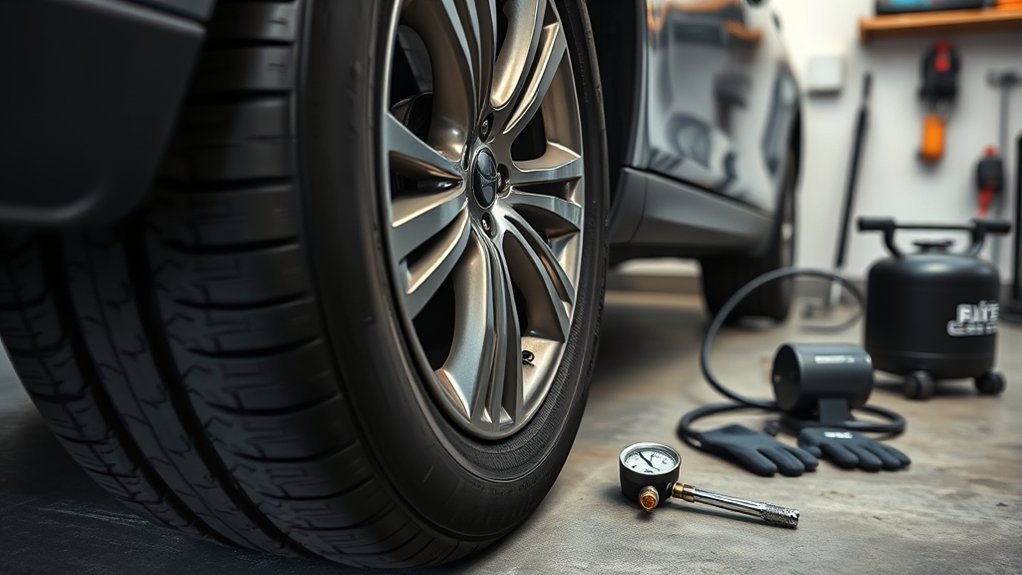
Tire maintenance means keeping your tires correctly inflated, evenly worn, properly rotated, and free from damage so your vehicle can grip, steer, and stop as designed. A few simple checks each month can help prevent uneven wear, poor fuel economy, tire failure, and surprise repair bills.
Quick Answer
Tire maintenance includes checking tire pressure, measuring tread depth, rotating tires, watching for uneven wear, inspecting sidewalls, and responding quickly to tire warning lights. Check pressure monthly and before long trips, rotate tires about every 5,000 to 8,000 miles unless your manual says otherwise, and replace tires at or before 2/32 inch of tread.
Key Takeaways
- Use the tire pressure on the driver-door placard or owner’s manual, not the maximum PSI printed on the tire sidewall.
- Check tire pressure when tires are cold, ideally before driving or after the vehicle has been parked for at least three hours.
- Measure tread depth monthly and replace tires when they reach 2/32 inch, or sooner if wet or winter grip is poor.
- Rotate tires according to the owner’s manual; if no interval is listed, 5,000 to 8,000 miles is a practical rule of thumb.
- Bulges, exposed cords, deep cracks, sidewall punctures, repeated air loss, or a TPMS light that returns after inflation need prompt professional service.
At a Glance
| Time Required | 10 to 20 minutes for a monthly DIY pressure, tread, and visual inspection; longer for shop rotation, balancing, or alignment. |
| Difficulty | Easy for pressure and tread checks; moderate to professional for rotation, balancing, alignment, and tire repairs. |
| Tools Needed | Tire pressure gauge, tread-depth gauge or penny, flashlight, owner’s manual, and air pump or compressor. |
| Cost | DIY checks are usually free after buying a gauge. Shop pricing for rotation, balancing, alignment, TPMS service, or repair varies by vehicle, tire size, region, and provider. |
What Tire Maintenance Covers
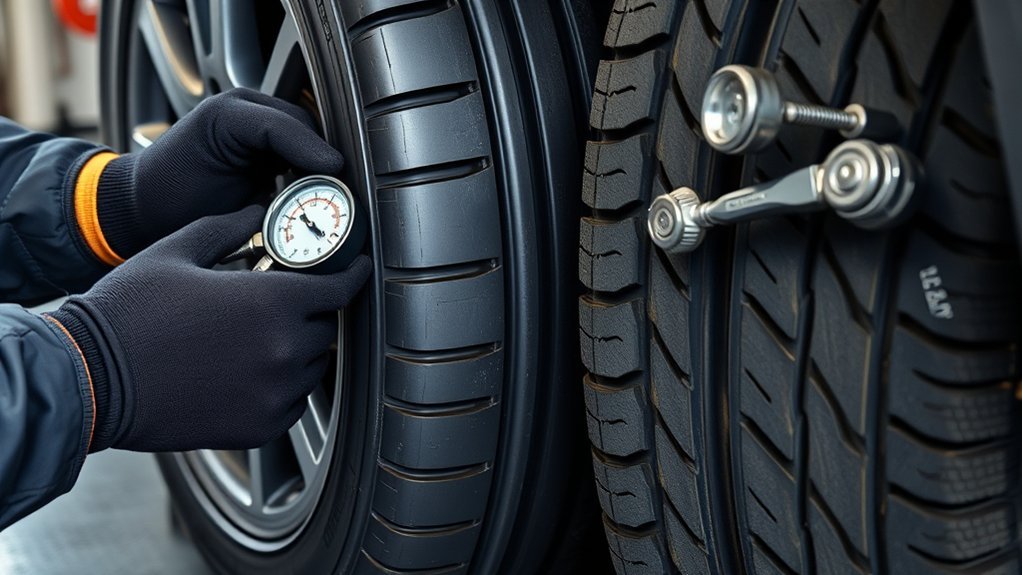
Tire maintenance covers the routine checks that keep the tire’s contact patch stable and predictable. That includes pressure, tread depth, rotation, balancing, alignment, tire age, sidewall condition, valve caps, and spare-tire readiness.
The main goal is simple: keep all four tires carrying the vehicle evenly. When pressure is low, the tire flexes too much and builds heat. When pressure is too high, the center of the tread can wear faster and the ride may feel harsh. When alignment, balancing, or rotation is ignored, the tread can wear unevenly and shorten the tire’s useful life.
- Check tire pressure at least once a month and before long trips.
- Measure tread depth across several grooves, not just one spot.
- Inspect sidewalls and tread for cuts, cracks, punctures, bulges, embedded objects, and exposed cords.
- Rotate tires based on your owner’s manual, or about every 5,000 to 8,000 miles if no interval is listed.
- Check alignment if the vehicle pulls, the steering wheel is off-center, or tread wear looks uneven.
- Include the spare tire or inflator kit in your routine so you are not stranded during a flat.
Seasonal tire care matters too. In cold weather, pressure often drops; in hot weather, pressure can rise after driving. For snow, ice, or frequent freezing temperatures, consider using dedicated winter tires instead of relying on worn all-season tires.
[Products Worth Considering]

EVOULTES heavy duty tire inflator with an integrated gauge delivers accurate pressure readings from 10–120 PSI, helping you inflate, deflate, and check tires in one tool. The 16.5-inch extended dual-head air chuck with swivel base reaches hard-to-access dual wheel valves on trucks and RVs. A brass trigger core and side-mounted air release valve make operation smooth, with standard 1/4" NPT threading and quick-connect compatibility for easy setup.

This portable cordless tire inflator delivers up to 160 PSI with fast 17 L/min airflow to help you quickly top up tires and get back on the road. It features dual power mode, running on a 21V rechargeable battery or a 12V DC adapter for convenient roadside use. An automatic shut-off with digital pressure gauge helps prevent overinflation, and a built-in LED light improves visibility in low-light conditions.

The JACO FlowPro Tire Inflator measures, inflates, and airs down tires up to 100 PSI with battery-free operation and ±2% accuracy after calibration. It features a glowing pressure dial for night visibility, a heavy-duty steel build with a hybrid hose, and a precision push-to-inflate thumb trigger. The patented Lightning Air Chuck locks on for a secure seal, and the kit includes quick-connect hardware for easy inline use with your air compressor.
Why Tire Maintenance Matters for Safety
Your tires are the only parts of the vehicle that normally touch the road. Pressure, tread, and tire condition directly affect braking, steering response, wet-road grip, ride stability, and fuel economy.
According to NHTSA TireWise, the correct tire pressure is the vehicle manufacturer’s recommended cold inflation pressure found on the tire information placard, certification label, or owner’s manual. FuelEconomy.gov also notes that underinflated tires can lower gas mileage by about 0.2% for every 1 psi drop in the average pressure of all tires.
Warning: Do not keep driving normally on a tire with a bulge, exposed cords, severe cracking, rapid air loss, or a sidewall puncture. Install the spare if it is safe to do so, slow down, and have the tire inspected or replaced.
Prevent Blowouts
Proper inflation helps reduce heat buildup, which is one of the biggest enemies of tire structure. A tire that is underinflated can flex more than designed, especially at highway speeds or when the vehicle is heavily loaded.
Monthly inspections also help you catch early warning signs before a tire fails. Look for bubbles, cuts, missing chunks of rubber, nails or screws, cracks around the sidewall, and uneven tread. If you find damage, do not assume the tire is safe just because it still holds air.
Improve Vehicle Control
Correct pressure and even tread help keep the contact patch consistent. That improves steering feel, wet-road traction, and braking stability. Uneven tire wear, low tread, or misalignment can reduce grip and make the vehicle feel unstable during emergency maneuvers.
For rainy climates, tires designed for wet conditions can help, but even good tires need proper pressure and enough tread depth to evacuate water.
Preserve Tread Life
Routine tire care spreads wear more evenly. Rotating tires on schedule, correcting alignment problems, and keeping pressure at the vehicle specification can help you get more useful miles out of a set of tires.
Check tread depth in several places because tires do not always wear evenly. A tire may look acceptable at one groove and be nearly worn out at the shoulder. Cupping, feathering, or one-sided wear usually means something else needs attention, such as alignment, balance, suspension, or inflation.
When to Service Your Tires
For most drivers, a practical tire maintenance schedule looks like this:
- Monthly: Check pressure, tread depth, sidewalls, valve caps, and spare tire condition.
- Before long trips: Recheck pressure when tires are cold, inspect tread, confirm the spare or inflator kit is usable, and avoid overloading the vehicle.
- Every 5,000 to 8,000 miles: Rotate tires unless your owner’s manual gives a different interval.
- When vibration appears: Ask a shop to check tire balance, wheel damage, and tire condition.
- When the vehicle pulls or tread wears unevenly: Have alignment and suspension checked.
- When tread reaches 2/32 inch: Replace the tire. For frequent rain, snow, or mountain driving, consider replacing earlier if traction has noticeably dropped.
If you drive on rough roads, carry heavy loads, tow, drive aggressively, or own an EV with high torque and heavier curb weight, inspect your tires more often. Harsh use can accelerate wear even when mileage is low.
Reinforced construction and the right tire type can improve durability during regular use, but reinforced sidewalls are not a substitute for pressure checks, rotation, and inspections.
How to Check Tire Pressure
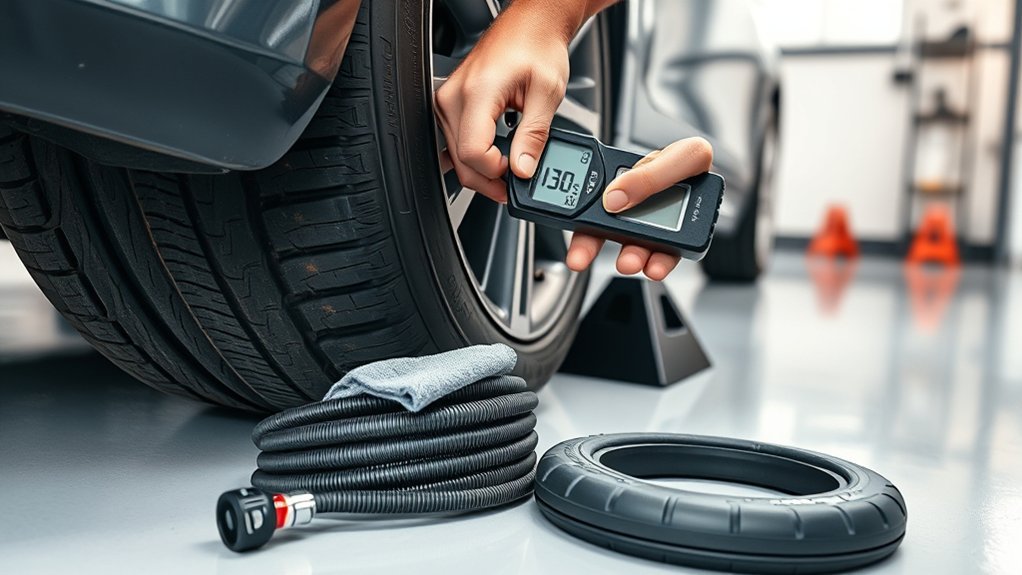
Checking pressure is one of the easiest tire maintenance jobs you can do at home. The key is to use the correct PSI and check the tires when they are cold.
Finding The Right PSI
Find the recommended tire pressure on the driver-door placard, certification label, fuel door sticker, or owner’s manual. Do not use the maximum pressure printed on the tire sidewall as your normal target; that number is the tire’s maximum allowed pressure, not necessarily the vehicle’s recommended cold pressure.
For vehicle-specific questions, such as a Kia Carnival tire pressure, use the placard on that exact vehicle. Kia’s owner manual portal provides model-year-specific information, but the placard on your vehicle is still the best quick reference because it matches the tire and load information for that vehicle.
Using A Tire Gauge
- Park the vehicle and let the tires cool. A cold tire is one that has not been driven for at least three hours.
- Remove the valve cap and press a tire gauge firmly onto the valve stem.
- Read the PSI and compare it with the vehicle’s recommended cold pressure.
- Add air if the reading is low, or release a little air if it is too high.
- Recheck with the gauge after every adjustment.
- Replace the valve cap to keep dirt and moisture out of the valve stem.
- Check the spare tire too, if your vehicle has one. Some spare tires require a different PSI than the road tires.
Pro Tip: Keep a simple digital or dial tire gauge in the glove box. Dashboard pressure readings and TPMS alerts are helpful, but a manual gauge is still the fastest way to verify pressure accurately.
Note: TPMS is a warning system, not a replacement for routine tire maintenance. A tire can be below the ideal pressure before the warning light appears.
How to Measure Tread Depth
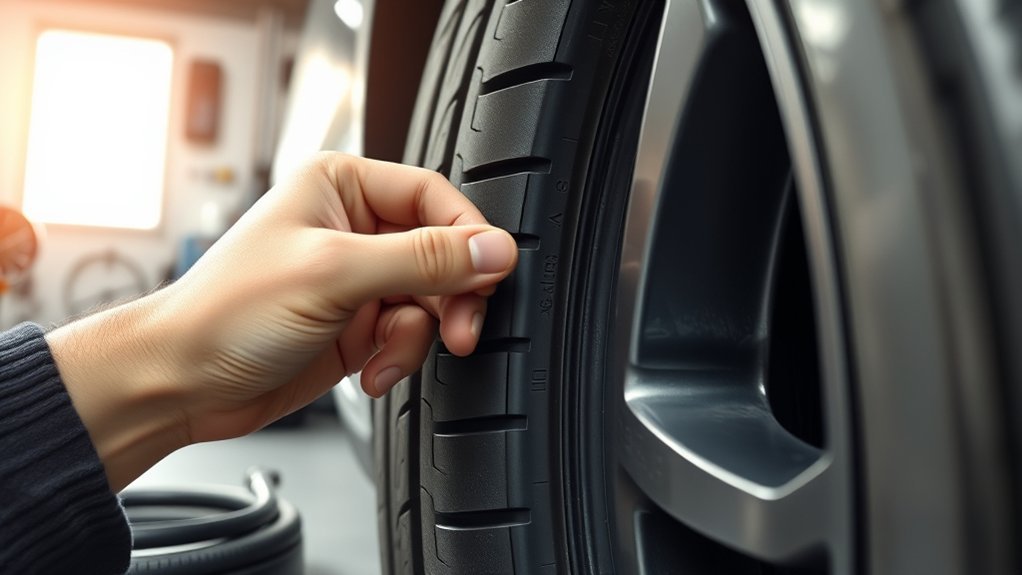
Tread depth affects how well a tire channels water, grips snow, and maintains traction. The minimum replacement point for passenger tires is commonly 2/32 inch, but wet-weather performance can feel weak before that point.
You can check tread depth two ways:
- Use a tread-depth gauge: Place the probe into the groove and read the measurement. Check the inner, center, and outer grooves on each tire.
- Use the penny test: Insert a penny upside down into the tread. If the top of Lincoln’s head is visible, the tire is at about 2/32 inch and should be replaced.
Many tires also have tread wear bars molded into the grooves. When the tread is level with those bars, the tire is due for replacement. If one part of the tire reaches the wear bars before the rest, the tire may also have an alignment, pressure, suspension, or rotation issue.
Winter tires often start with deeper tread and use compounds designed for cold weather. If your area sees frequent snow or ice, winter tires can improve cold-weather traction, but they still need pressure checks and tread inspections.
How to Read Tire Wear Patterns
Uneven wear tells you what the tire has been experiencing. Catching the pattern early can prevent a full set of tires from wearing out too soon.
- Center wear: The middle of the tread wears faster. This can happen when pressure is too high or the tire is not matched well to the wheel and load.
- Both-edge wear: Both shoulders wear faster than the center. This often points to underinflation or frequent hard cornering.
- One-edge wear: One shoulder wears faster. This often points to alignment or suspension issues.
- Cupping or scalloping: The tread has dips or high-low spots. This can come from worn suspension parts, imbalance, or delayed rotation.
- Feathering: Tread blocks feel smooth one way and sharp the other. This usually points to toe alignment problems.
If a wear pattern returns after rotation and pressure correction, have the vehicle inspected before installing new tires. New tires can wear quickly if the root cause is still present.
How to Rotate, Balance, and Align Tires
Tire rotation moves tires to different positions on the vehicle so wear is shared more evenly. The right pattern depends on your drivetrain, tire size, tread direction, and whether the front and rear tires are the same size. Always follow your owner’s manual first.
If your manual does not list a specific rotation interval, USTMA recommends rotating tires every 5,000 to 8,000 miles. After rotation, set tire pressure to the vehicle manufacturer’s specification for the tire’s new position.
- Use the correct rotation pattern for front-wheel drive, rear-wheel drive, all-wheel drive, directional tires, or staggered tire sizes.
- Balance tires if you feel vibration through the steering wheel, floor, or seat.
- Check alignment if the vehicle pulls, the steering wheel is off-center, or tread wear is uneven.
- Ask for a suspension inspection if cupping or abnormal wear returns after balancing and alignment.
- Record mileage after each rotation so the next service is easy to schedule.
For all-season driving, choose tires that match your climate and vehicle. The right tire performance in rain and snow still depends on pressure, tread, and rotation.
[Products Worth Considering]

The Fanttik X10 Pro is a cordless portable tire inflator that reaches up to 150 PSI and can inflate an R15 tire in about 35 seconds for quick roadside or home top-ups. With AccuInFlate auto-stop and smart start/stop controls, it helps maintain accurate pressure and frees your hands once the target is reached. A high-visibility digital display and preset modes make it easy to set and monitor inflation for cars, motorcycles, bikes, and balls.

This portable cordless tire inflator delivers fast, efficient inflation for cars, motorcycles, bikes, and sports balls with a digital pressure gauge. Use the one-click PSI preset with auto shut-off for accurate, hands-free topping to your target pressure up to 150 PSI. It’s compact and rechargeable with a built-in emergency LED light plus valve adapters and accessories for quick, ready-to-go use.
What the Tire Light Means
Not every tire-related dashboard message means the same thing. Two common alerts are often confused:
- TPMS / low tire pressure light: This usually looks like a horseshoe-shaped tire with an exclamation point. It means one or more tires may be significantly underinflated, or the TPMS system has a fault. Check pressure as soon as it is safe.
- Maintenance Tire reminder: Some vehicles, including certain Nissan models, use a “Maintenance Tire” reminder to tell you routine tire service is due. This is usually tied to mileage and may need to be reset after rotation or inspection.
If the TPMS light comes on while driving, slow down, avoid hard steering or braking, and check the tires when you can stop safely. Inflate to the placard pressure when the tires are cold. If the light returns, one tire keeps losing pressure, or you see visible damage, schedule service promptly.
If the alert is a routine tire maintenance reminder, inspect pressure, tread, wear, and rotation history soon. After the service is complete, reset the reminder using the steps in your owner’s manual. Regular maintenance can extend tire life and support overall driving performance.
Seasonal Tire Maintenance
Tires react to temperature, road conditions, and storage. Add these seasonal checks to your routine:
- Cold weather: Check pressure more often because cold air can lower PSI. Inspect tread before snow season and consider winter tires if temperatures often stay near freezing.
- Hot weather: Do not bleed air from a hot tire just because pressure rises after driving. Set pressure when tires are cold.
- Rainy season: Check tread depth before heavy rain. Worn tread increases hydroplaning risk.
- Road-trip season: Check pressure, tread, spare tire, jack, lug wrench, and load limits before leaving.
- Stored tires: Store tires in a cool, dry place away from sunlight, chemicals, and electric motors. Mark their previous positions so rotation is easier next season.
When to Replace or Repair Tires
Not every tire problem can be repaired safely. A professional shop should inspect punctures from the inside because outside-only plug repairs can miss hidden internal damage.
Replace the tire instead of repairing it if you find:
- Tread at or below 2/32 inch.
- Exposed cords, belts, or fabric.
- A sidewall puncture, sidewall bulge, or sidewall bubble.
- Large cuts, deep cracks, or tread separation.
- Repeated pressure loss after inflation.
- Damage from driving on a flat or severely underinflated tire.
- Tires that are too old according to the vehicle or tire manufacturer’s guidance, even if tread remains.
To check tire age, look for the DOT tire identification number on the sidewall. The last four digits show the week and year of manufacture. For example, “2321” means the tire was made in the 23rd week of 2021. If the date code is missing from the outer sidewall, it may be on the inner sidewall.
Frequently Asked Questions
How much is tire maintenance?
Basic DIY tire maintenance can cost little or nothing after you buy a tire pressure gauge and tread-depth gauge. Shop services vary by region, vehicle, tire size, and provider. Tire rotation may be included with some tire purchases or maintenance plans, while balancing, alignment, TPMS service, and repairs are usually priced separately. Ask for an itemized quote before approving the work.
What tire pressure should my Kia Carnival be at?
Use the tire pressure printed on your Kia Carnival’s driver-door placard or in the owner’s manual for your exact model year, trim, tire size, and load. Do not rely on a universal PSI range or the maximum PSI printed on the tire sidewall. Check pressure when the tires are cold.
What is the Maintenance Tire alert on a Nissan Murano?
On many Nissan models, “Maintenance Tire” is a mileage-based reminder for routine tire service, such as rotation, pressure checks, and tread inspection. It is different from the TPMS low-pressure warning light. After service, reset the maintenance reminder using the vehicle settings or the steps in the owner’s manual.
How often do you need tire maintenance?
Check pressure, tread, and visible damage monthly and before long trips. Rotate tires according to your owner’s manual, or about every 5,000 to 8,000 miles if no interval is listed. Check alignment when the vehicle pulls, the steering wheel is off-center, or tire wear is uneven.
Is the PSI on the tire sidewall the pressure I should use?
No. The sidewall number is usually the tire’s maximum allowed pressure. For daily driving, use the vehicle manufacturer’s recommended cold tire pressure on the driver-door placard, certification label, fuel door sticker, or owner’s manual.
Can I drive with the TPMS light on?
You can usually drive carefully for a short distance to reach a safe place, but you should check pressure as soon as possible. If a tire is visibly low, damaged, making noise, or losing air quickly, stop driving normally and use the spare or roadside assistance.
Do I need an alignment every time I rotate tires?
Not always. Tire rotation is routine maintenance. Alignment is needed when the vehicle pulls, the steering wheel is off-center, you hit a curb or pothole hard, new tires are installed, or tread wear looks uneven. Some drivers also check alignment annually as preventive maintenance.
How do I know if my tires are too old?
Check the DOT date code on the sidewall. The last four digits show the week and year the tire was made. Replace tires based on the tire or vehicle manufacturer’s age guidance, and replace sooner if you see cracking, bulges, hard rubber, tread separation, or other damage.
Do EVs need tire maintenance more often?
They often need closer attention because EVs can be heavier and deliver quick torque, which can accelerate tire wear. Follow the EV manufacturer’s rotation interval, check pressure monthly, and inspect tread more often if you notice rapid wear or noise.
Conclusion
Tire maintenance is simple, but it has a direct effect on safety, handling, traction, fuel economy, and tire life. Check pressure when tires are cold, measure tread depth monthly, rotate tires on schedule, inspect for damage, and treat warning lights seriously. If a tire has a bulge, exposed cords, sidewall damage, repeated air loss, or tread at 2/32 inch, replace it instead of gambling on another trip.
Sources
- NHTSA Tire Safety Ratings and Awareness / TireWise — cold tire pressure, placard PSI, tire safety basics, and tire ratings.
- NHTSA Winter Driving Tips — tire inspection, tread depth, sidewall damage, and spare tire checks.
- U.S. Tire Manufacturers Association Tire Care Essentials — pressure, tread, rotation, alignment, and wear guidance.
- FuelEconomy.gov Gas Mileage Tips — fuel-economy effect of proper tire inflation.
- AAA Guide to Vehicle Wheel Alignment and Suspension — alignment symptoms and when to check alignment.
- Kia Carnival Owner’s Manual Portal — model-year-specific vehicle guidance and owner manual reference.

Related Articles
AWD Tire Rotation Pattern: How Often and How to Do It
W**ondering the right AWD tire rotation pattern and timing? Discover the simple method, ideal schedule, and mistakes to avoid before your tires wear unevenly.
Read More
Wheel Damage: Types, Repair Options, and Costs
Many wheel damages look minor, but some hide costly safety risks—learn which repairs are worth it and when replacement is smarter.
Read More
Tire Balancing Weights: Types, Cost, and Why You Need Them
Precisely chosen tire balancing weights reduce vibration and wear, but which type fits your wheels and what it really costs may surprise you.
Read More