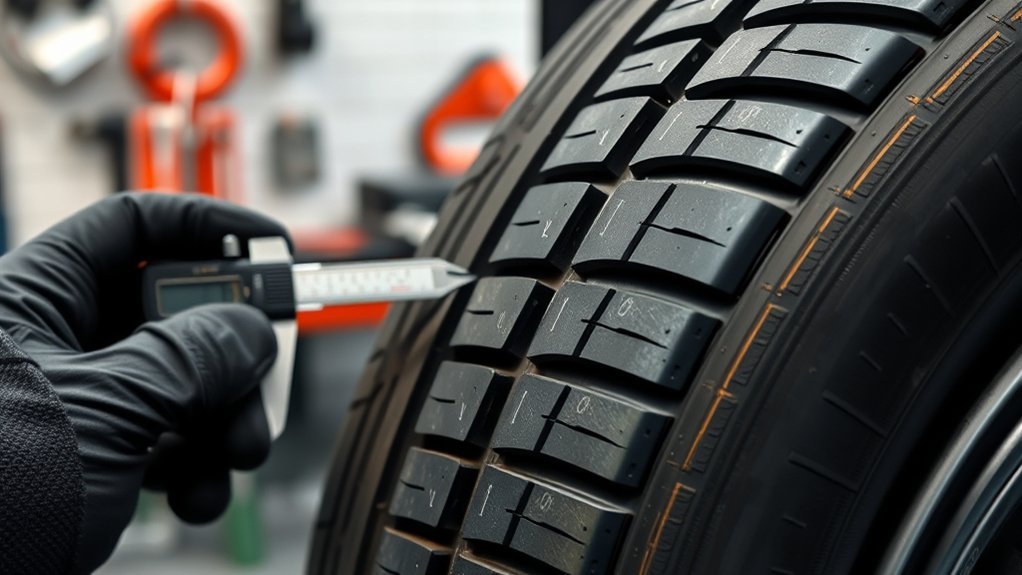
A tire’s “thickness” is usually measured as tread depth, not the total thickness of the rubber. Tread depth tells you how much usable groove depth is left to move water, grip the road, and help the tire brake and corner safely. Most drivers should track tread monthly, watch for uneven wear, and replace tires before the tread reaches the minimum wear limit.
Quick Answer
Tire thickness is best judged by tread depth. Many new passenger tires start around 10/32 to 12/32 inch, while some winter, light-truck, and off-road tires start deeper. Replace passenger tires by 2/32 inch at the latest, and start planning earlier around 4/32 inch for wet roads or about 5/32 inch for snow.
Key Takeaways
- Tire tread depth, not total rubber thickness, is the measurement that matters most for everyday safety.
- New passenger tires commonly start near 10/32 to 12/32 inch, but exact depth depends on tire type and model.
- The 2/32-inch mark is the minimum replacement point for passenger tires; do not treat it as a wet-weather safety target.
- Wet traction drops well before 2/32 inch, so many drivers should start shopping near 4/32 inch.
- Measure tread in several grooves and several spots around each tire because uneven wear can reveal pressure, alignment, or suspension problems.
At a Glance
| Time Required | 5 to 10 minutes for all four tires |
| Difficulty | Easy |
| Tools Needed | Tread depth gauge, or a penny and quarter for a quick check |
| Cost | Free with coins; usually inexpensive for a basic tread depth gauge |
What Is Tire Tread Depth?
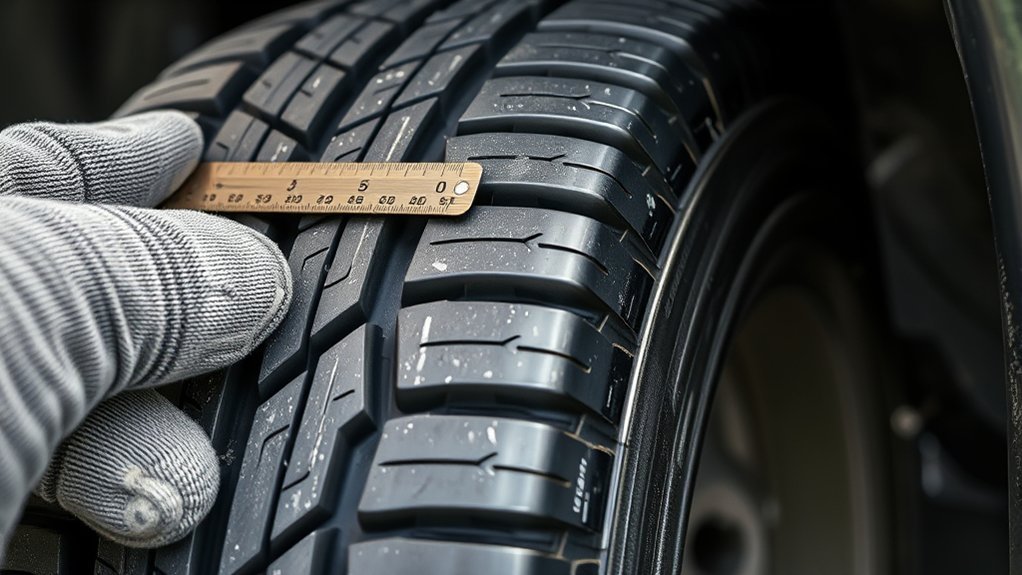
Tire tread depth is the distance from the top of the tread block down to the bottom of the main groove. In the United States, it is usually measured in 32nds of an inch. A reading of 10/32 inch means the groove is ten thirty-seconds of an inch deep.
That number matters because tread grooves help channel water away from the contact patch. As the grooves get shallower, the tire has less room to move water, slush, and loose material. That can reduce wet traction, increase hydroplaning risk, and lengthen stopping distance.
For passenger vehicles, 49 CFR § 570.9 states that tread must not be less than 2/32 inch. The National Highway Traffic Safety Administration also tells drivers to replace tires when tread is worn to 2/32 inch and to check tread at least once a month.
Warning: The legal minimum is not the same as the safest replacement point for rain or snow. If you often drive in wet weather, start planning replacement before the tire reaches 2/32 inch.
Why Tire Tread Depth Matters for Safety
Tread depth affects how well a tire grips, brakes, and resists hydroplaning. On dry pavement, a tire with low tread may still feel normal for a while. In rain, the loss can show up quickly because the tire cannot clear water as effectively.
In AAA wet-road testing, tires worn to 4/32 inch took about 42% to 44% longer to stop than new tires in the tested passenger car and light truck.
| Tread Depth | What It Usually Means | Recommended Action |
|---|---|---|
| 10/32–12/32 in. | Typical range for many new passenger tires | Monitor monthly |
| 8/32 in. | Good remaining tread on many tires | Keep checking for uneven wear |
| 6/32 in. | Usable, but no longer new-tire performance | Watch wet and winter performance |
| 5/32 in. | Snow traction is reduced | Consider replacement for snow driving |
| 4/32 in. | Wet-road safety margin is much lower | Start shopping or replace for rainy climates |
| 3/32 in. | Very limited wet-weather margin | Replace soon |
| 2/32 in. | Minimum wear limit for passenger tires | Replace now |
How to Measure Tire Tread at Home
The most accurate home method is a tread depth gauge. Coin tests are useful for a quick warning, but a gauge gives you an actual number you can track over time.
[Products Worth Considering]

Accurately measure tire tread depth with a calibrated gauge marked from 0 to 1 inch in 1/32 inch increments. The color-coded bar helps you quickly identify tread condition ranges, supporting safe driving for trucks, motorcycles, automobiles, and passenger vehicles.

Monitor tire tread wear with a smart, color-coded depth gauge that shows clear condition ranges at a glance. The bar is range marked for fast, easy readings, helping you maintain safer traction and performance. Each gauge is portable with a pocket clip, and the set includes 20 units for daily use and sharing.

Measure tire tread depth quickly and accurately with this LUMITECO dial gauge that reads in 1/32" increments up to 14/32". The color-coded green/yellow/red zones make it easy to judge tire wear and know when replacement is needed. A rugged, compact design with a protective pouch helps keep the gauge ready for use on cars, trucks, motorcycles, and more.
Measure With a Tread Depth Gauge
- Park on a flat surface and make sure the vehicle is secure.
- Place the gauge probe into a main tread groove, not on top of a raised wear bar.
- Press the gauge base flat against the tread blocks.
- Read the depth in 32nds of an inch or millimeters.
- Measure the inner, center, and outer grooves on each tire.
- Repeat at several points around the tire because one low spot can matter.
Use the Penny Test
Insert a penny into the tread with Lincoln’s head upside down and facing you. If you can see the top of Lincoln’s head, the tread is around the minimum replacement point and the tire should be replaced. This is a last-call check, not an early wet-weather warning.
Use the Quarter Test
A quarter gives an earlier warning than a penny. Insert the quarter with Washington’s head down. If the tread does not reach the top of Washington’s head, you are near 4/32 inch, which is a common planning point for wet-road replacement.
Check the Built-In Wear Bars
Most passenger tires have treadwear indicators molded into the grooves. When the tread is level with those raised bars, the tire has reached the wear limit and should be replaced.
Pro Tip: Write down the lowest reading for each tire. The lowest reading, not the best-looking groove, is the number that should guide your replacement decision.
How Tread Depth Varies by Tire Type
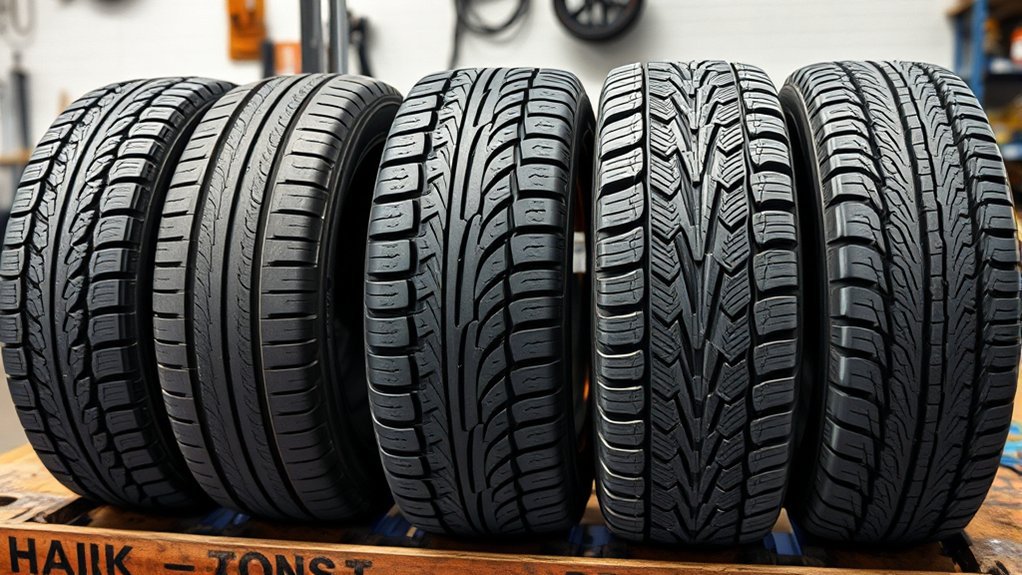
Tread depth is not identical across every tire. A touring all-season tire, summer performance tire, winter tire, and all-terrain tire are built for different jobs. That is why “new” does not always mean the same tread-depth number.
- All-season passenger tires: often start around 10/32 to 12/32 inch, depending on model and size.
- Performance or summer tires: may start with slightly less tread because their design focuses more on dry-road response and contact patch feel.
- Winter tires: often have deeper grooves and more biting edges to help with snow and slush.
- All-terrain and off-road tires: often have deeper, wider voids for mud, gravel, and loose surfaces.
Always check the specific tire model, not just the category. Two all-season tires in the same size can have different starting tread depths and very different wet, snow, noise, and wear characteristics.
[Products Worth Considering]

The SAFELIFE dial tire tread depth gauge measures tread depth in 1/32 inch increments with clear, easy-to-read 2-inch dial face. Color zones using a traffic light system help you quickly judge whether tread is low, marginal, or ample for safer driving. Built with a durable zinc cast body and a metal detect probe for precise, comfortable use across cars, motorcycles, trucks, and buses.

The 22800 wheel stud installer makes replacing wheel studs quick and secure, saving time and effort during tire service. It uses a ratchet or impact wrench to pull new studs firmly into place, helping when existing studs are too long. Compatible with most automotive wheels and light-duty truck wheel studs, it’s designed for easy, tool-assisted installation.

Measure tyre tread depth precisely with a digital gauge that reads in both MM and inches, helping you monitor safe driving conditions. The large LCD screen is easy to operate, and the compact tool fits for cars, trucks, and motorcycles. It provides high accuracy with a 0-25.4mm range and includes a 1-year warranty for added peace of mind.
When to Replace Tires Based on Tread Depth
Replace passenger tires by 2/32 inch at the latest. For real-world safety, many drivers should act sooner. Tire Rack recommends replacement around 5/32 inch for snow driving, 4/32 inch for wet roads, and 2/32 inch for dry-road use.
| Driving Condition | Depth to Watch | Why It Matters |
|---|---|---|
| Snow | About 5/32 in. | Shallow tread has less bite in snow and slush |
| Rain | About 4/32 in. | Wet braking and hydroplaning resistance decline |
| Dry roads | 2/32 in. | This is the minimum wear limit, not a comfort target |
You should also replace a tire regardless of tread depth if it has exposed cords, a bulge, deep cracks, tread separation, repeated air loss, severe vibration, or sidewall damage. Tire age matters too. NHTSA notes that some vehicle and tire manufacturers recommend replacing tires after six to ten years, regardless of visible treadwear.
Note: Your owner’s manual, tire sidewall information, driver-door tire placard, and local inspection rules can override general guidance. When in doubt, have the tire inspected by a qualified tire professional.
[Products Worth Considering]

The Continental Grand Prix 5000 is an allround road bike tire engineered for faster rolling, improved ride comfort, and enhanced puncture protection. It features a Vectran Breaker cut-protection layer, Lazer Grip micro-profile tread for confident cornering control, and Active Comfort Technology to damp vibration for smoother rides. BlackChili compound optimizes grip and speed for everyday performance and long-lasting confidence.

Milton S-921 pencil tire pressure gauge helps you maintain optimal tire pressure for passenger cars with accurate readings in PSI and kPa. It features a built-in deflator valve for convenient pressure adjustments, plus a single chuck head and nylon indicator bar for easy use on the go. Built from durable plated brass and designed for reliable performance, it’s a practical road trip and cold-weather maintenance tool.

Keep your tires properly inflated with this analog VONDIOR tire pressure gauge, designed for fast, easy readings without batteries. The swiveling, two-axis hose and large glow dial help you measure at any tire angle with instant visibility. Built with a protective rubber shield, it supports durable, low-maintenance use for cars and trucks.
How Tread Depth Affects Driving
As tread gets shallower, the tire has less groove depth to move water out from under the contact patch. That raises the chance of hydroplaning and reduces the tire’s ability to stop quickly in rain.
Shallow tread also affects cornering. In AAA’s all-season tire test, tires worn to 4/32 inch showed a 33% reduction in wet lateral acceleration for the Toyota Camry and a 28% reduction for the Ford F-150 compared with new tires. In plain English, worn tires had less wet-road cornering grip.
Snow and slush create another challenge. Deeper tread helps the tire pack and release snow while maintaining biting edges. Once tread is too shallow, the tire may spin more easily, take longer to stop, and feel less stable during lane changes or turns.
How Tire Size Affects Tread Wear
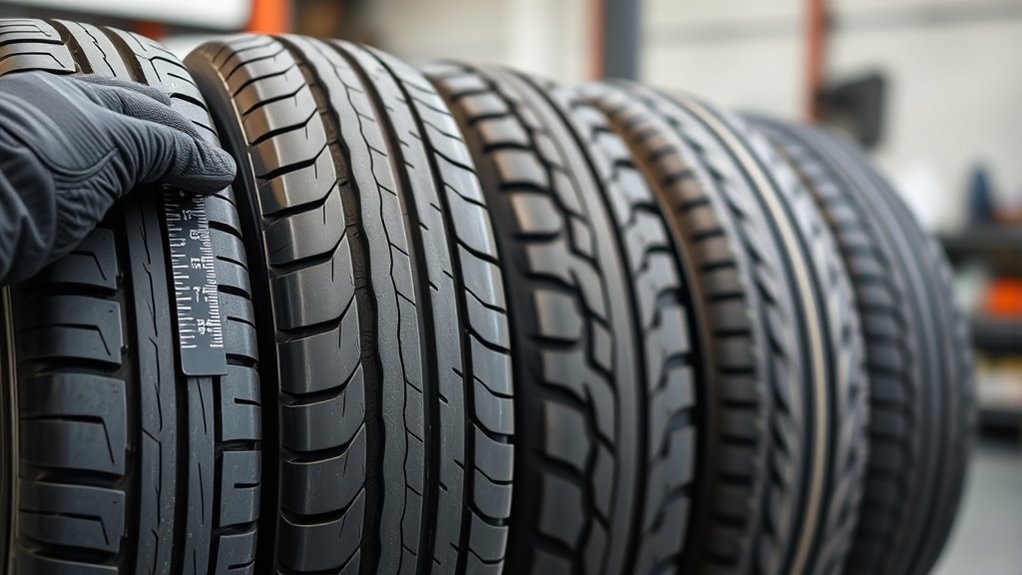
Tire size can influence how a tire wears because size changes the contact patch, sidewall behavior, load rating, and pressure requirements. Still, size alone does not decide tread life. Inflation pressure, alignment, rotation, suspension condition, road surface, tire compound, and driving style all matter.
Tire Width and Wear
Wider tires can place more rubber on the road, which may improve grip in some conditions. They can also be more sensitive to alignment errors because a wider contact patch can make uneven wear easier to notice. If the vehicle is not aligned correctly, one edge may wear faster than the rest of the tread.
Aspect Ratio Effects
Aspect ratio is the sidewall height compared with tire width. A lower aspect ratio usually means a shorter, stiffer sidewall. That can sharpen steering feel, but it can also make the tire more sensitive to potholes, rough pavement, and incorrect pressure. A taller sidewall may absorb impacts better, though it can feel less sharp in corners.
Pressure and Wear Patterns
Incorrect pressure creates predictable wear. Underinflation often wears both shoulders faster. Overinflation often wears the center faster. NHTSA advises checking tire pressure at least monthly when tires are cold and using the pressure listed on the vehicle’s tire placard or owner’s manual, not the maximum pressure printed on the tire sidewall.
| Wear Pattern | Possible Cause | What to Do |
|---|---|---|
| Center wear | Overinflation or load mismatch | Set cold pressure to the vehicle placard |
| Both shoulders worn | Underinflation or heavy cornering | Check pressure and driving habits |
| One edge worn | Alignment problem | Have alignment and suspension checked |
| Cupping or scalloping | Worn shocks, balance issue, or suspension wear | Get a professional inspection |
Tips to Make Tires Last Longer
Consistent maintenance helps tires wear evenly and keeps tread depth useful for longer. The basics are simple, but they work best when done on a schedule.
- Check pressure monthly: Use the vehicle placard pressure when tires are cold.
- Rotate on schedule: If your vehicle manufacturer recommends rotation, NHTSA says many vehicles use a 5,000- to 8,000-mile interval or sooner if uneven wear appears.
- Keep alignment in check: If the car pulls, the steering wheel is off-center, or one edge wears quickly, have alignment checked.
- Balance tires when needed: Vibration at speed can signal imbalance or another tire/wheel issue.
- Drive smoothly: Hard braking, fast cornering, and rapid acceleration generate extra heat and scrub tread faster.
- Inspect for damage: Look for cuts, cracks, bulges, embedded objects, and exposed cords.
- Store unmounted tires correctly: Keep them cool, dry, clean, and away from direct sunlight or ozone sources.
NHTSA says proper inflation can save fuel and extend the average life of a tire by about 4,700 miles. That makes pressure checks one of the easiest tire-care habits to justify.
Frequently Asked Questions
What is the 3% tire rule?
The 3% tire rule is a common fitment guideline that says a replacement tire’s overall diameter should stay within about 3% of the original tire diameter. It helps protect speedometer accuracy, clearance, gearing, ABS, traction control, and all-wheel-drive behavior. It is a guideline, not a substitute for your owner’s manual or a professional fitment check.
Is 1/4 inch tread depth good?
Yes, 1/4 inch equals 8/32 inch, which is generally a good remaining tread depth for many passenger tires. Still, tread depth is not the only safety check. Replace or inspect the tire if it has cracks, bulges, exposed cords, uneven wear, repeated air loss, or age-related concerns.
How do I read tire size?
Use the tire’s sidewall code. In a size such as P225/70R16, 225 is the tire width in millimeters, 70 is the aspect ratio, R means radial construction, and 16 is the wheel diameter in inches. Always match the size, load rating, and speed rating recommended by your vehicle manufacturer unless a qualified tire professional confirms an alternative fitment.
How thick do tire treads need to be?
Passenger tire tread should never be below 2/32 inch. For safer wet-road performance, start planning replacement around 4/32 inch. For snow driving, consider replacement around 5/32 inch because snow traction needs more groove depth than dry pavement.
Is the penny test enough?
The penny test is useful for spotting tires near the 2/32-inch replacement limit, but it is not the best early warning for rain or snow. A tread depth gauge is better because it gives an exact reading. A quarter test can also warn you earlier, near about 4/32 inch.
Should I replace all four tires at once?
It depends on your vehicle and the difference in tread depth. All-wheel-drive vehicles can be sensitive to mismatched tire diameter, so follow the owner’s manual and tire manufacturer guidance. If replacing only two tires, many tire makers and safety groups recommend installing the new pair on the rear axle for stability, but your vehicle’s requirements should come first.
Conclusion
Tire thickness is really about tread depth. The number tells you how much usable groove depth remains, how much wet-weather margin you have, and when replacement should move from “later” to “now.” Check tread monthly, measure more than one spot, watch for uneven wear, and remember that 2/32 inch is the final limit, not the ideal target. When rain, snow, age, or damage enters the picture, replacing earlier is often the smarter safety decision.
Sources
- National Highway Traffic Safety Administration — TireWise — backs tread checks, monthly pressure checks, tire age guidance, rotation, and replacement at 2/32 inch.
- 49 CFR § 570.9 — Tires — backs the 2/32-inch passenger-car tread-depth standard.
- AAA All-Season Tire Testing Report — backs wet braking and wet handling declines at 4/32 inch.
- Tire Rack — When Should Tires Be Replaced? — backs weather-based replacement guidance for snow, wet roads, and dry roads.
- Tire Rack — What Is the Tread Depth of a Tire? — backs tread-depth terminology and usable tread-depth context.