
How Tall Is a 275 65 20 Tire? Exact Height, Width & Dimensions
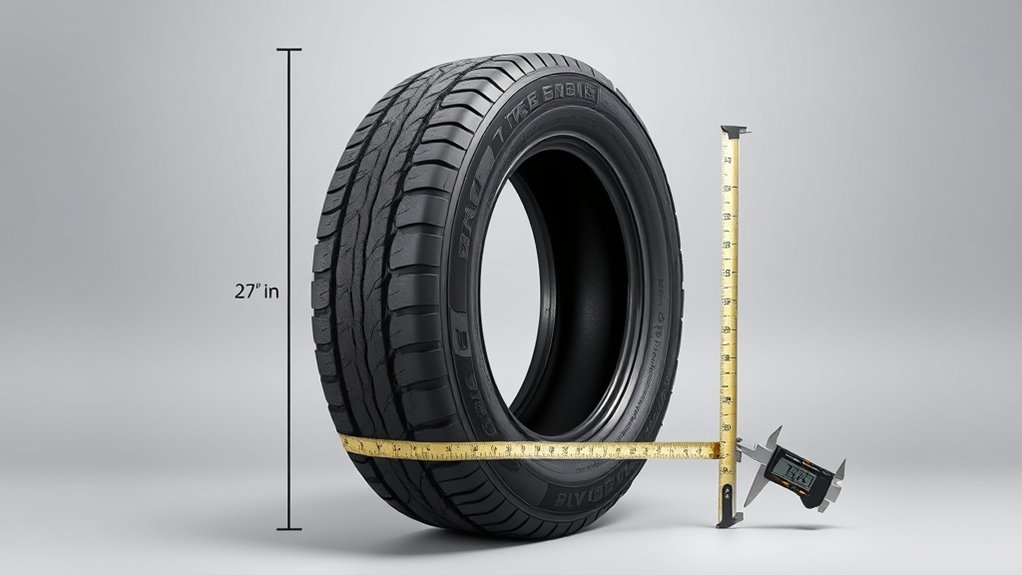
A 275/65R20 tire is about 34.1 inches tall, 10.8 inches wide, and built for a 20-inch wheel. Its sidewall is about 7.04 inches, and its calculated circumference is about 107.1 inches. Those numbers matter when you compare tire sizes, check wheel-well clearance, or estimate speedometer change.
Quick Answer
A 275/65R20 tire is approximately 34.1 inches tall, 10.8 inches wide, and 7.04 inches in sidewall height. Its calculated circumference is about 107.1 inches, which equals roughly 592 revolutions per mile. Actual mounted specs can vary slightly by tire model, inflation, tread depth, and load.
Key Takeaways
- A 275/65R20 tire is about 34.1 inches tall, or about 865.5 mm in calculated overall diameter.
- The 275 means the tire has a 275 mm nominal section width, which equals about 10.8 inches.
- The 65 aspect ratio means the sidewall height is 65% of 275 mm, or about 178.75 mm.
- The calculated circumference is about 107.1 inches, giving about 592 geometric revolutions per mile.
- Compared with a 275/60R20, a 275/65R20 is about 1.1 inches taller and can make actual speed about 3.3% faster than the speedometer shows if your truck is calibrated for the shorter tire.
What Does a 275/65R20 Tire Size Mean?
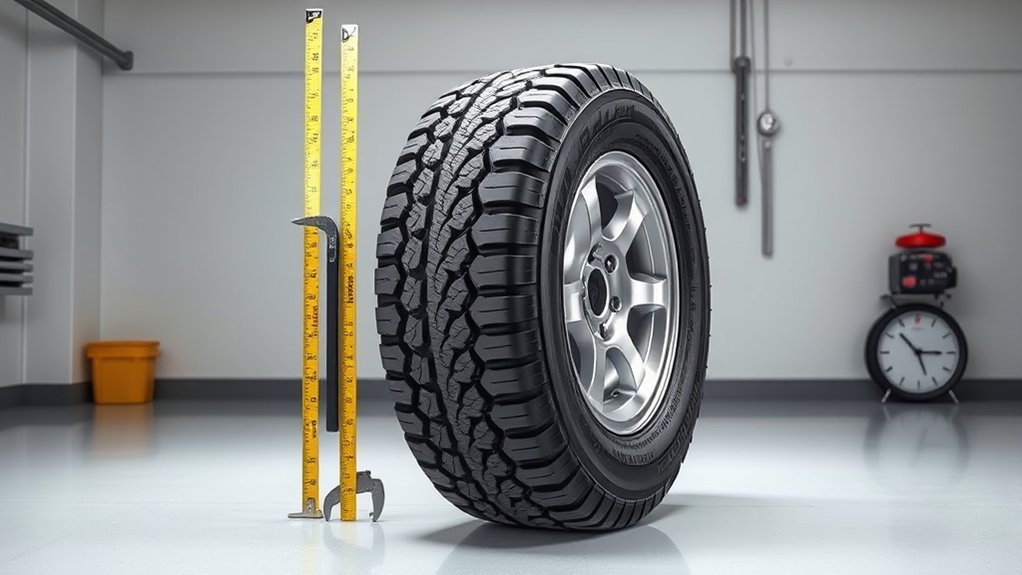
A 275/65R20 tire is a radial tire size with a 275 mm nominal section width, a sidewall height equal to 65% of that width, and a 20-inch wheel diameter. The “R” means radial construction, which is the common construction type for modern passenger and light-truck tires.
In simple terms, the tire is about 10.8 inches wide and about 34.1 inches tall. Michelin explains that a tire size code starts with width in millimeters, followed by aspect ratio, construction type, wheel diameter, and then load and speed information when shown on the full sidewall marking. You can review that tire-marking breakdown on Michelin’s tire sidewall guide.
Note: The 275 mm number is section width, not tread width. Tread width is the width of the rubber that contacts the road, and it varies by tire model and tread design.
[Products Worth Considering]

RVMATE dual-axle RV tire covers help shield your tires from sunlight, snow, rust, and dirt to keep them in better condition in harsh weather. Made with heavy-duty waterproof, UV-resistant 420D Oxford fabric, they provide strong shading and help reduce wear. They install easily by placing the cover on the wheel and fastening the rope for a stable fit.

Keep RV, trailer, or truck dual-axle tires protected with waterproof, UV-resistant covers that help guard against sunlight, snow, rust, and dirt. The dual tire covers are easy to install with a rope/bungee fastener for a stable fit that won’t easily slip. Designed for 27–30 inch diameter wheels, they help maintain tire condition through harsh weather.
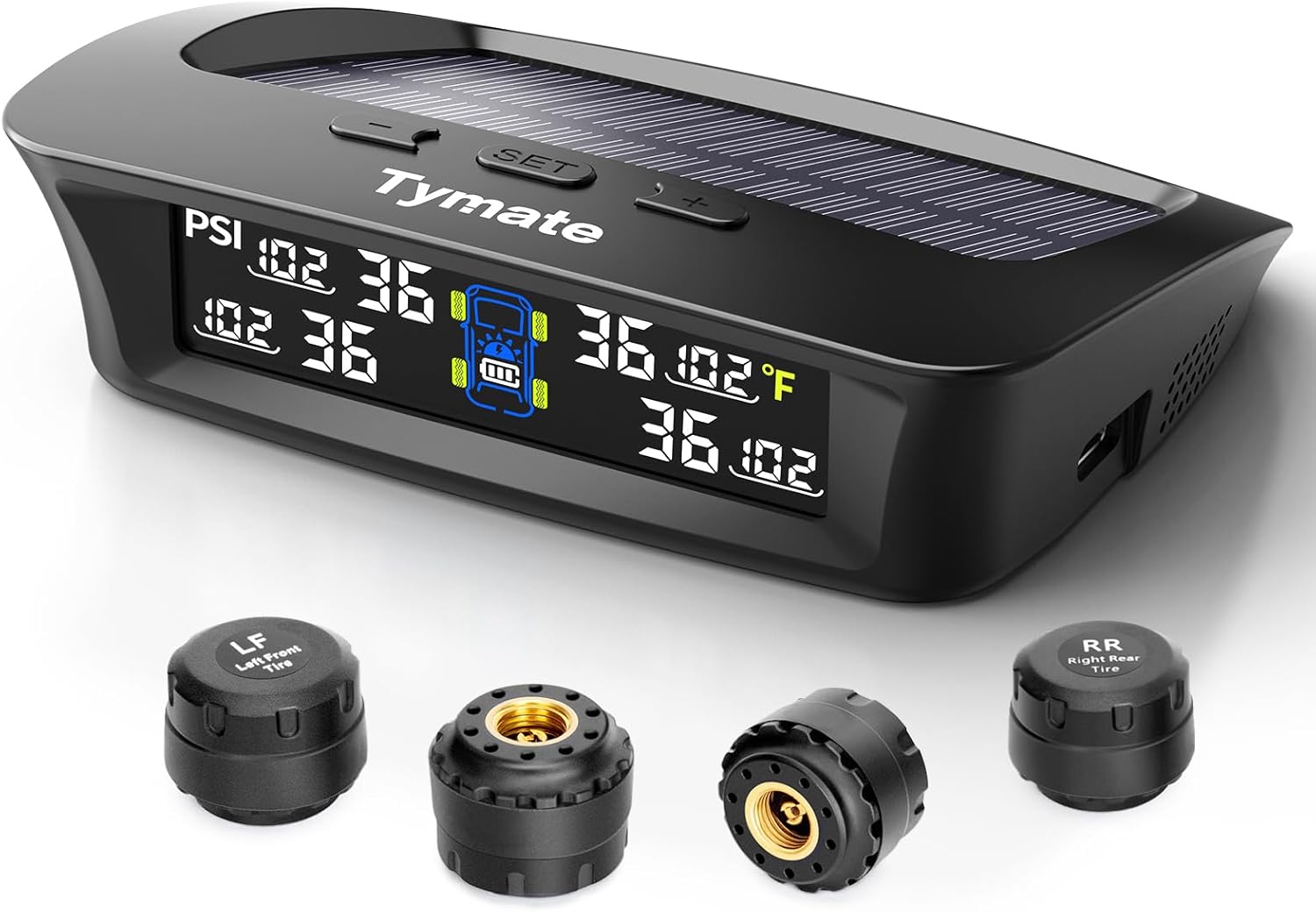
The Tymate TM3 RV TPMS delivers real-time tire pressure monitoring from 0 to 144 PSI with accurate readings and dependable wireless communication. It includes four external sensors with pre-pairing, six alarm modes for rapid leak, pressure extremes, temperature, and signal loss, plus an easy-reference setup for alert thresholds. Solar and USB-C charging help keep the display powered, while the color LCD and adaptive backlight improve visibility for safer driving and towing.
275/65R20 Tire Size Chart
Here are the calculated dimensions for a 275/65R20 tire. Use these as planning numbers, not as a substitute for the tire manufacturer’s published specifications.
| Measurement | Approximate Value |
|---|---|
| Nominal section width | 275 mm / 10.83 in |
| Sidewall height | 178.75 mm / 7.04 in |
| Wheel diameter | 20 in |
| Overall diameter | 865.5 mm / 34.07 in |
| Calculated circumference | 2,719 mm / 107.1 in |
| Calculated revolutions per mile | About 592 |
How Do You Calculate 275/65R20 Tire Height?
You can calculate the height of a 275/65R20 tire with three steps. First, multiply the width by the aspect ratio: 275 mm × 0.65 = 178.75 mm. That gives you one sidewall height. Next, double the sidewall because the tire has rubber above and below the wheel: 178.75 mm × 2 = 357.5 mm. Finally, add the 20-inch wheel diameter, converted to millimeters: 508 mm + 357.5 mm = 865.5 mm.
Converted back to inches, 865.5 mm equals about 34.07 inches. That is why most people round a 275/65R20 to a 34.1-inch tire.
A 275/65R20 is close to a 34-inch tire, but it is not a true 35-inch tire.
How Tall Is a 275/65R20 Tire?
A 275/65R20 tire is about 34.1 inches tall overall, based on the standard size calculation. In metric terms, that equals about 865.5 mm. This height affects ride height, gearing, fender clearance, and speedometer behavior.
Actual mounted height can vary slightly by brand, tread design, air pressure, wheel width, and vehicle load. For example, Toyo lists an LT275/65R20 Open Country R/T Trail with a 34.1-inch overall diameter, but its published revs per mile differ from the simple geometric estimate. That difference is normal because manufacturer specs often reflect loaded rolling behavior. You can see the example on Toyo’s LT275/65R20 specification page.
How Wide Is a 275/65R20 Tire?
A 275/65R20 tire has a nominal section width of 275 mm, which equals about 10.83 inches. Section width is measured from sidewall to sidewall when the tire is mounted on an approved measuring rim and inflated under specified conditions.
Do not treat this as the exact tread width or the exact space the tire needs inside the wheel well. Some 275/65R20 tires have squarer shoulders, wider sidewall bulges, or more aggressive side lugs than others. That is why two tires with the same size code can fit differently on the same truck.
What Is the 275/65R20 Sidewall Height?
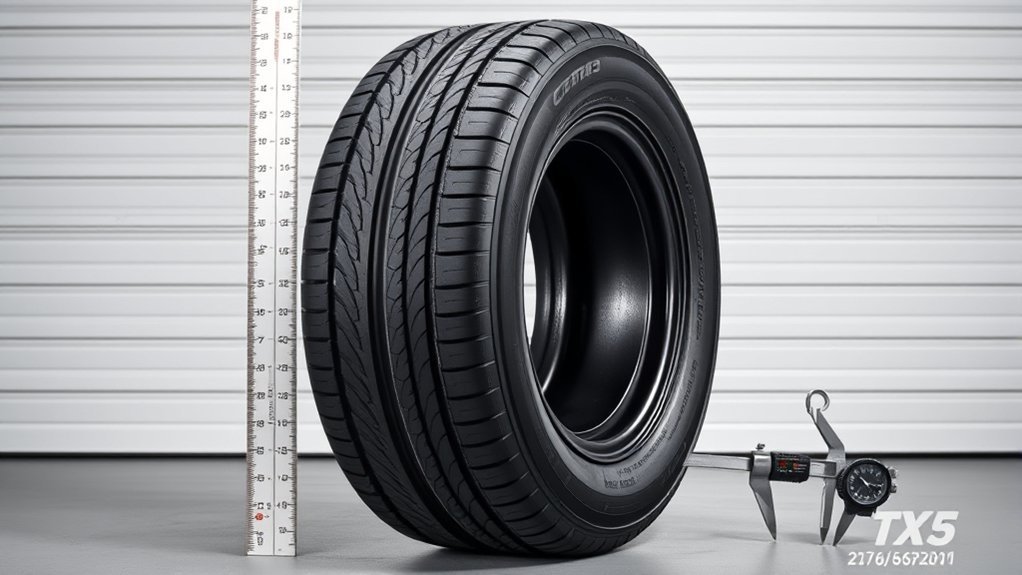
The 275/65R20 sidewall height is about 7.04 inches, or 178.75 mm. You get that number by multiplying 275 mm by 65%.
| Metric | Value |
|---|---|
| Sidewall height | 7.04 in |
| Sidewall height | 178.75 mm |
| Nominal section width | 275 mm |
| Wheel diameter | 20 in |
A taller sidewall can add a little more cushion than a shorter-profile tire, but ride quality still depends on tire construction, load range, pressure, tread design, and suspension setup.
What Is the 275/65R20 Circumference and Revs Per Mile?
A 275/65R20 tire has a calculated circumference of about 107.1 inches. Divide 63,360 inches in a mile by 107.1 inches, and you get about 592 revolutions per mile.
This number helps you estimate speedometer change when you move from one tire size to another. Tire Rack explains that a taller tire travels farther per revolution, which makes the speedometer read slower than actual speed if the vehicle was calibrated for a shorter tire. You can review the concept in Tire Rack’s guide to speedometer accuracy and tire diameter.
Note: Calculated revolutions per mile and manufacturer-listed revolutions per mile may not match exactly. Real rolling radius changes under vehicle weight, inflation pressure, tread depth, and tire construction.
Does Load Rating Matter on 275/65R20 Tires?
Yes. A 275/65R20 size does not automatically tell you how much weight the tire can carry. You still need to check the full service description on the tire sidewall, such as the load index, speed rating, and whether the tire is P-metric, XL, or LT.
Michelin explains that the load rating shows the maximum weight a tire can carry when properly inflated, and the speed rating shows the maximum speed capability under specified conditions. Replacement tires should meet or exceed the vehicle manufacturer’s requirements. You can confirm those markings in Michelin’s guide to tire load rating and speed rating.
Warning: Do not choose a 275/65R20 tire by size alone for towing or hauling. Check the door placard, owner’s manual, tire load index, maximum cold inflation pressure, axle ratings, and wheel rating before you buy.
[Products Worth Considering]

The Tymate TM12 RV TPMS delivers real-time tire pressure and temperature monitoring with a stable 433Hz display for safer long-distance driving. It supports simultaneous...
Will 275/65R20 Fit on Stock Trucks?
A 275/65R20 can fit some stock trucks, especially trucks that already use a similar factory diameter. Still, it is not a universal fit. A 34.1-inch tire may rub on some stock setups, depending on the truck’s year, trim, wheel offset, suspension, fender liner shape, mud flaps, and tire model.
NHTSA recommends choosing the same tire size as the original tires or another size recommended by the vehicle manufacturer. You can find that information in the owner’s manual or on the Tire and Loading Information Label on the driver’s door edge or door post. Review NHTSA’s tire guidance on its TireWise safety page.
Before installing 275/65R20 tires on a stock truck, check these points:
- Factory tire size on the door placard
- Approved wheel width for the exact tire model
- Wheel offset and backspacing
- Clearance at full steering lock
- Clearance under suspension compression
- Upper control arm and sway bar clearance
- Fender liner, mud flap, and bumper clearance
- Spare tire fitment
- Speedometer and odometer change
- Load index and inflation requirements for towing or hauling
Pro Tip: Check clearance with the steering turned both directions, not just with the wheels straight. Many rubbing problems show up at full lock or when the suspension compresses over a bump.
What Wheel Width and Offset Work Best?
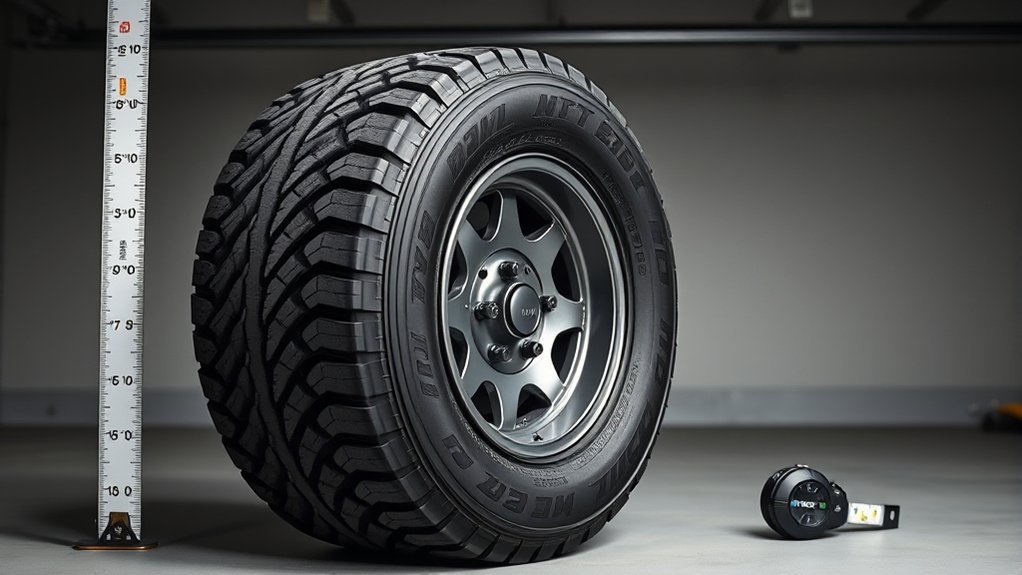
Many 275/65R20 tires are approved for wheels in the 7.5- to 9.5-inch range, but you should verify the exact range on the tire manufacturer’s spec sheet. An 8- or 8.5-inch wheel often gives a balanced shape on this size, but the “best” width depends on the tire model and vehicle use.
| Fitment Factor | What to Check |
|---|---|
| Wheel width | Use the approved rim-width range from the tire maker. |
| Offset | Lower offset pushes the tire outward; higher positive offset pulls it inward. |
| Inner clearance | Check control arms, sway bar, shocks, and frame clearance. |
| Outer clearance | Check fenders, mud flaps, bumper edges, and liner contact. |
Offset changes can solve one clearance problem while creating another. A lower offset may help inner suspension clearance, but it can increase rubbing at the fender or bumper. A higher positive offset may keep the tire tucked in, but it can bring the sidewall closer to suspension parts.
How Does 275/65R20 Compare to 275/60R20?
A 275/65R20 is taller than a 275/60R20, even though both tires have the same 275 mm nominal section width. The difference comes from the aspect ratio. The 65-series tire has a taller sidewall than the 60-series tire.
| Size | Diameter | Sidewall | Circumference |
|---|---|---|---|
| 275/65R20 | 34.1 in | 7.04 in | 107.1 in |
| 275/60R20 | 33.0 in | 6.50 in | 103.6 in |
| Difference | About 1.1 in taller | About 0.54 in taller | About 3.4 in longer |
Height and Sidewall Difference
The 275/65R20 gives you about 1.1 inches more overall diameter than the 275/60R20. Half of that increase affects ground clearance, so the truck may sit about 0.54 inch higher if everything else stays the same.
The taller sidewall can also change steering feel and ride character. It may add a little more cushion, but it can also feel less sharp than the shorter 275/60R20, depending on tire construction and pressure.
Speedometer and Gear Impact
If your truck is calibrated for 275/60R20 tires and you switch to 275/65R20 tires, the speedometer can read about 3.3% slower than your actual road speed. When the speedometer shows 60 mph, your actual speed is about 62 mph.
The taller tire also changes the effective gear ratio. Engine rpm may drop slightly at cruising speed, but acceleration and towing feel can soften because the tire covers more distance with each rotation. Fuel economy can change too, but the result depends on tire weight, tread design, driving speed, gearing, and load.
How Does 275/65R20 Compare to 35-Inch Tires?
A 275/65R20 is close to a 35-inch tire, but it is not a true 35. Its calculated diameter is about 34.1 inches, which makes it about 0.9 inch shorter than a true 35-inch tire.
| Size | Approximate Diameter | Approximate Circumference | Typical Width |
|---|---|---|---|
| 275/65R20 | 34.1 in | 107.1 in | 10.8 in nominal section width |
| 35×12.50R20 | 35.0 in nominal size | About 110.0 in | About 12.5 in nominal section width |
The 275/65R20 is usually easier to package than a common 35×12.50R20 because it is shorter and narrower. That can help with fender clearance, steering clearance, and rubbing risk. Still, you should check your exact tire model because aggressive all-terrain and mud-terrain designs often run wider at the shoulders than highway tires.
Frequently Asked Questions
What is the actual height of 275/65R20?
A 275/65R20 tire has a calculated height of about 34.1 inches, or about 865.5 mm. Real mounted height can vary slightly by brand, tread depth, air pressure, wheel width, and vehicle load.
Which tire is taller, a 65 or 70?
A 70-series tire is taller than a 65-series tire when both tires have the same width and wheel diameter. For example, a 275/70R20 has a taller sidewall than a 275/65R20 because 70% of 275 mm is more than 65% of 275 mm.
Is a 275/65R20 a 34-inch tire?
Yes. A 275/65R20 is commonly treated as a 34-inch tire because its calculated overall diameter is about 34.1 inches. It is slightly taller than many 33-inch sizes but still shorter than a true 35-inch tire.
Is a 275/65R20 a 35-inch tire?
No. A 275/65R20 is about 34.1 inches tall, so it is about 0.9 inch shorter than a true 35-inch tire. Some people call it “close to a 35,” but it is more accurate to call it a 34-inch tire.
Will 275/65R20 tires affect my speedometer?
They can. If your truck originally used a shorter tire, moving to 275/65R20 can make the speedometer read lower than your actual speed. Compared with 275/60R20, the difference is about 3.3%, so 60 mph indicated is about 62 mph actual.
Can I use 275/65R20 tires for towing?
You can use 275/65R20 tires for towing only if the exact tire’s load index, load range, inflation requirements, and wheel rating match your truck’s needs. Always check the door placard, owner’s manual, axle ratings, and tire sidewall before towing.
Sources
- NHTSA TireWise — tire placard, replacement tire size, inflation, and safety guidance.
- Michelin Tire Markings Explained — tire width, aspect ratio, construction, wheel diameter, load rating, and speed rating basics.
- Michelin Tire Load Rating & Speed Rating — load index and speed rating guidance.
- Tire Rack Speedometer Accuracy Guide — how taller or shorter tire diameter affects speedometer readings.
- Toyo LT275/65R20 Open Country R/T Trail Specs — manufacturer example showing 34.1-inch overall diameter and model-specific revs per mile.
Conclusion
A 275/65R20 tire is best understood as a 34.1-inch tire with a 10.8-inch nominal section width and a 7.04-inch sidewall. It is taller than a 275/60R20, shorter than a true 35-inch tire, and large enough to affect speedometer readings, gearing, and clearance on some trucks.
Before you buy, check your truck’s door placard, owner’s manual, wheel width, offset, load requirements, and full-lock clearance. The size math gives you a strong starting point, but the exact tire model and vehicle setup decide whether it fits cleanly.

Related Articles
How Tall Is a 305 70 R17 Tire? Exact Height, Width & Dimensions
Curious how tall a 305 70 R17 tire really is—and whether it fits your truck?
Read More
Can-Am Defender Tire Size Guide: Stock Specs & Upgrade Options
Just how big can you go on a Can-Am Defender before mods become necessary?
Read More
How Tall Is a 235 75R15 Tire? Exact Height, Width & Dimensions
Compare the 235/75R15 tire’s exact height, width, and dimensions to similar sizes to see what really fits your vehicle.
Read More