
What Causes Tire Feathering? Signs, Causes & How to Fix It
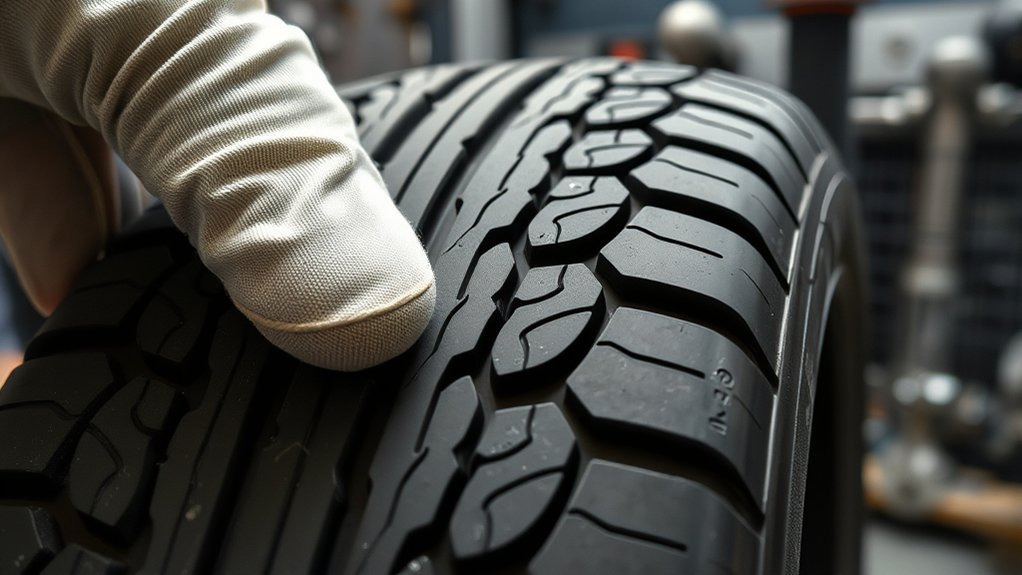
Tire feathering usually comes from wheel misalignment, worn suspension parts, incorrect tire pressure, or aggressive cornering that scrubs the tread. You’ll notice a sawtooth feel on the tread, wavy ridges, extra road noise, and vibration at speed. To fix it, have the alignment checked, inspect shocks and struts, set pressure to spec, and rotate tires regularly. If you want to stop it from returning, there’s more to know about the causes.
Key Takeaways
- Tire feathering is uneven tread wear with sharp and rounded edges on the same tread ribs.
- Common causes include wheel misalignment, incorrect tire pressure, worn suspension parts, and aggressive driving.
- Signs include wavy ridges, rough tread texture, uneven striping, noise, and vibrations while driving.
- Fix feathering by getting a professional wheel alignment and checking tire pressure to manufacturer specifications.
- Prevent future feathering with regular tire rotations, suspension inspections, and smoother driving habits.
What Is Tire Feathering?
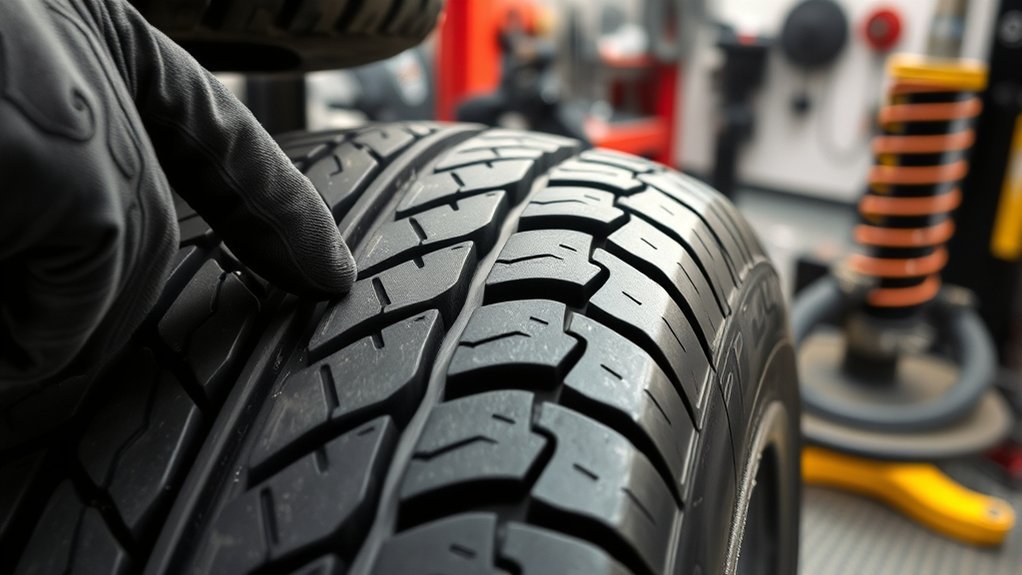
Tire feathering is a type of uneven tread wear in which the edges of each tread rib feel both rounded and sharp when you run a hand across the tire. You can spot tire feathering by tracing the tread: one side of each rib feels higher, the other lower. This uneven wear creates a rough texture and can make the tire look normal at a glance while hiding damage in plain sight. You may also notice increased road noise, small vibrations at speed, and visible striping across the tread surface. In practical terms, tire feathering tells you your tires aren’t rolling with equal contact. Misalignment often drives this pattern, so you shouldn’t ignore it. When you check your tires regularly, you protect your mobility, preserve control, and keep your vehicle from serving unnecessary friction. Additionally, all-season tires can help mitigate some wear issues when properly maintained.
What Causes Tire Feathering?
Feathered tread usually points to a setup problem rather than simple age or mileage. With tire feathering, the tread blocks wear into a sawtooth edge because the tire isn’t tracking cleanly. Misaligned wheels are the usual trigger, but improper inflation can also shift load across the contact patch and create irregular tire wear. Worn suspension components then let the wheel move instead of hold a stable path. Aggressive driving—hard cornering and rapid acceleration—adds friction and accelerates the pattern. Regular tire rotation can help maintain consistent mileage and reduce the risk of feathering.
| Cause | Effect | Result |
|---|---|---|
| Misalignment | Tread scrubs | Feathering |
| Low/high pressure | Uneven contact | Irregular tire wear |
| Worn suspension components | Wheel instability | Extra tread damage |
You can prevent this by checking pressure regularly and correcting alignment promptly. If you drive hard, expect faster wear unless you keep the chassis tight and the tires properly set.
How to Spot Tire Feathering
You can spot tire feathering by inspecting the tread for wavy ridges, uneven wear, or pronounced outer-edge patterns. Run your hand across each tire’s tread; feathering feels like alternating sharp and rounded edges on the ribs. While driving, watch for added vibration or noise, especially at higher speeds or during braking. Understanding proper tire maintenance can help prevent feathering from occurring in the first place.
Visual Tread Inspection
A quick tread check can reveal feathering before it becomes a bigger problem. During a visual inspection, look for wear patterns that form a wavy tread or ramp-like edges, especially near the outer shoulders. Feathering often appears uneven from one block to the next, so the tread won’t look uniform across the tire. Pollen or trapped debris can make these irregularities easier to see, helping you identify the affected sections faster. You may also notice a humming or whirring sound on the road, plus vibration at speed or under braking, which supports your diagnosis. If you spot these signs, don’t ignore them—feathering usually points to alignment, inflation, or suspension issues that need correction so you can drive with control and freedom.
Feel For Sharp Edges
After a visual inspection, run your hand lightly across the tread to confirm feathering. Move across each rib on your tire and compare both directions. You should feel sharp edges on one side and smoother, rounded edges on the other. That texture difference signals feathering and usually matches uneven wear you may have already seen as a wavy pattern. Check the whole tread, because the condition can vary by section. If dirt or pollen is present, it can make the edge pattern easier to detect, so don’t wipe everything clean first. Use a light touch; you’re only testing the surface profile. Consistent monitoring helps you catch feathering early, protect handling, and stay in control of your vehicle before the wear spreads.
Watch For Vibrations
Watch for vibrations at highway speeds or during braking, because tire feathering often shows up as a low-frequency shake or steering wheel buzz. You may also hear a steady road noise and feel reduced control. Inspect the tread and pressure, then check the suspension system and alignment. Uneven wear can trigger more vibrations, so don’t ignore early changes in handling.
| Symptom | What it suggests |
|---|---|
| Steering wheel buzz | Feathering or alignment error |
| Noise + shake | Tire wear or suspension issue |
| Pulling or drift | Loss of stability |
If the pattern persists, you’re not dealing with random roughness—you’re seeing a mechanical warning. Correcting pressure, alignment, and worn components lets you reclaim smooth, confident driving and keeps the tire contact patch working as it should.
Alignment Problems That Cause Feathering
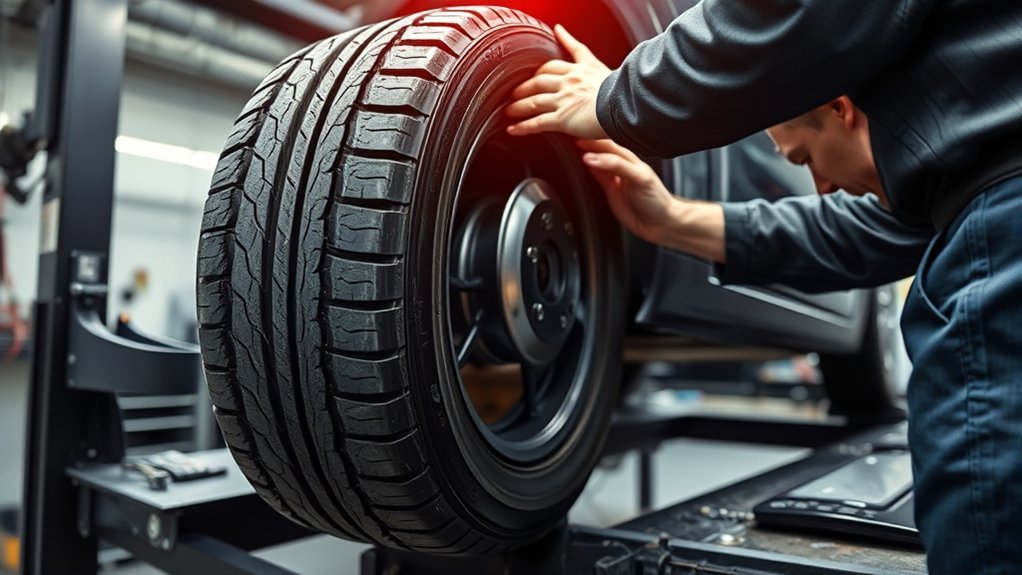
Wheel alignment problems are a common cause of tire feathering, especially when toe-in or toe-out settings are off and create uneven friction across the tread. You’ll often feel this on rear tires, too, especially in rear-wheel-drive vehicles or those with independent rear suspension. When alignment problems persist, the tread blocks wear at an angle, so one edge feels smooth and the other feels sharp. Don’t ignore it after you hit a curb or pothole; those impacts can knock your angles out fast. A professional alignment service can correct camber, caster, and toe, then restore even contact. Check tire pressure as well, because underinflation can mask the symptoms and speed wear. If you’ve got worn out suspension, have it inspected before you align anything. Hard cornering and rapid acceleration can worsen the issue, so drive smoothly and schedule regular checks to protect your tires and your freedom to move. Additionally, tread design for predictable handling can minimize the risk of feathering by ensuring even wear across the tire surface.
How Suspension Problems Wear Tires Unevenly
Worn shocks and struts can’t keep your tires planted evenly on the road, so tread starts wearing in a feathered pattern. If your suspension is out of alignment, it changes tire contact angles and increases friction across the tread. You should inspect bushings and ball joints regularly, because excess play can worsen misalignment and accelerate uneven wear. Additionally, maintaining proper tire pressure can help mitigate the risk of uneven wear caused by suspension issues.
Worn Shocks And Struts
Even a single set of worn shocks or struts can let your tires bounce excessively, reducing road contact and creating the uneven tread wear that leads to feathering. When worn shocks lose damping, you lose proper tire contact, and the tread starts scrubbing instead of rolling cleanly. Most units last about 60,000 miles; after that, control fades and tire wear rises.
- Inspect shocks and struts regularly.
- Replace parts showing leak, bounce, or noise.
- Upgrade to quality components for stronger damping.
- Act early to protect safety and tire life.
Don’t wait for handling to feel vague. Fresh suspension parts help you reclaim stable control, reduce feathering, and extend tire service life without surrendering comfort or precision.
Suspension Misalignment Effects
When your suspension is out of alignment, the tires no longer meet the road at the correct angle, so one edge of the tread scrubs harder and feathering develops quickly from inconsistent friction. You’ll notice this as uneven tire wear, especially on one side of the tread blocks. Suspension misalignment also reduces stability, because the wheels stop tracking straight and the vehicle responds less predictably. Worn shocks or struts can worsen the issue by letting the suspension shift under load, increasing tire wear on rough roads. Check alignment regularly, since even small deviations can shorten tire life and degrade performance fast. If you replace worn suspension parts promptly, you can restore proper contact, slow feathering, and keep your vehicle safe, efficient, and under your control.
Can Tire Pressure Cause Feathering?
Yes—tire pressure can cause feathering when it’s too low or too high, because both conditions change how the tread contacts the road and how the edges wear. When your tires run underinflated, the sidewalls flex more, and that extra movement drives uneven wear on the outer tread edges. When you overinflate, the center wears faster, but reduced road contact can still promote feathering.
Yes—tire pressure can cause feathering when it’s too low or too high, altering tread contact and edge wear.
- Check tire pressure monthly.
- Match pressure to the vehicle placard.
- Inspect tires for edge wear patterns.
- Correct pressure before more damage starts.
You keep your tires free from uneven wear by holding tire pressure at the manufacturer’s recommended level. That spec isn’t arbitrary; it’s set to balance load, grip, and tread contact so you can extend tire life and keep performance sharp. If you want control over your vehicle’s condition, don’t guess—verify pressure with a gauge and adjust it before feathering gets worse. Ensuring proper tire pressure can also help maximize fuel efficiency by reducing rolling resistance, which is critical for vehicles like the RAV4.
Other Causes of Uneven Tire Wear
Uneven tire wear can also come from inflation and alignment problems, since incorrect pressure and misaligned wheels change how your tread contacts the road. You should also check suspension and balance issues, because worn shocks, struts, or out-of-balance tires can create irregular wear patterns. If you ignore these faults, you’ll shorten tire life and worsen handling. Additionally, consider how tire fitment and load rating can affect overall performance and wear, as improper tire selection may lead to uneven wear patterns over time.
Suspension and Balance Issues
Worn suspension parts, especially shocks and struts, can keep your tires from maintaining consistent contact with the road, which promotes uneven wear patterns such as feathering. When suspension components loosen or age, you lose precision, and your tires scrub instead of roll freely. Unbalanced tires add vibration, while rear wheel alignment errors can create uneven friction and accelerate wear. You can reclaim control with regular inspections and corrective service.
- Check shocks and struts for play
- Verify tire balance at every rotation
- Inspect rear wheel alignment closely
- Replace damaged suspension components promptly
Even minor deviations can shorten tire life and dull handling. Keep your chassis tight, balanced, and aligned so your vehicle tracks cleanly and your tires wear evenly.
Inflation and Alignment Problems
Even with a healthy suspension, tire feathering can still develop when inflation or alignment drifts out of spec. If you run low inflation, the tire flexes too much, heats up, and scrubs the shoulders; too much pressure pushes the center tread into uneven wear. Check PSI regularly and hold to the manufacturer’s target so you keep control and extend tire life. Misalignment in camber, caster, or toe angles forces each tire to drag at a slightly different angle, creating feathering and other irregular wear. After curb strikes, potholes, off-road use, or heavy loads, schedule a professional wheel alignment. Quick checks help you stay ahead of damage, protect your tires, and keep your vehicle rolling free and true.
How to Fix Tire Feathering
Start with a professional wheel alignment to correct the misalignment that’s causing the feathered tread pattern. If you want to fix tire feathering, you need to remove the root cause, not just the symptom. After alignment, verify tire pressure with a gauge and keep it at the recommended spec; incorrect pressure worsens irregular wear and speeds tread damage.
- Inspect shocks and struts for play or leakage.
- Replace worn suspension parts before they shift tire contact.
- Get your tires rotated every 5,000 to 7,500 miles.
- Drive smoothly; avoid hard cornering, rapid acceleration, and heavy loads.
When you keep your tires rotated on schedule, you spread wear evenly and protect the tread from further feathering. Worn suspension lets the wheel bounce and scrub, so you’re better off restoring those components quickly. Maintaining precise pressure will help you achieve longer tread life, and you’ll reclaim stability, giving you the freedom to drive with less worry about premature wear.
Will New Tires Fix Feathering?
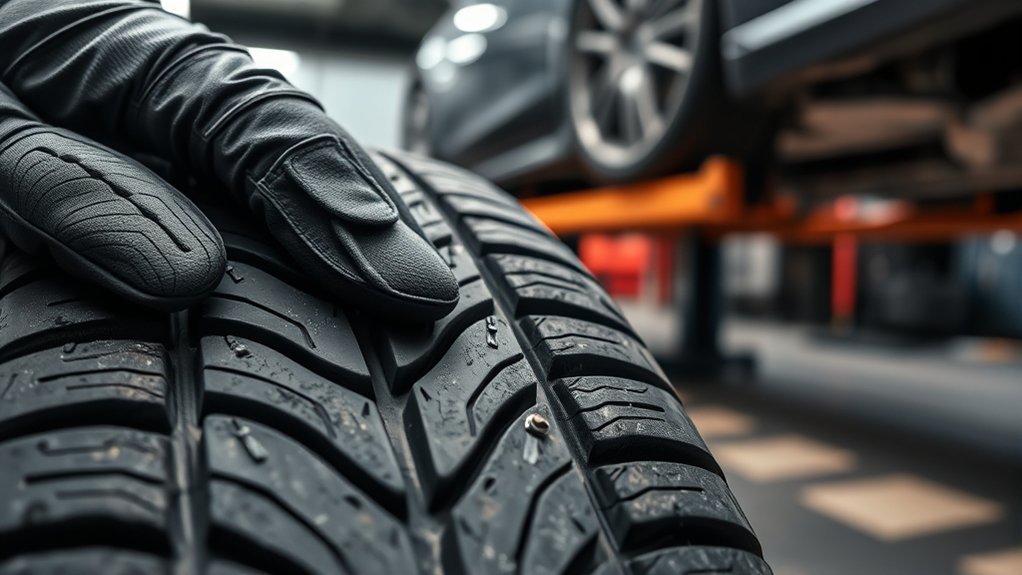
New tires can improve ride quality and handling, but they won’t permanently fix feathering if you leave the root cause alone. If your vehicle has alignment issues or worn suspension parts, the same irregular tread wear can return quickly on the new tires. That means you’d spend money on replacement rubber, yet still face the same jagged tread pattern and noise.
You need to correct the mechanical cause first, then install new tires if the old ones are too damaged to save. Even after that, your tires can only stay healthy if the underlying setup remains stable. Alignment checks, tire rotations, proper pressure, and disciplined driving help the new tires wear evenly and last longer. Think of it as taking control of the system, not just swapping parts. When you address the source, you free yourself from repeated feathering and get real value from every mile. Additionally, using all-season tires can provide greater stability, reducing the risk of uneven wear.
How to Prevent Tire Feathering
Preventing tire feathering comes down to keeping the vehicle’s setup stable and the tires loaded evenly. To prevent tire feathering, you need disciplined maintenance and quick correction of wear drivers. Check tire pressure often and keep it at manufacturer specs; underinflation and overinflation both distort contact patches. Schedule wheel alignments at least once a year, and after pothole hits or curb strikes, because improper tire alignment scrubs tread edges. Rotate tires every 5,000 to 7,500 miles so wear stays balanced across all four corners. Inspect shocks and struts regularly; worn suspension lets the tire hop and feather. Drive smoothly, too, because hard cornering and abrupt braking increase tread stress. Additionally, regularly monitoring tread life expectations can help you identify issues before they lead to feathering.
- Verify pressure monthly.
- Align after impacts.
- Rotate tires every 5,000 to 7,500 miles.
- Replace worn suspension parts promptly.
When you keep geometry true and loads consistent, you reclaim control, extend tire life, and stop feathering before it starts.
Frequently Asked Questions
Can Tire Feathering Be Fixed?
Yes, you can often fix tire feathering by correcting tire alignment and replacing worn suspension parts. You’ll also need to inspect tread wear, rotate tires regularly, and keep pressure at the right level. These maintenance tips help stop the uneven edge wear from returning. If feathering’s severe, you may need new tires too, since damaged tread can’t always recover safely.
Is It Safe to Drive on Feathered Tires?
No, you shouldn’t drive long on feathered tires. You’re risking reduced traction, longer braking distance, and unstable handling, which hurts driving safety. You may also feel vibration, noise, and worse hydroplaning. Treat this as urgent tire maintenance: inspect tread, check tire pressure, and get alignment checks plus suspension diagnostics. If feathering is severe, replace the tires before they fail and put your freedom from accidents first.
What Other Problem Is It Also Likely to Have Feathering Tires?
You’re likely dealing with tire alignment issues, uneven wear, and suspension problems too. Feathering usually means your wheels aren’t tracking straight, so your tires scrub the road instead of rolling cleanly. Check camber, toe, shocks, and struts, because worn components can keep the tread from contacting pavement evenly. If you keep driving, you’ll worsen wear and lose control faster, so inspect and correct it promptly.
Can Low Tire Pressure Cause Feathering?
Yes, low tire pressure can cause feathering. When you run underinflated tires, you increase sidewall flex, distort contact patch shape, and accelerate irregular tread wear. That uneven wear can mimic or worsen feathering, especially if your tire alignment is off or you’ve got suspension issues. You should keep PSI at the manufacturer’s spec and check it regularly. That simple habit protects handling, extends tire life, and keeps you in control.
Conclusion
Tire feathering is a warning sign you shouldn’t ignore—it’s your vehicle’s tread telling you something is out of line. If you catch the wear early, you can fix alignment, suspension, or inflation issues before they chew through new tires like a file on wood. Stay on top of rotations, inspections, and correct tire pressure, and you’ll protect handling, extend tire life, and keep your ride safer and smoother.

Related Articles
How to Get Water Out of a Tire: Why It Happens & How to Fix It
Prevent tire damage and weird handling by learning why water gets inside and the fastest way to remove it before worse problems start.
Read More
How to Get Tire Skid Marks Off Concrete: Effective Methods
Overcome stubborn tire skid marks on concrete with proven cleaning methods that reveal what works best, and discover the easiest way to finish the job.
Read More
How Thick Is a Tire: Complete Guide, Tips & Expert Advice
Starting with tread depth basics, this guide reveals how thick tires really are and when wear becomes dangerously thin.
Read More