What Does BSW Mean on a Tire? Load, Speed & Rating Guide
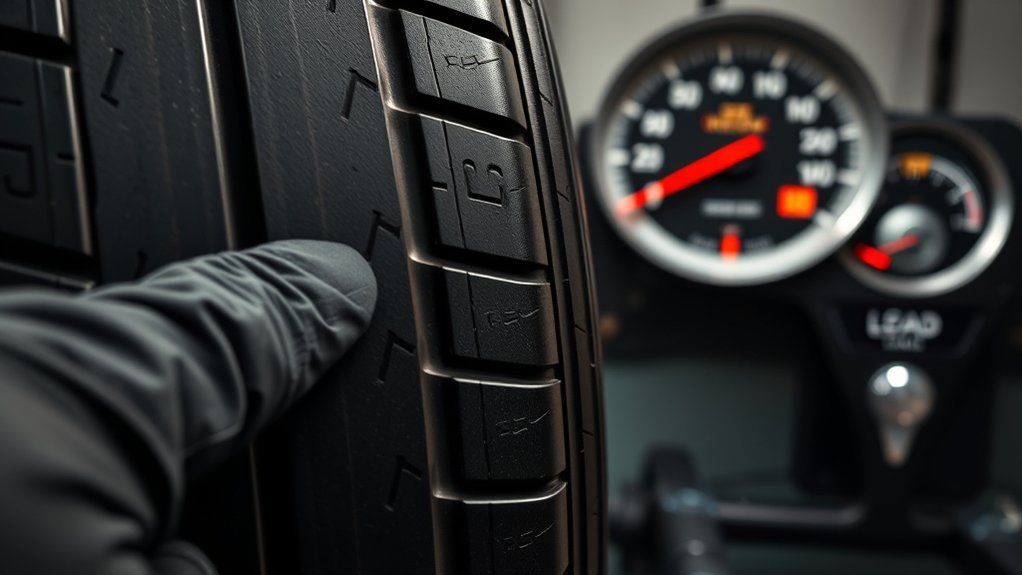
BSW on a tire means Black Side Wall, which means the sidewall is plain black with no white lettering. It’s mostly an appearance choice, but you still need to check the load index, speed rating, and size to make sure the tire matches your vehicle’s requirements. These specs affect carrying capacity, heat resistance, and fitment. Compare them with your owner’s manual, then look closer and you’ll see how each marking affects performance.
Key Takeaways
- BSW means Black Side Wall, describing a tire with a plain black sidewall and no white lettering.
- BSW is mainly an appearance choice; it does not change the tire’s safety or core performance.
- Tire load rating shows the maximum weight each tire can safely carry, and replacements should match or exceed the original load index.
- Tire speed rating indicates the maximum safe speed, and using a lower rating than required can increase heat and failure risk.
- Check tire size, tread, age, and DOT code to ensure proper fitment, safe performance, and timely replacement.
What BSW Means on a Tire
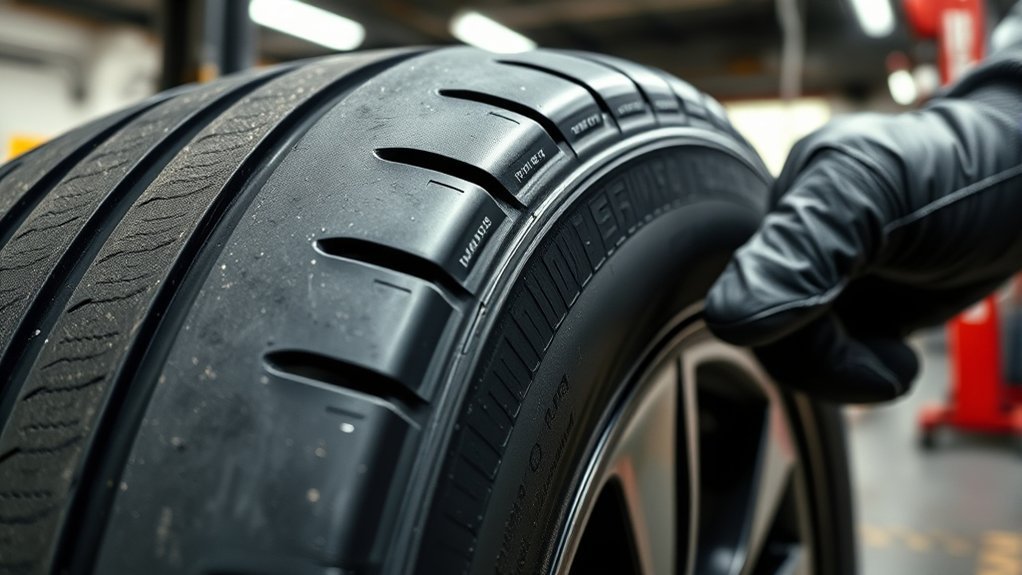
BSW stands for Black Side Wall, which means the tire has a uniform black finish on the sidewalls. When you see BSW on a tire, you’re looking at a design choice that keeps the tire sidewall free of white lettering and extra markings. That plain finish gives you a clean, minimalist appearance and can suit vehicles where you want a restrained, technical look. You’ll often find BSW tires on all-season models, because manufacturers use them across many vehicle types to balance appearance and utility. The black sidewall can also resist visible wear better in harsh conditions, helping the tire maintain a consistent look longer. BSW doesn’t change the load index itself, but you can still choose a BSW tire that meets your required load capacity and performance needs. In practice, BSW gives you aesthetic control without sacrificing specification compliance or market availability across brands. Additionally, tread design can significantly affect overall performance, providing important traction characteristics.
How to Read Tire Load Ratings
Tire load ratings tell you how much weight each tire can safely carry, and the load index gives you the standardized number to read. You’ll find each Tire Load Rating printed as a number, and that number maps to a maximum weight. For example, a load index of 95 means one tire supports 1,521 lbs, or 690 kg. If you need a replacement, choose a tire with the same or higher load index than the original. That keeps your vehicle’s safety and handling within spec. Standard Load, or SL, suits normal use. Extra Load, or XL, raises capacity, but it also needs higher inflation pressure. To estimate vehicle capacity, multiply the tire’s load index capacity by four, since most vehicles use four tires. Check the rating regularly, especially when you carry heavy cargo or tow. Tire fitment is crucial for ensuring optimal performance and safety.
Tire Speed Ratings Explained
Tire speed ratings use letters such as S, H, V, and Y to show the maximum safe speed a tire can sustain for extended periods. You’ll need to match that letter to the vehicle’s required performance rating, since each step up or down changes the speed limit the tire can reliably handle. If you choose a lower rating than specified, you increase the risk of heat buildup, wear, and structural failure. Additionally, all-season tires are designed to provide reliable performance across various conditions, making it crucial to select tires that meet your vehicle’s specifications.
Speed Rating Letters
Speed rating letters tell you the maximum safe speed a tire can sustain for extended periods, with each designation tied to a specific limit, from S at 112 mph to ZR for speeds above 149 mph. You should read the Speed rating as a performance index, not a guess. The H speed rating reaches 130 mph and fits many sport models. Check the DOT Code to verify the tire’s specification before you replace anything.
| Letter | Limit |
|---|---|
| T | 118 mph |
| H | 130 mph |
| V | 149 mph |
If you choose a lower rating, you can reduce stability. Match the original rating so your vehicle keeps its designed balance, response, and freedom on the road.
Maximum Safe Speed
When you read a tire’s speed rating, you’re seeing the maximum speed it can sustain safely for extended periods, not a target to exceed. Your tire specifications encode this limit directly in the sidewall code, after the load index. At the minimum, S means 112 mph; H reaches 130 mph; V climbs to 149 mph; and Z exceeds 149 mph. These speed ratings reflect controlled test conditions, so your real-world margin depends on heat, pressure, load, and road state.
- Check the sidewall for the rated letter.
- Compare it with the vehicle label.
- Keep speed within the stated maximum safe speed.
- Don’t override manufacturer guidance.
You protect control, stability, and freedom when you respect the rating.
Choosing The Right Rating
Choosing the right speed rating means matching the tire’s maximum safe sustained speed to your vehicle’s requirements, not just picking the highest letter available. You need to verify that the Load and Speed Rating fit your driving profile, axle demands, and manufacturer specs. An H Rating supports up to 130 mph and suits most passenger vehicles; S covers 112 mph, while Z exceeds 149 mph. If you run faster than the rating, heat buildup can trigger failure and reduce control. When you replace tires, keep the original Rating unless your vehicle manual says otherwise. On older tires, the speed symbol may appear before the R in the size code. That detail helps you identify the correct classification and preserve handling, safety, and freedom on the road.
BSW vs OWL and RWL Tires
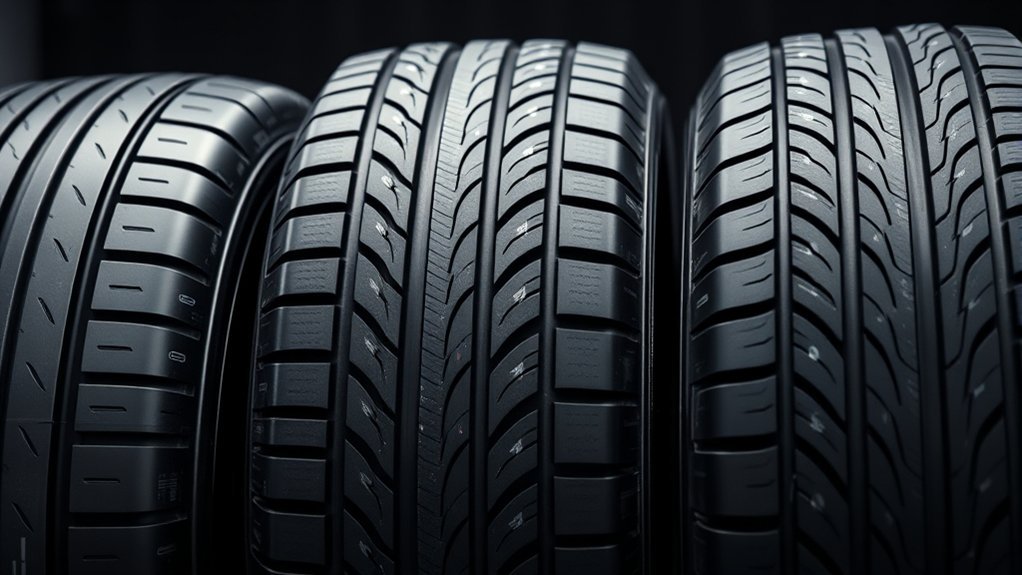
BSW means Black Side Wall, so you’re looking at a plain black sidewall with no lettering or markings. OWL uses raised white letters on a black background, while RWL keeps the white lettering but typically with a more pronounced profile. Your choice usually comes down to appearance and vehicle fitment, though OWL and RWL can show more abrasion in harsh use than BSW. Additionally, tire performance characteristics can influence your selection based on your driving needs.
BSW Sidewall Basics
Black sidewall tires, or BSW, use a plain black finish with no added lettering or decorative markings, giving them a clean, understated look that’s common on many all-season tires. You’ll usually mount BSW with the Outer: Side Facing Outwards position when the tire’s asymmetric design demands it, and you’ll often see it paired with Standard Load duty. This sidewall style prioritizes function:
- BSW means Black Side Wall.
- You get a smooth, minimalist finish.
- It resists curb rash and abrasion better.
- It supports a restrained, precise vehicle appearance.
Compared with other visible sidewall treatments, BSW keeps your tire visually quiet while still meeting the same load and speed specifications. That lets you choose performance and simplicity without compromise or excess.
OWL And RWL Differences
When you compare tire sidewall styles, the differences between BSW, OWL, and RWL are mainly visual rather than functional. BSW gives you a uniform black sidewall, so your tire reads as clean and restrained. OWL adds outline white lettering, which creates contrast without overwhelming the tread package. RWL goes further, using raised white lettering that stands out more sharply and boosts visibility. In practice, you don’t gain extra load capacity, speed rating, or performance from either style. You’re choosing an aesthetic statement, not a mechanical upgrade. If you want a discreet, minimalist look, BSW fits. If you want a bolder, more expressive tire profile, OWL or RWL can signal that freedom clearly.
How to Check Tire Size and Fitment
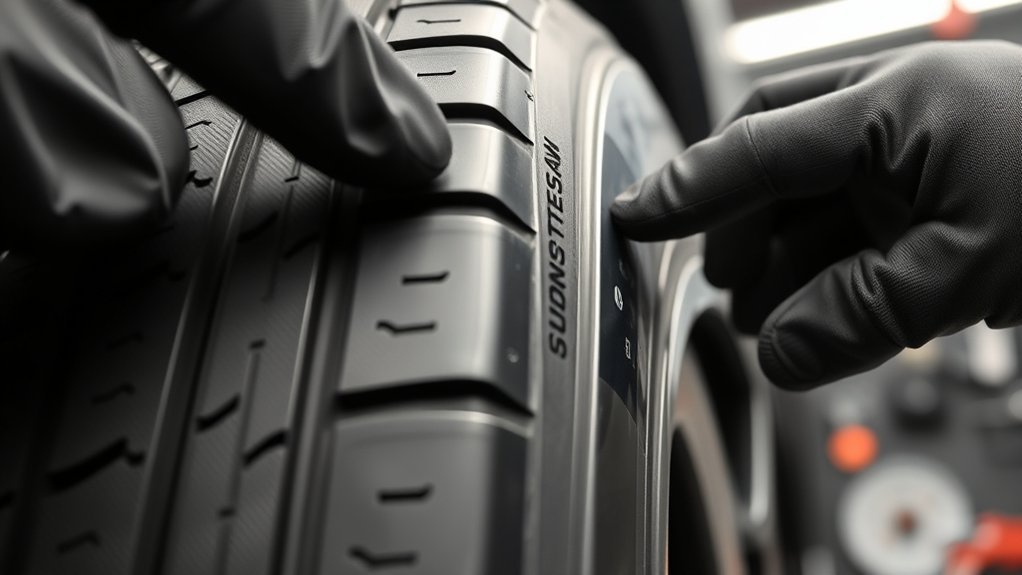
To check tire size and fitment, start by reading the alphanumeric code on the sidewall, such as P215/65R15, which identifies the tire width, aspect ratio, construction type, and rim diameter. You can then compare that tire size with your vehicle’s factory specification to confirm compatibility and preserve handling precision. Check the load index to guarantee it meets or exceeds the manufacturer’s minimum, and verify the speed rating matches your driving demands and vehicle capability.
- Match rim diameter exactly.
- Confirm width clears suspension and bodywork.
- Use a tire size calculator for dimension changes.
- Consult your owner’s manual before buying.
This method helps you avoid rubbing, speedometer error, and instability. When you choose the right tire size, load index, and speed rating, you keep control of performance and safety on your terms, without letting guesswork dictate your ride. Additionally, understanding the treadwear warranty can provide insights into the longevity you can expect from your selected tires.
How to Read a Tire DOT Code
A tire’s DOT code tells you it meets U.S. Department of Transportation standards. You’ll find an alpha/numeric serial number, sometimes up to 12 digits, on the sidewall. Read it like this:
| Segment | Meaning | What you do |
|---|---|---|
| DOT | Compliance mark | Verify it’s present |
| Last 4 digits | Week and year | Decode date |
| 1501 | 15th week, 2001 | Check age |
| 3 digits | Pre-2000 tire | Treat age as uncertain |
| Spare tire | Same rule | Inspect it too |
The final four digits matter most. If you see two digits followed by two digits, the first pair shows the week and the second pair the year. A three-digit date code signals older manufacture, so you can’t pin down age precisely. Use that data analytically: if a tire’s over six years old, its performance can decline even when tread looks fine. Don’t let hidden age control you—read every DOT code and log in or register your findings for a clear maintenance record. Additionally, regular tire rotation can help extend the lifespan and performance of your tires.
When to Replace Your BSW Tires
Your BSW tires should be replaced once tread depth reaches 2/32 of an inch, since that’s the legal minimum for safe traction. At that point, water evacuation drops sharply, and your stopping distance rises. You should also replace them if they’re over six years old, even if tread looks acceptable, because rubber hardens and loses performance. Inspect for uneven wear patterns, which often signal alignment or inflation faults that can’t be ignored. Visible cracks, bulges, or punctures also compromise safety and demand action. If you feel reduced steering response or hear more road noise, your tires are deteriorating and shouldn’t stay in service. Additionally, winter tire performance can significantly decline with age, making timely replacements crucial for safety.
- Measure tread depth across all grooves.
- Check for uneven wear patterns monthly.
- Replace aging tires after six years.
- Act on cracks, bulges, or punctures immediately.
Frequently Asked Questions
Should I Get a 10 Ply or 12 Ply Tire?
You should get a 12-ply tire if you need higher Load capacity, stronger Tire durability, or more towing margin; choose a 10-ply tire if you want better Driving comfort and your payload stays moderate. You’ll typically see about 2,540 lbs on 10-ply and around 3,500 lbs on 12-ply, so match the tire to your actual weight demands and vehicle specs. Don’t overbuy stiffness you won’t use.
Which Is Better, V or H Rated Tires?
Which is better, V or H rated tires? You’ll want V-rated tires if you need stronger tire performance at higher speeds, since they’re built to handle up to 149 mph. H-rated tires suit you if your driving conditions favor comfort and longer tread life, with speeds up to 130 mph. You’re choosing between performance and durability, so match the rating to your vehicle, speed needs, and driving conditions.
What Month Is the Cheapest to Buy Tires?
October’s usually the cheapest month for you to buy tires, because tire sales and seasonal discounts peak as retailers clear stock before winter. You can also save in late November, when Black Friday and Cyber Monday deals hit. If you want better prices, use buying tips like comparing rebates, checking off-peak spring inventory, and timing purchases around holiday weekends. You stay in control when you shop strategically and resist inflated pricing.
What Are the Top 3 Best Tire Brands?
Michelin, Bridgestone, and Continental are the top three tire brands, and they’re almost tire royalty. You’ll get Michelin for superior tire performance metrics and tread wear indicators, Bridgestone for balanced durability and grip, and Continental for wet-weather safety and refined handling. If you want freedom of choice, compare their seasonal tire options to match your driving needs. Each brand delivers technical precision, strong testing, and dependable real-world performance.
Conclusion
BSW may look like a small sidewall detail, but you now know it signals a black sidewall tire, not a performance compromise. You can read load ratings, match speed ratings, and compare BSW with OWL or RWL with confidence. One tire can look plain yet carry precise engineering; another can shine with lettering yet perform the same. Use the code, check the fit, and replace your BSW tires before wear turns safety into risk.

Related Articles
How Wide Is a 285 Tire? Exact Width & Fitment Guide
Keen to know how wide a 285 tire really is—and whether it’ll fit your rig? Find the exact width, ideal rims, and key fitment factors.
Read More
How Wide Is a 275 Tire? Exact Width & Fitment Guide
Can a 275 tire fit your setup exactly, or will offset, aspect ratio, and clearance change everything?
Read More
How Tall Is a 285 Tire? Exact Height, Width & Dimensions
What makes a 285 tire nearly 33 inches tall, and which exact dimensions could change your fitment?
Read More