
How to Pump a Bike Tire: Quick Guide for Every Valve Type
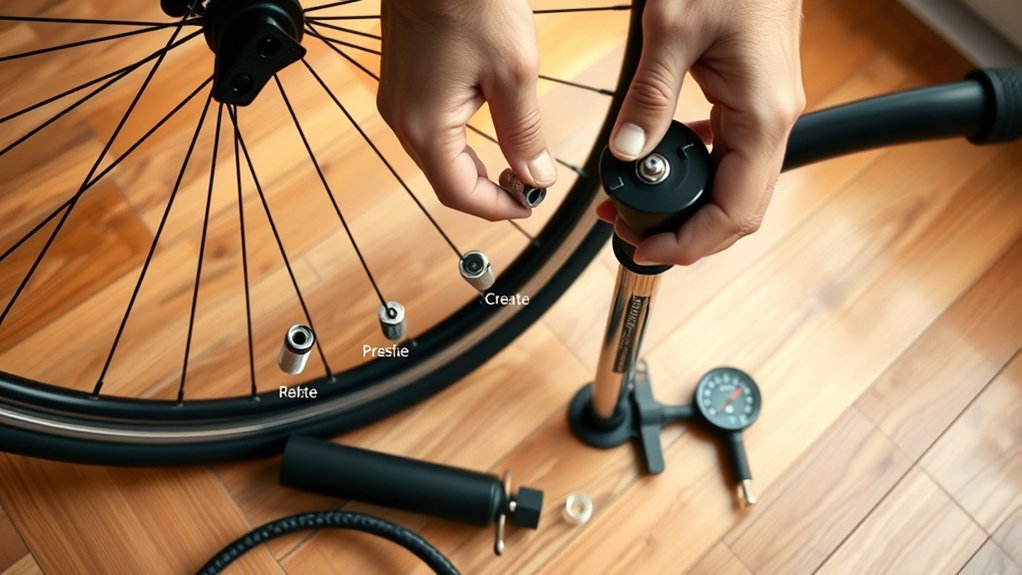
Learning how to pump a bike tire is mostly about three things: identifying the valve, using a pump head that fits, and stopping at a safe pressure. Once you know whether your tire has a Presta, Schrader, or Woods/Dunlop valve, the job usually takes only a few minutes.
Quick Answer
To pump a bike tire, remove the valve cap, match the pump head to the valve, open the valve if it is Presta, lock the pump head in place, and inflate to the pressure range printed on the tire sidewall. Remove the pump quickly, close the valve if needed, and replace the cap.
Key Takeaways
- Identify the valve first: Presta is narrow with a small top nut, Schrader looks like a car tire valve, and Woods/Dunlop is less common in many regions.
- Use a floor pump with a gauge for home inflation, and carry a mini pump or CO2 inflator for roadside fixes.
- Inflate within the tire and rim pressure limits; do not treat the sidewall maximum as the best riding pressure.
- If air leaks while pumping, reseat the pump head, check the valve core, and make sure the pump is set for the correct valve type.
At a Glance
| Time Required | 2–5 minutes per tire |
| Difficulty | Easy beginner maintenance |
| Tools Needed | Bike pump with a gauge, correct pump head or adapter, optional separate pressure gauge |
| Cost | Free if you already own a pump; adapters are usually inexpensive |
What Type of Bike Valve Do You Have?
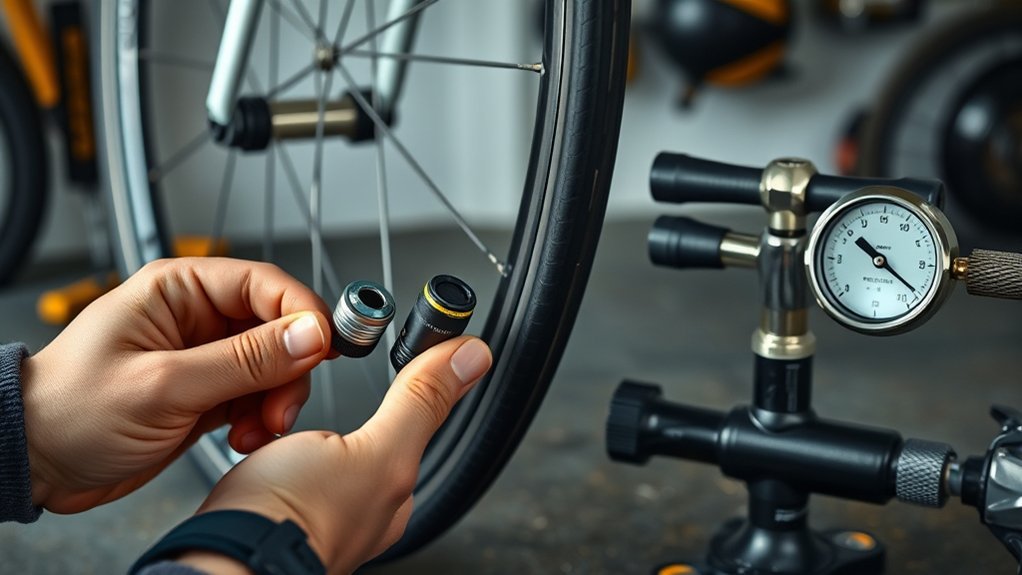
Before you attach a pump, identify the valve. The wrong pump head can leak air, bend a delicate valve stem, or make inflation feel impossible.
| Presta | Slim metal valve with a small threaded nut at the top. Common on road, gravel, performance, and many tubeless bikes. |
| Schrader | Wider valve that looks like a car tire valve. Common on many hybrid, commuter, cruiser, kids’, and mountain bikes. |
| Woods / Dunlop | Less common in the U.S., but still found in some regions. It has a wider base and narrower upper section and is often pumpable with a Presta-compatible pump head. |
For a deeper technical reference on valve types, see Sheldon Brown’s guide to bicycle inner tubes and valves.
Note: A Presta tube can fit loosely in a rim drilled for Schrader unless a reducer or grommet is used. A Schrader tube usually will not fit a Presta-drilled rim unless the rim is drilled larger, which can weaken or damage the rim.
[Products Worth Considering]

Convert Presta bicycle valves to accept standard Schrader pump nozzles for fast, hassle-free inflation. This kit includes durable brass adapters with leak-resistant connections, plus sports inflation needles and protective valve caps for convenient use on bikes and ball sports equipment.

Tiakia’s mini high-pressure frame pump delivers up to 260 PSI for faster, more efficient inflations with an optimized intake volume. It features a double-head valve design compatible with Schrader and Presta, plus a conversion for Donlop, making it versatile for bikes and many inflatables. The lightweight anodized aluminum build includes a mounting bracket for convenient carry, while the flexible high-pressure hose and IPX4 waterproof body support outdoor use.

This 4-pack kit converts Presta bike valves to standard Schrader valves so you can inflate with any regular pump or air compressor. The solid brass adapters include an O-ring for a tight, leak-proof seal and provide a simple screw-on setup. Compatible with road bikes, mountain bikes, e-bikes, and e-scooters, it’s designed for convenient, everyday carry readiness.
How Do You Choose the Right Bike Pump?
Choose the pump based on where you will use it and what valve your bike has. A floor pump is the easiest option at home because it has a stable base, moves more air per stroke, and usually includes a pressure gauge. A mini pump or frame pump is slower, but it fits in a pocket, bag, or frame mount for roadside repairs. A CO2 inflator is fastest, but each cartridge is single-use.
Many modern pumps use a dual-head, swappable-head, or auto-adjusting head that works with both Presta and Schrader valves. If your pump does not match your valve, use the correct adapter instead of forcing the head onto the valve. REI’s bike pump guide also recommends having a home pump and a ride-carry option so you can top off tires before rides and handle flats away from home: How to Choose Bike Pumps.
Pump Types for Use
- Floor pump: Best for routine inflation at home. Look for a clear gauge and a head that fits both Presta and Schrader.
- Mini pump: Best for emergency carry. It takes more strokes, but it does not run out like CO2.
- Frame pump: Similar to a mini pump but mounts to the bike frame and may move more air.
- CO2 inflator: Best for fast roadside inflation after a flat. Carry more than one cartridge if you rely on it.
Valve Compatibility Matters
Valve compatibility is the first thing to check. A Schrader-only pump head will not seal properly on Presta unless you add a Presta-to-Schrader adapter. A Presta-only pump head will not fit a Schrader valve. If you ride more than one bike, a dual-compatible pump is usually the simplest choice.
Gauge and Portability
A built-in pressure gauge helps you avoid guessing, but gauges can vary in accuracy. For the most consistent setup, use the same pump or a separate tire-pressure gauge each time. Keep a portable pump or CO2 inflator with your repair kit so one flat tire does not end the ride.
How to Pump a Bike Tire With Presta
A Presta valve is narrow and has a small threaded nut at the top. It must be opened before air can enter.
- Remove the dust cap. Set it somewhere safe.
- Unscrew the small top nut counterclockwise. Do not remove it completely; just loosen it until it stops.
- Tap the valve tip once. A tiny puff of air confirms the valve is open and not stuck.
- Attach the pump head straight. Press it on squarely so you do not bend the valve stem.
- Lock the pump head. Flip or twist the lever according to your pump design.
- Inflate to your target pressure. Stay within the safe range printed on the tire and rim.
- Remove the pump quickly and straight. A short hiss is normal.
- Tighten the small top nut clockwise. Finger-tight is enough; do not over-tighten it.
- Replace the dust cap. The cap helps keep dirt out of the valve.
Pro Tip: If your Presta valve will not take air, loosen the top nut and press the tip briefly before attaching the pump. A stuck Presta core often opens after that quick tap.
Using a Presta Valve Adapter
A Presta-to-Schrader adapter lets you use a Schrader pump or some gas-station inflators. To use one, open the Presta valve first, screw the adapter onto the valve, attach the Schrader pump head, inflate carefully, then remove the adapter and close the Presta valve. Keep the adapter in your repair kit if your usual pump is not Presta-compatible.
How to Pump a Bike Tire With Schrader
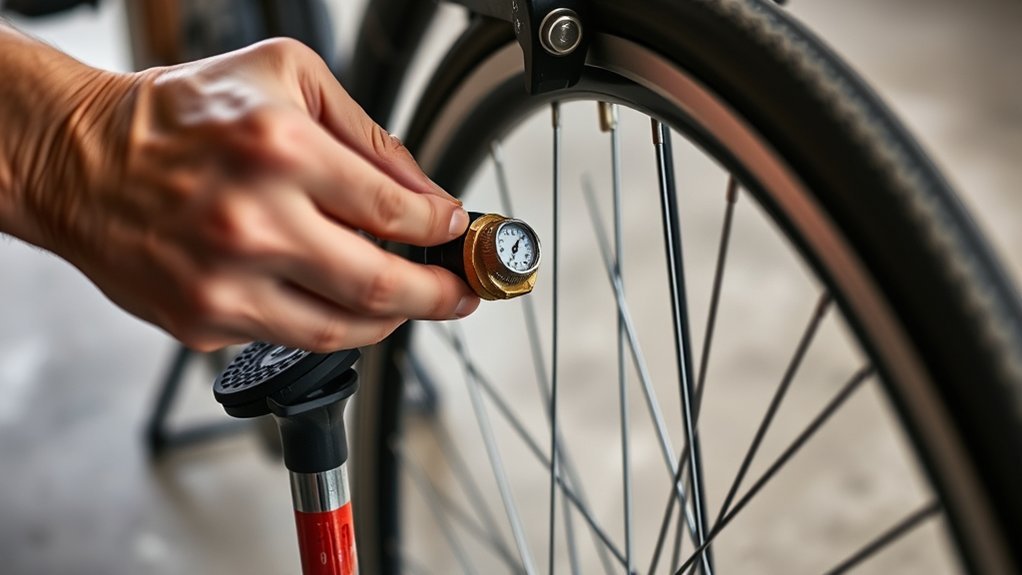
A Schrader valve is the same basic style used on car tires. It has a spring-loaded pin inside, so you do not need to unscrew a top nut before pumping.
- Remove the valve cap.
- Press the pump head firmly onto the valve. Push straight down so the pump head seals around the valve.
- Lock the pump head. Flip the lever or tighten the chuck, depending on the pump.
- Pump steadily. Watch the gauge and stop at your target pressure.
- Unlock and remove the pump head quickly. Pull straight off to reduce air loss.
- Replace the valve cap.
Warning: Be careful with gas-station compressors. They can push air very quickly, and some bicycle tires hold far less volume than car tires. Add air in short bursts and check the pressure often.
How to Pump a Bike Tire With Woods or Dunlop
Woods, also called Dunlop, is less common than Presta or Schrader, but the process is still simple if your pump fits. Remove the cap, attach a Presta-compatible pump head or the correct adapter, inflate to the tire’s safe pressure range, then remove the pump and replace the cap.
Pressure readings can be less straightforward on some Woods valves, so use a reliable gauge if your pump supports one. If the valve leaks after inflation, check that the valve insert is seated correctly and that the pump head did not loosen it.
How Much Air Should Bike Tires Get?
The right pressure is not one fixed number. Start with the pressure range printed on the tire sidewall, then adjust for rider weight, tire width, tube or tubeless setup, rim limits, terrain, and ride feel. Trek’s tire-pressure guidance explains that pressure affects comfort, grip, handling, pinch-flat risk, rolling resistance, and tire wear: How to Pump Bike Tires to the Right Pressure.
Use these as broad starting points only:
- Road bikes: often lower than old 100+ PSI habits when using wider modern tires, especially tubeless setups.
- Gravel bikes: usually lower than road tires for grip and comfort on rough surfaces.
- Mountain bikes: often lower still, especially tubeless, but too low can cause rim strikes or squirm.
- Hybrid and commuter bikes: usually sit between road and mountain pressures, depending on tire width and load.
For a more precise starting point, use a pressure calculator from a wheel or tire brand. SRAM/Zipp’s pressure guidance accounts for riding discipline, conditions, tire attributes, and setup: Know Your Tire Pressure. Schwalbe also explains why pressure matters for load support, puncture resistance, wear, and rolling behavior: Schwalbe Tire Pressure FAQ.
Warning: Never exceed the lower maximum pressure listed by the tire or rim manufacturer. This matters even more with tubeless and hookless rim systems, where the rim may have a lower pressure limit than the tire.
[Products Worth Considering]
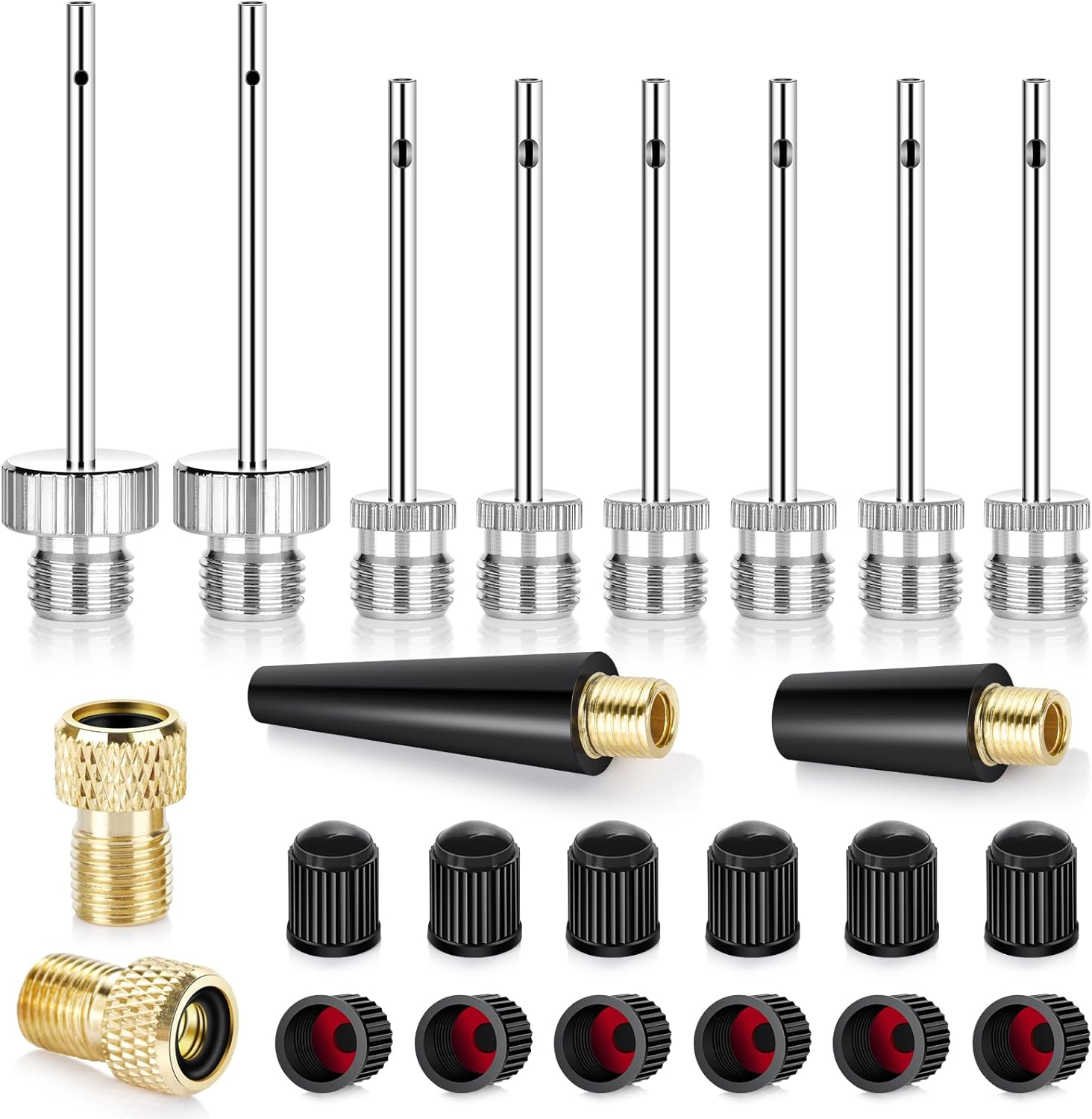
This ball pump needles kit includes brass ball needles for inflating footballs, soccer balls, basketballs, and volleyballs, plus conical nozzles for air mattresses, exercise...
What Bike Tire Pumping Mistakes Should You Avoid?
- Using the wrong pump head: If the head does not fit easily, stop and check the valve type.
- Forgetting to open a Presta valve: Air will not enter if the top nut is still closed.
- Bending the Presta stem: Keep the pump head straight and avoid yanking it sideways.
- Inflating to the sidewall maximum every time: The maximum is a limit, not always the best riding pressure.
- Ignoring rim pressure limits: The rim can be the limiting factor, especially on modern tubeless wheels.
- Relying only on the squeeze test: A tire can feel firm by hand and still be far from the best pressure.
- Pulling the pump off slowly: A quick, straight removal usually loses less air.
Troubleshooting Bike Tire Inflation Problems
| Problem | Likely Cause | Fix |
| Air leaks at the pump head | Poor seal or wrong pump setting | Remove the head, reseat it straight, and confirm Presta/Schrader mode. |
| No air goes in | Closed Presta valve or stuck valve core | Open the Presta nut and press the valve tip once before pumping. |
| Valve leaks after pumping | Loose valve core or damaged tube | Tighten a removable core gently with the correct tool, or replace the tube if damaged. |
| Tubeless valve clogs | Dried sealant in the core | Remove and clean or replace the valve core, then reinflate. |
CO2 vs. Mini vs. Floor Pumps
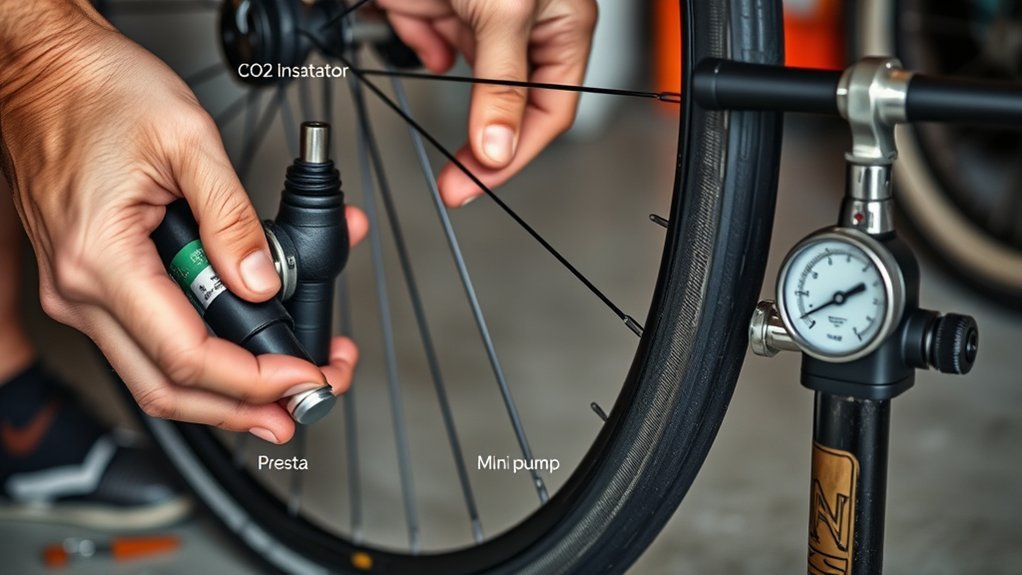
Each inflation method has a job. A floor pump is best before rides because it is stable, efficient, and easy to read. A mini pump is slower but reusable, which makes it dependable on longer rides. A CO2 inflator is fast and compact, but once the cartridge is empty, it is done.
- Use a floor pump for regular pressure checks at home.
- Use a mini or frame pump when you want a reusable emergency option.
- Use CO2 when speed matters, such as after fixing a flat during a group ride.
- Carry a backup plan if you rely on CO2, especially on long rides or remote routes.
Frequently Asked Questions
How do you pump up bike tyres with different valves?
Match the pump head to the valve. For Presta, remove the cap, loosen the small top nut, attach the pump, inflate, then tighten the nut. For Schrader, remove the cap, attach the pump directly, and inflate. For Woods/Dunlop, use a compatible pump head or adapter and inflate to the tire’s safe pressure range.
What is the 105% rule in cycling?
The 105% rule is an aerodynamic wheel-and-tire guideline, not a tire-pumping step. It says an aerodynamic rim should be at least 105% as wide as the tire to help manage airflow. It matters for wheel and tire selection, but it does not tell you what PSI to use.
How do I inflate a bike tire with a Presta valve?
Remove the dust cap, loosen the small top nut counterclockwise, press the tip once to open the valve, attach a Presta-compatible pump head, and inflate to your target pressure. Remove the pump straight off, tighten the top nut clockwise, and replace the cap.
How do I fill a bike tire with a Presta valve adapter?
Open the Presta valve first, screw the adapter onto the valve, then attach a Schrader pump head. Inflate in short strokes or bursts while watching the gauge. When finished, remove the pump, unscrew the adapter, close the Presta valve, and replace the cap.
How often should I check bike tire pressure?
Check pressure before important rides, after a flat repair, and whenever the bike has been sitting for a while. Narrow high-pressure tires usually need checking more often than wider lower-pressure tires. Use a gauge instead of relying only on the squeeze test.
Can I use a car tire pump on a bike tire?
Yes, if the bike has a Schrader valve or you use a Presta-to-Schrader adapter. Add air slowly and check pressure often because compressor pumps can inflate small bicycle tires very quickly.
Conclusion
A bike tire only needs the right valve connection, the right pump, and a safe pressure. Identify the valve first, attach the pump straight, use a gauge, and stay within the tire and rim limits. Do that, and the tire will feel firm, controlled, and ready to ride instead of soft, harsh, or risky.
Sources
- Trek Bikes: How to Pump Bike Tires to the Right Pressure — valve compatibility, sidewall pressure range, and inflation basics.
- REI: How to Choose Bike Pumps — floor pumps, portable pumps, and valve compatibility.
- Sheldon Brown: About Bicycle Inner Tubes — Presta, Schrader, and Woods/Dunlop valve details.
- Schwalbe: Tire Pressure FAQ — why bicycle tire pressure affects load support, rolling behavior, wear, and puncture risk.
- SRAM/Zipp: Know Your Tire Pressure — pressure selection based on riding discipline, conditions, and tire setup.
- SILCA: Tire Pressure and Aerodynamics — explanation of the cycling Rule of 105.

Related Articles
What Does THE P Stand For on a Tire? Full Meaning Explained
I’ll explain what the “P” on a tire really means and why it could change how you choose your next set.
Read More
How to Use a Tubeless Tire Repair Kit: Complete Field Guide
Learn how to fix tubeless tire punctures fast with the right kit, because one small mistake can leave you stranded on the trail.
Read More
How to Tell a Tire’s Diameter: Easy Guide to Reading Tire Size
Want to decode tire sidewall numbers and find the right diameter, but wonder what those hidden digits really mean?
Read More