
Honda Accord Tire Options for Driving on Icy Roads

For driving your Honda Accord on icy roads, winter tires are essential. Options like the Bridgestone Blizzak WS90 and Michelin X-Ice offer unmatched traction and control. You’ll find sizes like 225/50R17 maximize grip, while 215/55R17 provides extra comfort. Consider alloy wheels for better handling or steel wheels for durability. Regular maintenance can extend tire life and effectiveness. If you’re curious about more winter driving tips and tire recommendations, there’s plenty more to explore!
Best Winter Tires for Icy Conditions
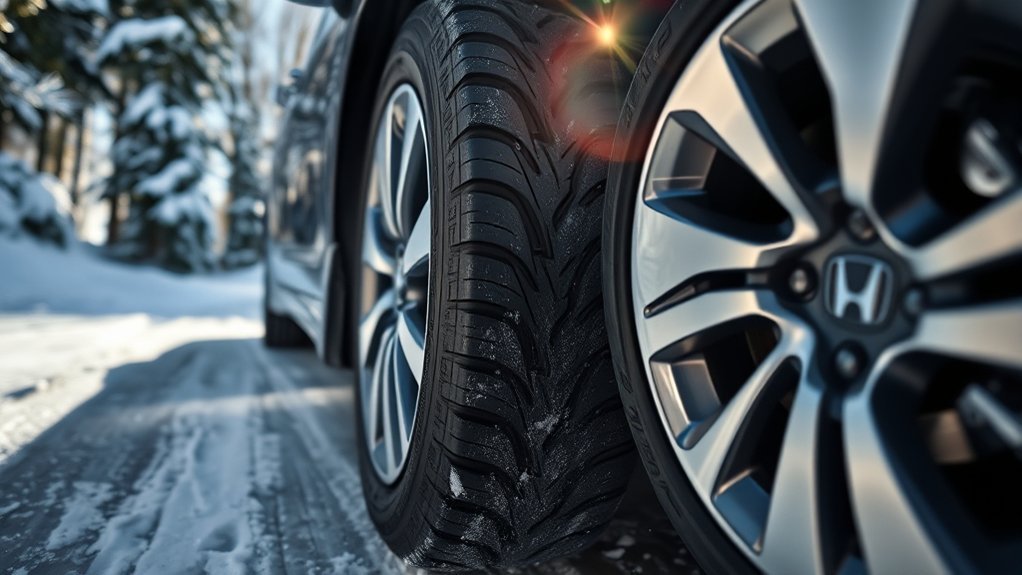
When icy conditions hit, how do you make sure your Honda Accord grips the road effectively? The answer lies in selecting the right winter tires. Options like the Bridgestone Blizzak WS90 and Michelin X-Ice harness cutting-edge tire technology to deliver superior traction advancements. These tires are specifically engineered for icy roads, providing the grip you need for safe driving.
For peak performance, consider the recommended sizes, such as 225/50R17 or 215/55R17, which balance grip and comfort. Installing winter tires on all four wheels is vital; otherwise, you risk unpredictable handling and increased skidding. The Continental VikingContact 7 is another excellent choice, offering remarkable stability and control in challenging conditions. Additionally, investing in 3PMSF certification ensures that your tires are verified for severe winter performance.
To guarantee maximum performance, regular tire maintenance—like checking for wear and maintaining proper inflation—is essential. Embracing these winter tire options empowers you to navigate icy roads with confidence.
Why Winter Tires Are a Must for Your Honda Accord
Choosing winter tires for your Honda Accord isn’t just a recommendation; it’s a necessity for safe driving in cold conditions. Winter tires, like the Blizzak WS90 and Michelin X-Ice, provide unmatched traction and handling on icy roads, far outperforming all-season tires. By installing winter tires on all four wheels, you guarantee peak performance, as they maintain flexibility and grip even in frigid temperatures.
One of the key tire benefits is the significant reduction in stopping distances on icy surfaces, enhancing your overall vehicle control and confidence. These tires are marked with M+S symbols, signaling their capability to thrive in low temperatures, and in many regions, they’re legally required during winter months. Regular inspection and maintenance of your winter tires can further extend their lifespan and effectiveness, guaranteeing you enjoy maximum winter safety. Additionally, tread designs that channel snow and slush can significantly improve traction. Don’t compromise; equipping your Honda Accord with winter tires is essential for traversing icy roads confidently.
Tire Size Comparison: 225/50R17 vs. 215/55R17
Understanding the differences between tire sizes like 225/50R17 and 215/55R17 can greatly impact your Honda Accord’s performance, especially in winter conditions. In a tire performance comparison, the 225/50R17 offers a wider contact patch, which can enhance grip on icy roads. On the other hand, the 215/55R17 features a taller sidewall that may provide better cushioning, improving driving comfort on rough surfaces.
While both sizes fit your Accord, they affect steering response and handling differently. The 225/50R17 tires might feel more stable, giving you confidence in your maneuvering, while the 215/55R17 tires could offer a smoother ride. Prioritizing tread design for icy conditions, such as deeper grooves and softer rubber, is essential for either size. Additionally, winter tires can significantly reduce stopping distances by up to 30%, enhancing your safety on those challenging winter roads. Your choice will influence not just handling but your overall driving experience on those challenging winter roads.
Alloy vs. Steel Wheels for Winter Performance
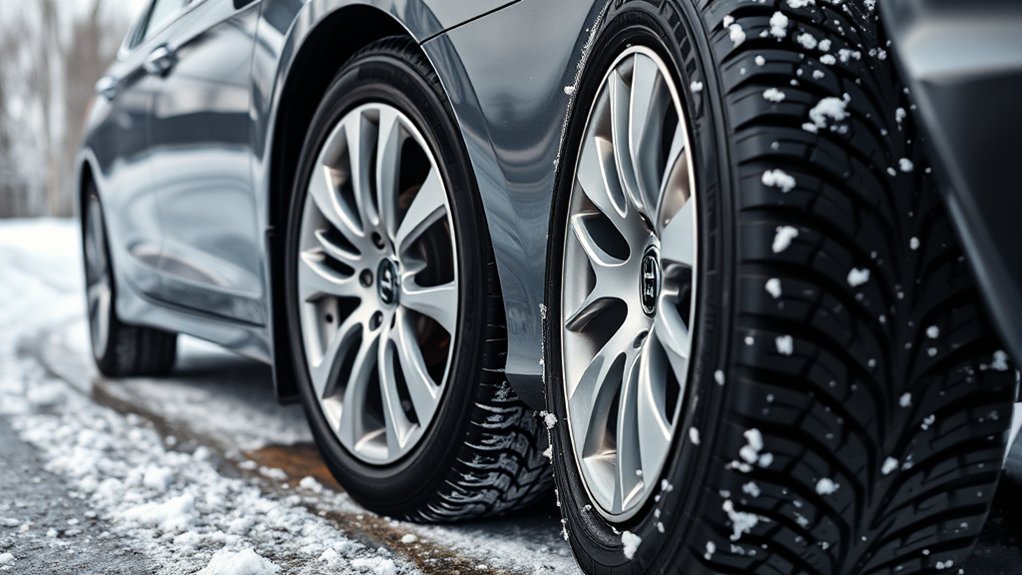
While both alloy and steel wheels have their merits, the right choice for winter performance hinges on your driving needs and preferences. Alloy wheels are generally lighter, which can enhance handling and fuel efficiency on icy roads. If you prioritize improved maneuverability, this might be your go-to option. However, steel wheels excel in durability, making them ideal for harsh winter conditions where potholes and road debris are common. They also tend to be more cost-effective, an essential factor if aesthetics aren’t your top priority. Speaking of aesthetics, alloy wheels often come in various designs that can elevate your vehicle’s look, even in winter. Ultimately, consider the wheel weight and how each option aligns with your winter driving style. Whichever you choose, guarantee compatibility with traction devices for maximum safety on icy surfaces. Additionally, having the right winter tires is crucial for maintaining traction and safety on icy roads.
Installing Tire Chains for Better Traction
When winter weather strikes, installing tire chains can greatly enhance your Honda Accord’s traction on icy roads. Focus on using chains designed specifically for the front tires to maximize grip. For vehicles with limited clearance, the SCC Radial Chain SC1036 is a solid choice, offering safe installation without compromising your vehicle’s integrity. Follow the manufacturer’s instructions closely for proper installation; ensuring the chains are tight is essential to avoid damaging components like brake lines and suspension. Remember, drive slowly while the chains are mounted—excessive speed can lead to loss of control. If you hear any unusual noise from the chains, stop immediately; this could indicate improper fitment. Additionally, be aware that maintaining tire pressure is crucial for optimal performance in winter conditions. With the right chain types and careful installation tips, you’ll navigate icy roads with confidence, liberating yourself from the worries of winter driving.
Safe Driving Techniques for Winter Travel
Driving confidently in winter conditions goes beyond equipping your Honda Accord with tire chains or winter tires. To guarantee icy road safety, remember these winter driving essentials:
| Technique | Description |
|---|---|
| Safe Following Distance | Maintain more space between you and the car ahead. |
| Reduced Speed | Slow down to allow for increased stopping time. |
| Tire Inspection | Regularly check tire pressure and tread depth. |
| Familiarization | Know your vehicle’s manual for winter operation tips. |
Always mount winter tires on all four wheels for balanced handling, and regularly inspect them for peak performance. Additionally, ensure your winter tires are designed for optimal cold performance to enhance grip and control in icy conditions. These techniques not only improve your control but also enhance your confidence on those slippery roads. Embrace the freedom of winter driving with the right mindset and practices. Your safety depends on it!
Caring for Your Winter Tires: Essential Maintenance Tips
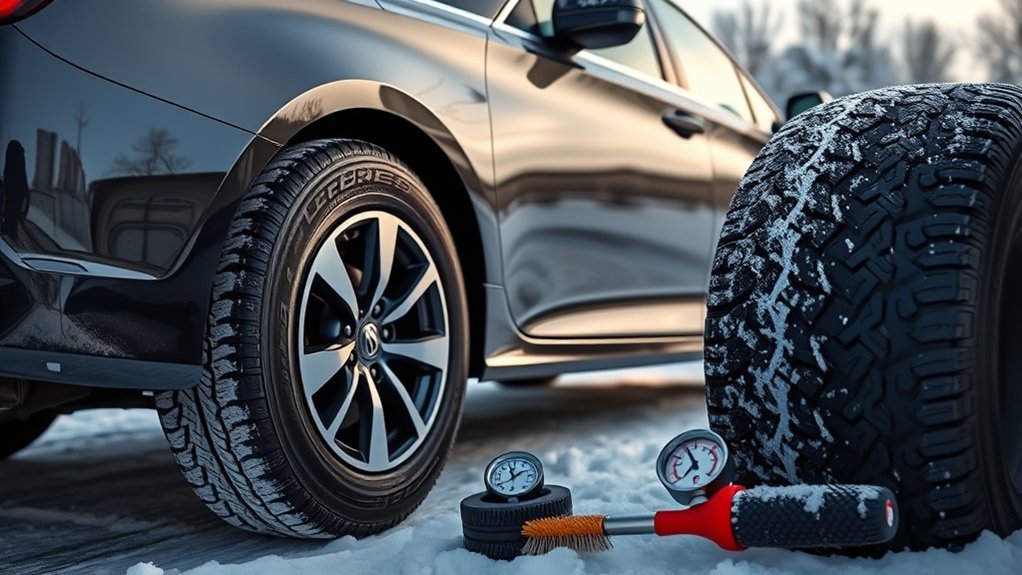
To keep your winter tires in top shape, it’s essential to inspect their condition regularly. Make it a habit to monitor tire pressure consistently, as cold weather can cause it to drop, impacting safety. Don’t forget to check the tread depth frequently; a minimum of 4/32 inches is important for the best traction on icy roads. Additionally, ensuring that your tires have the 3-Peak Mountain Snowflake certification can significantly enhance their performance in severe winter conditions.
Inspect Tire Condition Regularly
Regular inspections of your winter tires are vital for maintaining safety and performance during icy conditions. Start with a thorough tire inspection, focusing on tread assessment. Confirm your tires have at least 6/32 inches of tread depth to guarantee peak traction. Monthly checks for visible damage—like cuts or bulges—are important, as these issues can compromise tire integrity. Don’t forget to rotate your winter tires according to the manufacturer’s recommendations to promote even wear. Monitoring performance under winter conditions is key; address any concerns immediately to avoid hazardous situations. By staying proactive with these checks, you’ll enhance your driving experience and gain confidence on those slippery roads. Your safety depends on it!
Monitor Tire Pressure Consistently
While you might not think about it often, monitoring your tire pressure is crucial for winter driving safety. Cold temperatures can cause your tire pressure to drop, affecting traction and overall handling on icy roads. To guarantee peak performance, always maintain the recommended pressure listed in your owner’s manual. Under-inflated tires not only wear out faster but also reduce grip, making maneuvering challenging. It’s essential to use a reliable tire pressure gauge for consistent pressure monitoring—aim for at least once a month, especially in winter. Remember, winter tires may require slightly higher pressure than all-season ones, so consult your dealer for specifics. Prioritizing tire maintenance through pressure checks can greatly enhance your safety and driving experience.
Check Tread Depth Frequently
Checking your winter tire tread depth at least once a month is crucial for maintaining ideal traction on icy roads. Aim for a minimum of 4/32 inches. Use measurement techniques like a tread depth gauge or the penny test to evaluate wear. Uneven wear patterns can indicate alignment or suspension issues, so inspect regularly. Proper inflation is essential; low pressure affects both performance and longevity, especially in cold weather. Rotate your tires every 5,000 to 7,500 miles to guarantee even wear.
| Measurement Technique | How to Use | When to Replace |
|---|---|---|
| Tread Depth Gauge | Insert into tread grooves | Below 4/32 inches |
| Penny Test | Place a penny upside down | If Lincoln’s head shows |
| Visual Inspection | Look for uneven wear | At every oil change |
| Pressure Check | Use a tire pressure gauge | Monthly |
| Tire Rotation | Swap front and rear tires | Every 5,000 – 7,500 miles |
Community Experiences: Real Feedback on Honda Accord Tires in Winter
As winter approaches, many Honda Accord owners share their experiences with tire performance in icy conditions, revealing notable challenges. User testimonials highlight that stock Goodyear Eagle Touring tires often lead to slipping and sliding, making winter driving a stressful affair. To combat this, community members strongly recommend switching to dedicated winter tires, like the Blizzak WS90 or Continental VikingContact 7, for superior traction and safety.
Feedback consistently shows that all-season tires just don’t cut it on ice, emphasizing the need for specialized options. Curiously, some users have found better handling in slushy conditions by turning off traction control, illustrating how vehicle settings can impact your driving experience. Additionally, discussions suggest that smaller 17-inch wheels may enhance grip, as tire type and tread design play an essential role in icy conditions. Making informed choices about your tires can greatly boost your confidence on the road this winter, especially when considering 3PMSF certification to ensure optimal winter performance.
Frequently Asked Questions
What Are the Best Tires for Driving on Icy Roads?
For icy roads, you’ll want tires with deep tire tread and excellent winter performance. Consider options like the Bridgestone Blizzak WS90 or Michelin X-Ice, as they provide superior grip and control in slippery conditions.
Are Honda Accords Good in Snow and Ice?
While Honda Accords aren’t exactly snow tanks, they can handle winter driving with the right tires. You’ll find better traction control using winter tires, ensuring you navigate icy roads safely and confidently.
Does Honda Snow Mode Work on Ice?
Yes, Honda’s Snow Mode functionality enhances traction on ice, improving driving safety. It adjusts throttle response and shifting patterns, helping prevent wheel spin. However, always prioritize winter tires for the best grip in icy conditions.
Conclusion
As you navigate the winter landscape in your Honda Accord, think of your tires as sturdy boots on a snowy path. They grip the icy surface, ensuring you don’t slip into uncertainty. By choosing the right winter tires and maintaining them well, you’re not just preparing for the journey ahead; you’re safeguarding your adventure. Embrace the season with confidence, and let your Accord glide through the winter wonderland, where every turn is met with assurance and every stop is secure.

Related Articles

Honda Accord Tires That Perform Well in Heavy Rain
Get ready to discover the best tires for your Honda Accord that excel in heavy rain conditions and keep you safe on the road.
Read More
Summer Tires on the Honda Accord: When They Make Sense
Learn why summer tires are ideal for your Honda Accord in warm weather and discover how they can transform your driving experience.
Read More
Honda Accord All-Season Tires: A Full Explainer
Navigate the essentials of all-season tires for your Honda Accord—discover performance ratings and maintenance tips that could transform your driving experience.
Read More