Disclosure: As an Amazon Associate, we earn from qualifying purchases. If you click a link on this page and make a purchase, we may receive a small commission at no extra cost to you.
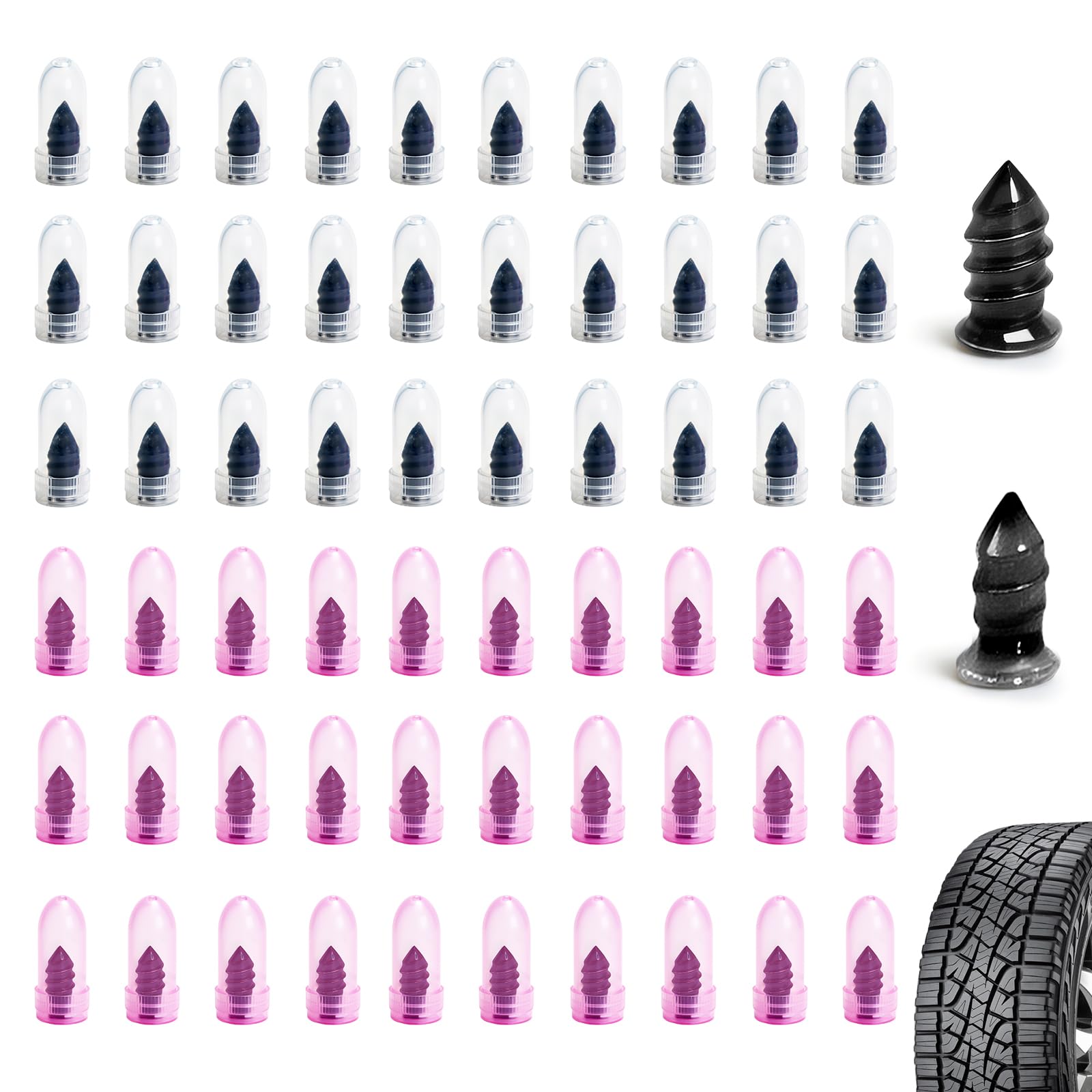
A small tread puncture can leave you choosing between roadside assistance, a spare tire, or a quick emergency seal. The Zesllwid 60 PCS Tire Repair Kit gives you 60 self-tapping rubber screw plugs in two sizes for tubeless tires, all stored in a compact case. Its main advantage is simple storage and fast access, but it does not provide an industry-standard permanent repair for a highway tire. This review explains where the kit may help, what else you need to carry, and when you should stop and call a tire professional.
Quick Verdict
Rating: 7/10, recommended with caveats
Best For: Drivers and equipment owners who want a compact emergency option for a small puncture in a tubeless tire tread
Bottom Line: The 60-piece count, two plug sizes, and small storage case make this an inexpensive backup for limited emergency use. The tradeoff is significant: a screw-in plug installed from the outside is not a substitute for removing, inspecting, and properly repairing the tire.
| Specification | Detail |
|---|---|
| Brand | Zesllwid |
| Product type | Screw-in emergency tire repair plugs |
| Quantity | 60 rubber screw plugs |
| Size options | Two plug sizes for different small punctures |
| Tire type | Tubeless tires only |
| Suggested uses | Cars, trucks, motorcycles, tractors, ATVs, and other compatible tubeless equipment tires |
| Storage | Compact plastic case with separated plug groups |
| Additional gear needed | Suitable driver or insertion tool, tire-pressure gauge, and air compressor or pump |
| Repair status | Emergency measure only, professional inspection and proper repair are still required |
TL;DR
|
Feature |
Verdict |
|---|---|
|
Value |
The 60-piece count gives you many spares, but value depends on treating the plugs as emergency supplies rather than permanent repairs. |
|
Ease of Use |
The screw-in design is simpler than a traditional rope-plug process, although finding the puncture, choosing the right size, and restoring pressure still take care. |
|
Effectiveness |
It may slow air loss from a small tread puncture long enough to manage an emergency. Results can vary with puncture shape, tire condition, and installation. |
|
Portability |
The compact plastic case keeps the two plug sizes organized and takes little space in a trunk, toolbox, motorcycle case, or equipment shed. |
|
Verdict |
A practical backup for limited emergency use, provided you also carry an inflator and arrange a professional tire inspection as soon as possible. |
Zesllwid 60 PCS Tire Repair Kit
What Is the Zesllwid 60 PCS Tire Repair Kit?
The Zesllwid kit is a small collection of threaded rubber repair screws designed for punctures in tubeless tires. You select one of the two plug sizes, drive it into the puncture from outside the tire, and then restore the tire to the vehicle maker’s recommended cold pressure.
The package is aimed at drivers and equipment owners who want a compact emergency option without carrying a full professional repair setup. It is most useful as part of a larger roadside kit that also includes a pressure gauge, portable inflator, gloves, a flashlight, and a safe way to move the vehicle away from traffic.
Before You Buy: Do not treat these screw-in plugs as a permanent repair for a passenger-car or light-truck tire. Industry guidance calls for the tire to be removed and inspected, with both the puncture channel and inner liner properly repaired by a trained technician.
Who Should Buy It?
Best For
- Drivers building a compact roadside emergency kit for a tubeless tire
- ATV, tractor, mower, and utility-equipment owners who need a portable backup
- Buyers who already carry a pressure gauge, inflator, and suitable insertion tool
Skip If
- The tire has sidewall, shoulder, bead, or large structural damage
- You want a complete kit with an inflator and clearly confirmed installation tools
- You plan to rely on an external plug as a long-term highway repair
What People Say
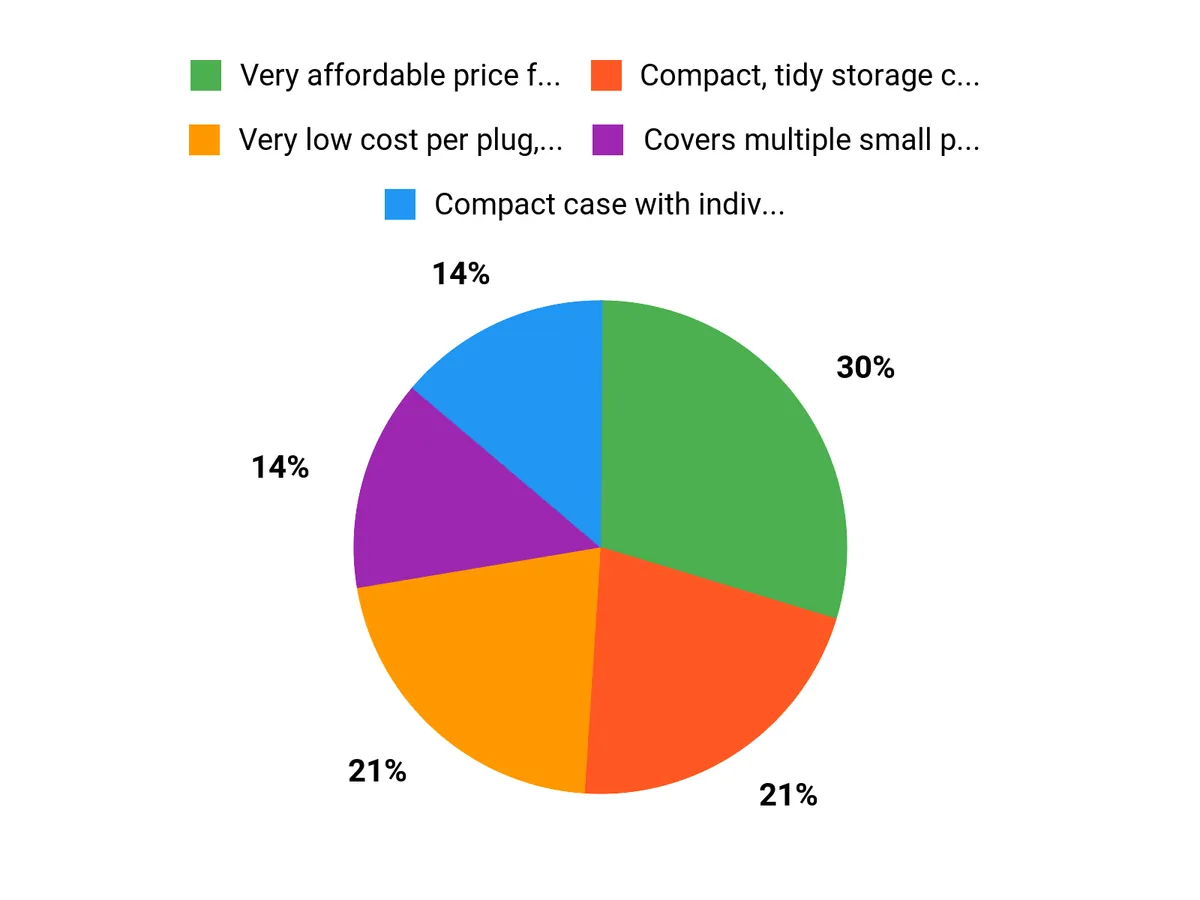
The buyer-feedback summary supplied with the original article was mixed. Positive comments focused on the low cost, compact storage, and clear separation between the two plug sizes.
Critical comments focused on inconsistent results across different punctures and the need for extra equipment, especially an air source. That mixed response fits the product’s role: it is a simple emergency item, not a guaranteed fix for every puncture.
Overall Sentiment: Neutral

Pros and Cons
|
Pros |
Cons |
|---|---|
|
✅ Sixty plugs provide a large supply for emergency kits and equipment storage |
❌ An outside-in screw plug is not an industry-standard permanent repair |
|
✅ Two sizes help you match different small puncture openings |
❌ It cannot be used safely on sidewall, shoulder, bead, or major tire damage |
|
✅ Compact case is easy to keep in a vehicle, toolbox, or equipment shed |
❌ You still need a suitable tool, pressure gauge, and pump or compressor |
|
✅ Screw-in format requires fewer steps than many traditional rope-plug kits |
❌ Puncture shape and internal tire damage cannot be judged from the outside alone |
Design, Plug Sizes, and Storage
Sixty Self-Tapping Rubber Screws
The kit uses threaded screw-style plugs instead of sticky rope plugs. The threads are intended to grip the puncture path while the surrounding rubber helps reduce air loss. Because the set contains 60 pieces, you can divide it between a car, garage, trailer, or outdoor equipment box without exhausting the supply after one use.
The two-size layout is more useful than a single-size pack because punctures are not identical. Even so, the goal is not to force the largest plug into any hole. A puncture that is too large, irregular, angled toward the shoulder, or caused by impact damage needs professional assessment rather than a larger emergency plug.
Compact Case
The storage case is one of the kit’s strongest practical features. It helps keep the small plugs clean, separated by size, and easier to find in poor light. The case is compact enough for a glovebox or trunk organizer, but you should store it with the other tools required to complete the job.
Pro Tip: Store the plugs, insertion tool, gauge, gloves, flashlight, and 12-volt inflator in one labeled pouch. A plug without a way to check and restore pressure may not help you leave the scene safely.
Ease of Use
The screw-in format removes some steps found in a traditional reamer-and-rope kit, but the whole job is not automatically easy. You still need to identify the leak, confirm that the injury is in the central tread area, remove the object without worsening the hole, select the correct plug size, and check whether the tire holds pressure.
Roadside conditions matter as much as the product. Do not attempt a repair while the vehicle is exposed to moving traffic or resting on unstable ground. Move to a safe location, use hazard lights, follow your vehicle manual, and call roadside assistance when the scene or damage is unsafe.
|
Feature |
Ease Level |
|---|---|
|
Finding the Hole |
Moderate, especially with a slow leak or more than one injury |
|
Choosing the Plug Size |
Moderate, because the plug should match the puncture without enlarging it unnecessarily |
|
Inserting the Plug |
Easy to moderate with the correct driver and a stable work position |
|
Reinflation and Monitoring |
Moderate, and impossible without a working gauge and air source |
How It Performs in Real Use
For a Small Roadside Tread Puncture
The kit may help slow a leak caused by a small nail or screw in the repairable tread area. Its value is highest when the tire still has enough structure to hold air and you can work in a safe location. A rapid pressure loss, visible bulge, torn rubber, exposed cords, or impact damage is a reason to stop rather than experiment.
For Lawn Tractors and ATVs
Compact plugs are convenient for equipment that operates away from a service bay. You still need to follow the tire and equipment maker’s instructions, particularly for pressure, maximum load, and whether the tire is approved for repair. A low-speed equipment tire does not make sidewall damage safe to plug.
For Long Trips
The case takes little room, so it is easy to add to a travel kit. It should sit beside a spare tire or mobility kit, not replace one. Before a long drive, confirm that your inflator works, the gauge is accurate, the spare is usable, and your roadside-assistance information is current.
For Ongoing Use
This is not a set-and-forget repair system. After any emergency plug, check the tire for renewed pressure loss and arrange professional service promptly. Continuing to drive on a tire with hidden internal damage can turn a small puncture into a larger safety problem.
When It Helps
|
Situation |
How It Helps |
|---|---|
|
Small Tread Puncture |
Provides a compact emergency option for slowing air loss while you arrange proper service. |
|
Lawn Tractor or ATV Tire |
Keeps multiple plugs close to equipment that may be far from a workshop, provided the damage and tire maker’s rules allow emergency repair. |
|
Travel Backup |
Adds a small, lightweight option to a broader roadside kit that includes inflation equipment and a plan for professional help. |
How to Use It Correctly
First, stop in a safe place and inspect the tire without crawling under an unsupported vehicle. If the injury is in the sidewall, shoulder, bead area, or a visibly damaged section of tread, do not install a screw plug. Use a spare tire or roadside assistance instead.
For a small central-tread puncture, remove the object only when you are ready to install the plug and restore pressure. Select the smaller size that fits the puncture securely, drive it in with a suitable tool according to the seller’s directions, then inflate the tire to the pressure listed on the vehicle’s door placard or in the owner’s manual. Check for continuing leakage and stop driving if pressure falls again.
Tell the tire technician that an outside-in emergency plug was used. The tire should be removed from the wheel so the inside can be inspected for damage that was not visible from the exterior.
Compatibility and Safety
The listing identifies this as a kit for tubeless tires across cars, trucks, motorcycles, tractors, and similar equipment. That broad compatibility describes the general tire type, not a guarantee that every tire or puncture can be repaired. Run-flat tires, foam-lined tires, high-performance tires, motorcycle tires, and commercial applications may have manufacturer-specific limits.
The U.S. Tire Manufacturers Association states that a passenger or light-truck tire repair should be limited to a tread-area puncture no larger than 1/4 inch (6 mm). It also states that the tire should be removed for internal inspection and repaired with both a plug or stem and an inner-liner patch, rather than an outside plug alone. You can review its tire repair guidance before deciding how to handle a puncture.
- Do not use the plugs on sidewall, shoulder, bead, split, or impact damage.
- Do not keep driving if the tire loses pressure again, vibrates, bulges, or exposes cords.
- Do not exceed the vehicle maker’s load or pressure recommendations.
- Do not assume that a sealed exterior hole means the tire is undamaged inside.
- Arrange professional inspection and a proper repair or replacement as soon as possible.
Is It Worth the Price?
The Zesllwid set sits in the budget emergency-tool category. Its main value comes from the 60-piece quantity, the two plug sizes, and the small case. You are buying a supply of compact plugs, not a complete roadside solution.
It makes the most sense for someone who already owns the supporting tools and wants a low-cost backup for several vehicles or pieces of equipment. It is less attractive if you still need to buy a driver, pressure gauge, inflator, gloves, and lighting, because a complete repair or mobility kit may be more convenient.
The biggest limitation is also the most important value test. A cheap emergency plug does not remove the cost of a professional inspection, proper repair, or tire replacement when the damage falls outside accepted repair limits.
How It Compares to Alternatives
A traditional rope-plug kit, such as a Slime plug kit, usually includes a reamer, insertion tool, plug strings, and bonding material. It takes more effort but gives you the core tools in one package. An aerosol sealant and inflator, such as Fix-a-Flat, may be faster when you cannot locate the puncture, although liquid sealant has its own compatibility, cleanup, and tire-service considerations.
A spare tire or roadside-assistance plan is the better choice for sidewall damage, a blowout, a tire that will not hold pressure, or any situation where you cannot work safely. The Zesllwid kit makes the most sense when you specifically want a tiny screw-plug supply to supplement those options.
Why Buyers Choose
You may choose this kit because 60 plugs and two sizes give you a large emergency supply in a case that takes little space. The simple screw-in format is approachable, and the kit can be divided among a car, garage, trailer, or equipment box.
The reason to buy it is convenience, not permanence. You still need an air source, a pressure gauge, and a plan for professional tire service after use.
Frequently Asked Questions
Are these plugs a permanent tire repair?
No. A screw-in plug installed from outside the tire should be treated as an emergency measure. A trained technician should remove and inspect the tire, then decide whether it can receive a proper combination repair or must be replaced.
What else do you need to use the kit?
Carry a suitable driver or insertion tool, a tire-pressure gauge, and a working compressor or pump. Gloves, eye protection, a flashlight, and leak-checking solution also make the process safer and easier.
Can you use it on a sidewall puncture?
No. Sidewall, shoulder, bead, split, and impact damage are outside the normal repairable tread area. Use a spare tire or roadside assistance and have the damaged tire assessed by a professional.
Does it work on every tubeless tire?
No universal emergency plug works for every tire or puncture. Check the tire maker’s repair policy, especially for run-flat, foam-lined, motorcycle, commercial, and high-performance tires.
How do you choose between the two plug sizes?
Use the smallest plug that fits the puncture securely without unnecessarily enlarging the injury. A hole that appears too large, irregular, torn, or angled toward the shoulder should not be handled by forcing in a larger plug.
Can you drive normally after installing one?
Do not assume normal driving is safe. Restore the specified pressure, check for continued leakage, avoid unnecessary speed and load, and go directly for professional tire service when the tire holds enough air to move safely.
Is this better than a complete rope-plug kit?
It is smaller and simpler, but it may not include every tool you need. A complete rope-plug kit can be bulkier and take more effort, yet it often provides the reamer, insertion tool, plug strings, and bonding material together.
Who should skip this kit?
Skip it if you want a permanent repair, need a complete inflator kit, or are not comfortable identifying tire damage. It is also the wrong tool for any puncture outside the central tread area or any tire with visible structural damage.
The Bottom Line
The Zesllwid 60 PCS Tire Repair Kit is worth considering as a compact backup for small punctures in compatible tubeless tires, especially when you already carry a gauge, inflator, and suitable tool. Skip it as a primary repair solution or for sidewall, shoulder, bead, or major damage. Its strongest points are quantity, two-size organization, and portability, while its main limitation is that an outside-in screw plug does not replace professional inspection and proper repair.
Ready to Buy?
Check the latest price, package details, and included tools before you decide.