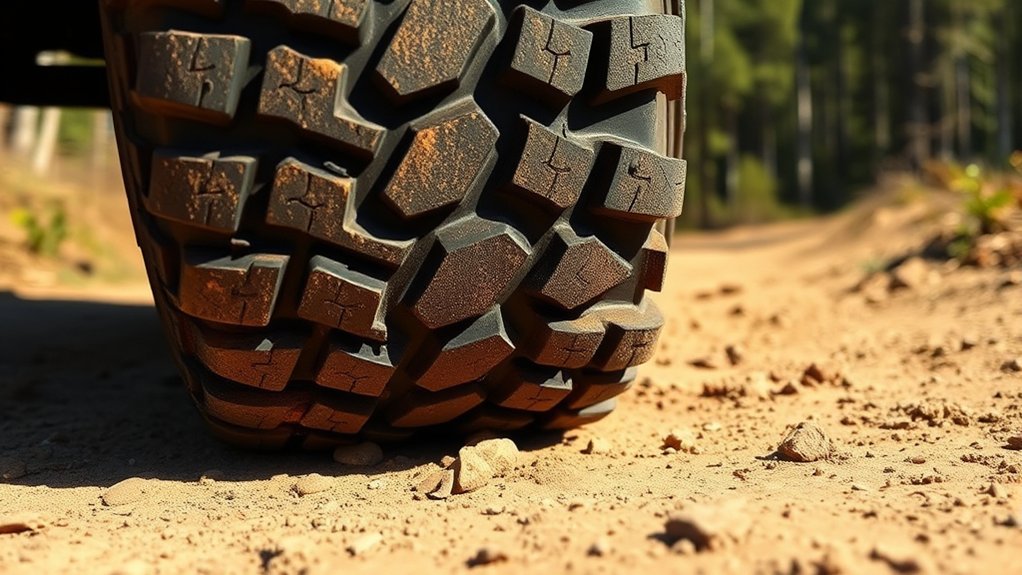
The tire void ratio is the share of a tire’s tread face made up of open spaces, grooves, and gaps between tread blocks instead of solid rubber. It matters because those open spaces help move water, mud, gravel, and snow away from the contact patch, but they also affect tread stability and road noise. A high-void tread can be excellent off road, while a lower-void tread is usually quieter and more stable on dry pavement.
Quick Answer
Tire void ratio is the percentage of the tread surface made up of grooves and open gaps. More void helps tires bite into mud, gravel, snow, and standing water, but it can increase tread-pattern noise. Less void usually feels quieter and sharper on dry roads, but has less space to clear water and debris.
Key Takeaways
- Higher void ratio usually improves mud, gravel, loose dirt, snow, and water evacuation.
- Lower void ratio usually improves dry-road contact, steering feel, tread stability, and ride quietness.
- Void ratio is only one part of tire performance; tread depth, rubber compound, siping, inflation pressure, and tire type also matter.
- For mostly highway driving, choose a touring, highway-terrain, or mild all-terrain pattern. For deep mud and loose trails, a higher-void all-terrain or mud-terrain tire makes more sense.
At a Glance
| Time Required | 5–10 minutes per month for a basic tread, pressure, and void check |
| Difficulty | Easy for inspection; professional help is needed for damage, alignment, or unusual wear |
| Tools Needed | Tire pressure gauge, tread depth gauge or penny, flashlight, soft brush, and your vehicle tire placard or owner’s manual |
| Cost | Usually $0–$15 for basic checking tools; tire service costs vary by shop and vehicle |
What Is Tire Void Ratio and Why Does It Matter?
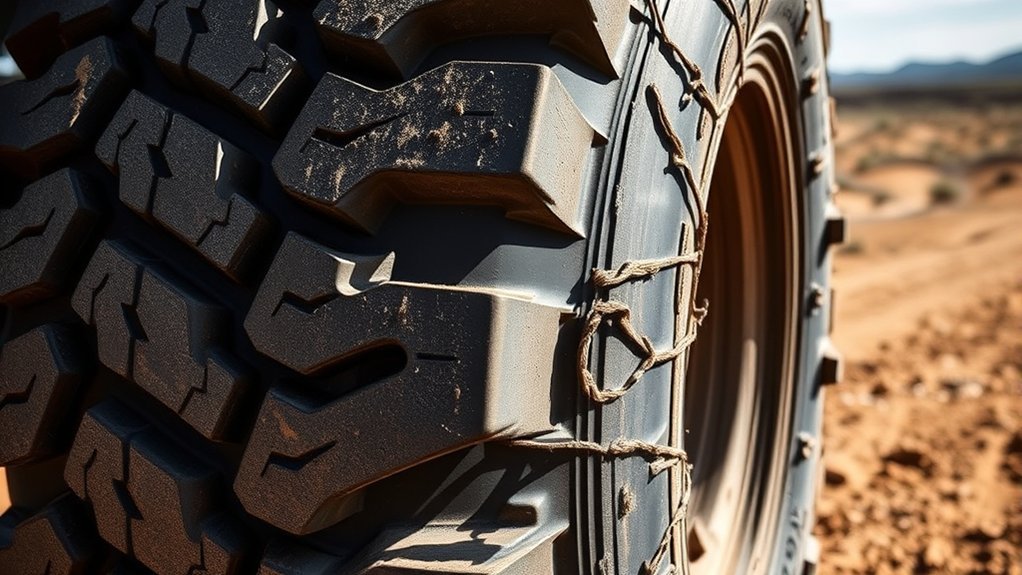
Tire void ratio describes how much of the tread face is open space compared with solid rubber. Tire engineers may also describe this as the tread’s negative portion: the ratio of grooves to the closed rubber surface. Continental explains that this groove-to-rubber relationship influences braking on wet roads, noise development, and fuel consumption.
In simple terms, a tire with many wide grooves and large gaps between tread blocks has a higher void ratio. A tire with more continuous ribs and more solid rubber across the tread has a lower void ratio. You usually will not see a “void ratio” number printed on the sidewall, so you judge it by the tire category and tread pattern.
| Term | What It Means | Why It Matters |
|---|---|---|
| Void ratio | Open tread area versus solid rubber area | Affects water, mud, snow, gravel clearing, road noise, and tread stability |
| Tread depth | Depth from tread surface to the bottom of the main grooves | Affects how much space remains to move water and maintain traction as the tire wears |
| Sipes | Thin cuts in tread blocks | Help create extra biting edges, especially for wet, icy, or snowy conditions |
| Tread pattern | The full layout of ribs, blocks, grooves, and sipes | Balances traction, handling, noise, rolling resistance, and wear |
A high-void tread gives mud, water, and loose material more room to move through the tread. A low-void tread places more rubber on the road, which can improve dry grip, steering response, braking feel, and ride comfort. The best choice depends on where you drive most often.
How Tread Void Influences Road Noise Levels
The tread void ratio can strongly affect the road noise you hear inside the cabin. Large open spaces and chunky tread blocks can create more tread-pattern noise as blocks strike the road, release air, and move in and out of the contact patch. This is one reason many mud-terrain tires sound louder on pavement than touring or highway-terrain tires.
That does not mean every high-void tire is automatically loud. Tire makers use tread-block shape, variable pitch sequencing, shoulder design, rubber compound, and groove layout to control noise. Continental notes that ribs, grooves, tread blocks, and sipes are arranged to influence noise, handling, traction, and wear.
Note: If a tire becomes louder over time, do not blame void ratio alone. Cupping, feathering, bad alignment, worn suspension parts, low pressure, or uneven rotation intervals can also make a tire noisy.
For a quieter ride, look for tires with tighter tread blocks, continuous center ribs, variable-pitch tread designs, and a highway or touring category. For maximum mud and trail grip, expect more tread growl on pavement because the larger voids and more aggressive blocks are doing a different job.
Does Tread Void Help Off-Road Traction?
Yes. Tread void helps off-road traction because the open spaces give mud, gravel, sand, and loose soil somewhere to go instead of packing flat under the tire. Larger voids also create more block edges that can dig into soft terrain. That is why all-terrain and mud-terrain tires usually have more open tread patterns than highway tires.
On loose surfaces, the tread needs to bite, clear itself, and maintain contact. If mud fills every groove, the tire can behave more like a slick, losing the edges that give it grip. A more open tread pattern helps the tire self-clean as it rotates, especially at low trail speeds.
There is a trade-off. Large tread blocks and wide gaps can reduce dry-road precision, increase rolling noise, and sometimes feel less stable during fast highway cornering. If most of your driving is paved-road commuting with occasional gravel roads, a mild all-terrain tire is often a better balance than a full mud-terrain tire.
Pro Tip: Match the tread to your worst regular driving condition, not the most extreme trip you might take once a year. A daily highway driver usually benefits from less void than a trail vehicle that regularly sees deep mud or loose rock.
Balancing Tread Void for Wet vs. Dry Conditions
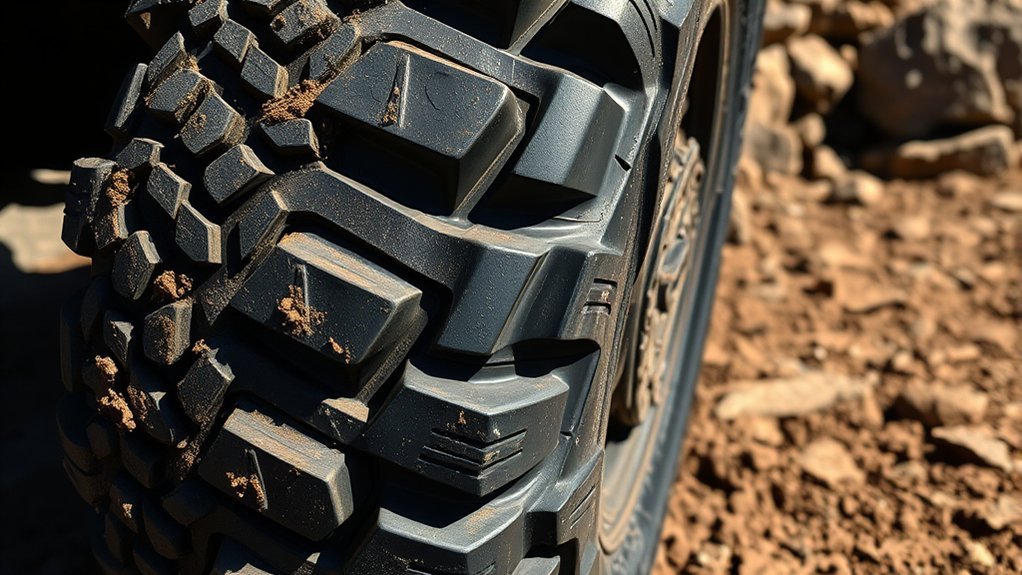
Balancing tread void is about choosing the right compromise. Wet roads need grooves that can move water away from the contact patch. Dry pavement rewards stable tread blocks and more rubber-to-road contact. Off-road surfaces need open spaces for mud and debris. No single tread pattern is best at everything.
On wet roads, tread channels act like a water pump. Michelin explains that more or larger tread channels help pump water away from the tire and road. Hydroplaning happens when water builds between the tire and road surface and the tire can no longer maintain contact, a process described in a Virginia Tech review of tire-pavement hydroplaning research.
A higher-void tire can help clear water, mud, and loose debris, but it cannot overcome worn tread, wrong pressure, excessive speed, deep standing water, or a tire that is wrong for the season.
| Driving Condition | Void Ratio Need | Main Trade-Off |
|---|---|---|
| Dry pavement | Lower to moderate | More contact and stability, but less open space for water or mud |
| Rain and standing water | Moderate, with effective circumferential and lateral grooves | Better water evacuation, but performance still depends on tread depth and speed |
| Gravel and dirt roads | Moderate to high | Better loose-surface grip, with some added noise and wear trade-offs |
| Deep mud | High | Strong self-cleaning and bite, but more road noise on pavement |
| Snow and ice | Pattern-specific; void, siping, and compound all matter | A winter tire is not just a high-void tire; rubber compound and siping are critical |
[Products Worth Considering]

Monitor tire tread wear with a smart, color-coded depth gauge that shows clear condition ranges at a glance. The bar is range marked for fast, easy readings, helping you maintain safer traction and performance. Each gauge is portable with a pocket clip, and the set includes 20 units for daily use and sharing.

Measure tire tread depth quickly and accurately with this LUMITECO dial gauge that reads in 1/32" increments up to 14/32". The color-coded green/yellow/red zones make it easy to judge tire wear and know when replacement is needed. A rugged, compact design with a protective pouch helps keep the gauge ready for use on cars, trucks, motorcycles, and more.

The SAFELIFE dial tire tread depth gauge measures tread depth in 1/32 inch increments with clear, easy-to-read 2-inch dial face. Color zones using a traffic light system help you quickly judge whether tread is low, marginal, or ample for safer driving. Built with a durable zinc cast body and a metal detect probe for precise, comfortable use across cars, motorcycles, trucks, and buses.
Which Tire Types Have More or Less Void?
Different tire categories use different void ratios because they are built for different jobs. Use the tread pattern as a visual clue: the more open space and chunky block separation you see, the higher the void ratio usually is.
- Touring and highway tires: Usually lower to moderate void. Best for quiet ride, long tread life, dry-road stability, and daily commuting.
- Performance and summer tires: Often use lower void in key areas to maximize dry contact, with designed grooves for wet grip. Continental notes that summer tire tread patterns tend to be more streamlined with fewer grooves for water clearance, maximizing the contact patch.
- All-terrain tires: Moderate to high void. Good for mixed highway, gravel, dirt, and light trail use.
- Mud-terrain tires: High void. Best for mud, ruts, rocks, and loose off-road surfaces, but typically louder and less refined on pavement.
- Winter tires: Use a mix of grooves, sipes, and cold-weather compound. Do not choose winter traction based on void ratio alone.
[Products Worth Considering]

Accurately measure tire tread depth with a calibrated gauge marked from 0 to 1 inch in 1/32 inch increments. The color-coded bar helps you quickly identify tread condition ranges, supporting safe driving for trucks, motorcycles, automobiles, and passenger vehicles.
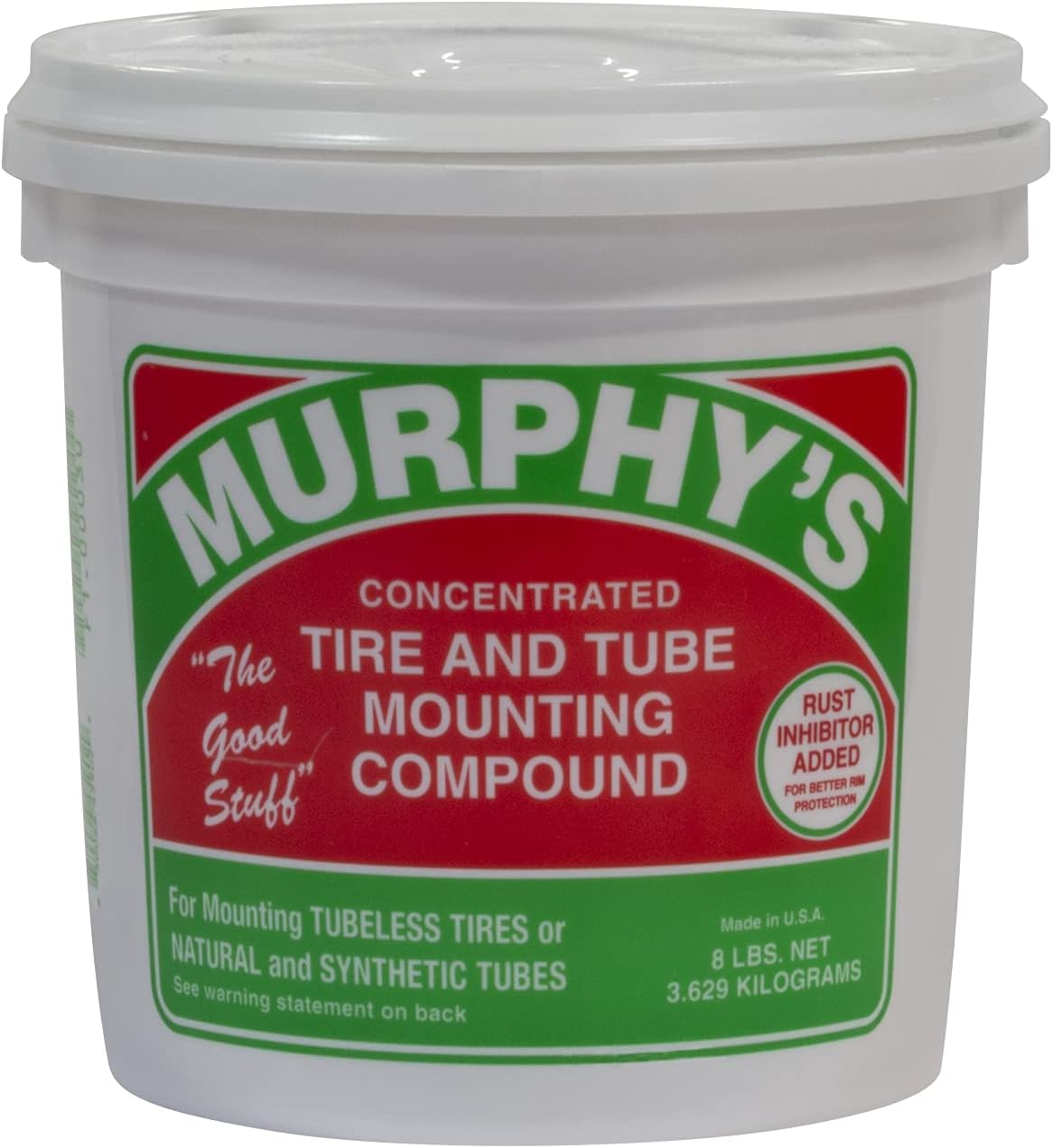
A concentrated tire and tube mounting compound designed to help simplify mounting rubber tires and tubes on passenger, semi truck, construction, and OTR applications. Its ultra-thick formula packs beads effectively and includes rust inhibitors to help protect against corrosion during use.
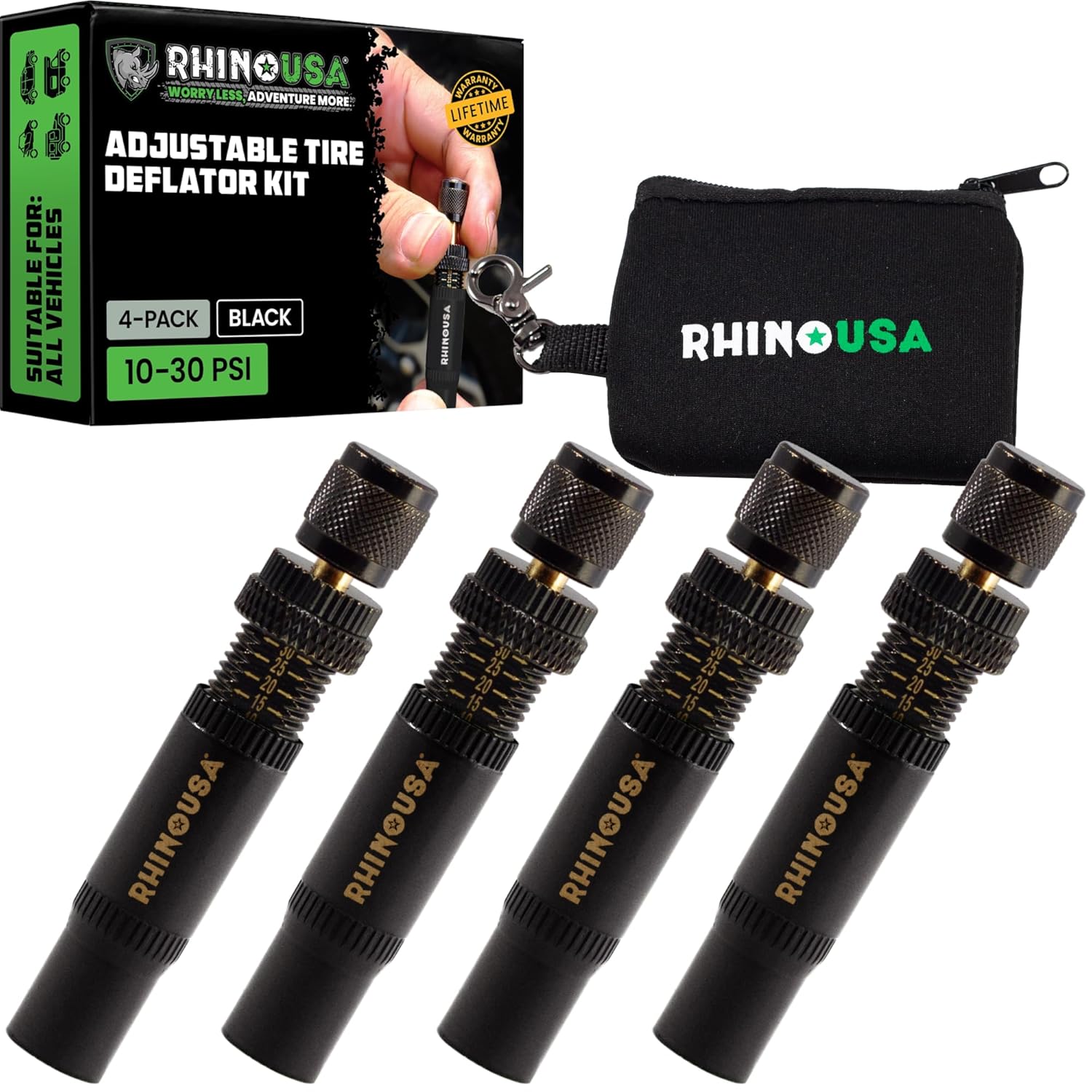
Use the Rhino USA adjustable tire deflators to air down all four tires at once by screwing one deflator onto each valve stem, letting you step away while the tires reach your preset pressure. Each deflator independently adjusts across a 10–30 PSI range with laser-etched indicators for quick setup and verification, making it ideal for beach, sand, and rocky off-road trails.
How to Choose the Right Void Ratio for Your Driving
Start with where you drive most often. If 80% of your miles are on highways and city streets, a quieter lower-void or moderate-void tire will usually serve you better than a very aggressive tread. If you regularly drive through mud, gravel roads, job sites, farms, or trails, a more open tread can be worth the extra noise.
| Your Priority | Better Choice | Why |
|---|---|---|
| Quiet highway driving | Touring, grand touring, or highway-terrain tire | Lower void and tighter tread blocks reduce pattern noise |
| Mixed pavement and gravel | Mild all-terrain tire | Balanced void ratio gives usable loose-surface grip without extreme road noise |
| Frequent mud or trail use | Aggressive all-terrain or mud-terrain tire | Large voids help the tread bite and self-clean |
| Heavy rain | Tire with strong wet ratings, adequate tread depth, and efficient grooves | Water evacuation depends on pattern design, tread depth, pressure, and speed |
| Snow and ice | Dedicated winter tire where conditions require it | Winter grip depends on compound, siping, and tread design, not void ratio alone |
[Products Worth Considering]

Measure tyre tread depth precisely with a digital gauge that reads in both MM and inches, helping you monitor safe driving conditions. The large LCD screen is easy to operate, and the compact tool fits for cars, trucks, and motorcycles. It provides high accuracy with a 0-25.4mm range and includes a 1-year warranty for added peace of mind.

The Big Rig Defense Tire Thumper is a truck tire pressure checker that lets you quickly check multiple tires by giving them a firm whack. Listen for a reassuring thump and feel the stick bounce when a tire is fully inflated, helping you get back on the road safely. It features a comfortable, glove-friendly handle and a secure wrist strap for confident use on busy routes.

This tire valve adapter kit lets you connect a 3/4-inch garden hose to tire valves to fill tires with air or liquid. It includes two adapters for standard bore and large bore valves plus a convenient bleeder valve to release trapped air. Designed for tractor tire tubes and compatible air/water valves and extensions, it’s a practical repair tool for getting back on the road or field quickly.
How to Maintain Optimal Tread Void for Performance
Maintaining ideal tread void is less about changing the tire’s original design and more about keeping the grooves open, the tread wearing evenly, and the tire operating at the correct pressure. USTMA recommends regular attention to tire pressure, tread, rotation, and alignment as core tire-care essentials.
| Action | Purpose |
|---|---|
| Check cold tire pressure monthly | Helps the tread contact the road correctly and reduces uneven wear that can distort the tread pattern. |
| Inspect for uneven wear | Cupping, feathering, edge wear, or center wear can reduce traction and increase road noise. |
| Clear stones and packed debris | Open grooves and voids help the tire move water, mud, and loose material more effectively. |
| Rotate tires on schedule | Promotes even wear so tread blocks, grooves, and voids keep their intended shape longer. |
| Measure tread depth | Confirms whether the grooves still have enough depth to work properly in wet or loose conditions. |
| Address alignment or suspension problems | Prevents wear patterns that can make tires noisy and reduce traction. |
Use the pressure listed on the vehicle tire placard or owner’s manual, not the maximum pressure molded on the tire sidewall. NHTSA provides consumer tire-safety guidance and emphasizes choosing and caring for tires correctly. If tread wear indicators are flush with the tread surface, or the tire reaches 2/32 inch of remaining tread depth, the tire is worn out and should be replaced.
Warning: Do not keep driving on tires with exposed cords, bulges, deep cuts, sidewall cracks, tread separation, or repeated pressure loss. Have the tire inspected by a qualified tire professional, even if the tread depth still looks acceptable.
For wet, snowy, or off-road use, do not treat 2/32 inch as a performance target. It is a worn-out threshold. If the tire slips, hydroplanes easily, packs with mud, or no longer clears debris well, replacement may be the safer choice before the legal minimum is reached.
Frequently Asked Questions
What is the void ratio of a tire?
The void ratio of a tire is the percentage of the tread face made up of open spaces, grooves, and gaps between tread blocks. A higher void ratio means more open space. A lower void ratio means more solid rubber contacting the road.
Is a higher tire void ratio always better?
No. A higher void ratio is useful for mud, gravel, snow, and water evacuation, but it can increase road noise and reduce dry-road tread stability. A lower or moderate void ratio is usually better for quiet highway driving and dry pavement handling.
Do all-terrain tires have more road noise because of tread void?
Often, yes. All-terrain tires usually have more open tread than touring or highway tires, so they can make more pattern noise. However, modern all-terrain designs use block spacing, variable pitch, and shoulder shaping to reduce noise compared with older or more aggressive mud-terrain designs.
Does tread depth affect tire void ratio?
Tread depth and void ratio are different measurements, but they work together. As tread wears down, grooves become shallower and the tire has less space to move water, slush, mud, or small stones. That can reduce wet and off-road performance even if the original tread pattern had a good void ratio.
Can I measure tire void ratio at home?
You can visually compare tread openness, but accurately calculating void ratio requires measuring the open tread area versus the total tread area. At home, it is more practical to compare tire categories, inspect groove depth, keep the tread clear, and choose a tread pattern that matches your driving conditions.
Conclusion
The tire void ratio helps explain why one tire is quiet and stable on the highway while another digs confidently through mud, gravel, or snow. More void usually improves self-cleaning and loose-surface traction, while less void usually improves dry-road contact and ride comfort. The right choice depends on your driving mix, climate, noise tolerance, and safety needs.
For the best results, choose the tread pattern that matches your real conditions, keep tires properly inflated, rotate them on schedule, clear packed debris from the grooves, and replace worn or damaged tires before traction becomes a problem.
Sources
- Continental Tires — 120 Years of Tread Tires — supports the explanation of tread negative portion, groove ratio, braking, noise, and fuel-consumption trade-offs.
- Continental Tires — Tire Tread — supports tread component definitions and how ribs, grooves, blocks, and sipes affect tire performance.
- Michelin — How Tires Are Made — supports the explanation of tread channels pumping water away from the tire-road contact area.
- NHTSA — Tire Safety Ratings and Awareness — supports tire safety and consumer tire-care guidance.
- U.S. Tire Manufacturers Association — Tire Care Essentials — supports monthly pressure checks, tread inspection, rotation, alignment, and the 2/32-inch replacement threshold.
- Virginia Tech — Review of Vehicle Hydroplaning and Tire-Pavement Interactions — supports the hydroplaning explanation and the role of tire tread design.