
What Is Tire Hydroplaning on a Toyota RAV4? Causes and Prevention

Tire hydroplaning happens when your Toyota RAV4’s tires lose traction due to water buildup between the tires and the road. This often occurs at speeds over 35 mph, especially in heavy rain or when roads are slick from oil. To prevent hydroplaning, maintain proper tire tread depth, check tire pressure regularly, and rotate your tires every 5,000 to 7,500 miles. You can also adopt safe driving techniques to steer clear of hydroplaning risks and keep your ride safe and smooth.
What Is Tire Hydroplaning and How Does It Happen?
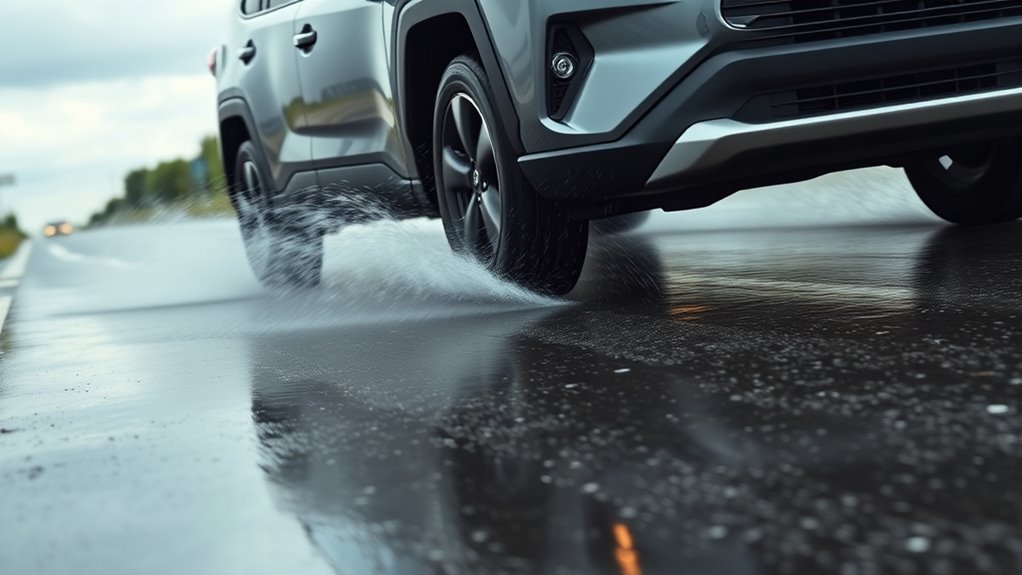
Tire hydroplaning happens when water builds up between your tires and the road, causing a loss of traction that can lead to a dangerous situation. This typically occurs at speeds above 35 mph, especially when significant water accumulation exists on the road. The design and depth of your tire tread are essential; deeper treads with larger gaps effectively channel water away, enhancing driving safety. When your tires can’t displace water quickly enough, traction loss can result, leaving you without vehicle control. Several factors increase the risk of hydroplaning, including tire pressure, vehicle weight, and your chosen speed. Lighter vehicles are particularly vulnerable. To maintain your freedom on the road, be mindful of weather conditions, regularly check your tire tread, and adjust your speed accordingly. By understanding these dynamics, you can navigate wet roads with confidence and reduce the likelihood of hydroplaning.
How to Maintain Your Tires to Prevent Hydroplaning
Maintaining your tires is essential for preventing hydroplaning and ensuring safe driving in wet conditions. To keep your RAV4’s tires in top shape, follow these important steps:
Maintaining your tires is crucial for safe driving in wet conditions and preventing hydroplaning.
- Check tire tread depth regularly using the penny test—aim for at least 2/32 inches for effective water displacement.
- Maintain proper tire pressure according to manufacturer recommendations; underinflated tires can compromise traction on wet surfaces.
- Rotate your tires every 5,000 to 7,500 miles to promote even wear and enhance performance, which is crucial for grip in rain.
Additionally, invest in tires designed with effective tread patterns that channel water away. Don’t forget to schedule routine maintenance checks, focusing on tire alignment and evaluating the need for tread replacement. Prioritizing these tasks empowers you to drive confidently, knowing you’ve taken the necessary steps to prevent hydroplaning. Stay safe, and enjoy the freedom of the road!
Driving Techniques to Avoid Hydroplaning
To navigate wet roads safely, you need to master key driving techniques that minimize the risk of hydroplaning. Start by managing your speed and maintaining a safe following distance, so you have time to react if the vehicle ahead loses traction. Additionally, practicing smooth steering and braking will help you maintain control in challenging conditions.
Speed Management Techniques
When driving in wet conditions, keeping your speed at 35 mph or lower is essential for reducing the risk of hydroplaning. Speed reduction not only enhances your control but also boosts your rain awareness, making each drive safer.
- Gradually reduce speed when approaching standing water to maintain traction.
- Increase your following distance to allow for better reaction time.
- Avoid using cruise control, ensuring you can respond swiftly to changing conditions.
Steering Control Practices
Driving at reduced speeds in wet conditions sets the stage for better control, but once hydroplaning occurs, your steering techniques become vital. Maintain a firm grip on the steering wheel to guarantee stability and make small adjustments rather than jerky movements. If your vehicle starts to slide, gently steer in the direction of the slide to regain grip control, avoiding overcorrection that can lead to further instability. Remember, sudden braking can exacerbate hydroplaning, so take your foot off the accelerator for natural deceleration. If you have anti-lock brakes (ABS), apply gentle pressure while steering to help maintain traction. Regularly practicing these steering techniques in wet conditions boosts your confidence and prepares you for hydroplaning scenarios.
Emergency Response Strategies
Hydroplaning can catch even the most experienced drivers off guard, but knowing how to respond can make all the difference. Here are some key strategies to regain control and maintain vehicle traction:
- Ease off the accelerator: Gently reducing speed helps you regain control without sudden movements.
- Steer into the skid: This technique guides your vehicle back on track, preventing further loss of control.
- Avoid emergency braking: Sudden stops can worsen the situation; instead, use gentle braking, especially if you have anti-lock brakes.
Stay calm and remember that maintaining a safe following distance and reducing speed in wet conditions can greatly lower your risk of hydroplaning. Equip yourself with these strategies to navigate rainy roads confidently.
What Makes Your RAV4 Hydroplane?
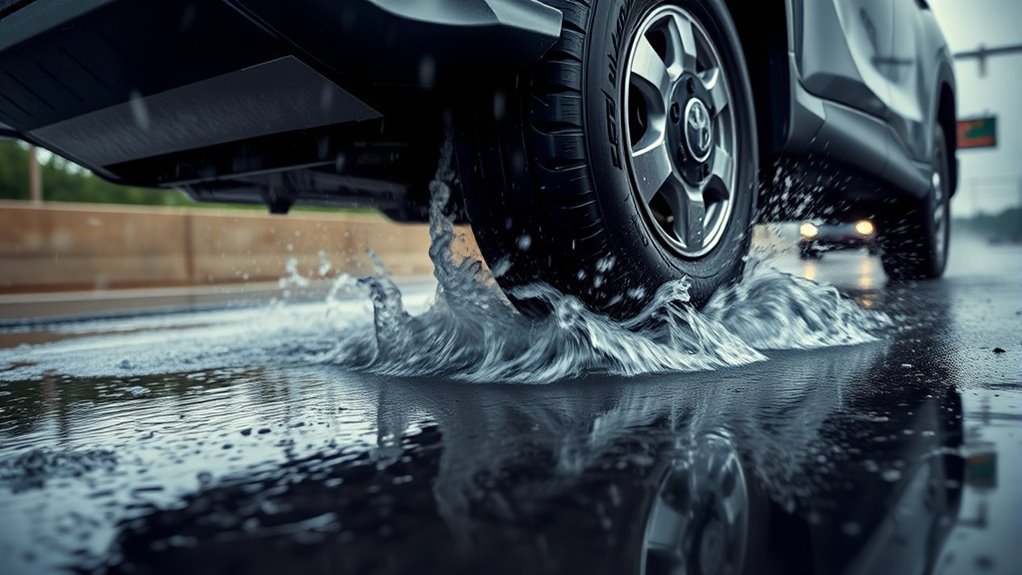
As rain saturates the road, your Toyota RAV4 can easily lose traction if conditions are right. Hydroplaning occurs when water builds up between your tires and the road surface. This risk heightens with speed, particularly at or above 35 mph, especially when driving through standing water.
Worn or bald tires markedly reduce water displacement effectiveness, increasing hydroplaning chances. Tire tread design, especially with larger grooves, plays an essential role in expelling water. Additionally, proper tire inflation is critical; under-inflated tires decrease road contact, enhancing hydroplaning risk.
| Factor | Impact on Hydroplaning | Recommended Action |
|---|---|---|
| Tire Tread Depth | Low tread increases risk | Regularly check tread depth |
| Speed | Higher speeds raise risk | Maintain speeds below 35 mph |
| Water Accumulation | More water leads to loss of traction | Avoid standing water |
| Tire Inflation | Under-inflation increases risk | Keep tires properly inflated |
How to Handle Hydroplaning?
When your Toyota RAV4 starts to hydroplane, staying composed is essential for regaining control. Here’s how to navigate this slippery situation:
- Gently ease off the gas pedal to let your vehicle decelerate naturally.
- Steer in the direction of the slide, making small adjustments to avoid overcorrection.
- If your RAV4 has anti-lock brakes (ABS), apply light brake pressure; for non-ABS, pump the brakes gently.
More Tips to Prevent Hydroplaning in Wet Conditions
To keep your Toyota RAV4 safe from hydroplaning, prioritize tire maintenance and adjust your driving habits. Regularly check your tire tread and inflation, as both are essential for ideal grip on wet roads. Additionally, slowing down and steering clear of puddles can greatly enhance your control and reduce the risk of losing traction.
Tire Maintenance Importance
Proper tire maintenance is essential for preventing hydroplaning, especially when driving a Toyota RAV4 in wet conditions. Regular checks can save you from dangerous situations. Here’s how to keep your tires in prime shape:
- Check tire tread depth using the penny test; deeper treads channel water away effectively.
- Maintain proper tire pressure per manufacturer recommendations to guarantee maximum surface contact.
- Schedule seasonal inspections and rotate tires to promote even wear and ideal traction.
Adjust Driving Speed
Adjusting your driving speed is one of the most effective ways to prevent hydroplaning in your Toyota RAV4 during wet conditions. Hydroplaning can start at speeds as low as 35 mph, so it’s crucial to make necessary speed adjustments. Aim to drive at least 5-10 mph slower than the posted speed limit in rainy weather to enhance wet traction and maintain control. Avoid using cruise control; it can hinder your ability to react swiftly if you encounter standing water. Additionally, keep a greater distance from the vehicle ahead, giving yourself more time to react. By being mindful of your speed, you empower yourself to navigate wet roads safely and confidently, reducing the risk of losing control.
Avoid Puddles and Flooding
While maneuvering wet roads in your Toyota RAV4, it’s essential to steer clear of puddles and flooded areas. Even small amounts of standing water can increase the risk of hydroplaning, especially at speeds over 35 mph. Here are some tips for effective puddle avoidance and flooding awareness:
- Choose interior lanes where water pools less, minimizing hazards.
- Slow down when rain begins, as the initial drops mix with road oils, creating slick conditions.
- Monitor weather forecasts and plan routes to dodge areas prone to flooding.
Frequently Asked Questions
What Causes Tires to Hydroplane?
Tires hydroplane when water depth exceeds your tire tread’s ability to channel it away. This loss of traction occurs, especially at high speeds or with worn tires, making control of your vehicle challenging and dangerous.
What Two Things Can You Control When It Comes to Preventing Your Car Hydroplane?
You can control tire pressure and tread depth to prevent hydroplaning. Keeping your tires properly inflated and ensuring adequate tread depth enhances traction, allowing you to navigate wet roads safely and confidently.
Conclusion
In summary, understanding tire hydroplaning is essential for every RAV4 driver. By maintaining your tires and using smart driving techniques, you can steer clear of this slippery situation. Hydroplaning can feel like being on a roller coaster—exciting but not in a good way! Stay vigilant, keep your tires in top shape, and practice safe driving habits to guarantee you navigate wet roads confidently. After all, a little preparation can make all the difference in your driving safety.

Related Articles

Upsizing Wheels on a Toyota RAV4: Pros, Cons, and Considerations
Boost your Toyota RAV4's performance with larger wheels, but discover the hidden trade-offs that could impact your ride before you decide.
Read More
Can I Change Tire Size on My Toyota RAV4? Rules and Recommendations
Are you considering changing the tire size on your Toyota RAV4? Discover the essential rules and recommendations before making a decision.
Read More
What to Do If the TPMS Light Comes On in Your RAV4
Understand the steps to take when the TPMS light illuminates in your RAV4, as overlooking it could lead to serious tire problems.
Read More