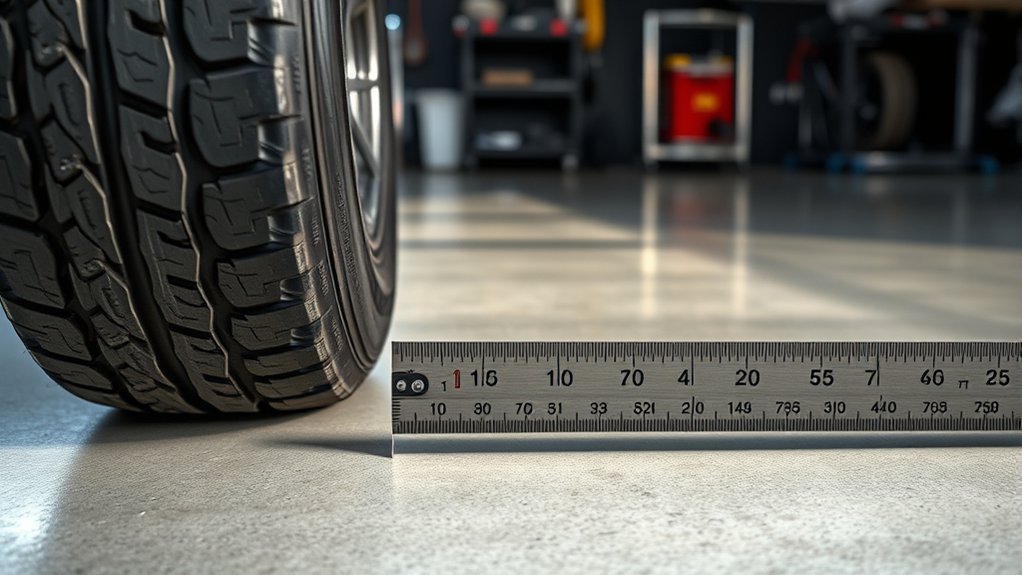
A 265 tire is about 10.4 inches wide, but that number only tells you the tire’s nominal section width. To know the full tire height, sidewall, circumference, and fitment impact, you need the complete size, such as 265/70R17. In that common size, the tire is about 31.6 inches tall, has a sidewall near 7.3 inches, and fits a 17-inch wheel.
Quick Answer
A 265 tire is about 10.4 inches wide because 265 means 265 millimeters of nominal section width. A 265/70R17 tire is about 31.6 inches tall, with a 7.3-inch sidewall and a 17-inch wheel opening, so it is closer to a 32-inch tire than a true 33-inch tire.
Key Takeaways
- A 265 tire is about 10.4 inches wide, but 265 alone is not a complete tire size.
- On a 265/70R17, the 70 means the sidewall is 70% of 265 mm, or about 7.3 inches.
- A 265/70R17 tire has a theoretical overall diameter of about 31.6 inches.
- A 265/70R17 is usually called a 32-inch-class tire, not a true 33-inch tire.
- Before upsizing, check clearance, rim width, load index, speed rating, tire placard, spare tire size, and speedometer error.
265/70R17 At a Glance
| Width | 265 mm, or about 10.4 inches |
| Sidewall Height | About 7.3 inches |
| Overall Diameter | About 31.6 inches |
| Wheel Size | 17-inch rim diameter |
What Is a 265 Tire in Inches?
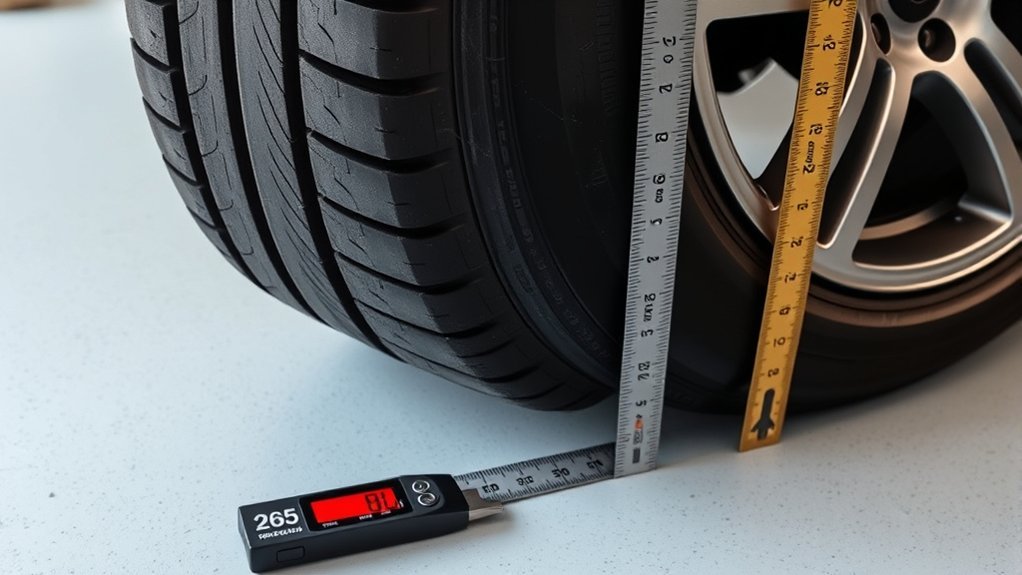
A 265 tire is about 10.43 inches wide. The math is simple: 265 millimeters divided by 25.4 equals 10.43 inches. In tire sizing, the first number is the tire’s nominal section width, which is the width from sidewall to sidewall when the tire is mounted on its measuring rim.
That does not mean every tire marked 265 measures exactly 10.43 inches on your vehicle. Actual width can vary slightly by tire brand, tread design, rim width, air pressure, and load. Still, 10.4 inches is the right conversion to use when comparing tire sizes.
Note: A tire labeled only as “265” is incomplete. You need the full size, such as 265/70R17, 265/65R18, or 265/75R16, to calculate overall height.
If you are comparing tires for an SUV, truck, or crossover, width helps you judge stance, clearance, and contact patch. It does not tell you the full tire diameter by itself. For diameter, you also need the aspect ratio and wheel diameter. Understanding tire performance ratings can also help when you compare tire options for your driving needs.
What Does 265/70R17 Mean?
The tire code 265/70R17 breaks down into three size numbers and one construction letter. The first number is width, the second number is sidewall ratio, the letter tells you the construction, and the final number is the wheel diameter.
- 265 = 265 mm section width, or about 10.4 inches.
- 70 = aspect ratio, meaning the sidewall height is 70% of the tire width.
- R = radial construction.
- 17 = fits a 17-inch wheel.
Here is the worked math for a 265/70R17 tire:
- Width: 265 ÷ 25.4 = 10.43 inches.
- Sidewall: 265 × 0.70 = 185.5 mm, then 185.5 ÷ 25.4 = 7.30 inches.
- Overall diameter: 17 + 7.30 + 7.30 = 31.6 inches.
This format helps you compare tire sizes without relying on vague labels such as “32s” or “33s.” It also helps you estimate changes in clearance, gearing, and speedometer accuracy. If you are shopping for all-season options, knowing the code can help you compare performance all-season tires more accurately.
How Big Is a 265/70R17 Tire?
A 265/70R17 tire is about 31.6 inches tall, 10.4 inches wide, and has a sidewall height of about 7.3 inches. Its theoretical circumference is about 99.3 inches, which works out to roughly 638 revolutions per mile.
That puts it closer to a 32-inch tire than a true 33-inch tire. Tires like the Falken Wildpeak A/T4W may list model-specific dimensions, so always check the exact tire’s spec sheet when clearance is tight.
[Products Worth Considering]

The SAFELIFE dial tire tread depth gauge measures tread depth in 1/32 inch increments with clear, easy-to-read 2-inch dial face. Color zones using a traffic light system help you quickly judge whether tread is low, marginal, or ample for safer driving. Built with a durable zinc cast body and a metal detect probe for precise, comfortable use across cars, motorcycles, trucks, and buses.

Keep your tires properly inflated with this analog VONDIOR tire pressure gauge, designed for fast, easy readings without batteries. The swiveling, two-axis hose and large glow dial help you measure at any tire angle with instant visibility. Built with a protective rubber shield, it supports durable, low-maintenance use for cars and trucks.

Measure tire tread depth quickly and accurately with this LUMITECO dial gauge that reads in 1/32" increments up to 14/32". The color-coded green/yellow/red zones make it easy to judge tire wear and know when replacement is needed. A rugged, compact design with a protective pouch helps keep the gauge ready for use on cars, trucks, motorcycles, and more.
Tire Code Breakdown
Reading a tire code like 265/70R17 gives you the main dimensions at a glance. The width is metric, the wheel diameter is in inches, and the aspect ratio links the two. That mix is why the calculation can look confusing at first.
The standard diameter formula is:
Overall diameter = wheel diameter + 2 × sidewall height
For 265/70R17, that means 17 inches plus two sidewalls of about 7.3 inches each, giving about 31.6 inches overall.
265/70R17 Dimensions Explained
The numbers below are theoretical calculations. A real tire may measure slightly smaller or larger depending on its construction, tread depth, rim width, and inflation pressure.
| Measure | Approx. Value | Why It Matters |
|---|---|---|
| Section width | 10.4 inches | Affects clearance, stance, and contact patch |
| Sidewall height | 7.3 inches | Affects ride comfort and tire height |
| Overall diameter | 31.6 inches | Affects ride height, gearing, and speedometer error |
| Circumference | 99.3 inches | Affects distance traveled per wheel revolution |
| Revs per mile | About 638 | Used for speedometer and odometer estimates |
How Does 265/70R17 Compare With 275/70R17 and 285/70R17?
When you compare 265/70R17, 275/70R17, and 285/70R17, each step adds width and height because all three sizes use the same 70% aspect ratio. A 275/70R17 is about 32.2 inches tall, while a 285/70R17 is about 32.7 inches tall.
| Size | Width | Sidewall | Diameter | Best Use |
|---|---|---|---|---|
| 265/70R17 | 10.4 in | 7.3 in | 31.6 in | Balanced daily driving and mild off-road use |
| 275/70R17 | 10.8 in | 7.6 in | 32.2 in | Slightly taller stance with modest fitment change |
| 285/70R17 | 11.2 in | 7.9 in | 32.7 in | 33-inch-class look with higher rubbing risk |
The 275/70R17 sits between the 265 and 285 in both width and diameter. The 285/70R17 gives more tread presence, but it is also more likely to rub on liners, mud flaps, control arms, or body mounts depending on the vehicle. If you are comparing all-terrain choices, the right all-terrain tires can matter as much as size.
[Products Worth Considering]

Accurately measure tire tread depth with a calibrated gauge marked from 0 to 1 inch in 1/32 inch increments. The color-coded bar helps you quickly identify tread condition ranges, supporting safe driving for trucks, motorcycles, automobiles, and passenger vehicles.

Upgrade your 2024-2026 Tesla Model 3 Highland with REEVAA all-weather mud flaps designed for seamless fit along the original body lines. The set of four delivers strong splash protection against mud, gravel, and road debris while using OEM-grade durable materials. Installation is non-destructive with original hole positions and snap-in clips, and the aerodynamic design helps minimize impact on efficiency.

The TYAMATE TM8 solar-powered wireless TPMS delivers real-time tire pressure and temperature monitoring with six alarm modes for safer driving. A vibrant color LCD display shows readings clearly while windshield mounting keeps it hands-free and easy to read. With a wide 0–87 PSI range, strong 433.92 MHz signal transmission, and quick sensor pairing, it’s ideal for RV, sedan, SUV, MPV, and truck use.
Size And Width Differences
All three sizes keep the same 70% aspect ratio, so the wider tire also gets a taller sidewall. That is why the jump from 265 to 285 changes both stance and overall diameter.
- 265/70R17: narrowest of the three, about 31.6 inches tall.
- 275/70R17: about 0.4 inches wider and 0.6 inches taller than 265/70R17.
- 285/70R17: about 0.8 inches wider and 1.1 inches taller than 265/70R17.
Diameter Comparison
The real fitment difference comes from diameter. A 265/70R17 is about 31.6 inches tall. A 275/70R17 is about 32.2 inches. A 285/70R17 is about 32.7 inches, so it is commonly treated as a 33-inch-class tire even though the theoretical size is still a little under 33 inches.
Fitment And Performance
As tire size increases, you may gain ground clearance and a larger footprint, but you can also add weight, rolling resistance, steering effort, and rubbing risk. Wider tires can feel more stable on some surfaces, but they can also reduce fuel economy and make the vehicle feel slower if the gearing is not matched to the new diameter.
Pro Tip: If you are deciding between 265, 275, and 285, compare the exact tire model’s published diameter, weight, approved rim width, load index, and tread width. The same listed size can vary slightly between tire brands.
Is a 265/70R17 a 33-Inch Tire?
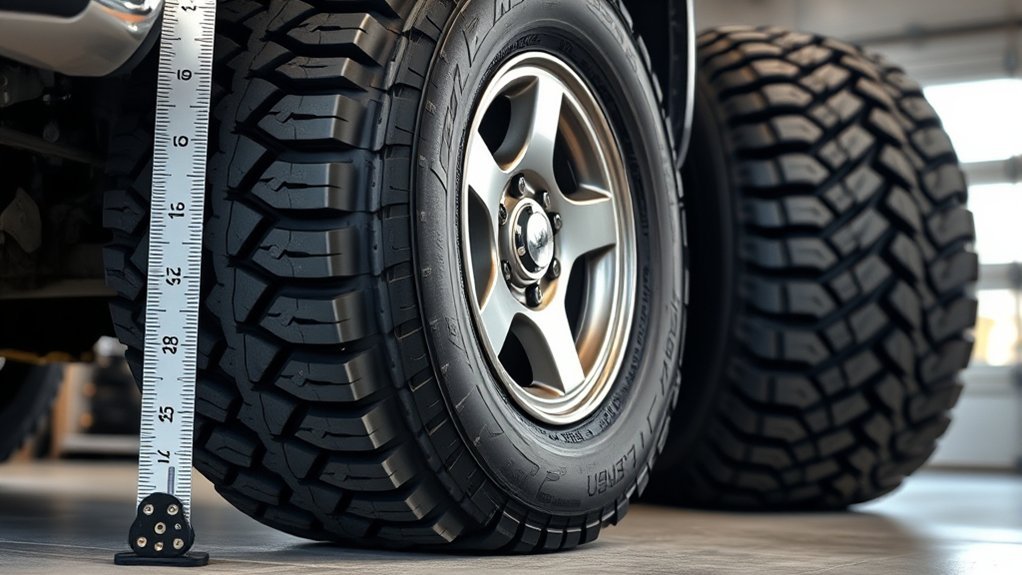
No. A 265/70R17 is not a true 33-inch tire. Its theoretical overall diameter is about 31.6 inches, so it is closer to a 32-inch tire.
The confusion happens because many people talk about tire sizes in rounded off-road terms. A 265/70R17 may look tall compared with smaller factory tires, but it does not measure 33 inches. If you want a tire that is closer to a 33-inch class size on a 17-inch wheel, a 285/70R17 is much closer at about 32.7 inches. Even then, you should check the tire maker’s actual specifications before buying.
For off-road use, diameter is only one part of the choice. Tread design, casing strength, sidewall protection, load rating, and terrain matter too. The tread and grip of the tire can affect traction more than a small change in size.
How Does 265/70R17 Affect Speedometer and MPG?
A 265/70R17 tire affects your speedometer only if it is a different diameter than the tire size your vehicle was calibrated for. If the new tire is taller than stock, the vehicle travels farther per wheel revolution. That means the speedometer can read lower than your actual speed.
If your new tire is about 3.4% taller than stock, an indicated 65 mph can mean you are actually traveling about 67.2 mph.
For example, moving from 265/65R17 to 265/70R17 increases theoretical diameter from about 30.6 inches to about 31.6 inches. That is about a 3.4% increase. In that case, your actual speed and odometer distance would be about 3.4% higher than the vehicle expects unless recalibrated.
| Comparison | Diameter Change | If Speedometer Shows 65 mph |
|---|---|---|
| 265/65R17 to 265/70R17 | About +3.4% | Actual speed is about 67.2 mph |
| 265/70R17 to 275/70R17 | About +1.7% | Actual speed is about 66.1 mph |
| 265/70R17 to 285/70R17 | About +3.5% | Actual speed is about 67.3 mph |
Fuel economy can also change, but there is no single MPG loss that applies to every vehicle. A heavier tire, more aggressive tread, taller diameter, or lower tire pressure can reduce MPG. On the other hand, a mild size change with a light highway tire may have a small effect. Larger tires can also lower engine RPM at steady highway speed while reducing mechanical leverage during acceleration.
If you want accurate readings after changing tire diameter, check whether your vehicle supports speedometer calibration through factory settings, a scan tool, or an aftermarket calibrator. For some vehicles, recalibration may also help transmission shift timing and driver-assistance systems work as intended.
What Should You Check Before Upsizing Tires?
Before you upsize tires, confirm that the new size is safe for your vehicle, wheels, and driving conditions. Do not rely only on forum photos or rounded tire-size labels.
Warning: A tire that fits while parked can still rub while turning, braking, carrying cargo, or compressing the suspension. Check clearance at full steering lock and under suspension load before driving normally.
| Check | Why It Matters | What To Do |
|---|---|---|
| Wheel-well clearance | Prevents rubbing on liners, mud flaps, body mounts, and suspension parts | Measure at full lock and full compression |
| Rim width range | A tire must be mounted on an approved rim width | Check the tire maker’s spec sheet or tire-industry data |
| Load index | The tire must support the vehicle’s weight and cargo | Match or exceed the required load rating |
| Speed rating | The tire must be rated for your vehicle’s intended use | Do not downgrade below the vehicle requirement without expert guidance |
| Offset and backspacing | Wheel position changes rubbing risk | Check inner and outer clearance, not just tire diameter |
| Spare tire size | A mismatched spare can stress driveline components on some vehicles | Confirm spare compatibility before long trips |
| Speedometer error | Taller tires can make displayed speed lower than actual speed | Calculate the percentage change and recalibrate when needed |
Also check the tire placard on the driver’s door jamb, the owner’s manual, and the tire manufacturer’s data. For snow and ice, size is only part of the decision. A proper winter compound can matter more than upsizing, which is why dedicated winter tires are still the better choice for severe winter conditions.
[Products Worth Considering]

Slip the Powerbuilt tire step over your vehicle’s tire to reach roof racks, engine bays, truck boxes, and more without overreaching. Its adjustable, universal design fits tires with a cross tread width up to 13 inches, including car, truck, RV, and semi tires. The non-slip cheesegrater surface and anti-slip tape provide secure grip while the open design lets mud and debris pass through. Fold-flat storage with rubber bumpers helps keep your tire and the step protected between uses.

This 3-piece wheel and tire brush set makes it easy to clean light, medium, and heavy dirt from wheels, rims, tires, and exterior surfaces. It includes both soft and stiff bristle options for gentle scrubbing and tough grime removal, helping lift brake dust and road buildup. The long-handle design supports comfortable cleaning across cars, trucks, SUVs, RVs, motorcycles, and more, with simple care instructions to restore brush shape.

This metal-free wheel and tire cleaning brush uses dense, fluffy synthetic wool to safely clean rims, spokes, fenders, and engine areas without worrying about damaging surfaces. Its flexible, comfortable design helps you reach detailed areas while maintaining durability, and the extra absorbent fibers work well with wheel spray cleaners for faster cleanup. Reusable and washable performance helps prevent grime and build-up for cleaner vehicles and easier maintenance at home.
Frequently Asked Questions
Is a 265 tire the same as a 31?
No. A 265 tire is not automatically a 31-inch tire because 265 only tells you the width in millimeters. A 265/70R17 is about 31.6 inches tall, while a different 265 size, such as 265/65R17 or 265/75R16, will have a different overall diameter.
What size is a 34-inch tire?
A 34-inch tire is a tire with an overall diameter near 34 inches. Metric sizes close to that range can include sizes such as 285/75R17 or 315/70R17, depending on the tire model. Always check the manufacturer’s actual measured diameter because the listed size and real mounted height can differ.
Is a 265 tire the same as a 33?
No. A 265/70R17 is about 31.6 inches tall, so it is not a true 33-inch tire. Some other 265 sizes may be taller, but you need the full tire code to know. For example, 265/75R16 is about 31.6 inches too, while 285/70R17 is closer to 33 inches at about 32.7 inches.
Is a 265 or 275 tire better?
A 265 is usually better if you want a lighter, more efficient daily-driving setup with fewer fitment concerns. A 275 can be better if you want a slightly wider footprint and taller stance. The best choice depends on your vehicle, rim width, clearance, load rating, terrain, and fuel-economy priorities.
Will 265/70R17 tires fit my truck or SUV?
They may fit many trucks and SUVs, but fitment depends on your factory tire size, wheel width, offset, suspension, trim, and available clearance. Check your tire placard, owner’s manual, wheel specs, and the tire manufacturer’s approved rim width before installing them.
Do 265/70R17 tires need speedometer calibration?
Only if 265/70R17 is a different diameter than the tire size your vehicle was calibrated for. If the new tire is taller than stock, your actual speed can be higher than the displayed speed. If the difference is more than a small amount, calibration is a smart step.
Conclusion
A 265 tire is about 10.4 inches wide, but you need the complete tire size to know the full height. A 265/70R17 tire is about 31.6 inches tall, has a 7.3-inch sidewall, and fits a 17-inch wheel. It is closer to a 32-inch tire than a true 33-inch tire.
If you are comparing it with 275/70R17 or 285/70R17, remember that each step up adds both width and height. Before you buy, check clearance, rim width, load index, speed rating, tire placard guidance, spare tire compatibility, and speedometer error. The numbers are simple once you know the formula, but safe fitment still depends on your exact vehicle and tire model.
Sources
- National Highway Traffic Safety Administration: Tires — tire safety, maintenance, recalls, and consumer tire guidance.
- 49 CFR § 571.110: Tire selection and rims for motor vehicles — federal tire and rim selection requirements for passenger vehicles.
- 49 CFR § 571.139: New pneumatic radial tires for light vehicles — federal safety standard for light-vehicle radial tires.
- The Tire and Rim Association — tire and rim standards used for approved dimensions and fitment data.