
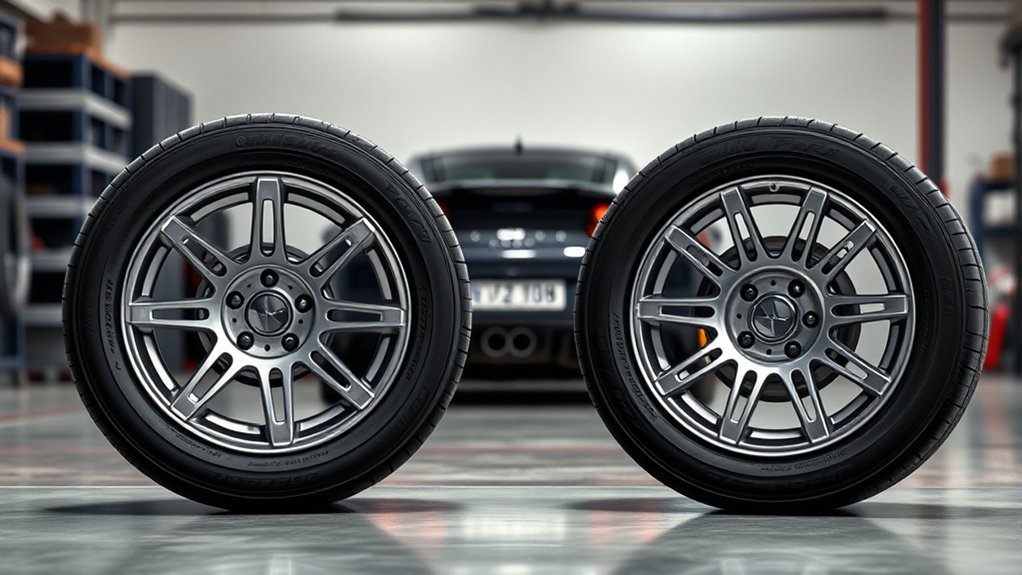
You can sometimes replace 255 tires with 265 tires, or 265 tires with 255 tires, but the 10 mm width difference alone does not determine compatibility. You need to compare the complete tire sizes, approved rim width, overall diameter, load index, speed rating, wheel offset, suspension clearance, and your vehicle manufacturer’s approved fitments before making the change.
Quick Answer
255 and 265 tires are not automatically interchangeable. The numbers mean the tires are nominally 10 mm different in section width, but safe fitment depends on the complete size, rim-width range, overall diameter, load and speed ratings, wheel offset, clearance, and vehicle requirements. Use an OEM-approved size whenever possible.
Key Takeaways
- 255 and 265 describe nominal tire section widths, so the difference is 10 mm, or about 0.39 inch.
- You cannot decide fitment from the first number alone; compare the entire tire-size code.
- Keeping the same aspect ratio while changing from 255 to 265 can change the tire’s overall diameter.
- The replacement tire must fit the wheel’s approved rim-width range and clear the suspension, fenders, liners, brakes, and steering components.
- Load capacity depends on load index and tire specification, not simply on whether the tire is 255 or 265.
- AWD and 4WD vehicles may have especially strict requirements for matching tire circumference.
- Check the driver-door tire placard and owner’s manual before choosing a non-original tire size.
What 255 and 265 Tire Sizes Mean
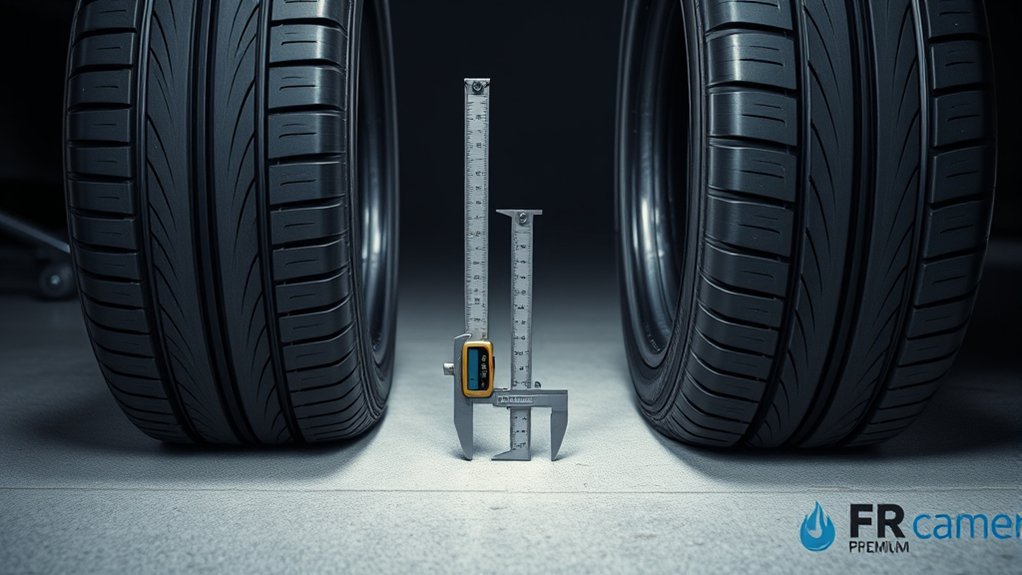
In a metric tire size, 255 or 265 is the tire’s nominal section width in millimeters. It is only the first part of the complete tire designation. Michelin and Continental both explain that the remaining numbers and letters identify characteristics such as aspect ratio, construction, rim diameter, load index, and speed rating. See Michelin’s tire-marking guide and Continental’s tire-sidewall guide.
For example, consider a tire marked 255/65R18:
| Marking | Meaning |
|---|---|
| 255 | Nominal section width in millimeters |
| 65 | Aspect ratio: sidewall height is nominally 65% of section width |
| R | Radial construction |
| 18 | Wheel/rim diameter in inches |
A 265 tire is nominally 10 mm wider than a 255 tire, but that does not mean every 265 is exactly 10 mm wider after installation. Published dimensions can vary between tire models, and wheel width can influence the tire’s mounted shape.
The jump from 255 to 265 is only about 0.39 inch in nominal section width, but width alone cannot tell you the tire’s overall diameter, rim compatibility, load capacity, or vehicle clearance.
The complete designation matters because the aspect ratio is a percentage of the tire’s width. If you increase the first number while keeping the same aspect ratio, the sidewall normally becomes taller as well.
Can You Swap 255 and 265 Tires?
You can sometimes swap between 255 and 265 tires, but there is no universal yes-or-no answer based only on those two numbers. Michelin recommends using the same tire size specified by the vehicle manufacturer or another approved option. If you are considering a different size, verify it against the tire placard, owner’s manual, tire manufacturer specifications, and the vehicle’s available clearance. See Michelin’s guidance on changing tire sizes.
Warning: Do not approve a 255-to-265 swap simply because the diameter difference falls within a percentage rule. A close overall diameter does not prove that the tire fits your wheel, clears the suspension and bodywork, carries enough load, or meets your vehicle manufacturer’s requirements.
Before changing sizes, check these items in order:
- Vehicle-approved sizes: Start with the driver-door tire placard and owner’s manual.
- Complete tire code: Compare width, aspect ratio, construction, and rim diameter.
- Approved rim width: Confirm that your wheel width falls within the tire manufacturer’s approved range for the exact tire model and size.
- Overall diameter and rolling circumference: Keep them close to the original approved setup unless the vehicle manufacturer specifically permits otherwise.
- Load index/load capacity: Do not install a replacement with inadequate load-carrying capacity.
- Speed rating: Follow the vehicle and tire manufacturer’s replacement requirements.
- Physical clearance: Check the fender, liner, strut, spring perch, control arms, brakes, and steering components.
- AWD/4WD requirements: Make sure all tire circumferences meet the drivetrain manufacturer’s requirements.
Why the Same Aspect Ratio Can Change Tire Diameter
One common mistake is assuming that a 255 and a 265 tire should use the same aspect ratio. Because the aspect ratio is a percentage of width, keeping that percentage unchanged usually makes the wider tire slightly taller.
For example, compare the theoretical dimensions of 255/70R17 and 265/70R17:
| Measurement | 255/70R17 | 265/70R17 |
|---|---|---|
| Nominal width | 255 mm | 265 mm |
| Calculated sidewall height | 178.5 mm | 185.5 mm |
| Calculated overall diameter | About 31.06 in | About 31.61 in |
| Diameter difference | — | About +1.8% |
That example shows why you must compare the full size rather than assuming that a 10 mm width increase is the only dimensional change. Actual tire specifications can differ slightly from theoretical calculations, so use the tire manufacturer’s published diameter and revolutions-per-mile data when available.
How 255 Vs 265 Tires Affect Fit
Fitment depends on much more than whether a tire appears to fit inside the wheel well. Important measurements include the tire’s mounted section width, overall diameter, approved rim-width range, wheel offset, suspension geometry, steering travel, and brake clearance.
A 265 tire is nominally 10 mm wider than a 255, which means roughly 5 mm of the nominal width increase lies on each side if every other part of the installation were identical. Real-world positioning can differ because wheel width and offset affect where the tire sits.
The rim-width range is especially important. A wheel that is approved for one 255 tire is not automatically approved for every 265 tire. Tire manufacturers publish acceptable wheel-width ranges for individual sizes. Michelin also notes that moving to a wider tire may require a wider wheel.
If the wheel is outside the tire’s approved range, the tire’s shape and sidewall behavior can change. That can affect handling, wear and clearance. Do not judge compatibility from appearance alone.
Pro Tip: Compare the tire manufacturer’s published overall diameter, section width, approved rim-width range and revolutions per mile for the exact 255 and 265 models you are considering. Those specifications are more useful than comparing only the numbers molded into the sidewall.
Check inner and outer clearance with the steering turned fully left and right. Clearance should also remain adequate when the suspension compresses under passengers, cargo, cornering or bumps.
Pay particular attention to:
- Struts and shock bodies
- Spring perches
- Control arms and steering links
- Inner fender liners
- Fender lips
- Brake calipers and related hardware
- Any manufacturer-required clearance for snow chains or cables
If the fit is marginal, the safer choice is the vehicle manufacturer’s specified tire size or another explicitly approved alternative.
Handling, Ride, and Fuel Economy Differences
Changing from a 255 to a 265 can affect steering, ride and efficiency, but width alone cannot predict exactly how the vehicle will behave. Tire construction, compound, tread design, sidewall height, wheel width, weight, inflation pressure, alignment and road conditions all contribute.
Steering Response Changes
A wider tire can change steering feel and the shape of the tire’s contact area. In some otherwise comparable performance tires, additional width can support stronger dry-road cornering, but it does not automatically guarantee more grip or shorter braking distances.
A 265 may also feel heavier at the steering wheel if the replacement assembly weighs more or has different construction. Another 265 tire with a stiffer carcass or different tread design could respond very differently.
- A 255 may feel lighter or more responsive in some setups.
- A 265 may provide a wider footprint and different cornering behavior.
- Tread compound and construction can matter more than the 10 mm width difference.
- Alignment and correct inflation pressure remain essential for predictable steering.
For that reason, compare actual tire models instead of assuming that every 255 behaves one way and every 265 behaves another.
Ride Comfort Differences
A 265 tire is not automatically firmer than a 255. Ride comfort depends heavily on sidewall height, carcass construction, wheel diameter, load rating, tire pressure and tread design.
If you move to a wider tire while also reducing the sidewall height, the setup may transmit more sharp impacts. A different 265 with a taller or more compliant sidewall could do the opposite.
Road noise is similarly tire-specific. Aggressive all-terrain tread blocks may create more noise than a touring tread, regardless of whether the tire is 255 or 265.
Inflation pressure also matters. Use the pressure specified for the vehicle and approved replacement setup rather than changing pressure merely because the tire is wider.
Fuel Economy Impact
A size change can affect fuel economy, but there is no fixed mileage penalty for moving from 255 to 265. Wider or heavier tires may increase rolling resistance and rotating mass, while tire compounds specifically designed for low rolling resistance may offset part of that effect.
Factors that can change efficiency include:
- Rolling resistance: Different compounds and constructions consume different amounts of energy as they flex.
- Tire and wheel weight: A heavier assembly requires more energy during acceleration.
- Inflation pressure: Underinflation increases tire flex and rolling resistance.
- Tread design: Aggressive tread can create more resistance and noise.
- Overall diameter: A diameter change also alters effective gearing and revolutions per mile.
If fuel economy is a priority, compare the complete tire specifications and tire model rather than using width as the deciding factor.
Speedometer and Clearance Checks
The speedometer does not care whether the tire says 255 or 265. What matters is the tire’s rolling circumference. If the replacement travels farther or less distance per wheel revolution than the original tire, speedometer and odometer readings can change.
Changes in tire circumference can also matter to systems that use wheel-speed information. Continental notes that altered rolling circumference can affect the speedometer, ABS and stability-control systems. Its plus-sizing guidance recommends keeping original-equipment rolling circumference as close as practical and following the vehicle manufacturer’s recommendations. See Continental’s plus-sizing technical bulletin.
Speedometer Accuracy
If the replacement tire has a larger overall diameter, the vehicle travels slightly farther per wheel revolution. In that situation, an uncorrected speedometer can indicate a speed lower than the vehicle’s actual road speed. A smaller replacement diameter can cause the opposite effect.
A useful approximate calculation is:
Actual speed ≈ indicated speed × new tire diameter ÷ original tire diameter
Using the theoretical 255/70R17-to-265/70R17 example above, the diameter increases by roughly 1.8%. At an indicated 60 mph, the corresponding road speed would therefore be roughly 61.1 mph if the vehicle were calibrated perfectly for the original size.
Note: A commonly cited diameter percentage is only a screening tool. Even a replacement with a small diameter difference still needs the correct rim fit, load capacity, speed rating, clearance and vehicle-manufacturer approval.
Wheel Well Clearance
A 265 tire adds 10 mm of nominal section width compared with a 255, but actual clearance depends on the complete tire and wheel combination. Check the vehicle with the steering at full lock and consider suspension compression and vehicle load.
| Check | What to verify |
|---|---|
| Steering lock | No contact at full left or right lock |
| Suspension travel | Adequate clearance when the suspension compresses |
| Inner clearance | Space to the strut, spring perch, control arm and steering parts |
| Outer clearance | No rubbing on the fender or liner |
| Brake clearance | Wheel and tire setup remains compatible with brake hardware |
If wheel width, offset or diameter changes along with the tire size, repeat every clearance check because the tire may move inward or outward relative to the suspension and body.
AWD and 4WD Tire Matching
AWD and 4WD vehicles deserve extra attention. Michelin advises that vehicles using ABS, traction control, AWD or 4WD may require closely matched tire diameters, and some drivetrains can be sensitive to differences in rolling radius or tread depth. See Michelin’s tire-mixing guidance.
Do not mix a 255 and 265 on the same AWD or 4WD vehicle unless that exact staggered arrangement is approved by the vehicle manufacturer. Some vehicles are factory-designed with different front and rear sizes, but that does not make an improvised staggered setup safe.
How to Choose Between 255 and 265 Tires
Choosing between 255 and 265 tires starts with vehicle compatibility, not with deciding which width sounds better. If both complete sizes are approved for your vehicle, you can then compare performance, comfort, price and intended use.
| Priority | What to consider |
|---|---|
| Maximum fitment margin | The narrower approved size may provide more space around fenders and suspension parts. |
| Dry-road handling | Compare the actual tire models, tread compounds and wheel fitment; width alone does not determine grip. |
| Fuel economy | Compare rolling resistance and assembly weight rather than assuming every 255 is more efficient. |
| Towing or cargo | Choose according to the required load index/load range and vehicle ratings, not width alone. |
| Off-road use | Consider tread type, sidewall construction, terrain, approved wheel size and clearance before width. |
| Winter driving | Use a manufacturer-approved winter size and suitable winter tire rather than assuming the wider option is better in snow. |
If the 255 is the factory size and the 265 is not listed as an approved alternative, do not assume the wider tire is an upgrade. Likewise, if the vehicle was designed around a 265, moving to a 255 requires the same complete fitment review.
For towing or heavy cargo, pay particular attention to the tire’s load index, load range where applicable, inflation requirements, and the vehicle’s axle and gross weight ratings. A wider tire does not automatically carry more weight.
Frequently Asked Questions
Do 255 and 265 Tires Use the Same Rim Width?
Sometimes. A wheel may fall within the approved rim-width range of both exact tire sizes, but you cannot assume that from the 255 and 265 numbers alone. Check the tire manufacturer’s specification sheet for each tire model and size before mounting it.
Will 265 Tires Affect My Spare Tire Fit?
They can. If the replacement tires have a different overall diameter, check the vehicle manufacturer’s instructions for using the full-size or temporary spare. Never reduce tire pressure simply to compensate for a size difference or storage problem. Use the specified cold pressure for the spare and vehicle.
Are 255 Tires Cheaper Than 265 Tires?
They may be, but width alone does not determine price. Brand, tire model, construction, load rating, speed rating, tread type, seasonal rating and market availability can make either size more expensive. Compare the exact tires you are considering.
Can Tire Chains Fit Both 255 and 265 Sizes?
Do not assume so. Tire chains and cables are approved for specific tire-size ranges, and the vehicle itself may have strict chain-clearance limits. Match the chain manufacturer’s fitment chart to the complete tire size and follow your vehicle owner’s manual.
Do 255 and 265 Tires Have Different Tread Patterns?
They can, but tread pattern depends mainly on the tire model rather than the width number. Even two sizes of the same model can have small construction or tread-detail differences, while tires from different product lines may use completely different compounds and tread designs.
Will 265 Tires Rub Where 255 Tires Do Not?
Possibly. The nominal width increase is only 10 mm, but rubbing depends on the exact mounted dimensions, wheel width, wheel offset, fender shape, suspension geometry and steering travel. Check both inner and outer clearance at full steering lock and through suspension movement.
Will Going From 255 to 265 Change My Speedometer?
Only if the replacement changes rolling circumference enough to affect calibration. A 265 tire is wider, but it is not automatically taller. Compare the complete sizes and the manufacturer-published overall diameters or revolutions per mile.
Can I Run 255 Tires on One Axle and 265 Tires on the Other?
Only when that staggered tire arrangement is specifically approved for the vehicle. Do not create your own front-to-rear size mismatch, especially on AWD or 4WD vehicles. Tires on the same axle should be matched, and many vehicles require closely matched tires at all four positions.
Conclusion
So, are 255 and 265 tires interchangeable? Sometimes, but not simply because they are only 10 mm apart. A 265 tire is nominally about 0.39 inch wider than a 255, yet the real fitment decision depends on the complete tire size, approved wheel width, overall diameter, load capacity, speed rating, wheel offset, suspension and fender clearance, and vehicle manufacturer requirements.
Do not assume that a wider tire automatically carries more weight, provides better all-weather traction, or requires a different inflation pressure. Check the driver-door placard and owner’s manual first, then verify the exact tire manufacturer specifications. AWD and 4WD vehicles require extra care because mismatched rolling circumferences can affect vehicle systems and drivetrain operation.
Sources
- National Highway Traffic Safety Administration — TireWise — vehicle tire placards, inflation pressure, load and general tire-safety guidance.
- Michelin — Tire Markings Explained — section width, aspect ratio, rim diameter, load index and speed-rating terminology.
- Michelin — Changing Tire Size or Specifications — manufacturer-approved replacement sizing, load capacity and alternate-size guidance.
- Michelin — Mixing Tires — same-axle matching and AWD/4WD considerations.
- Continental Tire — Passenger and Light Truck Plus Sizing Technical Bulletin — rolling circumference, speedometer, ABS, stability-control and replacement-size guidance.

