Disclosure: As an Amazon Associate, we earn from qualifying purchases. If you click a link on this page and make a purchase, we may receive a small commission at no extra cost to you.
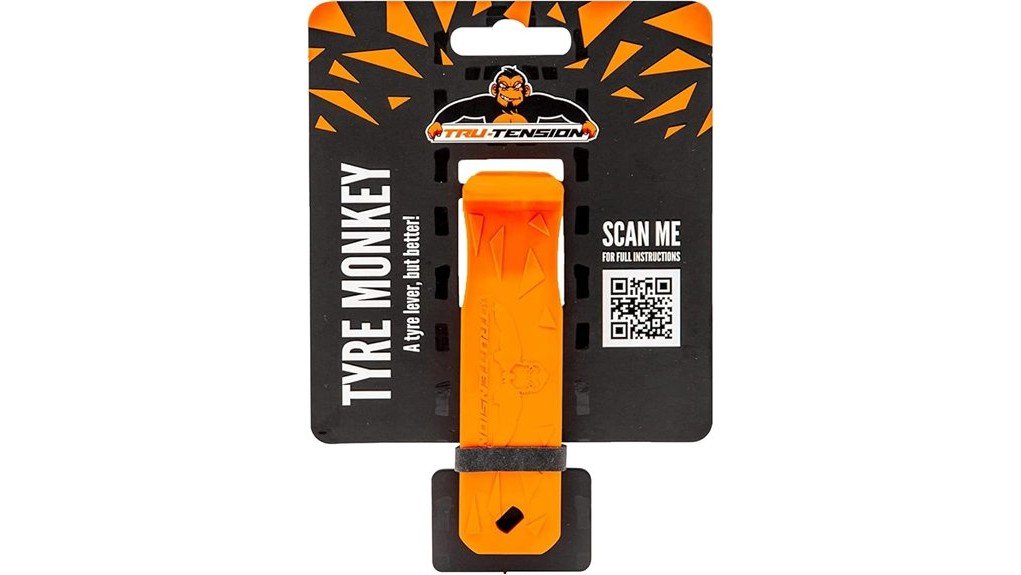
A stubborn bicycle tire can turn a simple tube change into a frustrating roadside delay. The Tru-Tension Tire Monkey is designed to remove and refit a tire with one compact lever, while keeping your hand away from the spokes. Its shaped, fiber-reinforced composite body is easy to carry and works with many common bike, tire, and rim setups. The main limitation is fit: unusually tight tire-and-rim combinations may still require careful technique or a backup lever.
Quick Verdict
Rating: 8.5/10
Best For: Cyclists who want a compact, one-tool tire lever for home maintenance and roadside repairs.
Bottom Line: The Tire Monkey offers a faster, cleaner hand position than many traditional multi-lever methods and fits easily in a saddle bag. It is a strong everyday choice, but no tire lever can guarantee an easy fit on every tight bead and rim combination.
| Specification | Detail |
|---|---|
| Brand | Tru-Tension |
| Model | Tire Monkey, manufacturer SKU BC066 |
| Product type | Bicycle tire removal and installation lever |
| Design | Single-tool hook-and-rotate geometry |
| Material | High-strength, fiber-reinforced plastic composite |
| Bike compatibility | Most road, mountain, electric, children’s, and BMX bicycles |
| Tire systems | Tubed and tubeless bicycle tires |
| Rim types | Hooked and hookless bicycle rims |
| Handedness | Suitable for left- and right-handed users |
| Package note | One Tire Monkey lever |
| Best use | Roadside tube changes, home tire service, and tubeless tire removal |
| Important limitation | May not work equally well with every tire-and-rim combination |
What Is the Tru-Tension Tire Monkey?
The Tru-Tension Tire Monkey is a bicycle tire lever made for both removing a tire bead and pushing it back onto the rim. Unlike a conventional set that may use two or three separate levers, the Tire Monkey is designed to complete both steps with one tool.
Its patent-pending geometry holds your hand at roughly a right angle to the wheel. That position can reduce spoke contact and give you a more controlled path around the rim. The compact body is intended for a jersey pocket, workshop drawer, or saddle bag.
Key Takeaways
- The one-tool design handles both tire removal and refitting.
- The hand position helps keep your knuckles farther from the spokes.
- The fiber-reinforced composite construction balances low weight with everyday durability.
- It is designed for tubed and tubeless tires on hooked and hookless rims.
- Compatibility is broad, but an exceptionally tight bead may still require patience or a second lever.
Who Should Buy It?
Best For
- Road, mountain, e-bike, and BMX riders who carry a compact repair kit.
- Home mechanics who want one lever for both bead removal and installation.
- Riders who often struggle with awkward hand placement near the spokes.
Skip If
- You need a guaranteed solution for an unusually tight or damaged tire-and-rim combination.
- You prefer a traditional lever set with spoke hooks and familiar multi-lever technique.
- You want a complete puncture kit with a tube, patches, inflation, and tire boot included.
Before You Buy: This is a tire lever, not a complete flat-repair system. You still need the correct spare tube or repair supplies, plus a pump or inflator. Very tight beads can also resist any plastic lever, so test the tool on your own wheel setup before relying on it during a long ride.
[Products Worth Considering]
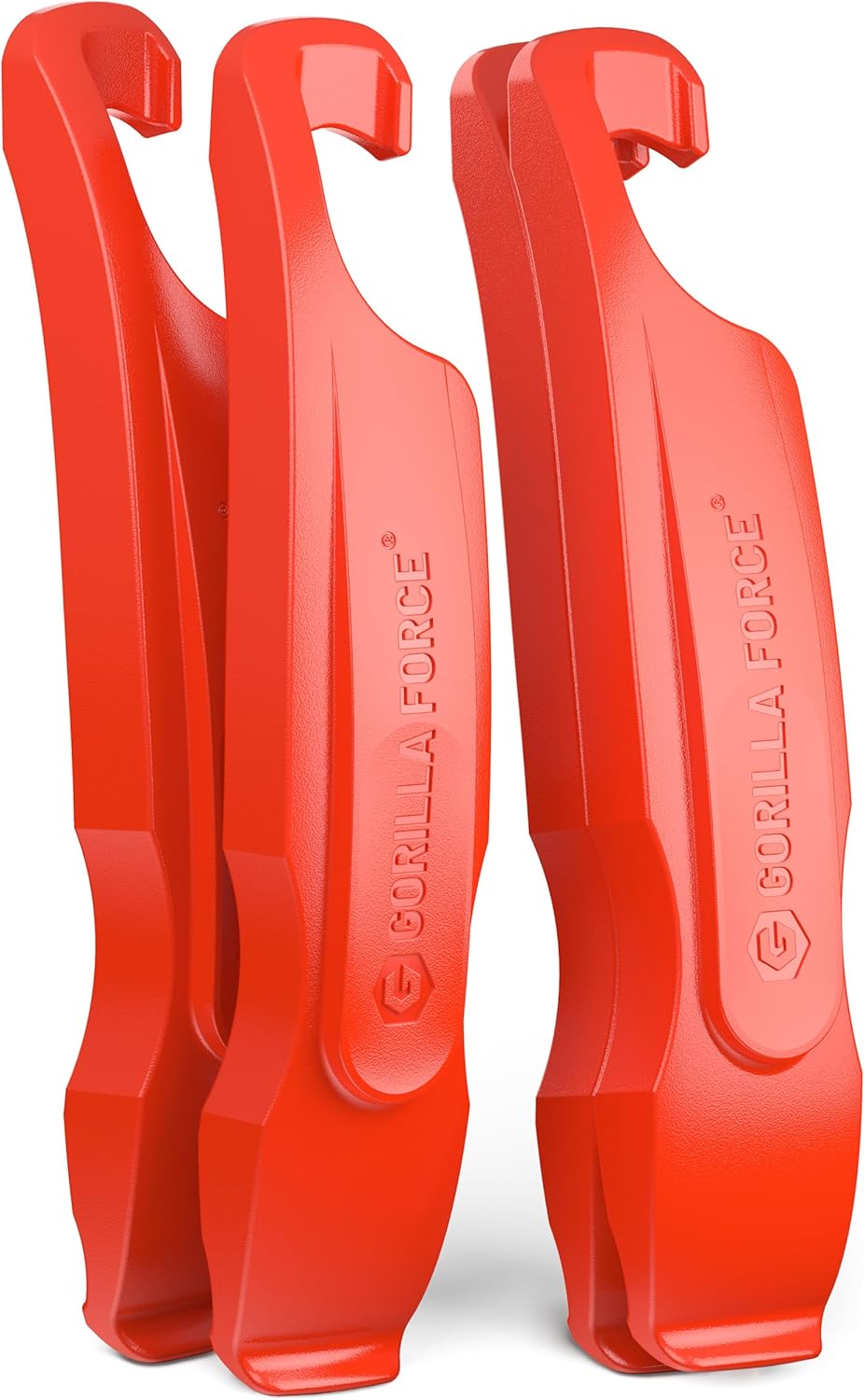
Gorilla Force tire levers make removing and installing even super-tight tires easier, using a stubby chisel tip and controlled leverage to lift the bead over the rim. Engineered, no-scratch plastic helps protect aluminum and carbon rims while providing smooth, reliable pry action. Designed for road, MTB, gravel, and e-bike tires, these compact levers clip together and include a spoke clip system for secure holding during tough changes.
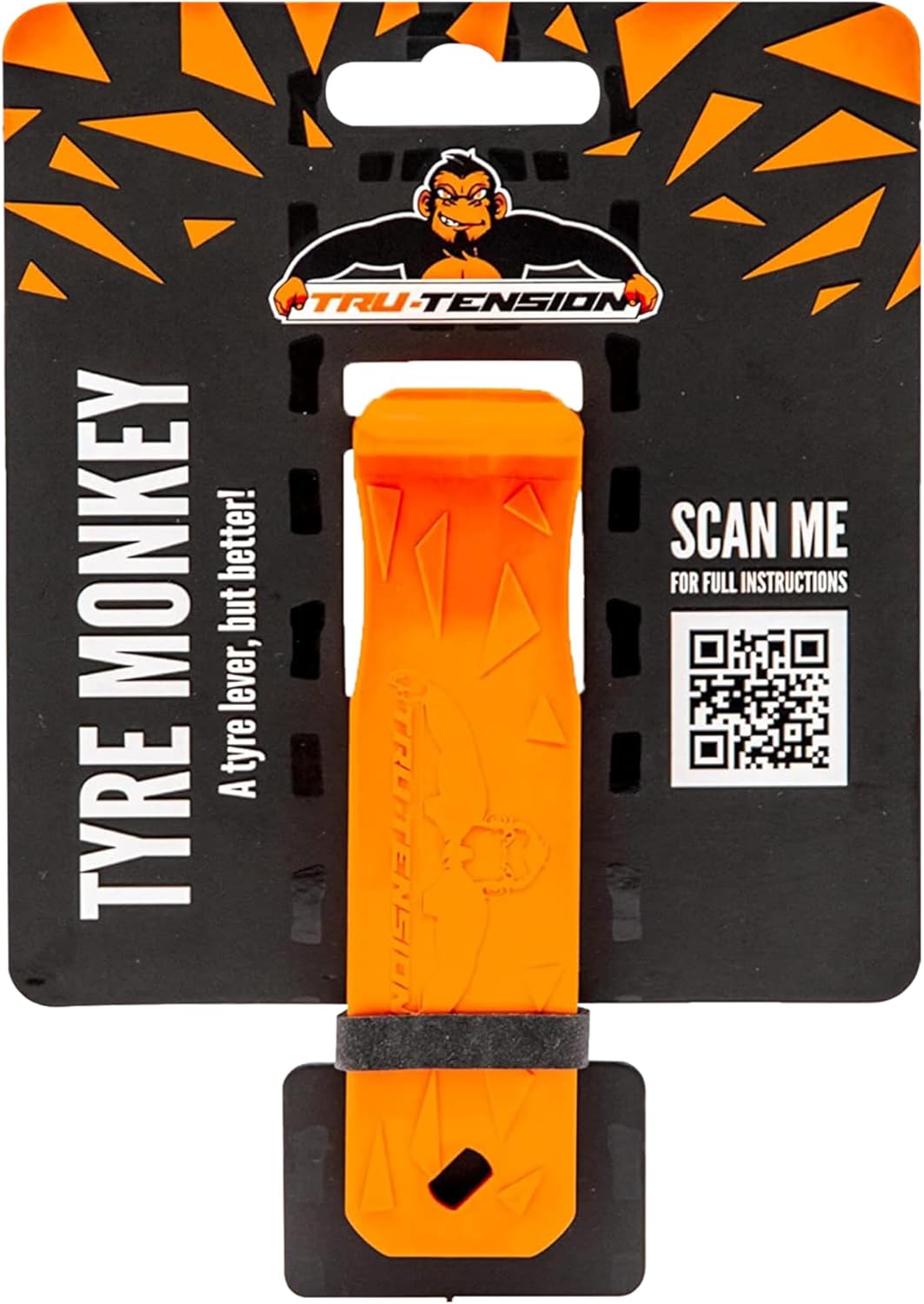
The Tru-Tension Tyre Monkey is a revolutionary bicycle tyre lever that makes removing and fitting tires fast and easy. Its innovative geometry helps keep your hand at a 90-degree angle to the wheel to reduce the risk of hitting spokes, and the design is optimized to use only one tool instead of multiple conventional levers. Compact and durable, it’s built for convenient carry and reliable tire changes on the go.

The Park Tool TL-1.2 tire lever set is narrow, strong, smooth, and versatile for easy tire removal and reliable work on bike tires. It includes a spoke hook design to help when multiple levers are needed. With Park Tool’s industry-standard reputation, this set is ideal for fast flat-fix repairs.
How Does the Tire Monkey Speed Up Tire Changes?
The Tire Monkey uses a hook-and-rotate motion rather than repeated levering and repositioning. For removal, you place the hooked section under the tire bead and guide the tool around the rim. For refitting, the opposite working edge hooks onto the rim and pushes the bead inward as you rotate it.
This continuous movement can reduce the stop-start process common with separate levers. You also avoid holding one lever against a spoke while reaching for another. The benefit is most noticeable when the bead is already loosened and sitting in the rim’s center channel.
The tool does not remove the need for correct technique. If the bead remains stretched over the outer shoulder of the rim, the final section can still feel extremely tight. Moving the bead into the deepest part of the rim first gives you more slack.
Materials and Build Quality
Tru-Tension makes the Tire Monkey from a high-strength, fiber-reinforced plastic composite. That material is lighter and less likely to scratch a rim than an exposed metal pry tool when used correctly. It also gives the lever a solid, shaped body without the weight of a workshop-grade steel tool.
The broad profile spreads pressure across your hand better than a thin lever. However, composite does not mean unbreakable. Twisting the tool sideways, forcing it into a damaged bead, or using it for a task other than bicycle tires can shorten its life.
Is the Tire Monkey Easier on Your Hands?
Its geometry is designed to keep your hand at about 90 degrees to the wheel. This position places your knuckles farther from the spokes and lets you guide the tool with your palm and fingers instead of repeatedly prying upward.
That can make a roadside change feel more controlled, especially when your hands are cold, wet, or tired. You still need steady pressure, and a very tight bead can demand effort. The tool improves leverage and hand position, but it cannot correct a poorly seated bead or incompatible tire-and-rim fit.
Fit and Compatibility
The manufacturer lists the Tire Monkey for most common bicycle types, including road bikes, mountain bikes, e-bikes, children’s bikes, and BMX bikes. It is also designed for tubed and tubeless tires, hooked and hookless rims, and both left- and right-handed users.
Broad compatibility should not be read as a guarantee for every wheel. Tire casing stiffness, rim-bed depth, bead diameter, rim tape thickness, and temperature can all affect how difficult a tire is to remove. A damaged bead or dented rim should be inspected before you apply more force.
Will the Tire Monkey Fit in Your Saddle Bag?
Yes. Its compact shape is intended to take up about the same space as a standard tire lever, so it fits beside a spare tube, patch kit, mini pump, or CO2 inflator in most saddle bags. Carrying one lever instead of a stacked set can also reduce clutter.
The shape is more substantial than a very thin emergency lever, so check the fit if you use an ultra-small race bag. It also helps to keep the tool away from sharp metal items that could scrape or deform its working edges.
How It Performs in Real Use
Roadside Tube Changes
For a normal puncture, the one-tool process keeps the repair simple. Once the wheel is removed and fully deflated, the Tire Monkey can lift the bead and travel around the rim without repeatedly swapping levers. Its compact size makes it easy to leave in your kit full time.
Home Workshop Maintenance
At home, the Tire Monkey is useful for rotating tires, replacing worn casings, or installing a new tube. A work stand is optional, but a stable wheel position makes the hook-and-rotate motion easier to control. You can also inspect the tire, rim tape, and bead before refitting.
Tubeless Tire Service
The tool can help remove a tubeless tire after the bead is fully unseated. Work slowly because sealant can make the tire slippery. Before refitting, clean the bead seat, inspect the rim tape, and follow the tire and rim makers’ inflation limits.
Very Tight Beads
This is the hardest scenario. The Tire Monkey can reduce hand strain, but it may not solve a bead that has no usable slack. Push both sides of the tire into the center channel, start opposite the valve, and stop if the bead or rim begins to deform.
How to Use It Correctly
- Deflate the tire fully. Remove the wheel if needed and press the bead away from the rim wall on both sides.
- Create slack. Move the bead into the center channel around the wheel, especially opposite the section you plan to lift.
- Remove the tire. Hook the removal edge under the bead, hold the tool square to the rim, and rotate it around the wheel with controlled pressure.
- Refit the tire. Seat most of the bead by hand, hook the fitting edge onto the rim, and guide the remaining bead inward.
- Check before inflation. Make sure the tube is not pinched, the bead is even, and the valve is straight. Inflate only to the limits stated by the tire and rim manufacturers.
Pro Tip: Start the final section of bead opposite the valve and keep squeezing the mounted bead into the rim’s center channel. That small amount of extra slack often matters more than using additional force.
Compatibility and Safety
Use the Tire Monkey only as a bicycle tire lever and inspect it for cracks, sharp damage, or a deformed hook before each use. Keep the tool aligned with the rim instead of twisting it sideways. Excessive sideways force can damage the lever, tire bead, rim tape, or rim finish.
For carbon rims, hookless systems, and tubeless setups, follow the wheel and tire manufacturers’ service instructions. Stop if you see bead damage, exposed casing threads, a dented rim, or lifted rim tape. A bike shop should inspect any component you are unsure about.
Pros and Cons
Pros
- One tool is designed to handle both bead removal and refitting.
- Right-angle hand position helps reduce contact with spokes.
- Compact enough for most jersey pockets and saddle bags.
- Works with tubed and tubeless tires on hooked and hookless rims.
- Fiber-reinforced composite avoids the exposed edges of a metal pry tool.
Cons
- May not work equally well with every tight tire-and-rim combination.
- Requires correct bead placement in the rim’s center channel.
- Does not include puncture supplies or an inflation device.
Is It Worth the Price?
The Tire Monkey sits above the simplest generic plastic lever sets, but its value comes from the shaped one-tool design rather than extra pieces. It makes the most sense for riders who change tires often, carry a small repair kit, or dislike the hand position of traditional levers.
It is also a practical upgrade for a home toolbox because the same tool handles removal and refitting. The value is weaker if you rarely service your own tires or already use a conventional set comfortably. It is worth considering for convenience, not because it guarantees that every difficult bead will become easy.
[Products Worth Considering]

A portable bicycle repair bag built for on-the-go maintenance, pairing a scalable mini tire pump with a multi-tool, crank and bone wrenches, tire levers, and self-adhesive glueless patches. The included patch set helps you quickly seal punctures using the integrated prep/rasp step, while the waterproof nylon bag keeps tools organized and easy to access. Ideal for road, mountain, and home bike emergencies, repairs, and routine adjustments.

This PXZBLG bike repair kit helps you tackle common tire and on-the-ride issues with a compact, ride-ready tool collection. It includes a mini tire pump supporting both Presta and Schrader valves, a 16-in-1 bike multitool, tire levers, glueless patches with a plastic box, plus 4mm and 5mm Allen wrenches. A convenient bike bag stores everything so you can mount it on your road bike or mountain bike for lightweight, portable preparedness.

This heavy-duty bicycle rim liner provides complete tube protection by shielding the inner tube from rim spoke holes and sharp metal burrs that can cause flats. Made from premium, wear-resistant PVC, it lays flat with optimized 18 mm width and 0.50 mm thickness for edge-to-edge coverage. Installation is quick with flexible stretch placement and a secure, non-slip fit.
How It Compares to Alternatives
Park Tool’s TL-4.2 uses a familiar two-lever set with spoke hooks, while Pedro’s sells a paired lever design with a chisel-shaped tip. Those options suit riders who prefer traditional technique and a backup lever in hand.
The Tire Monkey takes a different approach by combining removal and refitting into one shaped tool. Choose it for a continuous hook-and-rotate motion and compact carry. Choose a standard pair if you prefer working one small section of bead at a time.
[Products Worth Considering]

Get back on the road fast with this bike frame bag repair kit, featuring a 120 PSI mini pump, a 16 in 1 multi-function tool, and a glueless tire patch kit. The compact triangle bag provides 2L storage for essentials like phone, keys, and tools, while the included rasp and tire levers make quick flat repairs possible. Designed for commuting and trail riding, it supports both Presta and Schrader valves for versatile emergency inflation.

This 2-pack bicycle inner tube set is designed for kids, road, and MTB bikes with 20-inch tires in the 1.75 to 2.125 width range, using a 32mm AV Schrader valve. Each tube includes two tire levers for easier installation and safer handling while swapping tubes. Butyl rubber delivers reliable air retention, elasticity, and comfort for everyday rides.

The Tyre Glider is the original clip-on bicycle tyre lever designed to glide tyres on and off with controlled, effortless use. Its reinforced, glass-filled nylon construction helps it withstand high forces without snapping, while the smooth polymer surface protects rims and tubes. Universal compatibility makes it suitable for a wide range of tyres, including road, MTB, and gravel, for both tubed and tubeless setups.
Frequently Asked Questions
Can the Tire Monkey work with tubeless tires?
Yes. Tru-Tension lists it for tubeless and tubed bicycle tires. Fully unseat the bead first, control any sealant spill, and follow the tire and rim makers’ service instructions.
Is the Tire Monkey suitable for mountain bike tires?
Yes. It is marketed for mountain bikes as well as road, electric, children’s, and BMX bikes. Actual effort still depends on the tire casing, bead, rim depth, and condition.
Will one Tire Monkey replace a full lever set?
The tool is designed to remove and refit a tire by itself. A backup lever can still be useful for an unfamiliar or exceptionally tight setup, especially on a long trip.
What material is the Tire Monkey made from?
The current manufacturer description specifies a high-strength, fiber-reinforced plastic composite. It is designed to stay light enough for carrying while providing a durable working shape.
Does the Tire Monkey come in different colors?
The reviewed listing does not clearly confirm a selectable color range. Check the current product page before ordering if color matters to you.
Is the Tire Monkey covered by a warranty?
A specific warranty term was not clearly stated in the verified product information. Review the current seller and manufacturer policies before purchase because coverage can vary by region and retailer.
Does it replace a spare tube, patch kit, or pump?
No. The Tire Monkey only helps remove and install the tire. You still need the repair parts and inflation equipment required for your tubed or tubeless setup.
The Bottom Line
The Tru-Tension Tire Monkey is a smart choice for cyclists who want a compact lever that handles both removal and refitting with a cleaner hand position. Its main strengths are the one-tool workflow, broad bicycle compatibility, and easy storage, while its main limitation is that very tight tire-and-rim combinations can still resist. Skip it if you want a complete puncture kit or strongly prefer traditional paired levers.