A flat bike tire is usually fixable with a spare tube or patch kit, two tire levers, and a pump. The key is not just getting air back in the tire—it is finding what caused the flat, removing that hazard, seating the tire bead evenly, and checking the brakes before you ride again.
Quick Answer
To fix a flat bike tire, remove the wheel, take one tire bead off the rim, pull out the tube, find and remove the cause of the puncture, patch or replace the tube, reseat the tire, inflate it within the tire and rim limits, reinstall the wheel, and test the brakes.
Key Takeaways
- Always find the cause of the flat before installing a new or patched tube.
- Use tire levers, not screwdrivers or knives, so you do not damage the rim, tire, or tube.
- Replace the tube if the valve is damaged, the tear is large, or the tube keeps leaking.
- Inflate to a safe pressure for your tire and rim, not a random PSI number.
- Do a final brake, axle, and bead check before riding.
At a Glance
| Time Required | 10–25 minutes once you know the steps |
| Difficulty | Beginner-friendly with basic bike tools |
| Tools Needed | Tire levers, spare tube or patch kit, pump or CO2 inflator, and a wrench if your wheel uses axle nuts |
| Cost | Usually the cost of a tube, patch kit, or tire boot if the tire casing is damaged |
Warning: If you are fixing a flat roadside, move away from traffic first. Do not ride until the wheel is fully secured, the tire bead is seated evenly, and both brakes work normally.
Tools and Supplies You Need
For a standard bike with inner tubes, carry these basics:
- Two tire levers
- A spare tube that matches your tire diameter, width, and valve type
- A patch kit for small tube punctures
- A hand pump or CO2 inflator that fits your valve
- A small wrench if your bike uses axle nuts instead of a quick-release or thru-axle
- A tire boot or folded emergency material for a cut tire casing
- A rag or glove to keep your hands clean around the chain
Most beginner flat repairs are tube repairs. If your bike is tubeless, the repair process is different: small punctures may seal with sealant, while larger holes often need a tubeless plug. Park Tool notes that stick-on tube patches are for inner tubes, not tubeless tire bodies.
[Products Worth Considering]

The Park Tool TL-1.2 tire lever set is narrow, strong, smooth, and versatile for easy tire removal and reliable work on bike tires. It includes a spoke hook design to help when multiple levers are needed. With Park Tool’s industry-standard reputation, this set is ideal for fast flat-fix repairs.
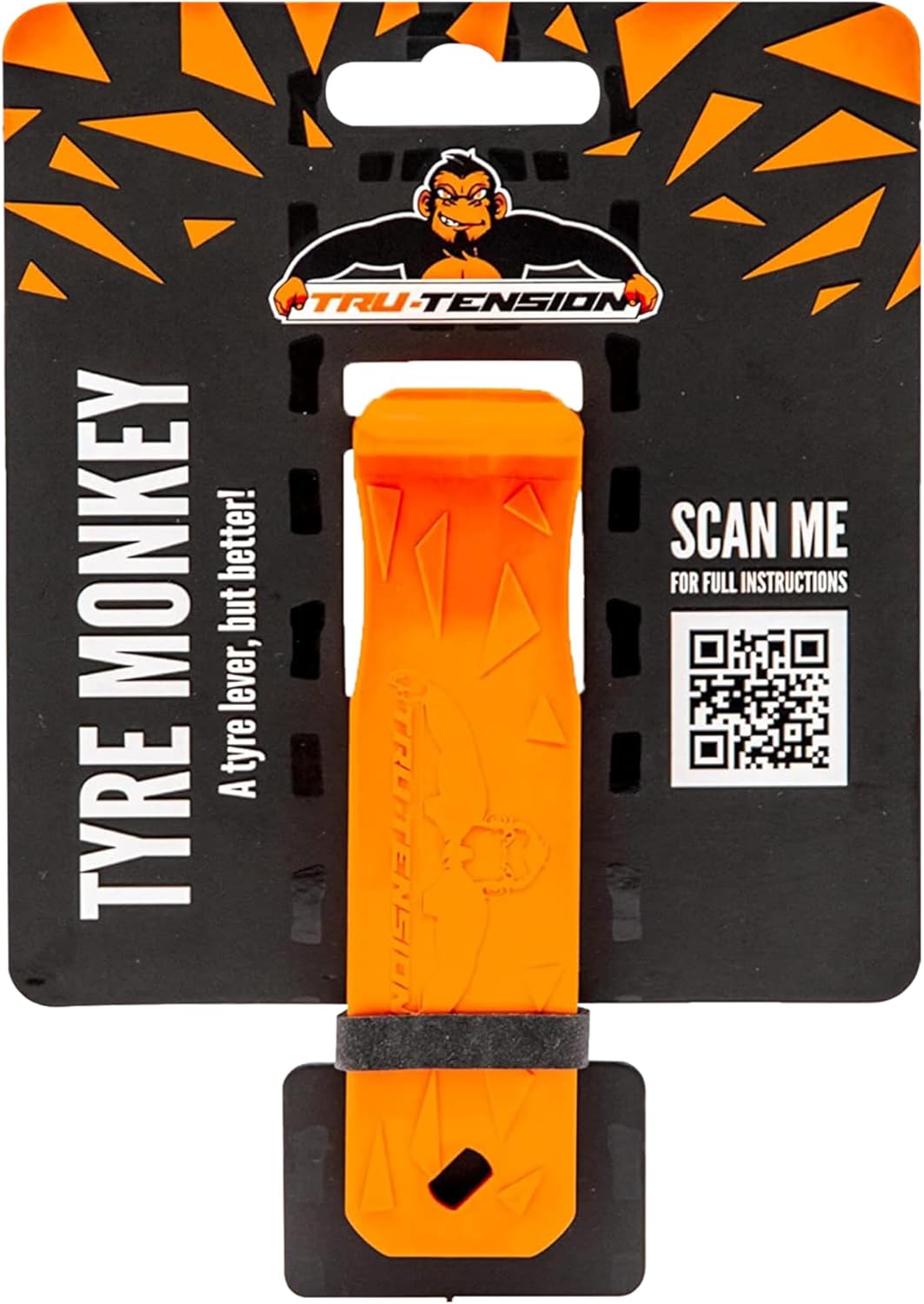
The Tru-Tension Tyre Monkey is a revolutionary bicycle tyre lever that makes removing and fitting tires fast and easy. Its innovative geometry helps keep your hand at a 90-degree angle to the wheel to reduce the risk of hitting spokes, and the design is optimized to use only one tool instead of multiple conventional levers. Compact and durable, it’s built for convenient carry and reliable tire changes on the go.

FANSPRO’s 2-pack 26-inch bicycle inner tubes are built for reliable performance on road and mountain bikes. They fit tire widths from 2.125 to 2.40 inches and use a 48mm Schrader valve for convenient inflation. The set includes two durable tire levers to help you remove and install tubes quickly after a flat.
Remove the Wheel From a Flat Bike Tire
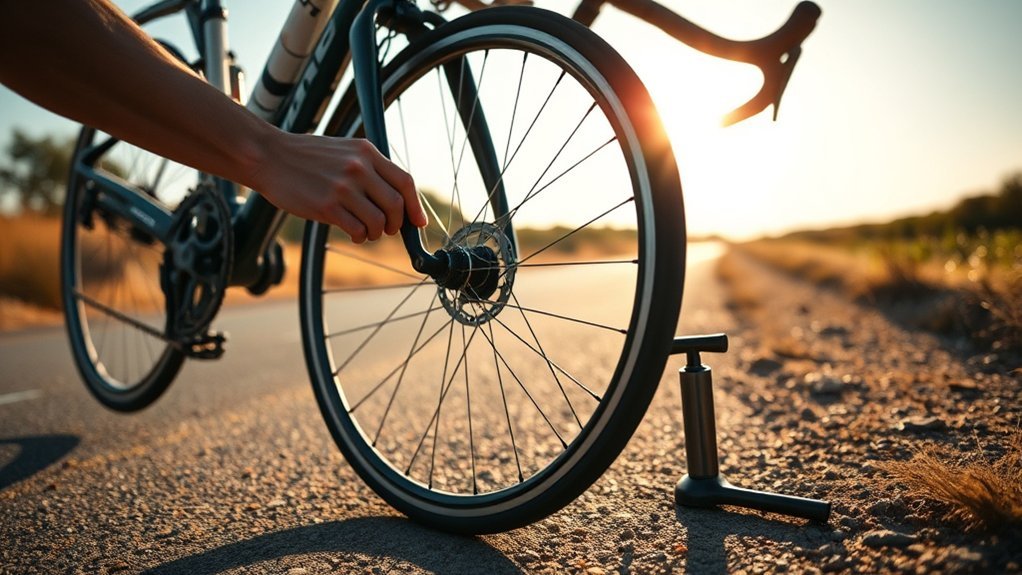
Start by releasing the brakes if your bike has rim brakes. On many v-brakes, squeeze the brake arms together and unhook the cable noodle. On bikes with a brake quick-release, open the lever so the tire can pass through the pads. If your bike has disc brakes, avoid squeezing the brake lever while the wheel is out.
If you are removing the rear wheel, shift the chain onto the smallest rear cog first. This reduces chain tension and makes the wheel easier to remove. Then open the quick-release lever, loosen the thru-axle, or use a wrench to loosen the axle nuts. Hold the bike steady and guide the wheel straight out of the fork or frame.
Pro Tip: If you are new to bike repair, practice removing and reinstalling both wheels at home. It is much easier to learn before you are tired, cold, or stuck on the side of the road.
Pry Off the Tire and Pull Out the Tube
Deflate the tube completely if any air remains. If the valve has a small retaining nut, loosen it before trying to remove the tube.
Slip a tire lever under one side of the tire bead and pry the bead over the rim. Hook the lever to a spoke if your lever has a spoke hook. Place a second lever a few inches away and work around the rim until one side of the tire is loose. You only need to remove one tire bead to pull the tube out.
Start at the valve stem and carefully pull the tube out of the tire. Keep the tire partly mounted on the rim if you can; this makes it easier to line up the puncture in the tube with the matching spot on the tire.
Warning: Do not use a screwdriver, knife, or other sharp tool as a tire lever. Sharp tools can cut the tube, damage the tire bead, or scratch the rim.
Find What Caused the Flat
Do not skip this step. If a thorn, staple, glass shard, wire, or sharp spoke is still in place, the next tube can go flat right away.
- Inspect the outside of the tire. Look for glass, thorns, nails, cuts, or embedded wire.
- Check the inside of the tire carefully. Run a cloth around the inside casing. If the cloth snags, inspect that spot closely. Use caution with your bare fingers because glass or wire can cut you.
- Inflate the removed tube slightly. Listen for hissing and feel for escaping air.
- Use water if needed. If the leak is hard to find, submerge part of the tube in water and watch for bubbles.
- Check the valve stem. Cracks, cuts, or leaks at the valve usually mean the tube should be replaced.
- Inspect the rim and rim tape. A sharp spoke end, damaged rim strip, or exposed spoke hole can puncture the tube from the inside.
The shape and location of the hole can also tell you what happened. One small hole often means a thorn or glass puncture. Two side-by-side slits often mean a pinch flat from hitting a curb or pothole with too little pressure.
Patch the Tube or Replace It
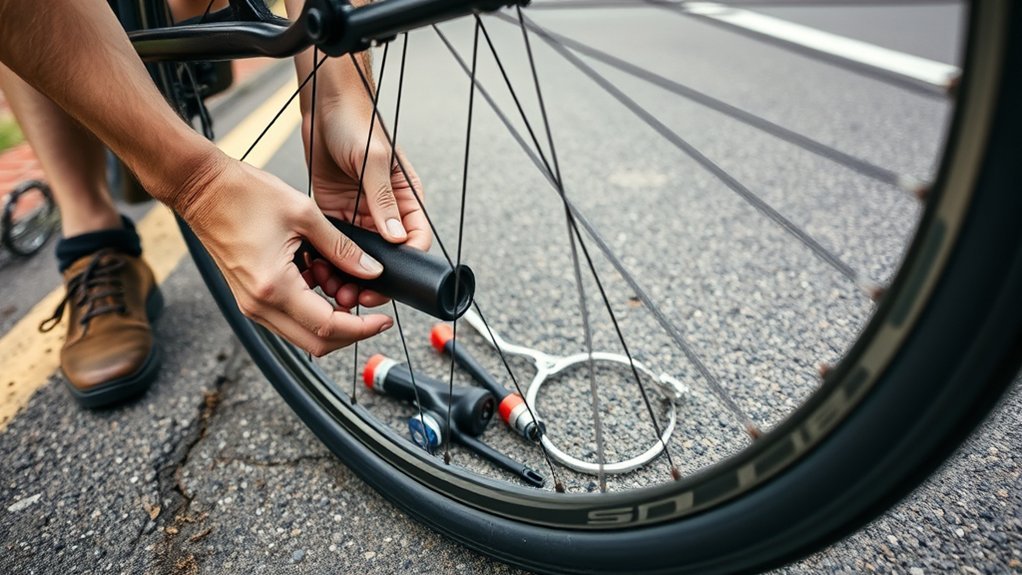
Patch the tube if the puncture is small and the tube is otherwise in good condition. Clean and dry the damaged area, roughen it lightly with the sandpaper from your patch kit, apply the adhesive if your kit requires it, and press the patch firmly in place. Let the patch set according to the patch kit instructions before reinstalling the tube.
Replace the tube instead of patching it if:
- The valve stem is torn, cracked, or leaking.
- The tube has a long cut or multiple punctures close together.
- The tube failed along a seam.
- The rubber is old, brittle, or stretched.
- You need the fastest roadside repair and can patch the old tube later at home.
Match the replacement tube to the tire size printed on the tire sidewall. Also match the valve type: Schrader valves are wider and common on many casual bikes, while Presta valves are narrower and common on road, gravel, and performance bikes.
Note: If the tire casing has a visible cut or sidewall tear, the tube may bulge through the opening. Use a tire boot as a temporary fix and replace the damaged tire as soon as possible.
[Products Worth Considering]

This 2-pack bicycle inner tube set is designed for kids, road, and MTB bikes with 20-inch tires in the 1.75 to 2.125 width range, using a 32mm AV Schrader valve. Each tube includes two tire levers for easier installation and safer handling while swapping tubes. Butyl rubber delivers reliable air retention, elasticity, and comfort for everyday rides.
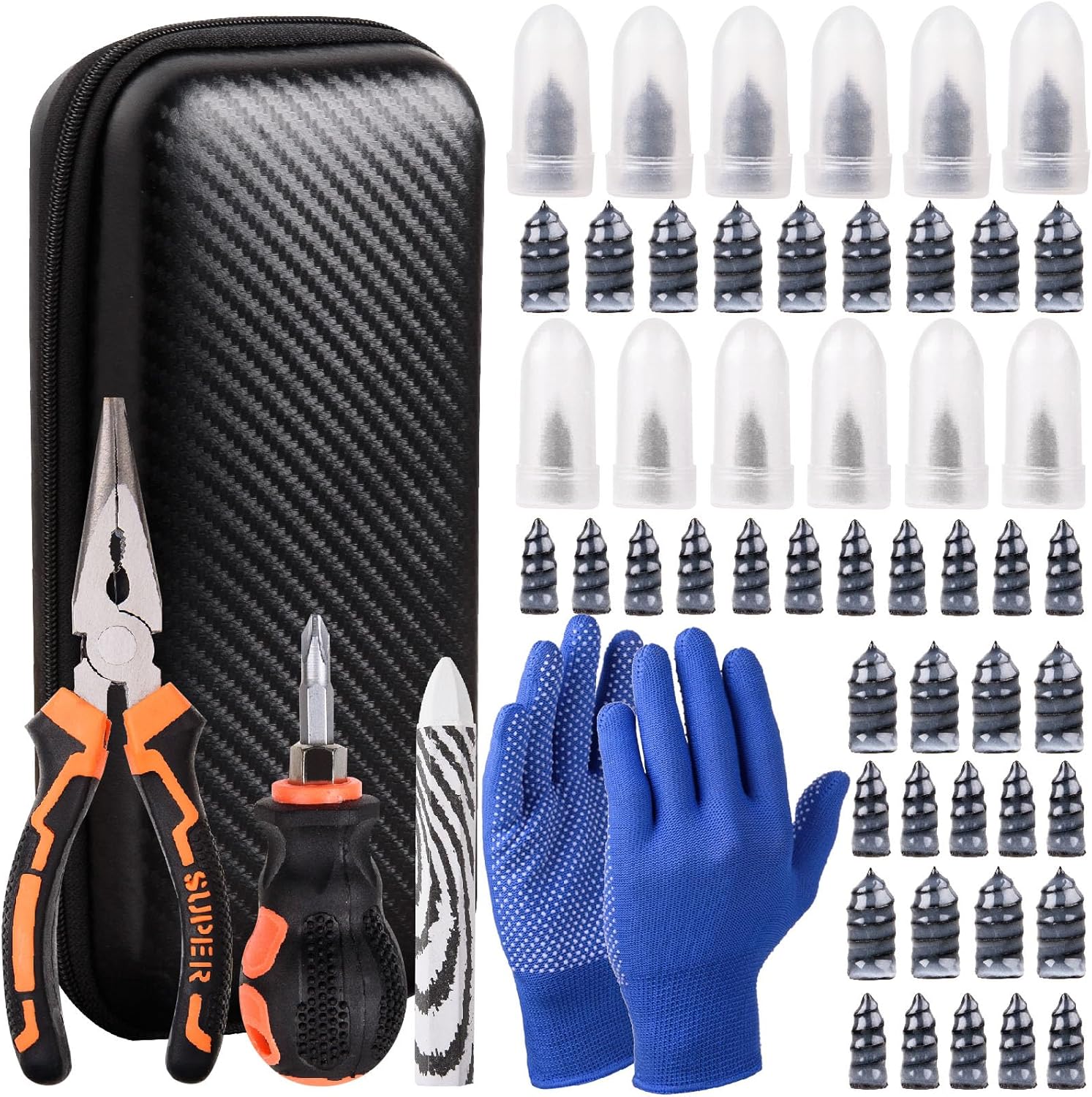
This tire sidewall puncture repair kit fixes flats fast without removing the tire, helping you get back on the road in minutes. It includes self-tapping repair nails, essential tools, gloves, and a portable storage bag for convenient roadside use. Designed for tubeless tires, it helps create a tight, leak-resistant seal for cars, motorcycles, trucks, SUVs, and ATVs.

This heavy-duty bicycle rim liner provides complete tube protection by shielding the inner tube from rim spoke holes and sharp metal burrs that can cause flats. Made from premium, wear-resistant PVC, it lays flat with optimized 18 mm width and 0.50 mm thickness for edge-to-edge coverage. Installation is quick with flexible stretch placement and a secure, non-slip fit.
Reinstall the Tube and Reseat the Tire
Add just enough air to the repaired or replacement tube so it takes shape. A slightly inflated tube is easier to position and less likely to twist inside the tire.
Valve Stem Position
Insert the valve stem through the rim hole first. Keep the valve straight rather than angled. An angled valve can tear near the base once the tire is inflated.
- Place the tube evenly inside the tire.
- Check that the tube is not folded, twisted, or trapped under the tire bead.
- Push the valve upward slightly while seating the bead near the valve so the tube does not get pinched there.
Seat Tire Bead
Starting near the valve, use your thumbs to push the loose tire bead back over the rim. Work evenly around both sides. Try to finish the last tight section opposite the valve, where the tire usually has the most room.
If the bead becomes hard to move, pause and squeeze the already-mounted parts of the tire toward the center channel of the rim. This creates extra slack. Avoid using a tire lever for the final section unless absolutely necessary because it can pinch the new tube.
Before full inflation, inspect both sides of the tire. The tube should not be visible anywhere between the tire bead and rim. Inflate a little, stop, check the bead line, and then continue inflating only if the tire is seated evenly.
Put the Bike Wheel Back On
Align the axle with the dropouts and seat the wheel fully in the fork or frame. For a rear wheel, pull the derailleur back gently and guide the chain onto the smallest rear cog as the wheel moves into place.
Align Axle With Dropouts
Make sure the axle sits fully in the dropouts before tightening anything. The wheel should be centered between the fork blades or frame stays. If it sits crooked, loosen it, reseat it, and try again.
- Slide the axle fully into the dropouts.
- Center the wheel in the fork or frame.
- Confirm the tire does not rub the frame, fork, or brake pads.
Reconnect Chain and Gears
For the rear wheel, the chain should run over the smallest rear cog and through the derailleur normally. Spin the pedals gently by hand to confirm the chain moves smoothly. If the chain skips or binds, stop and check that the wheel is fully seated and the chain is correctly routed.
Secure Quick-Release or Nuts
Close the quick-release lever firmly, tighten the thru-axle, or tighten the axle nuts with a wrench. The wheel should not shift when you push it side to side. If you opened rim brakes earlier, reconnect them now.
- Quick-release: The lever should close with firm resistance, not flop loosely.
- Thru-axle: Tighten according to your bike or axle markings.
- Axle nuts: Tighten both sides evenly while keeping the wheel centered.
Inflate the Tire and Test the Brakes
Inflate the tire to a safe pressure for your tire, rim, rider weight, and riding surface. The tire sidewall usually lists a pressure range or maximum pressure, and some rims also have maximum pressure limits. Do not exceed the lower maximum limit between the tire and rim.
As you inflate, watch the bead line on both sides of the tire. It should sit evenly all the way around the rim. If part of the bead dips low or bulges high, stop, deflate the tire, reseat the bead, and inflate again.
Spin the wheel and look for wobbling, rubbing, or brake drag. Squeeze both brake levers firmly. The pads or rotor should engage normally and stop the wheel without delay. Take a slow test roll before returning to normal riding speed.
A flat repair is not finished when the tire holds air. It is finished when the wheel is secure, the tire bead is seated evenly, and the brakes work.
Troubleshooting Common Problems
[Products Worth Considering]

A portable bicycle repair bag built for on-the-go maintenance, pairing a scalable mini tire pump with a multi-tool, crank and bone wrenches, tire levers, and self-adhesive glueless patches. The included patch set helps you quickly seal punctures using the integrated prep/rasp step, while the waterproof nylon bag keeps tools organized and easy to access. Ideal for road, mountain, and home bike emergencies, repairs, and routine adjustments.
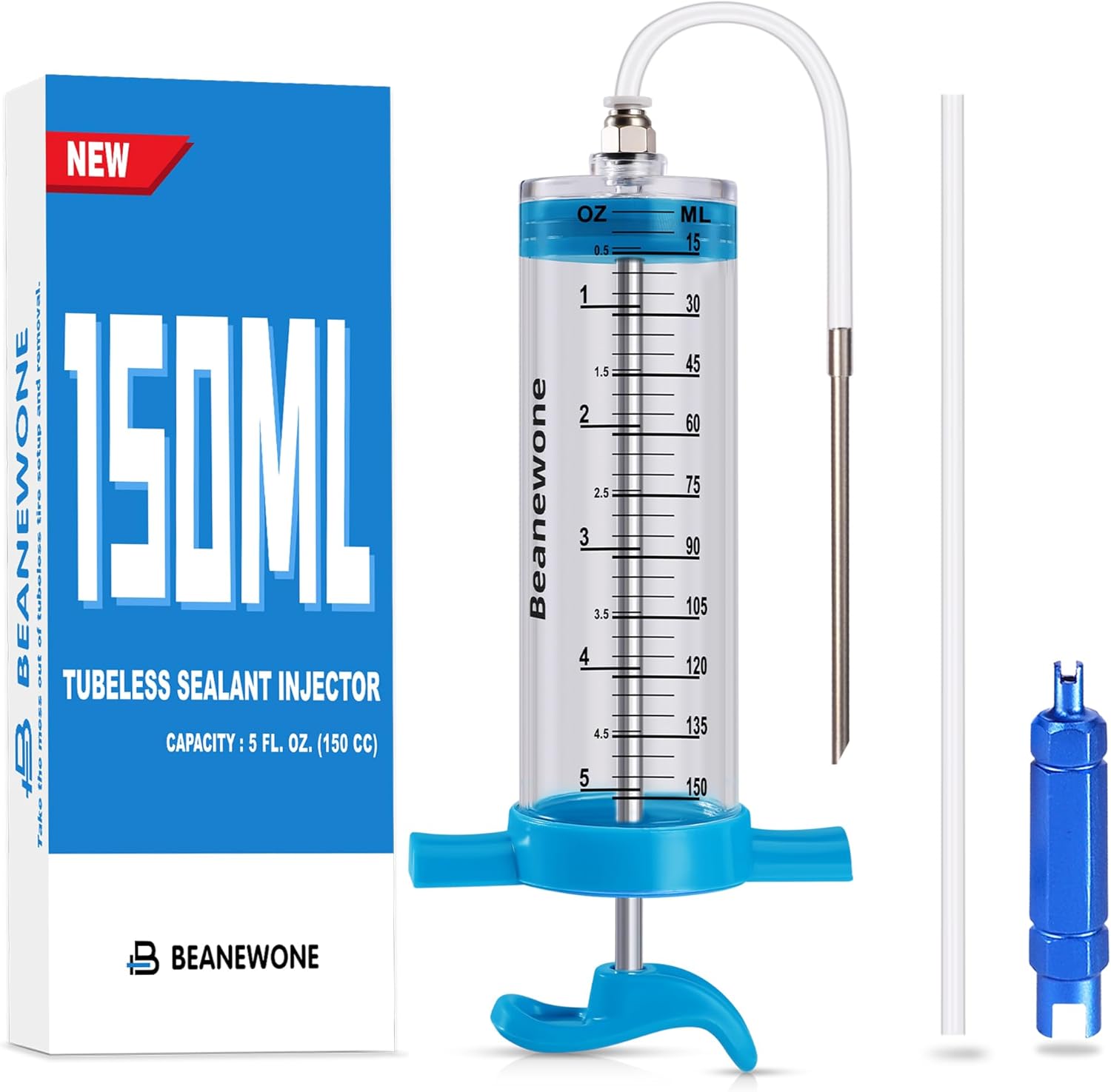
Make tubeless sealant installs faster and cleaner with this 150ml injector and clear measurement body. It connects and disconnects with a simple push-to-connector, then injects sealant directly into Schrader or Presta valve stems after removing the valve core. Includes a valve core remover tool to help you prepare and seal tires with less mess.

TireJect Off-Road Tire Sealant Kit provides 5-in-1 sealing to help fix tread punctures up to 3/8", sidewall punctures up to 3/8", bead leaks, slow leaks, and minor dry rot on low-speed tires. It permanently seals with liquid rubber, recycled tire particles, and Aramid fibers, making it ideal for flats caused by thorns, nails, and screws. The included dispensing cap attaches to the valve stem for a no-mess installation, along with a metal valve core remover tool and valve stem cap. This kit is for off-road use only.
The Tire Goes Flat Again Right Away
Remove the tube and inspect the tire, rim tape, valve hole, and spoke holes again. A missed thorn, glass shard, metal wire, sharp rim edge, or damaged rim strip is often the cause.
The Tire Bead Will Not Seat Evenly
Deflate the tire, push both beads into the center channel of the rim, and reinflate slowly. Massage the low spot into place with your hands. Do not ride with a bulging or uneven bead.
The Valve Stem Sits Crooked
Deflate the tire, loosen the bead near the valve, and straighten the tube. A crooked valve can tear at the base during riding.
The Wheel Rubs After Reinstallation
Check that the axle is fully seated and the wheel is centered. If the bike has rim brakes, confirm the brake cable is reconnected correctly and the pads are not stuck against the rim.
How to Prevent Future Flats
- Check pressure regularly. Underinflated tires are more likely to pinch flat, while overinflated tires can ride harshly and may exceed safe limits.
- Inspect your tires. Remove small glass or wire before it works deeper into the casing.
- Replace worn tires. Thin tread, casing cuts, and cracked sidewalls raise the chance of another flat.
- Use the right pressure for your setup. Tire width, rider weight, rim type, and terrain all matter.
- Carry a repair kit. A spare tube, levers, pump, and patch kit can turn a long walk into a short stop.
Frequently Asked Questions
How do you change a flat bike tire step by step?
Remove the wheel, deflate the tube fully, pry one tire bead off the rim, pull out the tube, find the puncture cause, patch or replace the tube, reinstall the tube, reseat the tire, inflate safely, reinstall the wheel, and test the brakes.
Can you fix a flat bike tire yourself?
Yes. Most tube-type bicycle flats can be fixed at home or roadside with tire levers, a spare tube or patch kit, and a pump. The most important step is finding and removing the cause of the puncture before you install the repaired or replacement tube.
Should I patch the tube or replace it?
Patch the tube if the hole is small and the rest of the tube is in good condition. Replace it if the valve is damaged, the tear is large, the tube has multiple holes, or you need the quickest roadside repair.
Why did my new tube go flat right away?
The most common reason is that the original hazard was still in the tire or rim. Check for glass, thorns, wire, sharp spoke ends, damaged rim tape, and pinched tube sections under the bead.
How much should I inflate a bike tire after fixing a flat?
Use the pressure range or maximum pressure marked on the tire and respect any pressure limit printed on the rim. The best pressure also depends on rider weight, tire width, rim type, and terrain, so do not rely on one universal PSI number.
Can I use tire sealant in a tube?
Some tubes are sold pre-filled with sealant, and some sealants are made for tube use. Standard tubeless sealant is not automatically right for every inner tube, valve, or tire setup, so follow the sealant and tube manufacturer instructions.
Conclusion
Fixing a flat bike tire is a simple skill once you know the order: remove the wheel, remove the tube, find the cause, patch or replace the tube, reseat the tire, inflate carefully, and test the brakes. Take your time during inspection and final checks. A careful repair prevents repeat flats and keeps your next ride safer.
Sources
- Park Tool — Inner Tube Repair — supports leak-finding, patching, and tube repair guidance.
- Park Tool — Tire and Tube Removal and Installation — supports tire lever use and safe tire/tube removal.
- REI Expert Advice — How to Fix a Flat Bike Tire — supports the beginner flat-repair sequence.
- Sheldon Brown — What Every Cyclist Should Know About Flat Tires — supports flat prevention and repair context.
- Continental Tires — Bicycle Tire Knowledge FAQ — supports tire pressure guidance and sidewall pressure limits.
- SRAM/Zipp — How to Calculate Tire Pressure — supports pressure guidance based on riding conditions and tire attributes.