If you want an aggressive truck tire that still spends plenty of time on pavement, a Toyo Open Country R/T model is usually the more balanced choice. If deep mud and severe off-road terrain are your main priorities, the Open Country M/T is the more specialized option. The important detail is that Toyo now offers several R/T models, so the right choice depends on which R/T you mean, your vehicle’s required load rating, and where you actually drive.
Quick Answer
Choose a Toyo Open Country R/T, R/T Trail, or R/T Pro if you need a mix of pavement comfort and off-road traction. Choose the Open Country M/T when deep mud and severe terrain matter more than highway noise, ride comfort, wet-road refinement, and mileage-warranty coverage.
Key Takeaways
- Toyo’s R/T family is aimed at drivers who want more off-road capability than a conventional all-terrain tire without moving fully to a dedicated mud-terrain design.
- The Open Country R/T Trail is the most road-friendly of the current R/T choices in Toyo’s own ratings, especially for wet handling and quiet ride.
- The Open Country R/T Pro moves closer to M/T-level off-road traction while retaining more on-road compromise than a dedicated mud tire.
- The Open Country M/T is built around aggressive off-road traction, including mud-clearing shoulder blocks and over-the-shoulder tread for deep mud.
- Always match tire size, load capacity, speed rating, and cold inflation pressure to your vehicle requirements rather than choosing only by tread appearance.
What’s the Difference Between Toyo RT and MT Tires?
Toyo R/T and M/T tires are built around different compromises. The Open Country R/T is a rugged-terrain hybrid that combines off-road traction with more road comfort than a dedicated mud tire. Toyo also sells the R/T Trail and R/T Pro, which push that balance in different directions.
The original Open Country R/T uses an optimized tread arrangement to reduce pattern noise, stone and mud ejectors to clear its grooves, and open shoulder blocks for traction in mud, sand, and snow. Construction varies by size: Toyo specifies three-ply construction for LT-metric and flotation sizes and two-ply construction for P-/Euro-metric versions.
The R/T Trail is more road-oriented. Toyo says its optimized tread uses a three-variable pitch pattern to reduce noise and harshness while two wide circumferential grooves help move water. The R/T Pro is more aggressive, using a three-ply polyester sidewall, larger shoulder lugs, higher void ratio, and a tread compound designed to resist cuts and chips.
The Open Country M/T is the most specialized off-road choice. Its open scalloped shoulders help eject mud and snow, while over-the-shoulder tread is designed to improve traction in deep mud and snow.
In Toyo’s current 1-to-5 manufacturer ratings, the R/T Trail scores 4.0 for quiet ride and 4.5 for wet handling, while the M/T scores 3.0 for quiet ride and 3.5 for wet handling. These are Toyo’s comparative product ratings, not independent laboratory test results.
When Toyo RT Tires Make More Sense
If you need one tire for commuting, highway miles, camping trips, gravel roads, and moderate trails, an R/T usually makes more sense than the M/T. The question then becomes which Toyo R/T model best matches your use.
| Toyo tire | Best fit | Off-road rating* | Wet rating* | Quiet rating* | Treadwear warranty |
|---|---|---|---|---|---|
| Open Country R/T | Balanced rugged-terrain use | 4.5/5 | 4.0/5 | 3.5/5 | 45,000 miles |
| Open Country R/T Trail | Mixed pavement and trails | 4.5/5 | 4.5/5 | 4.0/5 | 45,000 miles |
| Open Country R/T Pro | More demanding off-road use | 5.0/5 | 4.0/5 | 3.5/5 | 45,000 miles |
| Open Country M/T | Deep mud and severe terrain | 5.0/5 | 3.5/5 | 3.0/5 | Limited warranty; no mileage treadwear figure listed |
*Toyo manufacturer performance ratings. They are useful for comparing applicable Toyo products but should not be treated as independent instrumented test results.
If highway use dominates your mileage, the Open Country R/T Trail is the clearest fit in this group. If your trails are rougher and you want more protection against cuts, chips, and impacts, the Open Country R/T Pro moves closer to M/T capability while retaining a hybrid design.
[Products Worth Considering]

Keep food and beverages cold for hours with these reusable XL slim cooler ice packs. The break-resistant, BPA-free design features a space-saving shape that fits the top or sides of large coolers and wipes clean easily. Freeze overnight for best results, and use them for camping, fishing, tailgates, and beach days.
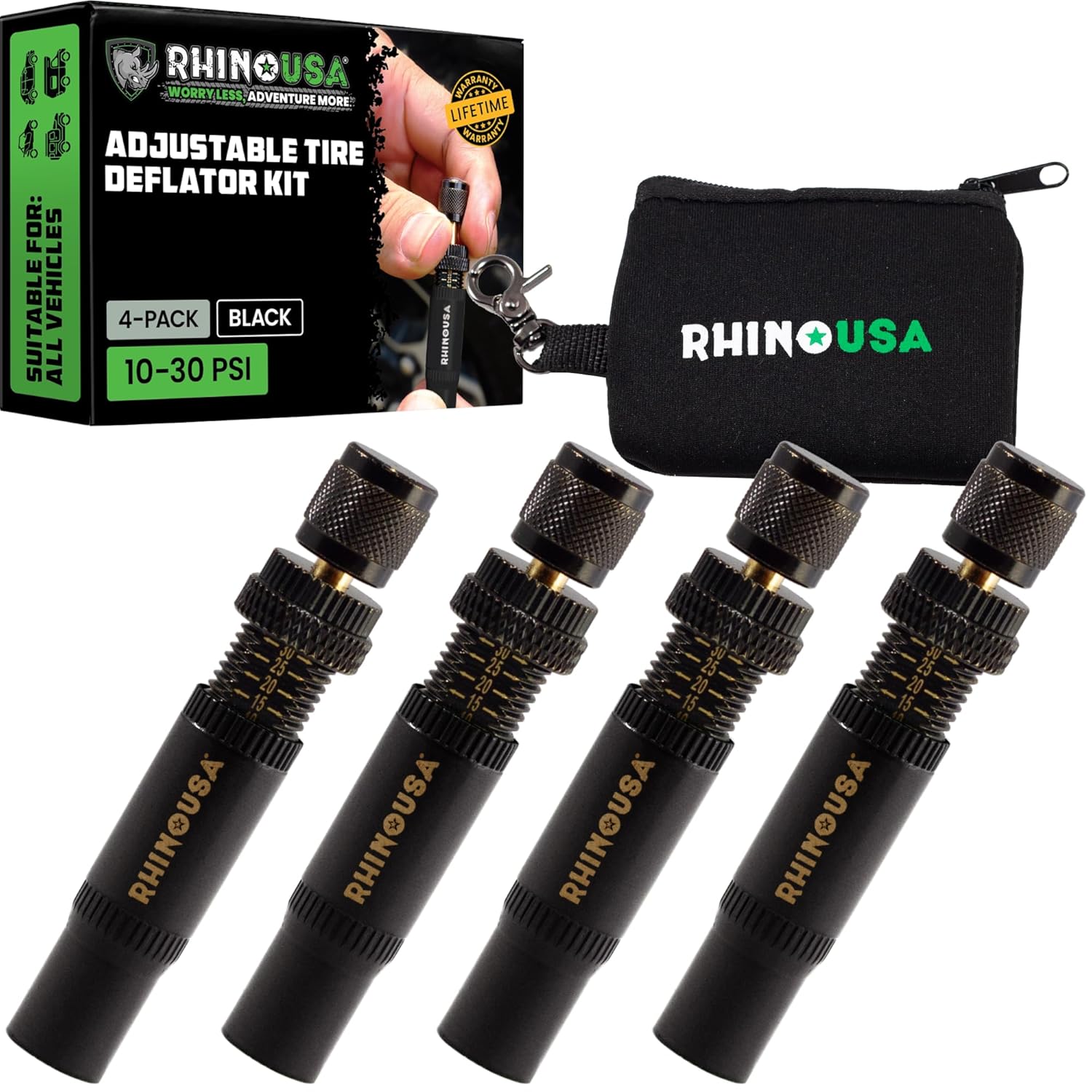
Use the Rhino USA adjustable tire deflators to air down all four tires at once by screwing one deflator onto each valve stem, letting you step away while the tires reach your preset pressure. Each deflator independently adjusts across a 10–30 PSI range with laser-etched indicators for quick setup and verification, making it ideal for beach, sand, and rocky off-road trails.

This ALL-TOP auto-stop tire deflator valve kit lets you air down off-road tires quickly without watching pressure, automatically stopping when your preset PSI is reached. Each valve is individually calibrated for reliable performance with an acceptable +/- 2 PSI tolerance. The adjustable deflator range covers 10 to 30 PSI and includes four valves plus valve caps and a zipper pouch for easy setup on trucks, SUVs, RVs, UTVs, and powersports.
Why MT Tires Still Win in Deep Mud
Deep mud is where the Open Country M/T’s specialized tread becomes most useful. Large open voids give mud somewhere to move, scalloped shoulders improve off-road bite, and the open channels are designed to eject mud and snow instead of allowing the tread to pack solid.
The M/T also carries tread over the shoulder. Toyo specifically says this feature helps provide traction in deep mud and snow and improves off-road handling in hard turns.
That does not mean an R/T is weak in mud. The original R/T uses stone and mud ejectors, while R/T Pro uses increased void ratio and aggressive shoulder lugs. For mixed routes, those designs may provide all the off-road capability you need without accepting every compromise of a dedicated M/T.
But when your truck regularly works through deep ruts, loose soil, mud holes, and similarly severe terrain, the M/T remains the purpose-built option.
How Toyo RT and MT Tires Affect Road Noise
Aggressive tread normally creates a harder noise-control problem because larger blocks and wider voids interact with pavement differently from a tighter road-oriented pattern. Toyo addresses this directly in its R/T designs with optimized pattern arrangements and variable-pitch tread layouts.
That is why the R/T family generally makes more sense when highway comfort matters. Toyo’s own quiet-ride ratings place the R/T Trail above the M/T, while the original R/T and R/T Pro sit between them.
Road Noise Levels
For frequent commuting or long highway drives, the R/T Trail is the strongest Toyo choice among the tires compared here. Toyo rates its quiet ride at 4.0/5, compared with 3.5/5 for the original R/T and R/T Pro and 3.0/5 for the M/T.
Those ratings should not be converted into a specific decibel difference. Actual cabin sound changes with tire size, vehicle insulation, pavement, speed, inflation, tread wear, alignment, and rotation history.
The Nitto Ridge Grappler is another hybrid-terrain product commonly cross-shopped with these Toyos. Nitto markets it around a variable-pitch tread pattern intended to provide a quiet, smooth highway ride, but that does not establish a universal head-to-head noise ranking against a particular Toyo size.
Tread Pattern Effects
Tread geometry is one reason rugged-terrain tires can split the difference between an all-terrain and a mud-terrain design. Toyo’s original R/T uses an optimized pattern arrangement for noise control, R/T Trail uses a three-variable pitch pattern, and R/T Pro uses its own three-variable pitch arrangement despite having a more aggressive void ratio.
The M/T prioritizes open shoulders, deep siping, mud evacuation, and off-road traction instead. Those features are valuable off pavement but make quiet highway operation a lower design priority.
Other hybrids use similar ideas. Nitto, for example, uses a variable-pitch pattern on the Ridge Grappler. That makes it a reasonable cross-shopping option, but tire size, load range, vehicle, and tread wear can change the result enough that brand-wide noise rankings should be treated cautiously.
Cabin Comfort Tradeoffs
Road noise is only one part of cabin comfort. Tire weight, sidewall construction, inflation pressure, wheel diameter, suspension, and tread-block movement also influence how a truck feels over pavement joints and rough roads.
The R/T Trail is the road-friendlier choice within this Toyo group. The R/T Pro shifts more emphasis toward off-road durability, while the M/T places maximum traction ahead of refinement.
If you are also considering a Ridge Grappler or another hybrid, compare the exact sizes rather than assuming every version behaves the same. A large F-load-range tire on a heavy wheel can feel very different from a lighter version of the same product line.
Wet and Snow Traction: RT vs MT
For wet pavement, Toyo’s own ratings favor its road-oriented rugged-terrain models over the M/T. R/T Trail receives a 4.5/5 wet-handling rating, the original R/T and R/T Pro receive 4.0/5, and M/T receives 3.5/5.
That fits the tread designs. R/T Trail uses two wide circumferential grooves to evacuate water for hydroplaning resistance, while its optimized blocks are designed to improve wet braking and handling. M/T uses deep siping to help wet grip, but its larger off-road-focused voids still make pavement refinement a secondary goal.
Snow needs more care because “good in snow” can mean different things. An aggressive tire may dig well in deep, loose snow yet behave differently on packed snow, slush, or ice.
Note: Do not assume a tire has a severe-snow certification simply because its tread looks aggressive or the manufacturer mentions snow traction. If the Three-Peak Mountain Snowflake (3PMSF) symbol matters for your climate or local rules, verify the symbol for the exact product and size you are buying.
The Nitto Ridge Grappler’s current product information emphasizes Z-shaped grooves and additional biting edges, but those features alone should not be presented as proof that it has better snow performance than the Toyos discussed here.
If winter-road traction is a major buying priority rather than occasional trail snow, consider a tire specifically qualified for severe snow. Toyo’s Open Country A/T III, for example, is identified by Toyo as Three-Peak Mountain Snowflake qualified.
Sidewall Strength, Durability, and Tread Life
Construction matters when you drive over sharp rocks, air down for trails, carry camping equipment, or subject a tire to repeated impacts. But “stronger” should be tied to an actual specification rather than tread appearance alone.
The original Open Country R/T uses three-ply construction in LT-metric and flotation sizes and two-ply construction in P-/Euro-metric sizes. The R/T Pro specifically uses a three-ply polyester sidewall with large lugs intended to protect against cuts, chips, and impacts. R/T Trail uses extra-thick shoulder and sidewall lugs for impact and puncture resistance.
There is also a clear warranty distinction. Toyo currently lists 45,000-mile treadwear warranties for R/T, R/T Trail, and R/T Pro. The M/T product page lists a limited warranty but does not state a mileage-based treadwear warranty.
Sidewall Strength
If sidewall abuse is one of your main concerns, the R/T Pro deserves attention because Toyo gives it a specific three-ply polyester sidewall construction and massive lugs that protect against cuts, chips, and impacts.
The original R/T can also use three-ply construction, but that depends on tire type and size. This is why comparing product names alone is not enough: two tires from the same line can have different construction, load range, weight, and specifications.
The Falken WILDPEAK R/T is another rugged-terrain tire aimed at trucks and SUVs and is a sensible cross-shopping option for drivers concerned about durable construction. Rather than assuming one brand is automatically stronger, compare the exact size, load range, sidewall specification, weight, and warranty.
Tread-Life Durability
Tread life depends on more than the compound. Vehicle weight, alignment, inflation, rotation, towing, heat, driving style, and time spent on abrasive trails all affect how quickly a tire wears.
Toyo’s 45,000-mile treadwear coverage on the R/T family gives road-biased buyers a useful benchmark. The M/T’s lack of a stated mileage treadwear warranty is another reason a high-mileage commuter should think carefully before choosing it solely for appearance.
Hybrid alternatives such as the Nitto Ridge Grappler and Falken WILDPEAK R/T belong in the same cross-shopping conversation, but tread-life comparisons should use the exact construction and warranty applicable to your size rather than broad claims about one model always wearing faster.
Pro Tip: Check cold tire pressure regularly and follow your vehicle or tire manufacturer’s rotation guidance. Correct inflation, rotation, balance, and alignment help prevent irregular wear and preserve both tire life and handling.
Best Tire Choice for Overlanding and Camping
For overlanding and camping, your best tire depends on the balance between highway mileage, trail difficulty, vehicle weight, and the gear you carry.
- Choose Open Country R/T Trail when the trip includes long highway sections, wet pavement, gravel roads, and moderate trails.
- Choose Open Country R/T when you want a middle-ground rugged-terrain tire with aggressive shoulders and better road manners than a dedicated M/T.
- Choose Open Country R/T Pro when rocky or demanding trails justify its three-ply sidewall and more aggressive tread.
- Choose Open Country M/T when deep mud and severe off-road traction matter more than highway quietness and treadwear-warranty coverage.
- Cross-shop options such as the Nitto Ridge Grappler or Falken WILDPEAK R/T by exact size, construction, load rating, weight, and warranty rather than relying only on tread appearance.
A heavily loaded overland rig needs more than a “tough-looking” tire. Confirm that the tire’s load capacity is appropriate for the actual vehicle and axle loads, especially after adding bumpers, armor, roof equipment, drawers, water, recovery gear, passengers, or a camper.
[Products Worth Considering]

Vigorder rubber cement glue delivers superior adhesion and cures quickly within about 30 seconds for seamless rubber bonding. Once cured, it helps provide a strong, durable, waterproof seal that holds up to vehicle weight, pressure, and heat. Suitable for cars, motorcycles, trucks, bicycles, and off-road tires, it’s designed for emergency patch and maintenance repairs.
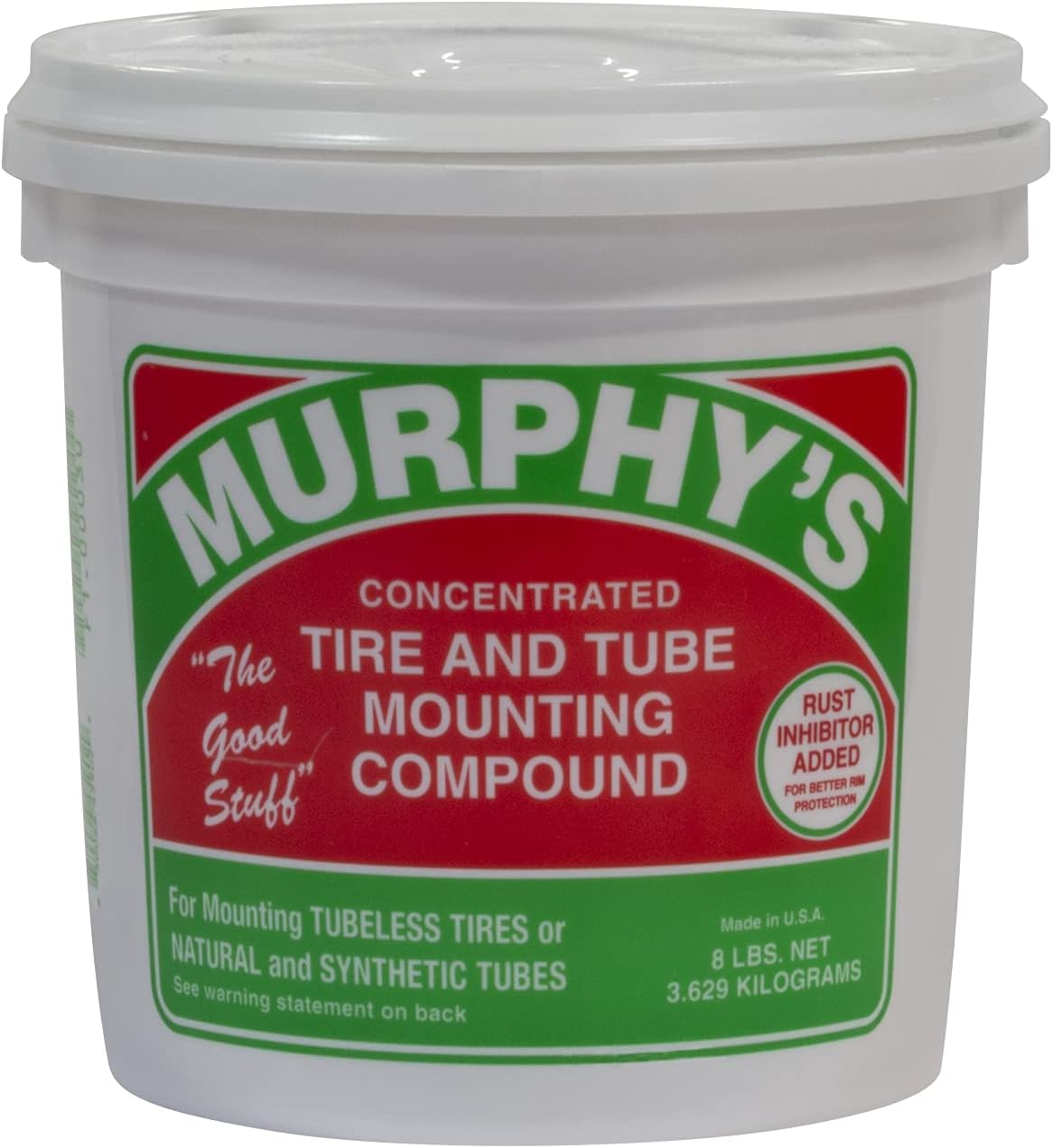
A concentrated tire and tube mounting compound designed to help simplify mounting rubber tires and tubes on passenger, semi truck, construction, and OTR applications. Its ultra-thick formula packs beads effectively and includes rust inhibitors to help protect against corrosion during use.

Check tire pressure with the Milton S-925 pencil gauge built for trucks, RVs, and bicycles. It features a single-head chuck with a built-in deflator valve, and it displays readings in both PSI and kPa for convenient use. The gauge is designed for accurate, repeatable pressure checks within its working range.
How Tire Design Affects Highway Handling
Highway handling depends on how consistently the tread and carcass respond under braking, steering, and cornering. A more road-oriented rugged-terrain pattern normally puts greater emphasis on stable tread blocks, water evacuation, noise control, and predictable pavement response.
Large, widely separated off-road blocks can move more under load than tightly supported street-oriented blocks. Tire construction, wheel width, inflation, vehicle alignment, and suspension also change the way that movement feels from the driver’s seat.
Contact Patch Stability
A stable tire-to-road footprint supports predictable steering and straight-line behavior, but it is misleading to reduce that stability to a claim that one tire simply has a “closer contact patch.” The actual behavior comes from the complete tread pattern, carcass, inflation, tire size, and vehicle load.
- Use the wheel-width range approved for the tire size.
- Keep the vehicle aligned so the tread loads evenly.
- Use the cold inflation pressure appropriate for the vehicle and load.
- Do not exceed the tire’s load capacity.
For a mostly paved truck, an R/T usually keeps more of the highway compromise you want. An M/T becomes more logical as the percentage of severe off-road use increases.
Tread Block Road Noise
Tread-block size, spacing, pitch sequence, and wear pattern all influence tire sound. Toyo uses optimized pitch arrangements on its R/T products specifically to control pattern noise, while the M/T gives more design priority to open channels and mud traction.
The R/T Trail is therefore the most obvious Toyo choice here when highway noise matters. The R/T Pro offers more aggressive traction, and the M/T accepts the greatest road-noise compromise in Toyo’s own rating system.
Competitor hybrids such as the Nitto Ridge Grappler also use noise-control tread features. Avoid assuming that one entire product line is always quieter than another without a same-size, same-vehicle comparison.
Inflation, alignment, balancing, and rotation also matter. Uneven wear can turn a relatively quiet tire into a noticeable source of hum or vibration.
Siping and Wet Grip
Siping adds small edges to the tread, but wet performance comes from the complete tread and compound rather than the number of visible sipes alone.
The Open Country M/T uses deep siping to help maintain wet grip. R/T Trail combines its tread-block design with circumferential grooves that move water, and Toyo rates it higher for wet handling than the M/T.
The Nitto Ridge Grappler uses lateral Z grooves and additional biting edges, while rugged-terrain competitors such as the Falken WILDPEAK R/T use their own tread strategies. Those features are worth comparing, but they do not justify declaring a wet- or snow-traction winner without comparable testing.
- More biting edges can help traction on slick surfaces.
- Water-evacuation grooves are important for wet-road performance.
- Large off-road voids improve loose-terrain clearing but change pavement behavior.
Which Tire Fits Your Truck and Terrain?
Start with where the truck spends most of its mileage.
If most miles are on pavement with occasional trails, the R/T Trail is the most road-oriented choice in this comparison. If you want a more aggressive middle ground, consider the original R/T. If your off-road use includes repeated rock, dirt, sand, mud, and rough trail work, the R/T Pro moves closer to the M/T side of the spectrum.
If deep mud and severe off-road terrain dominate, the M/T makes sense because its tread is specifically designed to clear mud and maintain bite in those conditions.
Warning: Do not choose a replacement tire only because the diameter fits or the tread looks appropriate. Follow your vehicle manufacturer’s requirements for tire size and load capacity. NHTSA recommends using the size listed in the owner’s manual or Tire and Loading Information Label and using the vehicle manufacturer’s recommended cold inflation pressure rather than the maximum pressure molded on the tire sidewall.
If your truck has been heavily modified, carries a camper, or regularly tows near its limits, have a qualified tire professional verify the exact tire size, load rating, wheel compatibility, and inflation requirements.
[Products Worth Considering]

Protect tire valves from water, dust, and sand to help prevent leaks and support safe driving. These universal stem caps install quickly by hand and feature durable aluminum alloy construction with an inner sealing ring for better air retention. Compatible with cars, SUVs, trucks, motorcycles, and bicycles for everyday convenience.

The Big Rig Defense Tire Thumper is a truck tire pressure checker that lets you quickly check multiple tires by giving them a firm whack. Listen for a reassuring thump and feel the stick bounce when a tire is fully inflated, helping you get back on the road safely. It features a comfortable, glove-friendly handle and a secure wrist strap for confident use on busy routes.
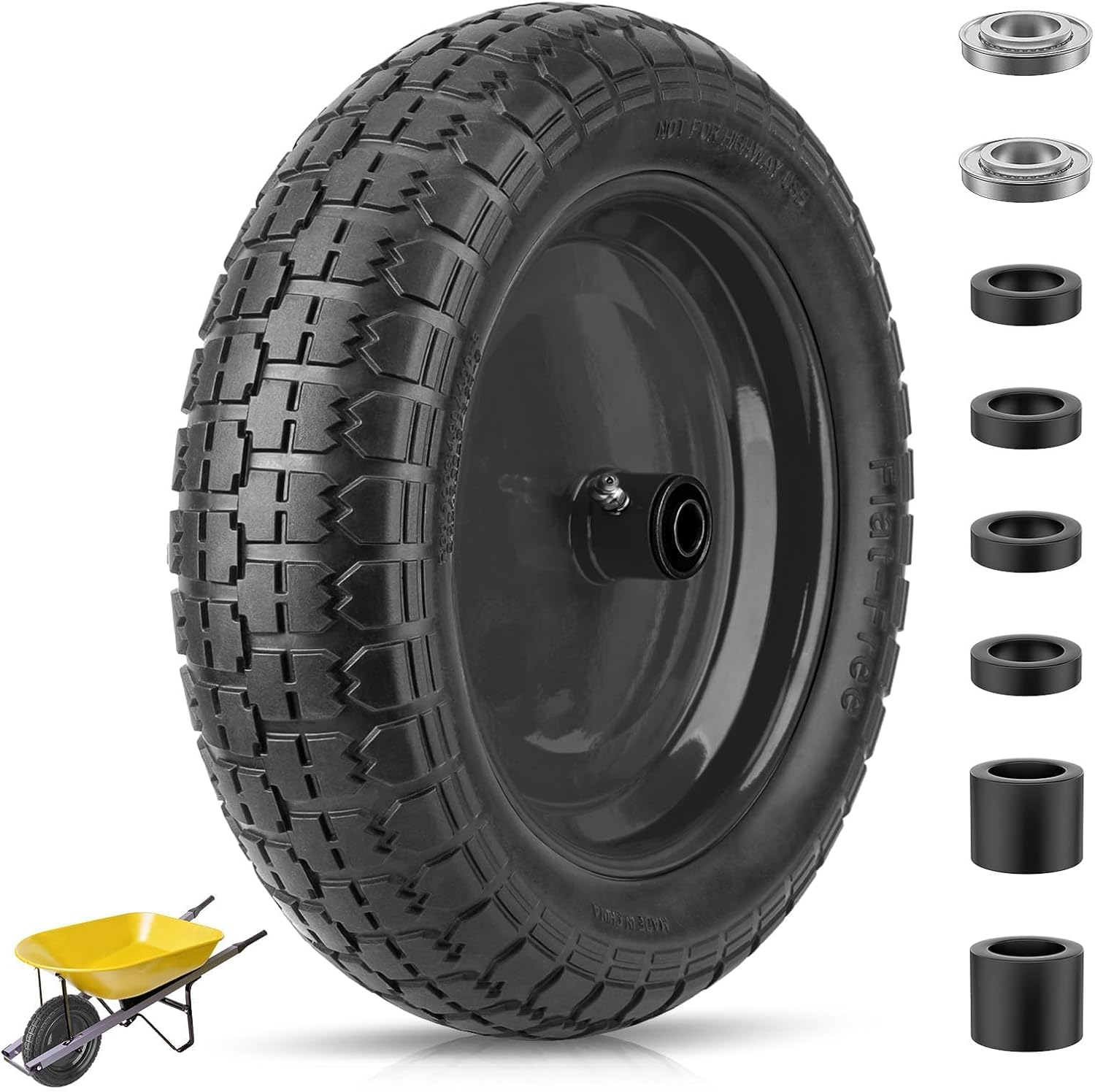
This flat-free TICONN wheelbarrow tire features durable polyurethane foam construction that never needs inflation, helping prevent punctures and reducing maintenance on rough outdoor terrain. With a 300 lb max load capacity and stable steel rim design, it supports safer transport for yard work and hauling tasks. An adapter kit with ball bearings and nylon spacers is included for easier fit and customization across common wheelbarrow and cart axle setups.
Toyo RT vs MT Tires: Final Takeaways
Toyo R/T and M/T tires serve different priorities. The R/T family gives you several steps between conventional all-terrain behavior and a dedicated mud tire, while the M/T concentrates more heavily on maximum off-road traction.
The R/T Trail is the strongest fit for mixed driving and highway mileage. The original R/T stays near the middle of the rugged-terrain category. The R/T Pro gives you M/T-level off-road traction in Toyo’s manufacturer ratings while adding a 45,000-mile treadwear warranty and a three-ply sidewall. The M/T remains the specialized choice when deep mud and severe terrain take priority.
- Choose R/T Trail for quieter mixed driving and stronger wet-road emphasis.
- Choose the original R/T for a balanced rugged-terrain setup.
- Choose R/T Pro for more demanding off-road use without moving fully to M/T.
- Choose M/T when deep mud and severe off-road traction are the priority.
- Verify exact size, construction, load capacity, wheel fitment, and inflation requirements before buying.
In practice, this is a choice between versatility and specialization. The farther your driving moves from daily pavement toward deep mud and severe trails, the stronger the case becomes for the M/T.
Frequently Asked Questions
Are RT or MT Tires Better?
R/T tires are usually better for mixed street-and-trail driving because they preserve more highway comfort and wet-road refinement. M/T tires are better when deep mud and severe off-road traction are your main priorities. Within Toyo’s lineup, R/T Trail is the most road-oriented option discussed here, while R/T Pro moves closer to M/T capability.
What Is the Best Toyo All-Terrain Tire?
If you specifically want a true Toyo all-terrain rather than a rugged-terrain or mud-terrain tire, the Open Country A/T III is the relevant model to compare. Toyo lists it as a Three-Peak Mountain Snowflake-qualified all-terrain tire with a treadwear warranty of up to 65,000 miles. Whether it is “best” depends on your vehicle, terrain, climate, and required size.
What Is the Difference Between Toyo MT and RT Tires?
The Open Country M/T is a dedicated mud-terrain design with open scalloped shoulders and over-the-shoulder tread for aggressive off-road traction. Toyo’s R/T models are rugged-terrain hybrids that keep more pavement comfort while still providing substantial off-road capability. R/T Trail favors mixed driving, while R/T Pro is the more aggressive R/T choice.
Which Is Better Toyo RT Trail or Cooper Rugged Trek?
Neither tire is automatically better for every truck. The Toyo Open Country R/T Trail is a rugged-terrain tire aimed at combining stronger off-road capability with lower noise and harshness than a dedicated mud tire. If you are comparing it with a Cooper Discoverer Rugged Trek, check the exact size, load rating, severe-snow marking, treadwear warranty, weight, and intended terrain for each version before deciding rather than assuming one brand has universally better traction.
Conclusion
If you split most of your time between pavement and dirt, a Toyo Open Country R/T model usually makes more sense than the M/T. R/T Trail puts the greatest emphasis on mixed-road refinement, the original R/T provides a middle-ground rugged-terrain setup, and R/T Pro gives you a more aggressive off-road package with a three-ply sidewall and 45,000-mile treadwear warranty.
If deep mud and severe off-road terrain are regular parts of your driving, the Open Country M/T remains the purpose-built choice. You give up some quiet-ride, wet-handling, and treadwear-warranty advantages in exchange for its more specialized mud-clearing design. Whichever tire you choose, match the exact size and load capacity to your vehicle and maintain the correct cold inflation pressure.
Sources
- Toyo Tires — Open Country R/T — construction, tread features, manufacturer performance ratings, and 45,000-mile treadwear warranty.
- Toyo Tires — Open Country R/T Trail — optimized tread, noise reduction, wet-performance features, manufacturer ratings, and warranty.
- Toyo Tires — Open Country R/T Pro — three-ply sidewall, aggressive hybrid tread, off-road features, manufacturer ratings, and warranty.
- Toyo Tires — Open Country M/T — deep-mud features, wet-grip siping, manufacturer ratings, and limited warranty.
- Toyo Tires — Open Country A/T III — all-terrain positioning, 3PMSF qualification, wet/snow features, and treadwear warranty.
- National Highway Traffic Safety Administration — TireWise — tire sizing, load and inflation safety, tread checks, rotation, and maintenance guidance.