
What’s in This Article
- Soft vs Hard Tire Compounds Quick Comparison
- What a Tire Compound Is and Why It Matters
- Where Soft Sport-Tire Compounds Shine
- When Hard Sport-Tire Compounds Make Sense
- How Temperature Affects Compound Performance
- How Tread, Sidewall, and Construction Change Grip and Wear
- Reading Treadwear Ratings and Durometer Numbers
- Choosing Compounds by Use Case: Street, Track, Winter, Touring
- Trade-Offs: Cost per Mile, Fuel Economy, and Safety Margins
- Tuning Your Choice With Pressure, Alignment, and Driving Style
- Quick Decision Checklist: Pick Soft or Hard for Your Car
- Frequently Asked Questions
- Conclusion
- References
Last updated: July 7, 2026 · Reviewed for accuracy [VERIFY: confirm named editor or reviewer before publishing]
For most street drivers, the best choice in the soft vs hard tire compounds debate is a medium compound that balances wet grip, tread life, and fuel economy. Choose a softer tire compound if you prioritize braking, cornering, cool-weather flexibility, or track grip. Choose a harder compound if you drive long highway miles, carry heavy loads, or want slower tread wear. The right answer still depends on your climate, tire category, tread design, pressure, alignment, and driving style.
Quick Answer
Pick a softer compound for more bite in braking and cornering, especially in cool or wet conditions. Pick a harder compound for longer tread life, lower heat buildup on long trips, and steadier wear. For daily driving, start with a quality all-season, summer, or touring tire that matches your weather, then use UTQG treadwear, traction grade, and independent test data to compare options.
Key Takeaways
- Softer compounds usually give more grip but wear faster.
- Harder compounds usually last longer but can lose traction in cold or wet weather.
- Temperature, pressure, tread depth, and road surface can change how the same tire grips.
- Tread pattern, sidewall stiffness, and construction can shift the grip and wear balance.
- UTQG treadwear helps compare tires, but it does not guarantee exact mileage.
- Pressure, alignment, rotation, and smooth driving can help you get more life from any compound.
Soft vs Hard Tire Compounds Quick Comparison
Use this table before you shop. It gives you the fastest way to match a compound type with your roads, climate, and wear expectations.
| Compound Choice | Best For | Main Advantage | Main Trade-Off |
|---|---|---|---|
| Soft | Performance driving, cool roads, wet grip focus | Stronger bite in braking and cornering | Faster wear and possible higher rolling resistance |
| Medium | Most daily street use | Balanced grip, comfort, and tread life | Not the best at either extreme |
| Hard | Long highway miles, warm climates, touring use | Slower wear and better heat stability | Less peak grip in poor conditions |
| Winter-focused soft compound | Cold, snow, ice, and freezing rain | Keeps flexibility in cold weather | Wears quickly if used in warm weather |
What a Tire Compound Is and Why It Matters
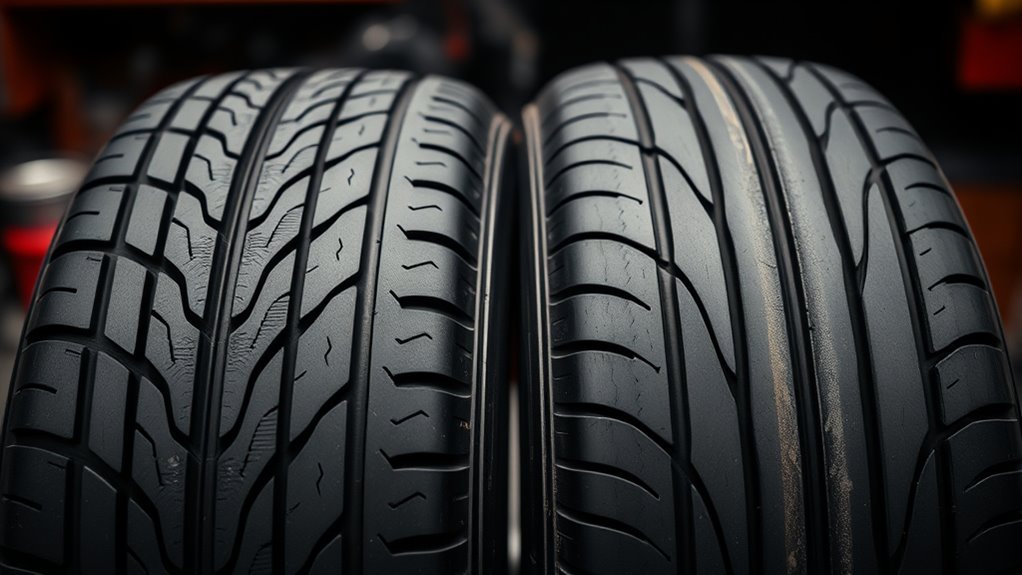
A tire compound is the rubber blend that helps set a tire’s grip, wear rate, heat behavior, and rolling resistance. Manufacturers blend polymers, fillers such as silica and carbon black, oils, resins, and curing agents to create a specific feel and use case.
You can compare compound traits with hardness, often measured on the Shore A durometer scale. A lower Shore A reading means softer rubber, while a higher reading means harder rubber. Treat durometer readings as shop or lab comparison tools, not as universal buying specs, because temperature, age, and test method can change the reading.
Silica-rich compounds can help tire makers balance wet traction and rolling resistance. Carbon black can support wear resistance and heat control. The final result depends on the full tire design, including tread pattern, casing, tread depth, and shoulder shape.
Where Soft Sport-Tire Compounds Shine
Soft sport compounds work best when you need maximum grip for cornering and braking. They can stay more flexible in cool weather, which helps the tread conform to the road and maintain bite.
When maximum grip matters, soft sport compounds can give shorter wet stops, stronger lateral bite, and more predictable cool-weather adhesion, but only when the tread design and temperature range also fit the road.
- Performance driving: Choose soft compounds for spirited street driving, autocross, and short high-grip runs.
- Track use: Use soft compounds when lap time and braking control matter more than mileage.
- Handling feel: Expect stronger turn-in, less understeer, and better brake modulation when the tire reaches its working range.
- Wear planning: Expect faster tread loss and a shorter replacement cycle.
Softer rubber can also raise rolling resistance, which may reduce fuel economy or electric vehicle range. Choose it when traction and control matter more than long service life.
[Products Worth Considering]
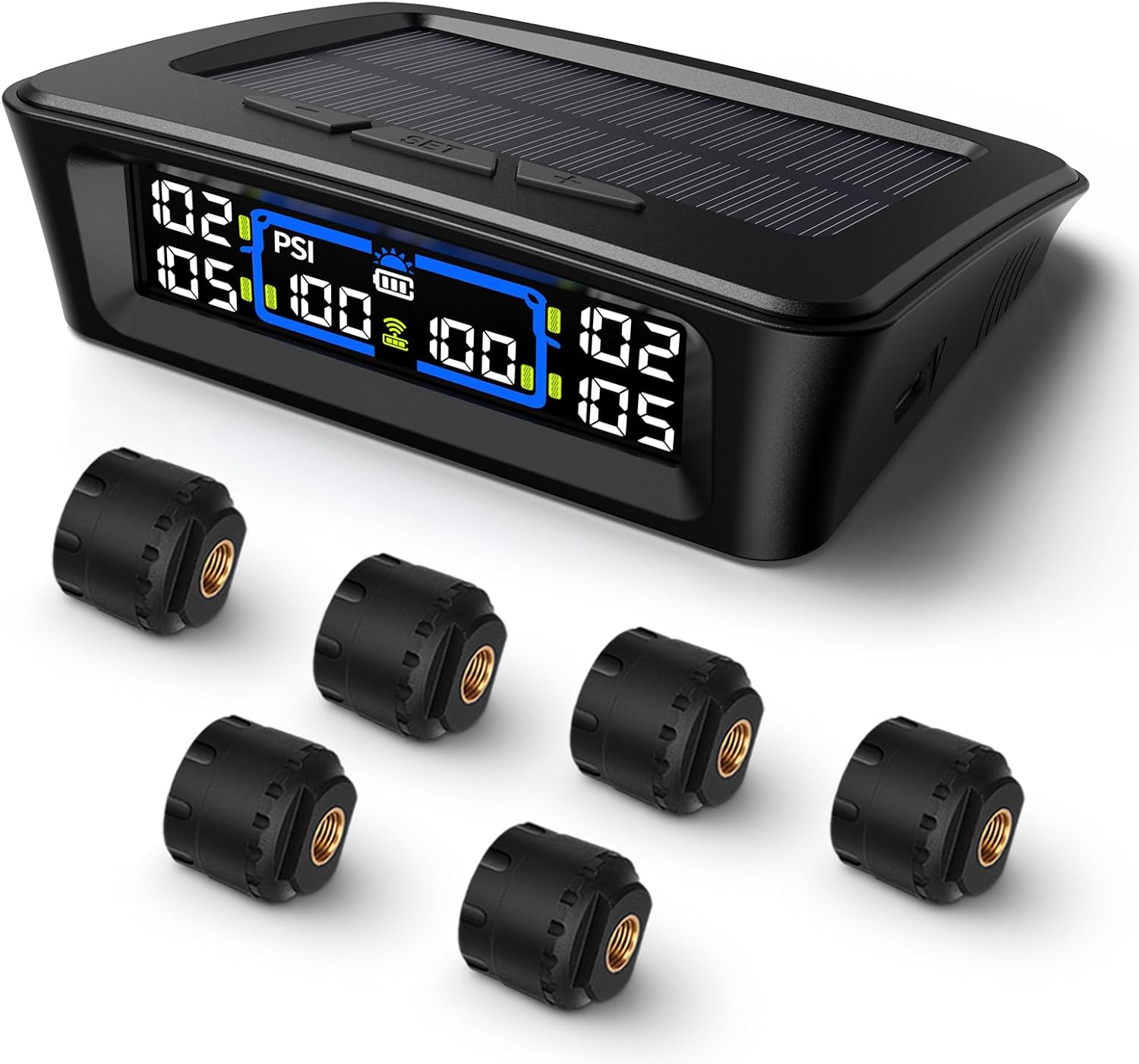
The Tymate TM12 RV TPMS delivers real-time tire pressure and temperature monitoring with a stable 433Hz display for safer long-distance driving. It supports simultaneous monitoring across vehicle and trailer zones, includes six alarm modes for pressure, temperature, leakage, battery, and signal loss, and features easy DIY installation with auto calibration. Power is supplied via USB-C charging or solar recharging, with a wide 0–144 PSI range and up to 50 ft signal coverage for RVs and towable trailers.

Measure tire tread depth quickly and accurately with this LUMITECO dial gauge that reads in 1/32" increments up to 14/32". The color-coded green/yellow/red zones make it easy to judge tire wear and know when replacement is needed. A rugged, compact design with a protective pouch helps keep the gauge ready for use on cars, trucks, motorcycles, and more.

Monitor tire tread wear with a smart, color-coded depth gauge that shows clear condition ranges at a glance. The bar is range marked for fast, easy readings, helping you maintain safer traction and performance. Each gauge is portable with a pocket clip, and the set includes 20 units for daily use and sharing.
When Hard Sport-Tire Compounds Make Sense
Hard sport-tire compounds make sense when you value mileage, highway stability, and steady wear more than peak grip. Their lower heat buildup can help the tread hold its shape during long, sustained drives.
You can expect a harder compound to resist abrasion better than a soft one in many daily driving conditions. That can lower cost per mile because you replace the tires less often.
You trade away some bite, especially on cold or wet pavement. Hard compounds fit commuters, long-distance travelers, and drivers who want a stable feel without frequent tire changes.
How Temperature Affects Compound Performance
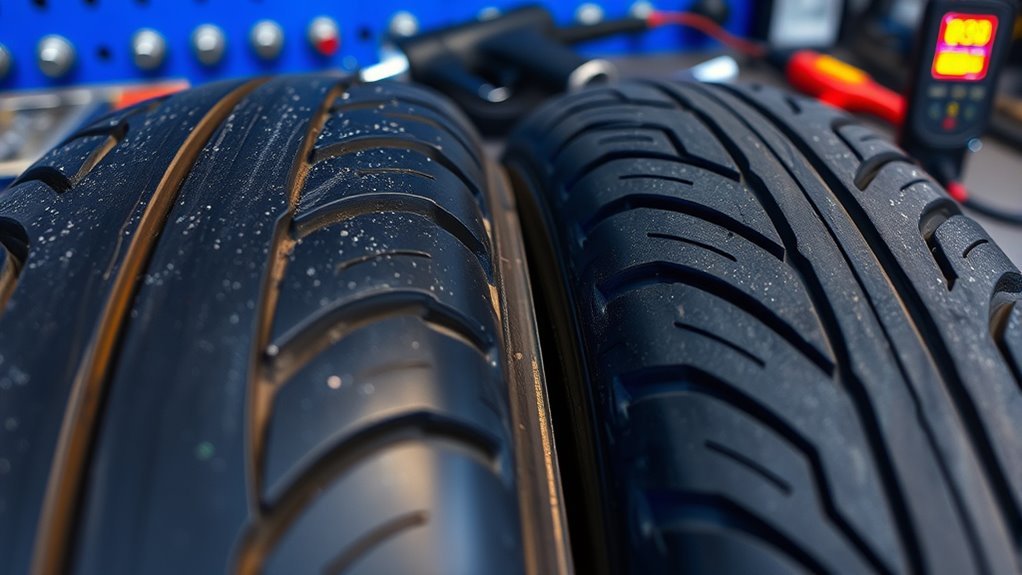
Temperature changes how rubber bends, grips, and wears. In colder weather, many harder or summer-focused compounds lose flexibility, which can reduce traction and lengthen stopping distances. In hot weather, rubber softens, which can improve bite but also speed up wear if the tire runs outside its intended range.
- Cold weather: Softer or winter-focused compounds can keep more flexibility on cold pavement.
- High heat: Soft compounds can gain grip but may wear fast if they overheat.
- Mixed conditions: Expect braking distance and cornering grip to change as pavement temperature changes.
- Best strategy: Match the compound to your normal climate, not your best-case driving day.
Warning: A tire that grips well in warm, dry weather may lose much of its safety margin in cold rain.
How Tread, Sidewall, and Construction Change Grip and Wear
Compound matters, but the rest of the tire can change the result. Tread pattern affects water evacuation, sidewall stiffness affects response, and construction controls heat flow and durability.
Directional tread patterns can move water well, while asymmetric patterns balance outside cornering grip with inside wet-road channels. A stiffer sidewall can sharpen steering, but it can also make the ride harsher and increase road noise.
Tread Pattern Effects
Tread geometry changes the contact patch and the way water leaves the tire. Deeper grooves and sipes can improve wet traction, but they can also allow more tread movement, heat, and uneven wear.
- Deeper grooves and sipes: Improve wet traction but can increase tread movement.
- Directional treads: Move water well but need correct rotation practices.
- Asymmetric patterns: Balance cornering support with wet-road channels.
- Tread materials: Affect heat dissipation, flexibility, and wear resistance.
Sidewall & Construction
Sidewall stiffness and carcass construction govern how a tire transfers force to the road. Stiffer sidewalls can improve steering response, while softer sidewalls can improve comfort.
Construction materials and ply design also affect durability. More reinforcement can resist damage and tread fatigue, but it can add weight and reduce ride comfort.
| Parameter | Effect on Grip | Effect on Wear |
|---|---|---|
| Sidewall stiffness | Improves response and limits deformation | Can concentrate wear on shoulders |
| Construction materials | Changes heat behavior and road feel | Stronger materials can reduce tread fatigue |
Match compound and tread depth with sidewall and construction design. A soft compound on a weak structure may feel vague, while a hard compound on a stiff structure may feel sharp but less forgiving.
Reading Treadwear Ratings and Durometer Numbers
You can use treadwear ratings and durometer readings to compare tire priorities, but neither number tells the full story alone. The National Highway Traffic Safety Administration describes UTQG treadwear as a relative wear-rate indicator, while UTQG traction grades compare straight-line stopping ability on wet pavement.
Durometer measures hardness. A lower reading points to a softer feel, while a higher reading points to a harder feel. Treat this number as a same-day comparison tool, because temperature, age, and measurement method can shift the result.
Understanding Treadwear Numbers
Treadwear ratings come from the Uniform Tire Quality Grading system. The number compares wear against a control tire under controlled conditions, but it does not predict exact miles for every driver.
- Lower treadwear number: Often points toward a grip-focused tire within the same category.
- Middle treadwear number: Often balances grip and durability for many street tires.
- Higher treadwear number: Often points toward longer wear, usually with less peak grip.
- Driving environment: Heat, road texture, alignment, rotation, pressure, and load can change real-world wear.
Interpreting Durometer Readings
Durometer readings measure how hard the compound feels at the time of testing. Compare tires under similar conditions and avoid treating a single reading as a complete performance score.
| Durometer Result | Typical Trait |
|---|---|
| Lower Shore A reading | Softer feel and higher grip focus |
| Middle Shore A reading | Balanced grip and wear |
| Higher Shore A reading | Harder feel and longer life focus |
| Treadwear comparison | Use with UTQG and test data, not alone |
Read durometer and treadwear together. A tire with a high treadwear number and a hard durometer reading will usually favor life over bite.
Comparing Ratings To Grip
Numbers alone can’t tell you how a tire will drive. They do help you narrow your choice before you compare manufacturer data, independent tire tests, warranty terms, and driver feedback from a similar vehicle.
- Low treadwear rating: May favor traction with faster material loss.
- High treadwear rating: May favor service life and lower rolling resistance.
- Lower durometer reading: Suggests stronger mechanical grip and more flex.
- Higher durometer reading: Suggests longer life and less compound movement.
Note: UTQG treadwear numbers help compare tires, but they don’t guarantee a fixed mileage figure.
Choosing Compounds by Use Case: Street, Track, Winter, Touring
Your main use case should guide your compound choice. Street, track, winter, and touring tires all solve different problems, so one tire can’t excel at every job.
| Use Case | Typical Compound | Primary Benefit |
|---|---|---|
| Street | Medium | Balanced grip and durability |
| Track | Soft | High grip with rapid wear |
| Winter | Soft cold-flex compound | Traction in cold conditions |
| Touring | Harder compound | Longer lifespan and efficiency |
| Adaptive choice | Match temperature and duty | Better performance per mile |
For street driving, a medium compound gives you the broadest balance. For track use, choose softer tires and plan for heat cycles and frequent inspection. For touring, choose harder compounds if your roads stay warm enough for safe grip.
[Products Worth Considering]

Keep your tires properly inflated with this analog VONDIOR tire pressure gauge, designed for fast, easy readings without batteries. The swiveling, two-axis hose and large glow dial help you measure at any tire angle with instant visibility. Built with a protective rubber shield, it supports durable, low-maintenance use for cars and trucks.

The SAFELIFE dial tire tread depth gauge measures tread depth in 1/32 inch increments with clear, easy-to-read 2-inch dial face. Color zones using a traffic light system help you quickly judge whether tread is low, marginal, or ample for safer driving. Built with a durable zinc cast body and a metal detect probe for precise, comfortable use across cars, motorcycles, trucks, and buses.

This tire inflator with pressure gauge delivers long-lasting performance with a durable rubber-protected gauge and sturdy build. The longer hose and 360 swivel air chuck help you seal the valve securely and keep your hands free while measuring, inflating, or deflating. It’s battery-free for reliable use and provides ±2 PSI accuracy in the mid-range for most typical tires, with universal compatibility for 1/4 NPT compressor outputs.
Trade-Offs: Cost per Mile, Fuel Economy, and Safety Margins
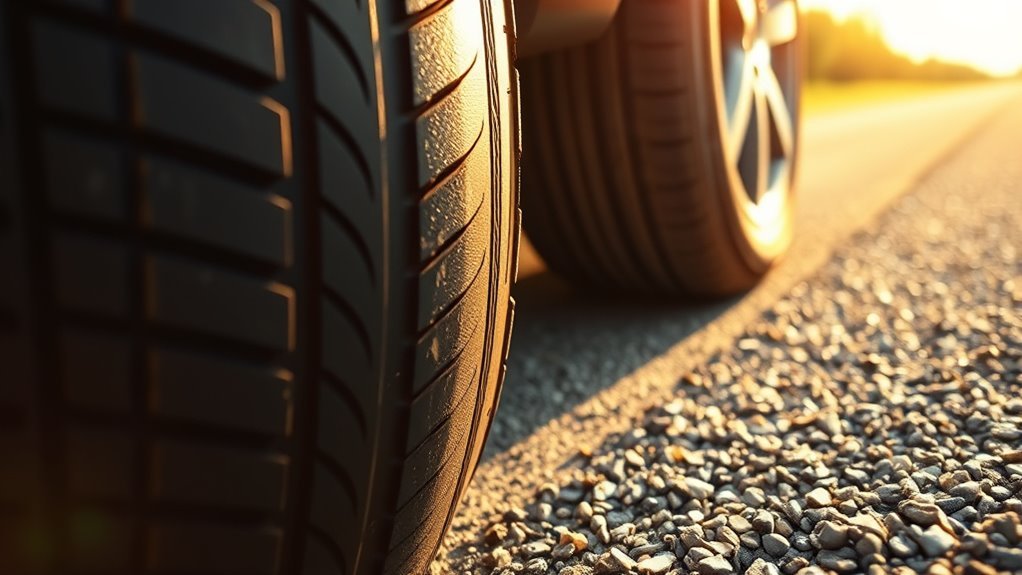
Compound choice affects three practical costs: tire replacement, energy use, and safety margin. You need to decide which one matters most for your driving.
- Softer compound: Gives stronger peak grip, higher wear, and often higher rolling resistance.
- Harder compound: Gives longer tread life, lower heat buildup, and less traction in poor conditions.
- Treadwear rating: Helps estimate relative lifespan, but it works best as a comparison tool.
- Safety choice: Favor grip if you drive in cold rain, mountain roads, or mixed weather.
A cheaper long-life tire may cost more if it reduces your safety margin in your climate. A soft tire may also cost more if you use it for long highway miles.
Tuning Your Choice With Pressure, Alignment, and Driving Style
You can tune the grip-versus-wear balance with tire pressure, alignment, rotation, and smooth inputs. Underinflation increases heat and shoulder wear, while overinflation can reduce comfort and change how the contact patch works.
Check pressure when the tires are cold and use the pressure on the driver-side door placard or owner’s manual, not the maximum pressure molded on the tire sidewall. NHTSA recommends checking tire pressure and tread at least once a month.
Use alignment to protect tread life. Poor toe, camber, or thrust angle can cause edge wear, feathering, and cupping. Smooth throttle, braking, and steering inputs also help soft compounds last longer.
Pro tip: Check pressure, alignment, rotation, and tread depth before you blame a tire compound for poor grip or fast wear.
Quick Decision Checklist: Pick Soft or Hard for Your Car
Use this checklist before you choose a tire compound. It helps you match grip, weather, mileage, and cost.
- Driving goal: Pick soft for grip and braking, or pick hard for long life and steady highway use.
- Climate: Favor soft or winter-focused compounds when you drive often in cold conditions.
- Usage pattern: Choose soft for track or performance bursts, and choose hard for long commutes.
- Heat exposure: Choose hard when you run long, hot, high-load trips.
- Budget: Compare replacement cost, fuel use, and safety margin together.
- Label check: Compare UTQG treadwear, traction, and temperature grades before you buy.
Make the decision with your real roads in mind. The best compound for a dry weekend drive may not fit a cold, wet weekday commute.
[Products Worth Considering]

The Continental Grand Prix 5000 is an allround road bike tire engineered for faster rolling, improved ride comfort, and enhanced puncture protection. It features a Vectran Breaker cut-protection layer, Lazer Grip micro-profile tread for confident cornering control, and Active Comfort Technology to damp vibration for smoother rides. BlackChili compound optimizes grip and speed for everyday performance and long-lasting confidence.

Milton S-921 pencil tire pressure gauge helps you maintain optimal tire pressure for passenger cars with accurate readings in PSI and kPa. It features a built-in deflator valve for convenient pressure adjustments, plus a single chuck head and nylon indicator bar for easy use on the go. Built from durable plated brass and designed for reliable performance, it’s a practical road trip and cold-weather maintenance tool.

The Airmoto portable tire inflator quickly and accurately fills car, truck, SUV, motorcycle, and bicycle tires up to 120 PSI with auto shut-off when your target pressure is reached. Its large LCD, multi-unit pressure display, and digital gauge make it easy to dial in settings and verify readings, while the built-in LED flashlight helps in low light. The included polyurethane hard carrying case and storage mesh pocket keep the inflator and accessories protected and organized.
Frequently Asked Questions
Do Hard Compound Tires Last Longer?
Yes, hard compound tires usually last longer because they resist abrasion and heat buildup better. You trade some grip for that durability, especially in cold or wet conditions.
Do Soft Tires Have Better Grip?
Yes, soft tires usually have better grip because the tread can flex and conform to the road surface. They often brake and corner better, but they also wear faster and may use more fuel.
Are Soft Tires Safe for Daily Driving?
Soft tires can work for daily driving if they suit your climate, speed, and mileage. Check tread depth often because softer compounds can wear out faster than touring compounds.
Can Hard Tires Work in Wet Weather?
Hard tires can work in wet weather when their tread pattern and compound suit rain. Still, they may offer less cold and wet grip than softer or wet-focused designs.
What Is the Best Tire Compound for Daily Driving?
A medium compound is usually the best daily-driving choice because it balances grip, tread life, comfort, and fuel economy. Choose a season-specific tire if your climate has extreme heat, cold, snow, or frequent rain.
What Does UTQG Treadwear Mean?
UTQG treadwear is a relative comparison of wear rate under controlled test conditions. It helps you compare tires, but it does not promise a specific number of miles.
How Often Should You Check Tire Wear?
Check tire wear at least once a month and before long trips. Look for uneven edges, low tread depth, cracks, and any change in steering feel or braking behavior.
Conclusion
Your best tire compound depends on the grip, wear, climate, and cost trade-off you can accept. Pick soft if you value braking, cornering, and cold or wet-road bite. Pick hard if you value mileage, heat control, and highway stability. For most daily drivers, a medium compound with strong wet-traction test results is the safer starting point. Check pressure, alignment, rotation, and tread depth often so your choice keeps working as intended.
References
- Tire Safety Ratings and Awareness: TireWise — National Highway Traffic Safety Administration
- 49 CFR § 575.104: Uniform Tire Quality Grading Standards — Electronic Code of Federal Regulations
- TireWise: Everything You Need to Know About Buying and Maintaining Tires — National Highway Traffic Safety Administration
- Maintaining Tires — U.S. Department of Energy
