
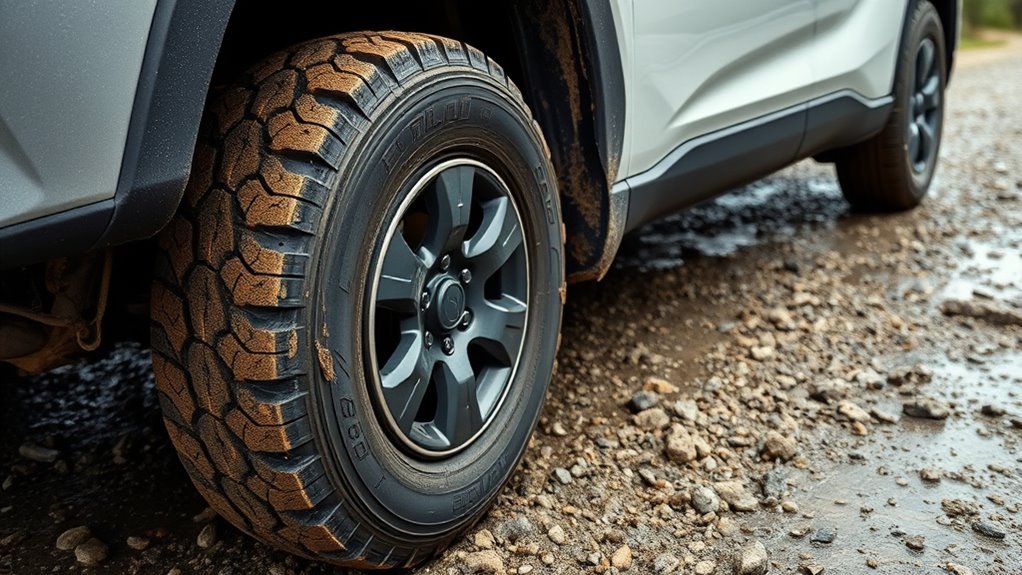
All-terrain tires can make a Toyota RAV4 more confident on gravel roads, dirt trails, wet pavement, and light snow, but they are not the best choice for every owner. The right answer depends on how often you leave paved roads, how much road noise you can tolerate, whether you need a severe-snow rating, and whether the tire matches your exact RAV4 size, load rating, and clearance.
Quick Answer
All-terrain tires are worth it for a RAV4 if you regularly drive on gravel, dirt roads, snowy backroads, campsites, or rough job sites. For mostly highway commuting, a quality all-season, all-weather, or touring tire will usually be quieter, smoother, cheaper, and more fuel-efficient.
Key Takeaways
- Choose all-terrain tires for mixed pavement, gravel, dirt, light mud, and mild trail use—not for rock crawling or deep mud.
- Expect possible trade-offs in road noise, ride firmness, steering feel, price, and fuel economy.
- For winter driving, look for the Three-Peak Mountain Snowflake (3PMSF) symbol, but remember that dedicated winter tires still perform better in severe ice and deep snow.
- Before buying, match the tire size, load index, speed rating, and inflation pressure listed in your RAV4 owner’s manual or driver-side door-jamb label.
- On AWD models, avoid mismatched tire sizes, tread depths, or rolling diameters unless a qualified tire shop confirms the setup is safe.
What Are All-Terrain Tires and Their Purpose?
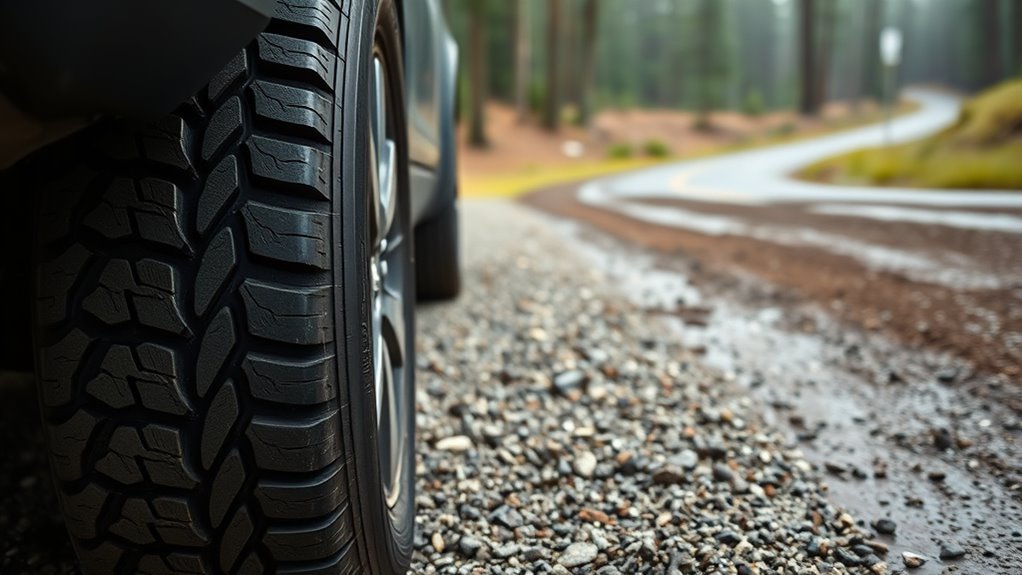
NHTSA describes all-terrain tires as a compromise between on-road driving and off-road capability. For a RAV4, that usually means a tire with a stronger tread pattern, wider grooves, more shoulder bite, and a tougher look than a standard highway or touring tire.
The purpose is versatility. A good all-terrain tire can help when your RAV4 sees gravel roads, campgrounds, unpaved driveways, muddy parking areas, fire roads, light snow, or wet rural routes. It does not turn a RAV4 into a hard-core off-roader, but it can add useful grip and durability for drivers who split time between pavement and rougher surfaces.
Note: “All-terrain” is a tire category, not a guarantee of performance. Two tires with the same label can feel very different in noise, comfort, wet braking, snow traction, treadwear, and fuel economy.
Key Features of All-Terrain Tires for Your RAV4
When comparing all-terrain tires for a Toyota RAV4, focus on the features that affect daily driving as much as trail traction:
- Tread pattern: Larger tread blocks and wider channels can improve grip on dirt, gravel, and light mud, but aggressive patterns can also increase road noise.
- Sidewall design: Some all-terrain tires use reinforced shoulders or sidewall styling for extra protection and traction near the edge of the tread.
- 3PMSF rating: Tires with the Three-Peak Mountain Snowflake symbol meet an industry severe-snow traction standard. The U.S. Tire Manufacturers Association defines the severe-snow-service criteria used for this marking.
- Load index and speed rating: These must meet or exceed what your RAV4 requires. Do not choose a tire only because the size fits the wheel.
- Weight: Heavier tires can affect acceleration, braking feel, ride comfort, and fuel economy.
- Treadwear warranty: Some crossover-focused all-terrain tires carry limited treadwear warranties around 60,000 to 65,000 miles, such as the BFGoodrich Trail-Terrain T/A and Falken Wildpeak A/T Trail. Actual life still depends on inflation, alignment, rotation, road conditions, and driving style.
[Products Worth Considering]

Accurately measure tire tread depth with a calibrated gauge marked from 0 to 1 inch in 1/32 inch increments. The color-coded bar helps you quickly identify tread condition ranges, supporting safe driving for trucks, motorcycles, automobiles, and passenger vehicles.

Monitor tire tread wear with a smart, color-coded depth gauge that shows clear condition ranges at a glance. The bar is range marked for fast, easy readings, helping you maintain safer traction and performance. Each gauge is portable with a pocket clip, and the set includes 20 units for daily use and sharing.

These universal tire valve stem caps help protect valve cores from dust, debris, and moisture while helping maintain stable tire pressure. The corrosion-resistant metal construction and sealed design provide reliable protection in road grime, mud, and winter conditions. Twist-on installation makes them quick to fit on cars, SUVs, trucks, and motorcycles.
RAV4 Fitment Rules Before You Buy
The safest tire choice is the size listed for your exact RAV4 year, trim, wheel size, and market. Toyota RAV4 trims can use different tire sizes, so do not copy another owner’s setup without checking your own vehicle.
Warning: Do not install all-terrain tires that change overall diameter, load rating, speed rating, or clearance unless a qualified tire professional confirms they are safe for your exact RAV4. The correct size and inflation pressure are listed in your owner’s manual and on the Tire and Loading Information Label on the driver-side door area.
Use this checklist before ordering:
- Match the tire size: Check the sidewall of your current tire and the door-jamb label.
- Match or exceed the load index: A tire with too low of a load rating is unsafe, even if it fits the wheel.
- Match an appropriate speed rating: Do not downgrade without professional guidance.
- Confirm wheel diameter: A 17-inch tire will not fit an 18-inch or 19-inch wheel.
- Check clearance: Wider or taller tires may rub the fender liner, strut, mud flap, or wheel well during turns or suspension compression.
- Consider AWD matching: If your RAV4 has AWD, keep all four tires closely matched in size, tread pattern, and tread depth to avoid driveline strain and inconsistent traction-control behavior.
- Recheck tire pressure: Use the pressure listed by Toyota for your vehicle, not the maximum pressure printed on the tire sidewall.
[Products Worth Considering]

Keep your tires properly inflated with this analog VONDIOR tire pressure gauge, designed for fast, easy readings without batteries. The swiveling, two-axis hose and large glow dial help you measure at any tire angle with instant visibility. Built with a protective rubber shield, it supports durable, low-maintenance use for cars and trucks.
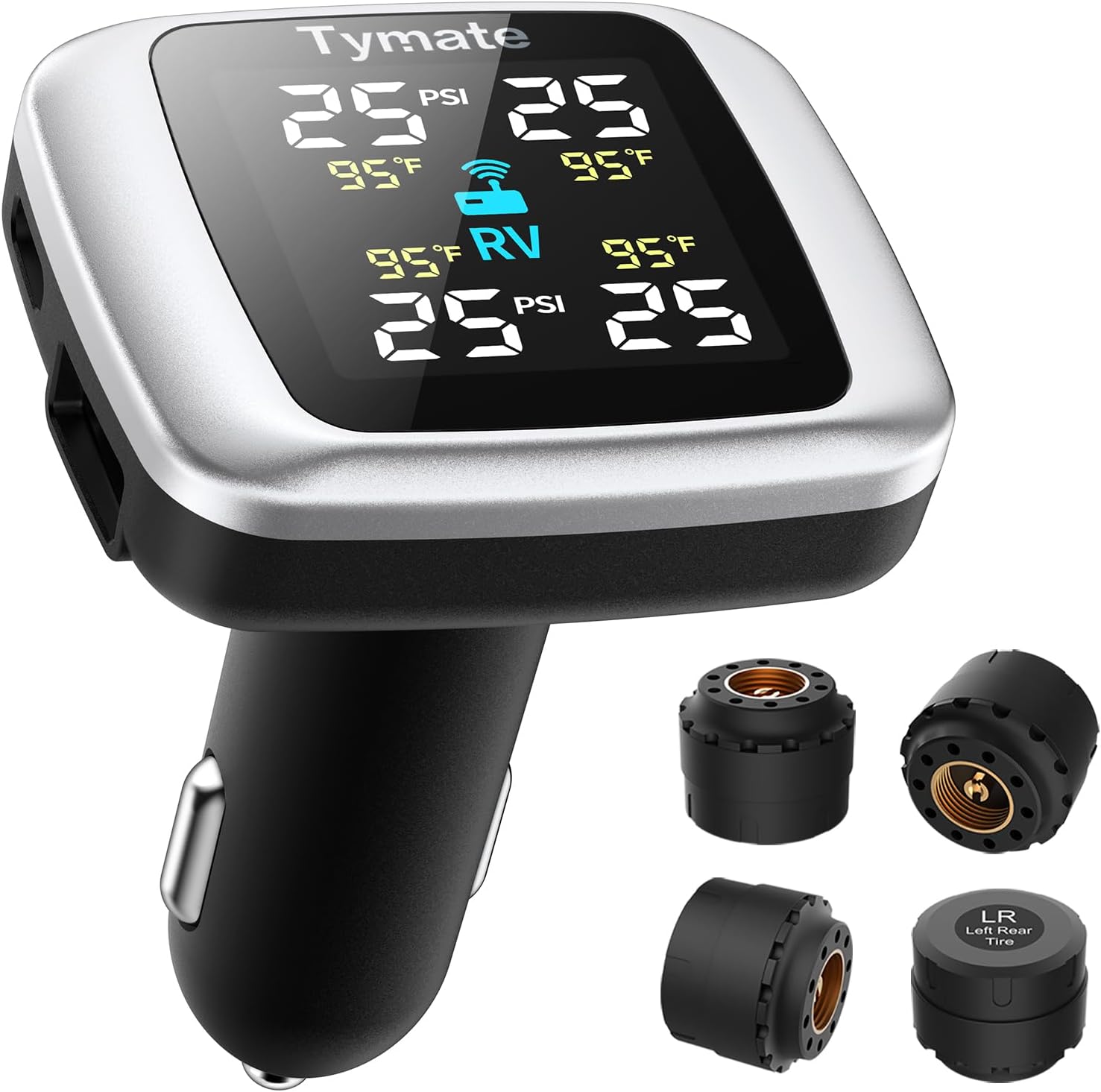
Tymate TM7 is a wireless tire pressure monitoring system that delivers real-time pressure and temperature readings for safer driving. It includes four external sensors, a bright color LCD display with adjustable backlight, and six alarm modes for high/low pressure, fast leakage, high temperature, and sensor signal or battery issues. The system covers a wide 0–144 PSI range and plugs into your vehicle’s cigarette lighter socket for quick DIY setup.

This manual duck head tire changer kit makes tire installation and removal simpler by letting you embed the duck head into the tire with applied pressure. The integrated design and durable steel construction help reduce friction and improve efficiency and safety during use. Suitable for 16–21 inch wheels, it’s convenient for cars, trucks, SUVs, and ATV tires, with 24-hour after-sales support.
Why Choose All-Terrain Tires?
All-terrain tires make the most sense when your RAV4 regularly sees surfaces that are rougher than normal pavement. They can add confidence on loose gravel, wet grass, sandy campground roads, hard-packed dirt, slush, and lightly rutted access roads.
| Driving Need | Best Tire Type | Why |
|---|---|---|
| Mostly highway and city driving | Touring all-season | Usually quieter, smoother, and more efficient. |
| Rain, light snow, and year-round commuting | All-weather or 3PMSF all-season | Better snow confidence than standard all-season tires without going full all-terrain. |
| Gravel, dirt roads, camping, and mild trails | Crossover all-terrain | Adds durability and loose-surface grip while staying livable on pavement. |
| Deep snow, ice, and long cold winters | Dedicated winter tire | Winter compounds and tread designs are built specifically for cold-weather traction. |
| Deep mud, rocks, or aggressive off-road use | More aggressive off-road tire or different vehicle setup | A RAV4 and mild all-terrain tire are not ideal for extreme terrain. |
Pro Tip: For most RAV4 owners, a crossover-focused all-terrain tire is a better match than a heavy light-truck-style all-terrain tire. You get useful gravel and snow capability without as much noise, weight, or ride harshness.
Potential Downsides of All-Terrain Tires?
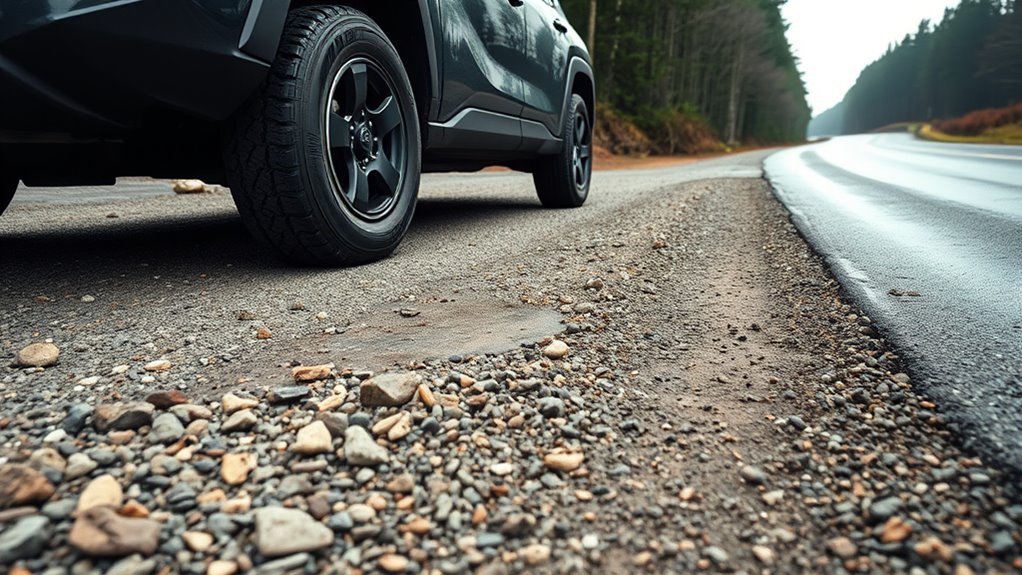
All-terrain tires are useful, but the trade-offs matter more if your RAV4 is mainly a commuter. Compared with a quiet touring tire, an all-terrain tire may feel firmer, hum more at highway speed, cost more up front, and slightly reduce fuel economy.
Increased Road Noise
Road noise depends on tread design, tire size, rubber compound, vehicle insulation, and pavement type. Mild crossover all-terrain tires can be fairly quiet, while aggressive designs may produce a hum or growl at highway speeds. If you do long freeway drives, read owner reviews for your exact tire size before buying.
Reduced Fuel Efficiency
All-terrain tires can reduce fuel economy when they are heavier, wider, taller, or designed with more rolling resistance than the original tire. The exact change varies too much to promise a single MPG number. The EPA notes that low rolling resistance tire technology can reduce rolling resistance and provide a fuel benefit in verified applications, which is why tire design matters.
For a RAV4, the practical takeaway is simple: if MPG is your top priority, choose a lighter, road-biased tire in the original size. If gravel, snow, and trail confidence matter more, a modest MPG trade-off may be acceptable.
Ride Quality Impact
Some all-terrain tires use stiffer tread blocks, stronger shoulders, or heavier construction. That can make the ride feel more controlled on rough roads but less cushioned on smooth pavement. The effect is usually more noticeable with larger wheels, lower-profile tires, or heavier tire designs.
Wet Braking and Handling
Do not assume every all-terrain tire is better in rain. Some are excellent in wet conditions, while others prioritize dirt and gravel. Check independent tests, the tire’s traction grade, and owner feedback for wet braking before you buy.
How Well Do All-Terrain Tires Perform?
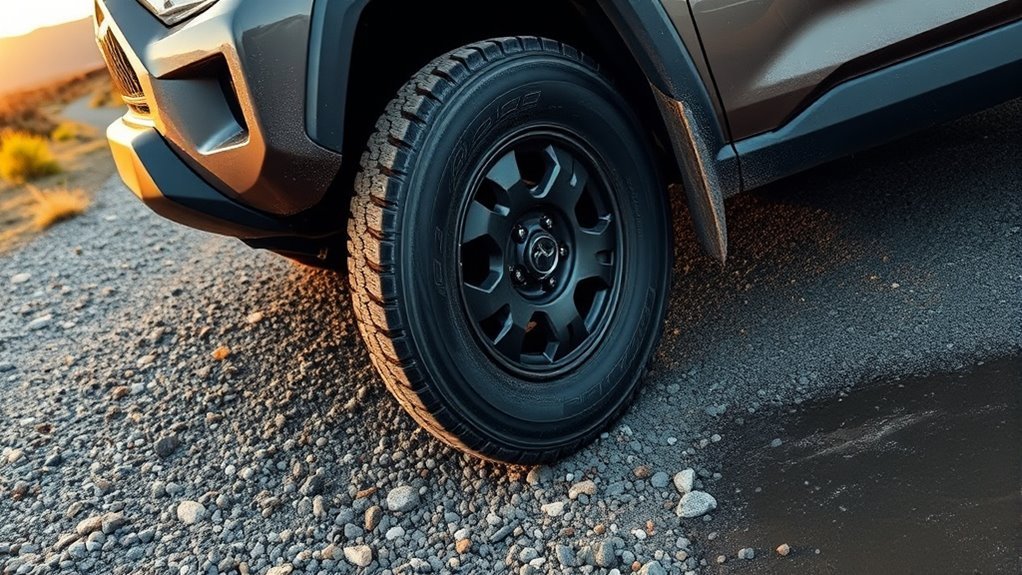
On a RAV4, all-terrain tires perform best in the middle ground: rough roads, loose gravel, light mud, wet grass, snow-dusted pavement, and uneven rural routes. They are not the best tool for every condition, but they can make the RAV4 feel more planted when the surface is loose or unpredictable.
- On pavement: A mild all-terrain tire can still feel stable and comfortable, but a touring tire usually wins for quietness and efficiency.
- On gravel: All-terrain tread blocks and shoulders can improve bite and reduce the nervous feel of standard highway tires.
- In light mud: Wider tread voids help clear some mud, but a RAV4 does not have the clearance or gearing for deep mud.
- In snow: 3PMSF-rated all-terrain tires can help in packed snow, but dedicated winter tires remain the better choice for frequent ice, deep snow, and extreme cold.
- On trails: They help on mild access roads and campsites, not on technical off-road routes that require more ground clearance and underbody protection.
The best all-terrain tire for a RAV4 is usually the one that improves dirt-road and snow confidence without making daily pavement driving feel noisy, heavy, or inefficient.
Understanding the Cost of All-Terrain Tires for Your RAV4
All-terrain tire costs vary by size, brand, warranty, season rating, and retailer. The tire itself is only part of the real cost. Budget for installation, balancing, valve stems or TPMS service parts when needed, alignment if wear is uneven, and possible fuel-economy changes.
A smart cost comparison should include:
- Price per tire: Larger RAV4 wheel sizes usually cost more.
- Installation and balancing: These costs vary by shop and region.
- Alignment: Worth checking if your current tires show uneven wear.
- Treadwear warranty: Compare the written warranty for your exact tire line and size.
- Fuel use: Heavier or more aggressive tires can cost more over time.
- Winter value: A 3PMSF all-terrain tire may reduce the need for a separate winter set in mild snow climates, but it is not a substitute for dedicated winter tires in severe conditions.
Impact on Fuel Efficiency and Ride Comfort
The biggest day-to-day difference after switching to all-terrain tires is often the feel of the RAV4. Some owners notice only a small change. Others notice more road noise, a firmer ride, slower steering response, or lower MPG.
Fuel Economy Considerations
Fuel economy is affected by rolling resistance, tire weight, tread pattern, inflation pressure, outside temperature, wheel size, and driving speed. To reduce the MPG penalty, stay close to the original tire size, avoid unnecessarily heavy tires, keep tires inflated to Toyota’s recommended cold pressure, and rotate them on schedule.
Ride Comfort Considerations
If comfort matters, choose a tire marketed for crossovers and SUVs rather than a heavier light-truck tire. Also pay attention to sidewall height. A RAV4 on smaller wheels with more sidewall often rides more comfortably than one on large wheels with lower-profile tires.
Noise Levels Comparison
Noise levels vary widely. A mild all-terrain tire may be quiet enough for daily commuting, while a more aggressive tread may drone on concrete highways. If quietness is a priority, look for reviews from RAV4 owners using your exact tire size and compare tread patterns before buying.
Winter Performance: 3PMSF vs. M+S vs. Winter Tires
Winter labels can be confusing, so it helps to separate them:
- M+S or M/S: Indicates a mud-and-snow tread classification, but it is not the same as a severe-snow traction test.
- 3PMSF: The Three-Peak Mountain Snowflake symbol means the tire meets an industry severe-snow traction standard.
- Dedicated winter tire: Built with winter-specific rubber compounds and tread designs for cold temperatures, snow, and ice.
If your RAV4 sees occasional snow, a 3PMSF all-terrain or all-weather tire can be a practical choice. If you drive through long winters, steep icy roads, or frequent storms, dedicated winter tires are still the safer option.
[Products Worth Considering]

The 22800 wheel stud installer makes replacing wheel studs quick and secure, saving time and effort during tire service. It uses a ratchet or impact wrench to pull new studs firmly into place, helping when existing studs are too long. Compatible with most automotive wheels and light-duty truck wheel studs, it’s designed for easy, tool-assisted installation.

Milton S-921 pencil tire pressure gauge helps you maintain optimal tire pressure for passenger cars with accurate readings in PSI and kPa. It features a built-in deflator valve for convenient pressure adjustments, plus a single chuck head and nylon indicator bar for easy use on the go. Built from durable plated brass and designed for reliable performance, it’s a practical road trip and cold-weather maintenance tool.

Vigorder rubber cement glue delivers superior adhesion and cures quickly within about 30 seconds for seamless rubber bonding. Once cured, it helps provide a strong, durable, waterproof seal that holds up to vehicle weight, pressure, and heat. Suitable for cars, motorcycles, trucks, bicycles, and off-road tires, it’s designed for emergency patch and maintenance repairs.
RAV4 Owners Share Their Experiences
Many RAV4 owners upgrade to all-terrain tires because they want the vehicle to feel more secure on gravel roads, forest roads, camping trips, and winter commutes. The most common positive feedback is better loose-surface grip and a tougher appearance.
The most common complaints are also predictable: more road noise, a firmer ride, higher cost, and possible MPG loss. Owners who are happiest with the switch usually choose a tire that matches how they actually drive, not the most aggressive tire they can fit.
If your RAV4 is a daily driver with occasional outdoor trips, look for a balanced crossover all-terrain tire. If you spend nearly all your time on highways, a premium all-season or all-weather tire may be the better upgrade.
Maintenance Tips for All-Terrain Tire Longevity
All-terrain tires need the same basic care as any tire, but maintenance matters even more because aggressive tread can develop uneven wear and noise if neglected. NHTSA recommends checking tire pressure at least once a month when tires are cold and replacing tires when tread reaches 2/32 inch.
- Check cold tire pressure monthly: Use Toyota’s recommended pressure on the door-jamb label or in the owner’s manual, not the maximum sidewall pressure.
- Rotate on schedule: Follow your RAV4 maintenance schedule or tire manufacturer guidance. Regular rotation helps prevent cupping and uneven noise.
- Check alignment: If the RAV4 pulls, the steering wheel is off-center, or the tread wears unevenly, get an alignment check.
- Inspect tread and sidewalls: Look for cuts, bulges, embedded objects, cracking, and uneven wear.
- Keep all four tires matched: This is especially important on AWD models.
- Rebalance if vibration appears: New road vibration after installation or rotation may mean a balance issue.
Note: Tire Pressure Monitoring Systems are helpful, but they do not replace routine pressure checks. TPMS usually warns after significant underinflation, not every small pressure change.
Frequently Asked Questions
What are the best tires to put on a Toyota RAV4?
The best tire depends on how you drive. For mostly highway use, choose a quiet touring all-season tire. For mixed pavement, gravel, and light snow, choose a crossover all-terrain or all-weather tire. For harsh winter conditions, choose dedicated winter tires. Always match the size, load index, speed rating, and inflation pressure required for your exact RAV4.
What are the disadvantages of all-terrain tires on a RAV4?
The main disadvantages are possible extra road noise, firmer ride quality, higher upfront cost, slightly lower fuel economy, and less sharp paved-road handling compared with a road-focused touring tire. The more aggressive the tread, the more noticeable these trade-offs can become.
What is the weakness of the Toyota RAV4 with all-terrain tires?
The RAV4 is a crossover, not a body-on-frame off-road SUV. Even with all-terrain tires, it still has limited ground clearance, approach angles, suspension travel, and underbody protection. All-terrain tires can help with traction, but they do not make the RAV4 suitable for extreme rocks, deep mud, or technical trails.
What is the 3% tire rule?
The 3% tire rule is a common fitment guideline that warns against changing overall tire diameter by more than about 3% from the original size. It is not a substitute for Toyota’s fitment guidance. A tire that is too tall or wide can affect speedometer accuracy, braking, clearance, AWD behavior, and stability systems.
Do all-terrain tires hurt RAV4 gas mileage?
They can, but the amount varies. Weight, tread design, rolling resistance, tire pressure, and tire size all matter. A mild all-terrain tire in the original size may have a small effect, while a heavier or oversized tire may be more noticeable.
Are all-terrain tires good in snow?
Some are good in snow, especially if they carry the Three-Peak Mountain Snowflake symbol. However, 3PMSF all-terrain tires are not the same as dedicated winter tires. If you drive in frequent ice, deep snow, or very cold weather, winter tires are still the better choice.
Can I put bigger all-terrain tires on my RAV4?
Sometimes, but bigger is not always better. A taller or wider tire can rub, add weight, reduce MPG, affect speedometer accuracy, and change how safety systems behave. Check your owner’s manual, door-jamb label, wheel width, suspension clearance, and local tire-shop fitment guidance before upsizing.
Conclusion
All-terrain tires can be a smart upgrade for a Toyota RAV4 that regularly sees gravel, dirt roads, mild trails, campsites, wet grass, or light snow. They add useful traction and durability, but they can also bring more noise, a firmer ride, higher cost, and possible fuel-economy loss.
For the best result, choose the least aggressive tire that matches your real driving needs. Verify the tire size, load index, speed rating, clearance, and inflation pressure for your exact RAV4, and consider a 3PMSF-rated tire if winter traction matters. If most of your driving is smooth pavement, a high-quality all-season or all-weather tire may be the better everyday choice.
Sources
- NHTSA TireWise — tire types, tire sizing, tire pressure, tread depth, and tire maintenance guidance.
- Toyota 2025 RAV4 Owner’s Manual: Tires — RAV4 tire inspection and maintenance reference.
- Toyota 2025 RAV4 Owner’s Manual: Tire Information — tire sidewall, tire size, and tire identification reference.
- USTMA Severe Snow Conditions Definition — Three-Peak Mountain Snowflake severe-snow-service criteria.
- EPA Low Rolling Resistance Tire Technologies — rolling resistance and fuel-use context.
- Falken Wildpeak A/T Trail — example of a crossover all-terrain tire with 3PMSF rating and limited treadwear warranty.


1 thought on “Pros and Cons of All-Terrain Tires for a RAV4: A Balanced Look”