
KZKB 160 PSI Tire Inflator Review: 6000mAh Portable Air Compressor for Cars
Disclosure: As an Amazon Associate, we earn from qualifying purchases. If you click a link on this page and make a purchase, we may receive a small commission at no extra cost to you.
A low tire can turn a routine drive into a stressful search for a working air pump. The KZKB 160 PSI Tire Inflator gives you a cordless way to check pressure and add air at home or on the road. Its 6000mAh rechargeable battery, digital gauge, automatic shutoff, and LED light cover the features most drivers need for routine top-ups. It is a practical emergency tool, but it is not a substitute for a high-volume shop compressor or a tire repair.
Quick Verdict
Rating: 8/10, recommended with caveats
Best For: Drivers, cyclists, and families who need a compact cordless inflator for pressure checks and moderate top-ups.
Bottom Line: The KZKB combines a 160 PSI maximum, 6000mAh battery, digital pressure control, and an LED in one portable unit. Its main tradeoff is that battery-powered inflators are better for short jobs than repeated heavy-duty inflation.
Key Specifications
| Specification | Detail |
|---|---|
| Brand | KZKB |
| Product type | Cordless portable tire inflator |
| Maximum pressure | 160 PSI |
| Battery capacity | 6000mAh rechargeable battery |
| Pressure control | Digital gauge with preset pressure and automatic shutoff |
| Lighting | Built-in LED light |
| Supported uses | Passenger-car tires, motorcycle tires, bicycle tires, and sports balls |
| Design | Cordless, compact, and rechargeable |
| Best use | Routine pressure maintenance, moderate top-ups, travel, and emergency backup |
[Products Worth Considering]

This portable cordless tire inflator delivers up to 160 PSI with fast 17 L/min airflow to help you quickly top up tires and get back on the road. It features dual power mode, running on a 21V rechargeable battery or a 12V DC adapter for convenient roadside use. An automatic shut-off with digital pressure gauge helps prevent overinflation, and a built-in LED light improves visibility in low-light conditions.
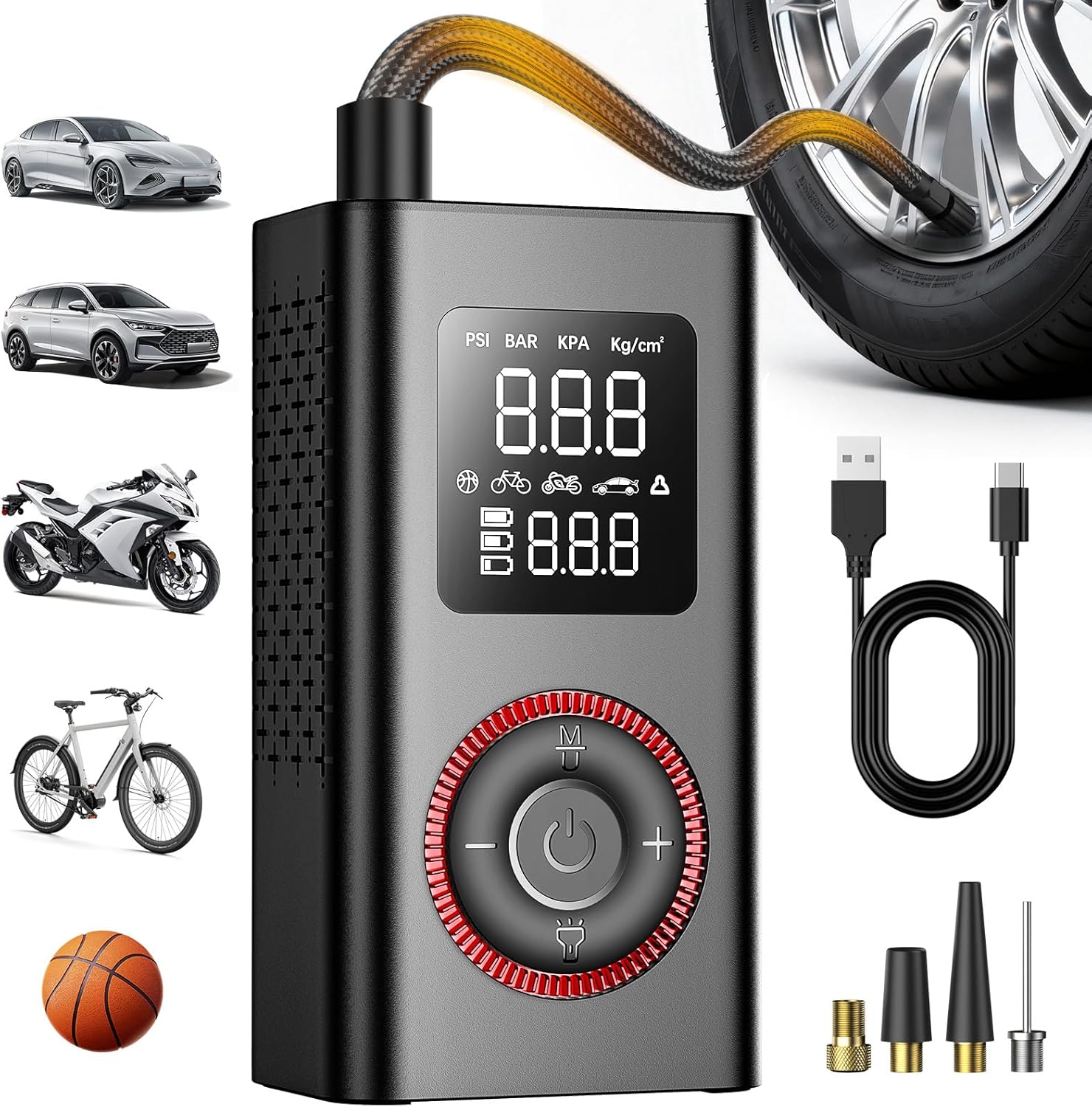
This portable tire inflator delivers fast, efficient inflation with a maximum 150 PSI rating and accurate pressure control for cars, motorcycles, bikes, and more. It features preset modes with automatic shutoff to help prevent overinflation, plus a real-time digital gauge and bright LED light for roadside use. Powered by a rechargeable 6000mAh battery with Type-C charging and a USB output, it’s also useful as an emergency power source for devices.
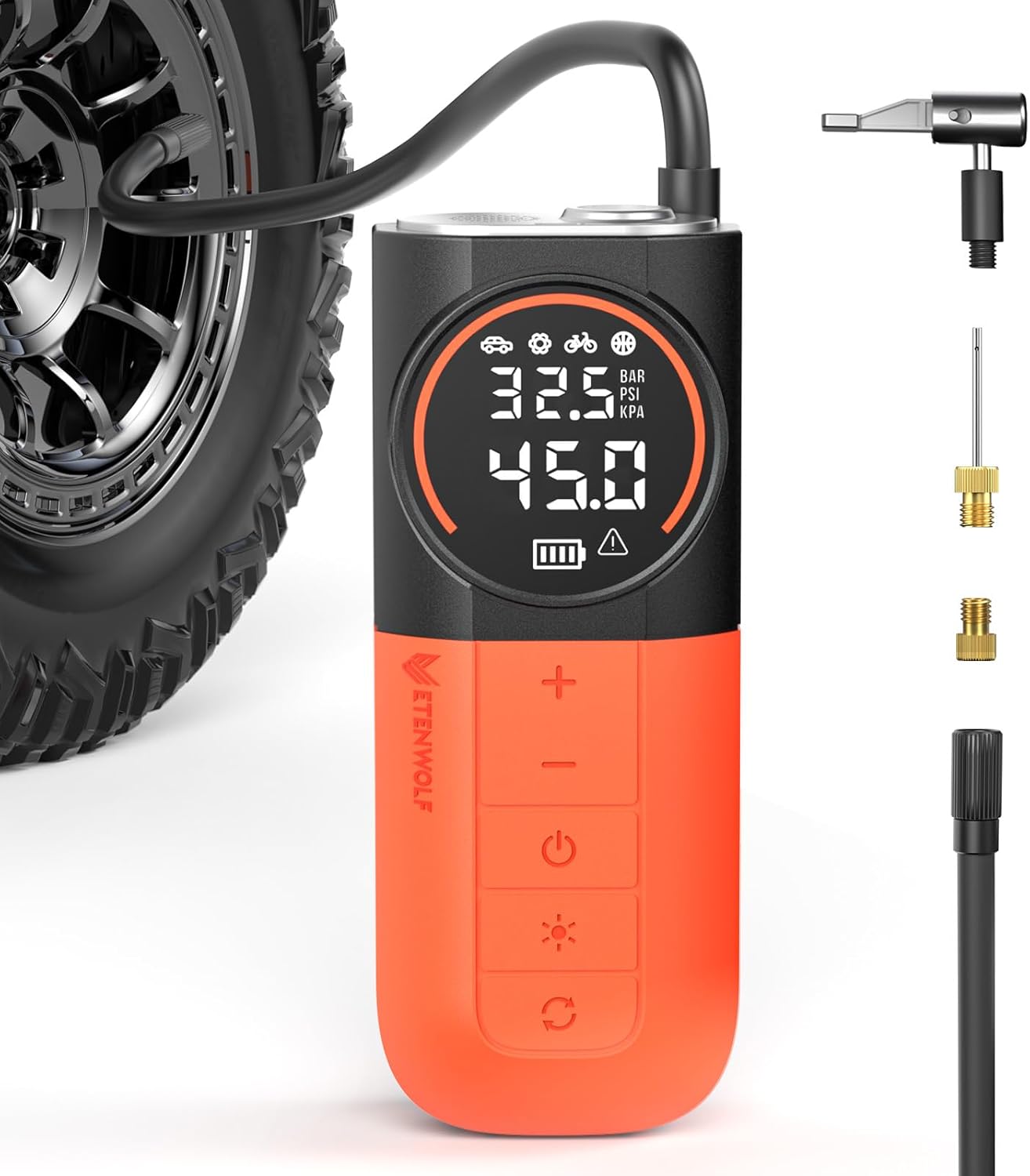
The ETENWOLF S1 cordless tire inflator delivers ultra-fast inflation with up to 160 PSI and a 20 L/min airflow for quicker tire top-offs. Its 5200mAh battery and cooling system support inflating many tires and sports balls on a single charge, while the digital pressure gauge and multi-unit display help you reach the right pressure accurately. With preset modes, pressure memory, an auto-stop feature, and an LED flashlight, it’s built for easy roadside and everyday use.
At a Glance
|
Buying Factor |
Our Take |
|---|---|
|
Ease of Use |
The digital gauge and automatic shutoff reduce guesswork after you set the correct target pressure. |
|
Portability |
The cordless format is easier to store and carry than a garage compressor or a long 12V cable. |
|
Battery |
The 6000mAh rechargeable battery supports mobile use, but you need to keep it charged before trips. |
|
Inflation Performance |
It suits pressure corrections and moderate fills, not continuous commercial work or large-volume inflatables. |
|
Roadside Use |
The pressure display, auto-stop function, and LED are useful when you need to work beside a vehicle in low light. |
KZKB 160 PSI Tire Inflator
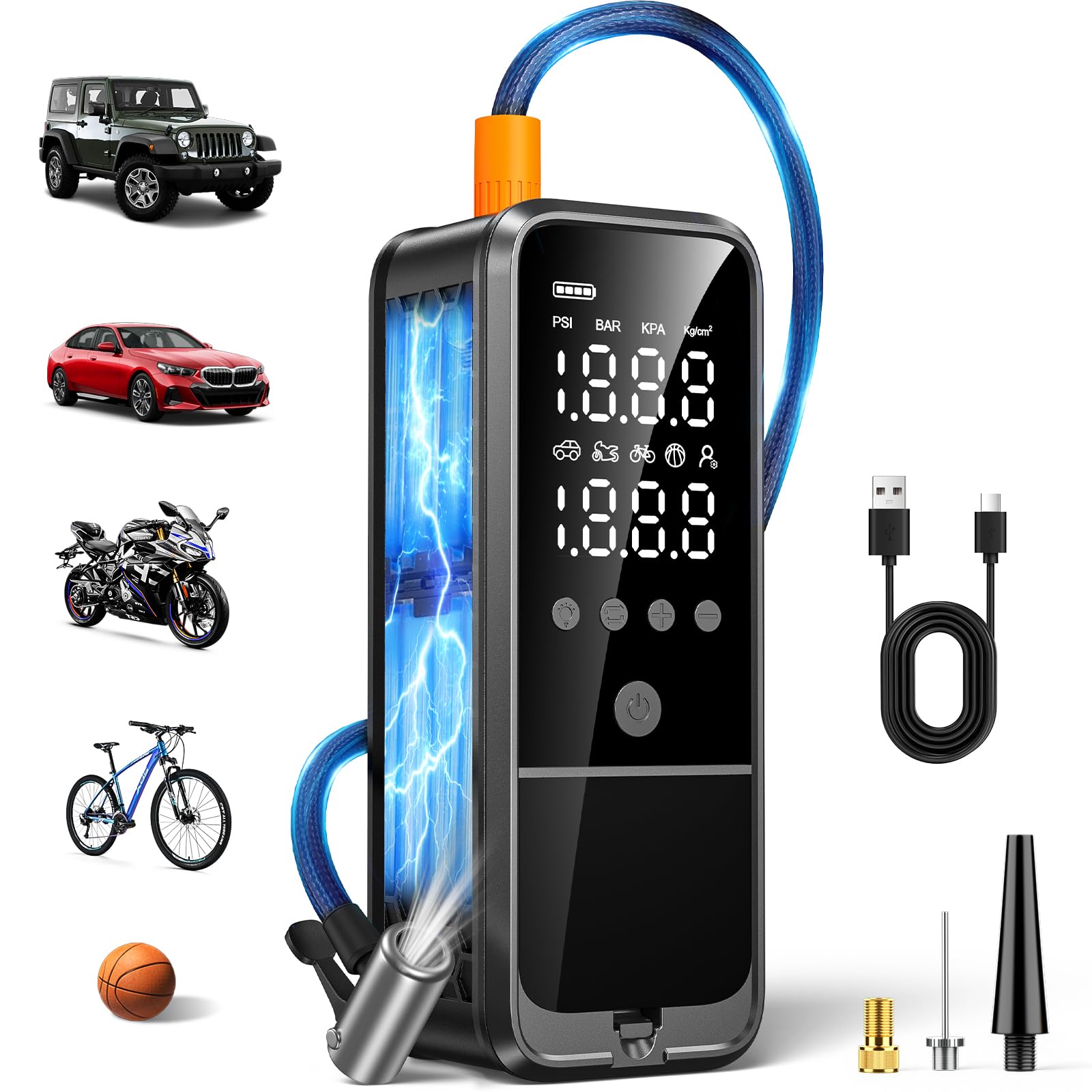
A cordless 6000mAh portable air compressor with a digital tire-pressure gauge, preset shutoff, and LED light for cars, motorcycles, bicycles, and sports balls.
Best for routine top-ups and travel backup
View Product on Amazon →What Is the KZKB 160 PSI Tire Inflator?
The KZKB is a rechargeable portable air compressor made for common tire-pressure tasks. You connect the hose, select or set the target pressure, and start the pump. The digital system tracks pressure and stops the motor when it reaches your preset level.
Its 160 PSI maximum gives it enough stated pressure range for passenger-car, motorcycle, and many bicycle tires. The 6000mAh battery removes the need to run a cable to a 12V socket, while the LED helps you see the valve and controls after dark.
The main appeal is convenience. You can keep one compact tool in your vehicle instead of relying on gas-station equipment. You still need a proper repair if a tire is punctured, damaged, or losing air repeatedly.
Who Should Buy It?
Best For
- Drivers who want a cordless inflator for seasonal pressure changes and slow leaks.
- Cyclists or motorcyclists who need a portable digital pump with preset shutoff.
- Families who want one tool for vehicle tires, bicycle tires, and sports balls.
Skip If
- You need to run a compressor continuously for commercial or workshop use.
- You regularly inflate large truck tires, air mattresses, paddleboards, or other high-volume items.
- You prefer a corded inflator that does not depend on battery charge.
Before You Buy: A portable inflator can restore pressure, but it cannot repair a puncture, sidewall damage, or a faulty valve. Repeated pressure loss needs a tire inspection.
Design and Portability
The cordless design is the KZKB’s clearest advantage. You do not need to park close to an outlet or route a power cable through the vehicle. That makes quick checks easier in a driveway, parking lot, or roadside setting.
Compact storage also matters because an emergency tool only helps when it is in the vehicle. Store the inflator, hose, charging cable, and adapters together so you can find every part quickly. Avoid leaving the battery fully discharged for long periods.
Digital Gauge and Automatic Shutoff
The built-in gauge lets you view tire pressure without carrying a separate tool. After you set the correct target, automatic shutoff stops inflation at that number. This feature is useful for small corrections because you can focus on keeping the hose secure instead of watching the display every second.
For the best result, compare the reading with a trusted handheld gauge from time to time. Temperature, valve connection, and normal gauge tolerance can create small differences. Always use the pressure listed on your vehicle’s door-jamb placard or in the owner’s manual, not the maximum molded into the tire sidewall.
Battery and Charging
The 6000mAh rechargeable battery gives you true cordless operation. That is convenient for roadside top-ups, bicycles, and equipment stored away from a power source. Battery condition, tire size, starting pressure, and temperature will affect how many jobs you can complete per charge.
Charge the inflator before a road trip and check its battery level during routine vehicle maintenance. A cordless tool with a dead battery is not useful during an emergency. Let the unit cool after a longer inflation cycle before starting another demanding job.
LED Light and Low-Light Use
The built-in LED helps you locate the valve stem and read the controls in a dark garage or at night. It can also make the inflator easier to spot beside the vehicle. You should still move to a safe location away from traffic before working on a tire.
The LED is a support feature, not a replacement for roadside warning lights or safe positioning. Use hazard lights, stay visible, and avoid kneeling near moving traffic.
How It Performs in Real Use
[Products Worth Considering]

The AstroAI L7 Air Tire Inflator refills car tires quickly with up to 150PSI max pressure and a fast 1-minute inflation claim. It includes 5 preset modes for car, motorcycle, bicycle, balls, and manual use, along with an auto shutoff to help prevent overinflation. Designed for convenience, it features a digital gauge with unit switching, a top LED light with multiple modes, and USB-C/USB ports for backup power.

This portable cordless tire inflator delivers fast, efficient inflation for cars, motorcycles, bikes, and sports balls with a digital pressure gauge. Use the one-click PSI preset with auto shut-off for accurate, hands-free topping to your target pressure up to 150 PSI. It’s compact and rechargeable with a built-in emergency LED light plus valve adapters and accessories for quick, ready-to-go use.
Routine Car-Tire Top-Ups
The KZKB makes the most sense when a passenger-car tire is a few PSI below its target. Preset shutoff keeps the process simple, and the cordless battery avoids stretching a cable across the cabin. Check all four tires when they are cold for a consistent reading.
Road Trips and Emergency Backup
In a travel kit, the inflator gives you a way to correct low pressure before driving to a service location. It is especially useful when a gas-station pump is unavailable or inaccurate. It does not make a damaged tire safe to drive on, so inspect the tire before continuing.
Bicycles, Motorcycles, and Sports Balls
The stated 160 PSI ceiling provides range for common bicycle and motorcycle applications, while the digital control helps with smaller targets. Use the correct adapter and confirm the recommended pressure for the specific tire or ball. Small-volume items can change pressure quickly, so secure the connection before starting.
Repeated or Heavy Inflation
This is not the ideal tool for filling several large tires from nearly empty or powering workshop tasks all day. Longer runs create heat and drain the battery faster. A corded 12V inflator or a full-size compressor is a better match for frequent, high-volume use.
How to Use It Correctly
- Charge the inflator and inspect the hose, connector, and adapters.
- Check the recommended cold-tire pressure on the vehicle placard or in the owner’s manual.
- Attach the hose firmly to the valve stem to reduce air loss.
- Select the correct mode or set the target pressure manually.
- Start inflation and allow the automatic shutoff to stop the pump.
- Remove the connector carefully, then replace the valve cap.
- Recheck pressure if the connection leaked or the reading seems unusual.
Pro Tip: Test the inflator at home before storing it for emergencies. You will learn the controls, confirm the adapters fit, and notice any charging or hose issue before a roadside problem.
Safety, Care, and Storage
Use the inflator on a stable surface and keep its air vents clear. Stop if the hose, connector, or housing becomes excessively hot, and follow the cooling guidance supplied with the product. Do not expose the unit to water or store it where the battery faces extreme heat.
Check tire pressure when the tires are cold. Driving warms the air inside the tire and raises the reading, which can lead to an incorrect adjustment. A tire that keeps losing pressure may have a puncture, damaged rim, leaking valve, or another issue that needs professional service.
What Buyers Say
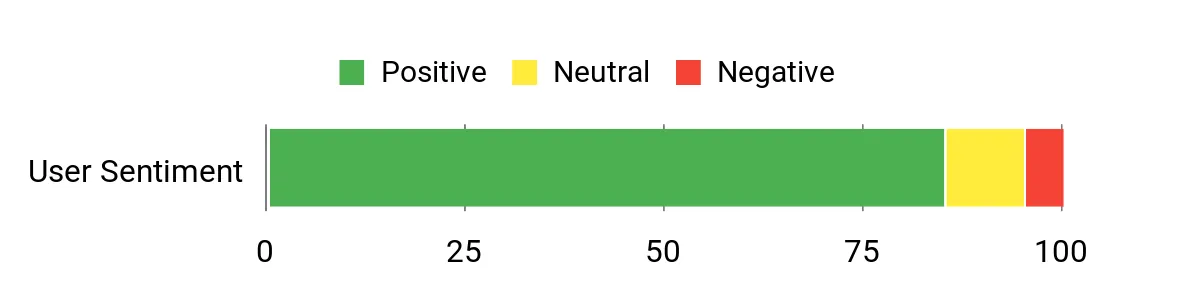
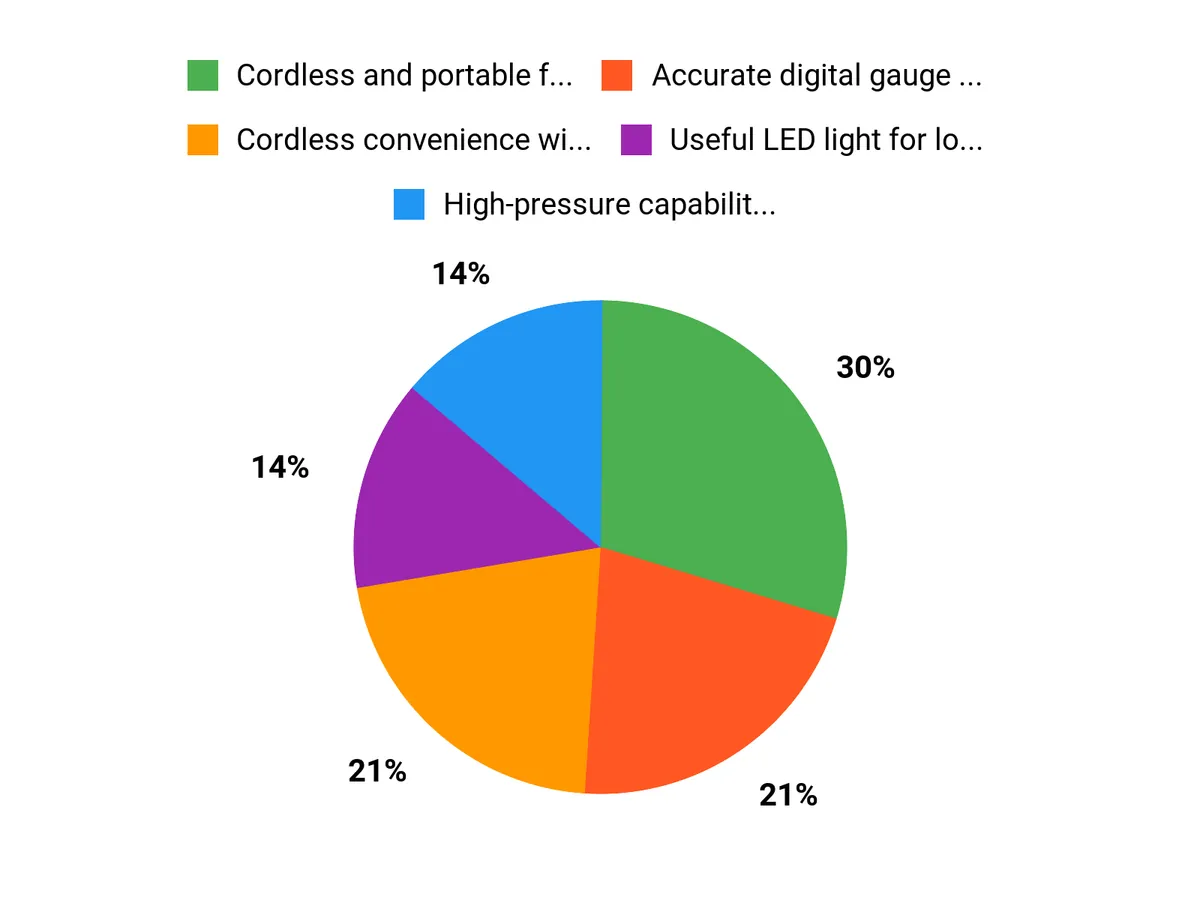
Feedback summarized for matching KZKB listings commonly praises the compact format, simple pressure setting, LED light, and automatic shutoff. Those features solve the main inconvenience of using a larger compressor for small pressure corrections.
Negative comments focus on unclear instructions and uneven battery endurance during demanding fills. That supports the most realistic buying expectation: use this model for maintenance and backup, not as a replacement for a workshop compressor.
Overall Sentiment: Mostly positive, with practical battery and instruction caveats.
Pros and Cons
Pros
- 6000mAh battery supports cordless inflation away from a power socket.
- 160 PSI stated maximum covers common passenger-car, motorcycle, bicycle, and ball applications.
- Digital pressure display and automatic shutoff reduce manual monitoring.
- LED light improves visibility around the valve and controls.
- Compact format is easier to keep in a vehicle than a full-size compressor.
Cons
- Battery charge and heat limit long, repeated inflation cycles.
- It is not suited to high-volume inflatables or regular heavy-duty tire work.
- Owners may need a brief practice session because the controls and pressure units can be confusing at first.
Why You’d Choose the KZKB
You would choose the KZKB because it combines cordless power, a 160 PSI pressure range, digital control, automatic shutoff, and an LED in one compact tool. It is most convincing as a maintenance device you can keep close at hand, rather than a machine for continuous high-volume work.
Is It Worth the Price?
The KZKB offers strong value for buyers who prioritize cordless convenience and basic digital controls. It replaces separate trips to an air station for routine top-ups and can serve several household uses without taking up much storage space.
Its value drops if you often inflate large tires from very low pressure or forget to charge battery-powered tools. In that case, a corded model may provide more dependable long-duration power. Check the current listing details, included accessories, and return terms before buying because seller packages can change.
How It Compares to Alternatives
The Fanttik X8 APEX is worth comparing if you want a more established premium portable-inflator option. The AstroAI AIRUN H and EPAuto 12V DC inflators may suit you better if you prefer steady corded power and do not want to manage a battery.
The KZKB makes the most sense when cordless portability, preset shutoff, and compact storage matter more than continuous runtime. For frequent garage use, a larger corded compressor remains the stronger choice.
Frequently Asked Questions
Can the KZKB inflate a completely flat car tire?
It can add air to a passenger-car tire, but the time and battery use depend on tire size and starting pressure. Inspect the tire first because a puncture or sidewall problem still needs repair.
Does it stop automatically at the set pressure?
Yes. The product is listed with preset pressure control and automatic shutoff. Set the target from the vehicle placard, connect the hose securely, and confirm the final reading.
Is the 160 PSI rating useful for normal car tires?
Most passenger-car tires use a much lower pressure than 160 PSI. The higher maximum gives the pump range for different tire types, but you should always follow the pressure specified for your vehicle or equipment.
Can you use it for bicycle tires and sports balls?
Yes, the product is marketed for bicycle tires and sports balls as well as vehicle tires. Use the correct adapter and the pressure recommended by the tire or ball manufacturer.
Is it suitable for truck tires or air mattresses?
It is not the best fit for large truck tires or high-volume inflatables. Those jobs need more airflow and longer runtime than a compact battery inflator is designed to provide.
How should you store the inflator?
Keep it dry, protect it from extreme heat, and store the hose, charging cable, and adapters together. Recharge it periodically so the battery is ready when you need it.
Who should skip this inflator?
Skip it if you need continuous commercial use, frequent large-tire inflation, or power that never depends on charging. A corded 12V pump or shop compressor will fit those needs better.
The Bottom Line
The KZKB 160 PSI Tire Inflator is a good fit for drivers and cyclists who want cordless pressure maintenance, automatic shutoff, and a compact emergency tool. Skip it for continuous heavy-duty work or large-volume inflation, where battery runtime and heat become bigger limits.
Its strongest advantage is easy mobile use. Its main weakness is the normal endurance tradeoff of a small rechargeable compressor.
Ready to Buy?
Check the latest price, included accessories, and product details before you decide.

Related Articles
GOOLOO A6 Gear Tire Inflator Review: 160 PSI Cordless Portable Air Compressor
You want a compact, reliable way to keep your tires at the right pressure without dragging an air hose around or waiting for service.…
Read More
BLACK+DECKER BDINF20C Tire Inflator Review: 20V MAX Cordless and Corded Air Pump
You rely on a compact, reliable inflator when a tire goes low or an air mattress needs a quick top‑up, and the BLACK+DECKER BDINF20C…
Read More
150 PSI Cordless Tire Inflator Review: 5X Faster Portable Air Compressor with Digital Gauge
You do not want to be stuck with underinflated tires when safety, fuel economy, and tire life are on the line. A compact cordless…
Read More