Is Mastertrack a Good Tire? Honest Review & Performance Rating
Mastertrack can be a good tire if you want a low-cost option for a trailer, light truck, SUV, or mixed-use vehicle and you choose the right model for the job. It is not a premium tire brand, so you should not expect the same consistency, testing depth, or long-term reputation as major brands. Still, some Mastertrack models can make sense when the size, load rating, speed rating, and tire type match your vehicle or trailer.
Quick Answer
Mastertrack is a decent budget tire for price-conscious drivers, especially for trailer use, basic towing, and light truck or SUV applications. It is best for normal road use, gravel, and moderate mixed terrain—not for buyers who want premium wet grip, proven long-mileage consistency, or the strongest brand reputation.
Key Takeaways
- Mastertrack is best viewed as a budget tire brand, not a direct replacement for premium brands like Michelin, Goodyear, or BFGoodrich.
- The brand includes trailer, highway, all-terrain, rugged-terrain, and mud-terrain models, so the right choice depends on the exact vehicle and use case.
- Select Mastertrack listings show strong customer ratings, but some review counts are small, so ratings should not be treated as full long-term testing.
- For towing, the tire’s load range, load index, speed rating, DOT date code, and cold inflation pressure matter more than the brand name alone.
- Mastertrack can be worth buying if the price is low and the specs match your needs, but high-mileage commuters and heavy haulers may be better served by a more established tire brand.
Is Mastertrack a Good Tire?

Yes, Mastertrack can be a good tire for the right buyer. Retail listings describe Mastertrack as a Chinese tire brand and a sub-brand of Unicorn Tires, with a lineup that includes trailer, passenger, SUV, light truck, and commercial-style tires. That gives the brand a broad range, but it also means you should judge each model separately instead of assuming every Mastertrack tire performs the same.
The strongest reason to consider Mastertrack is value. Many shoppers look at the brand because the upfront price is usually lower than major-name alternatives. That can make sense for trailers, occasional towing, work vehicles, older vehicles, and drivers who need a usable tire without paying premium prices.
The tradeoff is confidence. Mastertrack does not have the same public testing footprint, dealer network, or long-term reputation as top-tier tire brands. Some models have encouraging retailer ratings, but those ratings often come from limited review counts. If you drive long highway miles, tow near your trailer’s maximum capacity, or need the best wet braking and ride refinement, compare Mastertrack carefully against better-known brands before buying.
Note: A tire brand can be “good” in one use case and a poor fit in another. Always match the tire to the vehicle, trailer, load, climate, and road surface instead of buying by brand name alone.
Mastertrack Tire Models Compared
Mastertrack’s lineup includes several different tire types. The table below gives a practical overview of the models most buyers are likely to compare.
| Model | Best Use | What to Know |
| Mastertrack Badlands AT | Truck/SUV all-terrain use | A practical choice for pavement, gravel, dirt roads, and light mud when you want low-cost all-terrain traction. |
| Mastertrack Badlands RT | Rugged-terrain light truck use | Better suited to drivers who want a more aggressive tread than a highway tire but do not need a full mud-terrain tire. |
| Mastertrack Badlands MT | Mud-terrain light truck use | Best for drivers who prioritize mud and loose-surface bite over quietness, fuel economy, and smooth highway comfort. |
| Mastertrack UN-203 | Trailer highway use | A trailer-focused tire. Do not mount trailer-only tires on a light truck or passenger vehicle. |
| Mastertrack UN-All Steel ST | Trailer highway use | A trailer tire option for buyers who want a sturdier trailer-focused construction and regular highway use. |
[Products Worth Considering]

The 22800 wheel stud installer makes replacing wheel studs quick and secure, saving time and effort during tire service. It uses a ratchet or impact wrench to pull new studs firmly into place, helping when existing studs are too long. Compatible with most automotive wheels and light-duty truck wheel studs, it’s designed for easy, tool-assisted installation.

Get precise tire readings with the ETENWOLF T300 Plus digital gauge, calibrated to ANSI B40.7 Grade 2A for reliable accuracy. It measures across a wide 3–200 PSI range and includes thermal compensation for dependable performance from extreme cold to heat. The bright LED display, LED illumination, and replaceable AAA batteries make it easy to check pressures quickly, even in low light.

Check tire pressure with the Milton S-925 pencil gauge built for trucks, RVs, and bicycles. It features a single-head chuck with a built-in deflator valve, and it displays readings in both PSI and kPa for convenient use. The gauge is designed for accurate, repeatable pressure checks within its working range.
Is Mastertrack Good for Towing?
Mastertrack can be a good towing tire when you buy a trailer-specific model or a properly rated light truck tire. Trailer models such as the UN-203 and UN-All Steel ST are made for trailer use, while Badlands light truck models are aimed more at trucks and SUVs. The important point is that trailer tires and vehicle tires are not interchangeable.
For towing, do not buy only because a listing says “10-ply” or “heavy duty.” Those terms help describe strength, but they do not replace the exact load information on the tire sidewall. You need the correct tire size, load range, load index, speed rating, and cold inflation pressure for your trailer or vehicle.
Warning: Never overload a trailer tire, exceed its speed rating, or run it below the recommended cold inflation pressure. Underinflation, overloading, old tires, sidewall damage, and heat buildup can all increase the risk of tire failure.
If you tow often, inspect the tires before every trip. Look for cracking, bulges, uneven wear, punctures, exposed cords, low pressure, or a DOT date code that shows the tire is aging out. For heavy loads or long highway trips, a higher-end trailer tire from a more established brand may be worth the extra cost.
How Mastertrack Tires Perform On and Off Road
Mastertrack’s on-road and off-road performance depends heavily on the model. The Badlands AT is the most practical mixed-surface choice because it is an all-terrain tire designed for trucks and SUVs. It should be more comfortable on pavement than a mud-terrain tire while still giving useful grip on gravel, packed dirt, and light mud.
The Badlands RT is the middle ground. It is meant for drivers who want a more aggressive look and more bite than a highway tire without going all the way to a mud-terrain design. The Badlands MT is the more aggressive option for loose dirt and mud, but like most mud-terrain tires, it may be louder, rougher, and less efficient on the highway.
For winter use, be careful with expectations. All-season and all-terrain tires can handle a range of conditions, but they are not the same as true winter tires in deep snow, ice, or sustained freezing weather. If you regularly drive in severe winter conditions, choose a tire with winter-specific capability instead of relying on an all-season label.
Pro Tip: For mixed driving, choose the least aggressive tread that still fits your terrain. A milder all-terrain tire is usually quieter, smoother, and more fuel-friendly than a mud-terrain tire if most of your miles are on pavement.
Are Mastertrack Tires Worth the Price?
Mastertrack tires can be worth the price if you are shopping mainly for affordability and you are realistic about the tradeoffs. Select models list tread warranties up to 50,000 miles, and some retailer listings show positive customer ratings. That gives the brand value appeal, especially for budget-minded drivers.
Still, price should not be the only factor. A cheaper tire that wears faster, rides poorly, or does not match your load needs can cost more in the long run. For daily commuting, occasional towing, local trailer use, and moderate mixed terrain, Mastertrack can be a sensible budget pick. For maximum wet grip, premium ride quality, frequent long-distance towing, or high annual mileage, compare it against established brands before deciding.
The best Mastertrack tire is not the one with the lowest price. It is the one with the correct size, load rating, speed rating, tread type, and warranty for your exact vehicle or trailer.
[Products Worth Considering]
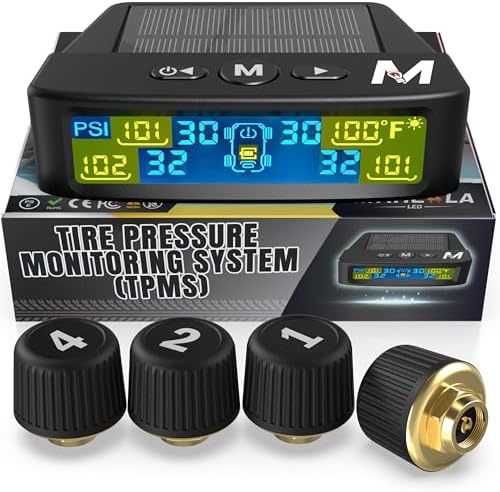
Marcala’s TPMS set of four sensors helps you monitor tire pressure and temperature in real time while driving, with updates every second. The bright color LCD uses auto-dimming for easy viewing, powered by dual solar and USB charging, and offers six alarm modes. Built for trailers, RVs, campers, trucks, and towing setups, the sensors support monitoring 1-4 wheels up to 98 PSI with IP67 waterproof protection.
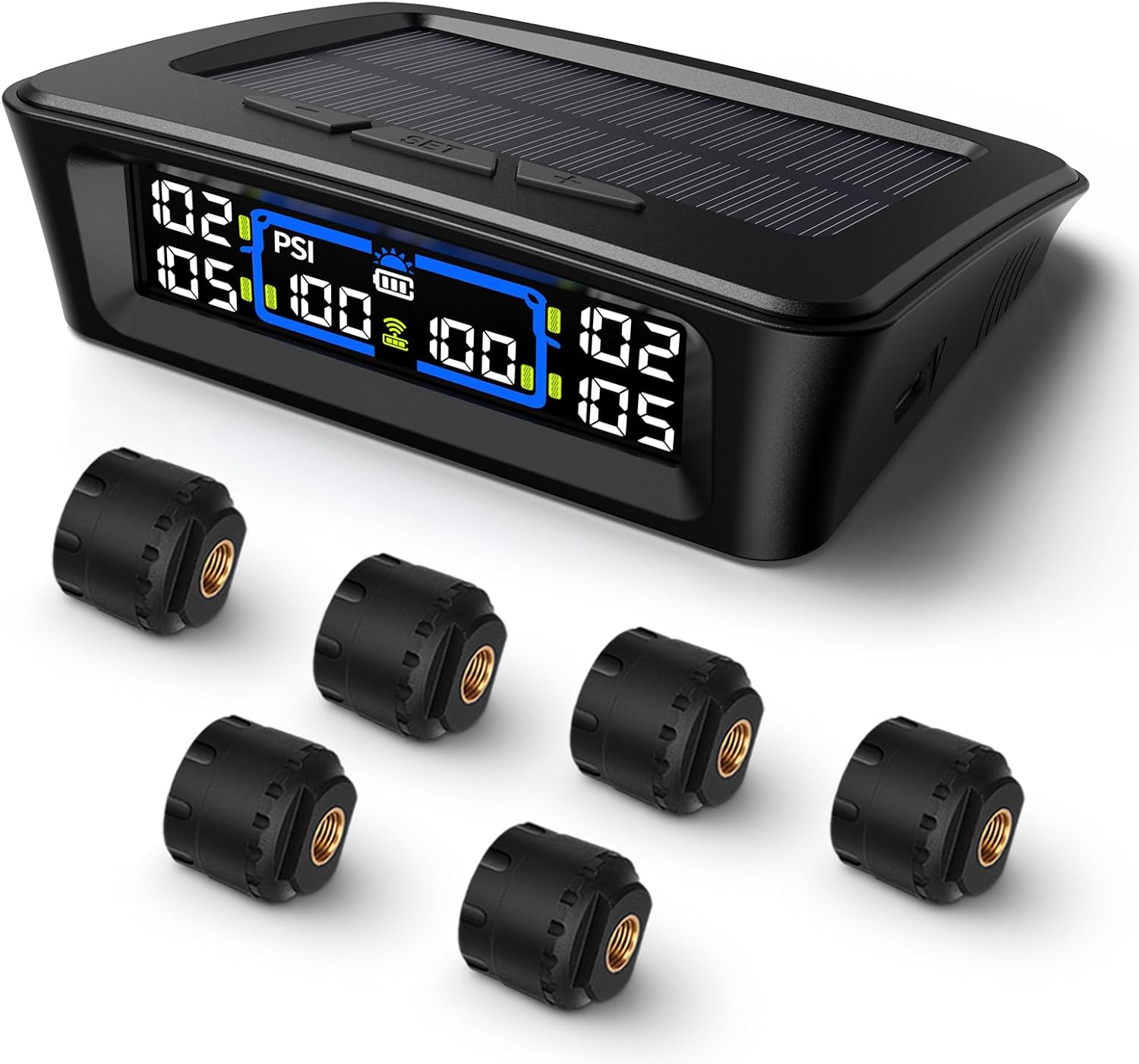
The Tymate TM12 RV TPMS delivers real-time tire pressure and temperature monitoring with a stable 433Hz display for safer long-distance driving. It supports simultaneous monitoring across vehicle and trailer zones, includes six alarm modes for pressure, temperature, leakage, battery, and signal loss, and features easy DIY installation with auto calibration. Power is supplied via USB-C charging or solar recharging, with a wide 0–144 PSI range and up to 50 ft signal coverage for RVs and towable trailers.

Accurately measure tire tread depth with a calibrated gauge marked from 0 to 1 inch in 1/32 inch increments. The color-coded bar helps you quickly identify tread condition ranges, supporting safe driving for trucks, motorcycles, automobiles, and passenger vehicles.
What to Check Before Buying Mastertrack Tires
Before you buy Mastertrack tires, check these items carefully:
- Correct size: Match the size listed in your owner’s manual, door placard, trailer placard, or current approved tire setup.
- Load index and load range: Make sure the tire can carry the loaded vehicle or trailer weight safely.
- Speed rating: Do not exceed the tire’s rated speed, especially when towing.
- Tire type: Use trailer tires only on trailers, and use passenger, SUV, or light truck tires only where they are designed to be used.
- DOT date code: Avoid old stock if you need long service life. Tire age matters even when tread looks new.
- Tread depth and wear: Replace tires when tread is unsafe, uneven, cracked, bulged, or damaged.
- Warranty details: Confirm whether the exact model and size include a treadwear warranty.
- Return policy and installer: Buy from a seller that provides clear returns, fitment support, and professional mounting options.
- Recall and registration: Register new tires and check for recalls so you can be notified if a safety issue is announced.
Note: Tire Pressure Monitoring Systems are helpful, but they do not replace regular pressure checks. Check tire pressure at least monthly and before long trips, using the recommended cold inflation pressure.
[Products Worth Considering]

The ETENWOLF T600 digital tire pressure gauge delivers precise, manually calibrated readings to ANSI B40.7 Grade 2A standards with ±0.5% PSI accuracy. Its 360° rotating nozzle and display hold make it easy to check pressures from any angle, while a bleed button helps dial tires to the perfect level. With a 0–250 PSI range and support for PSI, BAR, and KPA, it’s a convenient tool for maintaining tire performance across many vehicles and seasons.

LiQuiTube Premium Heavy Duty Tire Sealant provides permanent flat tire protection to help maintain proper air pressure while sealing punctures and leaks. It seals bead, rim, and porosity weathering leaks and helps prevent flats in heavy ply industrial tires. Designed for versatile use on trailers and off-road equipment, it can be installed in tubeless tires and also inside tubes.

Measure tyre tread depth precisely with a digital gauge that reads in both MM and inches, helping you monitor safe driving conditions. The large LCD screen is easy to operate, and the compact tool fits for cars, trucks, and motorcycles. It provides high accuracy with a 0-25.4mm range and includes a 1-year warranty for added peace of mind.
Who Should Buy Mastertrack Tires?
Mastertrack tires are best for budget-conscious buyers who need basic, practical performance and are willing to check specs carefully before purchase. They make the most sense for utility trailers, casual towing, older vehicles, work-focused setups, light trucks, SUVs, and drivers who want acceptable performance without paying premium-brand prices.
You should consider Mastertrack if your priorities are low upfront cost, usable traction, and a tire that fits routine driving or trailer needs. You should be more cautious if you tow heavy loads often, drive long highway distances in hot weather, need top wet-weather braking, or plan to keep the tires for many years.
Frequently Asked Questions
Who makes Mastertrack tires?
Retailer listings describe Mastertrack as a Chinese tire brand and a sub-brand of Unicorn Tires. Because public manufacturer information is limited, it is best to verify the exact model, size, warranty, and DOT information before buying.
Are Mastertrack and Mastercraft tires the same?
No. Mastertrack and Mastercraft are different tire brands. Mastercraft has its own official tire site under Goodyear, while Mastertrack is commonly sold as a separate budget tire brand. Do not use Mastercraft reviews to judge Mastertrack tires.
Are Mastertrack tires good for trailers?
Some Mastertrack models, such as the UN-203 and UN-All Steel ST, are made for trailer use. They can be a good budget option if the size, load range, load capacity, speed rating, and inflation pressure match your trailer. Trailer tires should not be mounted on passenger vehicles or light trucks.
How long do Mastertrack tires last?
Tread life depends on the model, vehicle, load, inflation pressure, alignment, rotation, terrain, and driving style. Select Mastertrack listings show tread warranties up to 50,000 miles, but not every model has that coverage. Check the warranty for the exact tire size before buying.
Are Mastertrack Badlands tires good off road?
Mastertrack Badlands AT, RT, and MT tires are designed for different levels of mixed-terrain use. The AT is better for everyday pavement plus gravel and light trails, the RT is more aggressive, and the MT is aimed at mud and loose terrain. None should be treated as a premium off-road competition tire.
Which is better, Goodyear or Mastertrack?
Goodyear is usually the better choice if you want stronger brand reputation, broader testing, more dealer support, and more premium tire options. Mastertrack is more attractive when price is the main concern and the exact model meets your load, size, and driving needs.
Conclusion
So, is Mastertrack a good tire? Yes, it can be a good budget tire if you choose the right model and keep your expectations realistic. Mastertrack is strongest for cost-conscious trailer, towing, light truck, SUV, and mixed-surface buyers who need useful performance at a lower price. It is weaker if you want premium wet grip, quiet ride quality, maximum tread-life confidence, or a long track record from a major brand.
Before buying, check the exact tire size, load rating, speed rating, DOT date code, warranty, and recall status. If everything matches your vehicle or trailer and the price is meaningfully lower, Mastertrack can be worth considering. If safety margin, heavy towing, or long-distance reliability matters most, spending more on a premium tire may be the smarter move.
Sources
- Priority Tire — Mastertrack Tires — brand description, public model listings, ratings, and selected warranty information.
- Priority Tire — Mastertrack Badlands AT — Badlands AT model type, use case, and feature claims.
- Priority Tire — Mastertrack UN-203 — trailer-specific model details and light-truck warning.
- NHTSA TireWise — tire pressure, tread depth, tire maintenance, tire aging, and tire-safety guidance.
- NHTSA Recalls — tire recall lookup and safety recall information.
- U.S. Tire Manufacturers Association — Tire Care & Safety — monthly inspections, tire registration, storage, aging, and maintenance guidance.

Related Articles

Firestone vs Michelin: Which Tire Is Worth It?
How do Firestone and Michelin really compare, and which tire gives you the best value for your driving needs?
Read More
BFGoodrich vs Goodyear: Which Tire Brand Is Better?
I compare BFGoodrich vs Goodyear to reveal which tire brand wins for traction, comfort, and value—before you buy.
Read More
Hankook vs Goodyear Tires: Which Should You Buy?
Torn between Hankook and Goodyear tires? Discover which one delivers the best value, performance, and longevity before you buy.
Read More