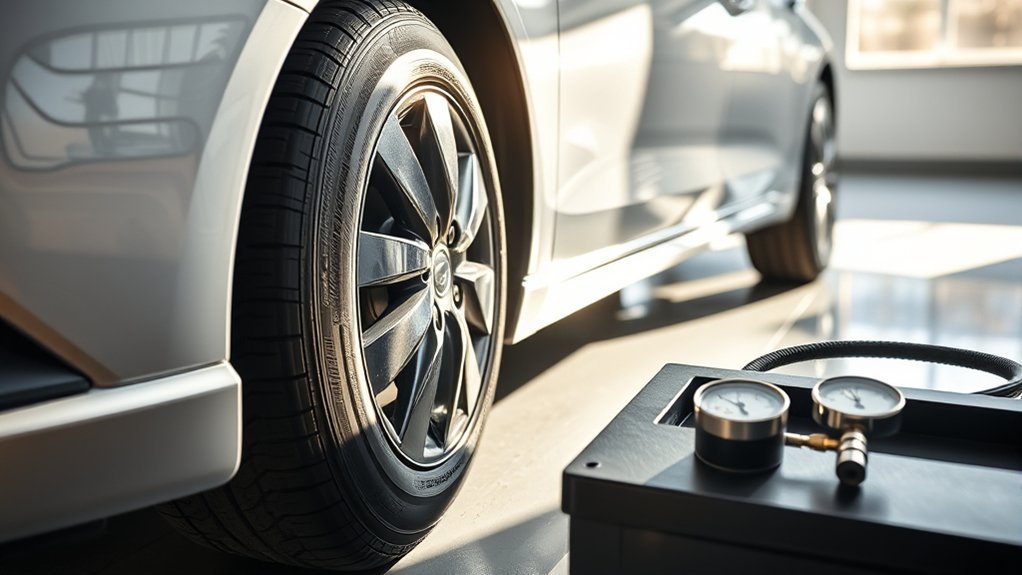
Keeping your Hyundai Sonata’s tires in good condition is one of the simplest ways to improve safety, ride comfort, fuel economy, and tire life. The core routine is straightforward: check cold tire pressure monthly, inspect tread and sidewalls, rotate tires on schedule, watch for uneven wear, and make sure your spare tire or tire mobility kit is ready before you need it.
Quick Answer
Hyundai Sonata tire maintenance includes checking cold tire pressure at least once a month, inspecting tread depth and sidewalls, rotating tires around the owner’s manual interval, and checking alignment, balance, and the spare tire. Use the Tire and Loading Information label on the driver-side door jamb for the correct PSI.
Key Takeaways
- Check tire pressure when the tires are cold, using the PSI listed on the Sonata’s door-jamb placard or owner’s manual—not the maximum PSI printed on the tire sidewall.
- Inspect tires monthly for low tread, sidewall cracks, bulges, nails, uneven wear, missing valve caps, and vibration while driving.
- Most Hyundai tire rotations fall around 7,500 miles, but always follow your Sonata owner’s manual and tire type.
- Replace tires before they reach the wear bars, if damage appears, or when age/service limits make the tire unsafe.
At a Glance
| Time Required | 10–15 minutes for monthly checks; 45–90 minutes for a tire rotation if done safely at home |
| Difficulty | Easy for pressure and visual checks; moderate for DIY rotation |
| Tools Needed | Tire pressure gauge, tread depth gauge or penny, flashlight, air compressor, gloves, valve caps, and owner’s manual; for rotation, use a jack, jack stands, wheel chocks, torque wrench, and lug wrench |
| Cost | Usually $0–$25 for basic checks if you own a gauge; professional rotation, balancing, or alignment costs vary by shop |
Why Regular Tire Maintenance Matters
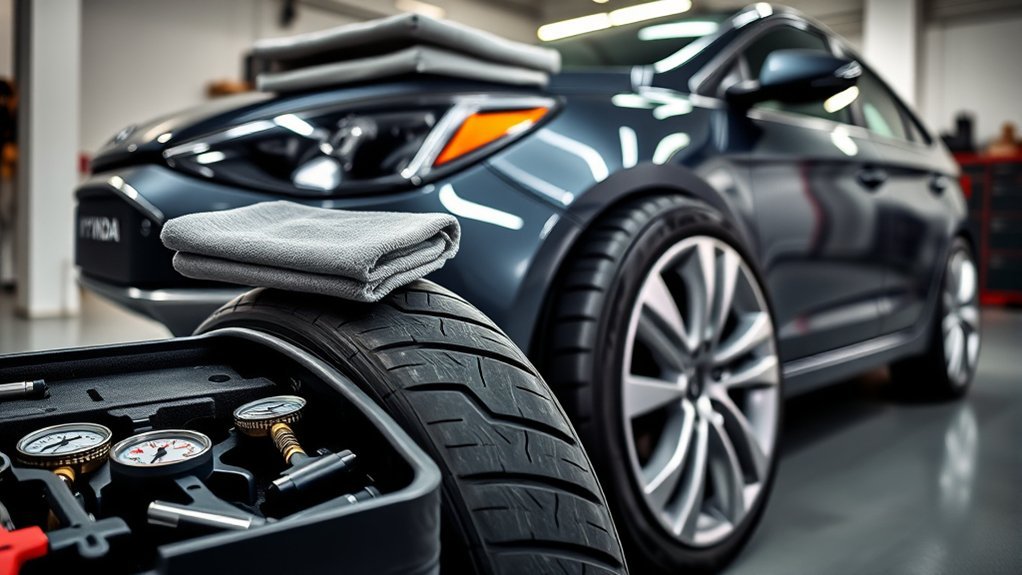
Regular tire maintenance helps your Hyundai Sonata brake, steer, and ride the way it should. Tires are the only parts of the car that touch the road, so small problems—low pressure, uneven wear, damaged sidewalls, or poor alignment—can quickly affect safety and comfort.
Proper inflation also helps fuel economy. According to FuelEconomy.gov, properly inflated tires can improve gas mileage by 0.6% on average and up to 3% in some cases. Under-inflated tires can lower gas mileage by about 0.2% for every 1 psi drop in the average pressure of all tires.
Tire care is not just about tire life. NHTSA notes that proper inflation, load limits, road-hazard awareness, and regular tire inspections help reduce the risk of tire failure.
Good tire care can also protect your suspension, reduce vibration, and help your Sonata track straight. A few minutes each month can prevent a roadside problem later.
How to Check Hyundai Sonata Tire Pressure Correctly
The correct tire pressure for your Hyundai Sonata is listed on the Tire and Loading Information label, usually on the driver-side door jamb, and in the owner’s manual. You can also use Hyundai’s official owner’s manual portal to look up model-specific guidance.
Note: Do not inflate your Sonata’s tires to the maximum PSI printed on the tire sidewall. That number is the tire’s maximum pressure, not Hyundai’s recommended cold tire pressure for your vehicle.
- Park the car and let the tires cool for at least three hours, or check them before driving more than about one mile.
- Find the recommended cold PSI on the driver-side door jamb placard.
- Remove the valve cap and press a quality tire pressure gauge firmly onto the valve stem.
- If the pressure is low, add air in small amounts and recheck with the gauge.
- If the pressure is too high, release air slowly and recheck.
- Repeat for all four tires and the spare tire, if your Sonata has one.
- Reinstall valve caps to help keep dirt and moisture out of the valve stem.
Hyundai’s tire-maintenance guidance says tire pressure can rise by 4–6 psi as tires warm up during driving, so setting warm tires to the cold placard number can leave them underinflated later. Always recheck when the tires are cold.
How to Inspect Tires for Wear and Damage
Inspect your tires at least once a month and before long trips. Use a flashlight and look at each tire from the outside, then turn the steering wheel to view more of the front tire tread and inner edges.
- Check tread depth: Use a tread depth gauge for the most accurate reading. As a quick check, use the penny test: place a penny into the tread with Lincoln’s head upside down. If you can see the top of Lincoln’s head, the tire is at or near the 2/32-inch replacement point.
- Look for wear bars: Tires have built-in tread wear indicators. If the tread is level with the wear bars, replace the tire.
- Check for uneven wear: Wear on one shoulder may point to alignment problems. Wear on both edges often suggests underinflation. Center wear can point to overinflation.
- Inspect sidewalls: Look for cuts, cracks, bulges, bubbles, or exposed cords. These are warning signs that the tire may be unsafe.
- Remove visible debris: Stones can usually be removed carefully, but do not pull out a nail or screw if the tire is holding air. Have the tire inspected by a professional.
- Notice vibration or noise: A new shake, thump, or humming sound may indicate imbalance, tire damage, cupping, or a suspension issue.
Warning: Do not drive on a tire with a visible bulge, exposed cords, severe cracking, or rapid air loss. Install the spare if it is safe to do so, use roadside assistance, or have the car towed to a tire professional.
[Products Worth Considering]

Measure tire tread depth quickly and accurately with this LUMITECO dial gauge that reads in 1/32" increments up to 14/32". The color-coded green/yellow/red zones make it easy to judge tire wear and know when replacement is needed. A rugged, compact design with a protective pouch helps keep the gauge ready for use on cars, trucks, motorcycles, and more.

Monitor tire tread wear with a smart, color-coded depth gauge that shows clear condition ranges at a glance. The bar is range marked for fast, easy readings, helping you maintain safer traction and performance. Each gauge is portable with a pocket clip, and the set includes 20 units for daily use and sharing.

The SAFELIFE dial tire tread depth gauge measures tread depth in 1/32 inch increments with clear, easy-to-read 2-inch dial face. Color zones using a traffic light system help you quickly judge whether tread is low, marginal, or ample for safer driving. Built with a durable zinc cast body and a metal detect probe for precise, comfortable use across cars, motorcycles, trucks, and buses.
How Tire Pressure Affects Tire Performance
Maintaining the correct tire pressure helps your Hyundai Sonata maintain steady handling, predictable braking, and even tire wear. Under-inflated tires flex more, build more heat, and can wear on both outer edges. Over-inflated tires may ride harshly, reduce the tire’s contact patch, and wear more quickly in the center of the tread.
Your Sonata’s Tire Pressure Monitoring System can warn you when pressure drops significantly, but it should not replace manual checks. Hyundai notes that displayed tire pressure can change with tire temperature, and if the vehicle has a spare tire, the spare may not have a TPMS sensor.
Pro Tip: Keep a compact digital tire gauge in the glove box and check pressure on the same day each month. Cold mornings often reveal low pressure before the TPMS light stays on.
When and How Should You Rotate Tires for Even Wear?
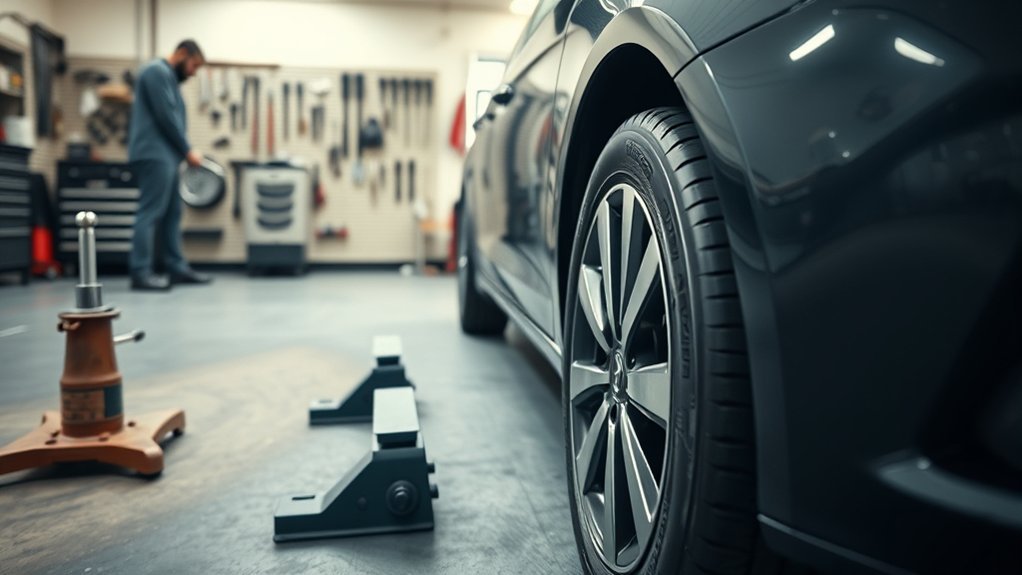
For many Hyundai models, tire rotation is recommended around 7,500 miles or sooner if irregular wear appears. NHTSA also advises checking the owner’s manual for the correct rotation interval and pattern. If your Sonata’s maintenance schedule gives a different interval, follow that schedule first.
The correct rotation pattern depends on your tires:
- Same-size, non-directional tires: Follow the rotation pattern in the owner’s manual. Many front-wheel-drive vehicles use a pattern that moves front tires to the rear and crosses rear tires to the front.
- Directional tires: These have an arrow on the sidewall and should usually stay on the same side of the vehicle unless they are dismounted and remounted correctly.
- Staggered tire sizes: If the front and rear tires are different sizes, normal front-to-rear rotation may not be possible.
- Uneven wear before rotation: If one tire is badly worn, cupped, or damaged, diagnose the cause before simply moving it to another position.
Warning: If you rotate tires at home, use a level surface, wheel chocks, jack stands, and the correct lift points. Never crawl under a vehicle supported only by a jack. Tighten lug nuts in a star pattern and torque them to the specification in your owner’s manual.
After rotation, drive a short distance and listen for new vibration, pulling, or rubbing. Recheck lug nut torque if your manual or tire shop recommends it.
Tire Alignment and Balancing Tips
Rotating your tires helps even out normal wear, but it does not fix alignment or balance problems. NHTSA TireWise explains that balancing helps wheels rotate properly without shake or vibration, while alignment helps prevent the car from veering left or right on a straight, level road.
Have your Hyundai Sonata’s alignment checked if you notice:
- The car pulls left or right on a straight road.
- The steering wheel is off-center when driving straight.
- One tire shoulder wears faster than the other.
- You recently hit a curb, pothole, or road debris.
- The vehicle feels unstable after tire service or suspension work.
Have tire balance checked if you feel a steady vibration through the steering wheel, seat, or floor, especially at highway speeds. New tires should be balanced when installed, and balancing is also smart when a vibration appears after rotation.
[Products Worth Considering]

Accurately measure tire tread depth with a calibrated gauge marked from 0 to 1 inch in 1/32 inch increments. The color-coded bar helps you quickly identify tread condition ranges, supporting safe driving for trucks, motorcycles, automobiles, and passenger vehicles.

Get precise tire readings with the ETENWOLF T300 Plus digital gauge, calibrated to ANSI B40.7 Grade 2A for reliable accuracy. It measures across a wide 3–200 PSI range and includes thermal compensation for dependable performance from extreme cold to heat. The bright LED display, LED illumination, and replaceable AAA batteries make it easy to check pressures quickly, even in low light.

Keep your tires properly inflated with this analog VONDIOR tire pressure gauge, designed for fast, easy readings without batteries. The swiveling, two-axis hose and large glow dial help you measure at any tire angle with instant visibility. Built with a protective rubber shield, it supports durable, low-maintenance use for cars and trucks.
How to Check Your Spare Tire for Emergencies
Some Hyundai Sonata models have a spare tire, while others may use a tire mobility kit. Check your trunk or cargo area so you know what your vehicle carries before you have a flat.
- Check inflation: If your Sonata has a spare, inflate it to the PSI listed on the vehicle placard or owner’s manual. Compact spare tires often use higher pressure than regular tires.
- Inspect the rubber: Look for cracks, bulges, dry rot, or damage.
- Check the tools: Confirm the jack, lug wrench, wheel lock key, and other tools are present and usable.
- Know the limits: Temporary spare tires are for short-distance emergency use only. Follow the speed and distance limits printed on the spare or listed in the manual.
- Check TPMS expectations: A spare tire may not have a tire pressure sensor, so the dashboard may not show its pressure.
- If equipped with a mobility kit: Check the sealant expiration date and read the instructions before a roadside emergency.
When to Replace Hyundai Sonata Tires
Replace your Sonata’s tires when they are worn out, damaged, too old, or no longer match safely across an axle. Hyundai’s tire-maintenance guidance says replacement considerations include tread wear level, tread wear pattern, age, and vibration.
- Tread depth: Replace tires before the tread reaches the wear indicators or 2/32 inch.
- Damage: Replace tires with sidewall bulges, exposed cords, severe cuts, or repeated air loss.
- Age: Hyundai recommends a maximum tire service period of six years from the date of new vehicle purchase, regardless of tread wear.
- Pair or set replacement: If you cannot replace all four tires, replace tires in pairs on the same axle. When only two tires are replaced, the newer tires are commonly placed on the rear for wet-road stability unless your tire setup prevents it.
- Mismatch issues: Avoid mixing tire sizes, construction types, or badly different tread depths on the same axle.
[Products Worth Considering]

ETENWOLF’s tire pressure gauge helps you quickly and accurately check tire PSI across cars, trucks, motorcycles, bikes, and more. It’s manually calibrated to ANSI B40.1 Grade A for reliable readings, includes a large glow dial for easy nighttime viewing, and features a 360-degree swivel chuck for use at any valve angle. The gauge also works consistently in extreme hot or cold weather.

The Trivd Frol 1/2" air impact wrench delivers high performance torque up to 1500 ft-lbs with a twin hammer impact mechanism for strong, balanced blows. It features an ergonomic grip, compact lightweight design, and quick-stop control with 3 forward speeds up to 8000 RPM plus a reverse speed. Built for demanding automotive repair and tire shop work, the rear exhaust helps keep debris away from the surface.

The Milton S-693 straight foot dual head air chuck is designed for accurate tire pressure checks and quick, secure valve-core engagement with lock-on threads on both ends. With a 1/4" FNPT connection and a maximum 150 PSI rating, it’s built for use on inner duals and common vehicle tires, including trucks and RVs.
Frequently Asked Questions
What is the 80000 mile service on a Hyundai Sonata?
At around 80,000 miles, a Hyundai Sonata usually needs a thorough maintenance inspection based on the model year and engine. This may include oil and filter service, fluid checks, brake inspection, tire rotation, tire wear inspection, steering and suspension checks, and replacement items listed in the owner’s manual. Always follow the maintenance schedule for your exact Sonata year and engine.
What is included in tire maintenance?
Tire maintenance includes checking cold tire pressure, inspecting tread depth, looking for sidewall damage, checking for uneven wear, rotating tires on schedule, balancing tires when needed, aligning the wheels when symptoms appear, and checking the spare tire or tire mobility kit.
What is included in the Hyundai full service?
A Hyundai full service generally includes an oil and filter change, tire inspection and rotation when due, brake inspection, fluid checks, battery check, belt and hose inspection, lights, wipers, steering, suspension, and a multi-point inspection. Exact items vary by Sonata model year, mileage, engine, and normal or severe driving schedule.
What tire pressure should a Hyundai Sonata have?
Use the PSI listed on your Sonata’s Tire and Loading Information label on the driver-side door jamb or in the owner’s manual. The correct PSI can vary by year, tire size, trim, and load, so the placard is the safest source. Check pressure when the tires are cold.
Can I rotate Hyundai Sonata tires myself?
Yes, if you have the right tools and know how to lift the car safely. Use wheel chocks, jack stands, the proper lift points, and a torque wrench. If you are unsure about the rotation pattern, lug torque, directional tires, or staggered sizes, have a tire shop do the rotation.
How often should I check my Sonata’s spare tire?
Check the spare tire at least monthly with your regular tire-pressure check and before long trips. Make sure it is properly inflated, free of cracks or bulges, and stored with the jack and lug wrench. If your Sonata has a tire mobility kit instead, check the sealant expiration date.
Conclusion
Hyundai Sonata tire maintenance does not take long, but it has a big effect on safety, comfort, fuel economy, and tire life. Check cold tire pressure monthly, inspect tread and sidewalls, rotate tires according to your owner’s manual, and respond quickly to vibration, pulling, uneven wear, or visible damage. Keep the spare tire or mobility kit ready, and do not delay replacement when tread depth, age, or damage makes a tire unsafe.
Sources
- Hyundai Owner’s Manual Portal — model-specific owner’s manual and tire information lookup
- Hyundai Tire Maintenance Best Practices TSB via NHTSA — cold tire pressure, rotation interval, spare tire TPMS note, wear patterns, and tire age guidance
- NHTSA TireWise — tire pressure, rotation, alignment, balancing, and tire safety guidance
- NHTSA Summer Driving & Road Trip Tips — cold pressure checks, tread depth, penny test, tire damage inspection, and replacement signs
- FuelEconomy.gov Gas Mileage Tips — fuel-economy impact of proper tire inflation