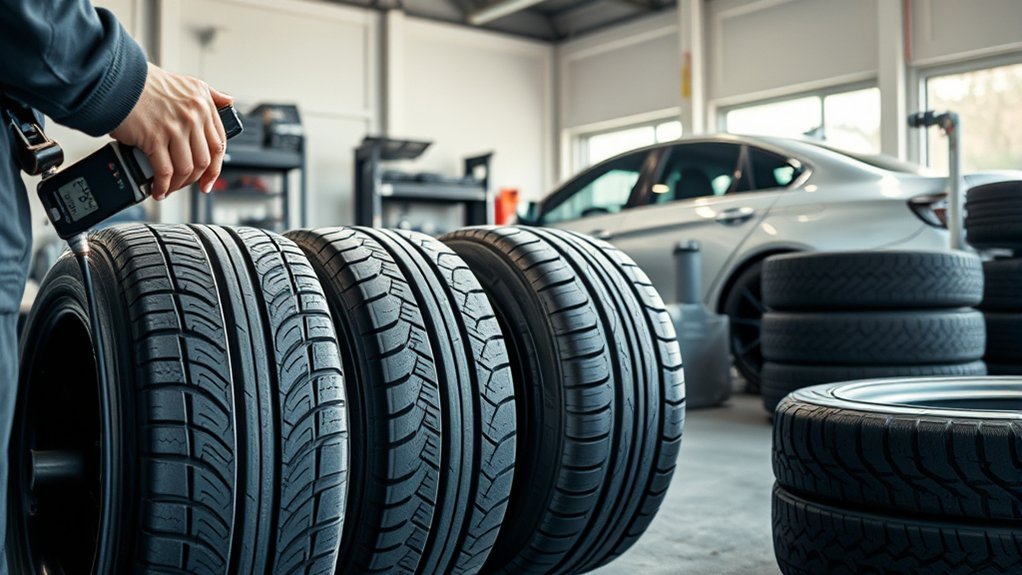
You can make your tires last longer by keeping them at the vehicle manufacturer’s recommended cold pressure, checking them every month, rotating them on the proper schedule, correcting alignment problems, and avoiding hard impacts and aggressive driving. Regular tread and damage inspections also help you catch problems before they ruin a tire or create a safety risk.
Quick Answer
To make your tires last longer, check cold tire pressure monthly, follow the vehicle manufacturer’s rotation schedule, correct alignment or vibration problems quickly, avoid overloading and hard impacts, inspect tread and sidewalls regularly, and store seasonal tires correctly. Replace tires when wear, damage, age, or manufacturer guidance says they are no longer safe.
Key Takeaways
- Check all tires, including the spare where applicable, at least once a month while they are cold.
- Use the cold PSI on the vehicle’s Tire and Loading Information label or in the owner’s manual—not the maximum pressure molded into the tire sidewall.
- Follow the vehicle manufacturer’s rotation schedule. If no interval is listed, 5,000–8,000 miles is a common industry guideline.
- Have pulling, a crooked steering wheel, unusual vibration, or irregular tread wear inspected instead of assuming the tires simply need replacement.
- Replace tires that reach 2/32 inch of tread, have unsafe damage, or exceed the age guidance from the tire or vehicle manufacturer.
At a Glance
| Time Required | About 10–15 minutes for a monthly pressure, tread, and visual inspection |
| Difficulty | Easy for routine checks; alignment, balancing, mounting, and internal tire inspections require professional equipment |
| Tools Needed | Accurate tire-pressure gauge, tread-depth gauge or penny, and a flashlight |
| Cost | Routine inspection is free if you already have a gauge; professional balancing, alignment, repair, and replacement costs vary by vehicle and location |
Maintain Proper Tire Pressure Year-Round
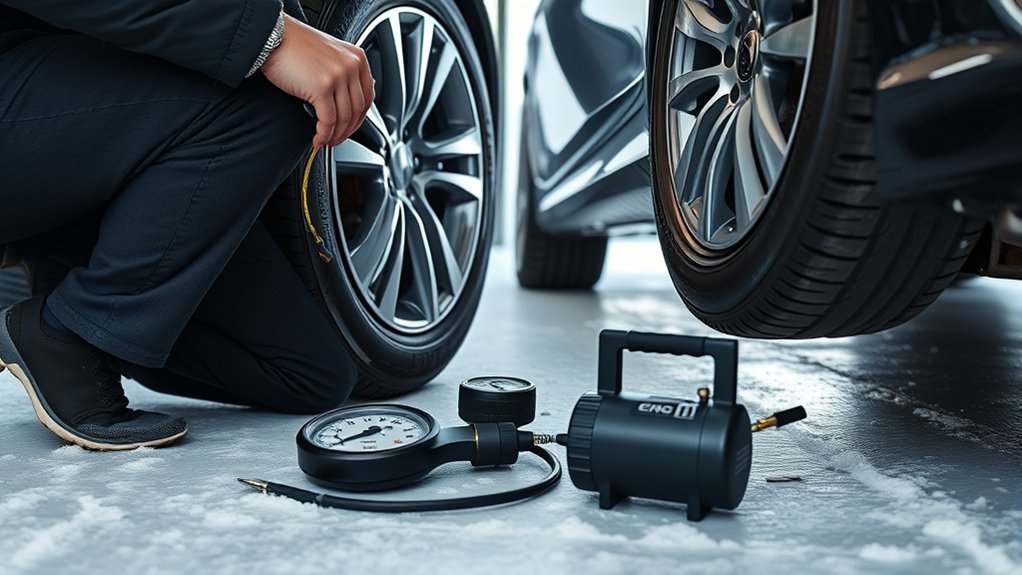
Check your tire pressure at least once a month, before long trips, and before carrying a heavy load or towing. Temperature changes also affect inflation pressure. The U.S. Tire Manufacturers Association notes that tire pressure can change by about 1–2 PSI for every 10°F change in ambient temperature.
Check tire pressure at least monthly while the tires are cold, and use the vehicle manufacturer’s recommended PSI rather than the maximum pressure molded into the tire sidewall.
Use a reliable pressure gauge when the tires are cold. NHTSA defines a cold check as one performed before significant driving, ideally after the vehicle has been parked for several hours. Compare the reading with the recommended cold tire pressure shown on the vehicle’s Tire and Loading Information label or in the owner’s manual.
Do not use the tire’s sidewall maximum pressure as your everyday target. That marking describes a tire limit, while the vehicle placard specifies the pressure selected for the vehicle’s original tire size, load, and handling requirements.
Underinflation increases tire flex, heat buildup, rolling resistance, and irregular wear. Overinflation can also contribute to irregular wear, a harsher ride, and greater vulnerability to impact damage. Keeping pressure near the specified cold value helps the tire support its load and wear more evenly.
Note: A Tire Pressure Monitoring System is a warning system, not a replacement for a pressure gauge. A TPMS warning may not appear until a tire is already significantly underinflated, so continue checking pressure manually each month.
If your vehicle has a full-size or temporary spare, include it in your pressure checks. Spare tires can lose air while sitting unused for months or years.
Rotate Tires Before Wear Starts
Regular tire rotation helps spread wear among tire positions. Instead of using one universal mileage interval, follow the schedule in your vehicle owner’s manual or tire manufacturer’s instructions.
If neither provides an interval, USTMA recommends rotation about every 5,000–8,000 miles. Rotate sooner if a tire professional finds a correctable irregular wear pattern.
Rotation Timing Matters
Front and rear tires can wear at different rates because steering, braking, acceleration, drivetrain layout, and vehicle weight distribution place different loads on each position. Rotating before a large tread-depth difference develops can help the set wear more evenly.
- Follow the vehicle manufacturer’s mileage or time interval first.
- If no interval is provided, use roughly 5,000–8,000 miles as a general guideline.
- Check and reset tire pressures after rotation because front and rear pressure specifications may differ.
- Inspect tread depth and wear patterns during every rotation.
Many drivers combine tire rotation with an oil-change or scheduled-maintenance visit simply because it makes the interval easier to remember.
Even Wear Patterns and Rotation Exceptions
A correct rotation pattern depends on the vehicle and tires. Front-wheel drive, rear-wheel drive, all-wheel drive, directional tires, and staggered wheel-and-tire setups may require different patterns.
Do not automatically cross every tire or move every tire front to rear. Directional tires generally must continue rotating in their designed direction unless they are remounted, while a vehicle with different front and rear tire sizes may have limited or no conventional front-to-rear rotation options.
Pro Tip: Record the tread depth at each wheel position during rotation. A tire wearing much faster on one edge or one axle can reveal pressure, alignment, suspension, or driving-pattern problems before the tire is ruined.
Use the rotation diagram in the owner’s manual or ask the tire manufacturer or installer for the correct pattern if your vehicle uses directional, staggered, or specialty tires.
Check Alignment After Hard Pothole or Curb Impacts
A hard pothole or curb strike can affect alignment, damage a wheel, or injure a tire internally. You do not need an alignment after every minor bump, but a strong impact deserves closer attention.
Common signs of an alignment or suspension problem include a steering wheel that no longer sits straight, a vehicle that consistently pulls on a level road, or rapid wear on one edge of a tire.
- Watch for pulling or steering changes after a hard impact.
- Check for a crooked steering wheel when driving straight.
- Inspect the tread for new feathering or one-sided wear.
- Look for sidewall bulges, cuts, exposed cords, or wheel damage.
USTMA recommends having alignment checked when there is an indication of trouble and periodically as specified by the vehicle manufacturer. Correcting a real alignment problem early can prevent rapid irregular tread wear.
Warning: A tire can suffer internal damage after a hard pothole or curb impact even if the outside looks acceptable. Stop driving on a tire with a bulge, exposed cords, rapid pressure loss, severe vibration, or other obvious structural damage, and have it inspected professionally.
[Products Worth Considering]
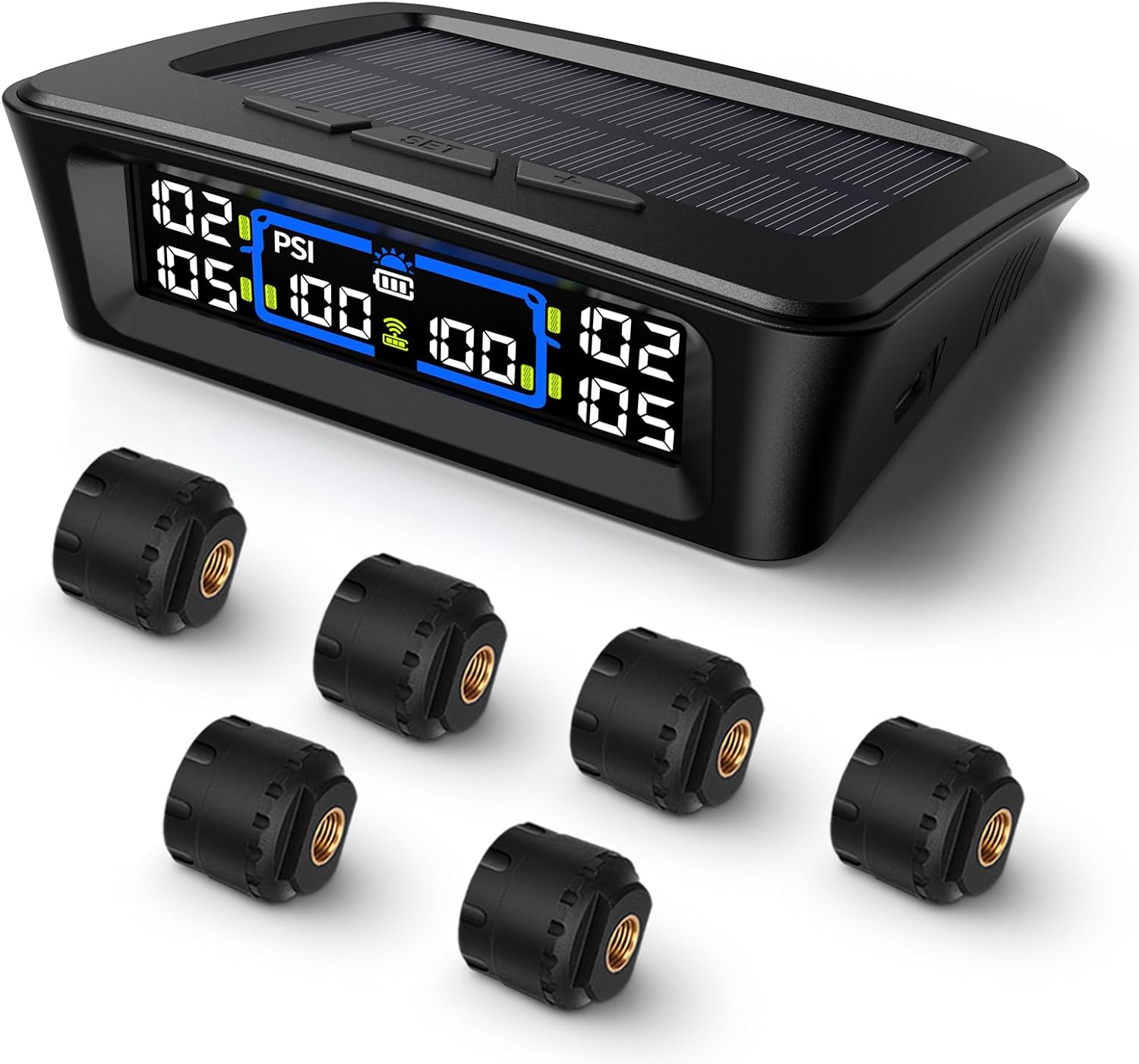
The Tymate TM12 RV TPMS delivers real-time tire pressure and temperature monitoring with a stable 433Hz display for safer long-distance driving. It supports simultaneous monitoring across vehicle and trailer zones, includes six alarm modes for pressure, temperature, leakage, battery, and signal loss, and features easy DIY installation with auto calibration. Power is supplied via USB-C charging or solar recharging, with a wide 0–144 PSI range and up to 50 ft signal coverage for RVs and towable trailers.

Steelman white tire marking crayons provide high-contrast, semi-permanent marks for repairing and inspecting tires and equipment. They write on wet or dry, smooth or coarse surfaces including rubber, metal, glass, and wood, making them ideal for puncture location and damage outlining. The lead- and zinc-free crayons resist weather and fading yet wipe away when you no longer need the marks.

Measure tire tread depth quickly and accurately with this LUMITECO dial gauge that reads in 1/32" increments up to 14/32". The color-coded green/yellow/red zones make it easy to judge tire wear and know when replacement is needed. A rugged, compact design with a protective pouch helps keep the gauge ready for use on cars, trucks, motorcycles, and more.
Balance Tires When Vibrations Begin
If you notice a new vibration in the steering wheel, floor, or seat, have the vehicle inspected instead of assuming the symptom is normal tire wear. A wheel-and-tire imbalance is one possible cause, especially when vibration appears within a particular speed range.
Balancing corrects small differences in weight around the wheel-and-tire assembly so it can rotate more smoothly. New tires are normally balanced when installed, and rebalancing may be appropriate when vibration develops.
However, vibration can also come from a bent wheel, damaged tire, wheel-bearing problem, suspension fault, driveline issue, or packed mud or debris. If balancing does not solve the symptom, further diagnosis is needed.
Fixing the underlying cause helps prevent irregular tread wear and reduces unnecessary stress on tires and suspension components.
[Products Worth Considering]

The Kurgo Seasonal Tire Tote helps protect your car interior, clothes, and garage from tire grime, brake dust, and residue during seasonal tire changes. Its universal design fits most passenger tires between 22" and 31" in diameter, making storage and transport simpler with less mess. Built for rugged, repeated use, it’s machine washable for easy care and comes with a lifetime warranty.

Monitor tire tread wear with a smart, color-coded depth gauge that shows clear condition ranges at a glance. The bar is range marked for fast, easy readings, helping you maintain safer traction and performance. Each gauge is portable with a pocket clip, and the set includes 20 units for daily use and sharing.

This tire inflator with pressure gauge delivers long-lasting performance with a durable rubber-protected gauge and sturdy build. The longer hose and 360 swivel air chuck help you seal the valve securely and keep your hands free while measuring, inflating, or deflating. It’s battery-free for reliable use and provides ±2 PSI accuracy in the mid-range for most typical tires, with universal compatibility for 1/4 NPT compressor outputs.
Drive Smoothly to Reduce Tire Wear
Your driving habits can change how quickly tires wear. Hard acceleration, repeated heavy braking, fast cornering, wheelspin, and curb impacts place additional stress on the tread and casing.
- Accelerate progressively instead of repeatedly spinning or scrubbing the tires.
- Brake early and smoothly when traffic conditions allow.
- Slow down before sharp turns instead of entering them aggressively.
- Leave enough following distance to avoid unnecessary panic braking.
- Reduce speed around potholes and road debris when it is safe to do so.
Smoother driving cannot overcome bad alignment, wrong pressure, or a damaged tire, but it can reduce avoidable tread wear and impact damage.
Avoid Overloading, Especially in Hot Weather
Heavy loads increase the work a tire must do, and heat adds another source of stress. Before carrying passengers, cargo, or trailer tongue weight near your vehicle’s limits, check the Tire and Loading Information label on the driver’s door area and the owner’s manual.
The placard normally states the combined occupant-and-cargo weight the vehicle is designed to carry, along with the original tire size and recommended cold inflation pressures.
Do not exceed the vehicle’s stated load limits, axle ratings, tire load capacity, or towing limits. Also make sure replacement tires have the load capacity required for the vehicle.
Distribute cargo securely and avoid placing unnecessary weight in the vehicle. Heavy loads combined with underinflation, sustained high speed, and high ambient temperature can increase tire heat and stress.
For long trips, towing, or heavy loads, check cold tire pressure before leaving and follow any load-specific instructions provided by the vehicle manufacturer.
Inspect Tires for Damage and Slow Leaks
Inspect your tires at least monthly and after a significant pothole, curb, or road-debris impact. Look at the tread and as much of each sidewall as you can safely see.
Watch for cuts, cracking, punctures, bulges, exposed cords, embedded objects, abnormal wear, or repeated pressure loss. Use a tread-depth gauge when you need a precise measurement.
Hidden Sidewall Damage
Some impact damage may not be obvious from a quick exterior inspection. A hard strike can damage internal tire components even when the tire initially continues holding air.
Pay attention to new vibration, a bulge, unusual noise, handling changes, or recurring pressure loss after an impact. Those symptoms justify professional inspection.
- Inspect both visible sidewalls in good light.
- Monitor tire pressure over the following days if you suspect a slow leak.
- Have a tire professionally inspected after a severe road-hazard impact.
Do not continue driving normally on a tire with a sidewall bulge or exposed internal material.
Tread Cuts, Cracks, and Embedded Objects
Inspect the tread for nails, screws, glass, cuts, cracking, and other damage. Do not pull out a deeply embedded nail or screw at the roadside if the tire is still holding air; removing it can turn a slow leak into a rapid one before you are ready to deal with the puncture.
Check tread depth in several grooves and at several points around the tire because wear may not be perfectly even.
At 2/32 inch of remaining tread in the United States, NHTSA and USTMA say the tire should be replaced. Physical damage may require replacement much sooner regardless of remaining tread.
Signs of Slow Leaks
A tire that repeatedly needs air is not something to correct indefinitely by topping it off. Common leak sources include tread punctures, valve components, bead-sealing problems, wheel damage, and tire damage.
- Check pressure with the same gauge under similar cold conditions.
- Remember that weather changes can alter pressure by roughly 1–2 PSI per 10°F.
- If only one tire repeatedly loses significantly more pressure than the others, have it inspected.
If the TPMS warning returns repeatedly after inflation, diagnose the cause rather than assuming the sensor is simply reacting to normal wear.
Can a Punctured Tire Be Repaired?
Some punctures can be repaired, but location and damage matter. USTMA’s passenger and light-truck repair guidance limits standard repairs to qualifying injuries in the tread area that are no more than 1/4 inch (6 mm) in diameter.
The tire should be removed from the wheel so its interior can be inspected. The recommended repair fills the injury and seals the inner liner; an outside-only plug is not considered a complete industry-standard repair.
Damage extending into the shoulder or sidewall is outside the standard repair area. Tires that were driven severely underinflated may also have internal damage that makes repair unsafe.
Store Seasonal Tires the Right Way
When seasonal tires come off the vehicle, store them indoors in a clean, cool, dry, dark place away from direct sunlight, heaters, electric motors, generators, solvents, fuels, and other sources of heat, chemicals, or ozone.
Clean the tires and wheels with water as appropriate and allow them to dry before storage. Inspect for cuts, cracks, punctures, bulges, uneven wear, and embedded debris before putting them away.
Clean and inspect seasonal tires before storage, then keep them away from sunlight, heat, moisture, chemicals, and ozone-producing equipment.
Michelin’s current storage guidance also recommends sealed plastic bags where practical to reduce exposure during storage.
Store Mounted and Unmounted Tires Differently
If the tires are mounted on wheels, they may generally be stacked horizontally or hung by the wheel according to the tire manufacturer’s storage guidance.
If the tires are not mounted on wheels, stand them upright on the tread. Do not hang unmounted tires from hooks, because supporting their weight incorrectly can distort them. If they remain stored for a long time, shifting their position periodically can help prevent prolonged loading on one area.
Before reinstalling stored tires, inspect them again and set inflation pressure to the vehicle manufacturer’s cold-pressure specification.
Check Tread Depth to Know When to Replace
Check your tread depth at least monthly and before long trips. A dedicated tread-depth gauge is the easiest way to get a precise measurement.
You can also use the traditional penny test. Insert a U.S. penny into a main tread groove with Lincoln’s head pointing down. If you can see the top of his head, the tread is approximately 2/32 inch or less and the tire should be replaced.
Most passenger tires also have tread-wear indicator bars molded into the grooves. When the surrounding tread is flush with those bars, the tire has reached its wear limit.
- Measure several grooves and several positions around each tire.
- Check before long trips as well as during monthly maintenance.
- Investigate large differences between the inner, center, and outer tread.
The 2/32-inch figure is a minimum replacement threshold, not a promise of strong wet-weather performance right up to that point. Water evacuation and wet traction generally decline as tread wears, so drivers who regularly face heavy rain or snow may choose to replace tires earlier based on performance needs and manufacturer guidance.
Check Tire Age, Not Just Tread
A tire can have usable-looking tread and still need attention because tires age through a combination of time, heat, sunlight, storage, maintenance, and service conditions.
Find the Tire Identification Number on the sidewall. For tires manufactured since 2000, the final four digits identify the week and year of manufacture. For example, 2524 means the tire was manufactured during the 25th week of 2024.
NHTSA notes that some vehicle and tire manufacturers recommend replacement based on age, commonly within a six-to-ten-year range. Follow the specific instructions from your tire and vehicle manufacturers rather than assuming that every tire has one universal age limit.
For example, Michelin recommends annual professional inspection after five years of service and replacement by ten years from the manufacture date as a precaution, even if tread remains.
Note: Check the age of the spare tire too. A spare may have almost no tread wear yet still be many years old because it spends most of its life unused.
Choose the Right Tires for Heat, Rain, Cold, and Roads
Tire choice matters as much as maintenance. Start with the tire size, load capacity, and other fitment requirements specified by the vehicle manufacturer.
Do not choose a replacement tire only because it physically fits the wheel. The tire also needs suitable load capacity and speed capability, and the overall setup must remain compatible with the vehicle.
For frequent rain, look for tires designed to evacuate water effectively and pay attention to wet-braking performance from reputable tire tests. For true winter conditions, consider tires carrying the Three-Peak Mountain Snowflake (3PMSF) symbol, which indicates that the tire has met a standardized snow-traction performance requirement.
All-season tires can be practical in moderate climates, while dedicated summer, winter, or all-weather tires may better match more demanding temperature and weather conditions.
If your vehicle uses all-wheel drive, follow the vehicle manufacturer’s guidance on allowable tread-depth and circumference differences between tires. Some AWD systems are sensitive to significant differences among tire positions.
[Products Worth Considering]

This TPMS sensor training and relearn reset tool is customized for Ford, Lincoln, and Mercury vehicles to help activate tire pressure programming after sensor replacement or tire rotation. It can activate individual tire pressure sensors with one-button operation, helping prevent TPMS warning light illumination. It is not a sensor programming tool and cannot program replacement sensors—use it to trigger/activate sensors only.
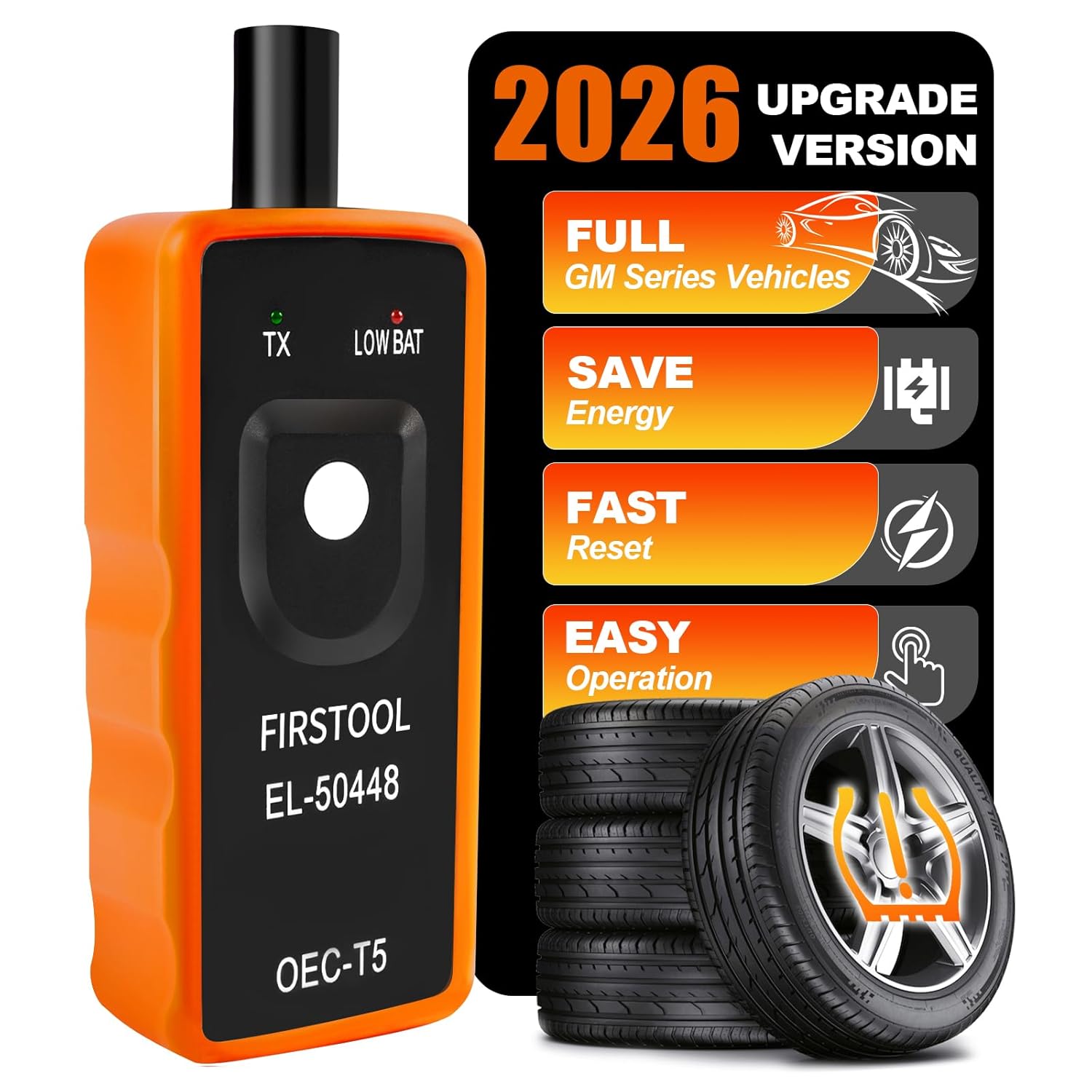
This TPMS relearn tool helps you quickly activate, match, and reset GM tire pressure sensors to keep the vehicle monitoring system working properly. It clears tire pressure alarms and dashboard warning lights after sensor replacement or tire rotation, and supports learning for common 315/433 MHz TPMS sensors. Designed for simple one-button operation, it can help you avoid unnecessary trips to repair shops.

Replace worn or malfunctioning GM TPMS sensors with this 433MHz pre-programmed sensor set designed for compatibility with many Chevrolet, Buick, GMC, and Cadillac models. It includes guidance for proper OBDII relearning/pairing after installation and supports reliable long-term operation with a high-performance CR2032 battery. Quality tested for durability and performance to help restore accurate tire pressure monitoring.
A Simple Tire Maintenance Schedule
- Monthly: Check cold pressure, tread depth, sidewalls, tread condition, and the spare where applicable.
- Before long trips or heavy loads: Recheck pressure and inspect for damage.
- Every 5,000–8,000 miles if no manufacturer interval is given: Rotate eligible tires and inspect wear.
- When vibration develops: Inspect the tire and wheel assembly and check balance as appropriate.
- When the vehicle pulls or tread wears unevenly: Check alignment, suspension, pressure, and tire condition.
- After a hard pothole or curb strike: Inspect the tire and wheel and watch for vibration, pressure loss, pulling, or bulging.
- As tires age: Follow the tire and vehicle manufacturer’s inspection and replacement recommendations.
Frequently Asked Questions
What helps tires last longer?
Keep them at the vehicle manufacturer’s recommended cold pressure, inspect them monthly, rotate them according to the owner’s manual, correct alignment and vibration problems, avoid overloading and hard impacts, and use smooth driving habits. Proper storage also matters for seasonal tires.
What is the 7-7 rule for tires?
The 7-7 rule is an informal seasonal-tire guideline, not a pressure or rotation schedule. It generally means considering the switch to winter tires when daily temperatures remain around 7°C (45°F) or colder for seven consecutive days, and switching back when temperatures remain above that level. Always consider local conditions and tire-manufacturer guidance.
What is the 3 rule for tires?
There is no universal tire-maintenance standard officially known as the “3 rule” meaning pressure, tread, and alignment every three months. The term can refer to different informal tire rules in different contexts. For routine maintenance, check pressure and tire condition at least monthly and follow your vehicle and tire manufacturers’ service instructions.
Is 10 years too long for tires?
Ten years is at or beyond the maximum service-life recommendation used by several tire manufacturers, but replacement guidance varies. Michelin, for example, recommends replacement by ten years from manufacture as a precaution and annual professional inspection after five years of service. Follow the tire and vehicle manufacturer’s specific age guidance and replace earlier for excessive wear, damage, pressure loss, or other unsafe conditions.
How often should tires be rotated?
Use the interval in your vehicle owner’s manual first. If no interval is listed, USTMA recommends about every 5,000–8,000 miles. Some directional or staggered tire setups cannot use standard rotation patterns, so follow the instructions for your specific vehicle and tires.
Does TPMS mean I do not need to check tire pressure manually?
No. TPMS is designed to warn you of significant pressure loss, but it does not replace a monthly cold-pressure check with an accurate gauge. Use the vehicle placard or owner’s manual for the correct pressure.
Can a nail puncture in a tire be repaired?
Sometimes. Under USTMA guidance, a qualifying puncture in the repairable tread area may be repairable when the injury is no larger than 1/4 inch (6 mm), the tire is removed from the wheel and inspected internally, and an approved repair method is used. Shoulder and sidewall injuries are outside the standard repair area.
Conclusion
If you want your tires to last longer, focus on maintenance rather than mileage promises. Keep cold pressure at the vehicle specification, rotate tires on the correct schedule, address alignment and vibration problems, inspect for damage, and avoid overloading or unnecessary impacts.
Track tread depth and tire age as well as mileage. Store seasonal tires correctly, pay attention to repeated pressure loss, and have questionable damage inspected instead of assuming a tire is safe because the tread still looks good. Those habits give your tires the best chance of wearing evenly while keeping safety the priority.
Sources
- National Highway Traffic Safety Administration — TireWise — tire pressure, tread depth, rotation, alignment, TPMS, and tire-age guidance.
- U.S. Tire Manufacturers Association — Tire Care Essentials — pressure, temperature effects, rotation intervals, alignment, and tread guidance.
- U.S. Tire Manufacturers Association — Tire Repair Basics — repairable tread-area punctures, inspection, and repair limitations.
- Michelin — Storing My Tires — seasonal tire storage conditions and mounted-versus-unmounted storage.
- Michelin — When to Replace Tires — tread, damage, professional inspection, age, and ten-year replacement guidance.