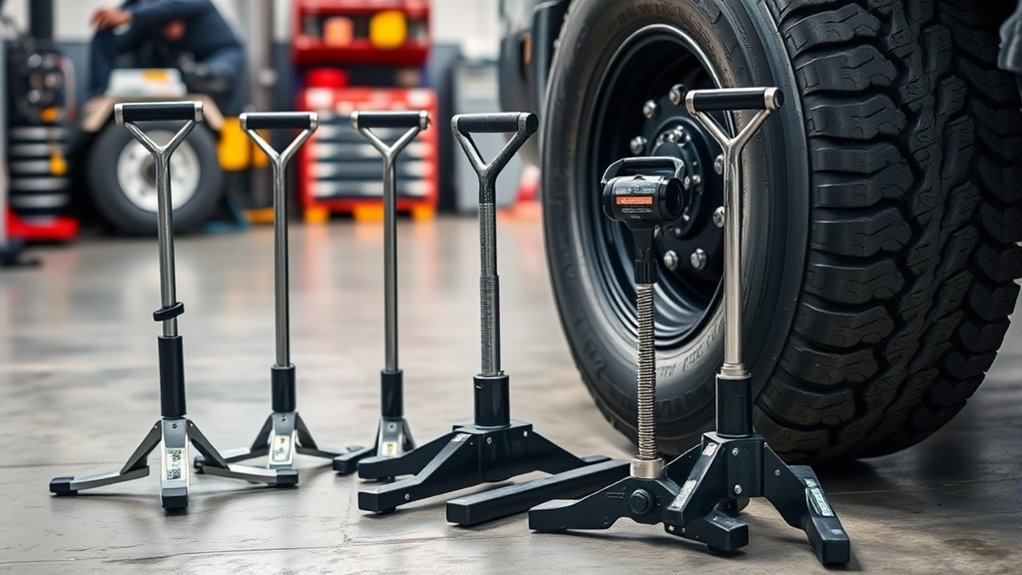
Choosing a tire lifting tool is not just about buying something strong enough to raise a wheel. The right tool should match the heaviest tire and wheel assemblies you handle, fit your tire changer and shop layout, reduce strain on technicians, and include the safety features needed for daily use. Use this guide to compare capacity, lift range, manual versus powered operation, compatibility, maintenance, and shop workflow before you buy.
Quick Answer
Choose a tire lifting tool by confirming the heaviest wheel and tire assembly you service, then selecting a tool with enough rated capacity, lift range, grip security, and shop clearance. For frequent truck, fleet, or heavy-duty work, a powered lift is usually worth the extra cost because it reduces strain and speeds repeated tire changes.
Key Takeaways
- Start with rated load capacity, but also check lift height, wheel width, tire diameter, and grip design.
- Manual tire lifts can work for light, occasional service; powered lifts are better for high-volume or heavy assemblies.
- A tire lifting tool does not replace proper tire changer procedures, inflation restraints, training, or PPE.
- Measure your bay, turning paths, tire changer height, and power or air access before ordering.
- Inspect the lift regularly and remove it from service if clamps, casters, hydraulics, controls, or structure are damaged.
At a Glance
| Time Required | 15 to 30 minutes to measure your needs; longer if comparing several shop-grade models |
| Difficulty | Moderate; you need tire assembly weights, shop measurements, and equipment compatibility details |
| Tools Needed | Tape measure, tire changer height, heaviest assembly weight, power or air hookup details, and shop floor layout |
| Cost | Varies widely from basic manual handling aids to powered commercial shop lifts; compare capacity, build quality, warranty, and parts support |
Warning: Never exceed the tool’s rated capacity, use a damaged lift, or improvise with straps, forks, jacks, or clamps that the manufacturer did not approve. For truck, bus, trailer, and off-road rim-wheel service, follow OSHA 29 CFR 1910.177, rim manuals, inflation restraints, and required training.
How to Choose a Tire Lifting Tool
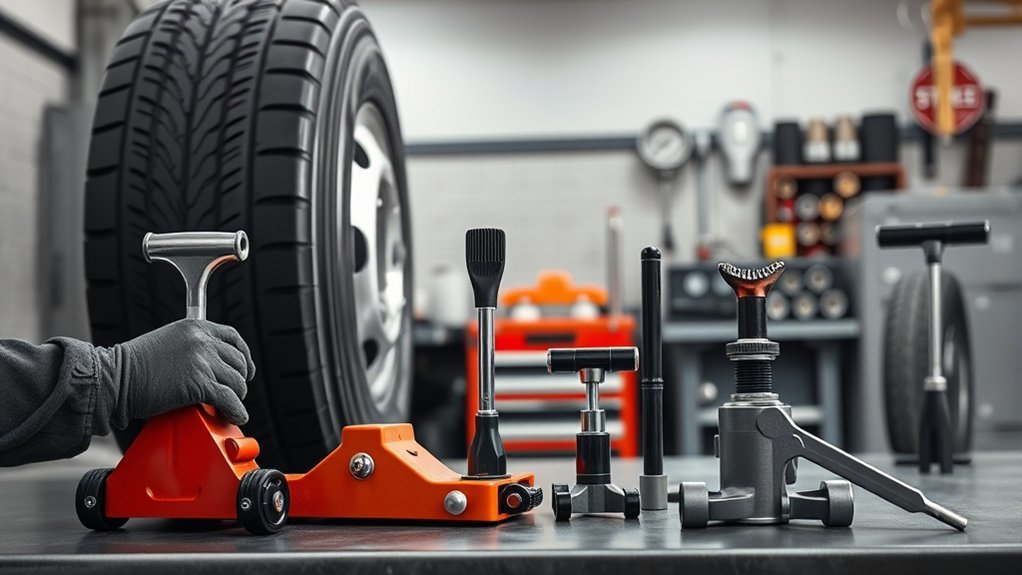
To choose the right tire lifting tool, start with the work you actually do. List the tire and wheel assemblies your shop handles most often, then identify the heaviest assembly, largest diameter, widest wheel, and most awkward service position. A tool that works for small passenger wheels may not be suitable for truck, fleet, agricultural, or specialty tires.
Next, match the tool to your tire changer and bay layout. Confirm that the lift can raise the assembly to the correct working height, roll close enough to the changer, and keep the wheel stable while you position it. If your shop also handles cost-effective repairs, make sure the lift does not block access to patching, inflation, balancing, or inspection stations.
Finally, compare safety and comfort features. Good tire lifting tools reduce bending, twisting, and forceful lifting. Look for stable casters, secure cradles or clamps, smooth controls, overload protection on powered models, and parts that can be maintained instead of replaced as a whole unit.
Step-by-Step Buying Checklist
- Find your heaviest assembly. Use actual shop records, manufacturer data, or a scale when possible. Do not guess if you service commercial or specialty tires.
- Add a safety margin. Choose a rated capacity above your normal maximum so the tool is not working at its limit every day.
- Measure lift height. The tool should align with your tire changer, balancer, workbench, or vehicle hub height.
- Check tire size compatibility. Confirm supported tire diameter, wheel width, rim style, and grip range.
- Measure shop clearance. Check aisle width, turning radius, floor condition, doorway clearance, and storage space.
- Choose the power type. Manual tools suit lighter, occasional work. Electric, hydraulic, or pneumatic tools suit repeated heavy lifts.
- Review safety features. Look for secure gripping, stable base design, controlled lowering, overload protection, and emergency stop functions where applicable.
- Plan maintenance. Choose equipment with available replacement pads, casters, seals, batteries, controls, and service support.
Pro Tip: Do one test layout before buying. Mark the lift’s footprint on the floor with tape, then walk through a real tire change from storage rack to tire changer to balancer. This exposes clearance problems before the equipment arrives.
Tire Lifting Tool Types and Uses
Tire lifting tools come in several styles. The right choice depends on tire weight, service frequency, and how much positioning control your technicians need.
| Tool Type | Best For | What to Check |
|---|---|---|
| Manual wheel dolly or assist cart | Light to moderate tire service and short moves inside the bay | Caster quality, cradle shape, handle position, and floor clearance |
| Hydraulic tire lift | Repeated wheel positioning at a tire changer or balancer | Lift range, controlled lowering, hydraulic leak points, and service parts |
| Pneumatic tire lift | Shops with reliable compressed air and steady tire volume | Air requirements, hose routing, controls, and moisture management |
| Electric tire lift | High-volume shops, fleet service, and heavy assemblies | Battery life, charging access, emergency stop, speed control, and overload protection |
| Heavy-duty truck tire handler | Commercial, bus, trailer, agricultural, and off-road tire work | Capacity, clamp security, tire diameter range, operator training, and OSHA rim-wheel procedures |
If your shop handles various tire sizes, avoid buying a tool that barely fits your current work. A small increase in tire diameter, width, or wheel offset can make a lift awkward or unsafe if the cradle, clamp, or arms do not adjust far enough.
[Products Worth Considering]

Make hard-to-reach areas easier to access with the MAXXHAUL truck tire service step featuring an adjustable width and height. The foldable design stores compactly, while the serrated non-slip platform provides secure footing for tire-related maintenance. It fits most stock tire sizes up to 31-inch diameter with a 300-lb capacity.

This manual duck head tire changer kit makes tire installation and removal simpler by letting you embed the duck head into the tire with applied pressure. The integrated design and durable steel construction help reduce friction and improve efficiency and safety during use. Suitable for 16–21 inch wheels, it’s convenient for cars, trucks, SUVs, and ATV tires, with 24-hour after-sales support.

The 22800 wheel stud installer makes replacing wheel studs quick and secure, saving time and effort during tire service. It uses a ratchet or impact wrench to pull new studs firmly into place, helping when existing studs are too long. Compatible with most automotive wheels and light-duty truck wheel studs, it’s designed for easy, tool-assisted installation.
Key Specs to Compare Before You Buy
When you compare tire lifting tools, do not stop at the headline capacity number. A strong tool can still be a poor fit if it cannot reach the tire changer height, grip the wheel securely, roll over your floor, or fit between vehicles and equipment.
Load Capacity and Safety Margin
Load capacity is the first number to verify. The tool must safely handle your heaviest wheel and tire assembly, not just your average assembly. Check the manufacturer’s rating, then compare it with real shop use. If your technicians often handle oversized tires, truck wheels, or specialty fitments, choose a higher-capacity model rather than pushing a lighter tool to its limit.
Never use capacity as a guess. Actual tire and wheel assembly weight depends on wheel size, tire type, construction, and application. When in doubt, weigh the assembly or use manufacturer data. The lift should also stay stable while rolling, tilting, and positioning, because dynamic movement can feel very different from a static load.
Lift Range and Working Height
Lift range determines whether the tool can raise the wheel to the right position. Measure the height of your tire changer table, balancer shaft, storage rack, and common vehicle hub heights. A tire lifting tool should reduce lifting, not force technicians to finish the last few inches by hand.
Also check the lowest pickup height. Some tools are easy to load from the floor but do not lift high enough. Others lift high enough but are awkward to load. The best choice handles both ends of the job smoothly.
Ergonomic Controls
Good ergonomic controls reduce bending, twisting, and repeated force. Look for handles that let the technician stand upright, controls that are easy to reach, and smooth movement that does not require sudden pulls. OSHA notes that lifting heavy items, bending, pushing, pulling, awkward postures, and repetitive tasks can increase the risk of work-related musculoskeletal disorders.
For powered equipment, compare control placement, lowering speed, emergency stop access, and whether controls return to neutral when released. For manual tools, pay attention to handle angle, leverage, caster resistance, and how much effort it takes to start, stop, and turn the loaded tool.
Grip, Cradle, and Wheel Protection
The lifting surface should hold the tire securely without damaging the rim. Padded grips, shaped cradles, wheel guards, and replaceable contact pads help protect wheels during mounting and demounting. This matters even more for alloy wheels, low-profile tires, specialty wheels, and customer vehicles with expensive finishes.
If you also rely on safety features in other tire service equipment, use the same mindset here: the tool should make the job more controlled, not simply faster.
Will It Fit Your Shop Layout?
A tire lifting tool only helps if technicians can actually move it through the bay. Before buying, measure aisle width, doorway clearance, tire storage areas, lift posts, tire changer placement, and the space around parked vehicles. A tool that is too wide or hard to turn can slow the shop down and create collision risks.
Shop Space Requirements
Compare the tool’s footprint with your shop space. Check the turning radius around tire changers, balancers, racks, carts, and vehicle lifts. If your floor has drains, slopes, cracks, expansion joints, or rough patches, make sure the casters can roll smoothly while loaded.
Also confirm power or air access before ordering. Electric models need charging space or outlets. Pneumatic models need enough air volume and pressure. Hydraulic models need room for safe pumping, lowering, and maintenance access.
Machine Placement Considerations
Place the tire lifting tool where it supports the flow of work instead of interrupting it. The best location usually allows a short path from tire storage to the tire changer, then from the tire changer to the balancer or vehicle.
| Check | Target | Why It Matters |
|---|---|---|
| Shop dimensions | Fits with open walking paths | Prevents congestion and trip hazards |
| Capacity | Above heaviest assembly | Reduces overload risk |
| Power or air access | Unobstructed and protected | Avoids downtime and hose or cord hazards |
| Maneuverability | Clear turns while loaded | Reduces collisions and awkward pushing |
| Workflow | Short, direct tire path | Improves speed without adding clutter |
Must-Have Tire Lifting Tool Features
The best tire lifting tool for a shop combines strength, stability, adjustability, and serviceability. Focus on features that make the job safer and more repeatable:
- Rated capacity label: The capacity should be clear and easy to verify.
- Secure cradle or grip: The tire should not roll, slide, or tilt unexpectedly during positioning.
- Controlled lifting and lowering: Movement should be smooth, predictable, and easy to stop.
- Stable base: A wide, balanced base reduces tipping risk when turning or raising a load.
- Durable casters: Wheels should match your floor surface and support loaded movement.
- Replaceable wear parts: Pads, seals, casters, batteries, and controls should be serviceable.
- Clear instructions: Operators need readable load limits, warnings, and maintenance guidance.
- Wheel protection: Padded contact points help prevent rim damage.
Small details matter during repeated use. A tool with better handles, smoother movement, and stronger wheel protection can reduce fatigue while also protecting the customer’s tires, wheels, and all-season performance setup from careless handling.
Ergonomics is not a luxury feature in tire service. Repeated lifting, bending, pushing, and awkward postures are known risk factors for work-related musculoskeletal disorders.
Manual vs Electric Tire Lifts
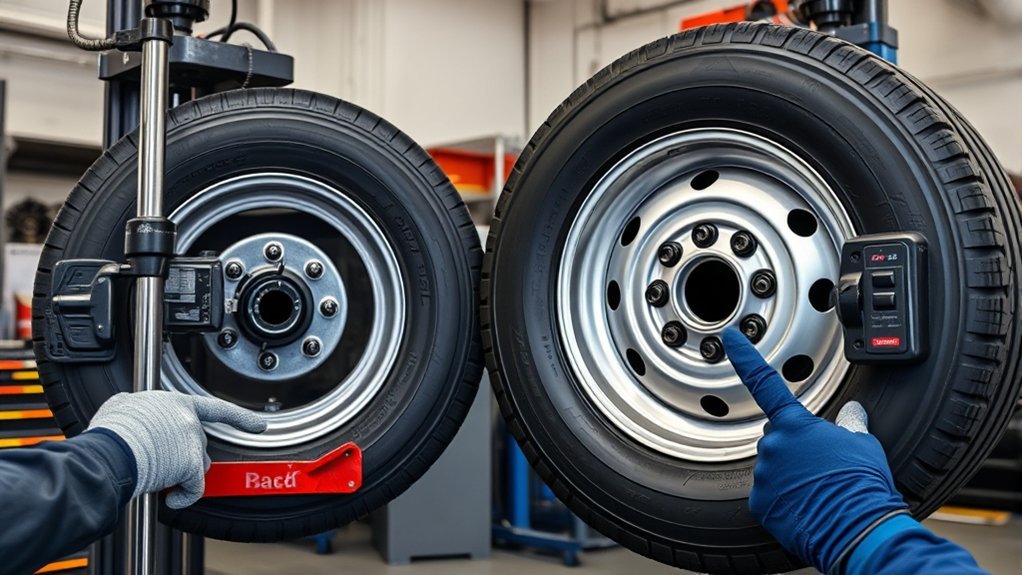
After you narrow your options by capacity, compatibility, and safety, decide how much physical effort the tool should require. Manual tire lifts cost less and can work well for low-volume shops, mobile setups, and lighter assemblies. They are simpler to maintain, but they still require pushing, steering, and pumping effort.
Electric tire lifts usually cost more, but they reduce repeated lifting effort and help technicians move through high-volume work with less fatigue. They can be a better fit for fleet shops, truck service, and bays where heavy assemblies move all day. Compare battery life, charger placement, motor speed, emergency stop access, and whether the tool can still be moved safely if power is low.
| Choose Manual If… | Choose Electric If… |
|---|---|
| You service lighter passenger tires occasionally. | You service heavy or oversized assemblies often. |
| Budget is the main constraint. | Technician fatigue and speed are major concerns. |
| You want simple maintenance with fewer powered parts. | You want controlled lifting with less physical effort. |
| Your shop has limited power or charging access. | Your bay already has reliable power access and storage space. |
Having the right tire repair tools nearby also improves efficiency, but lifting equipment should be chosen first for safety and fit, not only for speed.
[Products Worth Considering]

This 20-piece tire changer kit makes motorcycle and bike tire repairs easier with extended 14.5-inch spoons for leverage and access. Built from CrV steel with a corrosion-resistant chrome finish, it helps resist bending while protecting rims and tubes using smooth rounded spoons and included rim protectors. The all-in-one set includes valve removal and accessory tools for faster tire changes across motorcycles, bicycles, ATVs, and lawn equipment.

A concentrated tire and tube mounting compound designed to help simplify mounting rubber tires and tubes on passenger, semi truck, construction, and OTR applications. Its ultra-thick formula packs beads effectively and includes rust inhibitors to help protect against corrosion during use.

Malco tire mounting and demounting lubricant is a ready-to-use tire lube formulated to reduce friction during tire installation for passenger cars, light trucks, farm tires, and heavy-duty equipment. It provides rust-inhibiting protection to help reduce corrosion on rims and wheels, and helps support proper tire bead seating during inflation to reduce air leakage. The silicone-free, soap-free formula is whitewall safe to help prevent discoloration on whitewall tires and sensitive sidewall markings.
Safety and Compliance Checks Before Use
A tire lifting tool is part of a larger tire service system. It does not replace training, tire changer instructions, rim manuals, inflation safety equipment, or personal protective equipment. OSHA’s rim-wheel servicing rule applies to multi-piece and single-piece rim wheels used on large vehicles such as trucks, tractors, trailers, buses, and off-road machines. For those jobs, employers must train workers in the hazards and safe procedures for the type of wheel being serviced.
OSHA also requires suitable restraining devices or barriers for certain tire inflation work on rim wheels. That means a tire lift can help move and position the assembly, but it is not an inflation cage and should never be treated like one.
- Read the tool manual before use and follow the stated load limit.
- Train operators on lifting, lowering, rolling, stopping, and emergency procedures.
- Keep hands, feet, hoses, and cords clear of pinch points and wheels.
- Use only manufacturer-approved clamps, cradles, adapters, and accessories.
- Keep the floor clean, dry, and free of loose parts before moving a loaded lift.
- Do not use the lift if the frame, welds, casters, controls, pads, hydraulics, or power system appear damaged.
- Use proper tire inflation restraints and remote inflation procedures when required by the job and regulation.
Note: If the equipment is a vehicle lift or an integrated vehicle lifting system, check for applicable ANSI/ALI certification, operator training, and inspection requirements. The Automotive Lift Institute says vehicle lifts should be inspected at least annually by a qualified lift inspector.
Maintenance and Inspection
Good maintenance keeps a tire lifting tool safe and useful. Build a simple inspection routine into the start of each shift or before heavy work. Look for loose hardware, cracked welds, bent arms, worn pads, leaking hydraulic components, weak batteries, damaged cords, sticky controls, and casters that wobble or lock up.
For powered models, confirm the emergency stop, lowering control, battery, charger, and warning labels work as intended. For manual and hydraulic models, check pump action, release control, handle condition, and fluid leaks. If the tool feels unstable, drifts down, catches while rolling, or no longer holds the tire securely, remove it from service until it is repaired.
Pressure work needs the same discipline. Use accurate inflation equipment and follow shop procedures for accuracy and calibration, especially when moving between passenger, light truck, and commercial tire service.
Best Tire Lifting Tools for Shops
The best tire lifting tool is the one that matches your workload without forcing technicians into awkward lifts. Instead of choosing by brand name alone, match the tool to your shop type:
- Small repair shop: A quality manual lift or hydraulic assist may be enough if most work is passenger vehicles and daily volume is low.
- Busy tire shop: A powered lift can reduce fatigue and keep tire changer stations moving during seasonal rushes.
- Fleet shop: Choose higher capacity, strong parts support, and fast serviceability because downtime affects many vehicles.
- Truck or off-road shop: Prioritize heavy-duty capacity, clamp security, tire diameter range, OSHA-aware procedures, and operator training.
- Mobile service: Look for compact storage, battery runtime, floor stability, and safe loading/unloading from the service vehicle.
If your shop’s work changes often, choose adjustability. A lift that can handle several tire widths, diameters, and mounting positions will stay useful longer, especially when your tire selection factors change with customer vehicles, seasons, and service demand. For more context on tire fitment considerations, review these tire selection factors.
[Products Worth Considering]

Steelman white tire marking crayons provide high-contrast, semi-permanent marks for repairing and inspecting tires and equipment. They write on wet or dry, smooth or coarse surfaces including rubber, metal, glass, and wood, making them ideal for puncture location and damage outlining. The lead- and zinc-free crayons resist weather and fading yet wipe away when you no longer need the marks.

This universal magnetic jack pad is designed to protect pinch welds when lifting vehicles, helping prevent seam damage or warping. Crafted from solid aluminum with a nylon pad insert, it provides reinforced structural support and a secure fit for most single-vehicle pinch welds. Slotted for strong magnet holding, it supports safe jacking for cars, SUVs, trucks, and more.

Slip the Powerbuilt tire step over your vehicle’s tire to reach roof racks, engine bays, truck boxes, and more without overreaching. Its adjustable, universal design fits tires with a cross tread width up to 13 inches, including car, truck, RV, and semi tires. The non-slip cheesegrater surface and anti-slip tape provide secure grip while the open design lets mud and debris pass through. Fold-flat storage with rubber bumpers helps keep your tire and the step protected between uses.
Red Flags That a Tool Is Wrong for Your Shop
- The rated capacity is close to your heaviest assembly with no margin.
- The lift cannot reach your tire changer, balancer, or hub height.
- The cradle or clamp does not fit your tire widths or wheel styles.
- The tool is hard to steer when loaded.
- The manufacturer does not provide clear instructions, parts, or support.
- Replacement pads, casters, batteries, seals, or controls are difficult to source.
- The tool blocks technician paths, vehicle doors, lifts, or emergency exits.
- Operators need to bend, twist, or manually finish the lift after using the tool.
Frequently Asked Questions
What is the most important spec on a tire lifting tool?
Rated load capacity is the first spec to check, but it is not the only one. You also need lift height, minimum pickup height, tire diameter range, wheel width range, grip design, base stability, and caster quality. A tool with enough capacity can still be wrong if it cannot position the tire where your shop needs it.
Should I buy a manual or electric tire lift?
Choose a manual tire lift for lighter, occasional work and tighter budgets. Choose an electric tire lift for high-volume service, heavy assemblies, fleet work, or shops where technician fatigue is a real concern. The more often your team lifts tires each day, the more powered assistance can pay off.
Does a tire lifting tool replace a tire changer?
No. A tire lifting tool helps move, raise, and position the wheel and tire assembly. A tire changer mounts and demounts the tire from the wheel. In many shops, the lift supports the tire changer by reducing manual lifting and improving alignment during loading.
How much capacity do I need?
You need more capacity than your heaviest wheel and tire assembly. Check actual assembly weights when possible, especially for truck, agricultural, off-road, or specialty tires. Do not choose a tool that barely meets your maximum load, because repeated use at the limit can increase wear and reduce control.
What safety features should a tire lift have?
Look for secure tire support, stable base design, clear capacity labels, controlled lowering, durable casters, protected pinch points, and easy-to-reach controls. Powered lifts should also have overload protection and an emergency stop. The exact features depend on whether the tool is manual, hydraulic, pneumatic, or electric.
What should I inspect before using a tire lifting tool?
Check the frame, welds, fasteners, wheels, handles, pads, clamps, hydraulics, batteries, cords, labels, and controls. Make sure the tool rolls smoothly and holds the tire securely. Remove it from service if anything is cracked, bent, leaking, loose, unstable, or not working as designed.
Conclusion
Choose a tire lifting tool by matching capacity, lift range, tire compatibility, shop layout, and operator safety features to the work your shop performs every day. A good lift should reduce bending and forceful handling, hold the wheel securely, move smoothly through the bay, and remain serviceable over time. For light work, a manual lift may be enough. For frequent heavy-duty tire changes, a powered lift is usually the safer and more efficient investment.
Sources
- OSHA 29 CFR 1910.177 — rim-wheel servicing, training, equipment, and safe operating procedures for covered large-vehicle wheels.
- OSHA Ergonomics Overview — workplace MSD risks from lifting, bending, awkward postures, and repetitive work.
- U.S. Bureau of Labor Statistics MSD Factsheet — background on musculoskeletal disorders and days-away-from-work cases.
- Automotive Lift Institute: Automotive Lift Certification — ANSI/ALI ALCTV certification, testing, and Gold Label guidance for vehicle lifts.
- Automotive Lift Institute: Annual Lift Inspections — qualified inspection guidance and ANSI/ALI ALOIM:2020 inspection context.