
New tires can feel a little slick, soft, or slower to respond when you first install them on a Honda Accord. That is normal, but it is also the reason you should drive gently at first. A proper break-in helps the tread surface scrub in, lets the tire settle on the wheel, and gives you time to learn how the new tires feel before asking for full grip.
Quick Answer
To break in new tires on a Honda Accord, set the cold pressure to the door-jamb label, confirm the tires are balanced and installed correctly, then drive gently for about 500 miles. Avoid hard braking, fast cornering, sudden acceleration, and high-speed testing, especially during the first 100 miles.
Key Takeaways
- Drive gently for about 500 miles so the tire surface can scrub in and the new full-depth tread can settle.
- Use the Honda Accord’s Tire and Loading Information Label or owner’s manual for the correct cold PSI, not the number molded on the tire sidewall.
- If your Accord uses an indirect TPMS system, recalibrate it after replacing tires, rotating tires, or adjusting pressure.
- Vibration, pulling, rapid pressure loss, uneven wear, or a TPMS warning after installation should be checked by a tire professional.
At a Glance
| Time Required | About 500 miles of normal, gentle driving |
| Difficulty | Easy |
| Tools Needed | Accurate tire pressure gauge, air pump if pressure needs adjustment, and your Accord owner’s manual or tire placard |
| Cost | Usually $0 if the tires were already installed and balanced |
Understanding the Importance of Breaking In New Tires

Breaking in new tires matters because fresh tires do not deliver their best grip the moment they leave the shop. During manufacturing, compounds and parting agents can remain on the tread surface. During installation, mounting lubricant may also be present near the bead area. Until the tread is slightly roughened by normal road contact, traction and steering feel can be different from what you are used to.
Tire Rack recommends about 500 miles of easy acceleration, cornering, and braking so mold-release lubricant can wear away and the tire components can begin working together. Continental Tire also notes that new tires need a few hundred miles on dry roads before they reach their full gripping power.
Note: New tires may feel less sharp than your old tires even when they are the same brand and size. Full-depth tread blocks can flex more at first, which is often called tread squirm.
Before Your First Drive on New Tires
Do these checks before you start the break-in miles. They take only a few minutes and can prevent most new-tire problems.
- Confirm the tire size and type. The replacement tires should match the size and type recommended for your Accord, unless a qualified tire professional has confirmed an approved alternative.
- Set the cold tire pressure. Use the Tire and Loading Information Label on the driver’s door edge or door jamb, or use your owner’s manual. Do not use the maximum PSI printed on the tire sidewall as your normal setting. NHTSA says the correct pressure is the vehicle manufacturer’s recommended cold pressure.
- Look for visible installation issues. Check that valve caps are installed, tread labels are removed, the tires face the correct direction if directional, and there are no cuts, bulges, or obvious bead-seat problems.
- Ask about wheel torque. If the wheels were removed, confirm that the shop torqued the lug nuts to the correct Honda specification for your model year and wheel type.
- Calibrate TPMS if your Accord requires it. Many Honda Accord models use an indirect Tire Pressure Monitoring System that must be calibrated after adjusting pressure, rotating tires, or replacing one or more tires. Check your owner’s manual for the exact menu steps.
Warning: Tire pressure, tire size, lug nut torque, and TPMS steps can vary by Accord year, trim, and wheel package. When in doubt, follow the tire placard, owner’s manual, or a qualified Honda/tire technician.
Steps to Properly Break In Your New Tires
Breaking in new tires is not complicated. The goal is to avoid extreme forces while the tread surface and tire-to-wheel fit settle in.
- Drive gently for the first 10 to 20 miles. Keep speeds moderate, leave extra following distance, and avoid sudden steering inputs. This is when the tires may feel the most different.
- Be extra cautious for the first 100 miles. Avoid hard braking, rapid acceleration, and sharp cornering. Choose smooth, predictable driving over aggressive lane changes or quick launches.
- Continue easy driving through about 500 miles. You do not need to baby the car, but do not test maximum braking, cornering, or high-speed handling yet.
- Use dry roads when possible. Wet pavement, snow, and cold temperatures reduce available grip, and new tires may not have reached their full traction yet.
- Recheck cold pressure after a few drives. New tires can lose or gain pressure with temperature changes and seating. Adjust to the Accord’s recommended cold PSI.
- Pay attention to the ride. Mild change in steering feel is normal. Strong vibration, pulling, thumping, or a TPMS warning is not something to ignore.
Pro Tip: Use the break-in period to learn the new tire’s sound, steering response, braking feel, and ride comfort. That makes it easier to notice a real problem later.
Signs Your Tires Are Breaking In Well
A good break-in should feel gradual. Your Accord should become smoother and more predictable as the tires scrub in.
Visual Changes in Tread
As your tires settle in, the tread surface may look less glossy and more evenly scuffed. That does not mean the tire is wearing out too quickly; it usually means the surface is starting to make normal contact with the road.
Healthy visual signs include:
- A more even, matte tread surface after normal driving
- No bald spots, cupping, feathering, or unusual edge wear
- No bubbles, cracks, cuts, or sidewall bulges
- No missing valve caps or obvious air leaks around the valve stem
Improved Handling and Grip
Once the tires begin to break in, your Accord should feel more stable during lane changes, more predictable in turns, and smoother during braking. You may also notice less tread squirm as the miles add up.
If handling gets worse instead of better, have the tires checked. Pulling to one side, shaking through the steering wheel, or a thumping sound can point to balance, alignment, wheel, or tire problems.
What to Avoid During the Break-In Period
For the first 500 miles, avoid driving that asks for maximum grip. New tires can handle normal commuting, but they should not be pushed hard right away.
- Avoid hard braking unless it is an emergency. Panic stops can overload the tread before it has fully scrubbed in.
- Avoid sudden acceleration. Quick launches can cause slipping, especially on wet or dusty pavement.
- Avoid aggressive cornering. Sharp turns and fast ramps can make new tires feel loose or unsettled.
- Avoid high-speed testing. Wait until after the break-in period before judging maximum handling or braking performance.
- Avoid overloading the car. Heavy loads add heat and stress. Follow the load limit on the Accord’s tire placard.
- Avoid ignoring pressure changes. Cold weather, altitude changes, and normal air loss can all affect tire pressure.
Warning: Do not rely on TPMS alone. A warning light usually appears only after a tire is significantly underinflated. Check pressure with a gauge when the tires are cold.
Honda Accord Tire Pressure and TPMS Checks
Correct tire pressure is one of the most important parts of new-tire break-in. NHTSA recommends checking tire pressure at least once a month when the tires are cold, meaning the car has been parked for at least three hours. The correct PSI is on the Accord’s Tire and Loading Information Label or in the owner’s manual.
Some Honda Accord models use an indirect TPMS system. Instead of measuring air pressure directly inside each tire, the system compares wheel rotation while you drive. Honda’s TPMS instructions for the Accord state that calibration is needed after adjusting pressure, rotating tires, or replacing one or more tires. The calibration process and menu path can vary by model year, so use your owner’s manual for the exact steps.
If the TPMS light comes on after installing new tires:
- Park safely and inspect all four tires.
- Check and adjust cold tire pressure to the door-jamb label.
- Start TPMS calibration if your Accord requires it.
- If the warning returns, have the tires checked for leaks, incorrect size, mixed tire type, sensor/system issues, or installation problems.
[Products Worth Considering]

Keep your tires properly inflated with this analog VONDIOR tire pressure gauge, designed for fast, easy readings without batteries. The swiveling, two-axis hose and large glow dial help you measure at any tire angle with instant visibility. Built with a protective rubber shield, it supports durable, low-maintenance use for cars and trucks.

These aluminum alloy tire valve stem caps protect the valve core from corrosion and help prevent air leakage for more stable tire pressure. The rubber ring design helps support a secure, safe seal while adding a stylish look to your Honda wheels. Easy to install by hand, these caps are ideal for everyday driving and weather exposure.
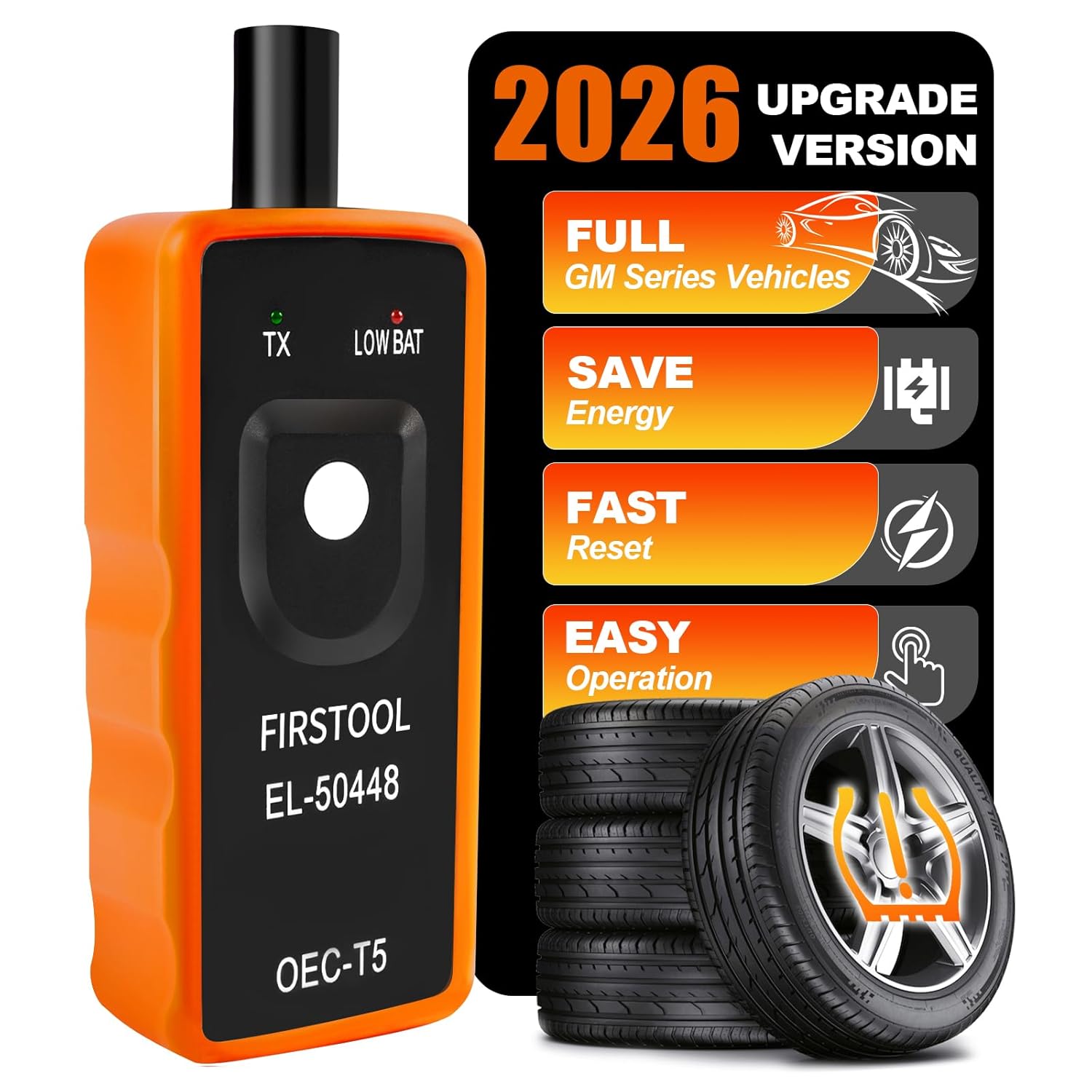
This TPMS relearn tool helps you quickly activate, match, and reset GM tire pressure sensors to keep the vehicle monitoring system working properly. It clears tire pressure alarms and dashboard warning lights after sensor replacement or tire rotation, and supports learning for common 315/433 MHz TPMS sensors. Designed for simple one-button operation, it can help you avoid unnecessary trips to repair shops.
Keeping Your Tires in Top Shape After Break-In

After the first 500 miles, keep up with basic tire maintenance. This protects tread life, ride comfort, fuel economy, and wet-road grip.
- Check tire pressure monthly. Use an accurate gauge and check when the tires are cold.
- Rotate tires on schedule. NHTSA says to follow the owner’s manual and, if recommended by the manufacturer, rotate every 5,000 to 8,000 miles or sooner if uneven wear appears.
- Watch tread depth. NHTSA says tires are not safe and should be replaced when tread is worn to 2/32 of an inch.
- Balance new tires when installed. Proper balancing helps prevent shaking and uneven wear.
- Check alignment if the car pulls. A wheel alignment can help prevent feathering, edge wear, and steering drift.
- Inspect for damage. Look for nails, cuts, sidewall bulges, cracks, and slow leaks.
Tires are not safe and should be replaced when tread reaches 2/32 of an inch.
[Products Worth Considering]

The VEHLIVE SU-50448 II TPMS relearn tool provides a fast activation reset to restore accurate tire pressure monitoring after sensor replacement or tire rotation. It supports 315 MHz and 433 MHz GM series sensors and helps clear dashboard pressure warnings. With simple two-button operation and horn-confirmed relearning order, you can reprogram sensors conveniently at home.

Replace worn or malfunctioning GM TPMS sensors with this 433MHz pre-programmed sensor set designed for compatibility with many Chevrolet, Buick, GMC, and Cadillac models. It includes guidance for proper OBDII relearning/pairing after installation and supports reliable long-term operation with a high-performance CR2032 battery. Quality tested for durability and performance to help restore accurate tire pressure monitoring.

Masoll M13 TPMS monitors tire pressure across RV and trailer applications and helps protect safety on the road. Set your reference pressure for auto alarm triggers, while the system automatically calibrates as you inflate or deflate. Solar charging with intelligent sleep/wake keeps operation efficient, and the color LCD provides clear readings in day or night driving.
Knowing When to Get Expert Help With Your Tires
New tires should improve your Accord’s safety and ride, not create new problems. If something feels wrong after installation, do not wait until the break-in period is over.
[Products Worth Considering]

Replace your worn or missing TPMS sensors with pre-programmed, direct-fit sensors for compatible Ford, Lincoln, and select Mazda models. Each sensor comes ready to activate with a scan tool, helping restore accurate tire pressure monitoring and trouble-free installation. Built with a long-life CR2032 battery and tested before factory release, this set provides dependable performance with a one-year warranty.

These universal tire valve stem caps help protect your valve core from dust, debris, moisture, and corrosion, supporting more stable tire pressure. The aluminum alloy design resists long-term wear, while the sealing construction helps help prevent air leakage. They twist on easily for quick installation and help safeguard driving safety across cars, SUVs, trucks, and motorcycles.

Milton S-921 pencil tire pressure gauge helps you maintain optimal tire pressure for passenger cars with accurate readings in PSI and kPa. It features a built-in deflator valve for convenient pressure adjustments, plus a single chuck head and nylon indicator bar for easy use on the go. Built from durable plated brass and designed for reliable performance, it’s a practical road trip and cold-weather maintenance tool.
Signs of Tire Trouble
Have the tires inspected if you notice any of these symptoms:
- Steering wheel vibration. This often points to wheel balance, tire uniformity, bent wheel, or suspension issues.
- Pulling to one side. This may indicate alignment trouble, uneven pressure, or a tire problem.
- Thumping, flapping, or humming that gets louder. Unusual noise can signal a tire defect, damage, or improper installation.
- Rapid pressure loss. A tire that loses more than a small amount of pressure repeatedly should be checked for a puncture, valve leak, or bead leak.
- Uneven tread wear. Feathering, cupping, or shoulder wear may mean alignment, balance, or suspension service is needed.
Professional Inspection Benefits
A qualified tire technician can check wheel balance, inspect for bead leaks, confirm tire direction, inspect valve stems, verify tire size, and look for road damage. If the wheels were removed, the shop can also confirm the lug nuts were torqued to the correct specification for your Accord.
When to Seek Assistance
Get help right away if the car shakes strongly, pulls hard, the TPMS warning stays on after proper inflation and calibration, or you see a sidewall bubble. A sidewall bulge can mean internal tire damage and should not be ignored.
Frequently Asked Questions
Is it necessary to break in new tires?
Yes. New tires can have surface residue and full-depth tread that may feel less responsive at first. Driving gently for about 500 miles helps the tread scrub in and lets you get used to the tire’s grip, sound, and steering feel.
How long does it take to break in new tires on a Honda Accord?
Plan on about 500 miles of gentle driving. The first 100 miles are the most important for extra caution, but it is smart to avoid aggressive driving until the full break-in period is complete.
Can I drive on the highway with new tires?
Yes, normal highway driving is fine. Keep speeds reasonable, leave more following distance, avoid sudden lane changes, and do not test hard braking or cornering until the tires have broken in.
Why do my new tires feel slippery?
New tires can feel slippery because the tread surface has not fully scrubbed in yet. Mold-release residue, mounting lubricant, and flexible full-depth tread can all affect the first few drives.
Do I need to reset TPMS after getting new tires on a Honda Accord?
Many Honda Accord models require TPMS calibration after tire replacement, tire rotation, or pressure adjustment. Set the cold pressure first, then follow the TPMS calibration steps in your owner’s manual.
What tire pressure should I use for my Accord’s new tires?
Use the cold PSI listed on the Tire and Loading Information Label on the driver’s door edge or door jamb, or in your Accord owner’s manual. Do not use the maximum pressure printed on the tire sidewall as the normal setting.
Conclusion
Breaking in new tires on a Honda Accord is simple: check the cold tire pressure, confirm the installation looks right, calibrate TPMS if your model requires it, and drive gently for about 500 miles. Avoid hard braking, fast cornering, and sudden acceleration during this period. Once the tires are broken in, keep them properly inflated, rotate them on schedule, and inspect tread wear regularly. That gives your Accord the best chance of smooth handling, reliable traction, and long tire life.
Sources
- Tire Rack — How Do I Break In Tires? — supports the 500-mile easy-driving break-in recommendation and explains mold-release lubricant and tread squirm.
- Continental Tire — Take Time to Break in Your New Tires — supports the advice to drive carefully for the first few hundred miles and avoid hard acceleration or braking.
- NHTSA TireWise — supports cold tire pressure checks, door-jamb placard guidance, tread depth replacement guidance, tire rotation, alignment, and TPMS safety notes.
- Honda Owners / Bridgestone Tire Maintenance, Safety and Warranty Manual — supports tire pressure safety, cold-pressure checks, and vehicle placard guidance.
- Honda Accord Tire Pressure Monitoring System Guide — supports Accord TPMS operation and calibration guidance after pressure adjustment, rotation, or tire replacement.