Disclosure: As an Amazon Associate, we earn from qualifying purchases. If you click a link on this page and make a purchase, we may receive a small commission at no extra cost to you.
A compact electric pump can save a ride, but only if it reaches your target pressure, fits your valve, and has enough battery left when you need it. The HOTO Air Pump Pocket, model QWCQA002, is a 150 PSI cordless bike inflator built around portability, automatic shutoff, and a digital pressure display. It is especially appealing for road cyclists, commuters, and riders who dislike carrying CO2 cartridges or a long hand pump. Its biggest limitation is just as important: this pocket model is designed mainly for bikes, motorcycles, scooters, and sports balls, not routine car-tire inflation.
Quick Verdict
Rating: 8.4/10, recommended with caveats
Best For: Road cyclists, commuters, e-bike riders, and anyone who wants a compact rechargeable pump with a gauge.
Bottom Line: The HOTO Air Pump Pocket combines 150 PSI capacity, automatic shutoff, two saved presets, and a pocket-friendly 0.56-pound body. It is a strong bike-focused inflator, but you should choose a larger compressor if car tires are part of your plan.
| Specification | Detail |
|---|---|
| Brand | HOTO |
| Model | Air Pump Pocket, QWCQA002 |
| Product Type | Cordless mini electric bike pump with digital gauge |
| Pressure Range | 3 to 150 PSI |
| Pressure Accuracy | ±1 PSI sensor accuracy |
| Battery | Built-in 2,000 mAh lithium-ion battery, 7.2 Wh |
| Charging | USB-C cable, rated input 5V/2A, approximately 1.5 hours |
| Dimensions | 3.66 × 2.28 × 1.50 inches |
| Weight | 0.56 lb, approximately 255 g |
| Housing Material | ABS and plastic housing |
| Controls | Flick-to-start hose, LED pressure display, automatic shutoff, and two saved presets |
| Compatibility | Presta and Schrader bicycle valves, motorcycles, scooters, and sports balls |
| Included Accessories | Presta adapter, American/Schrader valve piece, needle adapter, quick-connect adapter, soft rubber band, and charging cable |
| Warranty | One-year manufacturer warranty |
| Main Limitation | Not recommended as a primary car-tire inflator |
Key Takeaways
- The HOTO Air Pump Pocket reaches up to 150 PSI, so it covers high-pressure road tires as well as lower-pressure mountain-bike tires.
- Its 3.66-inch-tall body and 0.56-pound weight make it practical for a jersey pocket, saddle bag, backpack, or small tool pouch.
- The digital display, ±1 PSI sensor, automatic shutoff, and two saved presets reduce pressure guesswork.
- HOTO advertises fast 700×23C road-tire top-offs and up to eight flat-tire inflations per charge, although real results depend on tire size, starting pressure, temperature, and battery condition.
- Presta and Schrader support is included, but correct adapter order matters for reducing air loss.
- This model is best treated as a bike and light-mobility pump, not a replacement for a full-size car compressor.
What Is the HOTO Air Pump Pocket?
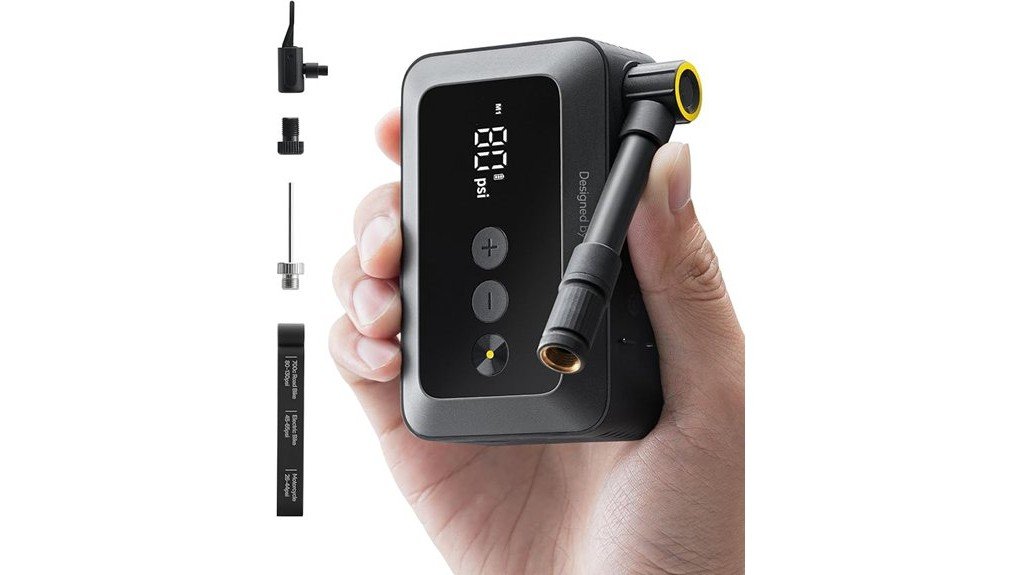
The HOTO Air Pump Pocket is a rechargeable mini compressor designed for cyclists and other light inflation tasks. Its QWCQA002 model combines a built-in 2,000 mAh battery, a digital pressure gauge, a 360-degree rotating hose, and a maximum setting of 150 PSI.
Unlike a basic hand pump, it lets you choose a target pressure and then stops automatically when that setting is reached. The main selling point is convenience: you can check current pressure, add air, and avoid carrying separate CO2 cartridges or a larger floor pump during a ride.
Its small size does create a clear tradeoff. The pump is highly portable, but its compact motor and battery are better suited to bicycle tires, motorcycle or scooter top-offs, and sports balls than high-volume automotive work.
Who Should Buy It?
Best For
- Road cyclists who need pressures above the range of many small electric pumps.
- Commuters and e-bike riders who want automatic shutoff and a readable pressure display.
- Riders who prefer rechargeable backup gear instead of single-use CO2 cartridges.
Skip If
- You need a dependable inflator for full-size car or truck tires.
- You want a pump that can be used in wet conditions.
- You prefer a manual pump that never depends on battery charge.
Before You Buy: Do not choose this model as your primary car-tire inflator. HOTO markets it mainly for bicycles, motorcycles, scooters, and sports balls, and the Amazon listing specifically says it is not recommended for car tires.
[Products Worth Considering]

The Powools cordless tire inflator delivers fast inflation up to 150 PSI with a built-in digital display and auto shut-off to prevent over-inflation. Powered by rechargeable batteries, it works without an external power source and includes multiple preset modes plus a custom mode for different inflatables. A set of interchangeable nozzles and a multi-mode LED light (lighting, alarm, SOS) make it useful for cars, motorcycles, bicycles, and sports balls.

This compact electric tire pump inflates bikes, motorcycles, scooters, and sports balls with preset pressure control and an LED display for precise readings. It automatically stops at your target PSI and supports up to 150 PSI, with fast inflation that reaches 80–100 PSI in about 25 seconds. Designed for easy carry, it fits in a jersey pocket or bag and remembers your last two pressure settings.

The TOOLITIN floor bike pump delivers high pressure performance with an easy-to-read gauge so you can dial in the right tire pressure for safer rides. It is compatible with both Presta and Schrader valves and features a stable, durable design for efficient pumping. Suitable for road, MTB, and hybrid tires as well as inflating sports balls and other inflatables, it also includes ball and bladder needles and convenient accessory storage.
Design, Size, and Portability
At 3.66 × 2.28 × 1.50 inches, the HOTO pump is smaller than many smartphones and compact enough for most cycling bags. Its 0.56-pound weight is noticeable in a jersey pocket, but it remains far easier to carry than a full-size cordless compressor.
The ABS and plastic housing keeps the pump light, while the soft rubber band helps secure the hose against the body during storage. The short, rotating hose can approach a valve from different angles, which is useful around tight spokes, disc rotors, or small scooter wheels.
The flick-to-start system also reduces setup steps. Rotating the hose into its active position powers the unit, and the display then shows pressure information and your selected target. That design is quick, though you should store the pump so the hose cannot accidentally move into the active position.
Inflation Speed and Pressure Performance
HOTO promotes the Air Pump Pocket as a fast top-off tool for road tires. Published HOTO figures show a 700×23C tire gaining about 25 PSI in 25 seconds under test conditions, while the Amazon listing also describes a 25-second high-pressure top-off and roughly 60 seconds for a flat road tire to reach 80 PSI.
Those figures are useful for comparison, but your actual time will vary. A wide mountain-bike tire contains much more air than a narrow road tire, and cold temperatures, low battery charge, valve leakage, or a higher target pressure can extend the run time.
The 150 PSI ceiling is a meaningful advantage for road cyclists. Many tiny electric pumps stop at 100 or 120 PSI, while the HOTO provides extra range for riders who use high-pressure setups. You still need to follow the pressure range printed on your tire and rim rather than treating 150 PSI as a recommended target.
Pressure Control, Display, and Presets
The built-in sensor is rated for ±1 PSI accuracy, and the LED display shows pressure while the pump runs. You set a target, start inflation, and the unit stops when it reaches that setting. This is more convenient than repeatedly disconnecting a hand pump to check a separate gauge.
The memory function stores your last two pressure settings. That feature is helpful when you regularly maintain two bikes, use different front and rear pressures, or alternate between a bicycle and a sports ball.
Automatic shutoff lowers the risk of accidental overinflation, but it does not replace basic attention. Stay near the pump, confirm that the correct unit and target are selected, and stop immediately if the hose connection leaks, the tire behaves unusually, or the pump overheats.
Battery Life and Charging
The Air Pump Pocket uses a built-in 2,000 mAh lithium-ion battery rated at 7.2 Wh. HOTO lists an approximate charging time of 1.5 hours through a 5V/2A USB-C input, making it easy to recharge from a standard USB power adapter or compatible power bank.
The Amazon listing claims up to eight flat 700×23C tire inflations or eighteen low-pressure tire inflations per charge. Treat those numbers as best-case test results rather than guaranteed field performance. Wider tires, higher target pressures, repeated heat buildup, and an aging battery will reduce the number of inflations.
For reliable emergency use, charge the pump before longer rides and check it periodically during storage. A rechargeable pump is only useful when the battery is ready, so riders on remote routes may still want a small manual backup or another inflation option.
Valve Compatibility and Included Accessories
The package supports the two common bicycle valve types. Schrader valves connect through the American/Schrader fitting, while Presta valves use the included Presta adapter with the quick-connect chuck. The package also includes a needle adapter for sports balls, a soft rubber retaining band, and a USB-C charging cable.
For Presta use, loosen the small valve tip first, thread the Presta adapter securely onto the valve, and then attach the quick-connect chuck. Installing the adapter first helps reduce air loss when you disconnect the pump.
The pump also works for many motorcycle and scooter top-offs, but tire volume still matters. It makes the most sense for pressure correction and roadside convenience, not repeated inflation of large-volume tires from completely flat.
Pro Tip: Save your normal front and rear bike pressures as the two presets, then recharge the pump before a long ride. This reduces setup time and helps you notice an unexpected pressure change sooner.
How to Use It Correctly
- Check the tire limit: Read the minimum and maximum pressure printed on the tire and confirm any rim pressure limit.
- Choose the correct valve setup: Use the direct Schrader connection or install the Presta adapter before attaching the quick-connect chuck.
- Power on: Rotate the hose into the active position or use the control as directed in the manual.
- Select the pressure unit and target: Confirm the number before starting, especially if you switch between PSI and bar.
- Inflate while staying nearby: Watch the tire and hose until the pump stops automatically.
- Disconnect carefully: Remove the chuck promptly to limit air loss, close the Presta tip if used, and return the hose to its storage position.
A common mistake is setting the target without checking the tire’s printed limit. Another is attaching the pump loosely, which can waste air and make the pressure reading less stable. A firm connection usually improves both speed and accuracy.
Compatibility and Safety
The Air Pump Pocket is not waterproof. Keep it away from rain, standing water, and wet storage, and do not operate it while charging. Like other compact compressors, it can become warm during use, so allow it to cool if you are completing several inflations in a row.
Use only the correct adapter and never exceed the tire, rim, ball, or equipment manufacturer’s pressure limit. The pump’s 150 PSI maximum describes its capability, not the safe pressure for every item.
Battery-powered inflators should not replace proper tire inspection. If a tire repeatedly loses pressure, has visible damage, or will not hold air, stop riding and repair or replace the tire or tube before continuing.
How It Performs in Real Use
For Road-Bike Top-Offs
This is the pump’s strongest use case. The 150 PSI range, digital gauge, and fast advertised top-off time suit narrow road tires, especially when you need to restore pressure after a slow leak or tube replacement.
For Commuting and E-Bikes
The compact body fits more easily into a work bag or frame bag than a floor pump. Automatic shutoff is useful when you maintain pressure frequently, although heavier e-bike tires may take longer than the narrow road-tire examples used in HOTO’s testing.
For Mountain Bikes and Gravel Bikes
Lower target pressures are easy for the pump to reach, but wider tires require more air volume. It should handle routine corrections well, while a fully flat high-volume tire may consume more time and battery than a road tire.
For Travel and Emergency Backup
The small size and USB-C charging make it practical for day trips, bike tours, and family outings. For remote travel, pair it with a patch kit or spare tube and consider a manual backup because battery charge and temperature can affect performance.
Pros and Cons
Pros
- 150 PSI maximum supports high-pressure road-bike setups.
- Compact 0.56-pound body fits common cycling storage spaces.
- Automatic shutoff and ±1 PSI sensor reduce pressure guesswork.
- Two saved presets speed up repeated maintenance.
- Presta, Schrader, motorcycle, scooter, and sports-ball accessories improve versatility.
Cons
- Not recommended as a primary car-tire inflator.
- Not waterproof, so wet-weather handling and storage require care.
- Per-charge inflation counts vary with tire size, pressure, temperature, and battery condition.
Is It Worth the Price?
The HOTO Air Pump Pocket sits in the premium part of the mini bike-pump category. Its value comes from combining high pressure, a digital gauge, automatic shutoff, preset memory, USB-C charging, and a compact body in one tool.
It is worth considering if you ride often and want a reusable alternative to CO2 cartridges with less effort than a small hand pump. You get the most value when road-bike pressure, compact storage, and repeatable presets matter to you.
It is not the best fit if you mainly need to inflate car tires or you rarely ride far from home. In those cases, a larger automotive compressor or a basic floor pump may offer better value.
[Products Worth Considering]

Tiakia’s mini high-pressure frame pump delivers up to 260 PSI for faster, more efficient inflations with an optimized intake volume. It features a double-head valve design compatible with Schrader and Presta, plus a conversion for Donlop, making it versatile for bikes and many inflatables. The lightweight anodized aluminum build includes a mounting bracket for convenient carry, while the flexible high-pressure hose and IPX4 waterproof body support outdoor use.

The Vibrelli Air Master mini bike pump locks securely to both Presta and Schrader valves, so you can inflate tires without changing adapters. It delivers high-pressure inflation up to 120 PSI for road bikes, MTB, BMX, and kids’ bikes, while staying compact and lightweight for easy carry. A frame mounting bracket with a Velcro strap helps keep the pump firmly in place with no rattles.

Get back on the road fast with this bike frame bag repair kit, featuring a 120 PSI mini pump, a 16 in 1 multi-function tool, and a glueless tire patch kit. The compact triangle bag provides 2L storage for essentials like phone, keys, and tools, while the included rasp and tire levers make quick flat repairs possible. Designed for commuting and trail riding, it supports both Presta and Schrader valves for versatile emergency inflation.
How It Compares to Alternatives
The CYCPLUS AS2 Pro is another bike-focused electric pump with a display, preset pressure, and automatic stopping, but its stated maximum is 120 PSI. The nanoFumpa is much lighter and extremely compact, yet it uses a simpler design without a pressure gauge or display, so you give up some control for minimum size.
If you need a pump that handles car tires more comfortably, the Xiaomi Portable Electric Air Compressor 2 is a more suitable comparison because it is designed for automotive inflation as well as bikes. The HOTO makes the most sense when your priority is a pocketable cycling pump with a 150 PSI ceiling and saved pressure settings.
[Products Worth Considering]

This portable cordless air pump inflates car, motorcycle, bike, and ball tires with up to 150 PSI and real-time LCD pressure monitoring. It features a built-in rechargeable battery, four unit modes (PSI/KPA/BAR/KG/CM²), and an auto shut-off to prevent over-inflation. An LED light and USB-C/USB-A ports make it useful for nighttime emergencies and charging devices.
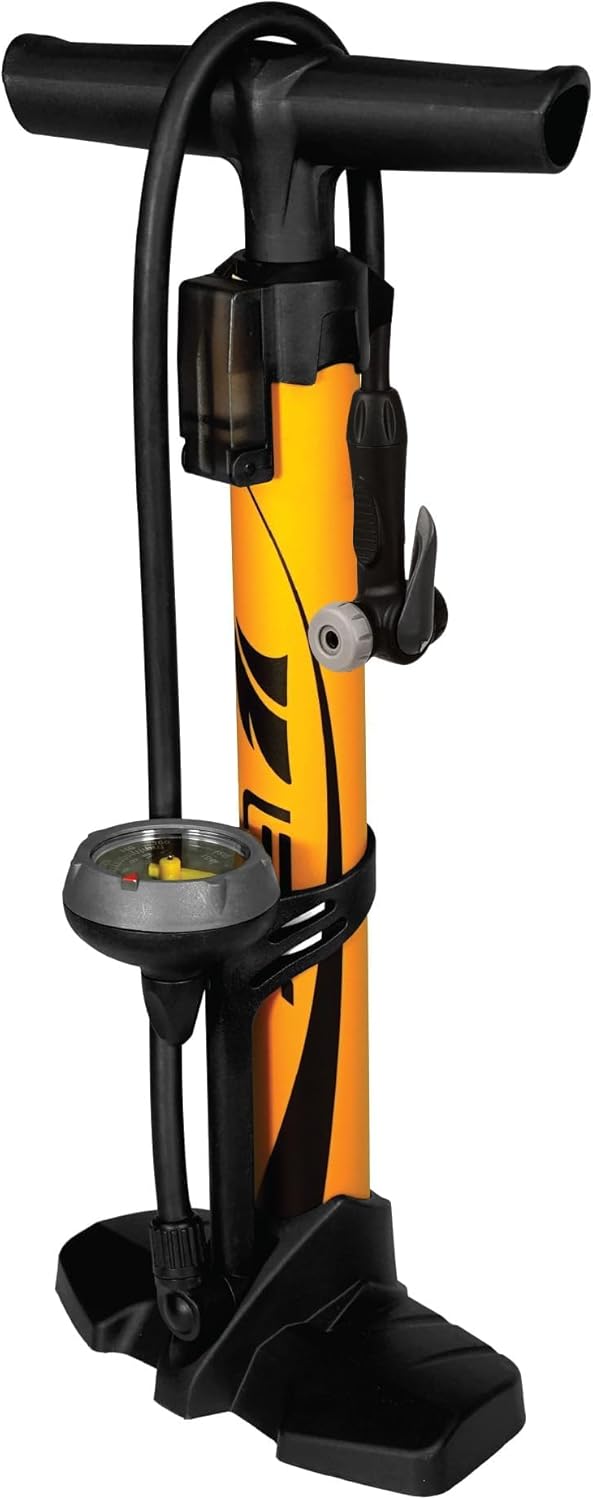
This durable BV floor pump delivers up to 160 PSI for confident inflation of bikes and other high-pressure uses. Its twin valve head lets you quickly switch between Presta and Schrader valves by reversing the components, with no compromise. The ergonomic handle makes pumping comfortable, and the compact size is easy to carry for rides and home storage.

This 4-pack kit converts Presta bike valves to standard Schrader valves so you can inflate with any regular pump or air compressor. The solid brass adapters include an O-ring for a tight, leak-proof seal and provide a simple screw-on setup. Compatible with road bikes, mountain bikes, e-bikes, and e-scooters, it’s designed for convenient, everyday carry readiness.
Frequently Asked Questions
Does the HOTO Air Pump Pocket support Presta and Schrader valves?
Yes. Schrader valves use the American/Schrader connection, while Presta valves require the included Presta adapter. Attach the Presta adapter to the valve first, then connect the quick-release chuck to reduce air loss.
Can it inflate car tires?
It may add a small amount of air in some situations, but the Amazon listing says this model is not recommended for car tires. Choose a larger automotive compressor if car-tire inflation is an important requirement.
How long does the battery take to recharge?
HOTO lists an approximate charging time of 1.5 hours with a compatible 5V/2A USB power source. Charging time can vary with the adapter, cable, temperature, and remaining battery level.
How many tires can it inflate on one charge?
The Amazon listing claims up to eight flat or eighteen low-pressure 700×23C tire inflations per charge. Real output will be lower with wider tires, higher pressure increases, cold weather, repeated use, or an older battery.
Does it stop automatically at the selected pressure?
Yes. You set a target pressure, and the pump stops when the sensor reaches that value. Stay nearby and confirm the correct unit and pressure before starting.
Can it inflate motorcycle tires and sports balls?
Yes. HOTO lists motorcycles, scooters, and sports balls among the supported uses, and a needle adapter is included for balls. Large tires will take more time and battery than narrow bicycle tires.
Is the pump waterproof?
No. Keep it dry, avoid operating it in rain or around standing water, and do not use it while charging. Store it in a protected bag when riding in uncertain weather.
What comes in the box?
The manufacturer lists the Air Pump Pocket, American/Schrader valve piece, Presta adapter, needle adapter, quick-connect adapter, soft rubber band, and charging cable. Package contents can change, so confirm the current listing before ordering.
The Bottom Line
The HOTO Air Pump Pocket is a strong choice for road cyclists, commuters, and riders who want a compact 150 PSI pump with automatic shutoff and saved pressure settings. Skip it if you need a primary car-tire compressor or waterproof equipment, but consider it when portability and bike-focused pressure control matter most.