Last updated: August 18, 2026
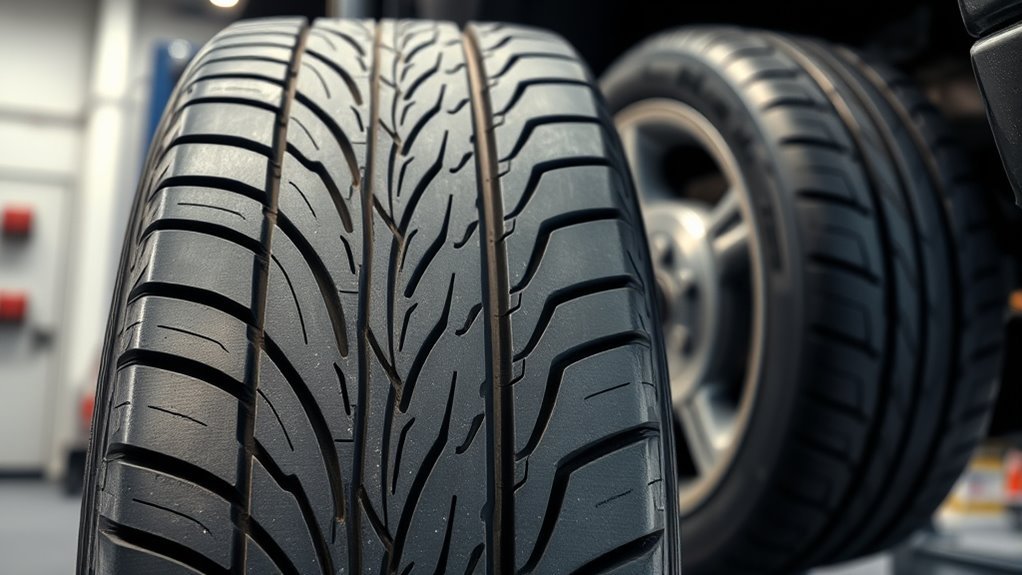
Front tires often wear faster than rear tires, especially on front-wheel-drive vehicles, because they steer, handle substantial braking and cornering forces, and also transmit drive torque on FWD cars. But faster front wear is not universal. Rear-wheel drive, tire size, alignment, inflation, suspension condition, road use, and driving style can change which axle wears fastest. Compare all four tires before assuming a front-to-rear difference is normal.
Quick Answer
Front tires typically wear faster on FWD cars because they combine steering, braking, cornering, and acceleration loads. On RWD vehicles, drive torque can increase rear-tire wear and make the front-to-rear difference smaller or even reverse it. If both front tires wear evenly but faster than the rears, normal vehicle dynamics may be the cause. If one tire or one shoulder wears much faster, check pressure, alignment, balance, and suspension.
Why Front Tires Wear Faster Than Rear Tires
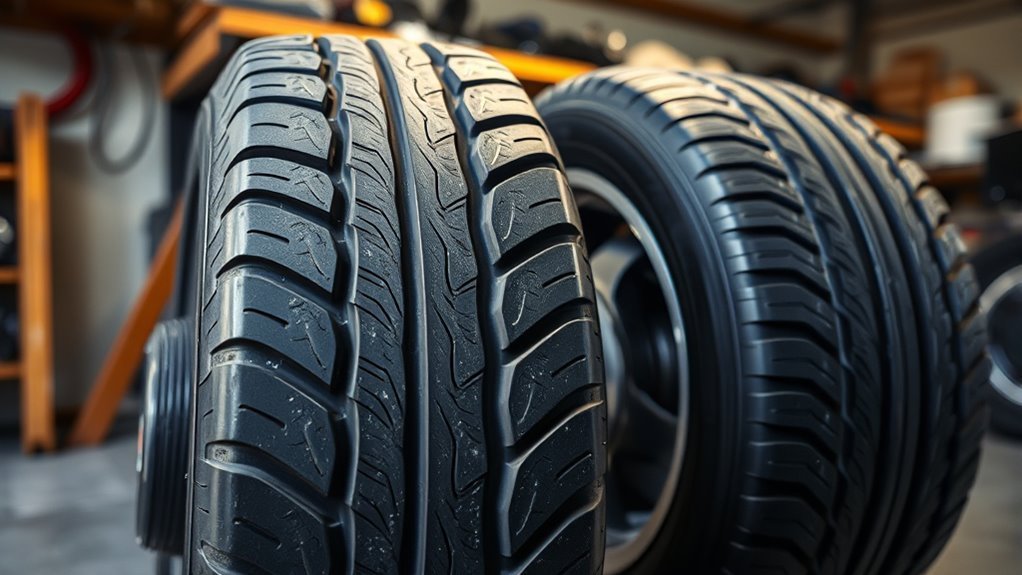
Front and rear tires do different jobs. The front tires steer the vehicle and handle substantial cornering and braking forces. On a front-wheel-drive car, they also transfer engine torque to the road. That combination commonly makes the front tread disappear faster.
Michelin’s tire-rotation guidance notes that front tires tend to wear faster because of steering, braking, and cornering forces. However, drivetrain matters. Continental’s tire-mileage guidance explains that wear is also higher on the driven axle, which is why RWD vehicles can show a more balanced front-to-rear wear relationship.
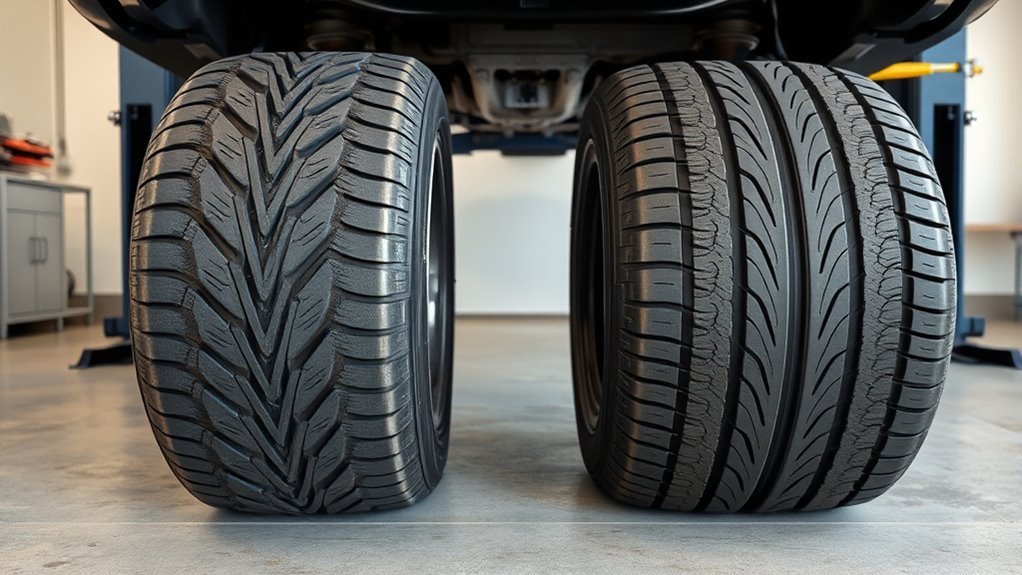
A useful diagnostic rule is to look at the shape of the wear, not just which axle has less tread depth. If both front tires are wearing evenly across the tread but simply faster than the rears, steering, braking, drivetrain, and normal vehicle loading are plausible causes. If only one front tire is wearing quickly, or one shoulder is disappearing faster than the rest, treat that as a possible pressure, alignment, balance, or suspension problem.
How Drivetrain Changes Front vs. Rear Tire Wear
- FWD: Front tires commonly wear faster because they steer and also transmit drive torque.
- RWD: Rear drive forces increase stress on the rear tires, so wear can be more balanced or rear-biased depending on the vehicle and driving style.
- AWD/4WD: All four tires may share drive forces, but wear still varies with system design, steering loads, alignment, tire size, and rotation history. Follow the vehicle manufacturer’s requirements for tread-depth matching and rotation.
Common Tire-Wear Patterns by Axle and What They Mean
Do not diagnose a tire only by whether it is on the front or rear axle. The wear pattern itself usually tells you more. Michelin’s tire-wear guidance distinguishes center wear, shoulder wear, one-sided wear, feathering, and cupping because they point to different problems.
| Wear Pattern | Likely Cause | What to Check First |
|---|---|---|
| Center wears faster | Chronic overinflation or incorrect pressure for the load | Cold pressure against the vehicle placard |
| Both shoulders wear faster | Chronic underinflation | Cold pressure and vehicle load |
| One inner or outer edge wears faster | Alignment or suspension geometry problem | Toe, camber, and worn suspension parts |
| Feathered tread ribs | Often a toe-alignment problem | Wheel alignment |
| Cupping or scalloping | Balance or suspension problem | Wheel balance, shocks, struts, and related components |
If the outside shoulder is disappearing faster than the rest of the tread, see the guide to outer-edge tire wear for a more focused diagnosis.
[Products Worth Considering]

Steelman white tire marking crayons provide high-contrast, semi-permanent marks for repairing and inspecting tires and equipment. They write on wet or dry, smooth or coarse surfaces including rubber, metal, glass, and wood, making them ideal for puncture location and damage outlining. The lead- and zinc-free crayons resist weather and fading yet wipe away when you no longer need the marks.

Monitor tire tread wear with a smart, color-coded depth gauge that shows clear condition ranges at a glance. The bar is range marked for fast, easy readings, helping you maintain safer traction and performance. Each gauge is portable with a pocket clip, and the set includes 20 units for daily use and sharing.

Measure tire tread depth quickly and accurately with this LUMITECO dial gauge that reads in 1/32" increments up to 14/32". The color-coded green/yellow/red zones make it easy to judge tire wear and know when replacement is needed. A rugged, compact design with a protective pouch helps keep the gauge ready for use on cars, trucks, motorcycles, and more.
How Uneven Wear Affects Handling and Braking
Uneven tread can make the vehicle respond differently from one axle or side to the other. A worn front pair can reduce steering grip and make the vehicle push wider in a turn. A rear pair with substantially less grip can make the rear of the vehicle less stable, particularly on wet or slippery roads.
Uneven wear can also reduce the consistency of braking and water evacuation. ABS and electronic stability control can help manage wheel slip, but they cannot restore tread or create grip that the tire-road contact patch does not have.
Pay attention to pulling, an off-center steering wheel, vibration, unusual tire noise, or rapid shoulder wear. These symptoms can help distinguish ordinary front-to-rear wear from an alignment, balance, or suspension fault.
5 Quick Checks to Spot Front- or Rear-Specific Tire Wear
- Check pressure when the tires are cold. Use the pressure on the vehicle’s Tire and Loading Information label or owner’s manual, not the maximum pressure molded into the tire sidewall.
- Measure tread depth on all four tires. Check several main grooves across each tire and record the lowest reading rather than measuring only one spot.
- Compare the center and shoulders. Center-heavy wear points toward excessive inflation, wear on both shoulders points toward underinflation, and one-sided wear can indicate an alignment problem.
- Feel for feathering or cupping. Run your hand carefully across the tread. Sharp feathered rib edges can indicate toe trouble, while repeated scalloped low spots can point to balance or suspension problems. Do not touch exposed cord or severely damaged tread.
- Compare front-to-rear and left-to-right trends. If one tire or shoulder is losing tread much faster than the others, investigate the cause instead of assuming normal front-tire wear.
NHTSA’s TireWise guidance recommends regular tread and pressure checks and says worn tires should be replaced when the tread reaches the built-in treadwear indicators.
[Products Worth Considering]

This universal wheel alignment tool helps you accurately restore tire tilt angles after tire or suspension repairs using an adjustable camber gauge. It features a powerful magnetic base that firmly attaches to brake rotors for stationary, slip-free readings, improving consistency during measurement. Built from durable PC plastic, it resists wear and corrosion and is compact enough for car, truck, RV, and motorcycle alignment tasks.

The Ziopetru adjustable magnetic wheel alignment tool helps you check and restore camber and caster positioning after removing and reinstalling undercarriage components. With a clear leveling/bubble measurement system and an easy zeroing adjustment knob, it supports precise horizontal angle checking. The strong magnetic base mounts to metal surfaces for convenient use at home on cars, motorcycles, trucks, vans, and SUVs.

Replace worn wheelchair rear tires with a universal 24x1 no-flat polyurethane foam option designed to mount tightly on 24-inch rims without the tire falling off. Installation is made easier with included tools and multiple methods, including using a pry bar or softening the tire in hot water to reduce resistance. The package includes two tires plus tie ropes for convenient fitting and handling.
Rotation, Pressure, and Suspension Fixes to Balance Tire Wear
Rotate when your vehicle and tire setup allow it. Follow the interval and pattern in the owner’s manual. NHTSA says that, when rotation is recommended by the vehicle manufacturer, 5,000 to 8,000 miles is a common interval, or sooner when irregular wear appears.
Not every tire setup can use the same rotation pattern. Directional tires have limited side-to-side movement, while vehicles with different front and rear tire sizes may not allow front-to-rear rotation at all.
Set pressure to the vehicle specification. Check pressure cold and use the driver’s-door placard or owner’s manual. Front and rear recommended pressures can differ, so do not automatically inflate all four tires to the same value.
Correct mechanical problems before relying on rotation. Rotation can redistribute normal wear, but it cannot repair wear caused by bad alignment, wheel imbalance, worn shocks or struts, loose steering or suspension components, or damaged tires. Correct the root cause first so the same pattern does not continue.
[Products Worth Considering]

Measure tyre tread depth precisely with a digital gauge that reads in both MM and inches, helping you monitor safe driving conditions. The large LCD screen is easy to operate, and the compact tool fits for cars, trucks, and motorcycles. It provides high accuracy with a 0-25.4mm range and includes a 1-year warranty for added peace of mind.

The SAFELIFE dial tire tread depth gauge measures tread depth in 1/32 inch increments with clear, easy-to-read 2-inch dial face. Color zones using a traffic light system help you quickly judge whether tread is low, marginal, or ample for safer driving. Built with a durable zinc cast body and a metal detect probe for precise, comfortable use across cars, motorcycles, trucks, and buses.

Accurately measure tire tread depth with a calibrated gauge marked from 0 to 1 inch in 1/32 inch increments. The color-coded bar helps you quickly identify tread condition ranges, supporting safe driving for trucks, motorcycles, automobiles, and passenger vehicles.
Frequently Asked Questions
Why Do My Front Tires Wear More Than My Back Tires?
Front tires commonly wear faster because they steer and handle substantial braking and cornering forces. On FWD vehicles, they also transmit engine torque. If both fronts wear evenly but faster than the rears, that can be normal. One-sided or highly uneven wear should be checked for pressure, alignment, balance, or suspension problems.
Do Front or Rear Tires Wear Faster on RWD Cars?
There is no universal rule for every RWD vehicle. Rear tires receive the drive torque, while the front tires still handle steering and substantial braking and cornering forces. Vehicle weight distribution, tire sizes, alignment, driving style, and suspension setup determine which axle wears faster.
Can Bad Alignment Make Front Tires Wear Faster?
Yes. Incorrect toe or camber can cause rapid one-sided wear or feathering. If one front tire or one shoulder is wearing much faster than the rest, have the alignment and steering or suspension components inspected rather than treating it as normal front-tire wear.
How Often Should I Rotate My Tires?
Follow your vehicle manufacturer’s maintenance schedule and rotation pattern. NHTSA says that, when rotation is recommended, 5,000 to 8,000 miles is a common interval, or sooner if uneven wear develops. Directional or staggered tire setups may require a different pattern or may restrict rotation.
If I Replace Only Two Tires, Should the New Ones Go on the Front or Rear?
The tire industry generally recommends placing the pair with deeper tread on the rear axle to preserve rear stability on slippery roads. However, some vehicle manufacturers specify different requirements, so follow the owner’s manual or manufacturer guidance for your vehicle. See Continental’s tire-mixing guidance for the general rear-axle recommendation and its exceptions.
Conclusion
Front tires often wear faster, particularly on FWD vehicles, but axle position alone does not diagnose tire wear. First compare all four tires. Even front wear may reflect normal steering, braking, and drivetrain loads, while one-sided wear, feathering, or cupping points toward pressure, alignment, balance, or suspension problems. Keep pressures at the vehicle specification, rotate according to the manufacturer’s schedule when your tire setup allows it, and investigate abnormal wear before replacing tires.