
For Florida heat and sudden rain, you should usually start with a properly fitted all-season tire that offers dependable wet-road braking, effective water evacuation, and suitable heat resistance. In Apopka, frequent downpours make tread condition and wet traction especially important, while long periods of hot pavement make correct inflation and load capacity just as critical. Check your vehicle’s required tire size, load rating, speed rating, and cold tire pressure before comparing brands or tread designs.
Key Takeaways
- Start with the tire size, load index, speed rating, and cold PSI specified for your vehicle.
- Choose tread designs with effective circumferential and lateral channels to help move water away from the contact patch.
- Use UTQG traction grades as one wet-braking comparison point, not as a complete hydroplaning or cornering score.
- Consider the tire’s UTQG temperature grade when comparing passenger tires for long drives in Florida heat.
- Check tire pressure when the tires are cold rather than releasing air simply because pressure rises after driving.
- Inspect tread regularly and follow your vehicle or tire manufacturer’s recommended rotation schedule.
How to Choose Florida Tires for Heat and Rain

When choosing Florida tires for heat and rain, begin with the specifications on your vehicle’s Tire and Loading Information Label or owner’s manual. A tire should match the required size and meet the vehicle manufacturer’s load and speed requirements before you compare tread design, comfort, mileage, or brand.
For wet roads, look for tread patterns with wide circumferential grooves and channels that can move water away from the tire’s contact patch. These features can help the tire maintain more contact with the pavement during heavy rain, although no tread design can eliminate hydroplaning when speed, standing water, worn tread, or improper inflation become excessive.
You can also compare the tire’s UTQG traction grade when applicable. Grades run from AA to C and provide a standardized indication of wet-pavement stopping traction. However, the grade should not be treated as a complete score for cornering, hydroplaning resistance, or every real-world rain condition.
Florida heat also makes tire maintenance important. Passenger tires may carry a UTQG temperature grade of A, B, or C, with A representing the highest resistance to heat under the standardized test. The grade is useful for comparison, but proper inflation, correct loading, tire condition, and appropriate speed remain essential.
All-Season vs All-Weather Tires
For most Florida drivers, a good all-season tire is the practical starting point. Florida normally does not require the severe-snow capability that drives many buyers toward all-weather tires, while all-season touring models are widely available for passenger cars, crossovers, and SUVs.
For most Florida driving, correct fitment and strong wet-road performance matter more than paying extra for severe-snow capability you may rarely use.
All-weather tires usually add stronger cold-weather and snow capability, and many carry the Three-Peak Mountain Snowflake symbol. That can be useful if you regularly drive north during winter, but the snow rating itself does not mean a tire will automatically outperform every all-season tire in Florida rain.
Consider the difference this way:
- All-season tires: a practical choice for year-round Florida commuting, highway use, comfort, and wet/dry driving.
- All-weather tires: useful when one set of tires must also handle meaningful winter travel and snow.
If nearly all of your driving stays in Florida, focus first on wet braking, tread design, fitment, ride comfort, durability, and heat resistance. If you frequently travel into colder or snowy areas, an all-weather tire may offer useful extra seasonal capability.
[Products Worth Considering]

Enjoy spa-like shiatsu foot massage at home with rolling, deep kneading, and 360° air pressure to target the forefoot, arch, and heel. The built-in heat warms up to 131°F (53°C) to help relax tired feet, ease tension, and support improved comfort and circulation. Choose from customizable modes and intensities for gentle or deeper pressure, making it ideal for daily recovery and bedtime wind-down.

Milton S-921 pencil tire pressure gauge helps you maintain optimal tire pressure for passenger cars with accurate readings in PSI and kPa. It features a built-in deflator valve for convenient pressure adjustments, plus a single chuck head and nylon indicator bar for easy use on the go. Built from durable plated brass and designed for reliable performance, it’s a practical road trip and cold-weather maintenance tool.

Monitor tire tread wear with a smart, color-coded depth gauge that shows clear condition ranges at a glance. The bar is range marked for fast, easy readings, helping you maintain safer traction and performance. Each gauge is portable with a pocket clip, and the set includes 20 units for daily use and sharing.
Why Tread Design Matters on Wet Roads
On Florida’s wet roads, tread design affects how effectively a tire can move water away from the contact patch. Circumferential grooves, lateral channels, and properly designed tread blocks help provide paths for water to escape when you drive through rain.
Directional and asymmetrical patterns can be engineered to support wet-road handling, but you should not judge rain performance by appearance alone. The complete tire design—including compound, tread depth, construction, inflation, and vehicle fitment—affects how the tire behaves.
Check tread depth at least monthly and before long trips during Florida’s rainy season. Tires worn to 2/32 inch should be replaced. Because water evacuation generally becomes more difficult as tread wears, frequent heavy-rain drivers should pay attention to declining wet performance well before the tread is completely worn out.
Also watch for uneven shoulder wear, cupping, cracking, bulges, vibration, or exposed treadwear indicators. Uneven wear may indicate alignment, inflation, suspension, or rotation issues that should be inspected rather than ignored.
Tire Features That Matter on Florida Highways
Florida highway driving can combine high pavement temperatures, sustained speeds, and sudden downpours. A suitable tire therefore needs more than an aggressive-looking tread pattern.
- Correct fitment: Use the size and load requirements specified by the vehicle manufacturer.
- Wet-pavement traction: Compare reputable wet-braking information and UTQG traction grades where applicable.
- Water evacuation: Look for tread channels designed to move water away from the contact patch.
- Temperature resistance: Consider the UTQG temperature grade on applicable passenger tires.
- Tread condition: Worn or uneven tread can reduce the advantage of an otherwise capable rain tire.
- Proper inflation: Check pressure when the tires are cold and use the vehicle placard specification.
Do not lower tire pressure simply because a warm tire shows a higher reading after highway driving. Tire pressure naturally changes as the tire warms. Base routine pressure adjustments on a cold reading unless your vehicle or tire manufacturer provides different instructions.
[Products Worth Considering]

Measure tire tread depth quickly and accurately with this LUMITECO dial gauge that reads in 1/32" increments up to 14/32". The color-coded green/yellow/red zones make it easy to judge tire wear and know when replacement is needed. A rugged, compact design with a protective pouch helps keep the gauge ready for use on cars, trucks, motorcycles, and more.

Measure tyre tread depth precisely with a digital gauge that reads in both MM and inches, helping you monitor safe driving conditions. The large LCD screen is easy to operate, and the compact tool fits for cars, trucks, and motorcycles. It provides high accuracy with a 0-25.4mm range and includes a 1-year warranty for added peace of mind.

The SAFELIFE dial tire tread depth gauge measures tread depth in 1/32 inch increments with clear, easy-to-read 2-inch dial face. Color zones using a traffic light system help you quickly judge whether tread is low, marginal, or ample for safer driving. Built with a durable zinc cast body and a metal detect probe for precise, comfortable use across cars, motorcycles, trucks, and buses.
Rotation and Maintenance
Rotation can help reduce irregular wear, but there is no single interval that fits every vehicle. Follow the schedule and rotation pattern in your owner’s manual or tire manufacturer guidance. Some staggered, directional, or specialty tire setups have limited rotation options.
Regularly inspect pressure, tread depth, alignment symptoms, sidewall condition, and tire age. Good maintenance helps preserve wet-weather performance and gives you a better chance of spotting problems before a long Florida highway trip.
Tire Models to Compare for Apopka Drivers
The original list contained several older tire models that are no longer dependable recommendations for a current Florida buying guide. Rather than replacing them with unrequested products, the list below keeps only the original models that still have current manufacturer support. Always confirm that the tire is offered in the exact size and specification required by your vehicle.
[Products Worth Considering]

Accurately measure tire tread depth with a calibrated gauge marked from 0 to 1 inch in 1/32 inch increments. The color-coded bar helps you quickly identify tread condition ranges, supporting safe driving for trucks, motorcycles, automobiles, and passenger vehicles.
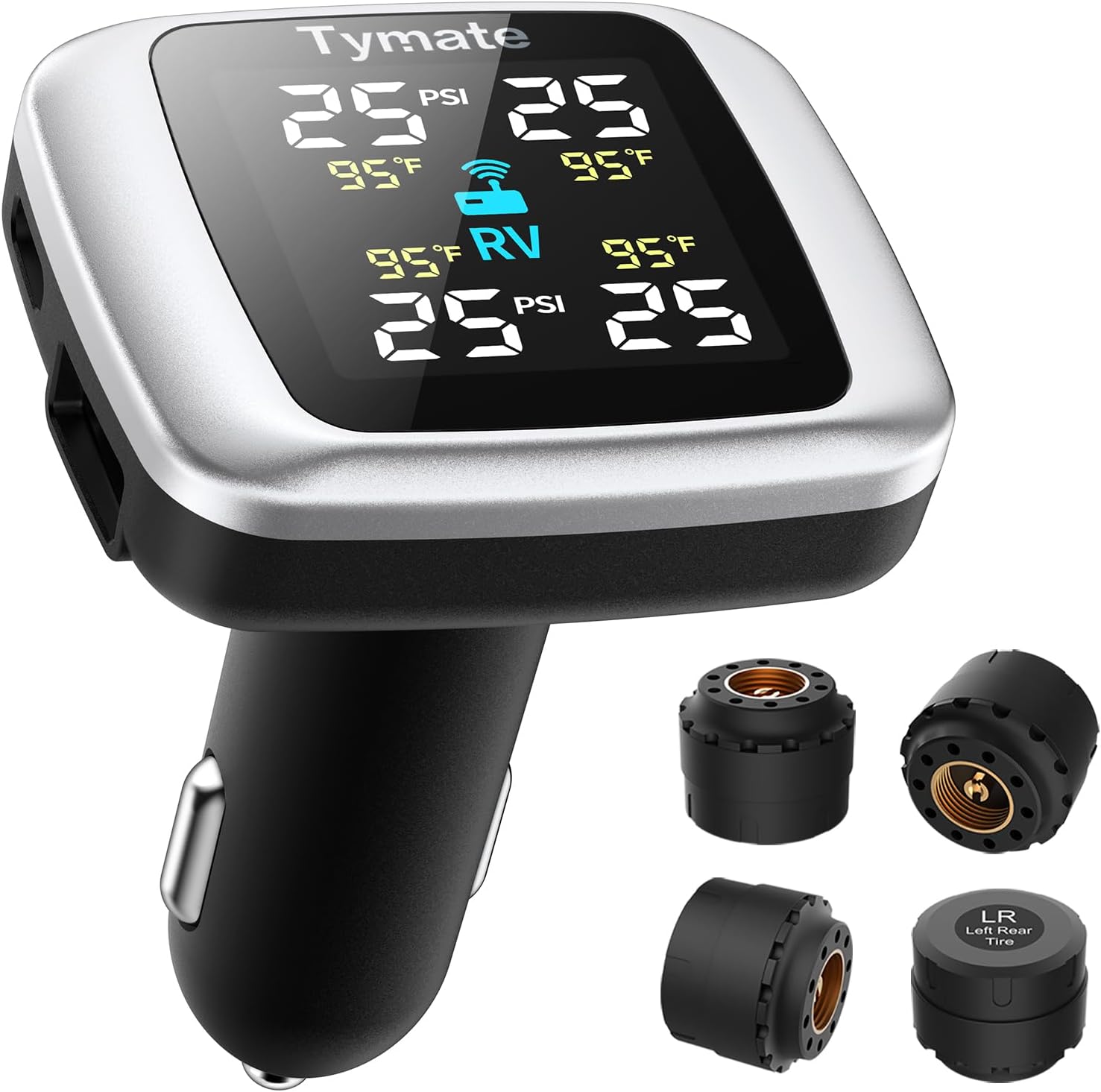
Tymate TM7 is a wireless tire pressure monitoring system that delivers real-time pressure and temperature readings for safer driving. It includes four external sensors, a bright color LCD display with adjustable backlight, and six alarm modes for high/low pressure, fast leakage, high temperature, and sensor signal or battery issues. The system covers a wide 0–144 PSI range and plugs into your vehicle’s cigarette lighter socket for quick DIY setup.

Add style while helping protect your tire valve stems with handmade crystal rhinestone caps and a durable plastic insert. These caps resist corrosion and help keep out rain, snow, and muddy water, extending tire life. Textured non-slip design makes them easy to grip for quick install and removal when checking tire pressure.
Michelin Defender T+H
The Michelin Defender T+H is an all-season touring tire worth comparing if your priority is everyday commuting, ride comfort, and long-term road use. Michelin still lists the model for passenger-car applications, although available sizes may vary by vehicle.
Best for: Drivers who want a conventional touring all-season tire for commuting and highway use.
Why you may like it: It focuses on the type of balanced year-round driving that fits many Florida passenger cars rather than adding specialized winter capability that may go unused.
Before choosing it: Confirm that your required tire size, load index, and speed rating are available, and compare its wet-road specifications with other tires available for your exact vehicle.
Goodyear Assurance WeatherReady
The Goodyear Assurance WeatherReady remains part of Goodyear’s Assurance family and is designed for changing weather conditions. It can make sense for drivers who want more seasonal versatility while still prioritizing wet-road traction.
Best for: Drivers who encounter Florida rain but may also travel into colder regions during the year.
Why you may like it: Its weather-focused positioning makes it a logical model to compare when wet traction and broader seasonal capability both matter.
Before choosing it: Check current availability in your exact tire size. Do not pay extra for additional winter capability unless it matches your actual travel needs.
Frequently Asked Questions
What Are the Best Tires for Florida Heat and Rain?
The best choice for most Florida drivers is a properly fitted all-season touring tire with dependable wet-pavement traction, effective water evacuation, appropriate load and speed ratings, and good temperature resistance. Compare the tires available in your exact size instead of assuming one model is best for every vehicle.
What Tire Brand Is Best for Rain?
There is no single tire brand that is automatically best for every vehicle in rain. Compare individual tire models and sizes using wet-braking information, UTQG traction grades where applicable, tread design, tread depth, vehicle fitment, and reputable independent testing. A strong model from one brand can perform differently from another model made by the same company.
What Type of Tires Should I Get in Florida?
For typical Florida commuting and highway driving, all-season tires are usually the most practical starting point. If you regularly travel into areas with snow or severe winter weather, an all-weather tire may provide useful additional capability. In either case, correct vehicle fitment and wet-road performance should remain priorities.
Which Tires Are Best for Hot Weather?
Do not choose a tire for hot weather based only on a “performance” label. Look for a tire that matches your vehicle’s required size, load capacity, and speed rating, and compare its temperature resistance, wet traction, tread design, and intended use. Correct cold inflation pressure is especially important during long drives in high temperatures.
Should I Lower Tire Pressure During Florida Summer?
No. Set tire pressure according to the vehicle manufacturer’s cold tire pressure specification. Pressure normally increases as tires warm while driving. Check and adjust pressure when the tires are cold rather than bleeding air from a properly inflated hot tire simply because its PSI has risen.
How Often Should I Rotate Tires in Florida?
Follow the interval and pattern recommended in your vehicle owner’s manual or by the tire manufacturer. Many vehicles use rotation intervals somewhere around 5,000 to 8,000 miles, but staggered tire sizes, directional tires, and other setups can require different procedures.
Conclusion
Florida tires have to cope with more than heat. In Apopka, sudden heavy rain, standing water, hot pavement, highway speeds, and year-round driving all influence the buying decision.
Start with the correct tire size, load rating, speed rating, and cold inflation pressure for your vehicle. Then compare wet traction, water-evacuating tread design, temperature resistance, durability, comfort, and tread condition.
For most local drivers, a quality all-season tire remains the practical choice. The Michelin Defender T+H and Goodyear Assurance WeatherReady are two original models from this guide that remain worth checking in suitable sizes, but neither should be purchased without confirming vehicle fitment and current availability first.
Whichever tire you choose, regular pressure checks, tread inspections, alignment attention, and manufacturer-recommended rotation will do more for long-term safety and performance than relying on a brand name alone.