Disclosure: As an Amazon Associate, we earn from qualifying purchases. If you click a link on this page and make a purchase, we may receive a small commission at no extra cost to you.
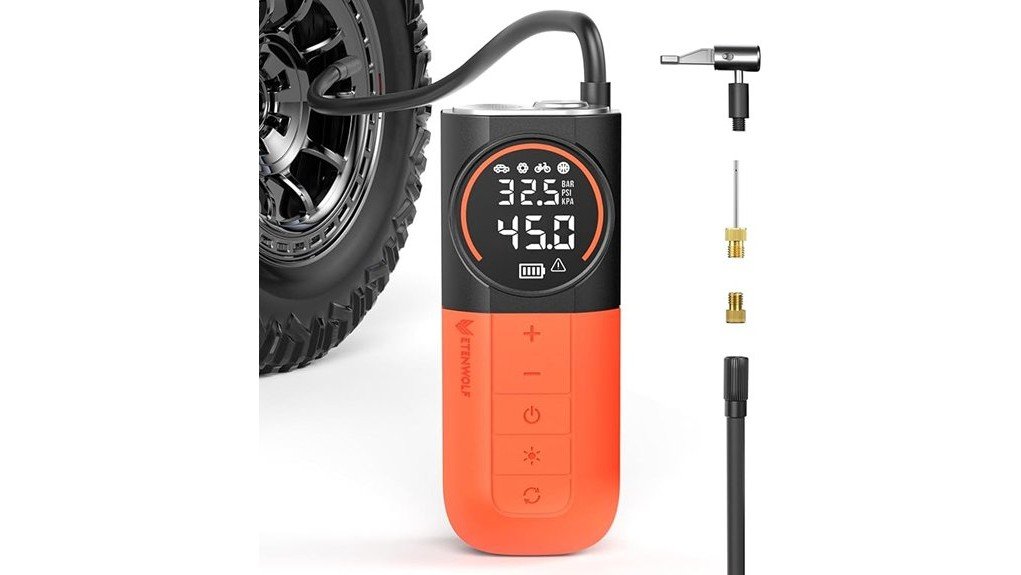
A low tire warning often appears when you have little time and no nearby air pump. The ETENWOLF S1 Tire Inflator gives you a cordless way to check pressure and handle routine top-offs from your trunk, garage, or bike bag. Its strongest points are the compact body, 20 L/min airflow, 5200mAh battery, and automatic shutoff. Its main tradeoffs are noticeable compressor noise and less speed than larger heavy-duty inflators when a big tire needs a substantial refill.
Quick Verdict
Rating: 8.5/10, recommended with caveats
Best For: Drivers, motorcyclists, and cyclists who want a compact cordless pump for pressure checks and routine top-offs.
Bottom Line: The S1 combines useful inflation speed, simple controls, and strong portability in a small package. Choose a larger ETENWOLF model if you regularly fill oversized tires or need faster recovery from very low pressure.
ETENWOLF S1 Tire Inflator Specs and Performance
| Specification | Detail | Why It Matters |
|---|---|---|
| Brand | ETENWOLF | Matches the S1 product line and accessories. |
| Model | S1 | Compact cordless model for everyday inflation. |
| Maximum pressure | 160 PSI | Covers common car, motorcycle, bicycle, and ball pressure ranges. |
| Airflow | 20 L/min | Well suited to top-offs, though larger pumps fill big tires faster. |
| Battery | 5200mAh rechargeable battery | Lets you inflate without a 12-volt cable or wall outlet. |
| Charging input | 5V/2A through USB-C | Works with a compatible USB power source. |
| Approximate size | 6.7 × 2.1 × 2.6 inches | Small enough for a trunk organizer, backpack, or bike pouch. |
| Approximate weight | 1.35 pounds | Easy to carry without taking much storage space. |
| Noise level | 85 dB at 1 meter | Audible during use, so it is not a quiet indoor appliance. |
| Controls | Four preset modes, custom pressure, pressure memory, auto-stop | Reduces manual monitoring and repeated setup. |
| Pressure units | PSI, kPa, bar, and kg/cm² | Lets you match the unit shown in a tire guide or equipment label. |
| Included items | Air chuck, ball needle, Presta adapter, charging cable, manual, storage bag | Supports several common inflation jobs out of the box. |
| Extra features | Digital display, integrated hose storage, accessory slots, LED work light, active cooling | Improves organization, nighttime visibility, and repeated-use convenience. |
Key Takeaways
- The ETENWOLF S1 is best viewed as a portable pressure-maintenance tool, not a replacement for a high-output garage compressor.
- Its 160 PSI ceiling covers many common inflation jobs, while 20 L/min airflow makes routine car-tire top-offs reasonably quick.
- The 5200mAh battery, auto-stop function, pressure memory, and preset modes make it practical for travel and regular checks.
- The manufacturer rates it at 85 dB from 1 meter, so expect noticeable compressor noise.
- Its compact size and included Presta adapter, ball needle, storage bag, and work light add useful day-to-day versatility.
What Is the ETENWOLF S1 Tire Inflator?
The ETENWOLF S1 is a rechargeable mini air compressor made for passenger-car tires, SUVs, motorcycles, bicycles, and sports balls. You set a target pressure on the digital display, start the pump, and let the auto-stop system shut it down when the target is reached.
Its main advantage is convenience. You do not need to route a power cord through your vehicle or depend on a working gas-station compressor. The built-in hose storage and accessory slots also keep small parts from moving around inside the storage bag.
The S1 makes the most sense when your normal job is adding a few PSI, checking several vehicles, or carrying a compact emergency tool. A larger dual-cylinder or higher-airflow inflator will still be a better choice for frequent truck-tire work, large off-road tires, or repeated fills from near-flat pressure.
Who Should Buy the ETENWOLF S1 Tire Inflator?
Best For
- Commuters who want a cordless pump for seasonal pressure loss and TPMS warnings.
- Motorcyclists and cyclists who value a compact unit with a Presta adapter.
- Families and road-trip drivers who want auto-stop, a work light, and organized accessories.
Skip If
- You regularly inflate large truck, RV, or oversized off-road tires from very low pressure.
- You need a quiet pump for indoor or late-night use near other people.
- You want a repair tool for punctures, sidewall damage, or a tire that will not hold air.
Before You Buy: A 160 PSI maximum rating does not mean the S1 fills every tire equally fast. Airflow and tire volume matter, so large truck and off-road tires can take much longer than a routine passenger-car top-off.
[Products Worth Considering]

AstroAI AIRUN H is a compact 12V tire inflator designed for fast, convenient inflation with an easy-to-read digital pressure gauge. Set your target pressure with programmable controls and let the auto shut-off turn off the pump when the preset is reached. It also includes a backlit screen and LED flashlight for nighttime use, with a ToughUltra durability design for longer service life.

The Airmoto portable tire inflator quickly and accurately fills car, truck, SUV, motorcycle, and bicycle tires up to 120 PSI with auto shut-off when your target pressure is reached. Its large LCD, multi-unit pressure display, and digital gauge make it easy to dial in settings and verify readings, while the built-in LED flashlight helps in low light. The included polyurethane hard carrying case and storage mesh pocket keep the inflator and accessories protected and organized.

This portable cordless air pump inflates car, motorcycle, bike, and ball tires with up to 150 PSI and real-time LCD pressure monitoring. It features a built-in rechargeable battery, four unit modes (PSI/KPA/BAR/KG/CM²), and an auto shut-off to prevent over-inflation. An LED light and USB-C/USB-A ports make it useful for nighttime emergencies and charging devices.
Inflation Speed and Pressure Range
The S1 delivers up to 20 L/min airflow and a maximum pressure of 160 PSI. ETENWOLF states that it can raise a 195/65R15 car tire from 30 to 35 PSI in about 60 seconds. That test represents a small top-off, which is the kind of job this compact pump handles best.
The 160 PSI ceiling gives you room for higher-pressure bicycle tires and other supported equipment, but the target must always come from the vehicle placard, owner’s manual, tire guide, or equipment label. Do not use the maximum number molded into a car tire’s sidewall as the normal inflation target.
For a tire that is only a few PSI low, the S1 should feel quick and convenient. For a nearly flat tire, expect a longer run, more heat around the hose connection, and greater battery use.
Battery Life, Charging, and Noise Level
The 5200mAh battery removes the need for a running vehicle or nearby outlet during inflation. ETENWOLF advertises up to 17 passenger-car tire top-offs from 30 to 35 PSI on one charge. Treat that number as a controlled top-off estimate because tire size, starting pressure, temperature, and target pressure will change the result.
The S1 charges through USB-C with a listed 5V/2A input. The manufacturer does not provide one universal recharge time on the product page, so your charger, cable, battery level, and temperature can affect how long a full charge takes. Charge it before a long trip instead of assuming a partly charged unit will cover several tires.
Noise reaches a listed 85 dB at 1 meter. That is manageable outdoors for a short inflation session, but it is loud enough to disturb people nearby. The built-in light offers steady, strobe, and SOS-style modes for low-light roadside work.
Controls, Auto-Stop, and Ease of Use
Setup is simple: connect the hose, select a mode, choose the pressure unit, adjust the target, and start inflation. The display shows pressure while the pump runs, and the auto-stop function ends the cycle at your preset target.
You can switch among PSI, kPa, bar, and kg/cm². Four preset modes cover common car, bicycle, and ball tasks, while the custom setting lets you enter a different target within the supported range. Pressure memory saves time when you repeat the same job.
Auto-stop reduces guesswork, but it does not replace a correct pressure target or a final check. A loose chuck can leak air and affect the reading, so secure the connection before starting.
Portability, Hose Storage, and Included Accessories
At about 6.7 × 2.1 × 2.6 inches and 1.35 pounds, the S1 is easier to store than a traditional 12-volt compressor. It can fit in a trunk organizer, backpack, motorcycle case, or larger bike pouch without taking much space.
The air hose stores on the back of the unit. Separate slots hold the ball needle and Presta adapter, which helps prevent lost parts. The package also includes an air chuck, USB-C charging cable, manual, and storage bag.
The accessory set covers Schrader-style vehicle valves, Presta bicycle valves, and sports balls. It is less suitable for high-volume inflatables such as large air mattresses or rafts because those jobs need high air volume rather than high pressure.
How It Performs in Real Use
For Daily Car-Tire Top-Offs
The S1 is strongest when a passenger-car tire needs a small adjustment. Set the cold pressure shown on the driver-door placard, connect the chuck, and let auto-stop handle the final target. The claimed 30-to-35 PSI test suggests good speed for this routine use.
For Road Trips and Emergency Backup
The cordless design and work light make the S1 useful at rest stops, parking lots, and dark driveways. It can help restore pressure after a slow leak, but it cannot repair the cause. A tire that loses pressure again needs inspection and proper repair.
For Motorcycles and Bicycles
The small body is easier to carry than a garage compressor, and the included Presta adapter helps with compatible bike valves. High-pressure bike tires use less air volume than car tires, so the 160 PSI range is useful. Confirm the tire or rim pressure limit before inflating.
For Sports Balls
The included ball needle and preset control remove much of the trial and error from inflating basketballs, soccer balls, and similar gear. Use the pressure printed on the ball, and stop if the needle or valve does not seat smoothly.
How to Use It Correctly
- Check the correct target pressure. For a vehicle, use the driver-door placard or owner’s manual and check the tire when cold when possible.
- Charge the inflator. A full battery is especially useful before a trip or when several tires need attention.
- Choose the correct connector. Use the air chuck for vehicle valves, the Presta adapter for compatible bike valves, or the ball needle for sports gear.
- Attach the hose firmly. A loose connection can leak and produce a slow or inaccurate fill.
- Select the mode and unit. Confirm PSI, kPa, bar, or kg/cm² before setting the target.
- Start inflation and stay nearby. Auto-stop adds convenience, but you should still monitor the pump and item.
- Disconnect carefully. The hose fitting can become warm after use. Recheck pressure if accuracy is critical.
Pro Tip: Store the S1 charged, but check its battery before every long trip. Test it at home once so you know the buttons, connector, and pressure units before a roadside situation.
Compatibility and Safety
Use the S1 only on items that fit its adapters and pressure range. Never exceed the pressure recommended by the vehicle or equipment maker. For car tires, the correct cold pressure is normally listed on the driver-door label or in the owner’s manual.
Do not leave the pump unattended. Keep it away from children, water, direct heat, and damaged electrical cables. Stop using it if the case, hose, connector, display, or battery appears damaged.
An inflator can add air, but it cannot repair a puncture, damaged valve, sidewall bubble, exposed cord, or wheel problem. Do not rely on added pressure to make a damaged tire safe. Have recurring pressure loss inspected by a qualified tire professional.
Pros and Cons
Pros
- 20 L/min airflow is useful for routine passenger-car top-offs.
- 5200mAh battery supports cordless use away from outlets.
- Auto-stop, preset modes, and pressure memory simplify repeat jobs.
- Compact 1.35-pound body is easy to store and carry.
- Presta adapter, ball needle, work light, and storage bag add versatility.
Cons
- 85 dB operation is noticeable and may be disruptive nearby.
- Large tires and near-flat tires take longer than small top-offs.
- It adds air only and does not solve punctures or recurring leaks.
Is It Worth the Price?
The S1 sits in the practical middle ground between tiny emergency pumps and larger heavy-duty cordless compressors. Its value comes from combining a usable 20 L/min output, 5200mAh battery, auto-stop, digital controls, integrated storage, and several adapters in one compact unit.
It is a smart buy for everyday use when you mostly correct low pressure, maintain bicycles or motorcycles, and want an organized tool for road trips. It is not the best fit if your main goal is repeatedly inflating large truck or RV tires, where higher airflow and a larger battery matter more than pocketable size.
[Products Worth Considering]

This tire inflator extension hose helps your air chuck quickly connect and disconnect from the tire nozzle with minimal leakage, supporting more accurate tire pressure. It uses a high-pressure resistant inflatable tube and durable brass chuck adapter for long-lasting performance. The quick-connect 90-degree thumb press chuck converts to a locking style and is easy to operate for car, motorcycle, and bicycle inflations.

The TOOLITIN floor bike pump delivers high pressure performance with an easy-to-read gauge so you can dial in the right tire pressure for safer rides. It is compatible with both Presta and Schrader valves and features a stable, durable design for efficient pumping. Suitable for road, MTB, and hybrid tires as well as inflating sports balls and other inflatables, it also includes ball and bladder needles and convenient accessory storage.

The Powools cordless tire inflator delivers fast inflation up to 150 PSI with a built-in digital display and auto shut-off to prevent over-inflation. Powered by rechargeable batteries, it works without an external power source and includes multiple preset modes plus a custom mode for different inflatables. A set of interchangeable nozzles and a multi-mode LED light (lighting, alarm, SOS) make it useful for cars, motorcycles, bicycles, and sports balls.
How It Compares to Alternatives
Within ETENWOLF’s lineup, the Zephyr S3 steps up to 35 L/min airflow and a 7800mAh battery, while the Zephyr S5 increases output to 40 L/min with a 15,600mAh battery. Those larger models make more sense for frequent SUV, pickup, or higher-volume tire work.
The S1 remains the better choice when compact storage and lower carrying weight matter most. You give up some airflow and battery capacity, but you gain a much smaller unit that is easier to keep in a daily driver, motorcycle case, or cycling bag.
[Products Worth Considering]
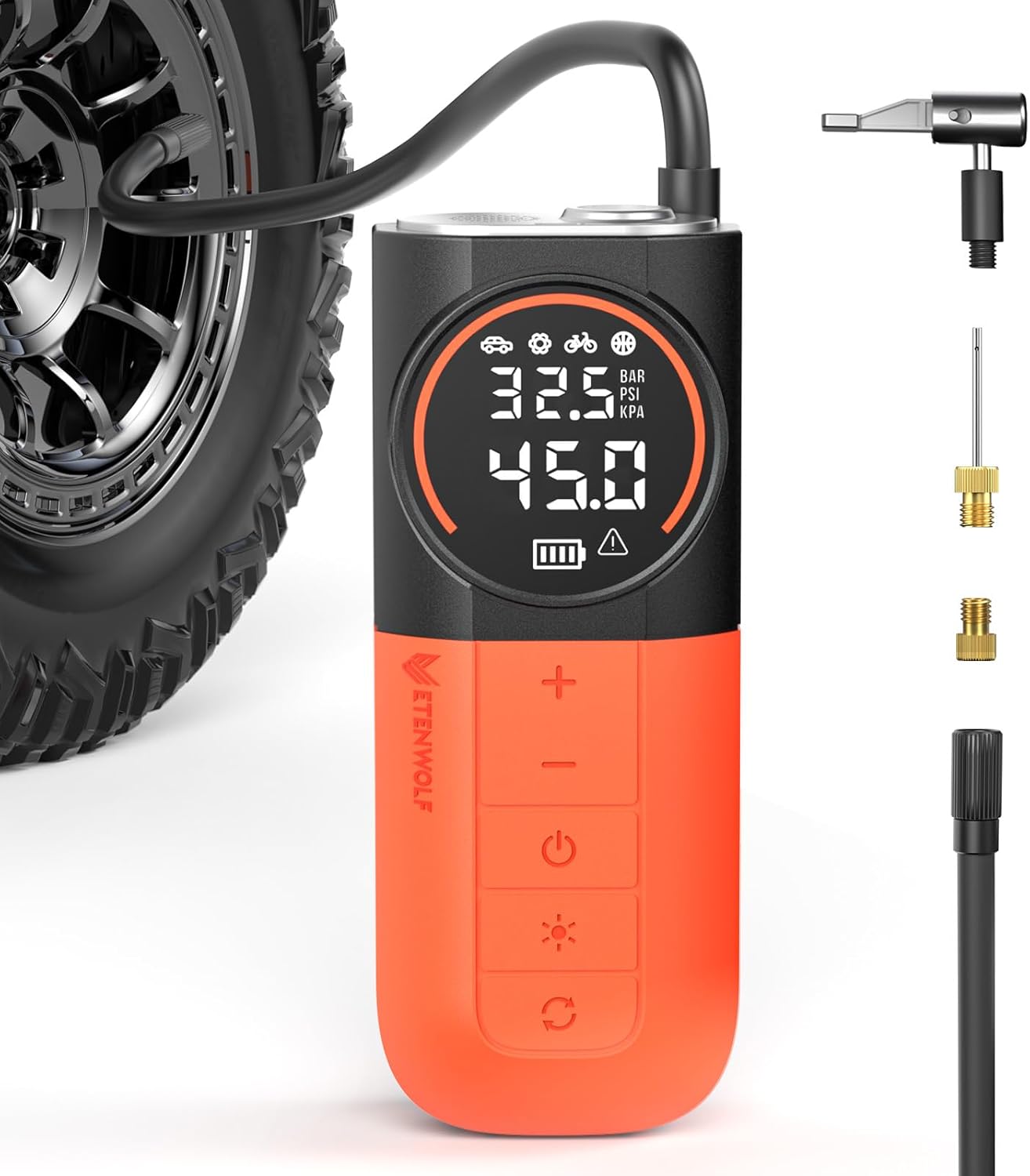
The ETENWOLF S1 cordless tire inflator delivers ultra-fast inflation with up to 160 PSI and a 20 L/min airflow for quicker tire top-offs. Its 5200mAh battery and cooling system support inflating many tires and sports balls on a single charge, while the digital pressure gauge and multi-unit display help you reach the right pressure accurately. With preset modes, pressure memory, an auto-stop feature, and an LED flashlight, it’s built for easy roadside and everyday use.
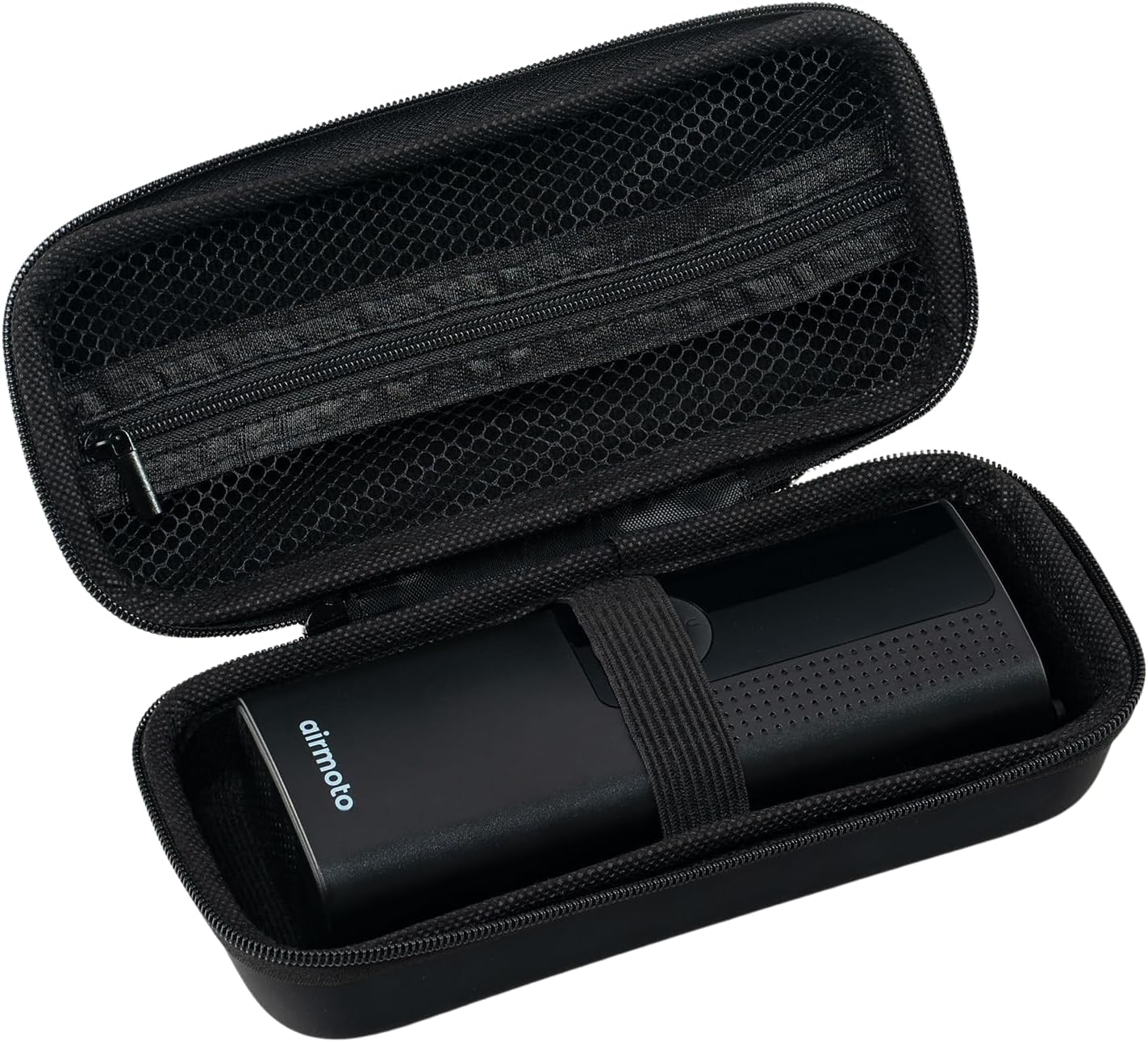
Protect and organize your Airmoto tire inflator with a purpose-designed carrying case made for a precise fit. The durable polyurethane shell and soft interior help guard against cuts, tears, and road wear, while a mesh pocket stores connectors and accessories. This travel box measures 7.5*3.5*2.8 inches and can work with most handheld portable air compressor models; this listing includes the case only.
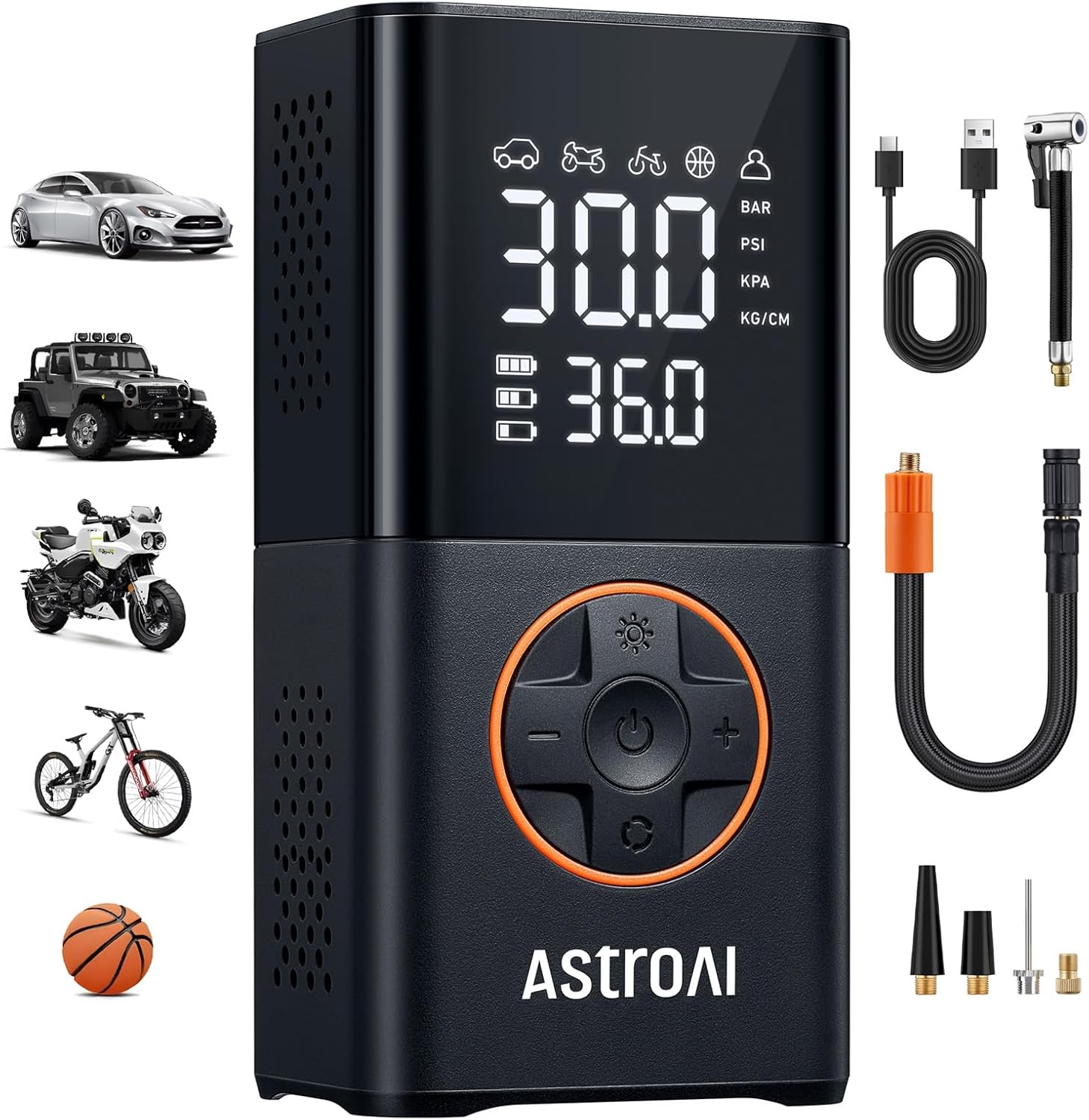
AstroAI L7 provides fast, cordless inflation for cars, motorcycles, bicycles, e-bikes, and sports balls with preset smart modes and a custom pressure option. Its compact design, dual digital display, and built-in auto-off make it easy to use for quick road-trip top-offs and emergency roadside inflation. The unit includes LED lighting and an SOS strobe flashlight for visibility, plus USB-C/USB ports for charging devices.
Frequently Asked Questions
Does the ETENWOLF S1 work with Schrader and Presta valves?
Yes. The standard air chuck handles common vehicle-style Schrader valves, and the package includes a Presta adapter for compatible bicycle valves. Attach the connector firmly to reduce leaks.
Can the S1 inflate car and SUV tires?
ETENWOLF lists the S1 for cars and SUVs, and its 20 L/min output suits normal pressure maintenance. Large tires or major pressure loss will take longer than the manufacturer’s one-minute passenger-car top-off example.
Does 160 PSI make it a heavy-duty truck inflator?
No. Maximum pressure tells you the upper pressure limit, not how quickly the pump moves a large volume of air. For regular pickup, RV, or oversized off-road tire work, compare a higher-airflow model.
Can one charge really top off 17 car tires?
ETENWOLF bases that claim on raising car tires from 30 to 35 PSI. Your total will vary with tire size, starting pressure, target pressure, temperature, and battery condition.
How loud is the ETENWOLF S1?
The listed noise level is 85 dB at 1 meter. That is typical of a noticeable compact compressor, so use it outdoors and avoid running it near sleeping people when possible.
What tire pressure should you set?
Use the vehicle manufacturer’s recommended cold pressure from the driver-door placard or owner’s manual. Do not use the maximum pressure printed on the tire sidewall as your normal target.
Can the S1 fix a punctured or damaged tire?
No. It can restore air pressure temporarily, but it cannot seal a puncture or make sidewall damage safe. Recurring pressure loss needs inspection and proper repair.
What comes with the ETENWOLF S1?
The listed package includes the S1 inflator, air chuck, ball needle, Presta adapter, USB-C charging cable, user manual, and storage bag. Check the current seller listing before ordering because package details can change.
The Bottom Line
The ETENWOLF S1 is a strong fit for drivers, riders, and cyclists who want a compact cordless inflator for regular pressure checks and modest top-offs. Its main strengths are portability, straightforward controls, auto-stop, and a useful accessory set, while its 85 dB noise and 20 L/min airflow make it less appealing for quiet environments or frequent large-tire work.
Choose it for convenient everyday maintenance and travel backup. Skip it for damaged tires, repeated heavy-duty fills, or jobs that need high-volume airflow.
Ready to Buy?
Check the latest price, color, package contents, and seller details before you decide.