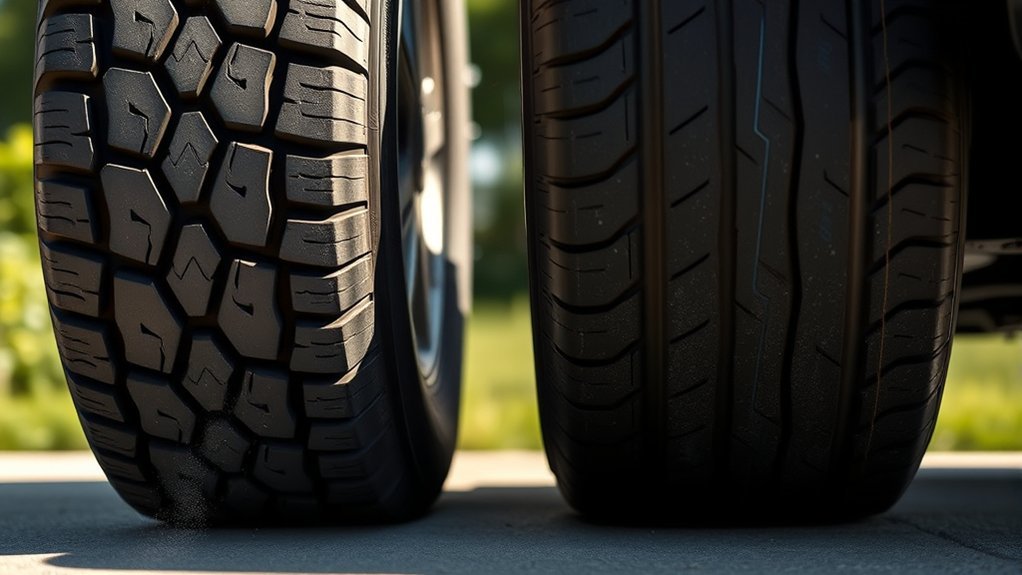
Choosing between C-rated and E-rated tires for your SUV comes down to more than a stronger-looking letter on the sidewall. You need the right size, load index, load range, speed rating, wheel fitment, and cold inflation pressure for your exact vehicle. C-rated LT tires often suit daily driving and lighter adventure use, while E-rated LT tires make more sense for heavier loads, towing, and rougher terrain.
Quick Answer
Choose C-rated tires if your SUV mainly handles commuting, highway trips, gravel roads, and light trail use. Choose E-rated tires if you tow often, carry heavy gear, or drive rocky trails. In every case, match the exact tire size, load index, speed rating, and cold pressure guidance on your vehicle placard first.
Key Takeaways
- C-rated usually means a lighter, more comfortable LT tire choice for daily driving, lighter cargo, and moderate off-road use.
- E-rated usually means a stronger LT tire choice for frequent towing, heavier payloads, and harsher terrain.
- Load range is not the same as load index. The tire’s load index and maximum load rating matter more than the C or E letter alone.
- Do not downgrade below your SUV’s required tire size, load rating, or speed rating just to improve comfort or save money.
- Use the cold tire pressure on your Tire and Loading Information Label or owner’s manual for normal driving, not the sidewall maximum.
What C-Rated and E-Rated Tires Mean
C-rated and E-rated tires usually refer to LT tire load range. Load range is a strength category used on light-truck tires. In common LT tire language, Load Range C is often described as 6-ply rated, while Load Range E is often described as 10-ply rated.
That does not mean the tire literally has 6 or 10 body plies. Modern tires use stronger materials than older bias-ply tires, so “ply rating” is mainly a strength comparison. The more useful question is whether the tire’s load index, maximum load, size, speed rating, rim fitment, and pressure requirements match your SUV.
Note: Do not confuse Load Range C with a UTQG traction grade “C” or a European tire label grade. This article compares LT tire load ranges, not wet-traction grades, temperature grades, or fuel-efficiency labels.
How to Read the Sidewall Before You Compare
Before comparing C-rated and E-rated tires, read the full sidewall service description. A tire marked LT275/70R17 121/118Q Load Range E, for example, tells you more than the E letter alone. The size, load index, dual-load rating if shown, speed rating, and maximum pressure all affect whether the tire fits your SUV safely.
Check these details before you buy:
- LT or P-metric marking: LT tires are built for light-truck service, while P-metric or metric passenger tires follow different load and pressure rules.
- Load index: This number tells you the tire’s rated carrying capacity at its specified pressure.
- Load range: This letter gives the tire’s strength category, such as C, D, E, or F.
- Speed rating: This must suit the vehicle and the way you drive.
- Maximum load and pressure: These sidewall numbers are limits, not a replacement for your vehicle’s recommended cold pressure.
- DOT date code: This helps you check tire age, especially when buying old stock or used tires.
Key Benefits of C-Rated Tires for SUVs
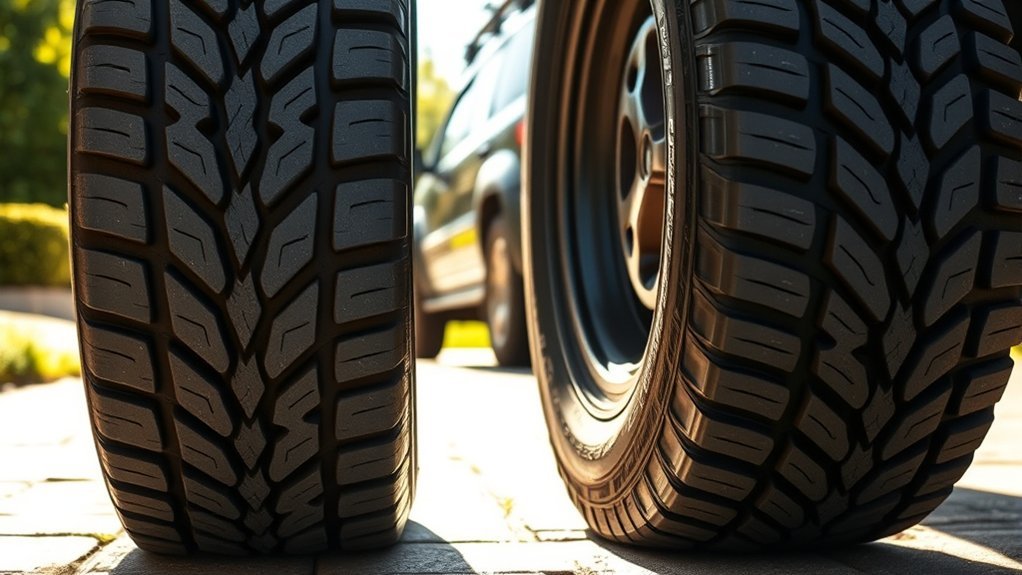
C-rated tires often suit SUV drivers who want a practical balance between strength, comfort, and weight. They can be a good match for daily commuting, family trips, gravel roads, forest roads, beach access, and light trail use when the tire size and load index meet your vehicle’s requirements.
The biggest advantage is ride quality. A C-rated LT tire usually has a more compliant sidewall than a comparable E-rated LT tire. That can help the SUV feel less stiff over potholes, broken pavement, washboard roads, and small trail impacts.
C-rated tires may also weigh less than E-rated versions in the same model and size. Less unsprung weight can help steering feel more responsive. It may also reduce the harsh, heavy feel some drivers notice after installing heavier LT tires.
Cost can be another benefit. C-rated options often cost less than E-rated tires in similar sizes. They can make sense if you do not tow often, do not run near your SUV’s payload limit, and do not need the extra casing strength of an E-rated tire.
When E-Rated Tires Make Sense for Heavy Loads
E-rated tires are built for heavier-duty LT use. They are often the better choice when your SUV regularly tows, carries a roof rack and camping gear, hauls tools, runs armored bumpers, or travels on sharp rock, rutted roads, and remote terrain.
The main benefit is strength under load. Compared with a similar C-rated tire, an E-rated tire commonly has a stiffer casing and higher load capability. That extra structure can help the tire feel more stable when the vehicle is loaded, especially at highway speed or while towing.
E-rated tires can also offer better resistance to sidewall flex. That matters when the rear of the SUV squats under cargo, when trailer tongue weight pushes down on the hitch, or when a loaded vehicle corners on uneven roads.
Warning: Never choose a tire by the C or E letter alone. Confirm the exact tire size, load index, speed rating, maximum load, rim compatibility, and recommended cold pressure. A tire that looks stronger on paper can still be wrong for your SUV if the size or load rating does not match the placard.
The trade-off is comfort. E-rated tires often ride firmer, especially on an unloaded SUV. They may also weigh more, cost more, and need careful pressure adjustment to avoid a harsh ride or uneven wear.
Load Range vs. Load Index: Why the Number Matters
Load range gives you a broad strength category. Load index gives you the load number tied to a specific tire. That is why two E-rated tires can have different maximum loads if they are different sizes or carry different load indexes.
When comparing two tires, look at the sidewall and product specs for:
- Tire size: It must match the size approved for your SUV or an approved alternate size.
- Load index: This number tells you how much weight the tire can carry at the specified pressure.
- Load range: This gives the LT strength category, such as C or E.
- Speed rating: This must suit your vehicle and driving use.
- Maximum cold pressure: This is not the same as your normal driving pressure.
The NHTSA TireWise guide recommends checking the owner’s manual or Tire and Loading Information Label on the driver’s side door area for the correct tire size and cold inflation pressure. That label should be your starting point before you compare C-rated and E-rated options.
NHTSA says the correct tire pressure is the vehicle manufacturer’s recommended cold pressure, not the maximum pressure molded on the tire sidewall.
C-Rated vs. E-Rated Tires Comparison Table
| Feature | C-Rated Tires | E-Rated Tires |
|---|---|---|
| Typical LT ply rating language | Often described as 6-ply rated | Often described as 10-ply rated |
| Ride comfort | Usually softer and more compliant | Usually firmer, especially when unloaded |
| Best use | Daily driving, light trails, moderate cargo | Towing, heavy payloads, rough terrain |
| Weight | Often lighter in the same model and size | Often heavier in the same model and size |
| Towing stability | Fine for lighter loads when properly rated | Better for frequent heavy towing |
| Pressure sensitivity | Can ride well at the vehicle’s recommended pressure when properly matched | May feel harsh if inflated incorrectly for an unloaded SUV |
| Main downside | Less heavy-load margin than E-rated options | More stiffness, weight, and cost |
[Products Worth Considering]

The SAFELIFE dial tire tread depth gauge measures tread depth in 1/32 inch increments with clear, easy-to-read 2-inch dial face. Color zones using a traffic light system help you quickly judge whether tread is low, marginal, or ample for safer driving. Built with a durable zinc cast body and a metal detect probe for precise, comfortable use across cars, motorcycles, trucks, and buses.
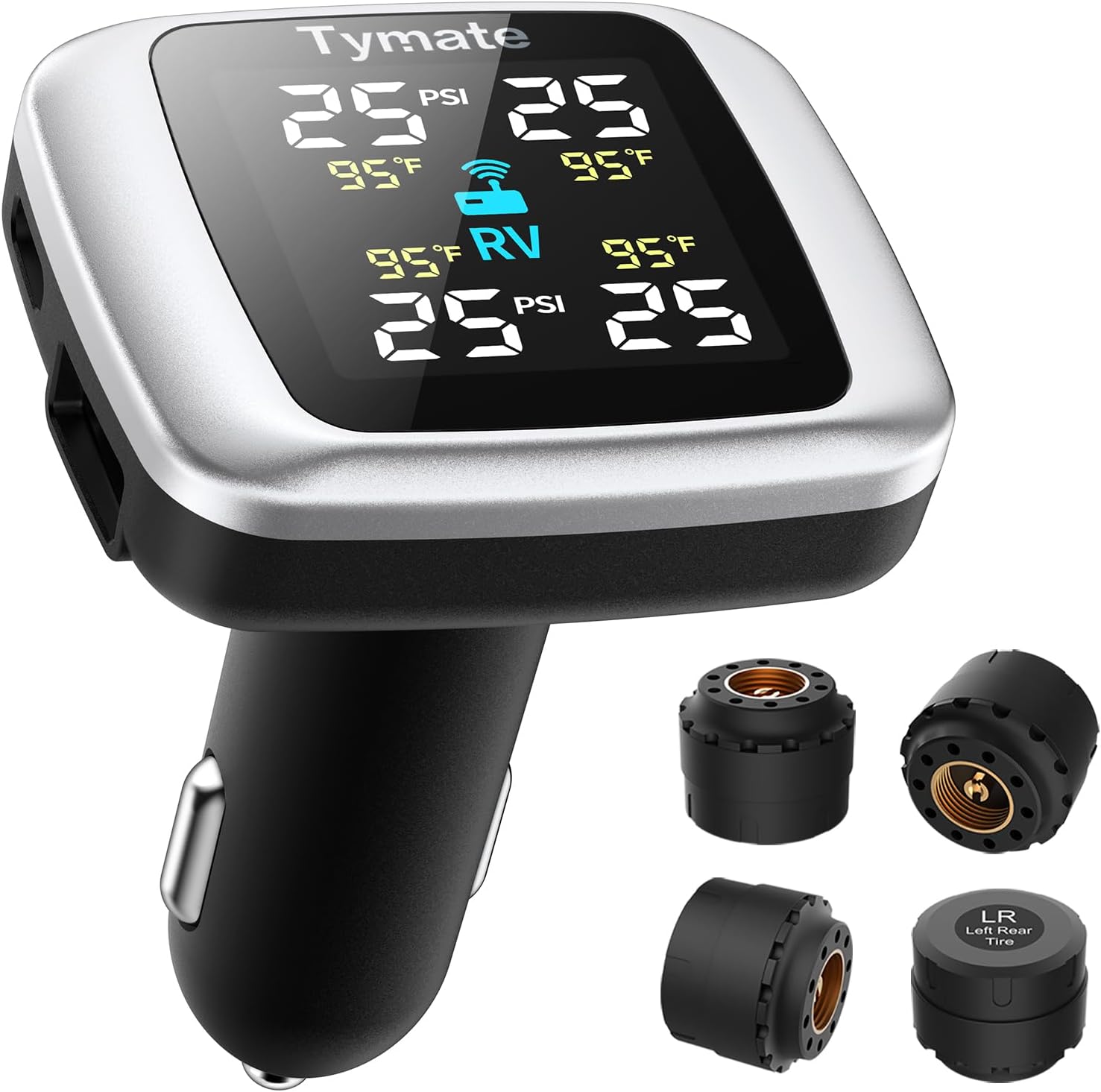
Tymate TM7 is a wireless tire pressure monitoring system that delivers real-time pressure and temperature readings for safer driving. It includes four external sensors, a bright color LCD display with adjustable backlight, and six alarm modes for high/low pressure, fast leakage, high temperature, and sensor signal or battery issues. The system covers a wide 0–144 PSI range and plugs into your vehicle’s cigarette lighter socket for quick DIY setup.

Measure tire tread depth quickly and accurately with this LUMITECO dial gauge that reads in 1/32" increments up to 14/32". The color-coded green/yellow/red zones make it easy to judge tire wear and know when replacement is needed. A rugged, compact design with a protective pouch helps keep the gauge ready for use on cars, trucks, motorcycles, and more.
Cost Analysis: C-Rated vs. E-Rated Tires
C-rated tires often cost less upfront. If your SUV is lightly loaded most of the time, that lower price can be the more economical choice. You avoid paying for extra casing strength you do not use every day.
E-rated tires usually cost more, but they can be worth it if your SUV often works near its payload or towing limits. In that situation, the stronger casing can support better loaded stability, as long as the tire’s load index, size, and pressure guidance still match the vehicle.
The cheapest tire is not always the best value. A tire that is too light for your load is a safety risk. A tire that is much heavier and stiffer than you need can make the SUV ride worse and may affect steering, braking feel, and suspension wear over time. The best value is the tire that matches your real load, terrain, and driving habits.
Pro Tip: Compare tires in the exact same size and model when possible. A C-rated all-terrain and an E-rated mud-terrain are not a clean comparison because tread design, compound, weight, and noise can change the result.
[Products Worth Considering]

Vigorder rubber cement glue delivers superior adhesion and cures quickly within about 30 seconds for seamless rubber bonding. Once cured, it helps provide a strong, durable, waterproof seal that holds up to vehicle weight, pressure, and heat. Suitable for cars, motorcycles, trucks, bicycles, and off-road tires, it’s designed for emergency patch and maintenance repairs.

Protect tire valves from water, dust, and sand to help prevent leaks and support safe driving. These universal stem caps install quickly by hand and feature durable aluminum alloy construction with an inner sealing ring for better air retention. Compatible with cars, SUVs, trucks, motorcycles, and bicycles for everyday convenience.

The Big Rig Defense Tire Thumper is a truck tire pressure checker that lets you quickly check multiple tires by giving them a firm whack. Listen for a reassuring thump and feel the stick bounce when a tire is fully inflated, helping you get back on the road safely. It features a comfortable, glove-friendly handle and a secure wrist strap for confident use on busy routes.
Comparing Ride Comfort: C-Rated vs. E-Rated Tires
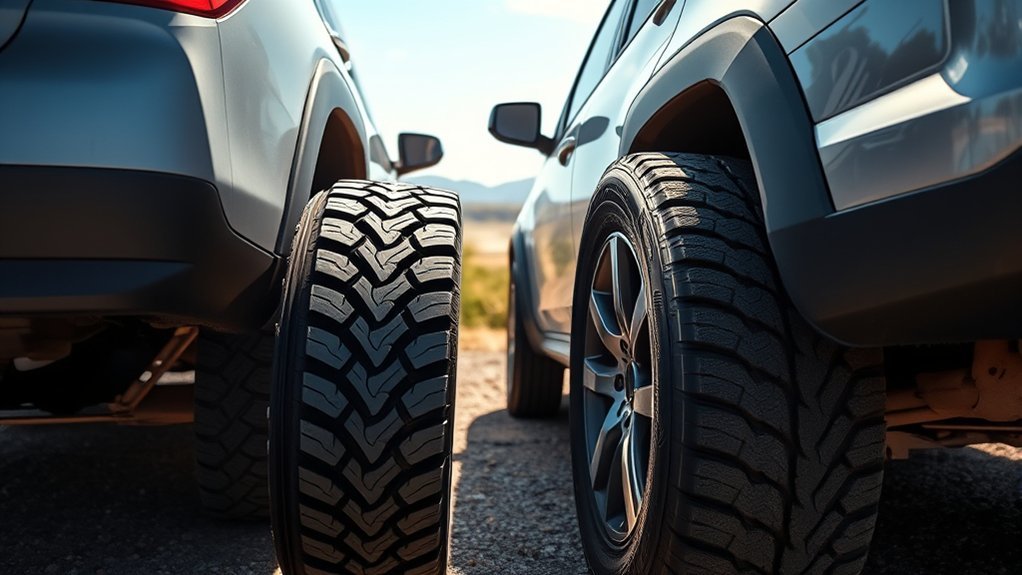
Ride comfort is one of the biggest differences between C-rated and E-rated tires. C-rated tires usually feel more flexible over small impacts. That can make them easier to live with on a daily-driven SUV.
E-rated tires usually feel firmer because their casing is built for heavier loads. That stiffness can feel stable when the SUV is loaded, but harsh when it is empty. You may notice more vibration on broken pavement, more impact noise, or a heavier steering feel.
Pressure plays a major role. The number molded on the tire sidewall is the maximum cold pressure for the tire, not the everyday pressure for your vehicle. The NHTSA says the correct cold pressure is listed on the vehicle’s Tire and Loading Information Label or in the owner’s manual.
Check pressure when the tires are cold, ideally before driving or after the SUV has been parked for at least three hours. Recheck after changing tire type, adding heavy cargo, towing, or driving off-road.
P-Metric vs. LT Tires: Why the Swap Matters
Many SUVs leave the factory with P-metric or metric passenger tires rather than LT tires. Switching from a passenger tire to an LT C-rated or E-rated tire can change ride quality, tire weight, steering feel, braking feel, and inflation requirements.
This matters because a passenger-tire load rating does not translate directly when used on a multipurpose passenger vehicle, truck, bus, or trailer. Under 49 CFR § 571.110, passenger-car tires installed on those vehicles are derated for load-limit calculations. That is one reason you should not treat P-metric, metric, and LT tire ratings as interchangeable.
If your SUV came with passenger tires, ask a qualified tire shop to confirm the approved replacement size, load index, wheel width, and pressure plan before moving to LT tires. This is especially important after adding a lift, aftermarket wheels, heavier bumpers, a roof tent, drawer systems, or towing equipment.
How to Decide Between C-Rated and E-Rated Tires for Your SUV
Start with your SUV, not the tire ad. The right choice depends on how much weight each tire must carry and how the vehicle is used.
- Check the tire placard: Confirm the original tire size, load rating, and cold inflation pressure on the driver-side Tire and Loading Information Label.
- Check your owner’s manual: Look for approved tire sizes, towing notes, pressure guidance, and load limits.
- Look at real payload: Add passengers, cargo, tools, camping gear, roof-rack weight, bumper weight, spare tire weight, and trailer tongue weight.
- Compare load index: Do not choose a tire with a lower load index than your vehicle needs.
- Check axle and payload limits: Tire strength does not increase the SUV’s GVWR, GAWR, payload rating, or tow rating.
- Match your terrain: Gravel and mild trails may not require E-rated tires, but sharp rocks, heavy vehicles, and remote travel may justify them.
- Think about daily comfort: If the SUV is unloaded most of the time, an E-rated tire may feel unnecessarily stiff.
- Ask a tire professional: This matters if you changed wheel size, added suspension parts, tow often, or drive a modified SUV.
Choose C-rated tires if your SUV is mostly a commuter, family hauler, weekend camper, or light-trail vehicle and the tire still meets the required load rating. Choose E-rated tires if you regularly tow, carry heavy equipment, run a fully loaded overland setup, or drive rough terrain where sidewall strength and loaded stability matter more than comfort.
[Products Worth Considering]

Keep your tires properly inflated with this analog VONDIOR tire pressure gauge, designed for fast, easy readings without batteries. The swiveling, two-axis hose and large glow dial help you measure at any tire angle with instant visibility. Built with a protective rubber shield, it supports durable, low-maintenance use for cars and trucks.

Upgrade your vehicle’s style with sparkling rhinestone valve caps that add a unique luxury look. Built with an O-ring seal and rotating thread design, they help prevent air leakage while keeping dust and road grime out. The universal fit works on standard American tire valves for cars, trucks, SUVs, and motorcycles, and installs easily without special tools.
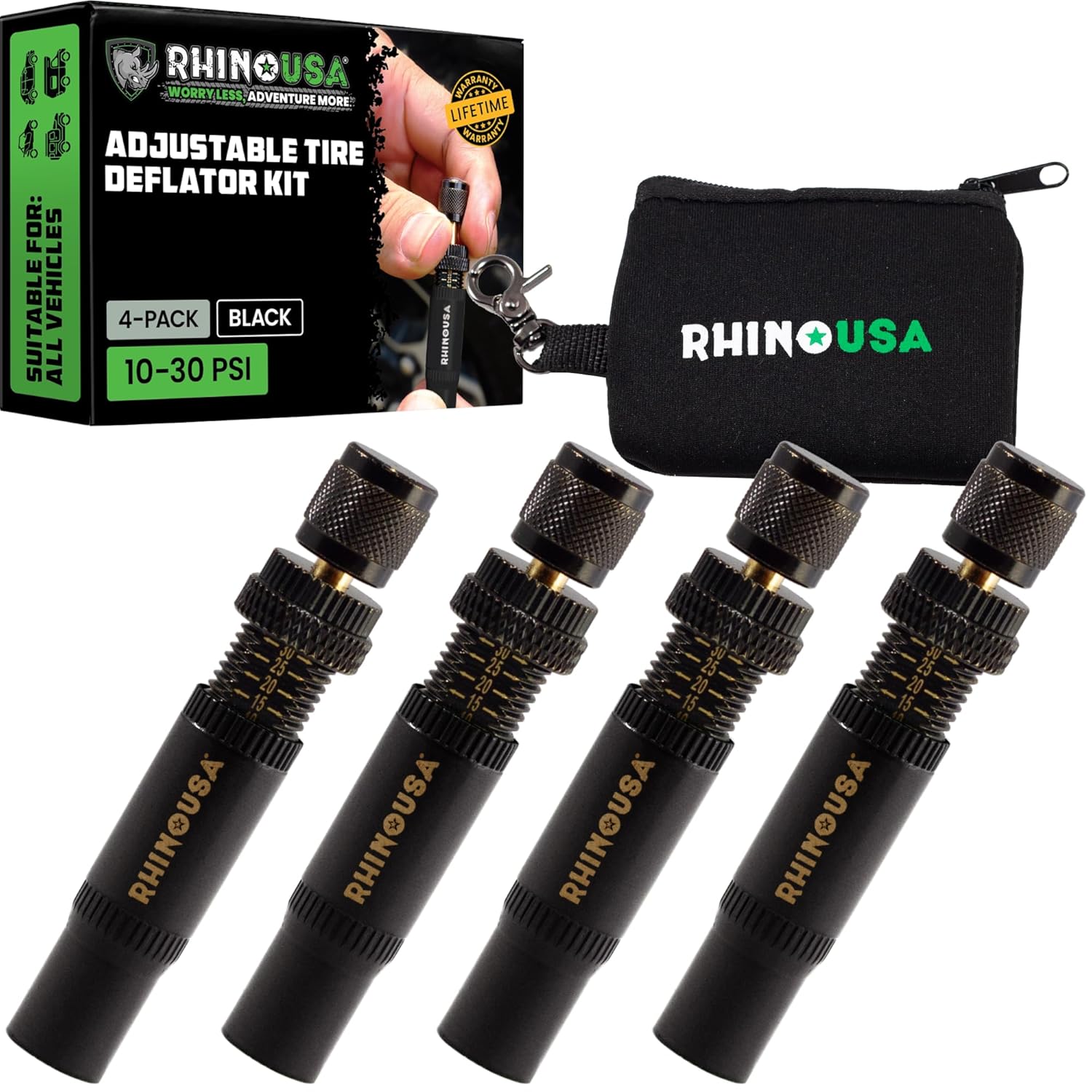
Use the Rhino USA adjustable tire deflators to air down all four tires at once by screwing one deflator onto each valve stem, letting you step away while the tires reach your preset pressure. Each deflator independently adjusts across a 10–30 PSI range with laser-etched indicators for quick setup and verification, making it ideal for beach, sand, and rocky off-road trails.
When You Should Not Upgrade to E-Rated Tires
E-rated tires are not automatically better for every SUV. You may want to avoid them if your SUV is light, rarely carries cargo, never tows, and spends most of its time on pavement. In that case, the extra stiffness and weight can make the vehicle feel harsher without giving you a meaningful benefit.
You should also be careful if your SUV came with P-metric or metric passenger tires. Switching to LT tires can change ride quality, pressure needs, weight, and handling. A tire shop can help confirm whether the switch is suitable for your exact vehicle and wheel setup.
Common Mistakes to Avoid
- Buying by ply rating only: Always check the load index, maximum load, and required pressure.
- Using sidewall pressure as daily pressure: The sidewall number is not the same as the vehicle’s recommended cold pressure.
- Assuming E-rated means puncture-proof: E-rated tires can still be damaged by nails, rocks, impacts, low pressure, or overloading.
- Ignoring tire weight: Heavier tires can affect braking feel, acceleration, steering, and ride comfort.
- Assuming tire upgrades increase payload: Stronger tires do not raise the SUV’s official payload, axle, or towing limits.
- Downgrading below vehicle requirements: Never choose a lower load rating just to save money or improve comfort.
Frequently Asked Questions
Can I use C-rated tires for off-road driving?
Yes, you can use C-rated tires for light to moderate off-road driving if the size and load index match your SUV. They often work well on gravel, dirt roads, sand access, and mild trails. For sharp rocks, heavy gear, and remote overlanding, E-rated tires may offer better sidewall support.
Are Load Range C tires always 6-ply tires?
No. Load Range C is often described as 6-ply rated, but that does not mean the tire has six physical body plies. Modern tire construction uses stronger materials, so ply rating works more like a strength category than a literal ply count.
How do tire ratings affect fuel efficiency?
Load range alone does not determine fuel efficiency. Tire weight, tread pattern, compound, inflation pressure, alignment, driving speed, and vehicle load all matter. A heavier E-rated all-terrain tire may reduce efficiency compared with a lighter C-rated tire, but the exact result depends on the tire model and vehicle setup.
What is the lifespan difference between C-rated and E-rated tires?
E-rated tires can be more durable under heavy loads, but they do not always last longer. Tread compound, alignment, rotation, pressure, road surface, driving style, and load have a major effect on tire life. A properly matched C-rated tire can outlast an E-rated tire if it suits the vehicle better and receives better maintenance.
Are C-rated tires more prone to punctures?
Not always. C-rated tires may have less casing strength than E-rated versions in the same model, but puncture resistance also depends on tread depth, sidewall design, rubber compound, pressure, speed, and terrain. E-rated tires can still puncture, especially when overloaded or underinflated.
How does tire pressure impact performance for each rating?
Tire pressure affects heat buildup, handling, tread wear, comfort, and fuel use. Underinflation can cause heat and tire damage. Overinflation can make the ride harsh and may cause uneven wear. Use the cold pressure listed on your vehicle placard or owner’s manual, then ask a tire professional if you changed tire type or load.
Do I need E-rated tires if I tow only a few times per year?
Not always. If your current tires meet the required load index and your loaded SUV stays within its payload, axle, and towing limits, C-rated tires may be enough. If towing adds heavy tongue weight or the SUV feels unstable, E-rated tires may be worth considering after checking your manual and a qualified tire shop.
Can I replace P-metric SUV tires with LT C-rated or E-rated tires?
Sometimes, but do not assume it is a direct swap. LT tires can require different pressures and may change ride comfort, handling, and weight. Confirm the approved size, load index, wheel compatibility, and pressure requirements before switching from P-metric or metric tires to LT tires.
Will E-rated tires increase my SUV’s payload or tow rating?
No. E-rated tires may provide more tire load capacity when properly sized and inflated, but they do not raise the SUV’s official payload rating, axle rating, GVWR, or tow rating. Those limits come from the vehicle manufacturer and still apply.
Conclusion
C-rated and E-rated tires both have a place on SUVs. C-rated tires are usually the better fit for comfort-focused daily driving, light trails, and moderate loads. E-rated tires are usually the better fit for towing, heavy payloads, armored or loaded SUVs, and rough terrain.
The safest choice is not the strongest-looking letter. It is the tire that matches your SUV’s required size, load index, speed rating, pressure guidance, wheel setup, and real-world use. Start with your tire placard and owner’s manual, then compare tires by exact size and load rating before you buy.
Sources
- NHTSA TireWise – tire size, tire pressure, tread, tire maintenance, fuel consumption, and tire safety guidance.
- 49 CFR § 571.110 via Cornell Legal Information Institute – federal tire selection, tire load limits, placard, and rim requirements for vehicles under 10,000 pounds GVWR.
- 49 CFR § 575.104 – Uniform Tire Quality Grading standards and tire consumer information.
- The Tire and Rim Association – U.S. tire, rim, valve, and allied-parts standards organization.