Disclosure: As an Amazon Associate, we earn from qualifying purchases. If you click a link on this page and make a purchase, we may receive a small commission at no extra cost to you.
Choosing a highway tire for a work truck or cargo van means balancing load strength, road comfort, wet traction, and long-term cost. The Armstrong Tru-Trac HT in LT225/75R16 is built around that practical mix, with Load Range E construction, a 10-ply rating, and a 65,000-mile treadlife warranty. Its highway-focused tread should suit drivers who spend most of their time on pavement, but it is not a substitute for a dedicated winter tire or an aggressive all-terrain model. This review explains the verified specifications, real-world strengths, limitations, fit concerns, and warranty details so you can decide whether it matches your vehicle and workload.
Quick Verdict
Rating: 8.4/10, recommended with caveats
Best For: Light trucks, work vans, and highway-driven vehicles that require LT225/75R16 Load Range E tires
Bottom Line: The Tru-Trac HT offers useful load capacity, deep 14/32-inch tread, and a strong mileage warranty at a value-focused position. Its main tradeoffs are a firmer Load Range E ride and limited suitability for severe winter conditions or regular off-road use.
Key Specifications
| Specification | Detail |
|---|---|
| Brand | Armstrong |
| Model | Tru-Trac HT |
| Product type | All-season highway-terrain radial tire |
| Size | LT225/75R16 |
| Load and speed index | 115/112T |
| Load range | E, 10-ply rating |
| Maximum load | 2,680 lb single / 2,470 lb dual |
| Maximum inflation pressure | 80 PSI |
| Overall diameter | 29.3 inches |
| Section width | 8.7 inches on the specified measuring rim |
| Measuring rim width | 6 inches |
| Original tread depth | 14/32 inch, about 11.1 mm |
| Sidewall | Black sidewall |
| Treadlife warranty | 65,000 miles, subject to eligibility and warranty terms |
| Package note | Tire only. Confirm the seller’s quantity before ordering; wheel and installation are not included unless stated. |
What Is the Armstrong Tru-Trac HT?
The Armstrong Tru-Trac HT is an all-season highway-terrain tire made for drivers who use trucks, vans, SUVs, or compatible commercial vehicles mainly on paved roads. The reviewed LT225/75R16 version uses Load Range E construction and a 10-ply rating, giving it the load support expected from many work-oriented fitments.
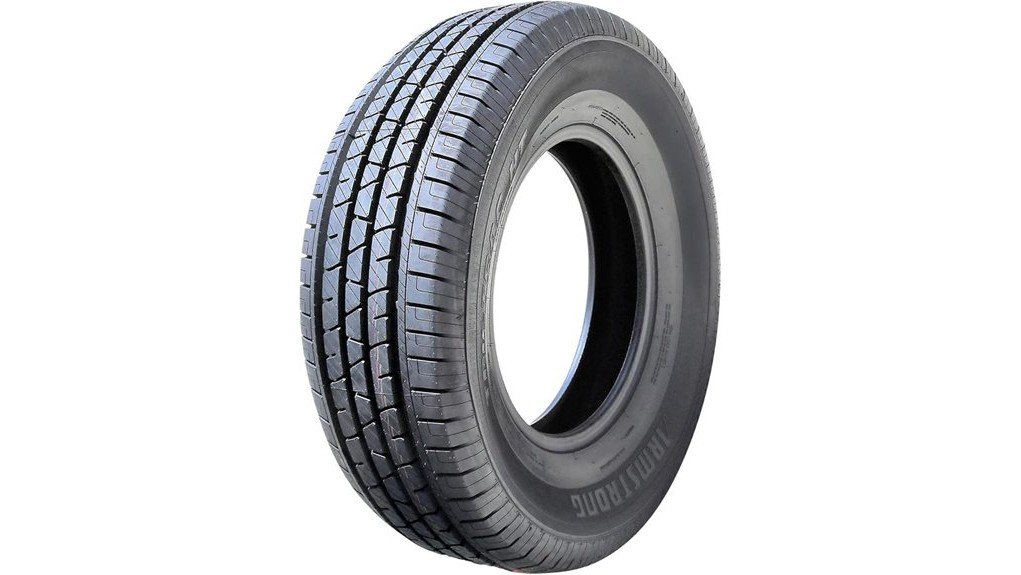
Its main selling point is balance rather than specialization. The tread uses open lateral channels for wet-road drainage, shoulder bars intended to reduce road noise, and a curved profile that Armstrong says improves rigidity and reduces rolling resistance. You can review the model’s full size chart on the official Armstrong Tru-Trac HT page.
Key Takeaways
- The LT225/75R16 version is a Load Range E tire with a 115/112T service description and 10-ply rating.
- Armstrong lists 2,680 pounds of maximum single-tire load and 2,470 pounds in dual service at up to 80 PSI.
- Continuous open lateral channels are designed to move water and slush away from the footprint.
- A shoulder noise-blocking bar and optimized curved tread profile target quieter highway use and more even road contact.
- The 65,000-mile treadlife warranty is unusually long for this type of LT highway tire, but coverage still depends on maintenance, eligibility, and claim terms.
Who Should Buy It?
Best For
- Work trucks and cargo vans that call for LT225/75R16 Load Range E tires
- Drivers who spend most of their miles on highways, city streets, and paved job sites
- Owners who value a long treadlife warranty and practical load capacity
Skip If
- You need a dedicated winter tire for frequent snow, ice, or mountain travel
- You regularly drive deep mud, loose rock, or rough off-road trails
- Your vehicle placard specifies a different size, load range, or speed rating
Before You Buy: LT225/75R16 fitment alone does not prove compatibility. Match the full size, load range, service description, wheel width, clearance, and vehicle-maker requirements. The 80 PSI figure is the tire’s maximum, not an instruction to inflate every vehicle to 80 PSI.
Fit and Compatibility
The LT225/75R16 size measures about 29.3 inches in overall diameter and 8.7 inches in section width on the manufacturer’s 6-inch measuring rim. It can appear on full-size pickups, older heavy-duty trucks, cargo vans, motorhome applications, and some commercial vehicles, but original fitment varies widely by model year and configuration.
Check the tire information placard on the driver’s door jamb, the owner’s manual, and the existing tire sidewall before ordering. A tire may physically mount yet still be wrong for the axle load, dual-wheel spacing, wheel width, or electronic systems. Four-wheel-drive and all-wheel-drive vehicles may also require closely matched tire circumference across all positions.
Tread Design and Wet-Road Performance
The Tru-Trac HT uses continuous open lateral channels to create paths for water and slush to leave the contact area. That design should help the tire maintain road contact in rain, although no tire can prevent hydroplaning when speed, water depth, tread wear, or pressure is unfavorable.
The 14/32-inch original tread depth gives the LT size a useful amount of rubber for highway service. Wet traction will decline as the tread wears, so you should not rely only on the legal 2/32-inch minimum. Replace tires sooner when rain performance becomes weak, damage appears, or a qualified tire professional recommends replacement.
Dry Highway Stability and Steering
Armstrong describes the tread profile as optimized and curved to increase rigidity. In practical terms, that design aims to keep the footprint stable during straight-line cruising, lane changes, braking, and towing. The T speed symbol also gives the tire a highway-oriented service rating, but you must still follow your vehicle’s speed and load limits.
This is not a performance tire, so steering response should be judged against other highway-terrain LT tires rather than sporty passenger tires. Its heavier casing and higher load capability favor stability and durability over light steering feel.
Ride Comfort and Highway Noise
A shoulder-mounted noise-blocking bar is intended to limit the sound produced as air moves through the tread. That feature can help reduce the steady hum common with more open truck-tire patterns, especially on smooth pavement.
Load Range E construction can still feel firm on an unloaded or lighter vehicle. Correct pressure matters: overinflation can increase harshness and center wear, while underinflation can create heat, poor handling, and shoulder wear. Use the vehicle manufacturer’s cold-pressure recommendation or a load-and-inflation plan approved for your application, not the sidewall maximum as a default.
Load Capacity and Towing
For this size, Armstrong lists a maximum load of 2,680 pounds in single-wheel service and 2,470 pounds in dual-wheel service at the stated maximum pressure. Those numbers apply per tire under the correct service conditions. They do not increase your truck’s gross vehicle weight rating, gross axle weight rating, hitch rating, or trailer rating.
The Tru-Trac HT can be suitable for towing when it matches the vehicle specification and the loaded axle weights remain within every relevant limit. Before a long trip, check cold pressure, inspect the tread and sidewalls, account for cargo and tongue weight, and verify that dual tires have enough spacing and similar inflation.
How It Performs in Real Use
For Daily Highway Driving
The symmetric highway pattern, noise-control shoulder feature, and 29.3-inch diameter make this tire a sensible match for regular commuting and long paved routes. You should expect a more truck-like feel than a standard passenger tire, but the design is clearly aimed at comfort rather than off-road aggression.
For Work Trucks and Cargo Vans
The Load Range E rating and 14/32-inch starting tread depth are useful for vehicles that carry tools, equipment, or delivery loads. The main benefit is reserve load capability, provided the vehicle, wheels, and tire pressure are all set up correctly. Frequent inspections are important when the vehicle operates near its rated load.
For Towing and Road Trips
The stable highway-focused footprint and LT casing fit the needs of many towing setups. Still, towing creates heat and places extra demand on tires. A tire-pressure check before departure, a walk-around at fuel stops, and conservative speed are more important than the mileage warranty.
For Light Snow and Cold Weather
The Tru-Trac HT is marketed as an all-season tire, so it can handle occasional light snow better than a summer tire. It should not be treated as a dedicated winter solution for frequent ice, packed snow, or severe mountain conditions. In those settings, use a winter tire or an all-weather tire with verified severe-snow capability.
Installation, Pressure, and Maintenance Tips
- Have the tire mounted and balanced by a qualified tire shop using a compatible 16-inch wheel.
- Set cold inflation pressure from the vehicle placard or an approved load table. Do not assume 80 PSI is correct for every load.
- Rotate tires at the vehicle or tire maker’s recommended interval, and keep records for warranty support.
- Check pressure at least monthly and before towing, long trips, or heavy-load use.
- Inspect for cuts, bulges, exposed cords, uneven wear, punctures, and aging. Replace damaged tires promptly.
- Maintain wheel alignment and suspension components to reduce irregular wear.
Pro Tip: Record the installation mileage, tire pressure, rotation dates, and alignment work. Good records help you spot wear early and may be needed if you make a treadlife warranty claim.
Compatibility and Safety Before Installation
Never use the tire’s maximum load to justify exceeding the limits printed on your vehicle. The axle, wheel, valve stem, suspension, and tire must all be rated for the actual load. Dual-wheel applications also use the lower 112 load index and 2,470-pound dual-service rating shown by Armstrong.
Ask the installer to inspect the wheel, confirm valve-stem suitability for the pressure, balance the assembly, and torque the lug nuts to the vehicle specification. After installation, recheck pressure when the tires are cold and make sure the tire-pressure monitoring system works correctly.
Warranty and Long-Term Value
Armstrong lists a 65,000-mile treadlife warranty for the Tru-Trac HT, along with its Tuff 360 warranty program. The manufacturer currently describes a six-year limited warranty, 30-day money-back coverage, road-hazard repair or replacement support, and roadside assistance. Limits, registration rules, proof-of-purchase requirements, exclusions, and reimbursement caps can apply, so read the official Armstrong warranty terms before relying on any benefit.
A mileage warranty is not a promise that every driver will reach 65,000 miles. Load, pressure, alignment, rotation, road surface, heat, driving style, and mechanical condition all affect tread life. The warranty is most valuable to owners who maintain the tires carefully and keep service records.
Pros and Cons
Pros
- 2,680-pound single-tire maximum load for the reviewed LT size
- Load Range E construction with a 10-ply rating
- Deep 14/32-inch original tread depth
- Water-channeling grooves and a highway-focused tread profile
- 65,000-mile treadlife warranty with additional Tuff 360 benefits
Cons
- Load Range E construction may ride firmly on a lightly loaded vehicle
- Not designed for severe winter conditions or demanding off-road use
- Seller quantity and warranty eligibility must be checked before purchase
Is It Worth the Price?
The Armstrong Tru-Trac HT is best viewed as a value-focused highway LT tire. Its combination of Load Range E capability, 14/32-inch tread depth, and a 65,000-mile warranty gives you a strong specification set without moving directly into premium-brand pricing.
It offers the most value when your vehicle needs this exact size and you mainly drive on pavement. It is less compelling if winter certification, off-road grip, or the softest unloaded ride matters more than load support and warranty length.
How It Compares to Alternatives
Compare the Tru-Trac HT with the Firestone Transforce HT3 if you want another commercial highway option, the General Grabber HTS if highway comfort and broad fitment matter, or the Michelin Agilis CrossClimate 2 if you are willing to pay more for a premium all-weather light-truck tire. Exact sizes, load indexes, warranties, and prices vary, so compare the full service description rather than the model name alone.
The Armstrong makes the most sense when you want a straightforward Load Range E highway tire with a long stated treadlife warranty and do not need specialized winter or off-road performance.
Frequently Asked Questions
How long can the Armstrong Tru-Trac HT tread last?
Armstrong lists a 65,000-mile treadlife warranty, but actual life depends on pressure, load, rotation, alignment, heat, and driving style. Treat the warranty as conditional coverage, not a guaranteed service life.
Is this tire suitable for regular trailer towing?
It can be suitable when LT225/75R16 115/112T Load Range E matches your vehicle and the loaded axle weights stay within every vehicle, wheel, and tire limit. Check cold pressure and condition before each towing trip.
Should I inflate the tire to 80 PSI?
Not automatically. Eighty PSI is the listed maximum pressure for this size. Use the vehicle placard or an approved load-and-inflation recommendation for your actual axle load.
What vehicles commonly use LT225/75R16 tires?
The size appears on some pickups, cargo vans, commercial vehicles, and motorhome applications. Compatibility depends on model year, trim, axle setup, wheel size, clearance, and the complete load and speed specification.
How does it perform in light snow?
Its all-season tread can handle occasional light snow, but it is not a dedicated winter tire. Choose a winter or verified severe-snow tire for frequent ice, packed snow, steep grades, or mountain travel.
Does Armstrong include road-hazard or roadside coverage?
Armstrong’s Tuff 360 program currently describes road-hazard support, flat-repair reimbursement, and roadside assistance, along with a six-year limited warranty. Coverage limits, dates, registration, and exclusions apply, so confirm the current official terms.
Does the Amazon listing include one tire or a full set?
The linked product is presented as a tire-only listing. Seller quantity can change, so read the title, package quantity, and cart details before ordering. A wheel and installation are not included unless the seller states otherwise.
Can I mix this tire with a different model?
Mixing tread patterns, wear levels, load ranges, or sizes can change handling. Follow the vehicle maker’s guidance and ask a qualified tire professional whether you should replace two tires on an axle or all four.
The Bottom Line
The Armstrong Tru-Trac HT is a strong value choice for drivers who need an LT225/75R16 Load Range E tire for mostly paved use, practical hauling, and occasional towing. Its best features are the verified 2,680-pound single-service load capacity, 14/32-inch tread depth, highway noise-control design, and 65,000-mile warranty. Skip it if severe winter grip, aggressive off-road traction, or a softer passenger-tire ride is your priority.
Ready to Buy?
Confirm the tire size, load rating, seller quantity, and latest product details before you decide.