
Honda Accord Tire Temperature Ratings: A, B, and C Explained
Understanding tire temperature ratings for your Honda Accord helps you choose tires that can resist heat buildup during normal driving, long highway trips, hot weather, and heavier loads. The key is knowing what the A, B, and C grades really mean: they are part of the U.S. Uniform Tire Quality Grading system, not a replacement for the tire size, load index, speed rating, or cold tire pressure listed for your Accord.
Quick Answer
For a Honda Accord, a tire temperature grade of A is the best heat-resistance grade, B is above the minimum standard, and C is the minimum federal level for passenger tires. Choose the correct Accord tire size, load rating, speed rating, and cold PSI first; then prefer an A-rated temperature grade when available.
Key Takeaways
- Temperature A is the highest UTQG heat-resistance grade; it is usually the safest choice for long highway driving, hot climates, or frequent higher-speed travel.
- Temperature B is still above the minimum requirement and can be acceptable for daily driving when the tire also matches your Accord’s size, load range, speed rating, and pressure needs.
- Temperature C meets the minimum federal level, but it gives less heat-resistance margin than A or B.
- Do not confuse the temperature grade with the speed rating, traction grade, or the maximum PSI printed on the tire sidewall.
- Always check the Honda Accord driver’s doorjamb label for the correct original tire size, load limit, and cold tire pressure.
At a Glance
| Time Required | 5–10 minutes to inspect the sidewall and driver’s doorjamb label |
| Difficulty | Easy |
| Tools Needed | Flashlight, tire pressure gauge, and your Accord owner’s manual or doorjamb label |
| Cost | $0 if you already have a gauge; about $5–$20 for a basic tire pressure gauge |
What Are Tire Temperature Ratings for Your Honda Accord?
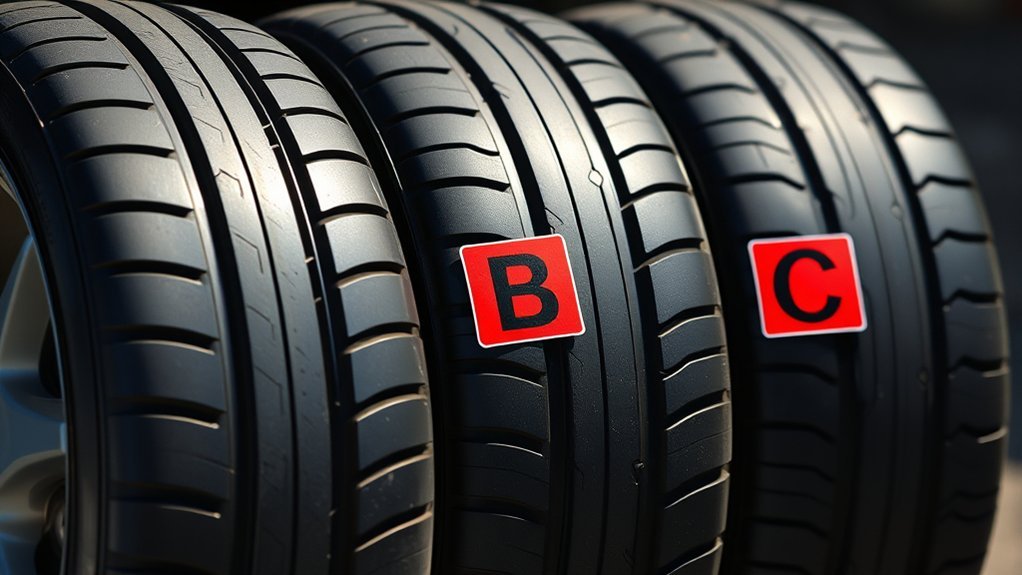
Tire temperature ratings are part of the UTQG system, which compares passenger-car tires in three areas: treadwear, traction, and temperature resistance. The temperature grade shows how well a tire resists heat generation and dissipates heat during a controlled laboratory test.
For your Honda Accord, the grade appears on the tire sidewall near the words TREADWEAR, TRACTION, and TEMPERATURE. A typical marking may look like this:
TREADWEAR 500 TRACTION A TEMPERATURE A
In that example, the temperature grade is A. That is the highest temperature grade, but it does not mean the tire can ignore pressure, load, or speed limits. It simply means the tire performed at the highest UTQG temperature-resistance level in the required test.
Note: UTQG temperature grades apply to many passenger-car tires, but not every tire type is covered. For example, the federal UTQG rule excludes certain deep-tread winter-type snow tires, temporary spares, limited-production tires, and some very small rim sizes.
[Products Worth Considering]

The JACO FlowPro Tire Inflator measures, inflates, and airs down tires up to 100 PSI with battery-free operation and ±2% accuracy after calibration. It features a glowing pressure dial for night visibility, a heavy-duty steel build with a hybrid hose, and a precision push-to-inflate thumb trigger. The patented Lightning Air Chuck locks on for a secure seal, and the kit includes quick-connect hardware for easy inline use with your air compressor.

EVOULTES heavy duty tire inflator with an integrated gauge delivers accurate pressure readings from 10–120 PSI, helping you inflate, deflate, and check tires in one tool. The 16.5-inch extended dual-head air chuck with swivel base reaches hard-to-access dual wheel valves on trucks and RVs. A brass trigger core and side-mounted air release valve make operation smooth, with standard 1/4" NPT threading and quick-connect compatibility for easy setup.

This roadside assistance kit helps drivers and passengers in urgent situations after an accident or breakdown, providing practical support while waiting for help. It includes a lightweight, compact tire inflator for fast inflation of standard vehicle tires, plus reinforced jumper cable protection for safer handling. Ideal for winter weather, road trips, camping, and travel, with everything stowed neatly in a trunk bag.
Explore the Differences: A, B, and C Ratings
The biggest fix to understand is this: A, B, and C are not tire temperature limits in degrees Fahrenheit. They are comparative UTQG grades from highest to lowest. The test is performed on an indoor laboratory wheel under controlled conditions, and the grade reflects how the tire handles heat buildup in that setting.
| Temperature Grade | What It Means | Best Fit for a Honda Accord |
|---|---|---|
| A | Highest UTQG temperature-resistance grade. It gives the most heat-resistance margin among the three grades. | Best choice when available, especially for hot climates, long highway trips, heavier loads, or frequent interstate driving. |
| B | Above the minimum required level, but not as heat-resistant as Grade A in the UTQG test. | Often acceptable for normal commuting if the tire also matches the correct size, load range, speed rating, and cold pressure. |
| C | Minimum federal temperature-performance level for passenger tires. | Use caution. For most Accord owners, an A or B temperature grade is the better target when comparable tires are available. |
The U.S. government’s tire-safety information also shows why A and B grades are common. NHTSA lists current tire temperature-grade distribution as 62% A, 34% B, and 4% C on its TireWise ratings page. That is a general tire-market statistic, not a promise about every Honda Accord tire.
A higher temperature grade gives you more heat-resistance margin, but it does not make an underinflated, overloaded, mismatched, or old tire safe.
Temperature Rating vs. Speed Rating, Traction Rating, and Load Index
One common mistake is reading the temperature grade as if it were the tire’s speed rating. They are different markings with different jobs.
- Temperature grade: A, B, or C. This compares heat resistance under the UTQG laboratory test.
- Speed rating: A letter such as H, V, W, or Y in the tire size/service description. This relates to the tire’s maximum speed capability under specified conditions.
- Traction grade: AA, A, B, or C. This compares straight-ahead wet braking traction, not heat resistance.
- Load index: A number such as 94 or 96 that tells you the maximum load the tire is rated to carry at the proper pressure.
- Cold tire pressure: The PSI recommended by Honda on the driver’s doorjamb label, not the maximum PSI molded on the tire sidewall.
Warning: The UTQG temperature grade assumes the tire is properly inflated and not overloaded. Excessive speed, underinflation, overloading, or a combination of these can cause heat buildup and possible tire failure.
Why Are Tire Temperature Ratings Important for Your Safety?
Heat is one of the main enemies of a tire. A tire flexes as it rolls, and that flexing creates heat. More speed, more load, low tire pressure, high outside temperatures, and long trips can all increase heat stress.
That is why the temperature grade matters for an Accord used on highways or in warm areas. A higher temperature grade gives the tire more ability to handle heat in the UTQG comparison test. However, the rating only helps when the tire is also used correctly.
- Heat resistance: Grade A gives the highest UTQG temperature-resistance margin.
- Minimum safety level: Grade C corresponds to the minimum level required for passenger-car tires under the applicable federal safety standard.
- Hot-weather driving: Heat-resistant tires are especially helpful for long trips, summer driving, and repeated highway use.
- Pressure protection: Proper inflation is still essential. Honda warns that underinflated tires are more likely to fail from overheating.
- Crash prevention: NHTSA reports that poor tire maintenance can lead to flats, blowouts, or tread separation, and tire-related crashes remain a real safety risk.
Locating and Interpreting Your Accord’s Tire Temperature Ratings
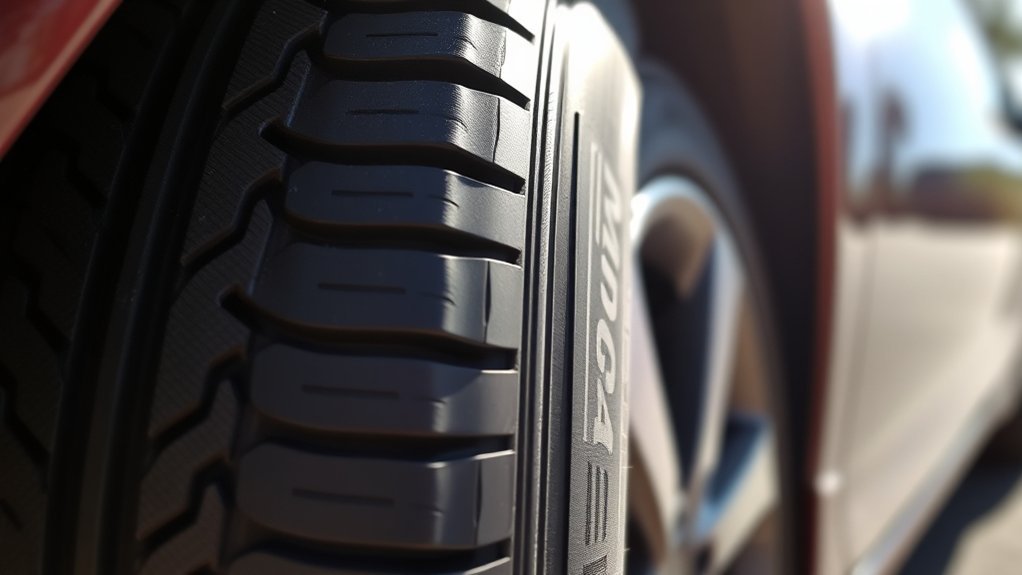
To find the temperature rating, look at the tire sidewall between the tread shoulder and the widest part of the tire. Search for the UTQG quality grade line. It normally includes three parts in this order:
- TREADWEAR followed by a number.
- TRACTION followed by AA, A, B, or C.
- TEMPERATURE followed by A, B, or C.
If the sidewall says TEMPERATURE A, that tire has the highest temperature grade. If it says TEMPERATURE B, it is above the minimum level. If it says TEMPERATURE C, it meets the minimum level but offers less heat-resistance margin than A or B.
Pro Tip: Check the rating on all four tires, not just one. Mixed tires can have different temperature grades, tread depths, ages, and speed ratings, which may affect handling and wear.
Check the Honda Accord Doorjamb Label Before Buying Tires
The temperature grade is only one part of choosing the right tire. Before comparing A, B, and C grades, open the driver’s door and read the Honda Accord Tire and Loading Information Label. Honda says this label includes the number of people the vehicle can carry, total weight limit, original tire sizes, and proper cold tire pressure for the front, rear, and spare tires.
Use that label because Accord tire sizes and pressures can vary by model year, trim, wheel size, and hybrid or non-hybrid configuration. A generic online tire-size chart is not as reliable as the placard on your own car.
When replacing tires, Honda recommends using radials of the same size, load range, speed rating, and maximum cold tire pressure rating shown for the vehicle. A tire with a great temperature grade is still the wrong tire if these basics do not match your Accord.
[Products Worth Considering]

This portable cordless tire inflator delivers up to 160 PSI with fast 17 L/min airflow to help you quickly top up tires and get back on the road. It features dual power mode, running on a 21V rechargeable battery or a 12V DC adapter for convenient roadside use. An automatic shut-off with digital pressure gauge helps prevent overinflation, and a built-in LED light improves visibility in low-light conditions.

The AstroAI L7 Air Tire Inflator refills car tires quickly with up to 150PSI max pressure and a fast 1-minute inflation claim. It includes 5 preset modes for car, motorcycle, bicycle, balls, and manual use, along with an auto shutoff to help prevent overinflation. Designed for convenience, it features a digital gauge with unit switching, a top LED light with multiple modes, and USB-C/USB ports for backup power.
How to Choose the Right Tires for Your Driving Needs
Use this simple checklist when comparing Honda Accord tires:
- Start with the correct size. Match the tire size listed on the driver’s doorjamb label or in your owner’s manual.
- Match or exceed the required load index and speed rating. Do not downgrade these ratings unless Honda or a qualified tire professional confirms the replacement is appropriate.
- Prefer Temperature A when available. This gives the best heat-resistance grade and is the easiest recommendation for hot climates and highway driving.
- Accept Temperature B when the full tire spec is right. A B-rated tire can be suitable for daily driving if the size, load, speed rating, tread type, and pressure needs match your Accord.
- Be cautious with Temperature C. It meets the minimum level, but it leaves less heat-resistance margin than A or B.
- Check the DOT date code. The last four digits of the DOT Tire Identification Number show the week and year the tire was made.
- Check cold tire pressure monthly. Honda defines cold pressure as pressure measured after the vehicle has been parked for at least three hours or driven less than 1 mile.
- Consider your climate and route. Long interstate trips, hot pavement, heavy loads, and mountain driving all make heat resistance more important.
For tire age, Honda recommends annual inspections once tires reach five years old. All tires, including the spare, should be removed from service after 10 years from the date of manufacture, regardless of appearance or tread depth.
Common Mistakes When Reading Tire Temperature Ratings
- Using Fahrenheit limits: Do not choose tires based on unsupported claims such as “A means 249°F.” UTQG temperature grades are not published as simple tire-temperature caps.
- Confusing AA with temperature: AA is a traction grade, not a temperature grade. Temperature grades are only A, B, and C.
- Ignoring tire pressure: A higher grade cannot protect a badly underinflated tire from overheating.
- Using the sidewall maximum PSI as the recommended PSI: Use Honda’s cold tire pressure from the doorjamb label, not the tire’s maximum pressure marking.
- Buying old “new” tires: A tire can look new but still have an older DOT date code.
- Replacing only one tire without checking the set: Uneven tire grades, tread depths, and ages can affect ride, braking, and handling.
Frequently Asked Questions
What is tire temperature A vs B?
Temperature A is the highest UTQG heat-resistance grade. Temperature B is still above the minimum required level, but it does not perform as highly as A in the UTQG laboratory temperature-resistance test. For a Honda Accord, choose A when the tire also matches the correct size, load range, speed rating, and pressure requirements.
Are B-rated tires good for a Honda Accord?
Yes, B-rated temperature tires can be acceptable for normal Accord driving when every other tire specification is correct. However, if you often drive in hot weather, take long highway trips, carry heavier loads, or have a choice between similar tires, a Temperature A tire gives more heat-resistance margin.
Is tire temperature AA or A better?
For temperature, there is no AA grade. Temperature grades are A, B, and C, with A being the highest. AA is used for the traction grade, which measures straight-ahead wet braking performance under controlled conditions.
Where is the temperature rating on a tire?
Look on the tire sidewall for the UTQG line. It usually appears as TREADWEAR, TRACTION, and TEMPERATURE. The letter after TEMPERATURE is the heat-resistance grade, such as TEMPERATURE A or TEMPERATURE B.
Does a Temperature A tire mean I can drive faster?
No. The temperature grade is not permission to exceed speed limits or the tire’s speed rating. For safe driving, you still need the correct Accord tire size, load index, speed rating, cold pressure, and vehicle load limit.
Should I avoid Temperature C tires?
Temperature C meets the minimum federal level, but it provides less heat-resistance margin than A or B. For most Honda Accord owners, especially in hot climates or for highway use, it is smarter to choose an A or B temperature grade when available.
Conclusion
For a Honda Accord, tire temperature ratings are worth checking, but they should not be used alone. Temperature A is the strongest heat-resistance grade, Temperature B can still be a good daily-driving choice, and Temperature C is the minimum level. The safest tire choice is the one that matches your Accord’s doorjamb label for size, load, speed rating, and cold PSI, while also giving you the highest practical temperature grade for your climate and driving style.
Sources
- eCFR — 49 CFR § 575.104 Uniform tire quality grading standards — backs up UTQG temperature-grade definitions, test basis, and heat-buildup warning.
- NHTSA TireWise: Tire Safety Ratings and Awareness — backs up sidewall ratings, A/B/C temperature grades, current grade distribution, and tire-maintenance safety guidance.
- NHTSA Tire Buyers’ FAQ — backs up tire type, size, UTQG ratings, and DOT Tire Identification Number guidance.
- Honda 2025 Accord Tire and Loading Information Label — backs up the driver’s doorjamb label details for tire size, load limit, and cold tire pressure.
- Honda 2025 Accord Checking Tires — backs up cold-pressure checks, underinflation risk, and tire inspection guidance.
- Honda 2025 Accord Tire Service Life — backs up annual inspections after five years and removal from service after 10 years from manufacture.

Related Articles
How Tall Is a 305 70 R17 Tire? Exact Height, Width & Dimensions
Curious how tall a 305 70 R17 tire really is—and whether it fits your truck?
Read More
Can-Am Defender Tire Size Guide: Stock Specs & Upgrade Options
Just how big can you go on a Can-Am Defender before mods become necessary?
Read More
How Tall Is a 275 65 20 Tire? Exact Height, Width & Dimensions
Check the exact height, width, and hidden fitment effects of a 275/65R20 tire before you buy or upgrade.
Read More