
Can You Run Different Tire Sizes Front and Rear on a Toyota Tacoma
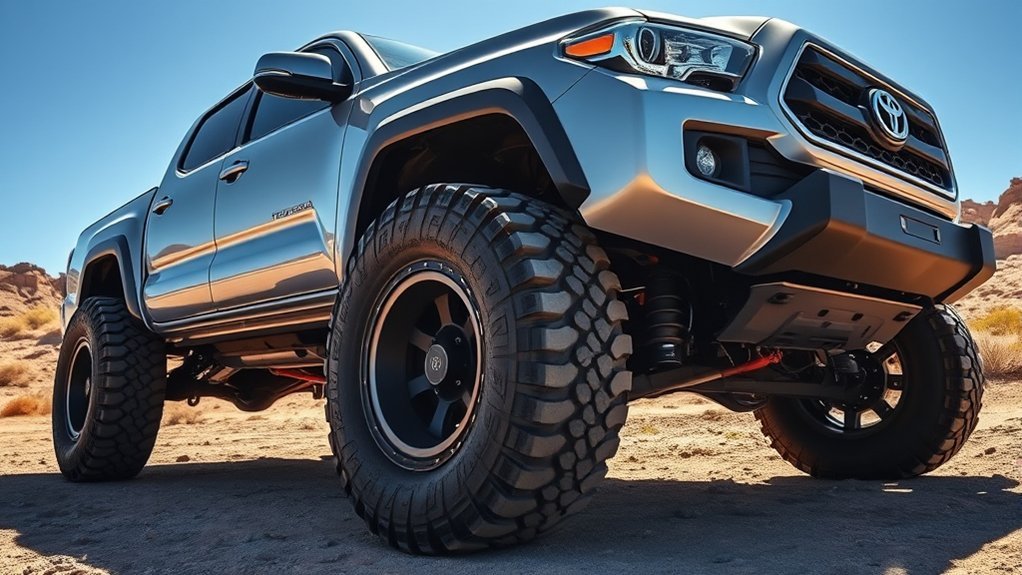
Running different tire sizes on the front and rear of a Toyota Tacoma can affect far more than appearance. A mismatch can change wheel speed, steering response, braking balance, ground clearance, and the way the truck’s 4WD and stability systems behave. Unless Toyota specifies different front and rear sizes for your exact model, the safest choice is a properly matched set.
Quick Answer
Do not intentionally run different front and rear tire sizes on a Toyota Tacoma unless Toyota approves that setup for your exact year and trim. Match all four tires in size, construction, type, load capacity, and preferably model and tread depth. A Toyota-specified spare is the temporary exception and must be used only within the owner’s-manual limits.
Key Takeaways
- Use the tire size printed on your Tacoma’s door-jamb placard or another size specifically approved by Toyota.
- A 4WD Tacoma is especially sensitive to differences in rolling circumference and tread depth.
- Operating in 2H reduces transfer-case involvement, but it does not make mismatched tires a good permanent setup.
- Match tire construction, type, load index, speed rating, inflation, and tread pattern as well as the printed size.
- A factory spare can be a different size because Toyota designed it for limited emergency use.
Warning: Tire fitment affects braking, steering, load capacity, and drivetrain operation. Do not use a tire-size calculator or a general percentage rule as your only approval. Confirm the setup in your exact Tacoma owner’s manual, on the tire placard, or with a qualified Toyota or tire technician.
Is It Safe to Run Different Tire Sizes on a Toyota Tacoma?
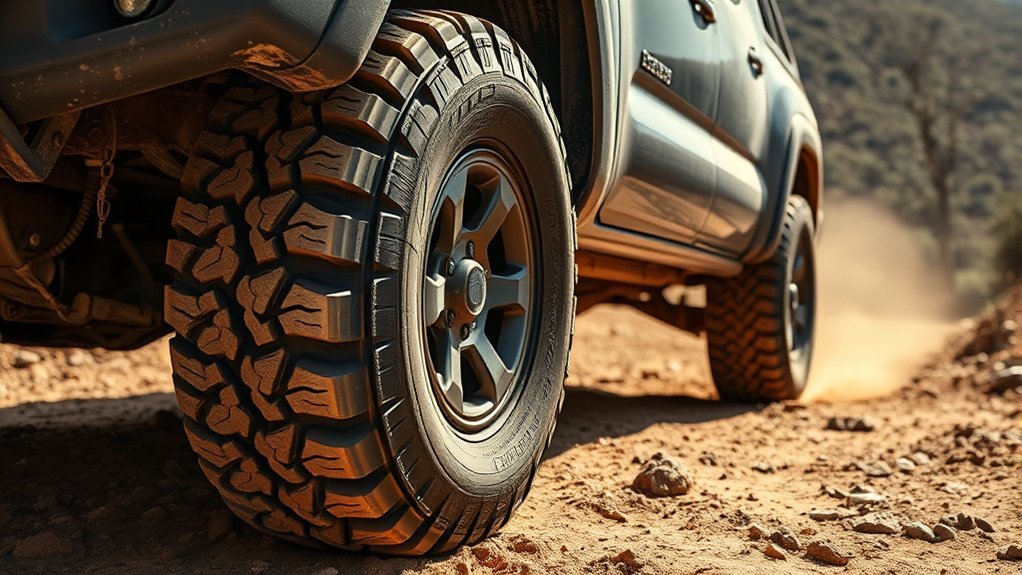
For a normal permanent setup, you should use the same approved tire size at all four positions. The National Highway Traffic Safety Administration recommends replacing tires with the original size or another size recommended by the vehicle manufacturer.
Matching the printed size is only the beginning. The tires should also have compatible construction, load capacity, speed rating, tread pattern, inflation pressure, and remaining tread depth. Two tires carrying the same size marking can have slightly different measured circumferences when they come from different manufacturers or product lines.
Toyota does not publish one universal percentage that approves a mismatch across every Tacoma generation and trim. The safe limit, if Toyota allows any difference at all, must come from the manual or technical guidance for your exact truck.
Maintaining similar tread depth also helps the tires complete a similar number of revolutions over the same distance.
[Products Worth Considering]

This VEVOR tire bead breaker uses a slide-hammer impact and wedge tip to separate tire beads from rims quickly and efficiently without damaging hub surfaces. The long handle and sturdy steel construction help reduce user strain while providing reliable, portable tire changing for cars, trucks, and more. Ideal for home mechanics and repair shops handling multiple vehicle tire sizes.

Universal magnetic jack pad with aluminum grooved design to protect vehicle pinch welds during lifting. Durable nylon pad inserts are upgraded and secured with screws to resist damage and keep in place. Designed to fit most single vehicle pinpoint welds for safer, stable jacking when changing tires, repairs, or performing oil changes.

Mount your spare tire directly to the inside wall of an enclosed trailer or garage to save space and keep your tire secure. This wall-mount spare tire carrier is designed for universal trailer tire fit and includes a fixed plate and chute for convenient screw replacement. Nylon insert hex lock nuts help prevent the tire from falling off, and wing hardware enables faster load and unload during maintenance.
Potential Risks of Mismatched Tires
A taller tire travels farther during each revolution than a shorter tire. When the truck’s systems see different wheel speeds during straight-line driving, several problems may develop:
- Drivetrain stress: When 4WD is engaged, the front and rear axles are mechanically linked. A persistent speed difference can create additional load in the transfer case, driveshafts, and differentials.
- Unpredictable handling: Different sidewall heights, tread designs, or grip levels can make the front and rear of the truck respond differently during braking or steering.
- Electronic-system interference: ABS, traction control, and Vehicle Stability Control use wheel-speed information. A mismatch may alter how these systems interpret tire slip.
- Uneven braking and traction: Different tire types or tread depths can produce different levels of grip on wet, icy, gravel, or loose surfaces.
- Incorrect load capability: A physically compatible tire may still be unsafe if its load index or load range is too low for the truck.
- Spare-tire incompatibility: An aftermarket wheel-and-tire upgrade may leave the original spare too different for normal use.
Under-inflation can make the rolling-radius difference worse while also increasing heat and shoulder wear. Review why cold temperatures can cause reduced tire pressure, and check all tires when they are cold.
2WD vs. 4WD: How Each System Handles Tire Size Variation
A Tacoma operating in 2H and a Tacoma operating in 4H or 4L do not react to a mismatch in exactly the same way. However, neither operating mode makes an unapproved tire combination a good permanent choice.
2WD System Implications
In 2H, the engine normally drives the rear axle, so a front-to-rear size difference does not create the same direct transfer-case conflict that it can create when 4WD is engaged. This may allow a truck to move temporarily without immediate binding.
That does not mean the setup is fully compatible. Different front and rear diameters can still affect:
- Steering response and braking balance.
- ABS, traction-control, and stability-control wheel-speed comparisons.
- Ride height and alignment angles.
- Headlight aim, speed calculations, and effective gearing.
- The ability to rotate tires normally.
- Emergency handling on wet or loose roads.
Tires on the same axle should always match in size, construction, type, load rating, and wear. If you install dedicated winter tires, use a complete matched set rather than placing winter tires on only one axle.
4WD System Risks
A part-time 4WD Tacoma links the front and rear drivetrains when 4H or 4L is selected. Toyota instructs drivers to use part-time 4WD on surfaces where the tires can slip, such as snow, ice, dirt, sand, or off-road tracks. On high-traction pavement, the system already has limited ability to release differences created while turning.
Different rolling circumferences add another source of speed difference. The drivetrain may try to force the axles to rotate at incompatible rates, increasing heat, noise, tire scrub, and component load.
Avoid engaging 4H or 4L with a known unapproved mismatch unless your exact owner’s manual specifically instructs you to do so during emergency spare-tire use.
Handling and Stability Effects
Tire size is only one part of the handling equation. A mixed set may also combine different tread compounds, sidewall stiffness, load ranges, or wear levels. These differences can make one axle reach its traction limit before the other.
- Less rear grip can increase oversteer or fishtailing.
- Less front grip can increase understeer and stopping distance.
- Different sidewall stiffness can change response during sudden lane changes.
- Unequal tread depth can create inconsistent wet and snow traction.
- Incorrect load ratings can reduce the truck’s safe carrying capability.
For predictable handling, use uniform tire specifications across all four positions whenever possible.
What Happens to Your Drivetrain With Different Tire Sizes?
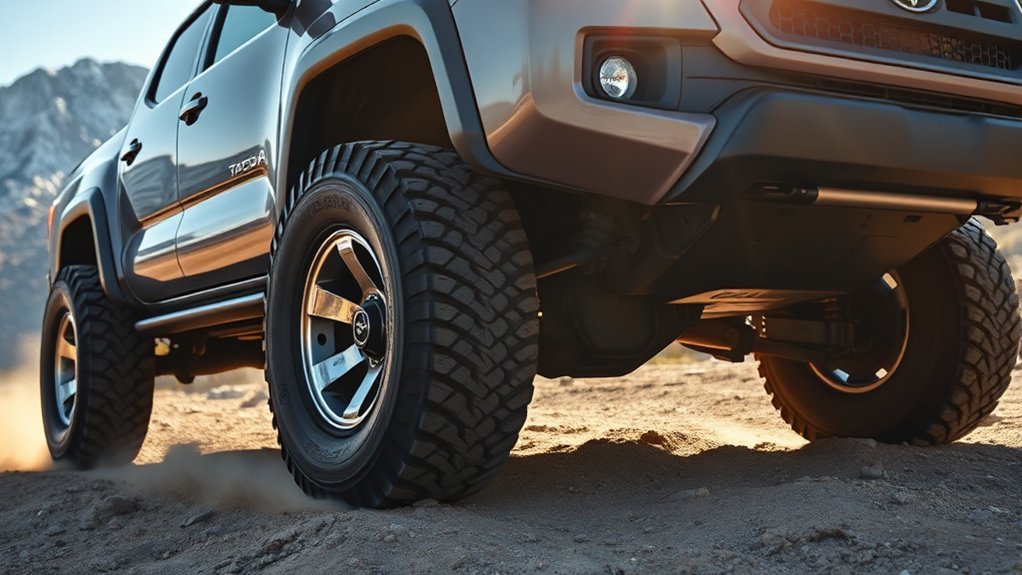
A tire with a larger rolling circumference turns fewer times per mile. A smaller tire turns more times. When the drivetrain connects axles fitted with different effective circumferences, the difference cannot disappear. It must be absorbed through tire slip or mechanical movement inside the drivetrain.
Note: Tire pressure and tread wear change effective rolling radius. A new tire paired with three heavily worn tires can create a meaningful difference even when all four sidewalls show the same nominal size.
Drivetrain Strain Risks
Possible results of prolonged operation with an incompatible mismatch include:
- Tire scrub or hopping during tight turns.
- Transfer-case heat or abnormal noise.
- Increased differential activity and wear.
- Vibration through the floor, seat, or steering wheel.
- Premature tire wear.
- Difficulty shifting into or out of 4WD.
Damage is not guaranteed after a specific percentage or distance. The outcome depends on the size difference, road surface, selected drive mode, load, tire inflation, speed, and time in service.
Differential Wear Issues
A differential normally allows the left and right wheels on an axle to rotate at different speeds while turning. A tire mismatch can force it to compensate even when the truck is moving straight.
Front-to-rear mismatch becomes more serious when the transfer case connects both axles. Matching the tires reduces unnecessary continuous correction and helps the drivetrain operate as designed.
Handling Stability Concerns
Drivetrain compatibility does not guarantee safe handling. A combination may have similar nominal diameters but different grip, construction, or load behavior. That can affect:
- Emergency braking.
- Trailer stability.
- Cornering on wet pavement.
- Steering response on rutted roads.
- Traction during hill climbs or descents.
Check tire pressure regularly and use the cold inflation pressure listed on your Tacoma’s tire placard, not the maximum pressure molded into the tire sidewall.
What Signs Indicate You Need to Replace Mismatched Tires?
Confirm the sidewall markings immediately if you notice any of the following after a tire replacement, wheel change, or used-vehicle purchase:
- Binding, hopping, or tire scrub during tight turns.
- New vibration at road speed.
- The truck pulling to one side.
- ABS, traction-control, VSC, or 4WD warning lights.
- Rapid or uneven tread wear.
- A noticeable difference in ride height.
- Transfer-case or differential noise.
- Reduced traction or unexpected skidding.
- A speedometer reading that no longer matches a reliable GPS speed.
These symptoms can also come from alignment, balancing, suspension, wheel-bearing, or pressure problems. A qualified shop should verify all four sidewall sizes, tread depths, inflation pressures, wheel specifications, and measured rolling circumferences.
Regular inspections support the tire maintenance guidelines needed for predictable handling and even wear.
How to Handle a Temporary Tire-Size Mismatch Safely
You should not plan a permanent front-to-rear mismatch unless Toyota or a qualified engineer approves it for your exact Tacoma. If a mismatch occurs because of a flat tire or installation mistake, use the following process:
- Identify every tire: Record the full size, load index, speed rating, model, and construction shown on each sidewall.
- Check the placard: Compare them with the tire-and-loading label on the driver’s door jamb.
- Read the exact manual: Follow the spare-tire and 4WD instructions for your Tacoma’s year, drivetrain, and trim.
- Use 2H when permitted: Avoid 4H and 4L with an unapproved mismatch unless the manual specifically directs otherwise.
- Reduce stress: Avoid towing, heavy loads, hard acceleration, abrupt braking, high speed, and off-road driving.
- Drive only as necessary: Treat an unapproved mismatch as a temporary condition while reaching a safe repair location.
- Restore a compatible set: Have a tire professional match the size, type, load capacity, tread pattern, and remaining tread depth.
Pro Tip: Ask the tire shop to compare manufacturer-published revolutions per mile or measured circumference, not only the size printed on the sidewall. Also confirm that each tire’s load capacity meets or exceeds the requirement for your Tacoma.
[Products Worth Considering]
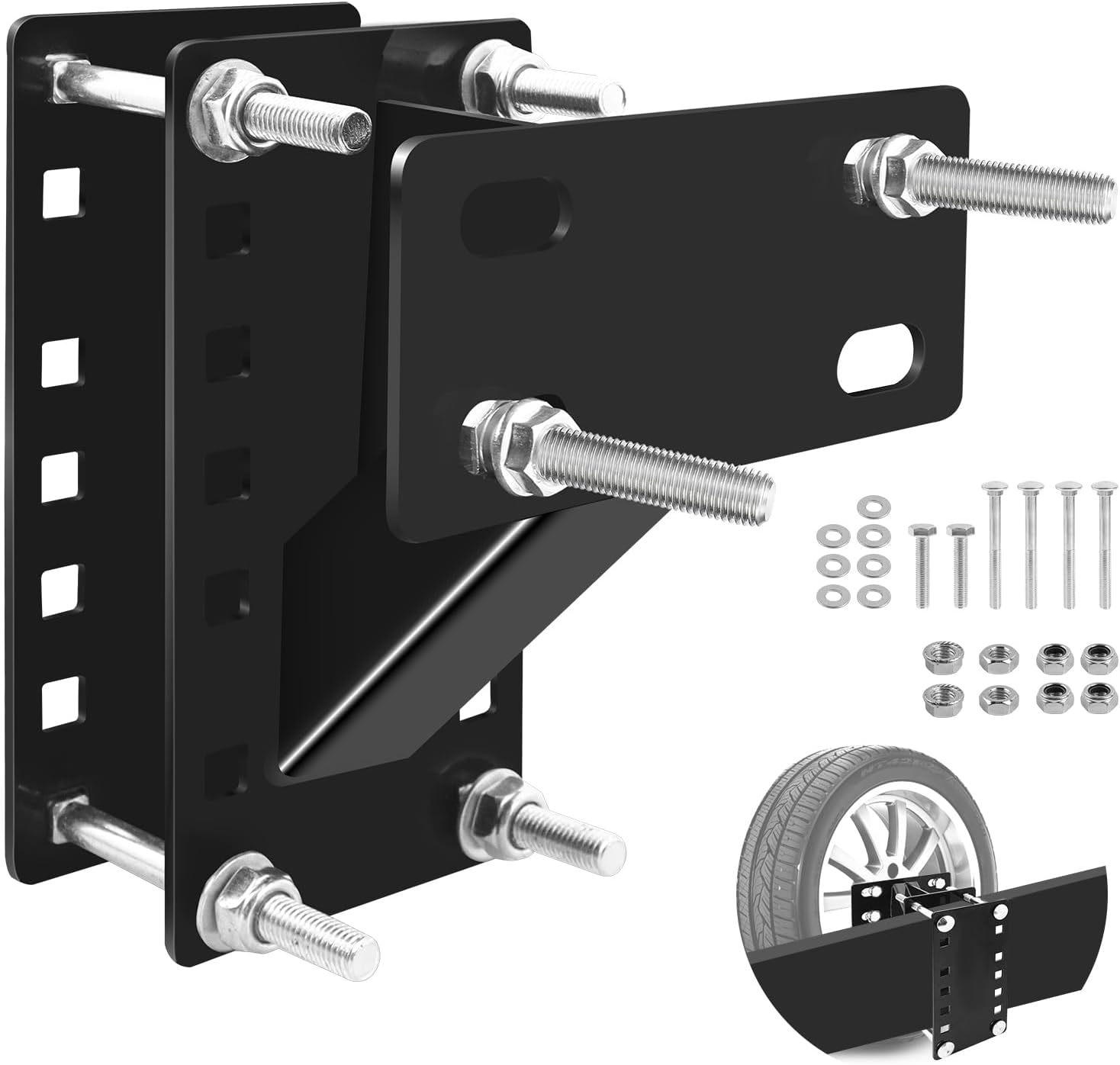
This universal spare tire mount carrier holder is built for utility trailers and boat trailers, offering a secure fit for 4, 5, and 6 lug wheels. It supports multiple bolt pattern sizes and a heavy-duty load capacity while resisting rust with a durable finish. The design allows easy installation and lets you choose the steel beam height for a better fit.

Secure a full-size spare on your trailer with this powder-coated steel spare tire mount bracket. It fits most 4-, 5-, and 6-lug wheel bolt patterns and mounts to trailer tongues up to 4 in wide and 5 in tall. Built for reliable carry with a max 150 lb load rating and includes zinc-plated hardware for straightforward installation.
Best Tire Sizes for Your Tacoma
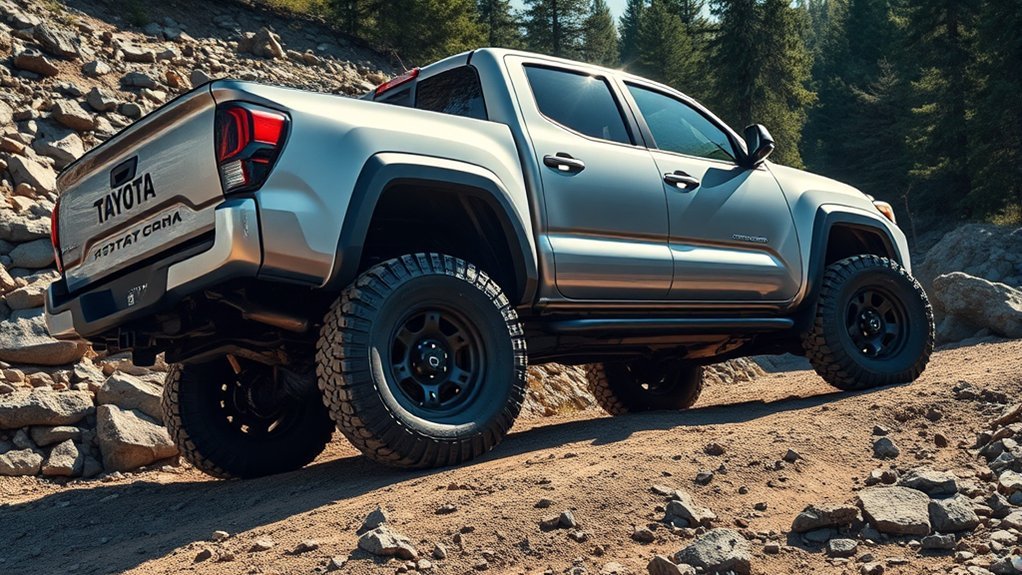
The best tire size is the one Toyota specifies for your exact truck or an alternative that has been professionally confirmed as compatible. Tacoma sizes vary by generation, model year, drivetrain, wheel package, trim, suspension, and market.
| Reference | Tire information | How to use it |
|---|---|---|
| Your exact Tacoma | Driver-door tire placard and owner’s manual | Use this as the primary authority for size and cold inflation pressure. |
| 2024 Tacoma examples | Toyota lists configurations including 245/70R17, 265/70R17, and 265/65R18. | These are examples only. They are not interchangeable on every 2024 Tacoma. |
| Current Trailhunter | Toyota markets the Trailhunter with factory 33-inch tires and 18-inch wheels. | A factory-engineered Trailhunter setup does not automatically fit another Tacoma trim. |
| Modified Tacoma | May require different wheels, offset, suspension clearance, alignment, gearing, or calibration. | Use a model-specific fitment inspection before purchasing or driving. |
How to Compare Nominal Tire Diameter
You can estimate the unloaded diameter of a metric tire with this formula:
Diameter in inches = wheel diameter + 2 × (section width × aspect ratio ÷ 25.4)
For example, the sidewall height of a 265/70R17 tire is approximately 7.3 inches. Doubling that height and adding the 17-inch wheel produces a nominal diameter of about 31.6 inches.
This calculation is useful for screening options, but it does not confirm fitment. Actual dimensions and revolutions per mile can vary by tire model. Tread wear, inflation, wheel width, load, and manufacturing tolerances also affect rolling behavior.
For off-road use, choose a suitable all-terrain or mud-terrain tire only after confirming clearance, load rating, wheel compatibility, spare compatibility, and road manners. Tire design can influence tire longevity and comfort as much as diameter does.
What Do Mechanics Think About Mixing Tire Sizes?
Qualified tire and drivetrain technicians generally prioritize a matched set unless the vehicle was engineered with a staggered arrangement. Michelin’s published 4WD guidance advises matching all four tires by size and avoiding mixed tread types when the vehicle manufacturer does not provide a different instruction.
A technician should check more than whether the tires fit onto the wheels. A complete review includes:
- Toyota-approved size and inflation pressure.
- Measured circumference or revolutions per mile.
- Load index, load range, and speed rating.
- Tread type, model, and remaining tread depth.
- Wheel width, diameter, offset, and load rating.
- Full steering and suspension clearance.
- Spare-tire compatibility.
- Alignment and electronic-system warnings.
General tire size flexibility on one Toyota model should not be treated as approval for a Tacoma.
Community Experiences: How to Interpret Owner Reports
Owner forums can reveal symptoms and fitment ideas, but an individual report does not establish that a setup is mechanically safe. A truck may appear to drive normally while its tires, stability systems, or drivetrain absorb extra stress.
| Owner report | What it actually proves | Safer response |
|---|---|---|
| “My 2WD Tacoma drives fine with different sizes.” | Only that no obvious symptom appeared during that owner’s use. | Confirm placard compliance, axle matching, load rating, and wheel-speed compatibility. |
| “The factory spare is smaller, so any smaller tire is safe.” | Nothing about an unrelated aftermarket tire. | Use only the specified spare and follow its manual restrictions. |
| “Larger rear tires help when towing.” | It does not prove increased towing capacity or safety. | Use approved tires and remain within Toyota’s towing, axle, and payload ratings. |
| “One new tire has the same size as the other three.” | The printed size matches, but the tread depth and actual circumference may not. | Compare tread depth and revolutions per mile before replacing only one tire. |
| “It does not rub while parked.” | Static clearance only. | Check full steering lock, suspension compression, braking, articulation, and loaded clearance. |
Regular tire balancing can correct weight imbalance, but it cannot make incompatible tire sizes mechanically compatible.
Frequently Asked Questions
Can different tire sizes affect fuel efficiency in my Tacoma?
Yes. A larger or heavier tire can increase rolling resistance, aerodynamic drag, and rotating mass. It can also alter effective gearing and speedometer calculations. The actual change depends on tire construction, tread, pressure, weight, diameter, driving conditions, and alignment, so no single fuel-economy percentage applies to every Tacoma.
What tire size is best for off-roading?
Use a size approved for your exact Tacoma and matched to its wheels, suspension, brakes, gearing, and available clearance. A larger tire may improve ground clearance, but it may also add weight, reduce acceleration, change braking behavior, rub the body or suspension, and leave the spare incompatible. Tread design, compound, inflation, and terrain often matter more than diameter alone.
How do I measure tire size accurately?
Read the full size from the sidewall, then compare manufacturer-published overall diameter and revolutions per mile. For a physical check, measure circumference around the center of the inflated tread while the tire is unloaded. A professional rolling-radius measurement under vehicle load is more useful when investigating a drivetrain-sensitive mismatch.
Will different tire sizes void my Tacoma’s warranty?
Using aftermarket tires does not automatically cancel the entire U.S. vehicle warranty. However, Toyota or a dealer may deny coverage for a specific failure if the incompatible tire setup caused that damage. Keep tire invoices, fitment records, alignment reports, and maintenance records. Warranty rules differ by country, so consult the warranty booklet supplied with your truck.
Can I use a temporary spare with a different size?
Yes, when it is the Toyota-specified spare for your exact Tacoma. Toyota designs some spare configurations with a different printed size or wheel diameter. Install it only as directed, observe all speed, distance, towing, loading, and 4WD restrictions in the manual, and replace it with the correct road tire as soon as practical.
Can I replace only one tire on a 4WD Tacoma?
Possibly, but the replacement should match the other tires in size, model, construction, and effective circumference. A new tire may be meaningfully taller than three worn tires. Ask a qualified shop to compare tread depth and revolutions per mile with Toyota’s requirements before replacing only one.
Can I use different wheel diameters if the tire diameters match?
Similar overall tire diameter does not automatically make the setup safe. The wheels must also have the correct width, offset, bolt pattern, center bore, brake clearance, load rating, and TPMS compatibility. The tires must meet the required load and speed ratings, and Toyota must approve the front-to-rear arrangement.
Conclusion
Do not intentionally run different front and rear tire sizes on a Toyota Tacoma unless Toyota approves the arrangement for your exact truck. A close nominal-diameter calculation is not enough. The tires must also match the vehicle’s load requirements, wheel specifications, construction, tread type, inflation needs, and drivetrain design.
A 2WD Tacoma may avoid some of the transfer-case stress associated with engaged 4WD, but mismatched tires can still affect handling, braking, stability systems, wear, and rotation. For a 4WD Tacoma, maintaining compatible rolling circumference and tread depth is especially important.
Use the driver-door placard and exact owner’s manual as your primary references. Treat a Toyota-specified spare as a limited emergency exception, and have any permanent aftermarket setup verified by a qualified professional before driving, towing, or going off-road.
Sources
- NHTSA TireWise — replacement-tire size, inflation, rotation, and general tire-safety guidance.
- 2024 Toyota Tacoma Owner’s Manual: Maintenance Data — factory tire, wheel, spare, pressure, and torque examples.
- 2024 Toyota Tacoma Owner’s Manual: Part-Time 4WD — approved 2H, 4H, and 4L operating conditions.
- Toyota Trailhunter — current factory 33-inch tire and 18-inch wheel configuration information.
- Michelin Tire Size and Mixing Guidance — 4WD tire matching, circumference, construction, and tread-pattern guidance.
- Federal Trade Commission Auto Warranty Guidance — aftermarket-part and damage-related warranty coverage principles.

Related Articles
How Tire Weight Affects Toyota Tacoma Performance
How does tire weight influence your Toyota Tacoma's performance and efficiency? Discover the surprising effects that could change your driving experience.
Read More
Tire Noise Levels by Tire Type on a Toyota Tacoma
A comprehensive look at how tire types affect noise levels in your Toyota Tacoma reveals surprising insights that could enhance your driving experience.
Read More
How To Choose Tires for a Dual Use Toyota Tacoma
Unlock the secrets to selecting the perfect tires for your dual-use Toyota Tacoma, ensuring optimal performance and comfort on every adventure. Discover more inside!
Read More