
Pros and Cons of Wider Tires on a Toyota Tacoma
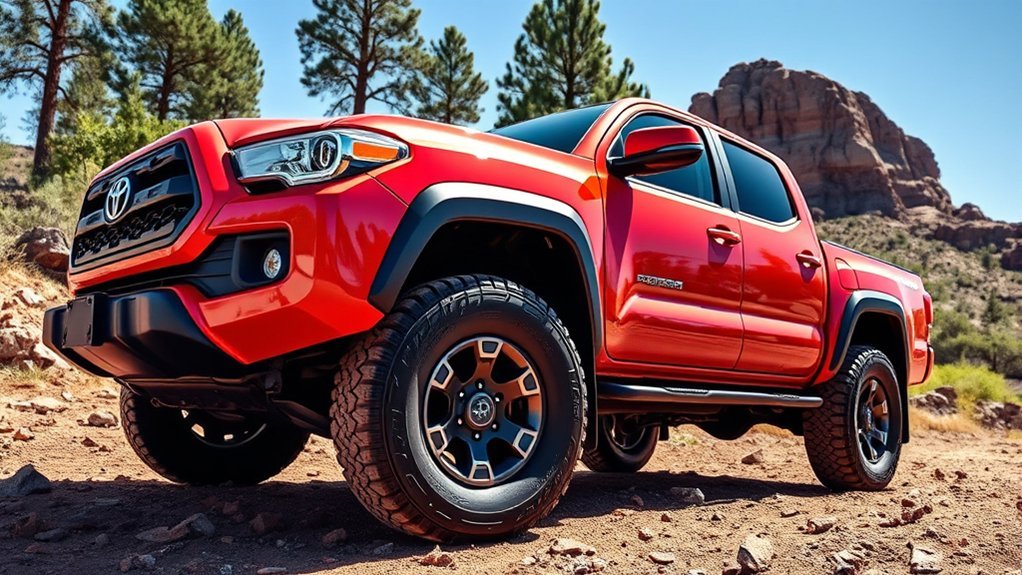
Wider tires can make a Toyota Tacoma look tougher and may improve flotation on sand, mud, and other loose surfaces. However, width alone does not guarantee better traction, braking, towing capacity, or wet-road safety. The right choice depends on your Tacoma’s model year, trim, wheel dimensions, tire construction, load rating, and how you drive.
Quick Answer
Wider tires can benefit a Toyota Tacoma used on sand, mud, or rocky trails, but they are not automatically better. They may add weight, steering effort, road noise, rubbing risk, and fuel use. Choose a size only after confirming wheel compatibility, clearance, load rating, inflation requirements, and speedometer effects.
Key Takeaways
- Wider tires can improve flotation and trail grip on some loose surfaces, but tread design and rubber compound matter as much as width.
- A wider tire does not automatically increase payload or towing capacity. Check the tire’s load index and your Tacoma’s door-jamb labels.
- Larger and heavier tire-and-wheel packages can reduce acceleration, change steering feel, increase fuel use, and affect braking.
- There is no universal “best” width for every Tacoma. Model year, trim, wheel width, offset, suspension, and intended use all affect fitment.
- Before buying, verify full-lock and suspension-compression clearance, spare-tire fit, TPMS compatibility, alignment, and speedometer accuracy.
What Are the Advantages of Wider Tires?
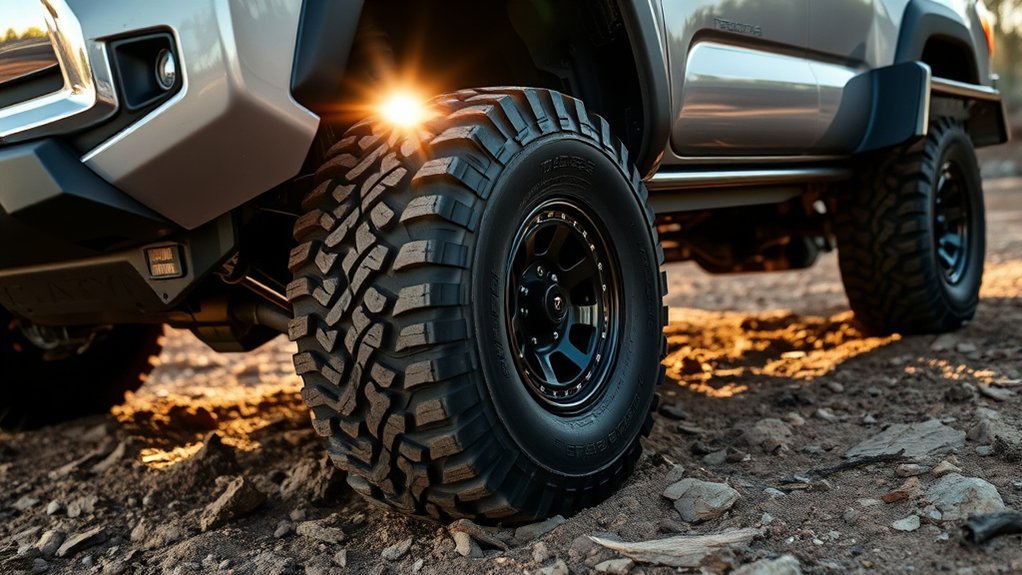
A wider tire can change how your Tacoma performs, but the result depends on the complete tire design. Width, tread pattern, rubber compound, sidewall construction, overall diameter, tire weight, and inflation pressure all work together. A wider highway tire and a wider mud-terrain tire may behave very differently even when their sidewalls show a similar size.
On loose terrain, extra tread width can help spread the truck’s weight across a broader footprint. This may improve flotation in sand, soft soil, and mud, especially when the tire is designed for off-road use. A suitable tread design can also improve the tire’s ability to clear mud, find edges on rocks, and maintain predictable road manners.
Wider tires may also provide a more planted steering feel on dry pavement and give the Tacoma a broader, more aggressive stance. However, you should not assume that a wider tire always creates more usable grip. Wet traction and braking depend heavily on tread depth, groove design, compound, temperature, road surface, and inflation pressure. The tire’s width is only one part of the equation.
Note: Wider tires do not automatically raise your Tacoma’s payload or towing rating. A tire’s load-carrying ability comes from its load index, construction, and pressure. Your truck’s GVWR, axle ratings, and manufacturer limits still apply.
[Products Worth Considering]
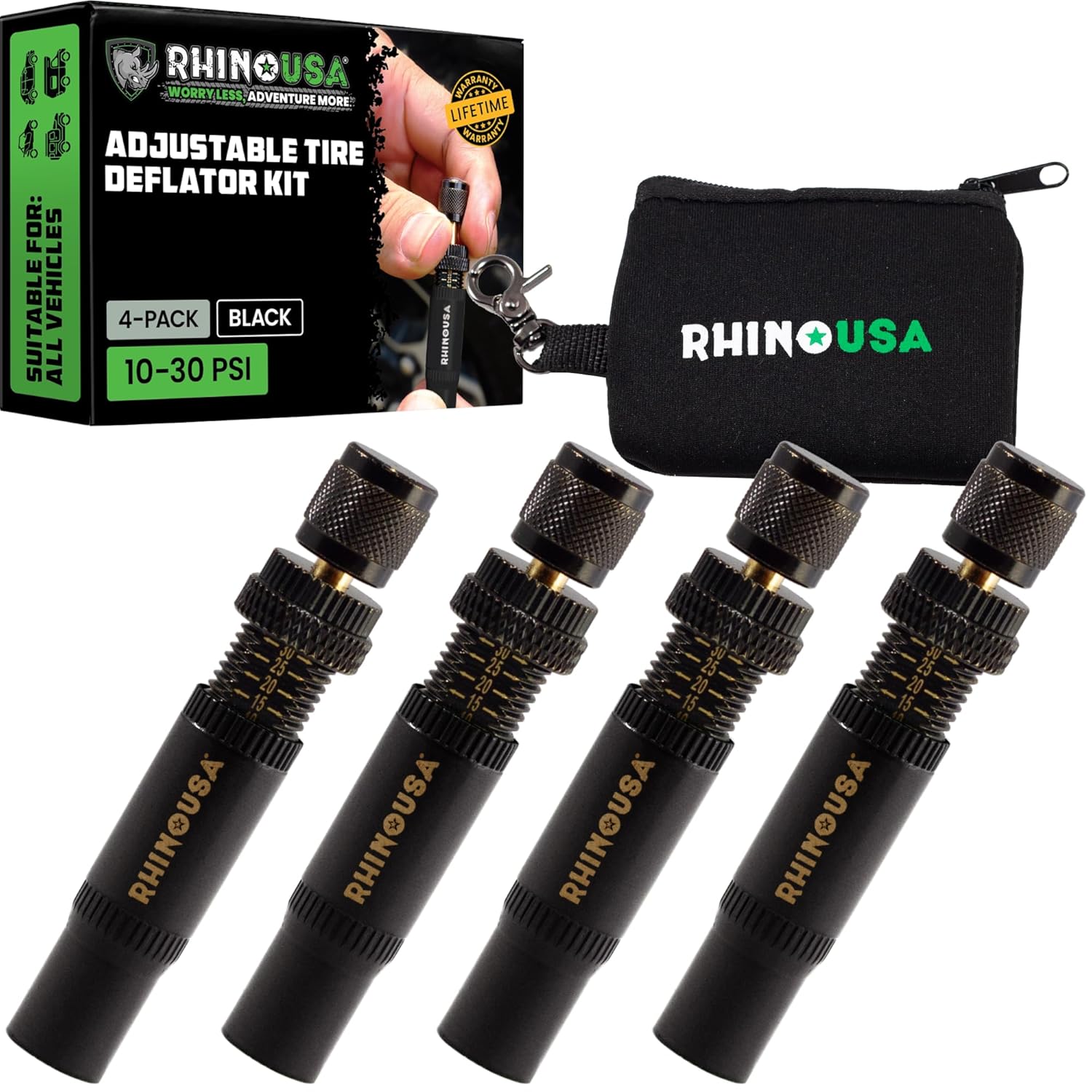
Use the Rhino USA adjustable tire deflators to air down all four tires at once by screwing one deflator onto each valve stem, letting you step away while the tires reach your preset pressure. Each deflator independently adjusts across a 10–30 PSI range with laser-etched indicators for quick setup and verification, making it ideal for beach, sand, and rocky off-road trails.

Keep RV, trailer, or truck dual-axle tires protected with waterproof, UV-resistant covers that help guard against sunlight, snow, rust, and dirt. The dual tire covers are easy to install with a rope/bungee fastener for a stable fit that won’t easily slip. Designed for 27–30 inch diameter wheels, they help maintain tire condition through harsh weather.
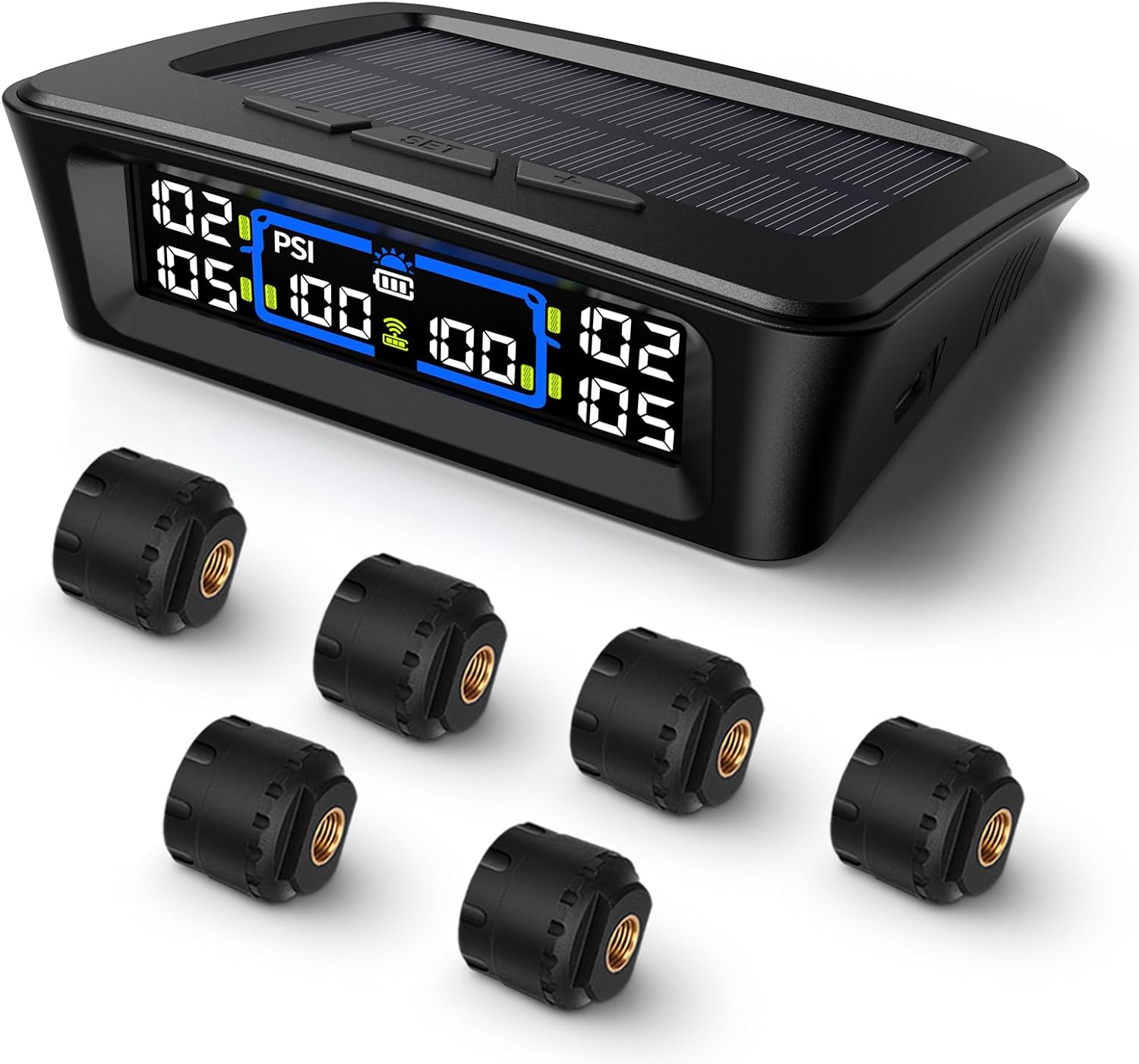
The Tymate TM12 RV TPMS delivers real-time tire pressure and temperature monitoring with a stable 433Hz display for safer long-distance driving. It supports simultaneous monitoring across vehicle and trailer zones, includes six alarm modes for pressure, temperature, leakage, battery, and signal loss, and features easy DIY installation with auto calibration. Power is supplied via USB-C charging or solar recharging, with a wide 0–144 PSI range and up to 50 ft signal coverage for RVs and towable trailers.
Benefits of Wider Tires for Off-Roading
Wider tires can be useful when your Tacoma spends significant time on sand, mud, or uneven trails. The main benefit is often flotation rather than a guaranteed increase in traction. A wider footprint can help the truck sink less deeply into soft ground, while an appropriate all-terrain or mud-terrain tread can provide biting edges and self-cleaning voids.
On rocks and washboard trails, lowering pressure within a safe, application-specific range can let the tread conform to the terrain and soften impacts. However, there is no universal off-road PSI. BFGoodrich’s off-road guidance notes that suitable pressure depends on tire type, terrain, and vehicle weight, and that going too low can unseat the bead or damage the tire.
Wider options such as 285-series tires or nominal 33×12.50R17 tires are popular in modified Tacoma builds, but the printed size does not guarantee clearance. Actual dimensions vary by brand and model, and a tire may contact the fender liner, mud flap, upper control arm, cab mount, or bodywork during steering and suspension movement.
Pro Tip: Test clearance with the steering turned fully left and right, then check again with the suspension compressed. A tire that clears while parked on level ground can still rub during braking, cornering, or articulation.
Drawbacks: Fuel Economy, Handling, and Wear
A wider tire often weighs more than a comparable stock-size tire, especially when the upgrade also increases overall diameter or changes from a passenger-rated tire to a heavier LT construction. Extra rotating mass can make acceleration feel slower and may require more braking effort. Aggressive tread blocks can also increase road noise and steering vibration.
Increased Rolling Resistance
Wider tires are not guaranteed to have higher rolling resistance, because construction and compound matter. However, many popular Tacoma upgrades combine extra width with a heavier carcass, larger diameter, and more aggressive tread. That combination can increase the energy needed to keep the tire moving.
NHTSA estimates that a 10% reduction in tire rolling resistance can improve vehicle fuel economy by about 1% to 2%. That is a percentage, not a guaranteed 1–2 MPG change for every Tacoma.
Reduced Fuel Efficiency
Your actual fuel-economy change can range from barely noticeable to significant. Tire weight, tread type, inflation, overall diameter, wheel weight, driving speed, gearing, terrain, and driving style all contribute. The U.S. Environmental Protection Agency explains that tire construction and tread design influence rolling resistance and fuel efficiency.
Do not rely on a fixed “1–2 MPG loss” estimate. Track several tanks before and after the change using corrected mileage if the new tire diameter alters your odometer. Also maintain the correct pressure for the new tire and load. Overinflation is not a safe shortcut for improving mileage, and improper pressure can increase uneven wear and the risk of tire damage or failure.
Changed Steering, Braking, and Ride Quality
A wider or heavier setup can make steering feel heavier at low speeds and may follow road grooves more strongly. Taller tires can also reduce the effective gearing, which may make the truck feel less responsive. Braking distance may increase when a much heavier tire-and-wheel package adds rotational mass, but width alone does not determine braking performance.
Ride quality can improve or worsen. A taller sidewall at an appropriate pressure may absorb impacts, while a stiff LT tire can feel harsh on an unloaded Tacoma. Wheel offset also changes steering geometry. An aggressive negative offset may increase scrub radius, kickback, bearing load, and the chance of the tire contacting the fender.
Factors to Consider Before Choosing Wider Tires
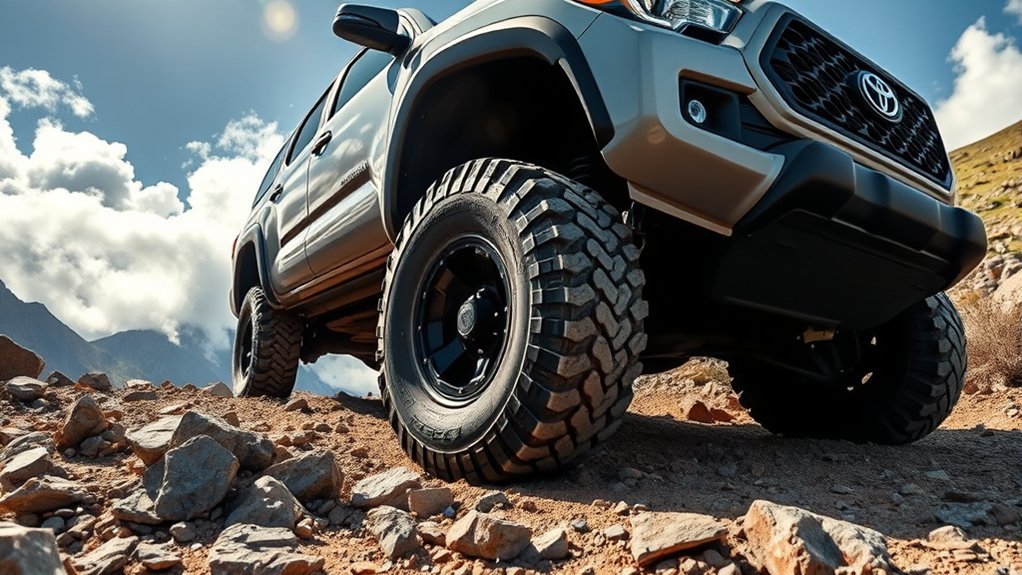
Tacoma factory tire sizes vary by generation, model year, trim, drivetrain, and wheel package. For example, Toyota’s official 2024 Tacoma specifications list several combinations, including 245/70R17, 265/70R17, and 265/65R18 on different configurations. That variation is why a single fitment claim cannot apply to every Tacoma.
Start with the tire and loading placard on the driver’s door jamb and the correct owner’s manual for your model year. NHTSA recommends using the original tire size or another size approved by the vehicle manufacturer. Michelin also advises confirming replacement sizes against the owner’s manual or door placard and never choosing a tire with less load capacity than the original specification.
Warning: Do not install a tire simply because its diameter or width appears close to another owner’s setup. A tire that rubs, sits on an incompatible wheel, has an inadequate load rating, or uses the wrong inflation pressure can affect steering, braking, and tire integrity.
Fitment Checklist Before You Buy
- Model year and trim: Confirm the exact Tacoma generation, suspension package, drivetrain, and factory wheel size.
- Wheel width: Make sure the wheel falls within the tire manufacturer’s approved rim-width range.
- Wheel offset and backspacing: These determine whether the tire moves inward toward suspension parts or outward toward the fender.
- Load index and speed rating: Meet or exceed the vehicle manufacturer’s requirements. Width alone does not establish load capacity.
- Overall diameter: A taller tire can change speedometer and odometer accuracy, effective gearing, shift behavior, and clearance.
- Full movement clearance: Check full steering lock and suspension compression, not only straight-ahead clearance.
- Spare tire: Confirm the larger tire fits the spare location and can be used safely with the other three tires.
- TPMS and alignment: Verify sensor compatibility and perform an alignment after suspension or wheel changes.
- Payload and towing: Keep the truck within the GVWR, GAWR, payload, and towing limits shown by Toyota.
The claim that moving from 265/70R17 to 285/70R17 always requires a 2- to 3-inch lift is too broad. Some combinations may fit with little or no suspension lift, while others may rub even after lifting because wheel offset, actual tire dimensions, alignment, and body clearance differ. A lift can create vertical clearance, but it does not automatically solve contact at the cab mount, upper control arm, or rear of the fender opening.
Wider Tires and Safety: Rain, Hydroplaning, and Snow
Wet-road performance cannot be predicted from width alone. Water depth, vehicle speed, tread depth, groove design, rubber compound, tire pressure, and road texture all affect hydroplaning risk. A wider tire may need to move more water from beneath its tread, but a well-designed wider tire can still outperform a poor narrower tire.
- Slow down in standing water and avoid abrupt steering or braking.
- Choose a tire with strong wet-traction performance and adequate circumferential grooves.
- Replace tires before tread reaches the legal minimum if wet-weather performance has become poor.
- Check cold pressure monthly using the vehicle placard and qualified fitment guidance for the replacement size.
- Correct alignment problems that cause outer-edge tire wear.
- Keep all four tires compatible in size, construction, and wear, especially on four-wheel-drive models. Learn why consistent tire dimensions and tread depth matter.
In snow and slush, a narrower tire can sometimes cut through the surface more effectively, while a wider tire may float more. The tread compound and winter design remain critical. Understanding tire performance in cold conditions is more useful than choosing by width alone.
A wider tire also does not guarantee improved wet traction. Compare the exact tire model’s wet-braking data, tread design, and intended use rather than relying only on section width.
Finding the Right Width for Wider Tires
There is no universal best width such as 275 mm or 285 mm for every Tacoma. The safest starting point is the factory specification. From there, choose the smallest change that meets your goal while maintaining correct load capacity, wheel compatibility, and clearance.
| Use Case | What to Prioritize | Main Trade-Offs |
|---|---|---|
| Daily commuting and highway driving | OE or approved size, low noise, wet braking, low rolling resistance | A wide aggressive tire may add noise, weight, and fuel use without a useful daily benefit |
| Mixed road and moderate trails | Moderate size increase, all-terrain tread, verified clearance and load rating | Possible rubbing, firmer ride, more road noise, and a small or moderate MPG change |
| Sand, mud, or technical off-road use | Flotation, sidewall strength, suitable tread, safe air-down range, wheel retention | Higher fitment risk, added weight, more wear, possible body or suspension modifications |
| Towing or heavy payload | Correct load index, pressure, axle limits, heat resistance, stable construction | A heavier LT tire may ride harshly when unloaded and does not raise the truck’s legal ratings |
Also separate width from diameter. A tire can be wider without being much taller, or taller without being much wider. Keeping overall diameter close to the approved specification reduces changes to speedometer readings and driveline behavior. When diameter changes significantly, recalibration may be appropriate.
[Products Worth Considering]
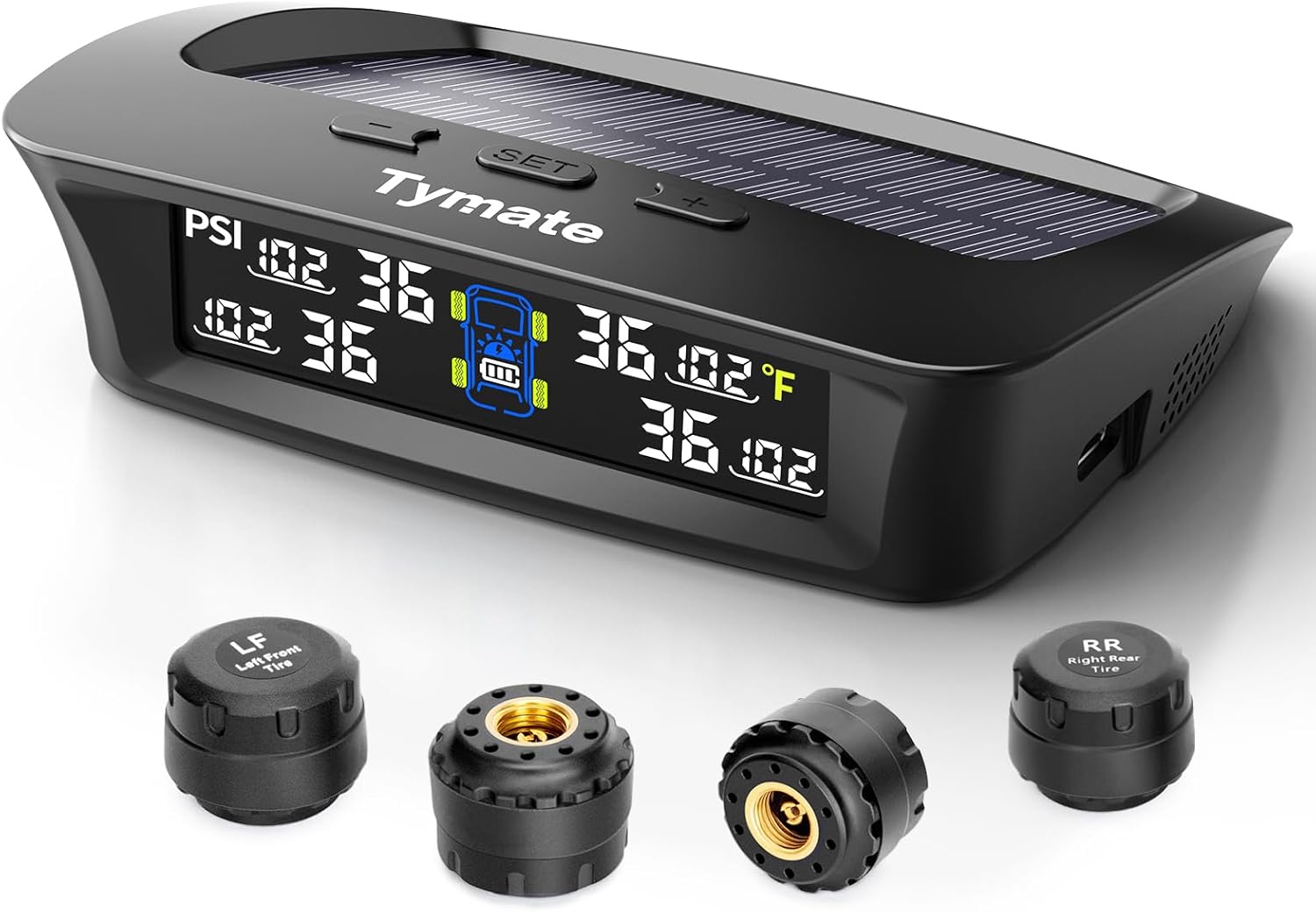
The Tymate TM3 RV TPMS delivers real-time tire pressure monitoring from 0 to 144 PSI with accurate readings and dependable wireless communication. It includes four external sensors with pre-pairing, six alarm modes for rapid leak, pressure extremes, temperature, and signal loss, plus an easy-reference setup for alert thresholds. Solar and USB-C charging help keep the display powered, while the color LCD and adaptive backlight improve visibility for safer driving and towing.

EVOULTES heavy duty tire inflator with an integrated gauge delivers accurate pressure readings from 10–120 PSI, helping you inflate, deflate, and check tires in one tool. The 16.5-inch extended dual-head air chuck with swivel base reaches hard-to-access dual wheel valves on trucks and RVs. A brass trigger core and side-mounted air release valve make operation smooth, with standard 1/4" NPT threading and quick-connect compatibility for easy setup.
Tire Pressure After Changing Tire Size
Do not use the maximum PSI printed on the tire sidewall as your normal street pressure. NHTSA states that the vehicle manufacturer’s recommended cold pressure is found on the tire and loading label or in the owner’s manual. When you install a non-original size, the correct pressure may need to be recalculated so the replacement tire provides at least the original load capacity.
Michelin’s replacement guidance recommends maintaining the original load capability when an optional tire size is installed. A qualified tire professional should use the correct load-and-inflation data for the specific P-metric or LT tire. Regular tire pressure management, rotation, balancing, and alignment help preserve handling and tread life.
Deciding If Wider Tires Suit Your Driving Needs
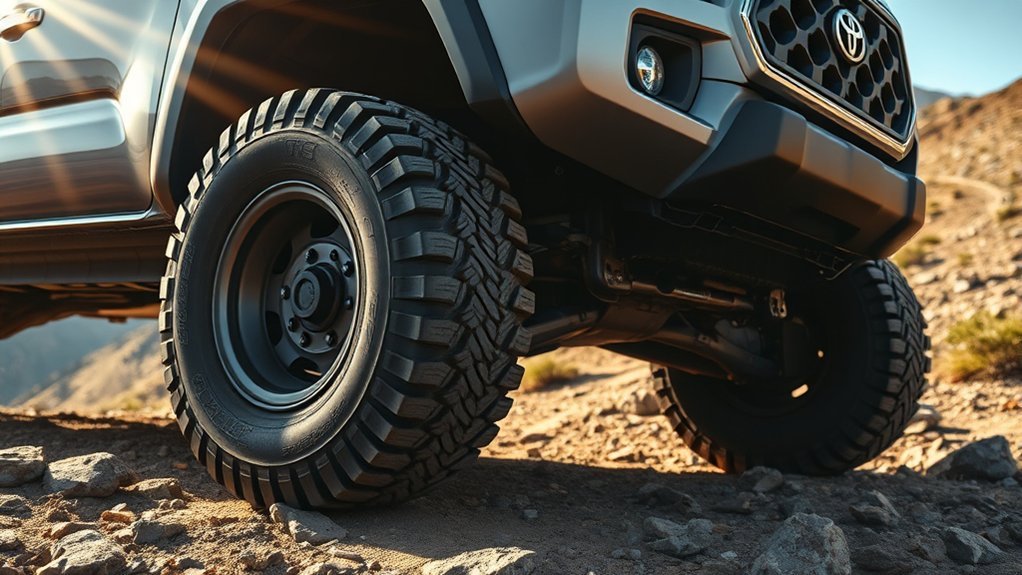
Wider tires make the most sense when they solve a real problem. If you regularly drive in soft sand, mud, or technical terrain, a properly fitted wider all-terrain or mud-terrain tire may improve flotation and trail control. If your Tacoma spends nearly all its time commuting, a factory or manufacturer-approved size often delivers better fuel economy, quieter operation, easier steering, and fewer fitment problems.
Before deciding, answer these questions:
- What exact terrain do you drive most often?
- Do you need more flotation, or would a better tread in the stock size solve the problem?
- Can your current wheels safely support the new tire width?
- Will the tire clear at full steering lock and full suspension compression?
- Does the replacement meet the required load index and speed rating?
- Are you willing to accept possible MPG, noise, ride, and braking changes?
- Will the spare, TPMS, alignment, and speedometer remain workable?
If you cannot verify those points, stay with the original size or an approved alternative. A professional fitment check is usually cheaper than correcting damaged tires, worn suspension parts, or unsafe rubbing after installation.
Frequently Asked Questions
What is the best tire width for a Toyota Tacoma?
There is no single best width for every Tacoma. Start with the door-jamb placard and owner’s manual for your model year and trim. Then choose an approved size that matches your wheel width, clearance, load requirement, terrain, and driving priorities.
Will 285/70R17 tires fit a stock Tacoma?
Fitment depends on generation, trim, wheel width, offset, alignment, actual tire dimensions, and suspension height. Some combinations may fit with minor changes, while others rub at the liner, cab mount, upper control arm, or fender. Verify the exact setup before buying.
Do wider tires increase Tacoma towing or payload capacity?
No. Wider tires do not change Toyota’s GVWR, axle ratings, payload label, or towing limit. The replacement tire must have enough load capacity, but installing a higher-rated or wider tire does not raise the truck’s legal or manufacturer-rated capacity.
Do wider tires reduce fuel economy?
They can, especially when the upgrade is also taller, heavier, or more aggressive. However, there is no guaranteed MPG loss. Tire construction, tread, inflation, wheel weight, driving conditions, gearing, and speed all affect the result.
What are the downsides of wide tires?
Possible downsides include rubbing, extra weight, higher fuel use, heavier steering, more road noise, altered braking, speedometer error, harsher ride, and reduced snow or standing-water performance in some conditions. The exact trade-offs depend on the complete tire-and-wheel package.
Conclusion
Wider tires can be a useful Tacoma upgrade when you need more flotation on loose terrain or want a specific off-road setup. They are not automatically safer, stronger, or better for daily driving. The best choice is the smallest properly approved size that meets your goal without sacrificing load capacity, clearance, steering, braking, or system compatibility.
Check your exact Toyota specifications, confirm the tire manufacturer’s rim-width and load requirements, and have the complete setup inspected before installation. That approach gives you the benefits you actually need without turning a cosmetic upgrade into an expensive fitment problem.
Sources
- Toyota 2024 Tacoma Owner’s Manual: Tires and Wheels — factory tire sizes, wheel sizes, pressures, and wheel-nut specifications for different configurations.
- NHTSA TireWise — replacement sizing, tire pressure, tread, wet traction ratings, maintenance, and rolling resistance.
- Michelin: Changing Tire Size or Specifications — replacement-size and load-capacity guidance.
- Michelin: Tire Load Rating and Speed Rating — how load ratings relate to vehicle requirements.
- BFGoodrich Off-Road Tire Selection Guide — terrain selection and safe air-down considerations.
- U.S. EPA: Advanced Gasoline and Diesel Vehicles — how tire construction and rolling resistance affect fuel efficiency.

Related Articles
How Tire Weight Affects Toyota Tacoma Performance
How does tire weight influence your Toyota Tacoma's performance and efficiency? Discover the surprising effects that could change your driving experience.
Read More
Tire Noise Levels by Tire Type on a Toyota Tacoma
A comprehensive look at how tire types affect noise levels in your Toyota Tacoma reveals surprising insights that could enhance your driving experience.
Read More
How To Choose Tires for a Dual Use Toyota Tacoma
Unlock the secrets to selecting the perfect tires for your dual-use Toyota Tacoma, ensuring optimal performance and comfort on every adventure. Discover more inside!
Read More