
How Much Lift for 35 Inch Tires on a Toyota Tacoma
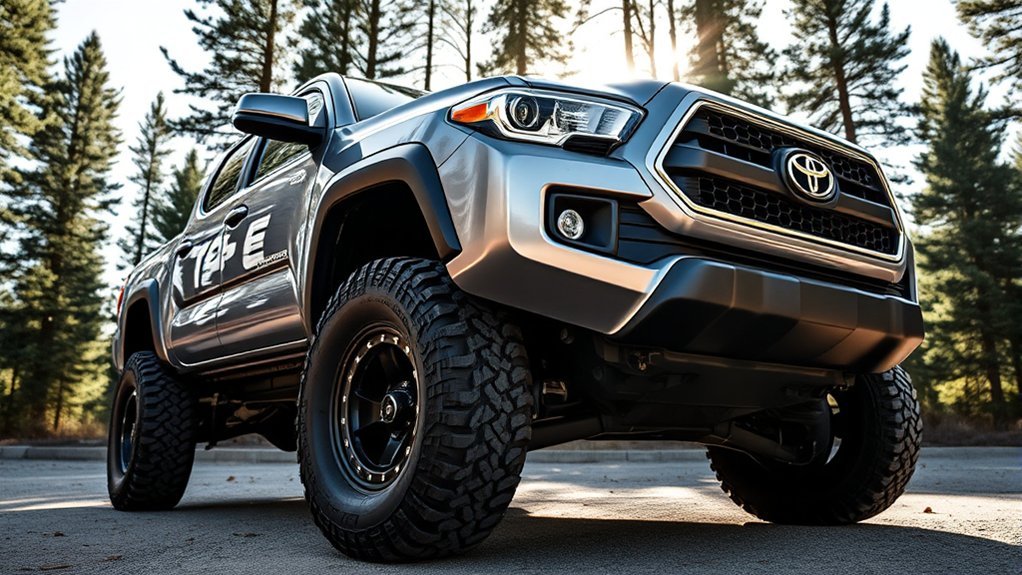
Fitting 35-inch tires on a Toyota Tacoma takes more than choosing a lift height. Your Tacoma’s generation, trim, suspension design, wheel width, offset, tire dimensions, and intended use all affect whether the tires will clear. A combination that fits while driving straight may still rub at full steering lock or when the suspension compresses off-road.
Quick Answer
There is no universal lift height for 35-inch Tacoma tires. Certain 2024–2026 rear-coil Tacomas can use a compatible 3-inch kit with the specified wheels and minor trimming. A documented 2016–2023 setup may use a 6-inch system. Wheel offset, actual tire dimensions, trim level, and clearance work matter as much as lift height.
Key Takeaways
- A 3-inch lift can work on some Tacomas, but only with a verified wheel-and-tire combination and possible trimming.
- A 6-inch lift is not automatically better. It may provide easier clearance but can require major steering, driveline, frame, and wheel changes.
- Wheel offset is critical. Too much inward or outward placement can cause contact with the suspension, body mount, bumper, or fender.
- Adjustable upper control arms and 5.29 gears are not universal requirements. Use the parts and axle ratio appropriate for your exact build.
- Test clearance under real suspension movement before driving at normal road or trail speeds.
At a Glance
| Time Required | Several hours for a straightforward bolt-on installation; multiple shop days if trimming, welding, alignment correction, calibration, or differential gearing is required. |
| Difficulty | Advanced. Professional installation is strongly recommended for systems requiring cutting, welding, frame brackets, steering knuckles, differential work, or electronic calibration. |
| Tools Needed | Vehicle lift or rated jack stands, torque wrench, suspension tools, alignment rack, tire-mounting equipment, and any cutting, drilling, welding, TPMS, or calibration tools specified by the kit manufacturer. |
| Cost | A complete 35-inch build commonly costs several thousand dollars after the lift, tires, wheels, alignment, trimming, labor, spare-tire solution, and any optional gearing are included. |
Warning: A tire that clears in the driveway can still contact the body, suspension, brake lines, or wiring at full lock and full compression. Do not drive at normal speed until the complete wheel-and-tire combination has been checked through the suspension’s usable range.
What Lift Height Is Ideal for 35-Inch Tires on a Tacoma?
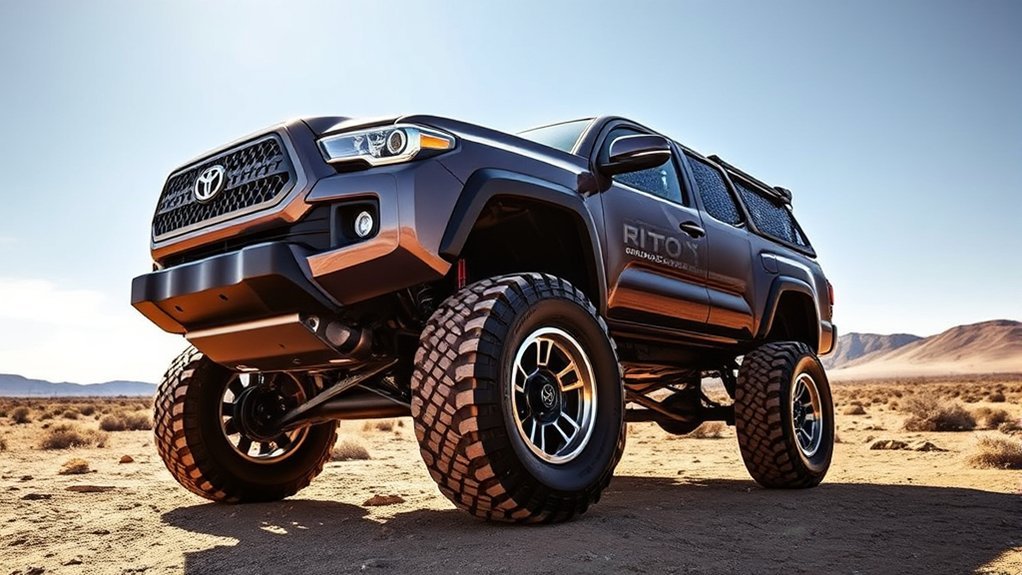
The ideal lift depends on how you want to use your Tacoma. A lower, properly engineered setup can preserve a lower center of gravity, while a complete 6-inch system may create more static space around a wide tire. Neither option guarantees clearance by itself.
A lift mainly changes the vertical relationship between the frame, body, and suspension. Tire rubbing often occurs horizontally at the upper control arm, frame, body mount, bumper, mud flap, fender liner, or pinch-weld area. Wheel offset and caster can therefore affect clearance as much as the advertised lift height.
Lift height creates space, but wheel position and suspension movement determine whether a 35-inch tire actually fits.
[Products Worth Considering]

This manual duck head tire changer kit makes tire installation and removal simpler by letting you embed the duck head into the tire with applied pressure. The integrated design and durable steel construction help reduce friction and improve efficiency and safety during use. Suitable for 16–21 inch wheels, it’s convenient for cars, trucks, SUVs, and ATV tires, with 24-hour after-sales support.

This professional wheel and rim brush kit makes it easy to lift brake dust, grime, and dirt from wheels and tires without scratching finishes. The brushes feature soft, metal-free wool heads and a flexible 360-degree rim brush design for reaching hard-to-clean areas. Includes multiple brush types plus accessories for thorough car, motorcycle, and general vehicle detailing.

These aluminum alloy tire valve stem caps with an O-ring seal help protect valve stems from corrosion while adding a clean, stylish look to your vehicle. The universal fit works across cars, trucks, motorcycles, bicycles, and more, making them an easy upgrade for everyday driving and off-road use. Installation is quick, and the included four-pack keeps all your tires dressed and protected.
Generation-Specific Starting Points
| Tacoma generation | Practical fitment guidance |
|---|---|
| 1995–2004 | Treat 35-inch fitment as a custom build. Use an exact-year suspension system and have the steering, body mounts, frame, brakes, axle gearing, and wheel clearance inspected before buying tires. |
| 2005–2015 | A simple leveling kit should not be assumed to clear 35s. Follow an exact kit manufacturer’s tire table and expect possible body-mount, bumper, liner, caster, and wheel-offset work. |
| 2016–2023 | A documented BDS 6-inch system supports up to 35×12.50 tires with specified 18×9 or 20×9 wheels and 4.5-inch backspacing. Trimming may still be required, and stock wheels cannot be reused with that system. |
| 2024–2026 | A compatible ReadyLIFT 3-inch rear-coil system lists 35×12.50R17 tires with minor trimming. Other systems use approximately 3.5 or 6 inches. Trim, suspension, hybrid, AVS, sway-bar-disconnect, TRD Pro, and Trailhunter exclusions must be checked individually. |
These examples show why “three inches” or “six inches” cannot answer the question by itself. Always select the lift system first, read its fitment notes, and then buy the exact wheel-and-tire combination it supports.
Nominal Tire Size Versus Actual Size
A tire marked 35×12.50R17 may not measure exactly 35 inches tall or 12.50 inches wide on your chosen wheel. For example, current Nitto Terra Grappler G3 specifications list a 35×12.50R17 at about 34.53 inches tall, while other 35-inch models measure closer to 34.8 inches and may be wider across the sidewall.
Check the tire manufacturer’s specifications for:
- Inflated overall diameter
- Inflated overall width
- Approved rim-width range
- Tire weight
- Load index and maximum load
- Revolutions per mile
Essential Modifications Needed for 35-Inch Tire Fitment
Your modification list should come from the lift manufacturer’s installation instructions and a physical clearance test. Not every Tacoma needs the same upper control arms, body-mount work, gussets, or differential components.
Suspension Geometry Correction
A 2- to 3-inch front lift often changes caster, camber, ball-joint position, and available droop. Replacement or adjustable upper control arms may help restore alignment range and ball-joint travel, but they are not automatically required with every lift.
Taller systems may correct geometry with new steering knuckles, crossmembers, differential-relocation brackets, sway-bar drops, bump-stop extensions, and brake-line brackets. Use the complete system as designed instead of combining unrelated parts based only on their advertised lift height.
Body and Fender Clearance
Depending on the generation, wheel offset, and tire width, clearance work may involve:
- Removing or reshaping the front mud flaps
- Heating, relocating, or trimming the plastic fender liner
- Trimming the lower bumper or valance
- Correcting exposed pinch-weld or seam clearance
- Performing a cab-mount chop or body-mount relocation
- Installing longer or correctly positioned bump stops
A cab-mount chop is not automatically necessary. Check the tire at full steering lock while the suspension is compressed before cutting structural or welded components.
Spindle Gussets and Reinforcement
Spindle or steering-knuckle reinforcement can be useful on specific hard-use builds, but it should not be treated as a standard requirement. Add reinforcement only when it is compatible with the installed knuckle, suspension system, wheel, brake package, and intended terrain.
Pro Tip: Before ordering parts, give the installer the tire manufacturer’s measured diameter and width, the wheel width and offset, your Tacoma’s exact trim, and any existing suspension modifications. “35-inch tire” alone is not enough information for an accurate fitment check.
Wheel Width, Offset, and Backspacing
Wheel selection controls where the tire sits inside the wheel well. A wheel with excessive positive offset can pull a wide tire inward toward the upper control arm or steering knuckle. A low or negative offset pushes the tire outward, increasing contact with the bumper, fender liner, body mount, and fender edge.
Do not choose a wheel based only on its diameter. Confirm all of the following:
- Bolt pattern and hub fitment
- Wheel diameter and brake clearance
- Wheel width within the tire’s approved range
- Offset or backspacing listed by the lift manufacturer
- Load rating suitable for the Tacoma’s axle loads
- Stud engagement and lug-seat type
Stock wheels may work with some mild systems, but they cannot be assumed to work with every 35-inch build. The documented BDS 2016–2023 6-inch system, for example, states that the stock wheels cannot be reinstalled.
Best Lift Kits for Fitting 35-Inch Tires on Your Tacoma
The best lift kit is the system that publishes a verified fitment table for your exact Tacoma and includes the components needed to correct its suspension and steering geometry. Avoid choosing a kit solely because it advertises the highest lift.
For 2016–2023 Tacoma Models
The BDS 6-inch Tacoma system is one documented approach for 35×12.50 tires. It uses crossmembers, steering knuckles, differential-relocation brackets, skid plates, sway-bar drops, bump-stop extensions, brake-line brackets, and other application-specific parts.
Important limitations include possible trimming, frame-bracket modification, minor welding, wheel-size restrictions, and incompatibility with certain trims or factory components. This type of system should be installed as a complete package.
For 2024–2026 Tacoma Models
The ReadyLIFT 3-inch SST kit documents 35×12.50R17 fitment with minor trimming on compatible rear-coil Tacoma models. It includes upper control arms and differential-drop components, but it does not fit every suspension or trim configuration.
A taller Rough Country 6-inch system also lists 35×12.50R18 and R20 fitment with minor trimming. However, it excludes several leaf-spring, hybrid, AVS, TRD Pro, Trailhunter, and TRD Off-Road configurations. Its documentation also requires cutting and drilling.
Note: Product fitment can change as manufacturers revise parts or add new Tacoma trims. Verify the current product page, installation document, and exclusions immediately before ordering.
Installation Tips for a Smooth Lift Process
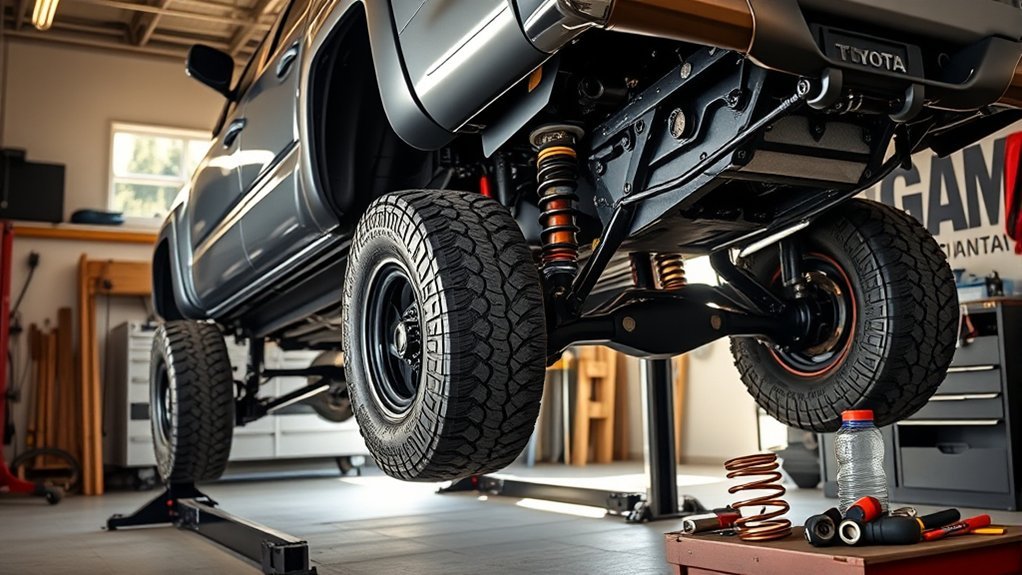
A successful 35-inch tire installation starts with measuring and planning. Do not mount the final tires and assume the remaining clearance problems can be corrected later.
- Identify the exact vehicle configuration. Record the model year, drivetrain, trim, cab, bed, rear suspension type, hybrid status, factory shock package, sway-bar disconnect, and any AVS equipment.
- Select a complete lift system. Confirm that the manufacturer explicitly lists your Tacoma configuration.
- Choose the wheel from the fitment table. Match the required diameter, width, offset, backspacing, and load rating.
- Check the tire’s measured specifications. Use actual diameter, width, approved wheel range, load index, and tire weight.
- Inspect the front-end components. Check ball joints, tie rods, wheel bearings, bushings, CV boots, steering rack mounts, brakes, and existing alignment hardware.
- Install every required geometry component. Do not omit differential drops, steering parts, bump stops, brake-line brackets, or sway-bar components supplied with the system.
- Perform preliminary clearance testing. Check both steering directions before lowering the truck fully.
- Align the truck. Set caster, camber, and toe within the lift manufacturer’s recommended range.
- Cycle the suspension. Check the tire at full lock and controlled compression on both sides, including situations where one front wheel is compressed more than the other.
- Correct rubbing safely. Modify plastic and nonstructural pieces first. Structural cutting or welding should be performed by a qualified fabricator.
- Verify brake-line, ABS-wire, and CV clearance. Nothing should become tight, pinched, or stretched through the available travel.
- Recheck torque. Follow the kit manufacturer’s post-installation torque and inspection schedule.
Warning: Never work under a Tacoma supported only by a hydraulic jack. Use equipment rated for the truck’s weight and follow the lift manufacturer’s installation instructions and torque specifications.
How Larger Tires Affect Your Tacoma’s Performance
Moving to 35-inch tires can increase axle and differential clearance, improve obstacle rollover, and provide a larger footprint when pressure is adjusted correctly for off-road conditions. Those benefits come with added rotating mass and leverage.
Acceleration and Transmission Behavior
A larger effective tire diameter raises the overall gearing. The engine must produce more torque to accelerate the truck, and an automatic transmission may downshift more frequently on hills or while towing. Heavier tires and wheels amplify the effect.
Braking
Large, heavy tires can increase stopping effort because the brakes must control more rotational inertia. Inspect pads, rotors, brake fluid, and tire traction before the conversion. Drive conservatively until you understand the modified truck’s braking distance and emergency behavior.
Steering and Wheel Bearings
Wider tires and aggressive wheel offset can increase steering effort, kickback, scrub radius, and load on wheel bearings, tie rods, ball joints, and steering components. Avoid pushing the tire farther outward than the lift manufacturer’s tested wheel specification.
Fuel Economy and Road Noise
Added weight, rolling resistance, tread aggressiveness, aerodynamic drag, and changed gearing can reduce fuel economy. Mud-terrain tires also tend to create more road noise than milder all-terrain designs.
Ground Clearance and Center of Gravity
Larger tires raise the axle and differential, which a suspension lift alone does not do. The lift and tire combination also raises the truck’s center of gravity. Allow more space for sudden lane changes, corners, side slopes, and emergency maneuvers.
Speedometer, Odometer, and TPMS
A larger tire travels farther with each revolution, which can make the indicated speed and recorded mileage inaccurate unless the vehicle is recalibrated. Confirm available calibration methods for your model year.
Toyota’s 2024 Tacoma owner’s manual also identifies tire-size and pressure changes as situations requiring tire-pressure warning-system initialization.
Do You Need to Re-Gear for 35-Inch Tires?
Re-gearing is not automatically required, and 5.29:1 is not the correct ratio for every Tacoma. Start by calculating the ratio that approximately restores the original effective gearing:
Target axle ratio ≈ original axle ratio × new tire diameter ÷ original tire diameter
For example, changing from an actual 31.6-inch tire to an actual 34.8-inch tire increases the required numerical ratio by about 10 percent if your goal is to restore the original engine speed at a given road speed.
Your final choice may be numerically higher than that calculation when the truck carries armor, camping equipment, a trailer, or heavy mud-terrain tires. Highway-focused drivers may prefer a less aggressive change. Consider:
- Current axle ratio
- Automatic or manual transmission
- Engine and model year
- Actual tire diameter and weight
- Typical highway speed
- Towing and payload use
- Added bumpers, armor, racks, or camping equipment
- Available front and rear differential gear sets
Both differentials on a four-wheel-drive Tacoma must use matching ratios. Differential setup requires specialized measuring tools and should be completed by an experienced drivetrain technician.
[Products Worth Considering]

This spare tire tool kit is designed for the 2004 to 2018 Ford F-150 to help you loosen and tighten wheel lug nuts and manage the spare tire and provided jack functions from underneath the vehicle. It includes the lug nut wrench and extension pieces plus a convenient storage carrying case for organized transport. The jack itself is not included.

Keep your tires properly inflated with this analog VONDIOR tire pressure gauge, designed for fast, easy readings without batteries. The swiveling, two-axis hose and large glow dial help you measure at any tire angle with instant visibility. Built with a protective rubber shield, it supports durable, low-maintenance use for cars and trucks.

The Ziopetru adjustable magnetic wheel alignment tool helps you check and restore camber and caster positioning after removing and reinstalling undercarriage components. With a clear leveling/bubble measurement system and an easy zeroing adjustment knob, it supports precise horizontal angle checking. The strong magnetic base mounts to metal surfaces for convenient use at home on cars, motorcycles, trucks, vans, and SUVs.
Tire Pressure, Load Rating, and Rim Width
Select a tire and wheel combination capable of supporting the Tacoma’s axle loads. A high maximum sidewall pressure does not mean that pressure should be used during normal driving.
The National Highway Traffic Safety Administration recommends checking the owner’s manual and Tire and Loading Information label for the vehicle’s original requirements and consulting a tire professional when selecting another size.
For a non-original tire size, have a qualified tire dealer establish a cold inflation pressure that supports the vehicle’s actual axle load using the tire manufacturer’s load-and-inflation data. Confirm that:
- The tire’s load index is adequate.
- The wheel has an adequate load rating.
- The selected wheel width falls inside the tire manufacturer’s approved range.
- The pressure is appropriate for the load and tire construction.
- The TPMS is initialized or registered as required.
Payload, Towing, and Spare-Tire Considerations
A lift does not increase the Tacoma’s published GVWR, GAWR, payload, or towing limits. Continue following the certification label and owner’s manual for your exact truck.
Lift components, heavier wheels, 35-inch tires, armor, bumpers, sliders, recovery equipment, and a full-size spare add vehicle weight. That weight reduces the remaining capacity available for passengers, cargo, and trailer tongue weight.
A modified truck may also react differently while towing because of its higher center of gravity, altered steering geometry, larger tire sidewalls, and increased braking demand. Keep the truck within its original ratings and use more conservative speeds and following distances until its handling has been evaluated.
Plan for the spare before buying five tires. A 35-inch spare may not fit the factory under-bed location or may reduce departure clearance. Use a properly rated carrier that does not block lighting, overload the bumper, or interfere with the tailgate.
Post-Installation Maintenance
After the lift and tires are installed:
- Recheck all fasteners at the interval specified by the lift manufacturer.
- Inspect the tires for fresh rub marks after the first road and trail tests.
- Watch for uneven tread wear that may indicate toe, camber, caster, or pressure problems.
- Inspect upper and lower ball joints, tie rods, bushings, CV boots, brake hoses, ABS wiring, sway-bar links, shocks, and wheel bearings.
- Check tire pressure when the tires are cold.
- Rotate and balance the tires at the tire manufacturer’s recommended interval.
- Repeat the alignment after suspension components settle if the installer recommends it.
- Investigate vibration, pulling, clunking, steering looseness, or warning lights immediately.
Frequently Asked Questions
Will a 6-inch lift affect my Tacoma’s towing capacity?
The lift does not automatically rewrite Toyota’s published towing rating, but the added parts and heavier tires consume payload and can change steering, braking, and stability. Stay within the original GVWR, GAWR, payload, tongue-weight, and towing limits for your exact Tacoma.
What does a complete lift for 35-inch tires cost?
The lift kit is only part of the total. A complete build may include wheels, tires, a matching spare, labor, alignment, trimming or fabrication, calibration, and optional differential gearing. The finished project commonly costs several thousand dollars, so request an itemized quote for the exact configuration.
How does lift height affect ride quality?
Ride quality depends more on spring rate, shock tuning, unsprung weight, tire construction, pressure, and corrected geometry than on lift height alone. A complete, properly damped system can ride well, while a poorly matched spacer or shock setup may feel harsh or uncontrolled.
Can I use my stock wheels with a lift and 35-inch tires?
Only when the lift manufacturer and tire manufacturer approve the wheel’s diameter, width, offset, backspacing, load rating, and brake clearance. Some systems permit stock wheels with smaller tires but require different wheels for 35s. Other systems state that stock wheels cannot be reinstalled.
What maintenance is required after lifting my Tacoma?
Recheck fastener torque, alignment, tire pressure, tread wear, ball joints, tie rods, bushings, CV boots, wheel bearings, brake hoses, ABS wiring, and sway-bar components. Follow the lift manufacturer’s inspection schedule and investigate any vibration, pulling, noise, looseness, rubbing, or warning light.
Will 35-inch tires fit a Tacoma with a 3-inch lift?
They can fit some Tacoma configurations. ReadyLIFT documents 35×12.50R17 tires with minor trimming on a compatible 2024–2026 rear-coil 3-inch system. That does not mean every 3-inch kit, wheel offset, tire model, Tacoma generation, or trim will clear.
Conclusion
A Tacoma does not have one universal lift requirement for 35-inch tires. Some verified fourth-generation setups use approximately 3 inches of lift with the correct wheels and minor trimming, while documented third-generation systems may use 6 inches and more extensive geometry correction.
Choose the complete lift system first, follow its exact wheel-and-tire table, verify the tire’s measured dimensions, and test full-lock and compressed clearance before regular driving. Treat upper control arms, body-mount work, spindle reinforcement, and differential gearing as application-specific decisions rather than automatic requirements.
Sources
- Toyota 2024 Tacoma Owner’s Manual: Maintenance Data — factory tire sizes, wheel specifications, inflation pressures, and wheel torque information.
- Toyota 2024 Tacoma Owner’s Manual: Items to Initialize — TPMS initialization after changing tire size or pressure settings.
- NHTSA TireWise — tire selection, inflation, loading-label, inspection, and maintenance guidance.
- ReadyLIFT 3-Inch SST Kit for 2024–2026 Tacoma — documented 35-inch fitment, wheel requirements, minor trimming, and trim exclusions.
- BDS 6-Inch Lift Kit for 2016–2023 Tacoma — documented tire sizes, wheel backspacing, geometry components, and installation limitations.
- Nitto Terra Grappler G3 Specifications — measured tire dimensions, approved wheel widths, tire weight, and load specifications.
[Products Worth Considering]
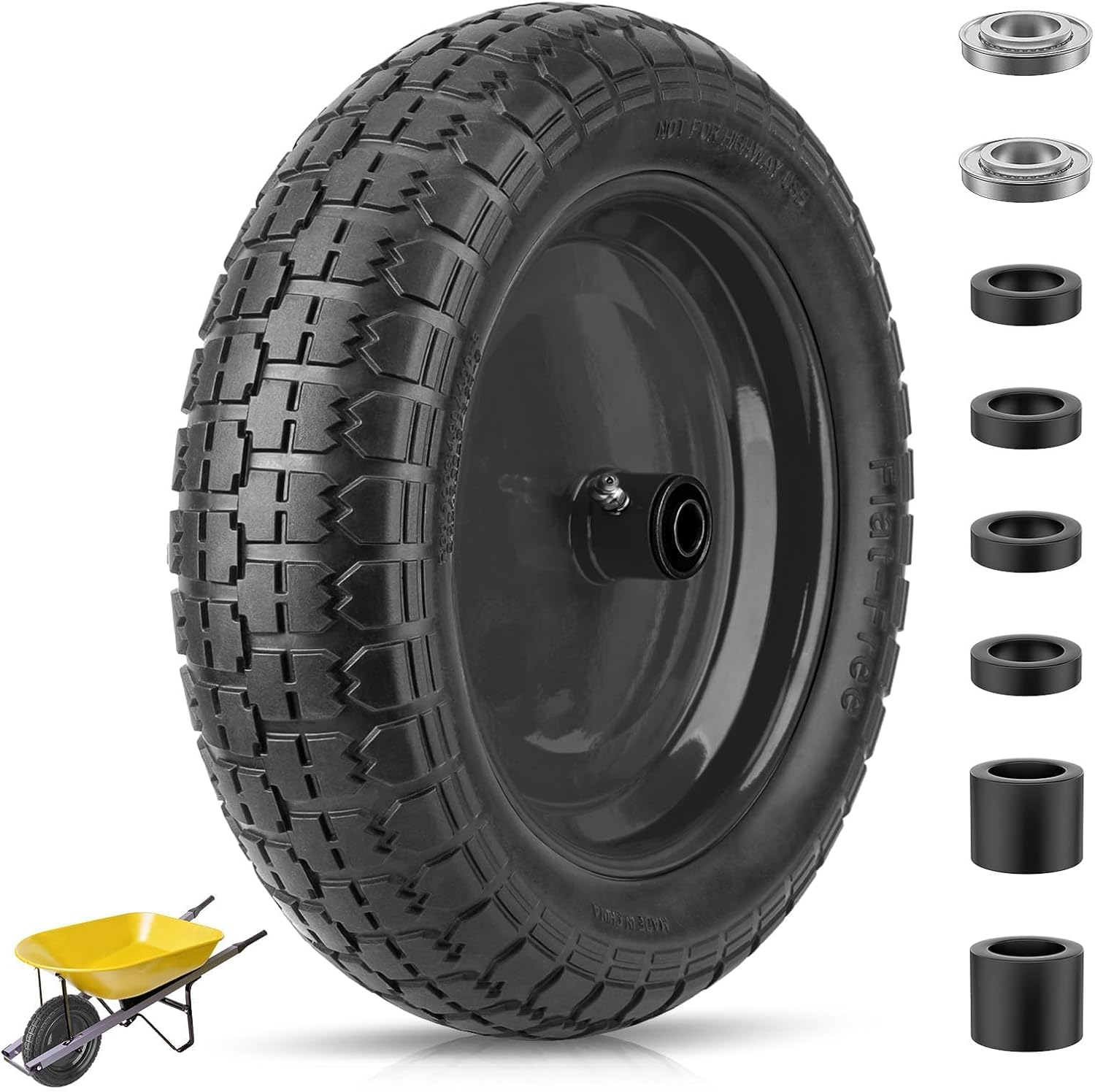
This flat-free TICONN wheelbarrow tire features durable polyurethane foam construction that never needs inflation, helping prevent punctures and reducing maintenance on rough outdoor terrain. With a 300 lb max load capacity and stable steel rim design, it supports safer transport for yard work and hauling tasks. An adapter kit with ball bearings and nylon spacers is included for easier fit and customization across common wheelbarrow and cart axle setups.

Upgrade your 2024-2026 Tesla Model 3 Highland with REEVAA all-weather mud flaps designed for seamless fit along the original body lines. The set of four delivers strong splash protection against mud, gravel, and road debris while using OEM-grade durable materials. Installation is non-destructive with original hole positions and snap-in clips, and the aerodynamic design helps minimize impact on efficiency.

The 22800 wheel stud installer makes replacing wheel studs quick and secure, saving time and effort during tire service. It uses a ratchet or impact wrench to pull new studs firmly into place, helping when existing studs are too long. Compatible with most automotive wheels and light-duty truck wheel studs, it’s designed for easy, tool-assisted installation.

Related Articles
How Tire Weight Affects Toyota Tacoma Performance
How does tire weight influence your Toyota Tacoma's performance and efficiency? Discover the surprising effects that could change your driving experience.
Read More
Tire Noise Levels by Tire Type on a Toyota Tacoma
A comprehensive look at how tire types affect noise levels in your Toyota Tacoma reveals surprising insights that could enhance your driving experience.
Read More
How To Choose Tires for a Dual Use Toyota Tacoma
Unlock the secrets to selecting the perfect tires for your dual-use Toyota Tacoma, ensuring optimal performance and comfort on every adventure. Discover more inside!
Read More