
How Often To Get Alignment on a Toyota Tacoma
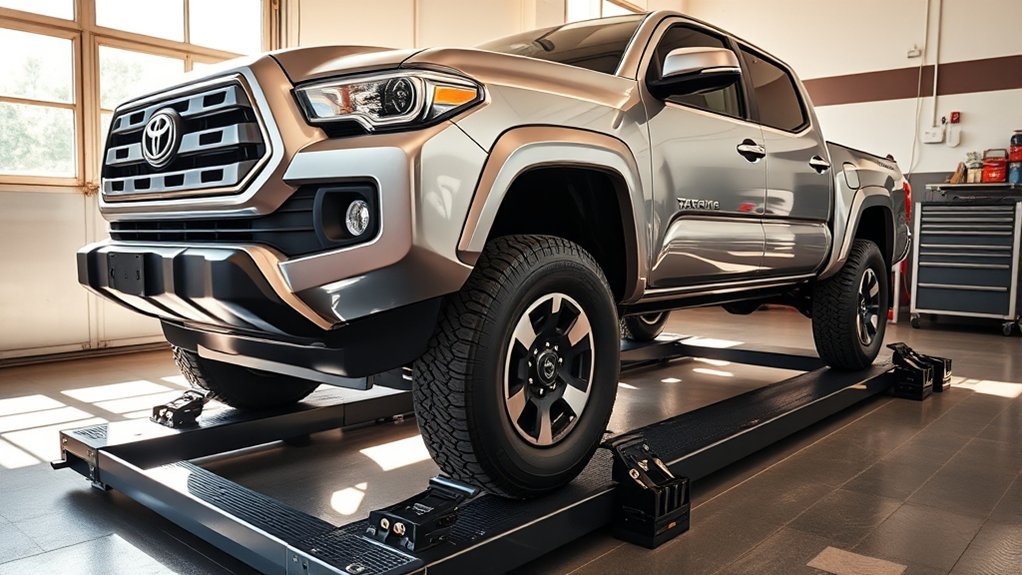
You should check your Toyota Tacoma alignment at least once a year, whenever you install new tires, and any time the truck starts pulling, the steering wheel sits off-center, or the tires show uneven wear. If you drive off-road, hit potholes often, tow heavy loads, or run a lift or leveling kit, check it more often.
Quick Answer
For most Toyota Tacoma drivers, a good rule is to inspect alignment yearly or around tire-rotation service, then schedule an alignment after new tires, suspension work, a lift kit, a hard pothole hit, curb impact, or any pulling, vibration, crooked steering wheel, or uneven tire wear.
Key Takeaways
- Check alignment at least once a year, sooner if you drive rough roads, trails, or construction zones.
- Schedule an alignment after new tires, suspension repairs, lift kits, leveling kits, or hard impacts.
- Common warning signs include pulling, an off-center steering wheel, vibration, and one-sided tire wear.
- A Tacoma alignment usually takes 30 to 90 minutes if no worn suspension parts need repair first.
At a Glance
| Time Required | 30 to 60 minutes for many front-end checks; 60 to 90 minutes for many four-wheel alignments |
| Difficulty | DIY inspection is easy; actual alignment adjustment needs a professional alignment rack |
| Tools Needed | Tire-pressure gauge, tread-depth gauge, flashlight, and a professional alignment machine for final adjustment |
| Cost | Often about $75 to $200, depending on location, shop type, alignment type, and whether repairs are needed first |
How Often Should You Align Your Toyota Tacoma?
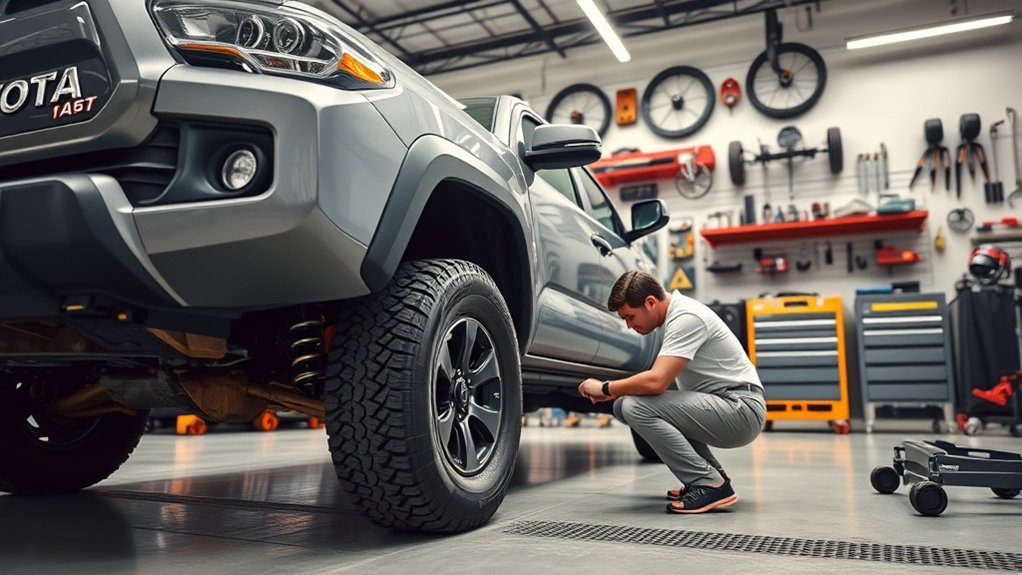
There is not one perfect mileage number for every Tacoma because tire size, model year, suspension setup, road conditions, and driving style all matter. For normal street driving, inspect alignment at least once a year and watch tire wear at every rotation. The Toyota Owners manuals and warranties page is the best place to check the maintenance guide for your exact year and trim.
You should also schedule an alignment right away after:
- Installing new tires
- Replacing shocks, struts, control arms, tie rods, ball joints, steering parts, or leaf-spring components
- Installing a lift kit, leveling kit, aftermarket control arms, or different wheel/tire size
- Hitting a curb, pothole, rock, rut, or trail obstacle hard enough to jolt the steering
- Noticing pulling, wandering, vibration, uneven tire wear, or an off-center steering wheel
Pro Tip: If you are already paying to mount new tires, ask for the alignment check before you put serious miles on them. New tires can hide old wear patterns for a short time, but bad alignment will start wearing them unevenly fast.
[Products Worth Considering]

EVOULTES heavy duty tire inflator with an integrated gauge delivers accurate pressure readings from 10–120 PSI, helping you inflate, deflate, and check tires in one tool. The 16.5-inch extended dual-head air chuck with swivel base reaches hard-to-access dual wheel valves on trucks and RVs. A brass trigger core and side-mounted air release valve make operation smooth, with standard 1/4" NPT threading and quick-connect compatibility for easy setup.

This portable cordless tire inflator delivers up to 160 PSI with fast 17 L/min airflow to help you quickly top up tires and get back on the road. It features dual power mode, running on a 21V rechargeable battery or a 12V DC adapter for convenient roadside use. An automatic shut-off with digital pressure gauge helps prevent overinflation, and a built-in LED light improves visibility in low-light conditions.

The JACO FlowPro Tire Inflator measures, inflates, and airs down tires up to 100 PSI with battery-free operation and ±2% accuracy after calibration. It features a glowing pressure dial for night visibility, a heavy-duty steel build with a hybrid hose, and a precision push-to-inflate thumb trigger. The patented Lightning Air Chuck locks on for a secure seal, and the kit includes quick-connect hardware for easy inline use with your air compressor.
Signs That Indicate Your Tacoma Needs an Alignment
Alignment problems usually show up in the way your Tacoma drives or the way the tires wear. Do not wait for the tread to become badly worn before checking it.
- Off-center steering wheel: The wheel sits crooked while the truck drives straight.
- Pulling to one side: The Tacoma drifts left or right on a straight, level road.
- Uneven tire wear: One edge of the tire wears faster than the rest of the tread.
- Wandering: The truck feels loose or needs constant correction to stay in the lane.
- Steering-wheel vibration: This may be alignment, tire balance, tire damage, or worn steering/suspension parts.
- Noisy tires: Feathered or cupped tread can make a humming or growling sound.
The National Highway Traffic Safety Administration says wheel alignment helps maximize tire life and helps prevent a vehicle from veering left or right on a straight, level road. It also recommends regular tire pressure, tread, rotation, balance, and alignment care as part of safe tire maintenance.
Warning: If your Tacoma suddenly pulls hard, shakes badly, or has a bulged, cut, or visibly damaged tire after an impact, do not keep driving at highway speed. Slow down safely, inspect the tires, and have the truck checked before continuing.
Why Four-Wheel Alignment Matters for Your Tacoma
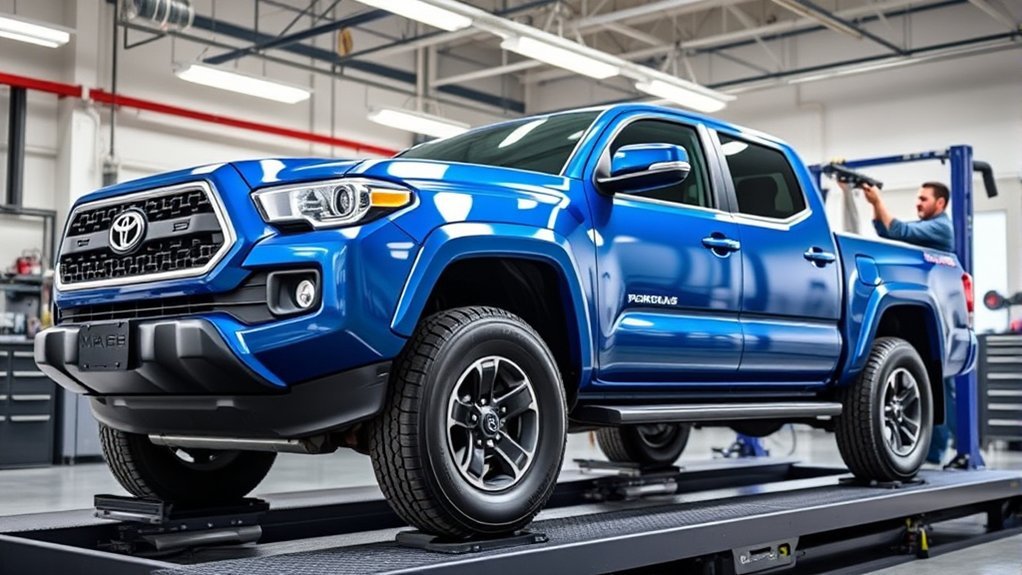
A four-wheel alignment does more than point the front tires straight. It checks how all four wheels sit in relation to each other and to the frame. Even when some rear settings are not adjustable on a specific Tacoma, the alignment report can still show rear tracking and thrust angle, which affects whether the truck drives straight.
This matters because Tacoma rear suspension design varies by year and trim. Toyota says the 2024 Tacoma added an available multi-link coil rear suspension, while leaf springs remain standard on SR, SR5 XtraCab, and TRD PreRunner grades. Older Tacoma models also use different rear suspension setups. That is why a shop should align your truck to the correct factory specifications for your exact year, trim, ride height, and tire setup.
A proper alignment check normally reviews:
- Toe: Whether the tires point slightly inward or outward
- Camber: Whether the tire leans inward or outward from vertical
- Caster: The steering-axis angle that affects tracking and steering return
- Thrust angle: Whether the rear wheels or axle point straight with the vehicle centerline
- Steering wheel center: Whether the wheel is straight after adjustments
How Driving Conditions Impact Your Tacoma’s Alignment
Driving conditions can shorten the time between alignment checks. A Tacoma used mostly on smooth highways may hold alignment longer than one used for trails, job sites, gravel roads, heavy towing, or daily pothole hits.
Check alignment more often if you deal with:
- Off-road trails: Rocks, ruts, and washboard roads can stress steering and suspension parts.
- City potholes: A sharp impact can change alignment or damage a tire or wheel.
- Curb strikes: Even low-speed impacts can bend or shift components.
- Heavy loads and towing: Extra weight can change ride height and tire wear patterns.
- Lift kits or leveling kits: Ride-height changes can alter caster, camber, and toe.
- Oversized tires: Larger tires can make small alignment problems easier to feel.
Note: If your Tacoma is lifted, ask for a shop that understands Toyota trucks and aftermarket suspension geometry. Some lifted setups need extra adjustment parts to bring caster and toe back into a stable range.
What Happens If You Ignore Alignment Issues?
Ignoring alignment problems can cost more than the alignment itself. The main risks are faster tire wear, worse handling, lower comfort, and extra strain on steering and suspension parts.
NHTSA reported 511 deaths in tire-related crashes in 2024, which is a reminder that tire condition, pressure, tread, balance, and alignment are safety issues, not just maintenance details.
Increased Tire Wear
Misalignment can scrub the tire across the road instead of letting it roll cleanly. That can create feathering, shoulder wear, cupping, or one-sided tread wear. Once the wear pattern is established, even a later alignment may not fully quiet or smooth the tire.
To protect your tires:
- Check tire pressure monthly and before long trips.
- Rotate tires at the interval listed in your Tacoma maintenance guide.
- Inspect tread depth and tire shoulders during oil changes.
- Align the truck before new tires develop abnormal wear.
Poor Handling Performance
A misaligned Tacoma may pull, wander, or feel unstable at speed. You may also notice that the steering wheel no longer returns smoothly after a turn. On a truck used for towing, trails, or wet roads, poor tracking can make the vehicle feel less predictable.
Do not assume every vibration is alignment. Tire balance, bent wheels, worn ball joints, loose tie rods, damaged shocks, and tire separation can feel similar. A good shop should inspect those items before adjusting alignment.
Decreased Fuel Efficiency
Bad alignment can add rolling resistance because the tires are not tracking cleanly. That can make the engine work harder and may reduce fuel economy. The bigger cost, though, is often tire wear. Replacing a set of truck tires early usually costs far more than a timely alignment.
Alignment vs. Rotation vs. Balancing
These services are related, but they are not the same.
- Alignment adjusts wheel angles so the tires meet the road correctly and the truck tracks straight.
- Rotation moves tires to different positions to even out normal wear.
- Balancing corrects weight imbalance in the tire and wheel assembly to reduce vibration.
If your Tacoma shakes mostly at certain speeds, start with tire balance and tire inspection. If it pulls, wears one tire edge, or has a crooked steering wheel, alignment is more likely. If the tires are wearing normally but faster in one position, rotation may be the missing step.
What You Should Expect to Pay for Tacoma Alignments
Most Tacoma alignment jobs fall somewhere around $75 to $200, depending on your area, the shop, the alignment type, and whether your truck is stock or modified. A simple front-end alignment is usually cheaper than a four-wheel alignment. A lifted Tacoma, rusted adjusters, worn parts, or bent components can raise the price.
Extra costs may appear if the technician finds:
- Worn tie rods, ball joints, control-arm bushings, or wheel bearings
- Bent wheels or damaged tires
- Seized alignment bolts or rusted hardware
- Aftermarket suspension parts that need extra adjustment time
- A lift kit that needs caster correction parts
Ask for a printed or digital before-and-after alignment report. It should show the readings before adjustment, the target range, and the final readings after adjustment.
How Long Does a Wheel Alignment Take for a Tacoma?
A Toyota Tacoma wheel alignment usually takes 30 to 90 minutes when the truck is in good shape. It can take longer if the shop has to free seized bolts, inspect worn parts, correct a lifted setup, or replace damaged suspension components first.
[Products Worth Considering]

Camco Trailer Aid Plus tandem tire ramp lifts your trailer for quick, safe tire changes with ample clearance from its 5 1/2-inch lift. It helps you change a flat tire without unloading cargo, making roadside and routine maintenance more efficient. The heavy-duty, waterproof and rustproof polymer design supports up to 15,000 lb and is built for easy portability and storage.

Universal magnetic jack pad with aluminum grooved design to protect vehicle pinch welds during lifting. Durable nylon pad inserts are upgraded and secured with screws to resist damage and keep in place. Designed to fit most single vehicle pinpoint welds for safer, stable jacking when changing tires, repairs, or performing oil changes.
Typical Timeframes Involved
- Quick alignment check: about 10 to 20 minutes at some shops
- Front-end alignment: often 30 to 60 minutes
- Four-wheel alignment: often 60 to 90 minutes
- Alignment plus repairs: two hours or more if parts are worn or damaged
Factors Affecting Duration
The biggest time factors are suspension condition, rust, aftermarket parts, tire size, and whether the truck is lifted. Shops with newer alignment equipment can measure the truck quickly, but the adjustment still depends on whether the parts move freely and whether the truck can be brought into specification.
What to Check Before Booking an Alignment
Before paying for an alignment, do a quick inspection. This can help you avoid aligning a truck that has a tire, wheel, or suspension problem that needs repair first.
- Set tire pressure to the door-jamb placard or your correct load/tire setup.
- Check all tires for cuts, bulges, punctures, cupping, and uneven shoulders.
- Make sure the bed is not loaded heavily on one side.
- Look for bent wheels or fresh curb damage.
- Listen for clunks over bumps, which may point to loose or worn suspension parts.
- Tell the shop if the truck has a lift, leveling kit, aftermarket control arms, or larger tires.
If a tire is damaged or a steering part is loose, fix that first. Aligning a truck with worn parts usually wastes money because the settings can shift again.
Debunking Myths on How Often to Align Your Tacoma
Alignment advice often gets oversimplified. Here are the big myths to avoid.
- Myth: You only need alignment when the truck pulls. Uneven tire wear can appear before strong pulling does.
- Myth: New tires fix alignment problems. New tires may feel better at first, but they will wear poorly if the alignment is still off.
- Myth: Off-road trucks do not need precise alignment. They do, especially if they drive highway miles between trail trips.
- Myth: A lifted Tacoma can always be aligned to stock specs. Some lifts need aftermarket control arms or caster correction to align properly.
- Myth: Rear alignment never matters on a truck. Even when rear adjustment is limited, rear tracking and thrust angle still affect how straight the truck drives.
When to Schedule Alignments After New Tire Installation?
Schedule an alignment check when you install new tires, especially if the old tires had uneven wear. New tires are expensive, and alignment problems can start wearing them unevenly within the first few thousand miles.
If the shop says the old tires wore evenly and the truck drives perfectly straight, you may only need an alignment check, not necessarily a full adjustment. But if the steering wheel is off-center, the truck pulls, or the old tires were feathered or worn on one shoulder, do the alignment before you drive far on the new set.
How to Find Top Tacoma Alignment Services
Look for a shop that understands Toyota trucks, especially if your Tacoma is lifted, used off-road, or fitted with larger tires. A good alignment is not just a machine reading. The technician needs to inspect the suspension, understand the truck’s setup, and center the steering wheel correctly.
Research Local Shops
Compare Toyota dealerships, independent repair shops, and tire stores. Dealerships may be best for stock trucks under warranty or when you want factory familiarity. Independent 4×4 shops may be better for lifted Tacomas or aftermarket suspension setups. Tire shops can be convenient when buying new tires and may offer alignment packages.
Before booking, ask:
- Do you align lifted Tacomas?
- Can you provide a before-and-after alignment printout?
- Do you inspect ball joints, tie rods, bearings, and bushings first?
- Can you align to factory specs for my exact model year and trim?
- Do you warranty the alignment if the truck still pulls?
Check Service Certifications
Choose qualified technicians when possible. The National Institute for Automotive Service Excellence says ASE certification is based on testing and relevant hands-on work experience. ASE certification is not the only sign of a good shop, but it is a useful trust signal when comparing alignment services.
Frequently Asked Questions
How often should a Tacoma get an alignment?
Check your Tacoma alignment at least once a year, and sooner after new tires, suspension work, lift kits, hard pothole hits, curb strikes, off-road use, pulling, uneven tire wear, or an off-center steering wheel. Also inspect tire wear at every tire rotation.
What is the most common thing that messes up Tacoma alignment?
The most common causes are pothole impacts, curb strikes, worn steering or suspension parts, off-road impacts, lift or leveling kits, and new suspension components installed without a follow-up alignment. Oversized tires can also make small alignment problems more noticeable.
How long does an alignment take on a Tacoma?
Most Tacoma alignments take 30 to 90 minutes. Expect more time if the truck is lifted, has seized alignment bolts, needs suspension repairs, has worn steering parts, or requires extra adjustment to center the steering wheel correctly.
Do I need an alignment after getting new tires?
You should at least get an alignment check after new tires. If the old tires had uneven wear, the truck pulls, or the steering wheel is crooked, schedule a full alignment so the new tires do not start wearing unevenly.
Is balancing the same as alignment?
No. Balancing corrects weight distribution in the tire and wheel assembly to reduce vibration. Alignment adjusts wheel angles so the Tacoma tracks straight and the tires contact the road correctly. You may need both services, especially after installing new tires.
Conclusion
Keeping your Toyota Tacoma alignment in check protects your tires, steering feel, fuel economy, and safety. For most drivers, a yearly alignment check is smart, but you should check sooner after new tires, suspension work, lift kits, hard impacts, or any pulling and uneven wear. Use your Tacoma’s model-year maintenance guide, ask for a before-and-after alignment report, and choose a shop that understands your exact suspension setup.
Sources
- NHTSA TireWise — tire safety, tire pressure, tire tread, tire rotation, balance, and alignment guidance
- Toyota Manuals and Warranties — model-specific owner manuals and warranty/maintenance guide access
- Toyota USA Newsroom: 2024 Toyota Tacoma — current Tacoma suspension and chassis details
- National Institute for Automotive Service Excellence — ASE certification and technician credential context

Related Articles
How Tire Weight Affects Toyota Tacoma Performance
How does tire weight influence your Toyota Tacoma's performance and efficiency? Discover the surprising effects that could change your driving experience.
Read More
Tire Noise Levels by Tire Type on a Toyota Tacoma
A comprehensive look at how tire types affect noise levels in your Toyota Tacoma reveals surprising insights that could enhance your driving experience.
Read More
How To Choose Tires for a Dual Use Toyota Tacoma
Unlock the secrets to selecting the perfect tires for your dual-use Toyota Tacoma, ensuring optimal performance and comfort on every adventure. Discover more inside!
Read More