Toyota Tacoma Tire Setup for Camping Trips
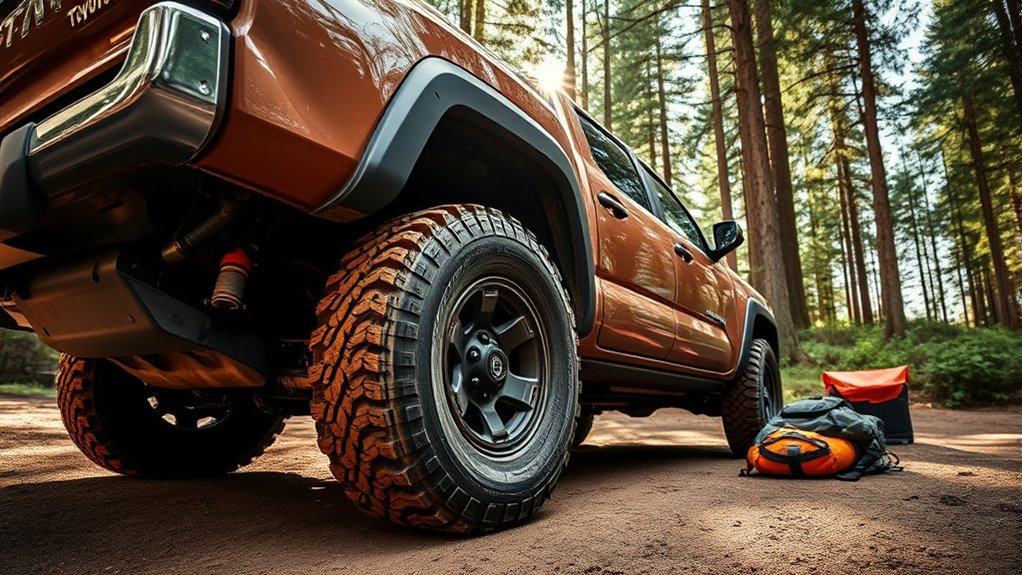
Your Toyota Tacoma can be a strong camping platform, but the best tire setup depends on your model year, trim, suspension height, wheel specs, payload, and the type of trails you drive. A tire that fits one Tacoma without rubbing may contact the fender liner, mud flap, or cab mount on another. Start with your door-jamb tire placard and owner’s manual, then choose a tire size that matches your camping load and off-road needs.
Quick Answer
For most Tacoma camping builds, stay close to the factory tire diameter on stock suspension, move to a mild 32- to 33-inch all-terrain tire with a leveling kit, and treat 35-inch tires as an advanced setup that may need trimming, alignment work, spare-tire planning, and professional fitment checks.
Key Takeaways
- Stock Tacoma setups should usually stay near the factory tire size unless you confirm clearance, load rating, and speedometer impact.
- A leveling kit can open the door to popular sizes such as 275/70R17 or 285/70R17, but wheel offset and alignment still matter.
- A 3-inch lift does not automatically make 35-inch tires easy. Rubbing, cab mount clearance, gearing, braking feel, and spare storage can become issues.
- For camping, tire load rating and payload are just as important as tire diameter because racks, water, recovery gear, and roof tents add weight fast.
- Use all-terrain or rugged-terrain tires for most camping trips. Mud-terrain tires are better for deep mud and rocks, but they are usually louder and heavier on the road.
At a Glance
| Time Required | 30 to 60 minutes to plan; longer if measuring clearance or test-fitting wheels |
| Difficulty | Moderate for tire selection; advanced for aggressive offsets, trimming, cab mount work, or 35-inch tires |
| Tools Needed | Owner’s manual, tire placard, tape measure, tire-pressure gauge, load-rating chart, and a trusted tire shop for final fitment |
| Cost | Usually the cost of tires and mounting; more if you need wheels, alignment, trimming, lift parts, a spare, or recalibration |
Choosing the Right Tire Size for Your Tacoma
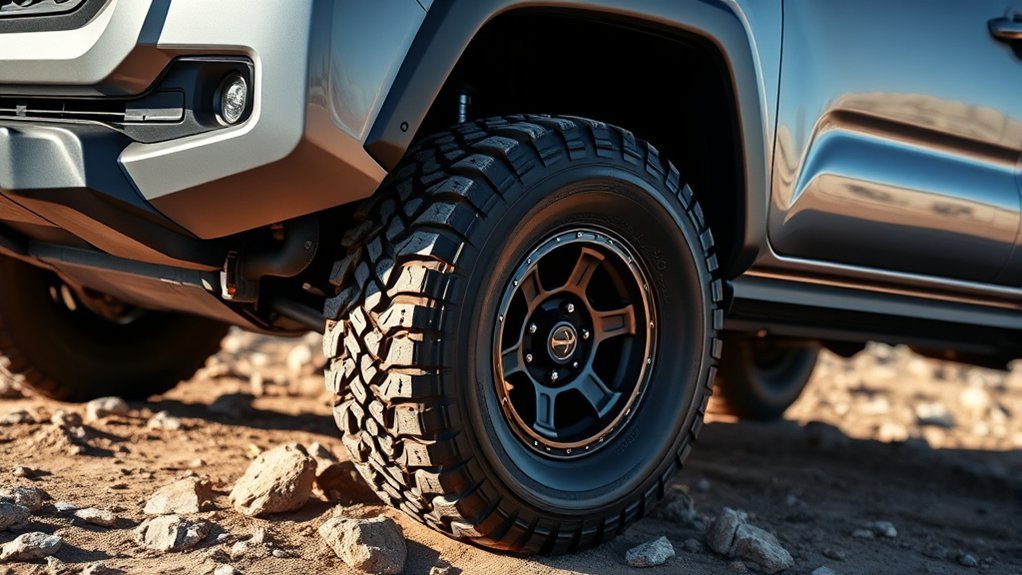
Choosing the right tire size for your Toyota Tacoma starts with the exact truck you own. Check your model year, trim, factory wheel size, suspension height, and the tire placard on the driver’s door jamb. You can also confirm factory information through the Toyota owner’s manual lookup.
For many older stock Tacoma setups, common sizes such as 265/70R16 or 265/65R17 are sensible because they stay close to factory fitment. On newer Tacomas, factory tire sizes vary by trim, so do not assume those sizes fit every truck. If your Tacoma came with a different wheel and tire package, use that as your baseline.
| Tacoma Setup | Common Tire Direction | Fitment Notes |
|---|---|---|
| Stock suspension | Stay near factory size, often around 31 to 32 inches depending on year and trim. | Best for daily driving, fuel economy, braking feel, and low rubbing risk. |
| Leveling kit | Popular options include 275/70R17 or 285/70R17 when wheel specs and clearance support them. | May need mud flap removal, liner adjustment, or alignment changes. |
| 3-inch lift | Sizes such as 285/75R16, 295/70R17, or 35-inch tires may be considered. | Aggressive builds may need trimming, cab mount clearance work, wheel offset changes, and spare-tire planning. |
Warning: Do not buy tires by diameter alone. Match or exceed the proper load rating for your truck and camping gear, confirm wheel width compatibility, and make sure the tires are legal for road use in your area.
[Products Worth Considering]

The VIAIR 400P EF is a 12V portable air compressor designed for off‑road trucks and SUVs, delivering fast, high‑performance inflation for up to 35‑inch tires. Its upgraded head improves heat dissipation and reduces noise, while a 5‑in‑1 hose and dual‑compartment bag add convenience. Versatile power options and a stable I‑Beam sand tray make it ideal for rugged terrain and heavy‑duty use.

The EVC31 PRO is a compact, rechargeable tire inflator that delivers up to 150 PSI using dual power sources, including lithium‑ion batteries and a 12V car outlet. Its automatic shut‑off ensures precise inflation without over‑inflation, while the 30‑inch hose and LED gauge make roadside assistance quick and easy. Ideal for cars, trucks, SUVs, motorcycles and e‑bikes, it fits comfortably in a glove box or emergency kit.

The VIAIR 300P delivers reliable tire inflation for trucks, SUVs, and jeeps with up to 150 PSI pressure and a 33% duty cycle, ensuring quick recovery from flats on and off road. Its 12‑volt operation and 2.30 CFM free flow make it ideal for emergency roadside use, while the deluxe dual‑compartment carry bag adds convenience and portability. Easy to connect to a vehicle battery and equipped with a 5‑in‑1 gauge, it provides accurate pressure monitoring and hassle‑free operation.
Check Load Rating Before You Add Camping Gear
Camping weight adds up quickly. Passengers, coolers, water, recovery boards, tools, firewood, a bed rack, and a roof tent can push your Tacoma close to its payload limit. Before choosing a tire, check the payload sticker on your truck and confirm that the tire load index can safely support the loaded vehicle.
Many Tacoma owners choose LT-rated all-terrain tires for camping because they can offer stronger sidewalls and higher load capacity in the right size. The trade-off is weight, road noise, and a firmer ride. If your trips are mostly paved roads and maintained campgrounds, a quality P-metric or C-load all-terrain may feel better than a heavy E-load tire.
Account for Speedometer and Drivability Changes
A taller tire changes the tire’s rolling diameter. That can make your speedometer and odometer read low, reduce acceleration, change shift behavior, and add braking load. Small changes are usually manageable, but big jumps should be checked with a tire-size calculator and corrected with recalibration when possible.
How to Choose the Right Wheel Fitment and Offset for Your Tacoma?
Wheel fitment is where many Tacoma builds run into trouble. The 2024-present Tacoma uses a 6-lug pattern, and many 6-lug Tacoma setups use a 6×139.7mm bolt pattern, but you should still confirm the bolt pattern, hub bore, wheel load rating, lug hardware, and brake clearance for your exact model before ordering wheels.
For stock setups, wheel sizes around 17×8 or 17×8.5 often keep the truck close to factory behavior. For a leveled Tacoma, 17×8.5 or 17×9 wheels are common because they can support wider tires without looking too tucked. For aggressive lifts and wide tires, 17×9 or 18×9 wheels may work, but they increase the need for careful offset and clearance checks.
A negative wheel offset pushes the tire outward. That can help clear the upper control arm, but it can also create fender-liner rubbing, mud flap contact, tire poke, and more spray on the side of the truck. Instead of treating -10 to -38mm offset as one universal answer, use this safer approach:
- Mild camping build: stay close to factory offset or use only a small negative offset for better clearance.
- Moderate all-terrain build: use a mild negative offset only after checking full-lock clearance.
- Aggressive trail build: expect more poke, more trimming, and a higher chance of rubbing.
Pro Tip: If you are choosing wheels and tires together, test fit before mounting all four. Turn the steering from lock to lock, check the mud flaps and cab mount area, and compress the suspension if possible.
Selecting the Best Tire Types for Enhanced Off-Road Performance
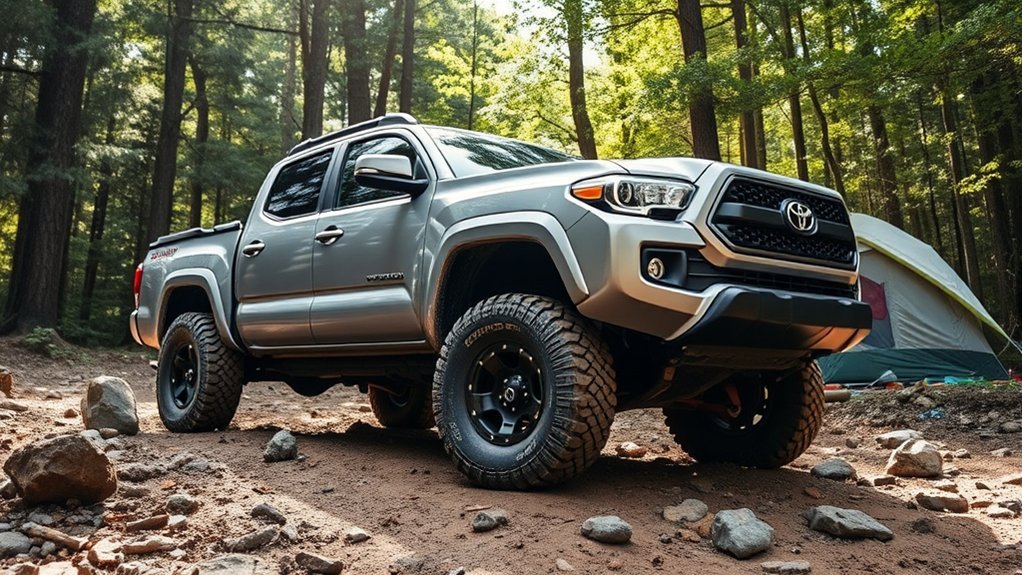
For most Tacoma camping trips, an all-terrain tire is the best balance. It gives you stronger dirt, gravel, and light mud traction than a highway tire while staying more comfortable and quieter than a mud-terrain tire on long drives.
- Highway-terrain tires: best for pavement, fuel economy, and low noise. Choose these if you mostly camp at paved or well-maintained sites.
- All-terrain tires: the best all-around choice for forest roads, gravel, mild rocks, and mixed camping use.
- Rugged-terrain tires: a middle ground between all-terrain and mud-terrain. They often look aggressive and add sidewall strength, but may be heavier.
- Mud-terrain tires: best for deep mud and more serious trail use. They are usually louder, heavier, and less comfortable for highway-heavy camping trips.
If you camp in cold climates, look for a tire with the Three-Peak Mountain Snowflake symbol when winter traction matters. A tire can have an aggressive tread and still perform poorly on packed snow or ice, so do not choose by appearance alone.
Aggressive tires such as Falken Wildpeak all-terrain models, BFGoodrich All-Terrain T/A models, Toyo Open Country all-terrain models, and similar tires can work well on Tacoma camping builds, but the best choice depends on size availability, load range, road noise, wet braking, and the terrain you drive most often. Always confirm the current tire model, because tire lines change over time.
[Products Worth Considering]

The ALL-TOP 4 Tire Inflation & Deflation System lets you inflate or deflate up to four tires simultaneously with precise ±0.1 PSI accuracy, saving time on overland and off‑road trips. Its built‑in backlit digital gauge, auto shut‑off couplers, and quick‑stop slider provide easy pressure management in any weather. The premium TPU braided hose reaches wheelbases up to 200 inches, and the fitting package covers over 90% of air source connections.

The VEVOR dual-cylinder air compressor delivers rapid 30‑second inflation with 10.6 CFM airflow and 150 PSI pressure, making it ideal for tires and inflatable equipment. Its lightweight design, built‑in thermal cut‑off, and versatile nozzle adapters ensure safe, portable use for cars, trucks, RVs, motorcycles and more. The complete kit includes a long hose, gauge, adapters and a tool bag for on‑the‑go road trips.
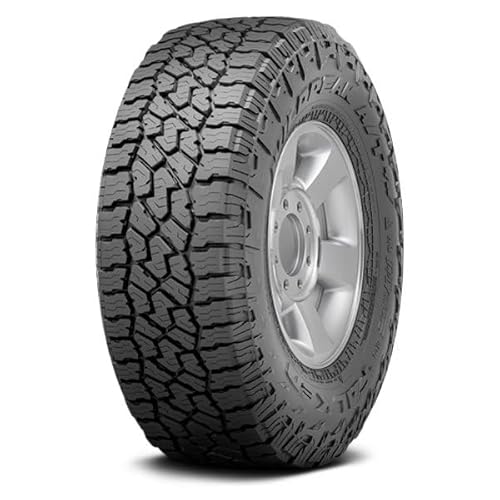
All-terrain, all-weather tire
How to Prevent Rubbing Issues on Your Tacoma?
To keep your Tacoma from rubbing with larger tires, check clearance in more than one position. A tire may clear while parked straight but rub at full steering lock, while reversing, or when the suspension compresses on a trail.
- Check full steering lock: turn left and right while parked and inspect the fender liner, mud flaps, body mount area, and upper control arm clearance.
- Check reverse turns: many tire rubs show up while backing up at full lock.
- Inspect compression clearance: look for contact points when the suspension is loaded or flexed.
- Start with simple fixes: mud flap removal, liner repositioning, and alignment changes may solve mild rubbing.
- Use trimming carefully: trimming the inner liner can help, but cutting metal or doing a cab mount chop should be done by a qualified shop.
If you plan to run tires around 33 inches or larger, expect the fitment to depend on tire brand, true measured diameter, wheel width, offset, caster, and suspension parts. A cab mount chop may be needed on some aggressive setups, but it should not be treated as a casual driveway job unless you have the right tools and experience.
Note: Two tires with the same printed size can measure differently once mounted. Tread shape, sidewall design, wheel width, and inflation pressure can all change real-world clearance.
Tire Pressure for Camping and Off-Road Driving
Use the factory tire placard and your owner’s manual as the starting point for pavement driving. The pressure printed on the tire sidewall is not the normal daily-driving target; it is a maximum cold pressure for that tire under specific conditions.
On slow dirt roads, sand, washboard, and rocky camp trails, many drivers air down to improve ride comfort and traction. Airing down also increases sidewall flex, so drive slowly, avoid sharp steering inputs, and bring a reliable compressor so you can air back up before returning to highway speeds.
- Pavement: use the door-jamb placard or a pressure chosen by a tire professional for your new tire size and load.
- Gravel and washboard roads: a mild pressure drop can improve comfort, but keep enough pressure for your load.
- Sand or rough trails: lower pressure can help traction, but it increases heat and bead-seating risk if you drive too fast.
- After the trail: reinflate before highway driving and recheck pressure when the tires are cold.
[Products Worth Considering]

100% ALUMINUM ALLOY MATERIAL: Made of high quality aircraft grade aluminum, not easy to aging and thermal expansion and contraction, super durable, can be used for many years. If it is made of plastic, it is easy to leak after winter and summer seasons.

[Upgraded Rooftop Tent Hardshell to 100% Market Excellence] - HEYFUN roof top tent RTT, directly from the industry-leading manufacturer, are standout options with attachable side awning and built-in LED light strip, perfect choice for camping enthusiasts and seasoned adventurers of all levels valuing quality and affordability.
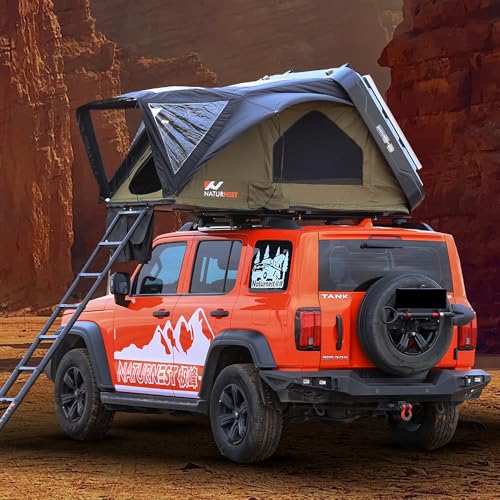
All-Weather Fortress for 4-Season Adventures: Built for any climate. The lightweight, aerodynamic, high-strength ABS hard shell, combined with an aluminum frame and sound & thermal insulating honeycomb panels and premium weather-proof fabric, shields you from wind, rain, and extreme temperatures. Connect a heater or cooler to the dedicated vent for perfect climate control inside
Payload and Spare Tire Planning for Camping
Your tire setup should match the way you camp. A Tacoma carrying two adults and a cooler has different needs than one carrying a roof tent, bed rack, water, fridge, tools, traction boards, and recovery gear. Check your payload sticker before adding heavy accessories.
Plan for the spare tire before your first trip. A larger spare may not fit in the factory spare location, and a smaller factory spare can create problems if you need to drive far in 4WD. For remote camping, the safest choice is a full-size spare that matches your tire diameter and load rating.
Warning: Never overload your Tacoma to make a camping setup work. Extra payload affects braking, steering, tire heat, suspension travel, and rollover risk, especially on uneven roads.
Essential Gear for Camping With Your Tacoma
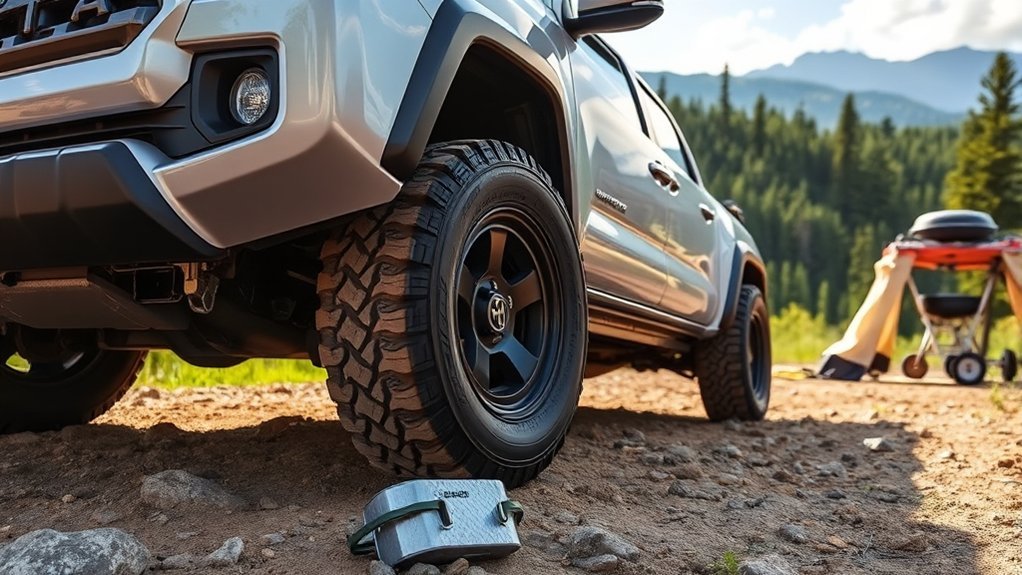
After confirming your Tacoma can handle larger tires without rubbing, build a camping kit that supports the tire setup. A roof tent can save bed space and keep your sleeping area off the ground, but it also adds weight up high. Check your rack rating, tent weight, and vehicle payload before installing one.
Make the most of your Tacoma’s cab and bed by keeping heavy gear low and secure. Store water, tools, and recovery equipment near the bed floor when possible. Use weatherproof storage boxes to protect food, sleeping gear, and cooking supplies from dust and rain.
Brand-specific products such as WeatherTech DigitalFit Floor Liners or Baja Designs LED Light Bars can be useful, but choose camping accessories by fit, durability, legality, and safe installation rather than brand name alone. Auxiliary lighting should be wired correctly, aimed responsibly, and used only where legal.
For tire-related camping safety, carry these items:
- Full-size spare tire: ideally the same diameter and load rating as the tires on the truck.
- Portable air compressor: required if you air down on trails.
- Accurate tire-pressure gauge: check pressure before pavement driving and after temperature changes.
- Tire repair kit: useful for small tread punctures on remote roads.
- Traction boards and shovel: helpful for sand, mud, snow, and soft campsites.
- Rated recovery gear: use proper recovery points and avoid unsafe hooks or unrated straps.
- Jack base plate: keeps the jack from sinking into dirt or sand.
Frequently Asked Questions
Is a Toyota Tacoma good for camping?
Yes, a Toyota Tacoma can be very good for camping because it has useful bed space, strong aftermarket support, and solid off-road potential. It works best when your tires, suspension, payload, recovery gear, and storage system match the type of roads you plan to drive.
What is the best Tacoma tire size for camping?
The best tire size is usually the largest size that fits without unsafe rubbing, keeps the correct load rating, and does not hurt daily drivability. For many builds, a mild 32- to 33-inch all-terrain tire is a practical camping choice. Stock trucks should stay closer to factory size.
Can I fit 285/70R17 tires on a Tacoma?
Many Tacoma owners fit 285/70R17 tires with a leveling kit, the right wheel specs, and minor clearance work. Fitment is not guaranteed. Tire brand, wheel offset, alignment, mud flaps, fender liners, and cab mount clearance can all change the result.
Are 35-inch tires worth it on a Tacoma camping build?
35-inch tires can add ground clearance and a tougher look, but they are usually not the easiest choice for a camping Tacoma. They can require trimming, cab mount work, careful offset, stronger suspension planning, speedometer correction, and possibly gearing changes. For most campers, a 33-inch all-terrain is easier to live with.
Should I choose LT tires or P-metric tires for camping?
Choose LT tires if you need stronger sidewalls, higher load capacity, or more durability for rough trails and heavy camping gear. Choose P-metric or lighter-load all-terrain tires if you mostly drive pavement and maintained camp roads. The right answer depends on your payload, road conditions, and ride-comfort priorities.
Do I need to air down my Tacoma tires for camping roads?
You do not need to air down for every camping road. It can help on washboard, sand, rocks, and rough dirt at low speeds, but you must carry a compressor and reinflate before highway driving. Use the factory placard or professional guidance for normal road pressure.
Conclusion
With the right tire setup, your Toyota Tacoma can be safer, more comfortable, and more capable on camping trips. Start with your exact truck, then match the tire size, wheel offset, load rating, and pressure strategy to the roads you actually drive. A mild, well-planned setup usually beats an oversized setup that rubs, overloads the truck, or makes long highway drives tiring.
Sources
- Toyota Owners Manuals and Warranty Guides — factory owner’s manual lookup for tire placard, load, and vehicle-specific guidance.
- Toyota Tacoma Features — current Tacoma trim and equipment reference.
- NHTSA Tire Safety — tire pressure, tread, loading, and tire safety guidance.
- Falken Wildpeak A/T4W — example of a current all-terrain tire line for trucks and SUVs.
- Bureau of Land Management OHV Recreation — public-land off-highway vehicle use and responsible trail guidance.

Related Articles
How Tire Weight Affects Toyota Tacoma Performance
How does tire weight influence your Toyota Tacoma's performance and efficiency? Discover the surprising effects that could change your driving experience.
Read More
Tire Noise Levels by Tire Type on a Toyota Tacoma
A comprehensive look at how tire types affect noise levels in your Toyota Tacoma reveals surprising insights that could enhance your driving experience.
Read More
How To Choose Tires for a Dual Use Toyota Tacoma
Unlock the secrets to selecting the perfect tires for your dual-use Toyota Tacoma, ensuring optimal performance and comfort on every adventure. Discover more inside!
Read More