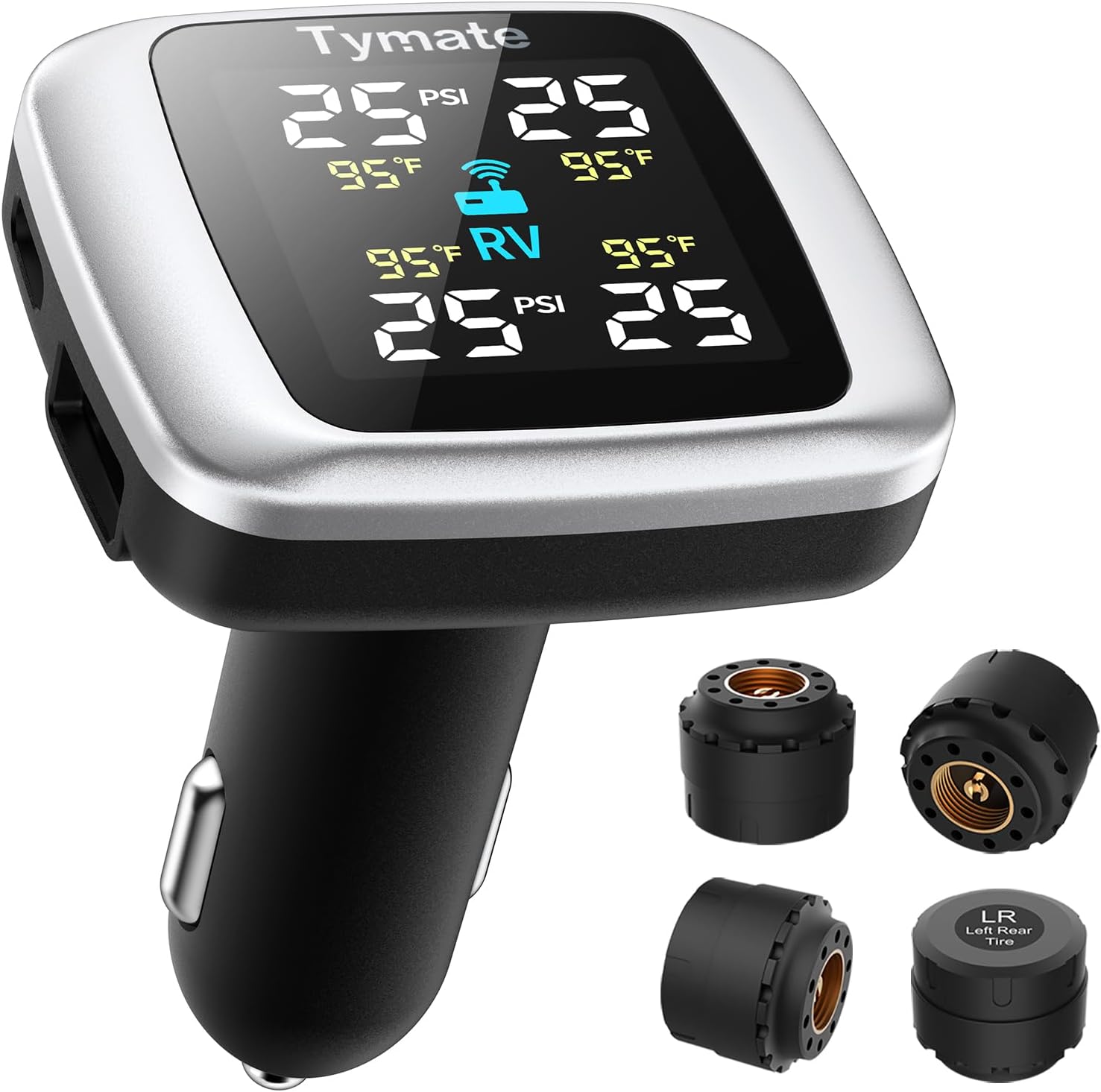
Toyota Tacoma Tire Blowout Causes and Prevention
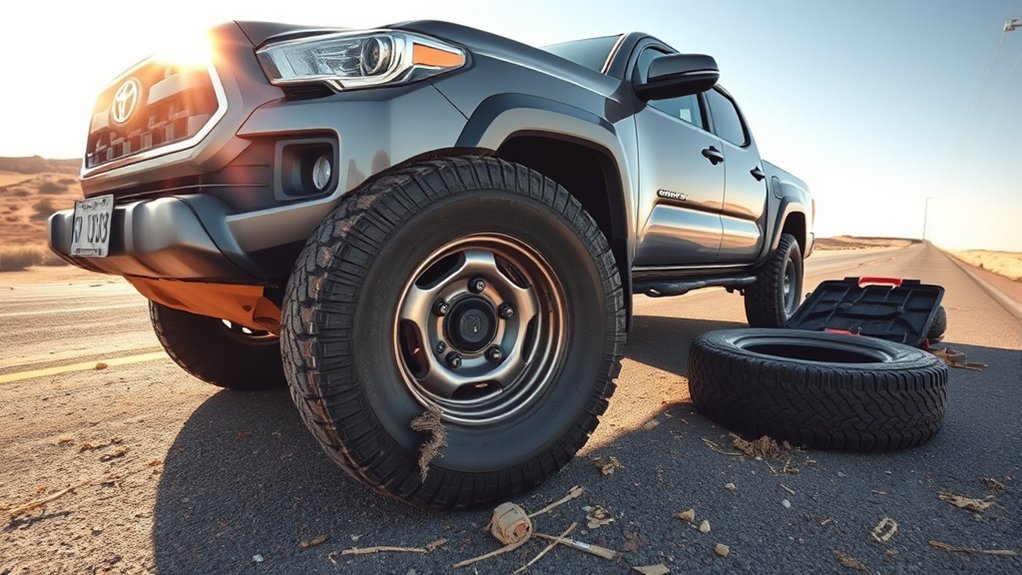
Tire blowouts in your Toyota Tacoma often stem from underinflation, overloading, or misalignment. Keeping tire pressure at 32-34 PSI is essential, as consistent underinflation leads to overheating and wear. Regular inspections for visible damage, coupled with tire rotations every 5,000 to 8,000 miles, can prevent major issues. Make sure you don’t exceed your truck’s load limit and choose high-quality tires suited for your driving conditions. There’s more to explore regarding prevention strategies and maintenance techniques.
Common Causes and Prevention of Tire Blowouts in Toyota Tacomas
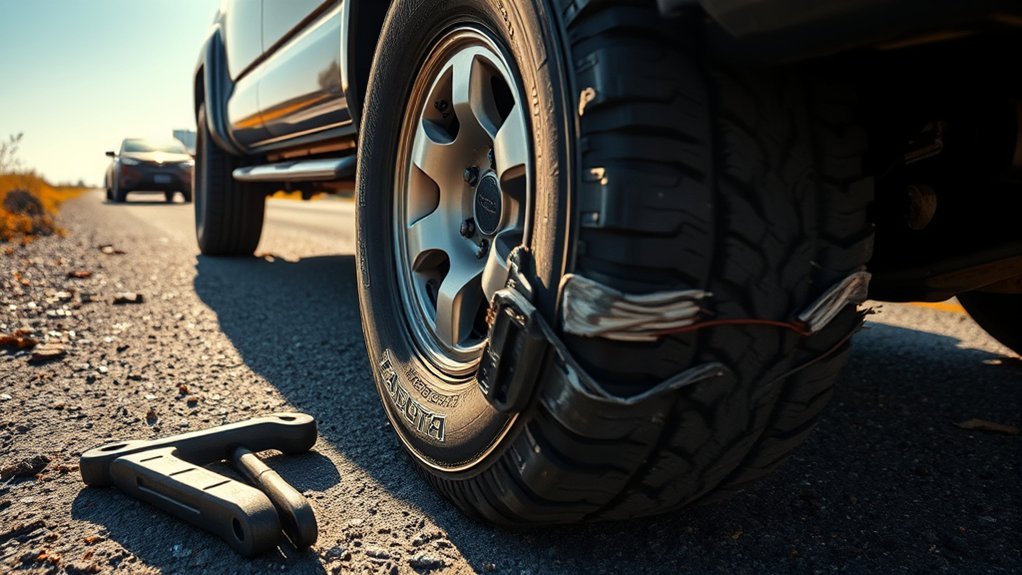
When you drive a Toyota Tacoma, understanding the common causes of tire blowouts is essential for your safety and vehicle performance. Underinflation is a primary factor; tires should maintain a pressure of 32 to 34 PSI. Insufficient pressure leads to excessive heat buildup and sidewall stress, increasing blowout risk. Additionally, overloading your Tacoma beyond its weight limit strains the tires, causing bulging. Regularly inspecting your tires for visible damage, like cuts or bulges, can catch issues early. Tire rotations every 5,000 to 8,000 miles promote even wear, critical for tire integrity. Furthermore, maintaining proper alignment is imperative—misalignment results in uneven tread wear, heightening the likelihood of failure, especially on rough terrain. By addressing these factors—tire pressure and vehicle load—you can greatly reduce the risk of blowouts and enhance your driving experience.
How to Recognize Signs of a Potential Blowout
Recognizing signs of a potential blowout is vital for every Toyota Tacoma owner. Start by paying attention to tire sound indicators; unusual noises like popping or flapping often signal impending damage. Conduct regular tread wear assessments, checking for visible signs such as cuts, cracks, or bulges on the sidewalls. Monitoring your tread depth is important; make sure it stays above the recommended minimum of 4/32 of an inch for ideal traction and safety. Be vigilant for exposed cords or steel belts, as these indicate severe tire damage and a heightened risk of blowout. Additionally, keep a close eye on tire pressure; consistent underinflation—below 32-34 PSI—can lead to overheating and excessive wear, greatly increasing blowout likelihood. By remaining proactive and observant, you can help safeguard your Tacoma and enhance your driving experience.
How to Respond During and After a Blowout
A tire blowout can happen unexpectedly, so knowing how to respond is essential for your safety. When a blowout occurs, maintain a firm grip on the steering wheel and slightly accelerate to stabilize the vehicle. Avoid abrupt braking, as it may lead to loss of control. Activate your hazard lights immediately to alert other drivers, then gradually ease off the accelerator to slow down safely.
Once you’ve come to a stop, assess your surroundings for safety. If you’re able, change the tire; if not, call for professional assistance.
Here’s a quick reference table for your emergency preparedness:
| Action | Description |
|---|---|
| Grip Steering Wheel | Maintain control during the blowout |
| Activate Hazard Lights | Alert other drivers of your situation |
| Gradually Slow Down | Avoid abrupt braking; stabilize the vehicle |
| Assess and Act | Check for damage; change tire or call for help |
Stay prepared and use proper driving techniques to enhance your safety on the road.
Key Maintenance Tips for Preventing Tire Blowouts
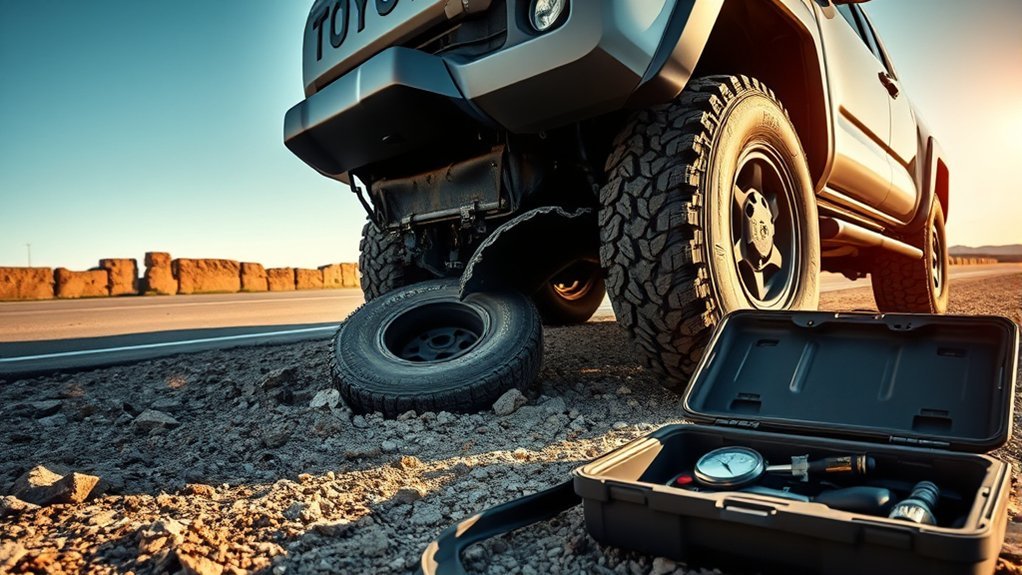
Being prepared for a tire blowout is only part of the equation; proactive maintenance greatly reduces the risk of such incidents. Regularly check your tire pressure, aiming for a range of 32 to 34 PSI. Underinflation, especially in high temperatures, is a leading cause of blowouts. Rotate your tires every 5,000 to 8,000 miles to guarantee even wear and extend their lifespan—uneven wear can create structural weaknesses. Inspect your tires monthly for visible damage like cuts, cracks, or bulges, which can compromise integrity. Additionally, maintain proper alignment to prevent uneven tread wear; misalignment can accelerate degradation, particularly after hitting potholes. Finally, be aware of your Tacoma’s load limits. Exceeding these can stress your tires, increasing the likelihood of blowouts, especially on rough terrain. By following these maintenance tips, you can greatly enhance your driving safety.
Choosing the Right Tires to Prevent Blowouts in Your Tacoma
Choosing the right tires for your Toyota Tacoma is essential to preventing blowouts and guaranteeing ideal performance. Start by considering tire specifications, including load index and speed rating, to align with your vehicle’s requirements. This match enhances safety and performance.
Select tires based on your driving conditions; for instance, all-terrain or mud-terrain options provide better durability on rough terrains, reducing blowout risks. Regularly consult tire reviews and adhere to manufacturer recommendations to confirm the tires you choose can handle the Tacoma’s weight and performance characteristics.
Prioritize high-quality brands with reinforced sidewalls to withstand impacts effectively and lower the chances of sidewall blowouts. Additionally, verify your selected tires maintain proper tread depth—ideally above 4/32 of an inch—to enhance traction and prevent overheating, a significant factor contributing to blowouts. Making informed choices here empowers your driving experience.
Frequently Asked Questions
Can Tire Blowouts Happen Randomly?
Tire blowouts don’t happen randomly; they’re often linked to poor tire maintenance and exposure to road hazards. By regularly checking tire pressure and inspecting for damage, you can greatly reduce the risk of unexpected blowouts.
Conclusion
In the world of driving, the threat of a tire blowout looms closer than you think. By staying vigilant and recognizing potential warning signs, you can avert disaster. Prioritize regular maintenance and choose the right tires for your Toyota Tacoma. Remember, a moment’s oversight can lead to an unexpected crisis on the road. Don’t let your next adventure turn into a perilous situation—take control, and guarantee your safety before it’s too late.

Related Articles
How Heat Affects Toyota Tacoma Tire Performance
Get ready to uncover how rising temperatures can impact your Toyota Tacoma's tire performance and what you can do to stay safe on the road.
Read More
How Cold Weather Affects Toyota Tacoma Tire Pressure
Discover how cold weather impacts your Toyota Tacoma's tire pressure and what you can do to ensure optimal performance this winter.
Read More
Toyota Tacoma Tires for Snow and Ice Driving
Tackle winter driving with the best tires for your Toyota Tacoma; discover essential options that ensure safety and performance in snowy conditions.
Read More