
Load Range C vs E Tires for a Toyota Tacoma
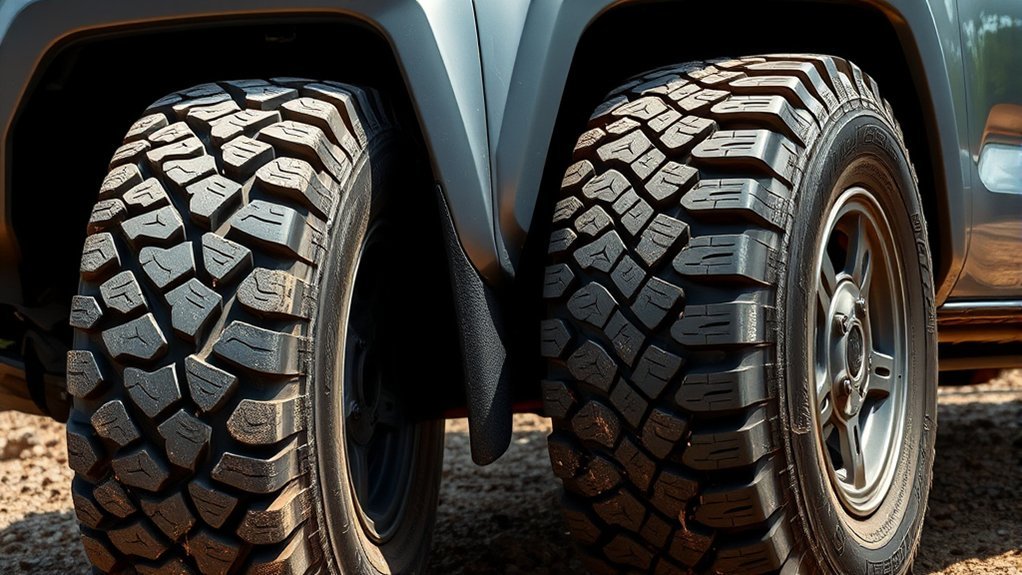
When choosing between Load Range C and E tires for your Toyota Tacoma, consider your driving habits and needs. Load Range C offers better fuel efficiency and a smoother ride, making it ideal for daily driving. In contrast, Load Range E provides superior durability and support for heavy loads or towing, but may sacrifice comfort. Evaluating your typical use can make all the difference. Let’s look deeper into how these options can impact your Tacoma’s performance and comfort.
Comparing Load Range C and E Tires for Your Tacoma
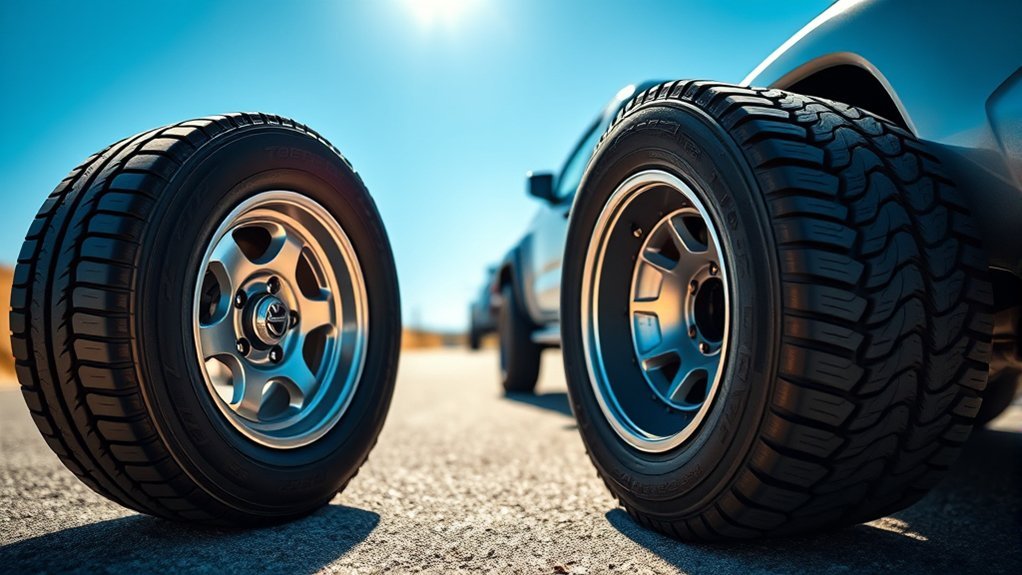
When you’re choosing tires for your Toyota Tacoma, understanding the differences between Load Range C and E can greatly impact your driving experience. Load Range C tires are lighter, weighing about 6 lbs less than their Load Range E counterparts. This can enhance fuel efficiency, especially for lighter loads. On the other hand, Load Range E tires boast higher load capacities, making them ideal for tougher terrains and heavier towing. While both tire types offer improved sidewall protection compared to standard tires, E-rated tires may lead to a rougher ride on highways. If you frequently tackle rocky paths, E tires provide better reliability, but you might experience a decrease in fuel efficiency—about 1 MPG compared to P-rated tires. Balancing tire tread performance with load capacity is key to optimizing your Tacoma’s performance while ensuring you enjoy a comfortable ride.
How Load Range Affects Tacoma Performance
When choosing tires for your Tacoma, understanding load range is essential for optimizing performance. Load Range E tires can enhance your truck’s capability for heavy loads but might impact fuel efficiency compared to the lighter C-rated options. Balancing these factors will help you make an informed choice that suits your driving needs.
Load Range Explained
Understanding load range is essential for optimizing your Toyota Tacoma’s performance, especially if you frequently tow or carry heavy loads. Load Range C tires are designed for lighter loads, offering a smoother ride and more comfortable handling. In contrast, Load Range E tires cater to heavier demands, allowing for higher tire pressure and greater load capacity. This can greatly enhance your Tacoma’s performance when hauling or towing. Plus, E-rated tires typically feature tougher tread patterns, enhancing off-road reliability and reducing the risk of flats in challenging terrains. While the difference in weight between C and E tires is minimal, the durability and performance benefits of Load Range E make it the better choice for rugged use.
Impact on Fuel Efficiency
Tires play a critical role in your Tacoma’s fuel efficiency, and the choice between Load Range C and E can greatly impact your daily driving experience. Load Range E tires, while durable, can weigh about 6 lbs more, potentially reducing your fuel efficiency by around 1 MPG. This extra weight increases rolling resistance, affecting acceleration and overall performance, especially on inclines. Many users have noticed a decrease in fuel economy when switching to E from C, particularly during regular driving.
- Increased tire noise
- Greater tread wear
- Reduced acceleration
- Possible need for lower PSI
- Trade-off between durability and efficiency
For daily driving, the sacrifices in fuel efficiency may not be worth the added durability of Load Range E tires.
Choosing the Right Load Range for Your Tacoma Tires
Selecting the right load range for your Tacoma’s tires can greatly impact your vehicle’s performance and safety, especially if you frequently navigate varying terrains. If you primarily drive on highways or lighter off-road paths, Load Range C tires might suit you, offering better fuel efficiency and handling. However, if your adventures demand more rugged capability and you often carry heavy loads, Load Range E tires are the way to go, providing enhanced durability despite a slight trade-off in ride comfort.
To make the best choice, conduct a driving conditions assessment to evaluate your typical routes and load requirements. Remember to incorporate tire maintenance tips to guarantee longevity, regardless of your selection. Ultimately, the right load range aligns with how you use your Tacoma, assuring you enjoy both performance and safety on every journey.
Real-World User Experiences With Load Range C and E Tires
Many Tacoma owners face the challenge of choosing between Load Range C and E tires, especially when they hear feedback from fellow drivers. User experiences reveal a mix of satisfaction and frustration, highlighting how these tires perform in real-world conditions.
- E-rated KO3 tires excel in rocky terrains, offering enhanced reliability.
- Many drivers report no flats over extensive mileage with E-rated tires.
- However, some find that the added weight reduces fuel efficiency and comfort.
- Load Range C tires perform well in rocky conditions, showing decent durability.
- Users note that while E tires handle heavy loads, they may compromise on highway comfort.
Ultimately, tire longevity and performance depend on your driving habits and needs. Understanding these experiences can guide you in making an informed decision that aligns with your lifestyle.
Why Sidewall Protection Matters for Tires
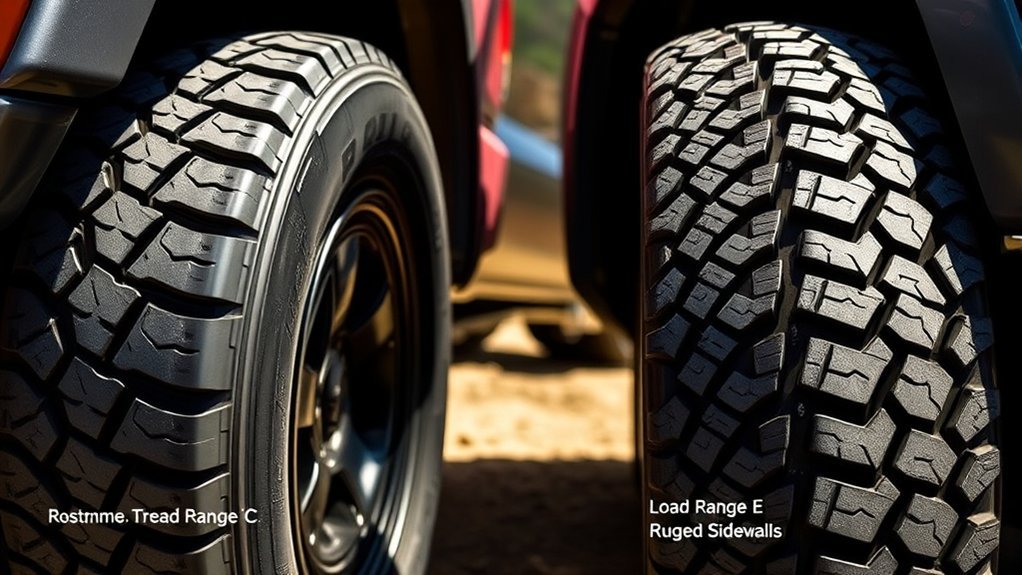
When you’re off-roading, the sidewall protection of your tires plays an essential role in keeping you moving. Enhanced durability and puncture resistance can mean the difference between a smooth ride and a frustrating flat. Understanding how Load Range C and E tires stack up in these areas helps you make a smarter choice for your Tacoma.
Enhanced Durability Insights
While you might think all tires offer similar durability, the sidewall protection inherent in E-rated tires sets them apart, especially for those tackling rugged terrains. Understanding tire longevity factors and terrain suitability is essential when choosing the right tire for your Toyota Tacoma.
- E-rated tires provide enhanced load capacity.
- Stronger sidewalls mean better overall durability.
- Designed for higher PSI without compromising performance.
- Ideal for off-road conditions and harsh environments.
- Users report fewer flats over extensive mileage.
These attributes make E-rated tires a go-to for adventurers like you, ensuring that your Tacoma can handle the demands of tough landscapes while maintaining reliability. When you prioritize sidewall protection, you’re investing in a safer, more durable driving experience.
Puncture Resistance Factors
Understanding how puncture resistance plays into your tire choices can greatly impact your driving experience. Both Load Range C and E tires offer enhanced sidewall protection, vital for traversing rugged terrains. However, it’s essential to recognize that thicker sidewalls don’t always equal better puncture resistance.
| Tire Type | Sidewall Strength | Puncture Resistance |
|---|---|---|
| Load Range C | Moderate Flexibility | Good |
| Load Range E | Increased Thickness | Variable |
| KO3 E-Rated | Robust Design | Excellent |
Tire tread patterns and sidewall flexibility also influence performance. While E-rated tires often excel in durability, the right tire construction, including tread bed stability, may play a more significant role in preventing flats. Choose wisely for your Tacoma!
Evaluating Weight and Fuel Efficiency of C vs. E Tires
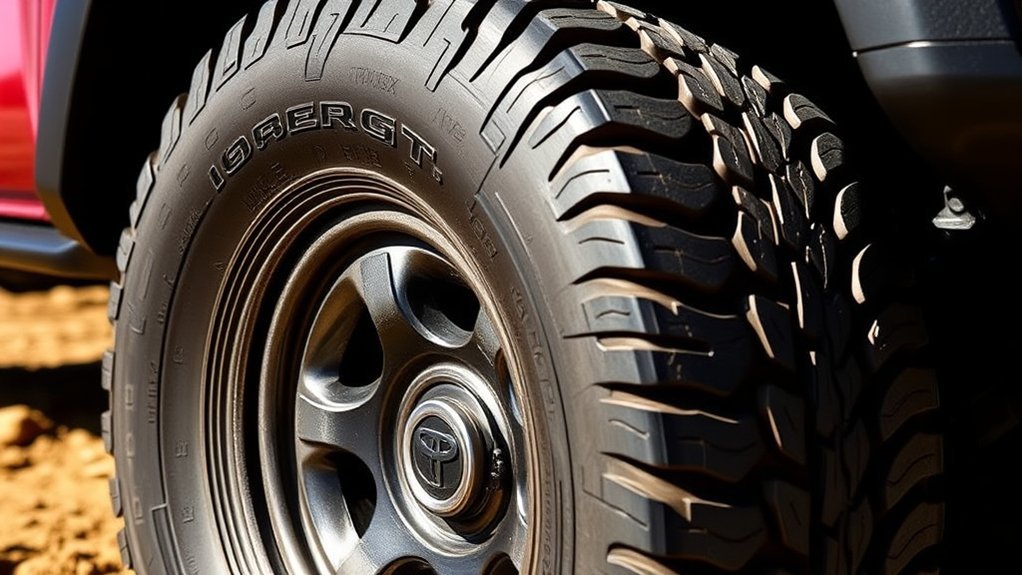
Choosing between Load Range C and E tires for your Toyota Tacoma involves more than just durability; it profoundly affects weight and fuel efficiency.
- Load Range C tires weigh about 6 lbs less than E tires.
- Heavier E tires can reduce your vehicle’s agility, especially on inclines.
- Users often report a loss of around 1 MPG when switching to E tires.
- C tires can enhance your fuel economy while still offering durability.
- Monitoring your vehicle’s load helps in finding the ideal tire pressure for better efficiency.
In everyday driving, the weight of your tires can impact performance and fuel consumption. While E tires provide excellent off-road reliability, the trade-off in fuel economy is significant. If you’re looking for a balance between performance and efficiency, Load Range C tires may be the better choice. Ultimately, consider how your driving habits align with the strengths of each tire type.
Debunking Common Myths About Tire Ratings
When it comes to tire ratings, you might think E-rated tires are always stronger than C-rated ones, but that’s a common misconception. Both offer solid protection, and their construction doesn’t automatically mean one outperforms the other in every scenario. Understanding load capacities and proper tire pressure is key to maximizing your Tacoma’s performance, regardless of which rating you choose.
Understanding Load Ratings
Many drivers often misinterpret tire load ratings, believing that a higher rating always means a stronger tire. Understanding these ratings is essential for making informed decisions about your Toyota Tacoma. Here are some key points to take into account:
- Load Range C tires are ideal for everyday use with lower tire pressure.
- Load Range E tires handle heavier loads and higher PSI.
- Higher ratings don’t guarantee better puncture resistance; both can perform well.
- E-rated tires excel in off-road conditions, especially rocky terrains.
- The weight difference between C and E tires is minimal, affecting fuel efficiency.
Strength Misconceptions Explained
How can you be sure that a higher load rating truly translates to a stronger tire? It’s a common misconception that Load Range E tires are always superior to Load Range C ones. While E-rated tires boast higher load capacities, strength depends on tire construction and specific models. Not all E-rated tires offer better puncture resistance; sidewall design varies considerably among brands. Both ratings provide improved protection for rugged terrains. User experiences reveal that some Load Range C options can outperform E-rated tires over time. Understanding your vehicle’s needs and driving conditions is essential. Don’t let assumptions cloud your judgment; choose based on your requirements rather than mere load ratings.
Recommended PSI for Load Range C and E Tires
What’s the ideal PSI for Load Range C and E tires on your Toyota Tacoma? Understanding tire pressure is critical for maximizing load capacity and ensuring a smooth ride.
- Load Range C: Recommended PSI is around 30-35 for daily driving, balancing comfort and stability.
- Load Range E: Higher PSI, typically 40-50, enhances load capacity and durability under heavy loads.
- Comfort Adjustments: Some drivers find 26-30 PSI suitable for a cushier ride, even with Load Range E.
- Front Tires: Higher inflation is generally advised for front tires, especially when hauling.
- Consistency is Key: Regularly check tire pressure to avoid reduced fuel efficiency and increased wear.
User Preferences: Daily Driving vs. Off-Roading
When considering tire options for your Toyota Tacoma, it’s essential to weigh your driving habits against tire performance. If your daily driving preferences lean towards commuting and city travel, Load Range C tires might be your best bet. They offer a smoother ride and improved fuel efficiency, making them ideal for everyday use. You might notice a drop in MPG with Load Range E tires, and adjusting the PSI could help, but the added weight can impact your Tacoma’s agility.
On the flip side, if off-roading considerations are your priority, Load Range E tires shine. Their durability and puncture resistance make them perfect for rocky terrains, with many users reporting no flats even after extensive mileage. Ultimately, your choice hinges on how you plan to use your Tacoma—comfort and efficiency for daily trips or rugged reliability for off-road adventures.
Final Thoughts on Selecting the Best Tires for Your Tacoma
Choosing the right tires for your Tacoma ultimately boils down to understanding your specific needs and driving style. Whether you prioritize fuel efficiency or rugged durability, the decision between Load Range C and E tires can greatly impact your experience.
- Evaluate load requirements for your Tacoma.
- Consider driving conditions, such as off-road versus daily commuting.
- Prioritize tire maintenance tips to guarantee longevity and performance.
- Account for seasonal tire considerations to adapt to changing weather.
- Balance comfort and capability based on your lifestyle.
Load Range C tires might be your go-to for light loads and better fuel efficiency, while Load Range E tires shine in durability and puncture resistance, especially in rough terrains. Ultimately, assess your unique needs, weigh the pros and cons, and choose wisely for a liberated driving experience tailored to you.
Frequently Asked Questions
How Do I Know Which Load Range My Tacoma Requires?
Check your Tacoma’s owner’s manual for tire specifications. You’ll find vehicle recommendations that specify the load range needed. Ensuring you choose the right tires keeps your ride safe and enhances performance on any terrain.
Can I Mix Load Range C and E Tires on My Tacoma?
Mixing load range C and E tires can feel like a high-stakes gamble! For safety considerations and ideal tire performance, it’s best to stick with one load range to guarantee a smooth, secure ride.
What Are the Price Differences Between Load Range C and E Tires?
Load Range E tires usually cost more due to their enhanced durability and tire longevity. While performance comparisons show better handling under heavy loads, you’ll need to weigh the price against your driving needs and preferences.
How Does Tire Load Range Affect Ride Comfort?
Tire load range affects ride comfort like a tightrope walker’s balance. Higher load ranges often mean stiffer sidewalls, which can lead to a harsher ride quality. Proper tire pressure can help improve comfort and stability.
Are Load Range C Tires Suitable for Towing?
Load Range C tires can handle light towing, but they might not support heavier loads effectively. Check your vehicle’s tire specifications and verify they match your towing capacity for safe and comfortable hauling.
Conclusion
Ultimately, choosing between Load Range C and E tires for your Tacoma boils down to your specific needs. Remember, “the best of both worlds” isn’t always achievable—what suits off-roading may not excel in daily driving. Prioritize your driving habits and the load you carry. By understanding the differences, you’ll make an informed decision that enhances both performance and safety. Investing in the right tires will keep your Tacoma running smoothly, no matter the road ahead.

Related Articles
Toyota Tacoma LT Tires vs P Metric Tires Explained
I understand the confusion between LT and P-metric tires for your Tacoma; discover which one truly fits your driving style and needs.
Read More
Toyota Tacoma Tire Height Comparison Chart
Wondering how tire heights impact your Toyota Tacoma's performance? Discover essential comparisons and tips to enhance your rides on and off the road.
Read More
Recommended Wheel Width for 285 Tires on a Toyota Tacoma
Knowing the ideal wheel width for 285 tires on a Toyota Tacoma can enhance performance, but what else should you consider for the perfect fit?
Read More