
Biggest Tire With a Leveling Kit on a Toyota Tacoma
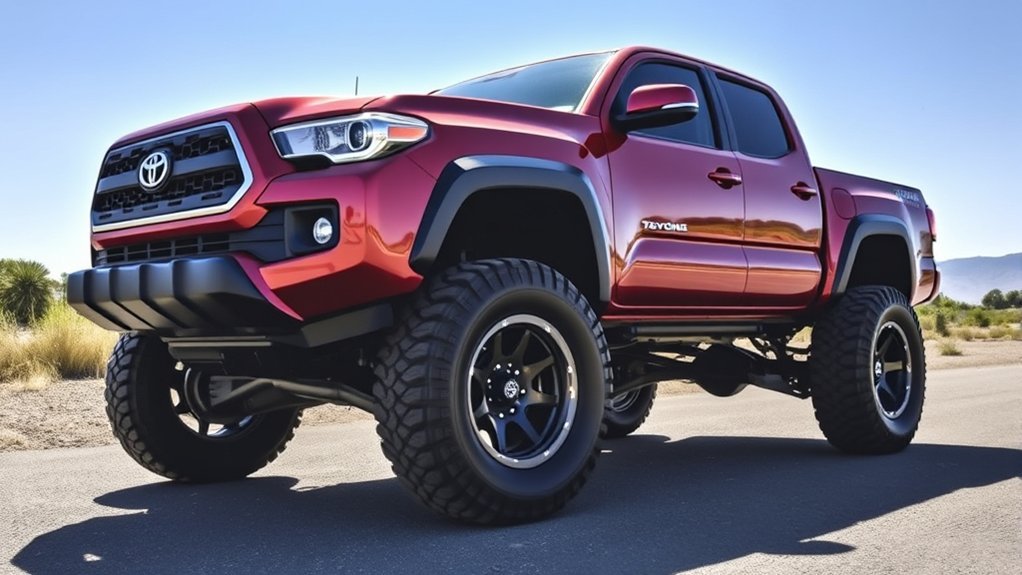
Choosing the largest tire size for a Toyota Tacoma with a leveling kit is not just about diameter. Your Tacoma’s model year, wheel width, offset, alignment, upper control arm clearance, fender liner position, and tire brand all affect fitment. Use the sizes below as practical planning ranges, then confirm clearance on your exact truck before buying tires.
Quick Answer
For many 2005–2023 Toyota Tacomas, a 2-inch leveling kit commonly supports about a 32-inch tire, such as 275/75R16 or 275/70R17, with low rubbing risk on stock-like wheels. A 285/75R16 or 285/70R17 is closer to 33 inches and usually needs more lift, trimming, and careful wheel offset.
Key Takeaways
- A 275/75R16 or 275/70R17 is the safer “big tire” target for many leveled Tacomas because it stays near 32.2 inches tall.
- A 285/75R16 or 285/70R17 is a common 33-inch upgrade, but it can rub the cab mount, fender liner, mud flaps, bumper, or upper control arms.
- Wheel offset matters as much as lift height. More negative offset can clear suspension parts but may push the tire into the fender or bumper area.
- Always match or exceed the original load rating, keep the TPMS working, set cold tire pressure correctly, and get an alignment after suspension changes.
At a Glance
| Time Required | 30–60 minutes to measure and check clearance; 2–4 hours for tire install, lift adjustment, and alignment at a shop. |
| Difficulty | Moderate. Measuring is simple, but trimming, cab mount work, suspension changes, and alignment should be handled carefully. |
| Tools Needed | Tape measure, flashlight, floor jack, jack stands, tire pressure gauge, torque wrench, and alignment rack after installation. |
| Cost | $0–$50 to measure and inspect; roughly $300–$1,200+ for trimming, alignment, lift parts, TPMS work, or professional fitment labor. |
Warning: Toyota and tire-safety organizations recommend using the tire size, cold inflation pressure, and load capacity shown on your vehicle placard, owner’s manual, or manufacturer-approved replacement guidance. Oversized tires can affect braking, handling, fuel economy, speedometer accuracy, towing performance, and warranty coverage. When in doubt, have a qualified tire or suspension shop inspect the setup.
What Is the Largest Tire Size You Can Fit With a Leveling Kit on a Tacoma?
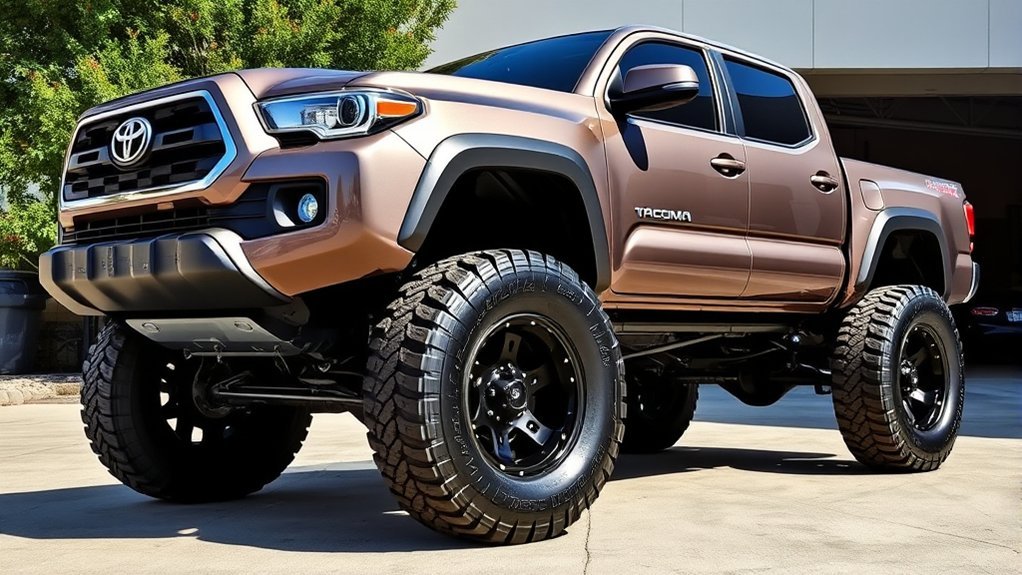
For many 2nd- and 3rd-generation Toyota Tacomas, the practical largest tire size with a typical 2-inch leveling kit is usually 275/75R16 on 16-inch wheels or 275/70R17 on 17-inch wheels. Both are roughly 32.2 inches tall, so they give the Tacoma a fuller stance without jumping straight into aggressive trimming.
With a true suspension lift around 3 inches, many owners move up to 285/75R16 or 285/70R17. These sizes are close to 33 inches tall and about 11.2 inches wide, which is where rubbing becomes much more common. A 285 can fit well, but it is not a guaranteed bolt-on size for every Tacoma.
| Setup | Common Tire Size | Approx. Diameter | Fitment Notes |
|---|---|---|---|
| Stock or mild lift | 265/75R16 or 265/70R17 | About 31.6–31.7 in. | Low-risk upgrade on many Tacomas, depending on factory wheel and trim. |
| 2-inch leveling kit | 275/75R16 or 275/70R17 | About 32.2 in. | Good “biggest safe” target for many 2005–2023 trucks with stock-like wheels. |
| 3-inch lift | 285/75R16 or 285/70R17 | About 32.7–32.8 in. | Often needs trimming, alignment caster adjustment, and sometimes cab mount work. |
| 2024+ Tacoma | Varies by trim and wheel package | Check your placard | Fourth-gen trucks have different clearance points, so do not copy older Tacoma fitment blindly. |
The best Tacoma tire size is the largest size that clears at full steering lock, full suspension compression, and real trail movement—not just the largest size that fits while parked.
[Products Worth Considering]

Universal magnetic jack pad with aluminum grooved design to protect vehicle pinch welds during lifting. Durable nylon pad inserts are upgraded and secured with screws to resist damage and keep in place. Designed to fit most single vehicle pinpoint welds for safer, stable jacking when changing tires, repairs, or performing oil changes.

This portable cordless tire inflator delivers fast, efficient inflation for cars, motorcycles, bikes, and sports balls with a digital pressure gauge. Use the one-click PSI preset with auto shut-off for accurate, hands-free topping to your target pressure up to 150 PSI. It’s compact and rechargeable with a built-in emergency LED light plus valve adapters and accessories for quick, ready-to-go use.

The JACO FlowPro Tire Inflator measures, inflates, and airs down tires up to 100 PSI with battery-free operation and ±2% accuracy after calibration. It features a glowing pressure dial for night visibility, a heavy-duty steel build with a hybrid hose, and a precision push-to-inflate thumb trigger. The patented Lightning Air Chuck locks on for a secure seal, and the kit includes quick-connect hardware for easy inline use with your air compressor.
How to Read Tacoma Tire Sizes Before You Buy
A size like 275/70R17 tells you three important things:
- 275 is the tire section width in millimeters.
- 70 is the sidewall height as a percentage of the width.
- R17 means the tire fits a 17-inch wheel.
That means a 285/70R17 is not just taller than a 275/70R17; it is also wider. The extra width is often what creates rubbing against the upper control arm, fender liner, bumper edge, or cab mount.
Note: Two tires with the same printed size can measure slightly differently from brand to brand. Always check the manufacturer’s actual diameter, section width, tread width, approved rim width, load index, and speed rating before ordering.
How Can You Avoid Rubbing and Clearance Issues With Larger Tires?
To avoid rubbing, check clearance before and after installation. Do not rely only on lift height. A Tacoma can clear a tire while parked and still rub when turning into a driveway, braking hard, or flexing off-road.
- Check the door placard first. Confirm the original tire size, load rating, and cold tire pressure guidance.
- Measure current clearance. Look at the upper control arm, spindle area, fender liner, mud flaps, bumper corner, body mount, and rear of the wheel well.
- Turn lock-to-lock. With the truck safely parked, turn the steering wheel fully left and right and check the closest contact points.
- Account for compression. Leave extra room for suspension movement, braking dive, added cargo weight, and off-road flex.
- Use alignment to your advantage. On many Tacomas, more positive caster can help move the front tire away from the cab mount, but it must remain within a safe alignment range.
- Test-drive slowly. Listen for rubbing during tight turns, reverse turns, driveway entrances, and mild suspension compression.
| Rubbing Area | Common Cause | Typical Fix |
|---|---|---|
| Upper control arm | Tire too wide or wheel offset too positive | Different offset, narrower tire, or aftermarket control arms |
| Fender liner and mud flap | Taller tire during steering lock | Liner push-forward, mud flap removal, or minor trimming |
| Cab/body mount | 33-inch tire, low-offset wheel, or low caster | Alignment adjustment, cab mount chop, or cab mount relocation |
| Front bumper edge | Wider stance from negative offset | Minor trimming or a high-clearance bumper setup |
Pro Tip: If you want the least drama, choose the tire first, then choose the wheel offset around that tire. Buying aggressive low-offset wheels first can make a mild tire rub like a much larger one.
How Does Suspension Lift Impact Tire Fitment?
A leveling kit mainly raises the front of the Tacoma to reduce factory rake. It improves vertical clearance, but it does not magically create unlimited room at the rear of the front wheel well. That is why a 33-inch tire can still rub even with a 2- or 3-inch lift.
A suspension lift can help larger tires clear by increasing ride height and improving approach angles, but too much front preload can reduce down travel and make the ride harsher. A complete lift with quality shocks, proper spring rates, and a professional alignment is usually better than forcing maximum height out of a basic spacer or coilover adjustment.
Wheel offset also changes the result. A wheel with more negative offset pushes the tire outward. That can help clear the upper control arm, but it also increases the arc of the tire as it turns, which can create more rubbing at the bumper, fender liner, and cab mount.
What Mods Do You Need for 285/75R16 Tires on Your Tacoma?
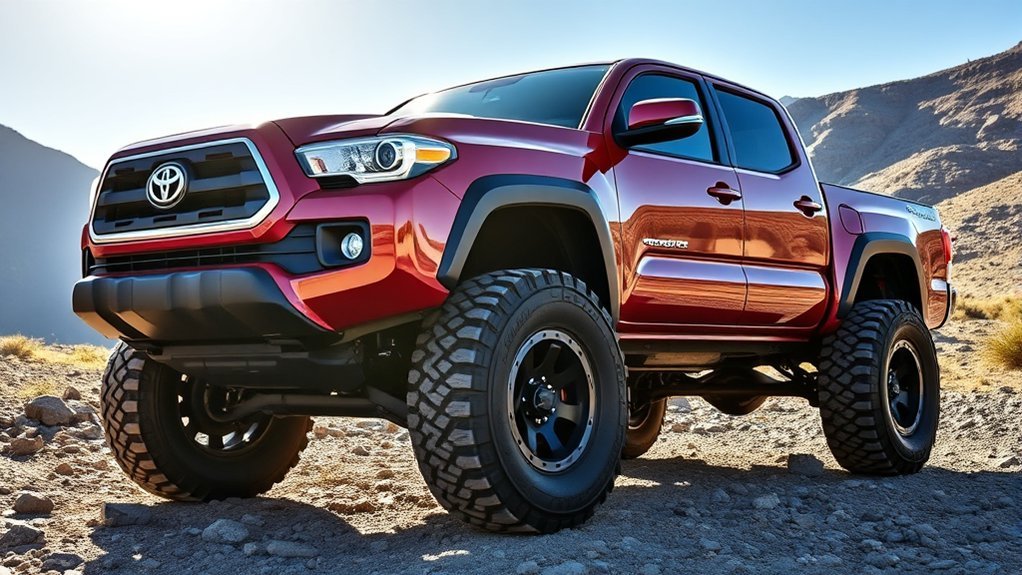
To fit 285/75R16 tires on a Tacoma, plan for more than just tire installation. This size is about 32.8 inches tall and 11.2 inches wide, so it often needs supporting modifications.
- Lift height: A 3-inch suspension lift is a more realistic starting point than a basic leveling kit for 285/75R16 tires.
- Wheel offset: Many builds work best near stock-to-mild negative offset. Too much negative offset may create fender and cab mount rubbing.
- Cab mount clearance: On many 2005–2023 Tacomas, a cab mount chop or cab mount relocation may be needed if the tire contacts the rear of the wheel well.
- Fender liner and mud flap trimming: Expect possible liner adjustment, mud flap removal, or small plastic trimming.
- Upper control arms: Aftermarket upper control arms may help alignment and clearance on some lifted setups.
- Alignment: Get a professional alignment after the lift and tires are installed. Ask the shop to check caster and verify clearance at full steering lock.
- TPMS: Keep the tire pressure monitoring system functional. If you buy a second wheel set, use compatible TPMS sensors and have them registered or programmed correctly.
- Load rating: Match or exceed the original load capacity. Do not choose a tire with a lower load index than your Tacoma requires.
Note: A 285/75R16 and a 285/70R17 are both common “33-inch” Tacoma sizes, but they are not identical. The 16-inch version gives more sidewall, while the 17-inch version may offer more wheel and brake-clearance options depending on your Tacoma generation.
Which Tire Brands and Models Are Recommended for Your Tacoma?
The best Tacoma tire depends on how you drive. A daily driver needs road comfort and wet braking. An overland truck needs durable sidewalls and all-terrain traction. A trail-focused truck may accept more road noise for stronger mud, rock, and sidewall performance.
| Tire Type | Good For | Common Tacoma Picks | Tradeoff |
|---|---|---|---|
| All-terrain | Daily driving, gravel, light trails, snow-rated options | BFGoodrich KO2, Falken Wildpeak A/T4W, Cooper Discoverer AT3 | Heavier and louder than highway tires |
| Hybrid-terrain | Aggressive look, weekend trails, mixed pavement/off-road use | Nitto Ridge Grappler, Toyo Open Country R/T Trail | More road noise and weight than mild all-terrains |
| Mud-terrain | Mud, rocks, aggressive trail use | Toyo Open Country M/T, BFGoodrich KM3 | Noisier, heavier, and usually worse for wet-road comfort |
If your Tacoma is a commuter first and trail truck second, a 275/70R17 all-terrain is often the best balance. If your truck sees regular trail use and you are willing to trim, a 285/70R17 or 285/75R16 can be worth it.
[Products Worth Considering]

EVOULTES heavy duty tire inflator with an integrated gauge delivers accurate pressure readings from 10–120 PSI, helping you inflate, deflate, and check tires in one tool. The 16.5-inch extended dual-head air chuck with swivel base reaches hard-to-access dual wheel valves on trucks and RVs. A brass trigger core and side-mounted air release valve make operation smooth, with standard 1/4" NPT threading and quick-connect compatibility for easy setup.
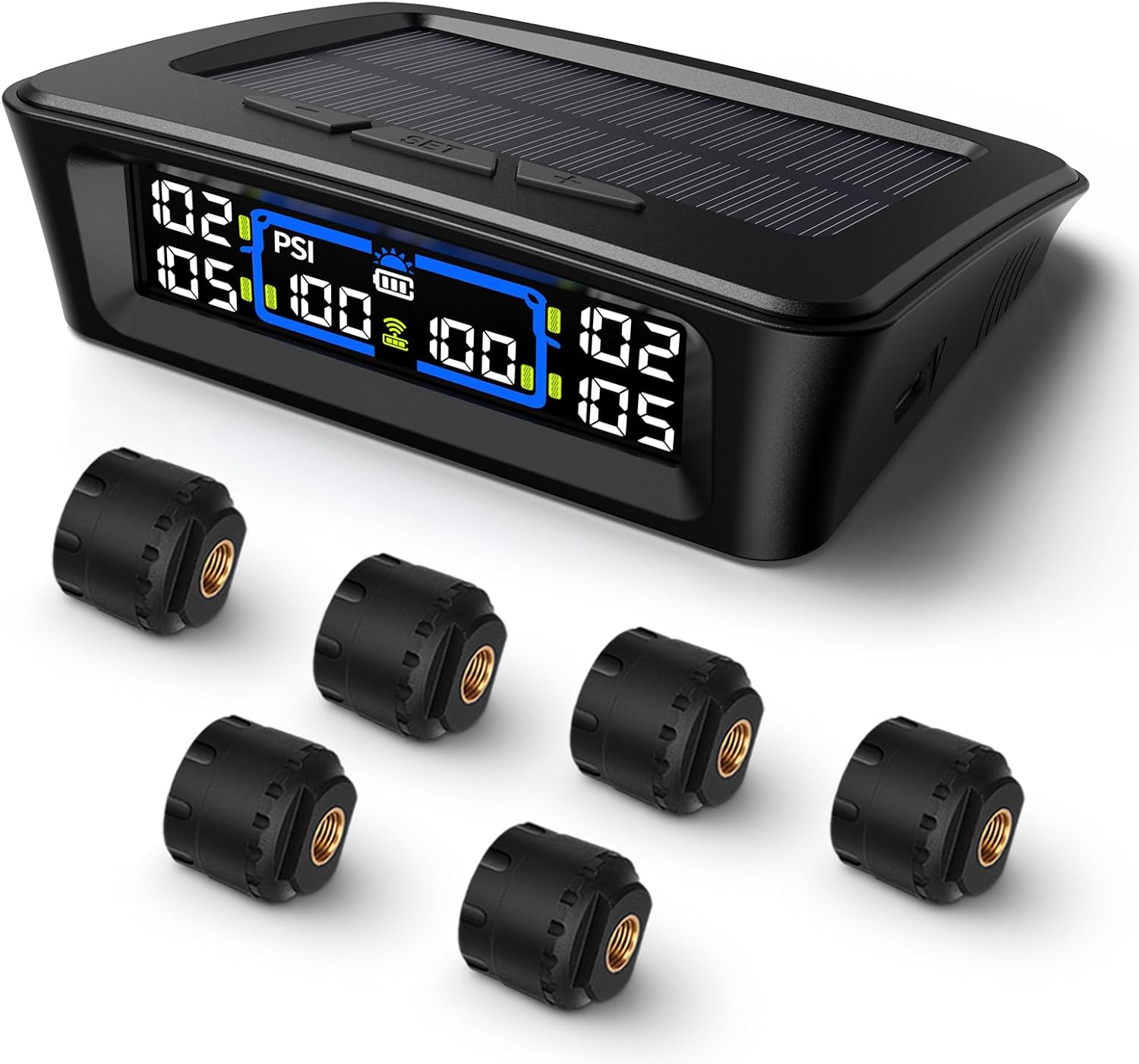
The Tymate TM12 RV TPMS delivers real-time tire pressure and temperature monitoring with a stable 433Hz display for safer long-distance driving. It supports simultaneous monitoring across vehicle and trailer zones, includes six alarm modes for pressure, temperature, leakage, battery, and signal loss, and features easy DIY installation with auto calibration. Power is supplied via USB-C charging or solar recharging, with a wide 0–144 PSI range and up to 50 ft signal coverage for RVs and towable trailers.
Best Tacoma Tire Size by Driving Style
- Daily driver: 265/70R17, 275/70R17, or similar keeps weight and rubbing risk reasonable.
- Daily driver with a leveled stance: 275/75R16 or 275/70R17 is a strong fit for many older Tacomas.
- Overlanding: 285/70R17 or 285/75R16 can work well with the right lift, offset, trimming, and load rating.
- Snow and wet roads: Do not choose width only for looks. A slightly narrower all-terrain or winter-rated tire can perform better than an oversized wide tire.
- Towing and hauling: Stay close to the factory diameter and choose a tire with the right load rating to protect braking, gearing, and stability.
- Rock crawling or aggressive trails: A 33-inch tire gives more clearance, but plan for trimming, armor clearance, and possible gearing changes.
What to Check After Installing Larger Tacoma Tires
After installing larger tires, do a careful inspection before taking a long trip or hitting the trail.
- Cold tire pressure: Set pressure when the tires are cold and compare against the placard, tire load data, and shop recommendation.
- TPMS warning light: Make sure the system reads correctly and does not show a malfunction.
- Wheel torque: Recheck lug nut torque after the first short drive and again after the first 50–100 miles.
- Alignment: Confirm the truck tracks straight and the steering wheel is centered.
- Speedometer accuracy: Larger tires can make your speedometer read slower than your actual speed.
- Braking and acceleration: Heavier tires can increase stopping distance and make the truck feel slower.
- Rubbing marks: Look for fresh shiny spots, polished plastic, scraped undercoating, or tire marks inside the wheel wells.
Frequently Asked Questions
What is the largest tire you can put on a Toyota Tacoma?
For many leveled 2005–2023 Tacomas, 275/75R16 or 275/70R17 is a practical large size with low rubbing risk. With a 3-inch lift, 285/75R16 or 285/70R17 is common, but trimming, alignment, and cab mount clearance may be needed. Always verify your exact year, trim, wheel offset, and tire model.
Are leveling kits good for Tacomas?
A quality leveling kit can improve stance and add front clearance for slightly larger tires. The downside is that too much front lift or preload can reduce down travel, affect ride quality, and require alignment correction. A mild, well-aligned setup is usually better than maxing out height.
Will 285 tires fit a Tacoma with only a 2-inch leveling kit?
Sometimes, but it is not a safe guarantee. A 285 tire is wide enough to rub the upper control arm, fender liner, mud flap, bumper edge, or cab mount depending on offset and alignment. A 275 tire is usually the easier fit for a basic leveling kit.
Do bigger Tacoma tires affect the speedometer?
Yes. A taller tire travels farther with each wheel rotation, so the speedometer may read lower than your actual road speed. Larger, heavier tires can also affect acceleration, braking, fuel economy, and transmission behavior.
What wheel offset is best for larger Tacoma tires?
There is no single best offset for every Tacoma. Stock-like offset often reduces fender poke and bumper rubbing, while mild negative offset can help upper control arm clearance. Very negative offset can make the tire swing into the fender, bumper, and cab mount during turns.
Do I need an alignment after installing larger tires or a leveling kit?
Yes. Any leveling kit, lift, upper control arm change, or major tire-size change should be followed by an alignment. Proper caster, camber, and toe settings help tire wear, steering feel, and clearance.
Conclusion
The largest tire size for a Toyota Tacoma with a leveling kit is usually not the biggest tire you can physically bolt on. For most simple leveled setups, 275/75R16 or 275/70R17 is the smarter big-tire choice. If you want the more aggressive 285/75R16 or 285/70R17, plan on a real suspension lift, correct wheel offset, alignment work, and possible trimming or cab mount clearance. Measure first, buy once, and build the tire setup around how you actually use your Tacoma.
Sources
- Toyota Tacoma official vehicle page — current Tacoma lineup, trims, suspension features, and factory configuration context.
- Toyota Owners: Tacoma tire inflation pressure — why correct cold tire pressure matters for safety, handling, comfort, and tire life.
- NHTSA TireWise — tire ratings, tire safety basics, and tire shopping guidance.
- NHTSA Tire Safety brochure — replacement tire-size guidance, tire pressure checks, tread depth, balancing, and alignment basics.
- U.S. Tire Manufacturers Association Tire Care and Safety Guide — replacement tire load capacity, placard guidance, and professional tire/wheel selection cautions.
- Toyota Support: Tire Pressure Monitor System — TPMS warning function and low-pressure alert guidance.

Related Articles
How Tire Weight Affects Toyota Tacoma Performance
How does tire weight influence your Toyota Tacoma's performance and efficiency? Discover the surprising effects that could change your driving experience.
Read More
Tire Noise Levels by Tire Type on a Toyota Tacoma
A comprehensive look at how tire types affect noise levels in your Toyota Tacoma reveals surprising insights that could enhance your driving experience.
Read More
How To Choose Tires for a Dual Use Toyota Tacoma
Unlock the secrets to selecting the perfect tires for your dual-use Toyota Tacoma, ensuring optimal performance and comfort on every adventure. Discover more inside!
Read More