
How To Measure Wheel Backspacing on a Toyota Tacoma
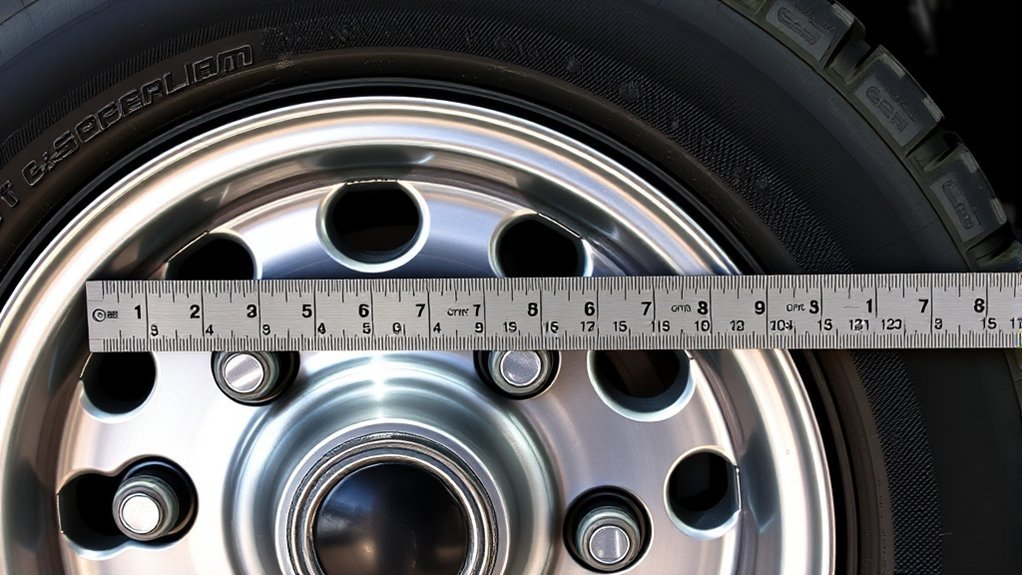
Wheel backspacing is one of the most important measurements to check before putting new wheels or larger tires on a Toyota Tacoma. It tells you how far the wheel sits toward the suspension or out toward the fender, which affects rubbing, stance, steering feel, and brake clearance.
Quick Answer
To measure Toyota Tacoma wheel backspacing, remove the wheel, lay it face down on a soft, flat surface, place a straightedge across the rear rim lip, and measure from the hub-mounting pad up to the underside of the straightedge. Record the result in inches and compare it with your wheel width, tire size, and clearance needs.
Key Takeaways
- Backspacing is measured from the wheel’s hub-mounting pad to the inner/back rim lip.
- More backspacing moves the wheel inward; less backspacing pushes the wheel outward.
- A lower-backspacing wheel may clear upper control arms better, but it can rub the fender liner, bumper, or body mount sooner.
- Backspacing alone does not guarantee Tacoma fitment; also verify bolt pattern, center bore, load rating, brake clearance, lug nut seat, tire size, and suspension setup.
At a Glance
| Time Required | 10–20 minutes per wheel |
| Difficulty | Beginner, as long as the wheel is removed safely |
| Tools Needed | Tape measure, straightedge or flat board, jack, jack stands, wheel chocks, lug wrench, torque wrench |
| Cost | Usually $0 if you already own basic wheel-removal tools |
How Backspacing Affects Your Tacoma Wheels
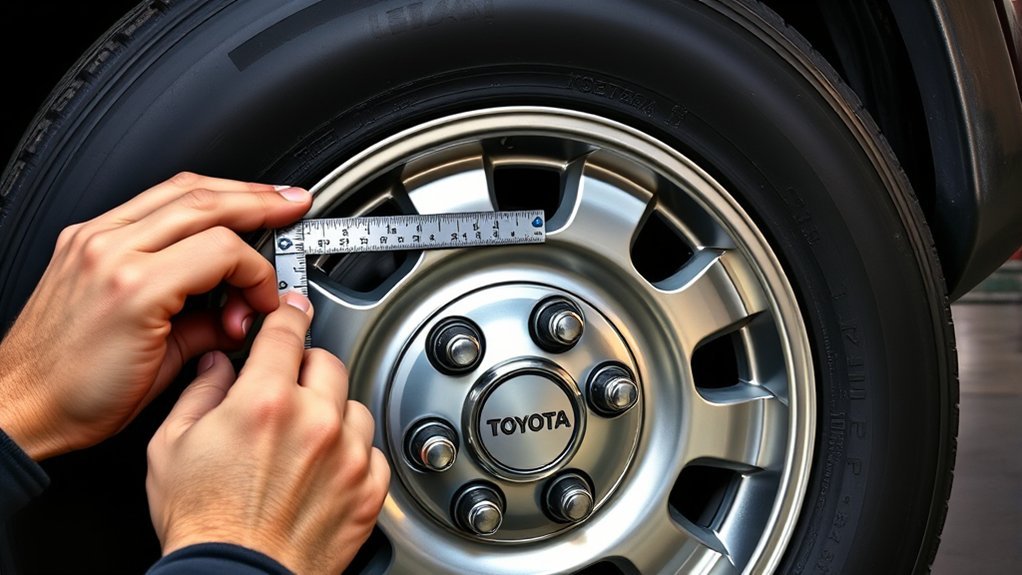
Backspacing is the distance from the wheel’s hub-mounting surface to the inner lip of the wheel. On a Tacoma, that measurement helps determine whether the wheel and tire sit closer to the suspension or farther out toward the fender.
A wheel with more backspacing sits farther inward. That can reduce fender poke, but it can also reduce clearance near the upper control arm, spindle, sway bar, brake components, and inner fender. A wheel with less backspacing pushes the tire outward. That often improves inner clearance, but it can increase rubbing at the fender liner, mud flap, bumper edge, or body mount when turning.
Note: Backspacing is not the only fitment number that matters. Before buying wheels, also confirm your Tacoma’s bolt pattern, center bore, wheel load rating, lug nut seat type, brake caliper clearance, TPMS compatibility, and tire load rating.
[Products Worth Considering]
The Everlit Road Guardian emergency kit is designed for roadside breakdowns, combining essential safety gear and roadside tools in one compact bag. It includes a digital 12V...
Essential Tools for Measuring Wheel Backspacing
You do not need specialty equipment to measure wheel backspacing, but you do need a stable setup and a flat reference edge.
Required Measuring Tools
- Straightedge or flat board: This bridges the rear lip of the wheel so you have a flat surface to measure to.
- Tape measure or ruler: Use one with clear inch markings. A ruler can work better than a flexible tape if the hub pad is deep inside the wheel.
- Socket wrench or lug wrench: Needed to remove the wheel from the Tacoma.
- Jack, jack stands, and wheel chocks: These keep the truck stable while the wheel is off.
- Torque wrench: Use it when reinstalling the wheel so the lug nuts are tightened to the correct specification for your model and wheel type.
Warning: Never work under or around a Tacoma supported only by a jack. Park on level ground, chock the opposite wheels, support the truck with jack stands, and follow the lifting points and lug-nut torque guidance for your specific model year.
Step-By-Step Measurement Guide
- Remove the wheel safely. Loosen the lug nuts slightly while the tire is on the ground, lift the truck, support it with jack stands, and remove the wheel.
- Lay the wheel face down. Use cardboard, a towel, or a soft mat to protect the wheel face from scratches.
- Place the straightedge across the rear rim lip. Make sure it rests on the wheel lip, not on the tire sidewall bulge.
- Measure to the hub-mounting pad. Measure vertically from the mounting surface to the underside of the straightedge.
- Record the measurement in inches. Measure twice, especially if the wheel has a stepped or unusual barrel shape.
Step-by-Step Guide to Measuring Wheel Backspacing
The most accurate way to measure Tacoma wheel backspacing is with the wheel removed. You can measure a mounted wheel and tire assembly, but be careful that the tire sidewall does not lift the straightedge above the actual wheel lip.
Required Tools And Materials
For the cleanest measurement, use a rigid straightedge, a tape measure, and a flat work surface. If the wheel is dirty, wipe the mounting pad first so rust, dirt, or stuck-on debris does not throw off your reading.
Step-by-Step Measurement Process
- Set the wheel face down. The decorative face should point toward the ground, and the inner barrel should face up.
- Bridge the back lip. Place your straightedge across the back edge of the rim so it touches both sides evenly.
- Find the mounting pad. This is the flat center surface that contacts the Tacoma’s hub.
- Measure straight down. Hold the tape measure vertical and measure from the hub-mounting pad to the underside of the straightedge.
- Write it down. A measurement of 4.75 inches, for example, means the wheel has about 4.75 inches of backspacing.
Pro Tip: If you are comparing old and new Tacoma wheels, measure both wheels the same way. The difference in backspacing tells you how much the inner lip will move toward or away from suspension components.
How to Calculate Backspacing From Offset
Offset and backspacing describe the same wheel-positioning idea in different ways. Wheel offset is measured in millimeters from the wheel centerline to the mounting surface. Backspacing is measured in inches from the mounting surface to the inner/back lip of the wheel.
Use this practical formula when you know the wheel width and offset:
Approximate backspacing = (wheel width + 1 inch) ÷ 2 + offset in inches
The extra 1 inch estimates the wheel’s outer flanges because wheel width is normally listed from bead seat to bead seat, while backspacing is measured to the outer rear lip. Actual flange thickness can vary slightly by wheel design.
| Example Wheel | Approx. Backspacing | Fitment Effect |
| 17×8.5, 0 offset | About 4.75 inches | Moderate outward stance compared with many stock-style wheels |
| 17×8.5, +12 offset | About 5.22 inches | Tucks farther inward; check upper control arm clearance |
| 17×8.5, -12 offset | About 4.28 inches | More poke; check fender liner, bumper, mud flap, and body mount clearance |
Common Backspacing Measurements for Tacoma Wheels
Many Tacoma aftermarket wheel discussions fall somewhere around 4.5 to 5.5 inches of backspacing, but that range is not a universal fitment guarantee. A 17×8 wheel, 17×8.5 wheel, and 17×9 wheel can all behave differently even if the backspacing number looks similar.
Use these ranges as a starting point, not as a final buying rule:
- More than about 5.25 inches: Usually a more tucked-in setup. This may help keep the tire under the fender, but it can create inner clearance issues with wider tires or aftermarket upper control arms.
- About 4.75 to 5.25 inches: A common middle range for many mild Tacoma wheel setups, depending on width and tire size.
- Less than about 4.75 inches: A more aggressive outward stance. This can improve inner clearance but may require trimming, mud-flap removal, cab-mount clearance work, or alignment changes with larger tires.
If you drive a stock-height Tacoma and want minimal trimming, stay conservative with tire diameter, wheel width, and poke. If your Tacoma has a lift, aftermarket upper control arms, or 33-inch-class tires, measure the actual clearances before assuming a wheel will fit.
How Offset Influences Backspacing in Tacoma Wheels
Offset changes backspacing because it moves the mounting surface relative to the wheel centerline. A positive offset adds backspacing and pulls the wheel inward. A negative offset reduces backspacing and pushes the wheel outward.
That change affects more than appearance. On a Tacoma, offset and backspacing can influence:
- Inner clearance: Space between the tire and upper control arm, sway bar, spindle, and inner fender.
- Outer clearance: Space near the fender liner, bumper edge, mud flap, and body mount.
- Steering feel: Large offset changes can alter steering effort and road feedback.
- Wheel bearing and suspension load: Aggressive poke can add leverage to suspension and hub components.
- Brake clearance: Wheel spoke shape and barrel design matter even when backspacing looks correct.
The safest approach is to compare the new wheel against your current wheel. Measure current backspacing, current tire size, and current rubbing points, then calculate how the new setup moves the inner and outer edges.
Troubleshooting Wheel Backspacing Rubbing Issues
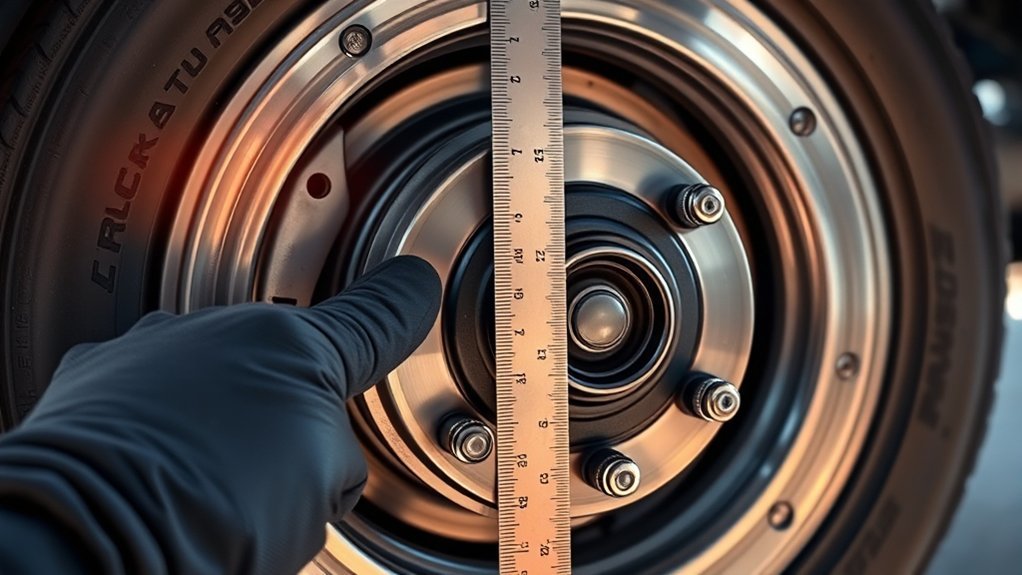
Rubbing is easiest to fix when you know where it happens. Turn the steering wheel from lock to lock on level ground, inspect the tire and wheel well, and look for shiny plastic, polished metal, fresh rubber marks, or torn liner material.
| Where It Rubs | Likely Cause | Possible Fix |
| Upper control arm or suspension | Too much backspacing, high positive offset, or tire too wide | Use less backspacing, narrower tire, different wheel design, or verify UCA compatibility |
| Fender liner or mud flap | Tire is pushed outward or tire diameter is too large | Heat/reshape liner, trim carefully, adjust alignment, or reduce tire size/poke |
| Bumper edge or body mount area | Large tire diameter plus aggressive outward stance | Alignment adjustment, trimming, body-mount clearance work, or smaller tire |
| Brake caliper | Wheel barrel or spoke shape does not clear the brake package | Choose a wheel confirmed for your Tacoma trim and brake setup |
Warning: Do not solve major rubbing by ignoring it. Rubbing can damage tires, wiring, brake lines, fender liners, and suspension components. If the tire contacts metal or steering/brake parts, stop driving and correct the fitment.
What’s the Real Difference Between Backspacing and Offset?
Backspacing and offset are closely related, but they are not the same measurement.
- Backspacing: Measured in inches from the hub-mounting pad to the inner/back lip of the wheel.
- Offset: Measured in millimeters from the wheel centerline to the hub-mounting pad.
A wheel can have the same offset but different backspacing if the wheel width changes. That is why a 17×8.5 +12 wheel and a 17×9 +12 wheel do not sit exactly the same on a Tacoma. The wider wheel adds width to the inside, outside, or both depending on offset and design.
For real-world fitment, think about both measurements together. Backspacing tells you inner clearance. Offset helps explain how the wheel shifts in or out. Wheel width tells you how much total space the wheel uses.
Tips for Choosing the Right Wheels Based on Backspacing
Choosing Tacoma wheels based on backspacing alone is risky. Use backspacing as one part of a full fitment checklist.
- Start with your current setup. Record current wheel size, tire size, backspacing, offset if known, and any rubbing points.
- Compare inner clearance. More backspacing moves the inner lip closer to suspension parts.
- Compare outer poke. Less backspacing pushes the tire closer to the fender liner, bumper, and body mount.
- Verify tire size and load rating. Use a tire size recommended by Toyota or a properly selected equivalent with suitable load capacity. The NHTSA TireWise guide is a helpful safety reference for tire selection and maintenance.
- Check wheel load rating. Tacoma wheels must be rated for the truck’s weight and intended use, especially for towing, hauling, and off-road driving.
- Confirm lug hardware. Aftermarket wheels may require a different lug nut seat than the factory wheels.
- Test full-lock clearance. Check clearance while turning left and right, and recheck after alignment or suspension changes.
Pro Tip: If two wheels have the same diameter and width, the one with lower backspacing will sit farther out. If two wheels have the same backspacing but different widths, the wider wheel will usually add more outer poke.
Frequently Asked Questions
Can backspacing affect my Tacoma’s handling and ride quality?
Yes. Backspacing changes where the wheel and tire sit relative to the suspension and steering geometry. A mild change may only affect stance and clearance, but a large change can affect steering feel, road feedback, turning clearance, and component stress.
How often should I check my wheel backspacing?
You do not need to check it every few months because backspacing is a fixed wheel dimension. Measure it when buying new wheels, checking used wheels, diagnosing rubbing, comparing two wheel setups, or inspecting a wheel that may be bent or damaged.
Are there specific backspacing requirements for off-road tires?
There is no single off-road backspacing number that fits every Tacoma. Larger all-terrain or mud-terrain tires need enough inner clearance for suspension parts and enough outer clearance for steering and compression. Tire diameter, tire width, wheel width, lift height, alignment, and control-arm design all matter.
What tools are needed for measuring backspacing accurately?
Use a straightedge or flat board, a tape measure or ruler, and a flat surface. If the wheel is still on the truck, remove it safely with wheel chocks, a jack, jack stands, and a lug wrench. Use a torque wrench when reinstalling the wheel.
Can I use any wheel for my Tacoma if it meets backspacing?
No. Backspacing is only one fitment measurement. The wheel also needs the correct bolt pattern, center bore or hub-centric setup, wheel load rating, brake clearance, lug nut seat, TPMS compatibility, and a tire size/load rating that is safe for your Tacoma.
Does lower backspacing always mean better clearance?
Lower backspacing usually improves inner clearance near the upper control arm, but it does not always improve total clearance. It pushes the tire outward, which can create new rubbing at the fender liner, bumper, mud flap, or body mount.
Is offset or backspacing more important for Tacoma wheels?
Both matter. Offset is easier to compare when shopping because most wheels list it in millimeters. Backspacing is useful for checking inner clearance. For the best result, compare wheel width, offset, backspacing, tire size, and actual clearance together.
Conclusion
Measuring Toyota Tacoma wheel backspacing is simple: remove the wheel safely, lay it face down, place a straightedge across the rear lip, and measure from the hub-mounting pad to the straightedge. The harder part is using that number correctly.
More backspacing tucks the wheel inward, while less backspacing pushes it outward. Neither is automatically better. The right choice depends on your Tacoma’s model year, wheel width, tire size, suspension setup, lift height, control arms, and how much trimming you are willing to do. Measure carefully, compare your old and new setup, and verify every fitment spec before buying wheels.
Sources
- Tire Rack — What Is Wheel Offset? — backs up offset definition, positive/negative offset behavior, and backspacing definition.
- Discount Tire — Wheel Offset & Backspacing — backs up the relationship between offset, backspacing, rubbing, and measuring method.
- NHTSA TireWise — backs up tire safety, tire selection, and maintenance guidance.
- Toyota Owners — Tacoma Manuals and Warranties — vehicle-specific reference for owner manual, tire, wheel, and service information.
- U.S. Tire Manufacturers Association — Replacing Tires — backs up replacement tire size, load index, and speed rating safety considerations.

Related Articles
How Tire Weight Affects Toyota Tacoma Performance
How does tire weight influence your Toyota Tacoma's performance and efficiency? Discover the surprising effects that could change your driving experience.
Read More
Tire Noise Levels by Tire Type on a Toyota Tacoma
A comprehensive look at how tire types affect noise levels in your Toyota Tacoma reveals surprising insights that could enhance your driving experience.
Read More
How To Choose Tires for a Dual Use Toyota Tacoma
Unlock the secrets to selecting the perfect tires for your dual-use Toyota Tacoma, ensuring optimal performance and comfort on every adventure. Discover more inside!
Read More