
How To Torque Lug Nuts on a Toyota Tacoma Correctly
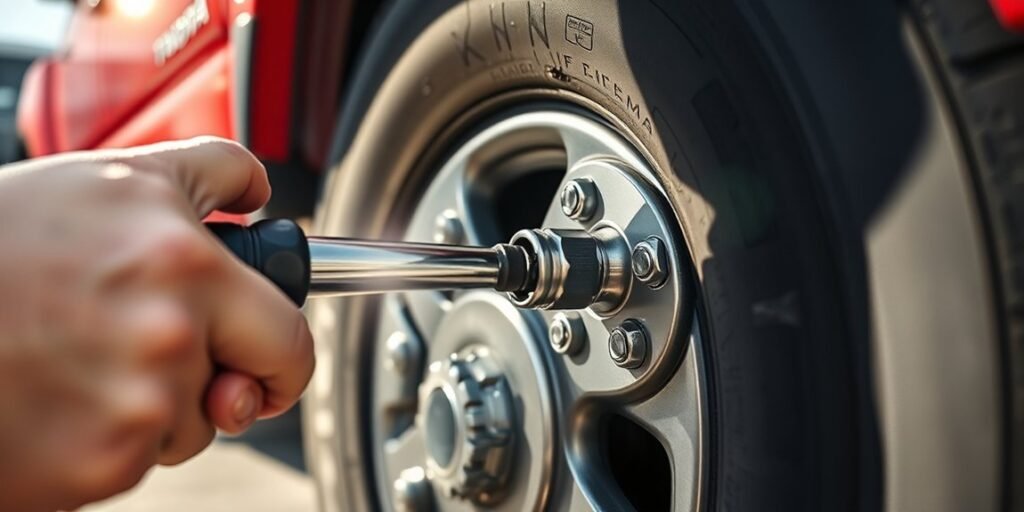
Correctly torquing Toyota Tacoma lug nuts is a safety step, not just a tire-change detail. The right torque depends on your Tacoma’s model year, wheel material, and wheel hardware, so start with the owner’s manual for your exact truck and finish every wheel with a calibrated torque wrench.
Quick Answer
For a 2005 Toyota Tacoma, Toyota lists 85 ft-lbf for the wheel nuts. For a 2026 Tacoma, Toyota lists 97 ft-lbf for aluminum wheels and 154 ft-lbf for steel wheels. Hand-start each lug nut, tighten in a star pattern, finish with a torque wrench, and recheck after driving within the owner’s manual interval.
Key Takeaways
- Do not use one universal Tacoma torque number for every year and wheel type.
- Use clean, dry lug studs and nuts unless the wheel or hardware manufacturer specifically says otherwise.
- Tighten lug nuts in a crisscross or star pattern so the wheel seats evenly against the hub.
- Use an impact wrench only for light run-down if needed; final torque should come from a calibrated torque wrench.
- After wheel removal, recheck torque within the interval stated in your owner’s manual.
At a Glance
| Time Required | 10–20 minutes per wheel once the vehicle is safely positioned |
| Difficulty | Easy to moderate DIY task |
| Tools Needed | Owner’s manual, calibrated torque wrench, correct lug-nut socket, breaker bar, wheel chocks, jack, jack stands, and wire brush |
| Cost | Usually $0 if you already own the tools; about $40–$150+ if buying a torque wrench |
Understand Your Tacoma Lug Nut Torque Specifications
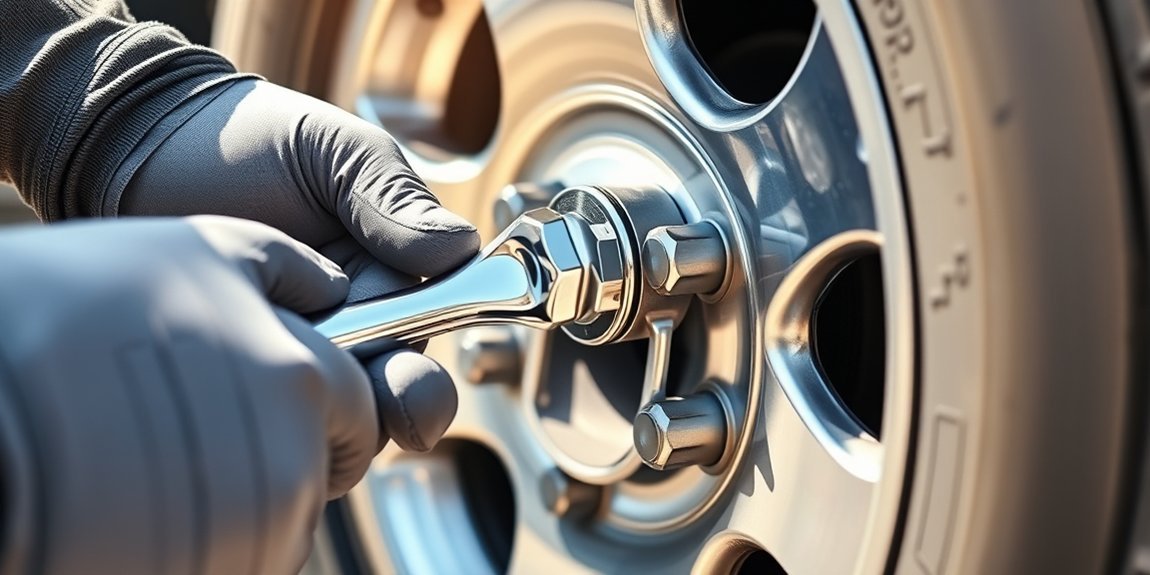
The most important rule is simple: use the torque value for your exact Tacoma, wheel type, and hardware. Toyota’s published specs are not the same for every generation or wheel material.
| Tacoma / Wheel Type | Toyota-Listed Wheel Nut Torque | What to Do |
| 2005 Toyota Tacoma | 85 ft-lbf (113 N·m) | Use the value in the 2005 Tacoma owner’s manual. |
| 2026 Toyota Tacoma with aluminum wheel | 97 ft-lbf (131 N·m) | Confirm in Toyota’s current 2026 Tacoma flat-tire instructions. |
| 2026 Toyota Tacoma with steel wheel | 154 ft-lbf (209 N·m) | Confirm wheel material before torquing. |
| Other Tacoma years, aftermarket wheels, or spacers | Varies | Check the owner’s manual, wheel manufacturer, or spacer manufacturer before tightening. |
Note: Avoid blanket statements like “all Tacomas use 83 ft-lbf” or “newer Tacomas use 76–84 ft-lbf.” Toyota’s current Tacoma instructions show that wheel material can change the required torque.
[Products Worth Considering]

Universal magnetic jack pad with aluminum grooved design to protect vehicle pinch welds during lifting. Durable nylon pad inserts are upgraded and secured with screws to resist damage and keep in place. Designed to fit most single vehicle pinpoint welds for safer, stable jacking when changing tires, repairs, or performing oil changes.

This roadside assistance kit helps drivers and passengers in urgent situations after an accident or breakdown, providing practical support while waiting for help. It includes a lightweight, compact tire inflator for fast inflation of standard vehicle tires, plus reinforced jumper cable protection for safer handling. Ideal for winter weather, road trips, camping, and travel, with everything stowed neatly in a trunk bag.

This spare tire tool kit is designed for the 2004 to 2018 Ford F-150 to help you loosen and tighten wheel lug nuts and manage the spare tire and provided jack functions from underneath the vehicle. It includes the lug nut wrench and extension pieces plus a convenient storage carrying case for organized transport. The jack itself is not included.
Gather Essential Tools for Torquing Lug Nuts
Before you start, gather the right tools so you are not guessing under the truck or tightening by feel. You need:
- A calibrated click-type or digital torque wrench with enough range for your Tacoma’s required torque.
- The correct socket for your lug nuts, commonly 21 mm or 13/16 inch depending on the wheel hardware.
- A breaker bar or lug wrench for loosening lug nuts before lifting the truck.
- Wheel chocks to keep the Tacoma from rolling.
- A properly rated jack and jack stands if the wheel is off the ground.
- A wire brush or clean rag for removing corrosion from the hub and wheel mounting face.
- Your owner’s manual or Toyota Owners manual page for the exact torque spec.
Warning: Do not oil or grease Tacoma lug studs or lug nuts unless the specific wheel-hardware manufacturer instructs you to. Toyota warns that oil or grease can cause overtightening, damaged bolts, loosening, and possible wheel loss.
Prepare the Wheel Before Torquing
Good torque starts before the torque wrench clicks. Park on a flat, solid surface, set the parking brake, chock the opposite wheels, and loosen the lug nuts slightly before lifting the truck if the wheel is still installed.
When the wheel is off, inspect each lug stud and nut. Do not reuse badly damaged, stretched, cracked, cross-threaded, or heavily corroded hardware. Clean rust and debris from the hub face and the wheel’s mounting surface so the wheel can sit flat against the hub.
Reinstall the wheel and start every lug nut by hand. The nut should spin on smoothly for several turns. If it binds right away, stop and inspect the threads instead of forcing it with a wrench.
Follow the Proper Tightening Technique
The goal is to seat the wheel evenly, not just make the lug nuts feel tight. Uneven tightening can create poor clamping force, vibration, brake rotor issues, or wheel damage.
Use the Star Pattern Method
Use a crisscross or star pattern instead of tightening around the circle. On a 6-lug Tacoma wheel, tighten one nut, then move across the wheel to the opposite nut, continuing around the wheel so pressure is spread evenly.
Hand-tighten first, then snug each nut lightly in the star pattern. Do not apply full torque while the wheel is hanging freely and spinning in the air.
Tighten in Stages
- Hand-start all lug nuts with the tapered or washer side seated correctly for your wheel.
- Snug the nuts in a star pattern with a lug wrench or low-power tool.
- Lower the truck until the tire just touches the ground and cannot spin freely.
- Set the torque wrench to the correct spec for your Tacoma and wheel type.
- Torque each lug nut in the star pattern until the wrench clicks or signals the set value.
- Repeat the same star pattern once more to confirm every nut reached the final setting.
Pro Tip: If you use an impact wrench, use it only to run the nuts down gently. Never rely on an impact wrench as the final torque check. Finish with a torque wrench every time.
Recheck Torque After Installation
After the wheel has been removed and reinstalled, recheck the lug nut torque within the interval specified in your Tacoma owner’s manual. Toyota’s 2024 Tacoma Hybrid flat-tire instructions say to retighten wheel nuts within 100 miles (160 km) after replacing a tire. Continental also recommends retorquing wheels after a short drive following a tire change.
When rechecking, use the same final torque spec and star pattern. Do not loosen the nuts first unless a qualified repair procedure tells you to; simply verify that each nut reaches the required torque.
A wheel nut that is too loose can lose clamping force; one that is too tight can damage studs, nuts, or wheel seats. Correct torque is the safe middle ground.
What Mistakes Should You Avoid When Torquing?
Most lug nut problems come from rushing or guessing. Avoid these common mistakes:
- Using the wrong torque spec: Confirm your model year, wheel material, and wheel hardware.
- Skipping the star pattern: Tightening in a circle can seat the wheel unevenly.
- Using oil or grease: Lubricated threads can change clamping force and lead to overtightening.
- Trusting an impact wrench: Impact tools can easily over-tighten or under-tighten lug nuts.
- Torquing with the wheel fully off the ground: Final torque should be applied when the tire is stable and lightly loaded.
- Ignoring damaged hardware: Replace damaged studs, nuts, or wheels before driving.
- Forgetting the retorque check: Recheck after driving within the interval in your manual.
[Products Worth Considering]

Secure your parked vehicle quickly with AFA Tooling 4T rubber wheel chocks in a 4-pack for two dual-wheel sets. The ribbed design and textured base grip fast without pounding, so you can chock tires on trailers, RVs, ATVs, and work vehicles with confidence. EZ rustproof handles with rope ties keep the pair together for easy placement and removal, while nylon-reinforced rubber stands up to dirt, ice, salt, and harsh weather.

Camco’s RV wheel chocks with an attached rope help keep your travel trailer securely in place for safer unhitching or parking. This 2-pack is compatible with wheels up to 26-inch diameter and features durable UV-resistant construction for reliable outdoor performance. The rope enables quick, safe removal so you can prepare for your next trip with less hassle.
What About Aftermarket Wheels, Lug Nuts, and Spacers?
Aftermarket wheels and wheel spacers need extra care because the factory Tacoma torque spec may not be the only number involved. Different wheels may use different lug seats, such as flat washer-style, conical, or ball-seat hardware. Using the wrong lug nut style can prevent the wheel from clamping correctly.
For spacers, follow the spacer manufacturer’s instructions for the spacer-to-hub nuts. Then follow the appropriate wheel or vehicle specification for the wheel-to-spacer nuts, unless the spacer or wheel manufacturer provides a different verified procedure. Recheck spacer hardware as instructed by the spacer manufacturer.
Warning: Do not guess on spacer torque. Spacers add another clamping surface and another set of fasteners, so incorrect torque can create vibration, stud damage, or wheel-separation risk.
When to Seek Professional Help for Torque Issues
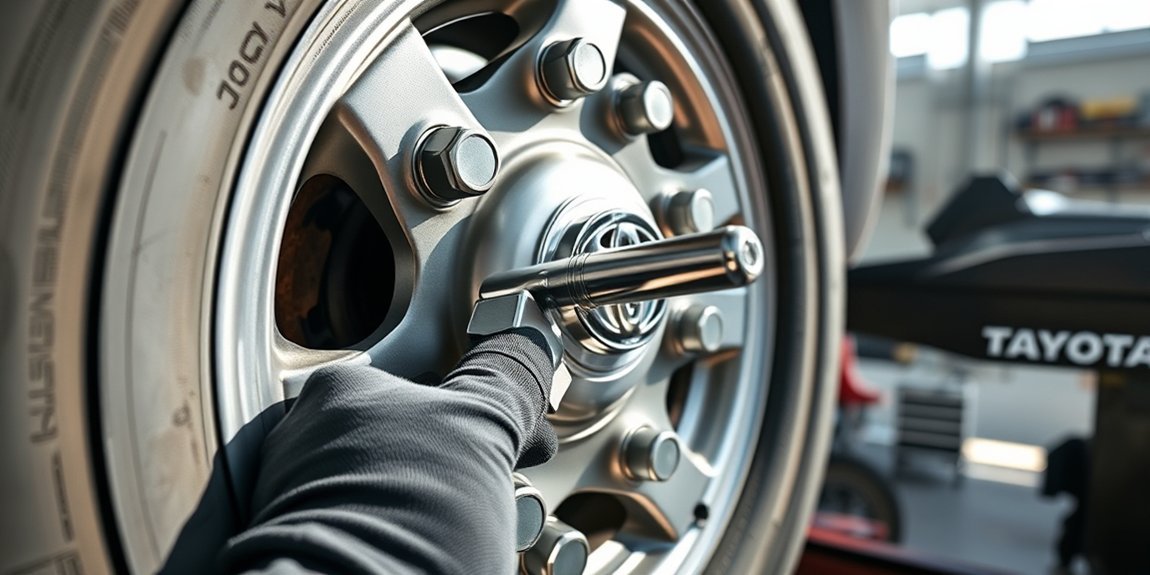
Get professional help if the lug nuts do not thread on smoothly, the studs look stretched or damaged, the wheel does not sit flush, or the truck develops vibration after a wheel service. Also stop and get help if you hear clicking, clunking, scraping, or knocking from the wheel area after installation.
A Toyota dealer, qualified tire shop, or trusted mechanic should inspect the truck if a lug nut was badly over-tightened, a stud breaks, a spacer is involved, or a wheel has been driven while loose. Insufficiently tightened wheel nuts can loosen the wheel attachment and increase crash risk, so do not keep driving if something feels wrong.
Frequently Asked Questions
What is the torque spec for Toyota Tacoma lug nuts?
It depends on the model year and wheel type. Toyota lists 85 ft-lbf for the 2005 Tacoma. For the 2026 Tacoma, Toyota lists 97 ft-lbf for aluminum wheels and 154 ft-lbf for steel wheels. Always confirm your exact truck’s owner’s manual before tightening.
Is 76–84 ft-lbf correct for a Tacoma?
Do not use that range as a universal Tacoma spec. Some older or third-party charts may show numbers in that area for certain vehicles, but Toyota’s current Tacoma instructions include higher wheel-type-specific values. Use the official spec for your exact year and wheel.
How much torque does a 3.5 V6 Tacoma use for lug nuts?
Engine size is not the best way to identify lug nut torque. Lug nut torque is based on the vehicle year, wheel, studs, nuts, and hardware design. Check the owner’s manual for your exact Tacoma rather than using the 3.5 V6 engine as the deciding factor.
Should Tacoma lug nuts be torqued dry?
Yes, factory Tacoma lug nuts and studs should generally be clean and dry unless the specific wheel or hardware manufacturer says otherwise. Oil or grease can change the clamping force and may lead to overtightening or loosening.
How soon should I recheck Tacoma lug nut torque after a tire change?
Follow your owner’s manual. Toyota’s 2024 Tacoma Hybrid instructions say to retighten wheel nuts within 100 miles after replacing a tire. If your manual gives a different interval, follow the manual for your truck.
How much torque do I put on nuts for Tacoma wheel spacers?
Use the spacer manufacturer’s torque spec for the spacer-to-hub nuts. For the wheel-to-spacer nuts, follow the wheel or vehicle specification unless the spacer or wheel maker provides a different verified instruction. Do not guess.
Does the 2005 Tacoma’s reliability reputation change its lug nut torque?
No. Reliability discussions do not change the wheel nut torque spec. For a 2005 Tacoma, use Toyota’s listed 85 ft-lbf wheel nut torque and inspect the studs, nuts, wheels, and hub surfaces before driving.
Conclusion
Torquing Toyota Tacoma lug nuts correctly comes down to three things: the right spec, the right pattern, and the right tool. Confirm your exact torque value from Toyota or the wheel-hardware maker, hand-start the nuts, tighten in a star pattern, finish with a calibrated torque wrench, and recheck after driving within the manual’s interval. Taking a few extra minutes helps protect the studs, wheels, brakes, and everyone on the road.
Sources
- Toyota Owners — 2026 Tacoma flat-tire instructions — current Tacoma steel and aluminum wheel nut torque values.
- Toyota — 2005 Tacoma Owner’s Manual — 85 ft-lbf wheel nut torque and dry-thread safety warnings.
- Toyota Owners — 2024 Tacoma Hybrid flat-tire instructions — retighten wheel nuts within 100 miles after replacing a tire.
- Continental Tires — Retorquing wheels — tire-industry retorque guidance after a tire change.
- ISO 6789-2:2017 — calibration requirements for hand torque tools.
- NHTSA recall bulletin — safety context on insufficiently tightened lug nuts and wheel detachment risk.

Related Articles
How Tire Weight Affects Toyota Tacoma Performance
How does tire weight influence your Toyota Tacoma's performance and efficiency? Discover the surprising effects that could change your driving experience.
Read More
Tire Noise Levels by Tire Type on a Toyota Tacoma
A comprehensive look at how tire types affect noise levels in your Toyota Tacoma reveals surprising insights that could enhance your driving experience.
Read More
How To Choose Tires for a Dual Use Toyota Tacoma
Unlock the secrets to selecting the perfect tires for your dual-use Toyota Tacoma, ensuring optimal performance and comfort on every adventure. Discover more inside!
Read More