Correct Toyota Hilux Tire Pressure for Highway Driving
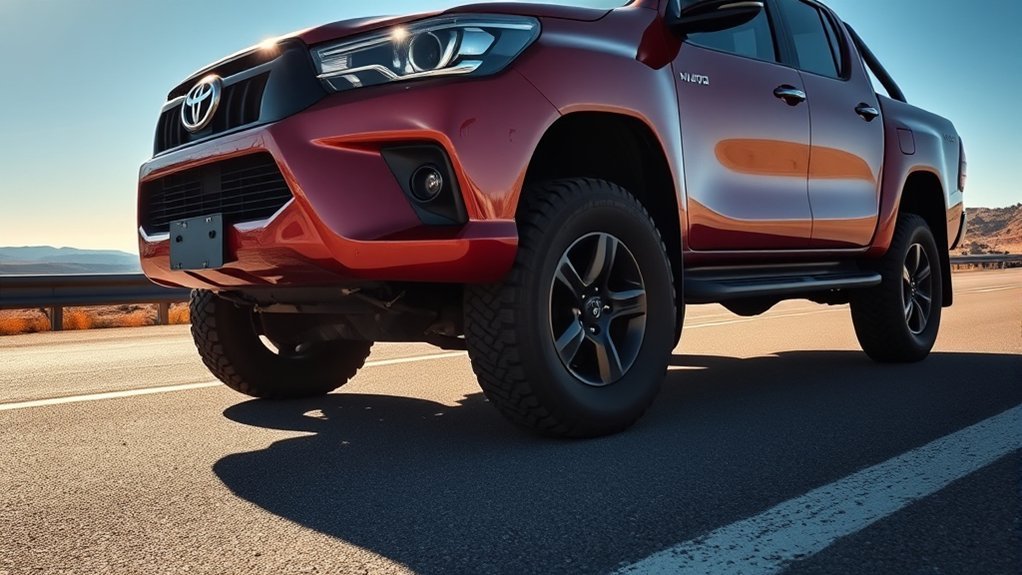
For highway driving in your 2025 Toyota Hilux, you should maintain a tire pressure of 35 PSI for the front tires and 38 PSI for the rear tires. Proper tire pressure enhances safety, improves fuel efficiency, and reduces the risk of blowouts. Remember to check the pressure every 15 days and adjust it as needed for heavy loads or seasonal changes. Want to know more about how to keep your tires in prime condition?
Why Proper Tire Pressure Is Crucial for Highway Safety
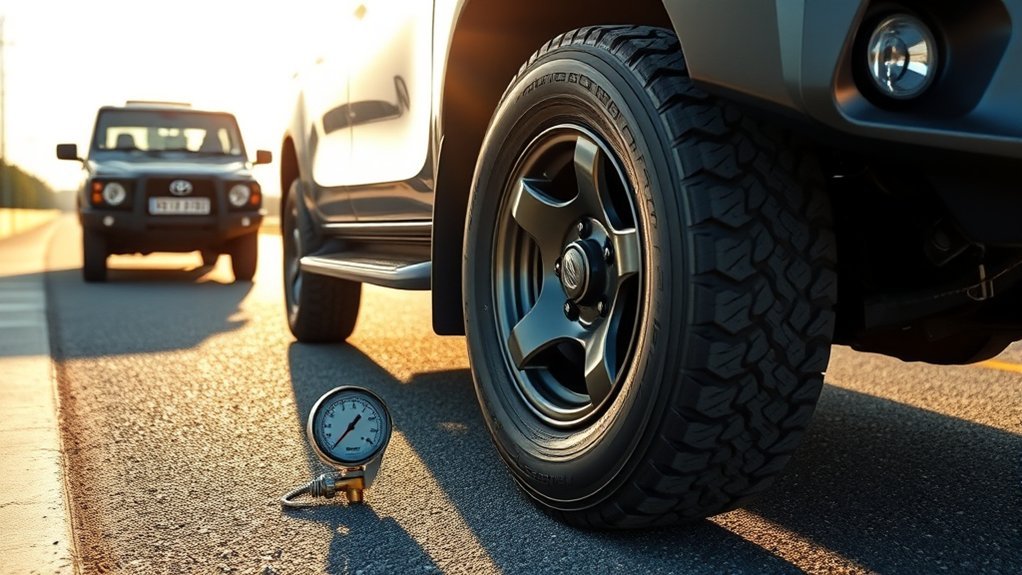
Proper tire pressure is essential for ensuring safety on the highway. When you maintain the recommended pressures—35 PSI in the front and 38 PSI in the rear for your 2025 Toyota Hilux—you enhance your vehicle’s stability and maneuverability. This is vital when driving at high speeds, where even a slight miscalculation can lead to serious accidents. Correctly inflated tires greatly reduce braking distances and minimize the risk of blowouts, which can be catastrophic on the highway.
Regularly checking your tire pressure not only promotes highway driving safety but can also improve your fuel efficiency by up to 3%. That’s money saved on long trips and a positive impact on the environment. Plus, adhering to manufacturer-recommended pressures helps prevent uneven tire wear, extending their lifespan. In short, understanding tire pressure importance is your key to a safer and more efficient driving experience on the open road.
Adjusting Tire Pressure for Load and Driving Conditions
When you’re gearing up for a hefty load or seasonal changes, adjusting your tire pressure is essential for safety and performance. For instance, adding 4-6 PSI can help accommodate extra weight or towing. Regular checks will keep your handling sharp, regardless of the conditions.
Load-Specific Pressure Adjustments
Adjusting tire pressure based on your load and driving conditions is vital for ideal vehicle performance. For your 2025 Toyota Hilux, maintain 35 PSI in the front and 38 PSI in the rear under normal load. If you’re carrying heavy loads, boost the pressure by 4-6 PSI to guarantee optimal handling and safety. When towing a trailer, adding 6 PSI to the standard pressure helps accommodate extra weight. This load management is essential, as dropping pressure can lead to poor fuel efficiency and uneven tire wear. Regularly engage in pressure monitoring, especially before long trips, to enhance stability and driving safety. Empower yourself with these adjustments for a smoother, liberated ride!
Seasonal Temperature Considerations
As temperatures drop, it’s vital to keep an eye on your tire pressure for your 2025 Toyota Hilux. Seasonal adjustments are important for peak performance and safety. During cooler months, increase tire pressure by about 2 PSI. If you’re carrying extra load, such as cargo or towing, boost it by 4 to 6 PSI.
Here’s a quick reference table for your tire pressure monitoring:
| Condition | Recommended Pressure (Front) | Recommended Pressure (Rear) |
|---|---|---|
| Normal Conditions | 35 PSI | 38 PSI |
| Cold Weather | 37 PSI | 40 PSI |
| Heavy Load | 39-41 PSI | 42-44 PSI |
| Wet Conditions | 35-36 PSI | 38-39 PSI |
Regular checks guarantee safety and enhance fuel efficiency.
Recommended Tire Pressure for the 2025 Toyota Hilux
When it comes to the 2025 Toyota Hilux, the recommended tire pressure is 35 PSI for the front tires and 38 PSI for the rear. Keeping these specifications in mind is crucial for improving your vehicle’s performance and safety, especially on highways. If you’re carrying heavy loads, remember to adjust the pressure by an extra 4-6 PSI to guarantee peak handling.
Ideal PSI Specifications
For the 2025 Toyota Hilux, maintaining the right tire pressure is vital for performance and safety. The recommended PSI is 35 for the front tires and 38 for the rear when driving on highways. Regular tire pressure monitoring is important, ideally every 15 days, to prevent uneven wear and enhance fuel efficiency. Remember, always check tire pressure when the tires are cold to avoid the impact of temperature on your readings.
| Tire Position | Recommended PSI | Notes |
|---|---|---|
| Front | 35 | Best for highway driving |
| Rear | 38 | Guarantees stability |
| Cold Pressure | Check regularly | Prevents inflated results |
| Heavily Loaded | +4 to +6 PSI | Adjust for extra weight |
| Check Interval | Every 15 days | Routine monitoring |
Load Impact Adjustments
To guarantee peak performance and safety for your 2025 Toyota Hilux, adjusting tire pressure based on load is essential. When you carry heavy loads, increase the tire pressure by 4-6 PSI to maintain ideal load distribution and prevent uneven tire wear.
- Recommended pressure: 35 PSI front, 38 PSI rear under normal conditions
- Load capacity: 1,250 kg—adjust pressure accordingly
- Check tire pressure when tires are cold for accuracy
- Regular monitoring enhances fuel efficiency and extends tire lifespan
Checking Your Hilux Tire Pressure: A Step-By-Step Guide
Start by verifying your Toyota Hilux tires are cold for the most accurate pressure readings. If you’ve driven less than 3 km, you’re good to go. Next, remove the valve cap from each tire and grab your tire pressure tools—preferably a digital tire pressure gauge for precision. Firmly press the gauge onto the valve stem to get your reading.
For the 2025 Hilux model, aim for 35 PSI in the front tires and 38 PSI in the rear. If you’re hauling heavy loads, don’t forget to add 4-6 PSI to maintain peak performance and safety.
Make it a habit to check your tire pressure every 15 days, especially before long trips. This simple tire maintenance tip can enhance handling and fuel efficiency, keeping you liberated on the road. Take charge of your ride and verify those tires are always ready to roll!
How Seasonal Changes Affect Tire Pressure
As temperatures fluctuate with the seasons, your tire pressure can shift dramatically, impacting your Hilux’s performance. Understanding how seasonal changes affect tire pressure is vital for safe driving.
- In colder months, expect about a 1 PSI drop for every 10°F decrease in temperature.
- Increase your tire pressure by 2 PSI during winter to combat these fluctuations.
- In summer, heat can cause tires to expand, making weekly pressure checks essential.
- Proper inflation during wet conditions enhances traction and road adherence.
Regular monitoring of tire pressure not only prevents uneven tire wear but also maintains fuel efficiency. By staying vigilant about these tire pressure fluctuations and their temperature impact, you guarantee your Hilux remains safe and performs at its best year-round. Adjusting your tire pressure according to the seasons can make a significant difference in your driving experience.
Debunking Tire Pressure Myths
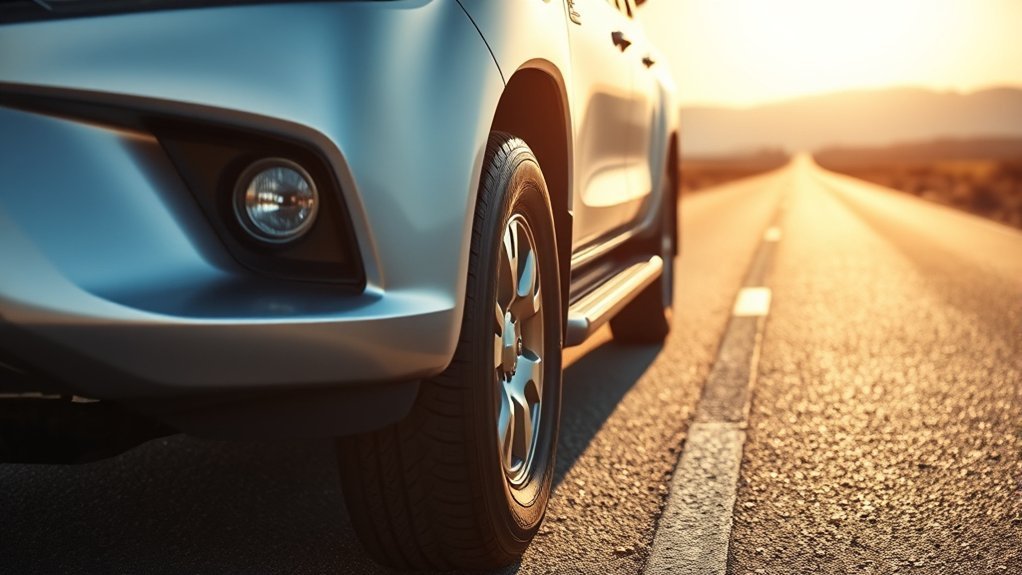
While many drivers hold onto common misconceptions about tire pressure, understanding the facts can greatly enhance your driving experience. One of the biggest tire pressure myths is that higher pressure always boosts fuel efficiency. In reality, overinflating tires can lead to uneven wear and a harsher ride, compromising safety. It’s also a safety misconception that you only need to check tire pressure seasonally; aim for every 15 days, especially before long trips.
Another myth is that tire pressure remains constant regardless of load. Heavier loads require an increase of 4-6 PSI for ideal handling. Plus, don’t forget to measure tire pressure when they’re cold for accurate results. Finally, the recommended tire pressure isn’t universal; each vehicle, including your Toyota Hilux, has specific guidelines to follow. By debunking these myths, you’ll drive safer and enjoy a smoother ride.
What to Do When Your Tires Show Warning Signs?
When your tires start showing warning signs, it’s essential to act quickly to secure your safety on the road. Ignoring these signs can lead to serious issues, so keep an eye out for the following:
- Uneven tread wear, indicating alignment or inflation problems.
- Visible cuts or defects requiring professional evaluation or replacement.
- Bulges or blisters on the sidewall, which can lead to blowouts.
- Vibration or noise while driving, suggesting imbalance or deterioration.
Use these tire inspection tips to make sure you catch potential problems early. Regularly check your tire pressure and tread depth, and don’t hesitate to seek help if you notice anything unusual. By staying proactive, you can maintain your vehicle’s performance and enjoy a safer driving experience. Remember, your tires are your connection to the road, so keep them in top shape!
Maintaining Tire Health for Optimal Performance
To guarantee your Toyota Hilux performs at its best, maintaining tire health is crucial. Regularly check your tire pressure every 15 days and before long trips, confirming you measure them when they’re cold for accuracy. For highway driving, keep your front tires at 35 PSI and the rear at 38 PSI to enhance fuel efficiency and handling. If you’re carrying heavy loads, increase the pressure by 4-6 PSI.
Don’t forget to monitor tread depth, confirming it’s at least 1.6mm for ideal grip and safety. Regular tire rotation helps guarantee even wear, extending tire life. Also, schedule alignment checks to prevent uneven wear and improve handling. Inspect your tires for cuts, defects, and signs of uneven wear, as these factors can greatly impact performance on highway surfaces. By prioritizing tire health, you’ll enjoy a smoother, safer ride in your Hilux.
Frequently Asked Questions
How Much Air Should Be in a Hilux Tyre for Sand Driving?
For sand driving in your Hilux, lower the tire pressure to about 15 psi. This boosts off-road handling and traction, letting you glide over soft surfaces effortlessly. Just remember to reinflate afterward for peak performance.
Is 40 Psi Too High for 4WD?
“Too much air can burst your tire’s bubble.” Yes, 40 PSI is too high for 4WD. It compromises off-road performance and accelerates tire wear, leading to safety issues. Keep it within recommended limits for peak driving.
Is 26 Psi Too Low for a Highway?
Yes, 26 PSI is too low for highway driving. Prioritize tire pressure maintenance for highway safety; maintaining proper pressure enhances handling and reduces blowout risks, ensuring a smoother, safer ride while maximizing fuel efficiency.
Is 42 Tire Pressure Too High to Drive?
Yes, 42 PSI is too high for safe driving. Imagine your tires as instruments; overinflation distorts their harmony, impacting traction and safety on highways. Keep tire pressure balanced for a smoother, safer journey.
Conclusion
In summary, keeping your Toyota Hilux’s tire pressure in check is essential for safety and performance on the highway. For instance, a driver named Sarah noticed her fuel efficiency plummeted after driving on under-inflated tires, leading to costly trips to the gas station. By regularly checking and adjusting her tire pressure, she saved money and assured a smoother ride. So, make it a habit to monitor your tire pressure—it’s an easy step toward safer, more efficient driving!

Related Articles
The Right Tire Pressure for Toyota Hilux Off-Roading
Proper tire pressure is crucial for Toyota Hilux off-roading; discover how to optimize your adventure with the right PSI for every terrain.
Read More
Toyota Hilux Tires That Work Both Off-Road and On-Road
Learn about the best tires for your Toyota Hilux that excel on and off the road, ensuring you’re ready for any adventure ahead.
Read More
Choosing the Right Tire for Daily Toyota Hilux Driving
Just like finding the perfect fit for your Toyota Hilux, choosing the right tire can significantly impact your driving experience—discover how to make the best choice.
Read More