
Recommended Tire Sizes for the Toyota Hilux
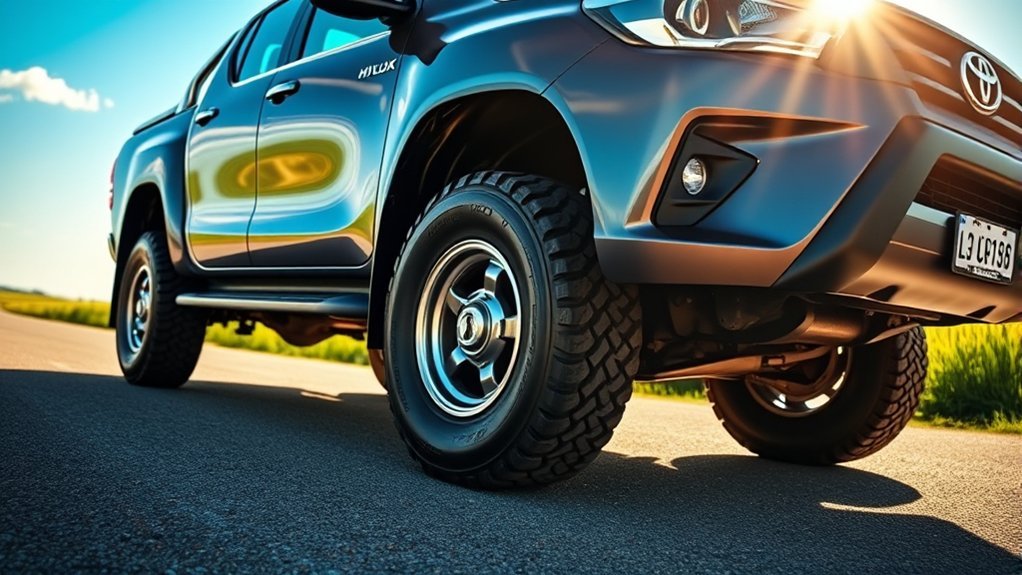
If you’re choosing tyres for a Toyota Hilux, start with the tyre placard on your vehicle, not a universal internet size. A Hilux can leave the factory with different tyre sizes depending on the year, market, trim, body style, drivetrain and wheel package. Common factory sizes include 265/65R17 and 265/60R18, but the best choice depends on how you drive, how much you carry, and whether you tow or go off-road.
Quick Answer
For many modern Toyota Hilux models, 265/65R17 is the most common all-round factory tyre size, while some higher-grade 18-inch wheel packages use 265/60R18. Always confirm your exact size, load index, speed rating and pressure on the door placard or owner’s manual before buying tyres.
Key Takeaways
- Best all-round choice: stay with the factory size shown on your Hilux tyre placard, usually 265/65R17 or 265/60R18 on many current models.
- For towing and payload: match or exceed the original load index and use the correct cold tyre pressure for the load.
- For off-road upgrades: sizes such as 265/70R17 or 33-inch tyres may need clearance checks, suspension changes, speedometer recalibration and legality checks.
- For safety: never fit tyres with a lower load rating, wrong speed rating, visible damage or tread below the legal limit in your country.
Understanding Toyota Hilux Factory Tyre Specifications
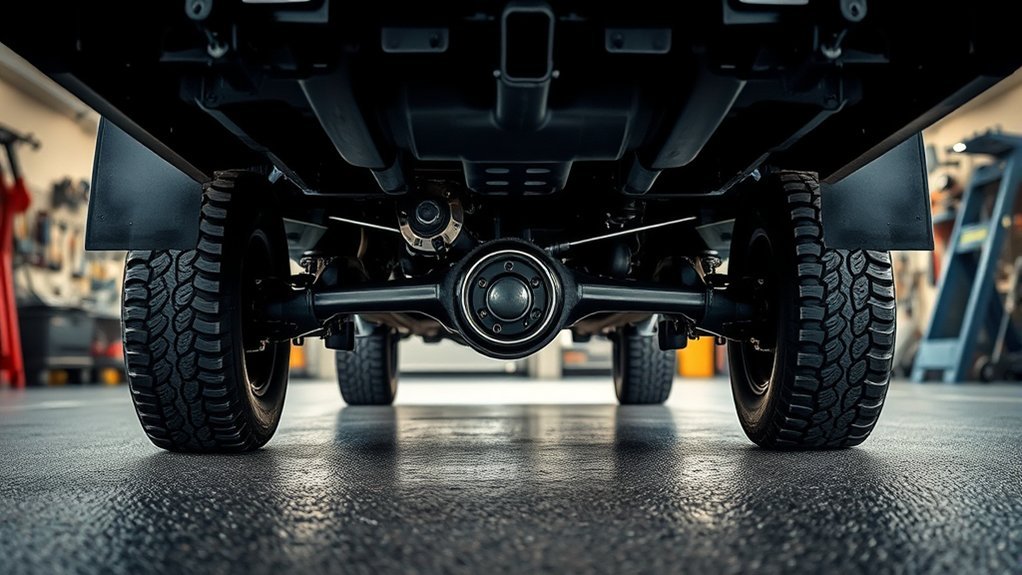
The safest tyre size for your Toyota Hilux is the size Toyota fitted or approved for your exact vehicle. You can usually find this on the tyre information placard on the driver’s door jamb, door edge or inside the fuel flap, depending on market. Your owner’s manual also lists approved tyre information.
For example, Toyota Australia’s HiLux specification table lists 265/65R17 on many 17-inch wheel variants and 265/60R18 on several 18-inch 4×4 grades. That does not mean every Hilux worldwide uses those sizes. Older models and other markets may use different 16-inch, 17-inch or 18-inch fitments.
Warning: Do not choose a tyre only because it “fits” the rim. The tyre must also clear the body and suspension, match the correct load index and speed rating, suit the vehicle’s weight, and remain legal for road use in your area.
[Products Worth Considering]

This 100-piece tire repair screw plug kit provides a fast, self-service solution for punctures on the road. Choose the correct plug size, insert it into the break, and screw...
How to Read a Hilux Tyre Size
A tyre marked 265/65R17 breaks down like this:
- 265 — tyre width in millimetres.
- 65 — sidewall height as a percentage of the width.
- R — radial construction.
- 17 — wheel diameter in inches.
The size marking is only part of the story. You must also check the load index and speed rating. Michelin explains that these ratings define how much weight a tyre can carry and the speed it can safely sustain when properly inflated, and they should match the vehicle manufacturer’s specification. You can read Michelin’s guidance on tyre load and speed ratings.
What Are the Best Tyre Sizes for Your Hilux?
The “best” Toyota Hilux tyre size depends on whether you want original ride quality, better off-road durability, stronger load carrying, or a sharper on-road feel. For most owners, the best choice is the factory size with the right tyre type for the job.
Popular Tyre Sizes
| Tyre Size | Common Use | What to Check First |
|---|---|---|
| 265/65R17 | Common factory 17-inch Hilux size; good all-round choice | Confirm load index, speed rating and pressure on the placard |
| 265/60R18 | Common 18-inch factory size on some higher-grade models | Use if your Hilux was supplied with 18-inch wheels or Toyota-approved 18-inch fitment |
| 265/70R17 | Common mild off-road upgrade | Check clearance, spare-wheel fitment, speedometer error and legality |
| 245/70R16 | Seen on some older or market-specific 16-inch setups | Do not fit unless approved for your Hilux wheel, load rating and placard spec |
| 33-inch tyres | Serious off-road builds | Usually needs professional fitment checks, possible lift, trimming and recalibration |
Best Size by Driving Style
| Driving Need | Best Approach | Why It Works |
|---|---|---|
| Daily road use | Keep the factory size, usually 265/65R17 or 265/60R18 on many current models | Preserves speedometer accuracy, steering feel, ride quality and safety-system calibration. |
| Towing and heavy loads | Use the factory size with the correct or higher load index, never lower | Load rating matters more than a wider look. The vehicle’s GVM and axle limits still apply. |
| Mixed road and gravel | Factory size with a quality all-terrain tyre | Adds stronger tread and sidewall protection without creating major fitment problems. |
| Regular off-road driving | 265/65R17 all-terrain or, where suitable, 265/70R17 after clearance checks | More sidewall can improve off-road comfort and protection, but only if the tyre clears properly. |
| Mud and ruts | Factory or approved size in a mud-terrain pattern | Tread design matters more than simply going wider. Mud tyres can be noisier and less efficient on-road. |
Pro Tip: If your Hilux is a daily driver, choose the right tyre pattern before chasing a larger size. A high-quality all-terrain tyre in the factory size is often safer, quieter and easier to live with than an oversized tyre.
Performance Considerations
Changing tyre size changes more than the look of your Hilux. A taller tyre can increase ground clearance slightly, but it can also reduce acceleration, change braking feel, affect gearing and alter speedometer accuracy. Discount Tire explains that changing tyre height can make the speedometer read differently from the vehicle’s actual speed, so recalibration may be needed after a size change. Michelin also recommends replacing tyres with the same size or manufacturer-approved options for maximum safety; see its guide to changing tyre size or specifications.
A wider tyre is not automatically better. It may improve some types of grip, but it can also increase road noise, fuel use, rubbing risk and steering weight. Compound, tread pattern, tyre pressure and construction are just as important as width.
How Tyre Size Impacts Performance and Handling
Tyre size affects how your Hilux steers, brakes, rides and carries weight. Here are the main trade-offs:
- Width: A wider tyre can give a larger contact patch, but it may follow road ruts, rub guards and increase rolling resistance.
- Sidewall height: A taller sidewall can improve off-road comfort and rim protection, but it may feel less sharp in corners.
- Overall diameter: A larger rolling diameter can affect gearing, acceleration, braking and speedometer readings.
- Weight: Heavy all-terrain or mud-terrain tyres can make the suspension work harder and may reduce fuel economy.
- Construction: LT/C or reinforced tyres can be better for loads and rough tracks, but they may ride firmer than passenger-construction tyres.
The best Hilux tyre is not always the biggest tyre. It is the tyre that matches the placard size, load rating, driving conditions and legal requirements.
Avoid These Common Tyre Sizing Mistakes
The biggest mistake is assuming any tyre that fits the wheel is safe for the vehicle. Before changing size, check these points:
- Ignoring the tyre placard: Your placard is the first source for size, pressure and loading information.
- Choosing a lower load index: Never fit a tyre with a lower load index than Toyota specified for your Hilux.
- Forgetting the spare: A larger tyre may not fit in the spare-wheel location, and a mismatched spare can be a problem on 4×4 drivetrains.
- Mixing tyre sizes or patterns: Avoid mixing different sizes, constructions or tread patterns unless the vehicle manufacturer allows it.
- Skipping clearance checks: Bigger tyres can rub the guards, mud flaps, body mounts, suspension or inner guards.
- Not recalibrating: A tyre diameter change can affect speedometer and odometer accuracy.
- Ignoring local law: Tyre poke, lift height, speed rating, tread depth and size changes may be regulated where you live.
Note: Legal tread-depth limits vary by country. The UK Highway Code says cars and light vans must have at least 1.6 mm of tread across the central three-quarters of the tyre and around the full circumference. Michelin Middle East also cites 1.6 mm as the minimum tread depth. Replace damaged tyres immediately, even if the tread looks legal.
Tyre Maintenance Tips for Longevity
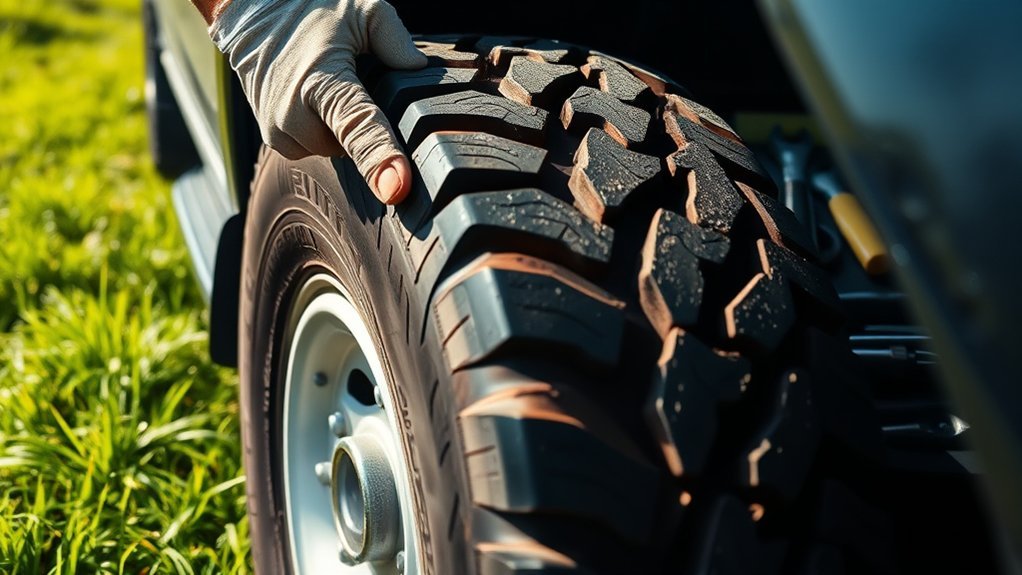
Good tyres can wear quickly if pressure, alignment and rotation are ignored. The National Highway Traffic Safety Administration provides tyre safety resources covering tyre maintenance, labelling and buying guidance. Use those basics together with your Hilux owner’s manual.
Regular Pressure Checks
Check tyre pressure when the tyres are cold. Do not rely on a universal number such as 35 PSI unless your placard says so for your exact tyre and load. Tyre pressure should match the vehicle manufacturer’s recommendation for the load being carried. Under-inflated tyres can overheat and wear on the shoulders; over-inflated tyres can reduce ride comfort and wear the centre of the tread.
Check pressure before long highway trips, towing, carrying heavy tools or heading off-road. If you air down for sand, rocks or corrugations, re-inflate before returning to normal road speeds.
2. Scheduled Rotations
Rotate tyres according to your owner’s manual. As a general rule, many owners rotate around every 8,000–10,000 km, but the correct interval depends on tyre type, use and Toyota’s recommendation for your model. The NHTSA says tyre rotation can reduce irregular wear and that owners should follow the owner’s manual for the best rotation pattern.
After heavy off-road use, check wheel alignment and balance. Uneven wear on the front tyres often points to alignment, suspension or pressure issues.
3. Visual Inspections
Inspect your Hilux tyres regularly for cuts, bulges, cracks, exposed cords, punctures and uneven tread wear. Use a tread-depth gauge rather than guessing. Also check the spare tyre, because it is easy to forget until you need it.
Replace tyres that are damaged, too old, below the legal tread limit, or no longer suitable for your driving conditions. A tyre can be unsafe before it is fully worn out if the casing is damaged or the rubber has aged badly.
Emerging Tyre Technologies Relevant to the Toyota Hilux
Tyre technology is improving, but Hilux owners should focus on technologies that genuinely suit a ute or pickup:
- All-terrain compounds: Newer A/T tyres often balance road noise, wet grip and off-road durability better than older aggressive patterns.
- Reinforced sidewalls: Helpful for gravel, towing, trade loads and rocky tracks, provided the tyre matches the required load rating.
- Low rolling resistance designs: Some highway-terrain tyres can reduce rolling resistance, but the result depends on tyre model, pressure, load and driving style.
- Tyre pressure monitoring: Aftermarket systems can be useful for towing and off-road travel, especially when carrying heavy loads or adjusting pressures.
- Self-sealing tyres: Available in some tyre lines, but not a substitute for carrying a proper spare, repair gear and a compressor on remote trips.
Do not buy a tyre only because it has new technology. Match the tyre to the Hilux’s load, road conditions, climate and approved fitment first.
Frequently Asked Questions
What size tyres are best for Toyota Hilux?
For most owners, the best tyre size is the factory size listed on the tyre placard. Many modern Hilux models use 265/65R17, while some 18-inch wheel packages use 265/60R18. Choose the tyre pattern based on your use: highway-terrain for road comfort, all-terrain for mixed driving, and mud-terrain for regular mud or ruts.
Can you fit 33s on a Hilux?
Sometimes, but 33-inch tyres are not a simple plug-and-play upgrade on every Hilux. They may require a suspension lift, wheel-offset changes, trimming, speedometer recalibration and engineering or roadworthy approval. Check clearance at full steering lock and full suspension compression before driving on-road.
Which is better, 2.4 or 2.8 Hilux?
For tyre choice, the engine is less important than the exact model, wheel package, load rating and use case. A 2.8 Hilux may be preferred for heavier towing and stronger performance, while a 2.4 can suit lighter daily use in markets where it is sold. Either way, choose tyres by the placard and load requirements.
What is the best tyre for a Toyota Hilux?
There is no single best tyre for every Hilux. A highway-terrain tyre is best for quiet road use, an all-terrain tyre is the best all-round choice for road and gravel, and a mud-terrain tyre suits frequent mud, rocks and ruts. Always match the correct size, load index and speed rating.
Can I use 265/70R17 instead of 265/65R17?
265/70R17 is a common mild off-road upgrade from 265/65R17, but it has a larger overall diameter. Check guard clearance, spare fitment, speedometer error, insurance, warranty and local road rules before fitting it.
What tyre pressure should a Toyota Hilux run?
Use the cold tyre pressure shown on your Hilux tyre placard or owner’s manual. Pressure can differ by tyre size, load, towing and driving conditions. Check pressure when tyres are cold, before long trips, and whenever the vehicle load changes.
Conclusion
Choosing the best tyre size for a Toyota Hilux is really about matching the tyre to the vehicle, not chasing the biggest number. For many current Hilux models, 265/65R17 is a strong all-round factory size, while 265/60R18 appears on some 18-inch grades. Off-road upgrades such as 265/70R17 or 33-inch tyres can work on the right setup, but they need proper fitment checks. Start with the placard, match the load and speed ratings, choose the right tread pattern, and maintain pressure and tread depth regularly.
Sources
- Toyota Australia HiLux specifications — current factory tyre-size examples by grade and wheel package.
- NHTSA TireWise tyre safety resources — tyre safety, maintenance, labelling and buying guidance.
- NHTSA Tire Safety Month guidance — pressure checks, tread checks and rotation basics.
- Michelin guide to changing tyre size or specifications — advice on using original or manufacturer-approved tyre sizes.
- Michelin load and speed rating guide — explanation of load index, speed rating and replacement tyre requirements.
- GOV.UK Highway Code Annex 6 — official tyre inflation, tread-depth and defect guidance for UK road use.

Related Articles
Toyota Hilux Run-Flat Tires: What You Need to Know
Take control of your safety with Toyota Hilux run-flat tires; discover their benefits and hidden costs that could change your driving experience forever.
Read More
Effects of Underinflated Tires on the Toyota Hilux
Inadequate tire pressure in your Toyota Hilux can lead to serious safety issues and costly repairs; discover how to avoid these pitfalls.
Read More
The Risks of Overinflating Toyota Hilux Tires
Overinflating your Toyota Hilux tires can lead to dangerous blowouts and uneven wear, but understanding the risks is crucial for your safety.
Read More