
Highway vs All-Terrain Tire Lifespan: How Many More Miles Do HTs Last?
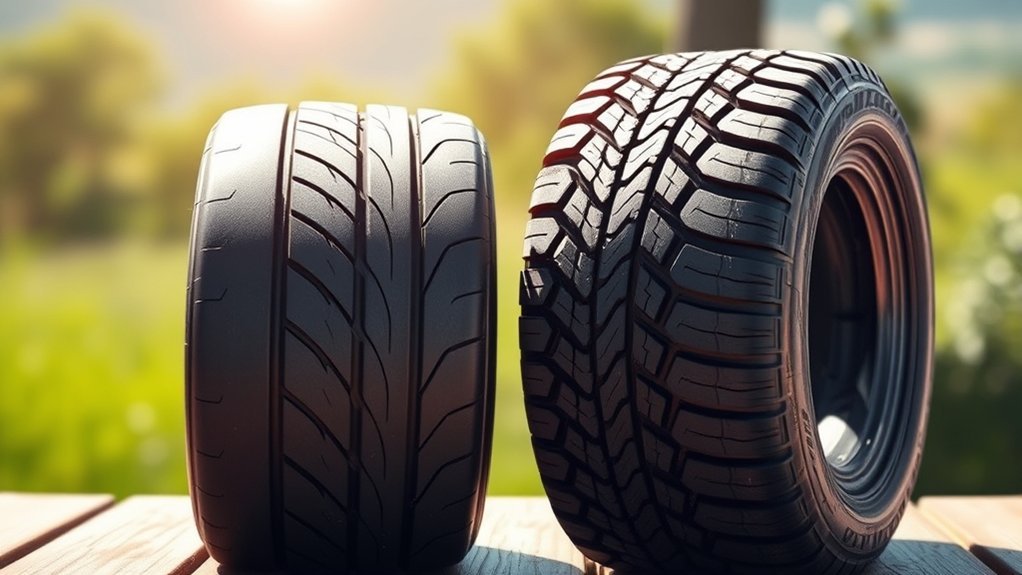
Highway tires (H/T) typically last between 50,000 to 80,000 miles, considerably outlasting all-terrain tires (A/T), which generally offer 30,000 to 50,000 miles. The smoother tread design of H/T tires reduces rolling resistance and promotes longevity on paved roads. On the other hand, A/T tires, though versatile for off-road use, wear faster due to their aggressive tread patterns. Understanding these differences can help you choose the right tires for your needs—let’s explore what affects tire lifespan further.
Understanding the Lifespan of Highway vs All-Terrain Tires
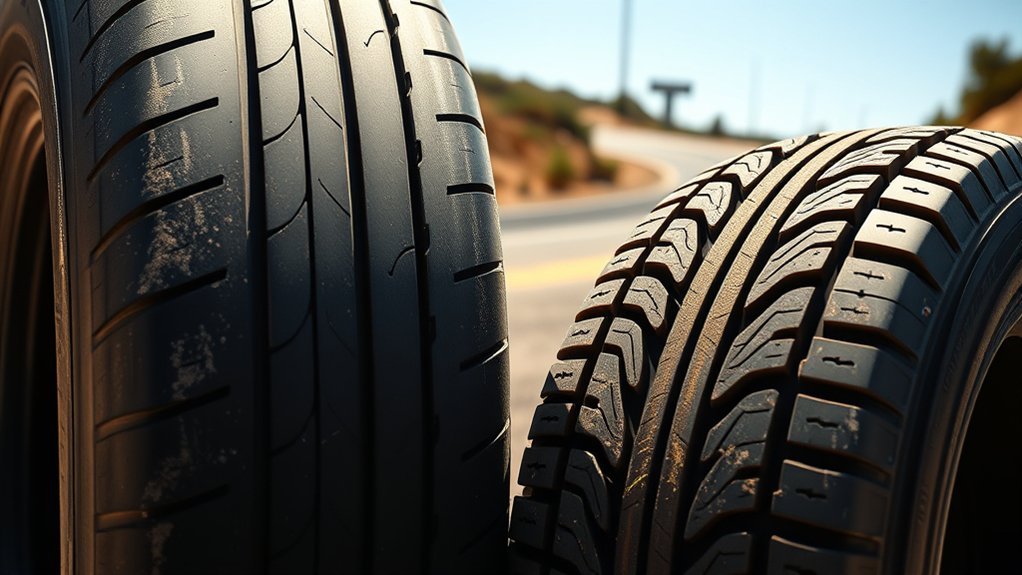
When choosing between highway-terrain (H/T) and all-terrain (A/T) tires, it’s essential to understand their lifespan differences. H/T tires typically last longer, averaging 50,000 to 80,000 miles, while A/T tires usually range from 30,000 to 50,000 miles. This discrepancy largely stems from their tread design; H/T tires feature smoother patterns that reduce rolling resistance on paved roads, enhancing longevity. In contrast, A/T tires, built for varied terrains, often wear faster when mainly used on highways due to their deeper tread blocks and aggressive patterns.
The rubber composition of H/T tires also contributes to their durability, making them more economical for those focused on road driving. Regular maintenance, like pressure checks and rotations, can extend the life of both tire types, but you’ll find that H/T tires generally require less frequent replacement. Understanding these factors empowers you to make a more informed choice for your driving needs.
Key Factors That Affect Tire Longevity
Tire longevity hinges on several key factors that can greatly impact your driving experience. One of the most significant is the tread patterns. Highway-Terrain (H/T) tires feature smoother designs that minimize wear on paved surfaces, often lasting between 50,000 to 80,000 miles. In contrast, All-Terrain (A/T) tires, with their aggressive tread designed for off-road conditions, usually last only 30,000 to 50,000 miles.
Your driving habits also play an essential role; aggressive acceleration or braking can accelerate tread wear, particularly for A/T tires that aren’t meant for frequent highway use. Proper maintenance, like regular pressure checks and tire rotations, can extend the life of both tire types. Finally, consider the environmental impact—weather and terrain conditions can affect tire performance. H/T tires thrive in mild, paved environments, while A/T tires might wear out faster when used on highways.
Expected Mileage for Highway Tires
Highway tires can typically last anywhere from 50,000 to 80,000 miles, making them a solid choice for drivers who prioritize longevity. Their design focuses on paved roads, which enhances their tread life compared to all-terrain options. With smoother tread patterns, highway tires reduce rolling resistance, leading to less wear over time.
To maximize your mileage expectations, consider these factors:
| Factor | Impact on Mileage |
|---|---|
| Driving Habits | Aggressive driving can shorten lifespan |
| Surface Quality | Smooth surfaces prolong tread life |
| Maintenance Practices | Proper inflation and alignment matter |
| Tread Patterns | Smoother patterns reduce wear |
Expected Mileage for All-Terrain Tires
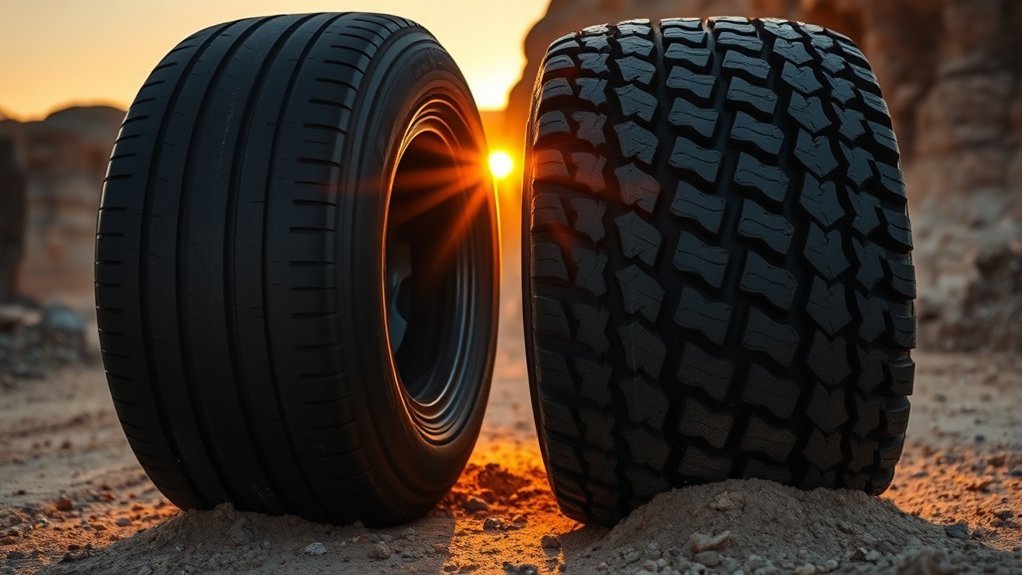
When it comes to all-terrain tires, you’re looking at a lifespan that typically ranges from 30,000 to 50,000 miles, influenced by how you use and maintain them. If you mainly drive on highways, you might stretch that mileage even further, while off-road conditions can accelerate wear. Regular maintenance, like proper inflation and tire rotations, plays an essential role in maximizing their longevity.
Lifespan Factors Explored
While you might expect all-terrain (A/T) tires to offer impressive versatility, their lifespan can vary greatly based on several key factors. Understanding these can help you maximize your investment:
- Tread Design: A/T tires feature deeper tread blocks for off-road capabilities, which can lead to faster wear compared to highway-terrain tires.
- Material Quality: Higher quality materials often result in better durability, extending the life of your tires.
- Driving Conditions: Mainly street driving can greatly enhance tire longevity, whereas rough terrains accelerate wear.
Typical Mileage Range
Understanding the typical mileage range for all-terrain tires is essential to gauging their value and performance. Generally, you can expect these tires to last between 30,000 to 50,000 miles, but this varies based on your driving conditions and maintenance habits. If you primarily use them on highways, you might stretch their lifespan considerably. However, aggressive tread patterns, while great for off-road traction, can lead to quicker wear on paved surfaces. Regular maintenance, like checking tire pressure and rotating tires, plays an important role in meeting your mileage expectations. Many all-terrain tire models also boast a three-peak mountain snowflake rating, enhancing performance across diverse weather conditions, making them a versatile choice for adventurous drivers.
What Driving Conditions Cause Tire Wear?
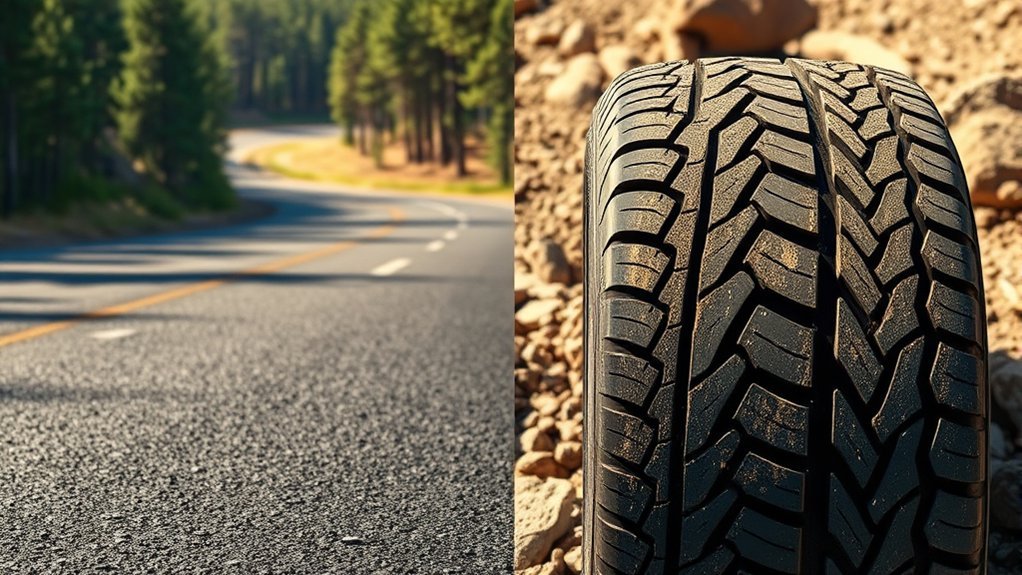
Driving conditions play an essential role in how quickly your tires wear down. If you frequently navigate rough roads or engage in aggressive driving, you’ll likely notice a significant impact on tire lifespan. Understanding these factors can help you make smarter choices to extend the life of your tires.
Road Surface Quality
When you hit the road, the quality of the surface beneath your tires plays a crucial role in how quickly they wear out. Your tires’ tread design and surface interaction can drastically affect their lifespan. Here are three key factors to evaluate:
- Smooth Pavement: Highway tires thrive on smooth, paved surfaces, lasting 50,000 to 80,000 miles.
- Rough Terrain: All-terrain tires endure quicker wear on uneven or unpaved roads due to their aggressive tread patterns.
- Weather Effects: Extreme temperatures can degrade tire materials, impacting all-terrain tires more severely.
Regular maintenance, including pressure checks and rotations, can mitigate these effects, enhancing overall tire longevity. Choosing the right tire for your driving conditions is essential for maximizing your investment.
Driving Habits Impact
The way you drive can greatly influence how quickly your tires wear out. Factors like driving speed and tire pressure play vital roles. For instance, consistent high speeds can increase heat buildup, accelerating tread wear. Similarly, under-inflated tires can lead to uneven wear and reduced lifespan, especially if you’re frequently on highways or rough terrains.
| Driving Condition | Effect on Tire Wear |
|---|---|
| Smooth, paved roads | Minimal wear |
| High speeds | Increased heat & wear |
| Frequent off-roading | Significant wear |
Maintenance Tips to Extend Tire Life
To maximize your tires’ lifespan, it’s important to adopt a proactive maintenance routine. Keeping your tires in top shape not only guarantees safety but also improves performance. Here are three key tips to extend your tire life:
- Check Tire Pressure: Regularly monitor and maintain proper tire pressure. Under-inflated tires can lead to increased wear and decreased fuel efficiency.
- Rotate Tires: Rotate your tires every 5,000 to 7,500 miles. This practice helps guarantee even wear across all tires, greatly extending their lifespan.
- Inspect for Damage: Frequently inspect your tires for signs of damage, like cracks or bulges. Address any issues immediately to prevent further deterioration.
Additionally, avoid aggressive driving habits and keep your tires aligned and balanced. By paying attention to tread depth and following these maintenance tips, you’ll enjoy a smoother ride and longer-lasting tires.
Tire Cost: Highway vs All-Terrain
Choosing between Highway Terrain (H/T) and All-Terrain (A/T) tires can greatly impact your driving experience and wallet. When it comes to tire performance, H/T tires generally last longer, averaging 60,000 to 80,000 miles on paved roads, while A/T tires fall short at 30,000 to 50,000 miles. Although A/T tires boast ruggedness for off-road adventures, their higher upfront cost reflects their design and capabilities.
However, don’t overlook the long-term costs. A/T tires wear faster due to aggressive tread patterns, leading to more frequent replacements. Plus, their increased rolling resistance can reduce fuel efficiency, adding to your expenses over time. If you’re primarily driving on highways, investing in H/T tires can provide better value, given their durability and extended mileage. Ultimately, a smart cost comparison reveals that H/T tires could save you money in the long run, making them the more economical choice for daily driving.
How to Choose Between Highway and All-Terrain Tires
When reflecting on how to choose between Highway Terrain (H/T) and All-Terrain (A/T) tires, it’s vital to assess your driving needs and habits. Your choice will greatly impact tire performance and longevity. Here are three key factors to take into account:
- Driving Conditions: If you primarily navigate urban environments, H/T tires are optimized for smooth pavement, offering longer lifespans of 50,000 to 80,000 miles. In contrast, if your adventures take you off-road, A/T tires provide versatile tread designs ideal for rugged terrains, albeit with shorter lifespans of 30,000 to 50,000 miles.
- Fuel Efficiency: H/T tires reduce rolling resistance, enhancing fuel efficiency, which can be vital for daily commuters.
- Driving Habits: Evaluate how often you drive off-road versus on highways. This will guide you toward the best option for your lifestyle. Your tires should liberate your driving experience, not restrict it!
Frequently Asked Questions
Do HT Tires Last Longer Than AT?
Yes, H/T tires generally last longer than A/T tires. Their optimized tread patterns enhance tire performance on paved roads, resulting in lower wear rates and extended mileage compared to the aggressive designs of A/T tires.
How Long Do Highway Terrain Tires Last?
Highway terrain tires typically last 50,000 to 80,000 miles. Their tread wear is influenced by performance factors like driving habits and maintenance; gentle driving and regular checks can enhance their longevity considerably.
Conclusion
To sum up, while all-terrain tires offer versatility, highway tires generally outlast them by several thousand miles. You might think the trade-off isn’t worth it, but if you primarily drive on paved roads, those extra miles can mean fewer replacements and lower long-term costs. By understanding your driving habits and following maintenance tips, you can maximize your tire lifespan—ensuring you get the most out of your investment, whether you choose highway or all-terrain tires.

Related Articles
33 Vs 35-Inch Tires on a Tundra: Clearance, MPG, and Looks Compared
Discover the crucial differences between 33 and 35-inch tires for your Tundra, from clearance to MPG, and what modifications might be necessary.
Read More
Studded vs Non-Studded Winter Tires for Trucks: Traction and Legal Rules
In exploring studded versus non-studded winter tires for trucks, you'll uncover crucial factors that could impact your safety this winter season. What will you choose?
Read More
Tire Chains vs Cables for a Tundra in Snow: Which Grips Better?
Wondering which provides better traction for your Tundra in snowy conditions? Discover the crucial differences between tire chains and cables.
Read More