
When to Upgrade From Stock Tires on a New Tundra: Is It Worth It Early?
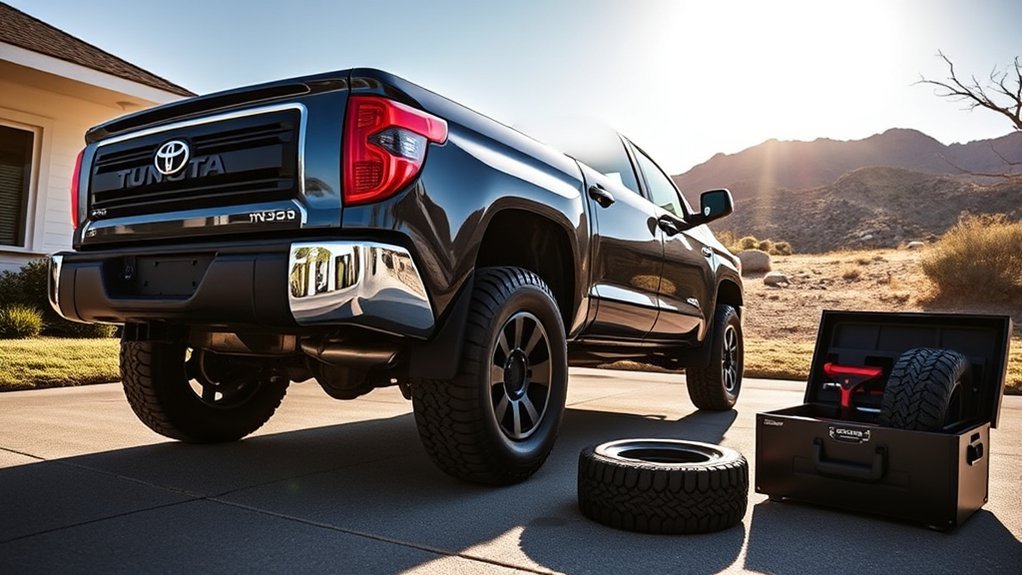
Upgrading from stock tires on your new Tundra is often essential for safety and performance right from the start. Many owners find the OEM tires wear quickly, leading to uneven tread and safety risks. If you notice rapid wear or struggle in adverse weather, it’s a clear sign to evaluate an upgrade. Enhanced traction, longer lifespan, and improved comfort are just a few benefits. Stick around to explore popular options and budgeting tips for your next tire upgrade.
Common Issues With Stock Tires on the Tundra
When it comes to stock tires on the Tundra, have you ever wondered why so many owners feel the need to replace them almost immediately? Tire longevity concerns are a significant issue. Many drivers report rapid wear, with some replacing tires after just 10,000 miles. The OEM Michelin Trail LTX, for instance, often fails to exceed 26,000 miles, especially in harsh winter conditions. Similarly, the Bridgestone Duelers leave much to be desired, with reports indicating only 10/32 tread remaining after 20,000 miles. This decline in durability raises safety concerns, as blowouts can happen unexpectedly. With such performance expectations unmet, many Tundra owners opt for immediate replacements, seeking better quality and reliability. If you value safety and performance, understanding these common issues can empower you to make informed decisions about your tires. Don’t settle; explore options that meet your needs.
Signs You Need to Upgrade Tires
As you assess your Tundra’s stock tires, watch for signs that indicate an upgrade is essential. If you’re facing common tire issues, struggling with off-road performance, or simply want better handling and aesthetics, it’s time to contemplate a change. Recognizing these signs early can enhance your driving experience and keep you safe on the road.
Common Tire Issues
While it might seem tempting to stick with the stock tires on your Tundra, there are several signs indicating it’s time for an upgrade. Ignoring these can compromise your safety and performance.
- Uneven tread wear: This can lead to handling issues, especially in bad weather.
- Tread depth: If it’s less than 2/32 of an inch, it’s time for a replacement.
- Blowouts or punctures: Original tires can fail, signaling you need something more durable.
- Poor performance: If your stock tires struggle in snow or off-road conditions, consider specialized options.
Upgrading not only enhances your Tundra’s capability but also improves tire longevity and optimizes tread patterns for better traction.
Off-Road Performance Needs
Stock tires can limit your Tundra’s off-road capabilities, especially if you frequently tackle challenging terrains like mud, snow, or rocky paths. If you’re finding your stock tires struggle for traction, it’s time to think about an upgrade. Tires designed for mud terrain, like the BF Goodrich All-Terrain TA KO2, offer aggressive tread patterns that enhance tire grip and stability. This change not only boosts your traction but also reduces the risk of punctures and blowouts, thanks to more robust sidewalls. Plus, if you’ve added weight with accessories, larger tires improve balance and handling. Upgrading can also enhance your vehicle’s ground clearance, making those intimidating approaches and departures far more manageable. Don’t settle for limitations—embrace the freedom of superior performance.
Aesthetic and Handling Improvements
Upgrading your tires can markedly improve both the aesthetics and handling of your Tundra. If you’re considering an upgrade, look for these signs:
- Improved Grip: Shifting to wider tires, like 285mm, enhances cornering stability and steering response.
- Aggressive Stance: Opting for larger sizes, such as 285/70 R18, gives your Tundra a bolder look that complements its rugged design.
- Durability Issues: If your stock tires wear out quickly—some under 20,000 miles—it’s time for more durable performance upgrades.
- Off-Road Capability: All-terrain tires like the Nitto Terra Grappler G2 boost traction and stability on uneven terrain, enhancing your driving experience.
Investing in these visual enhancements and handling improvements can liberate your Tundra’s full potential.
When Should You Upgrade Based on Your Driving?
Wondering when it’s time to upgrade your tires based on your driving habits? If you frequently tackle off-road conditions or harsh weather, consider upgrading to all-terrain tires. They can greatly boost traction and performance, giving you the confidence to conquer varied terrains. If your stock tires start showing wear around 20,000–30,000 miles, it’s a smart move to replace them, especially since many OEM tires struggle to last beyond 50,000 miles. Frequent blowouts or rapid wear signal it’s time for more durable alternatives. Upgrading not only enhances your vehicle’s aesthetics but also improves handling—think wider tires for a more aggressive look and better grip. If you plan to tow heavy loads or need better stability, investing in tires with a higher load rating early on can prevent performance issues down the road, ensuring safety and tire longevity.
Tire Specifications You Should Know
When selecting new tires for your Tundra, it’s essential to know key tire measurements like width, aspect ratio, and rim diameter. Understanding different tire types and their tread patterns can greatly impact your driving experience, from handling to fuel efficiency. By grasping these specifications, you can make informed choices that enhance your truck’s performance.
Key Tire Measurements
Understanding tire measurements is essential for maximizing your Tundra’s performance and guaranteeing safety on the road. Knowledge of these specs can guide your upgrade decisions effectively. Here are four key measurements to evaluate:
- Tire Width: Measured in millimeters, a wider tire (like 265) enhances traction and stability.
- Aspect Ratio: This percentage (like 70) indicates sidewall height relative to width, impacting ride comfort and handling.
- Rim Diameter: Expressed in inches (like 18), guarantees proper fit on your Tundra.
- Construction Type: The “R” signifies radial construction, the standard for modern tires.
Understanding Tire Types
Tires are more than just rubber; they’re essential components that directly impact your Tundra’s performance and safety. Understanding tire specifications is vital for making informed choices. Here’s a quick breakdown:
| Specification | Example | Impact |
|---|---|---|
| Width | 265mm | Affects handling and stability |
| Aspect Ratio | 60% | Influences ride comfort and performance |
| Construction Type | Radial | Enhances durability and flexibility |
| Rim Diameter | 20 inches | Determines fitment and performance |
Each specification plays a role in tire durability and performance. The load index and speed rating also matter, influencing how much weight your tires can carry and their safe maximum speed. Choosing wisely maximizes your Tundra’s capabilities.
Importance of Tread Patterns
While selecting the right tires for your Tundra, the tread pattern plays an essential role in determining overall performance. Choosing the right tread design can greatly enhance your driving experience. Here are four key factors to keep in mind:
- Traction Performance: Aggressive patterns excel off-road, while smoother designs improve on-road comfort.
- Tread Depth: New tires typically range from 10/32 to 12/32 inches; below 2/32 inches, you’re compromising safety.
- Wet Weather Handling: Deeper grooves channel water, reducing hydroplaning risks.
- Driving Conditions: All-terrain and mud-terrain designs impact grip on surfaces like snow, mud, and gravel.
Regularly inspecting tread wear guarantees you’re aware of when it’s time to upgrade, keeping your Tundra safe and capable.
How Much Can You Safely Increase Tire Size?
When considering an upgrade for your Tundra’s stock tires, it’s essential to know how much you can safely increase their size. Generally, increasing your tire diameter and width by up to 3% from stock is safe without needing a lift kit. For second-generation Tundras (2007–2021), leveling kits allow for higher tire sizes beyond this guideline. The third-generation Tundra (2022-present) has a redesigned suspension accommodating larger tires while still adhering to the 3% rule for safety sensors.
| Stock Size | Max Safe Size | Diameter Increase |
|---|---|---|
| 265/70 R18 | 285/70 R18 | 3.9% |
| 275/65 R18 | 285/65 R18 | 1.6% |
| 245/75 R17 | 255/75 R17 | 1.7% |
Keep in mind that wider tires may require backspacing adjustments to prevent suspension interference.
Benefits of Upgrading Tires Early
Upgrading your Tundra’s stock tires can greatly enhance your driving experience, especially if you frequently venture off the beaten path. Early upgrades can transform not just performance, but also your overall enjoyment. Here are some key benefits to take into account:
- Traction Enhancement: Aftermarket tires offer superior grip, especially in diverse terrains, boosting your confidence on and off the road.
- Tire Longevity: Upgraded tires often feature better tread patterns and rubber compounds, leading to a longer lifespan and reduced wear.
- Improved Ride Comfort: Many options reduce road noise, making everyday driving a more pleasant experience.
- Aggressive Stance: Higher-quality tires can increase ground clearance and fill wheel wells, enhancing your truck’s rugged appearance.
Popular Tire Options for Tundra Owners
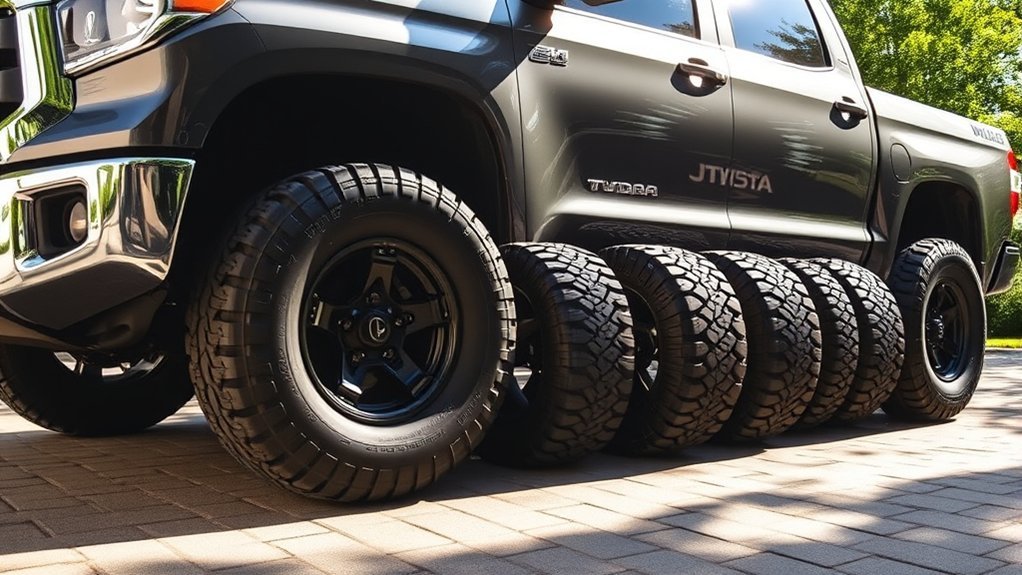
Choosing the right tires for your Tundra can greatly impact your driving experience, especially when tackling various terrains. Here’s a look at popular tire options that balance durability and performance:
| Tire Brand | Warranty | Off-Road Capabilities |
|---|---|---|
| Toyo Open Country A/T2 | 50,000 miles | Excellent traction |
| Nitto Terra Grappler | 50,000 miles | Versatile for rugged use |
| Cooper AT3 | 55,000 miles | Road hazard coverage |
Upgrading from the stock size of 275/70 R18 to 285/70 R18 can enhance traction considerably. Falken Wildpeak tires are also favored for their quiet ride and wet performance. While pricing varies—with Mastercraft AXT around $720—higher-end options like Nitto and Toyo provide competitive performance, making tire brand comparisons essential for your decision.
Budgeting for Tire Upgrades
How do you guarantee you’re getting the best value when budgeting for tire upgrades on your Tundra? With a little planning, you can make an informed decision that balances cost and performance. Here are four key steps to take into account:
- Set a realistic budget: Aim for $1,100 to $1,300 for a full set of upgraded tires.
- Research local retailers: Negotiate prices; you might find a deal like $977.50 for Cooper AT3s.
- Explore online options: Websites like TreadDepot.com often offer better prices than traditional retailers.
- Factor in tire lifespan: Some brands, like Nitto and Toyo, might be pricier upfront but can save you money in the long run due to their durability.
Tips for Choosing the Right Tires
Selecting the right tires for your Tundra can make a significant difference in your driving experience, and a few key factors will guide your decision. Start by familiarizing yourself with tire specifications, like width, aspect ratio, and rim diameter, to guarantee compatibility and performance. Stick to the 3% rule for height increase to avoid rubbing issues that can compromise safety.
Next, evaluate your specific driving needs. If you frequently tackle off-road terrain or harsh weather, consider upgrading to all-terrain tires for improved traction performance. Don’t overlook tire longevity; opt for options with warranties, such as a 50k mileage guarantee, to protect your investment.
Finally, engage with online communities for real-world feedback on performance and durability. Gathering insights from fellow Tundra owners can help you make an informed choice, leading to a tire upgrade that enhances both safety and enjoyment on the road.
Frequently Asked Questions
What Is the Best Month to Buy New Tires?
October’s your best month for buying new tires, thanks to seasonal considerations and sales. Prioritize tire maintenance and grab deals before winter demand spikes. It’s a smart move to save money and enhance safety.
Will 2026 Tundra Be Reliable?
Yes, the 2026 Tundra will likely be reliable. Its strong construction and proven drivetrain enhance performance. By prioritizing tire longevity and regular maintenance, you’ll guarantee your Tundra continues to perform at its best.
Conclusion
Upgrading your Tundra’s stock tires can greatly enhance your driving experience, especially if you rely on your truck for off-roading or heavy hauling. Did you know that 50% of truck owners report improved handling and safety after switching? Investing in quality tires not only boosts performance but can also extend the lifespan of your vehicle. So, if you’re noticing wear or limitations, it’s worth considering an upgrade sooner rather than later. Your Tundra deserves the best!

Related Articles
Highway Tires vs All-Terrain for a Daily-Commute Truck: Which Saves More?
Maximize your truck's efficiency with highway tires over all-terrain options—discover the surprising cost-saving differences for your daily commute. What will you choose?
Read More
When to Choose LT Tires Over P-Rated for a Tundra: Weight and Use Cases
Understanding when to choose LT tires over P-rated for your Tundra can transform your driving experience—discover the key factors that matter.
Read More
Running All-Terrain Tires Year-Round on a Tundra: Pros and Cons
Learn the crucial pros and cons of running all-terrain tires year-round on your Tundra—your driving experience may never be the same again.
Read More