Seasonal Tire Swap Guide for Toyota Tundra: Summer, Winter, and Year-Round
For your Toyota Tundra, seasonal tire swaps are essential for peak performance and safety. Switch to winter tires when temperatures drop below 45°F to guarantee maximum traction, and install summer tires in early spring when temps rise above that threshold. While all-season tires offer convenience, specialized tires enhance performance in extreme conditions. Proper installations and regular maintenance, like inspections and storage, can greatly extend tire life. Discover more insights to keep your Tundra road-ready year-round.
Understanding the Importance of Seasonal Tire Swaps
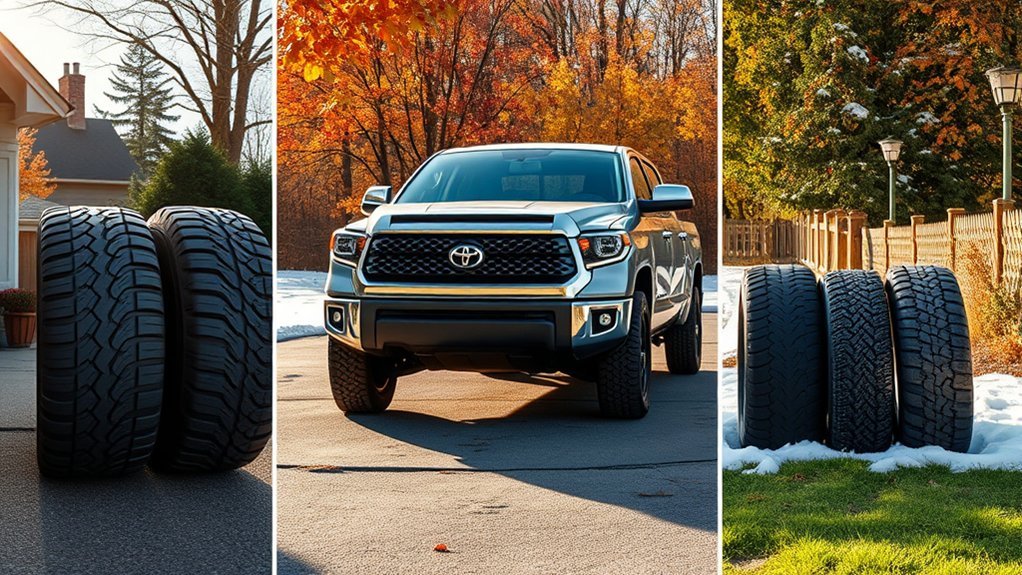
When temperatures drop or rise, you might not realize how essential seasonal tire swaps are for your Toyota Tundra. Choosing the right tires for the season greatly impacts tire performance and safety. Winter tires excel in cold conditions, offering superior traction and reducing the risk of skidding, while summer tires are designed for warmer weather, enhancing handling on dry roads.
Using the appropriate tires not only boosts your driving confidence but also extends tread lifespan. If you keep winter tires on in warmer temperatures, you’ll experience quicker tread wear and decreased fuel efficiency. Swapping based on temperature guidelines—below 45°F for winter tires and above for summer—ensures ideal driving conditions.
Regular seasonal changes not only improve your vehicle’s performance but also save you costs in the long run. Invest in tire swaps to maintain your Tundra’s effectiveness and enjoy a smoother, safer ride.
When and Why to Switch to Winter Tires: Understanding Temperature and Safety Factors?
As temperatures drop and winter approaches, it’s time to contemplate switching to winter tires for your Toyota Tundra. When the mercury consistently dips below 45°F (7°C), the temperature impact on your tire performance becomes significant. Winter tires are designed with special rubber compounds that remain flexible in cold weather, offering enhanced traction on icy roads. This flexibility translates into better control, which is essential as you navigate challenging conditions.
It’s wise to install winter tires before the first snowfall to minimize the risk of skidding and improve safety. Remember, using winter tires in warmer weather can lead to faster tread wear and reduced fuel efficiency due to higher rolling resistance. Keep an eye on local weather patterns; a few warm days don’t mean winter’s over. Embrace the winter tire benefits and stay safe on the road!
When’s the Best Time to Install Summer Tires?
You should install summer tires on your Toyota Tundra when daily temperatures consistently exceed 45°F, as this is when they perform best. Keep an eye on local weather forecasts for any unexpected cold snaps before making the switch. Ideally, aim for early to mid-spring to guarantee safe driving conditions and maximize tire performance.
Ideal Temperature Range
Wondering what temperature signals the right time to swap in summer tires for your Toyota Tundra? You’ll want to wait until daily temperatures consistently exceed 45°F (7°C). This guarantees peak performance and safety, as summer tires thrive in warmer conditions. Keep an eye on the weather forecasts; a few warm days don’t mean it’s time to switch. Early to mid-spring usually offers the best window, but don’t forget about nighttime temperatures—make sure they stay above 45°F too. Cold asphalt can hinder your tires’ effectiveness. Installing summer tires too early can lead to decreased handling and increased wear, so be patient. Remember to check tire pressure and tread depth to maximize your driving experience.
Signs of Consistent Warmth
When temperatures consistently rise above 45°F during the day and stay there at night, it’s a clear indicator that it’s time to contemplate swapping to summer tires for your Toyota Tundra. Begin temperature monitoring by checking local weather forecasts for a stable warm trend; a few warm days alone aren’t enough to signal that winter’s fully behind you. Verify nighttime temperatures also remain above 45°F for several consecutive days. Pay attention to dry road conditions, as they indicate readiness for summer tires, minimizing risks associated with winter tires in warmer weather. If your region experiences lingering cold snaps, hold off until frost is out of the picture. Embrace the thrill of summer driving by making that timely switch!
Benefits of Seasonal Tire Swaps: Are All-Season Tires Right for You?
Are all-season tires truly a one-size-fits-all solution for your Toyota Tundra? While they offer convenience by eliminating the need for seasonal swaps, their all-season performance may not meet your needs in extreme conditions. If you face harsh winters or scorching summers, dedicated winter or summer tires could be a better choice.
Here’s a quick comparison:
| Feature | All-Season Tires |
|---|---|
| Winter Traction | Moderate |
| Dry Performance | Good |
| Tread Life | Longer than winter tires |
| Effectiveness Below 40°F | Diminished |
Evaluate your local climate and driving habits. If you often deal with temperatures below 40°F or extreme weather, specialized tires can enhance safety and performance. Ultimately, consider what keeps you liberated on the road.
How to Properly Swap Tires: Tips for DIY and Professional Help
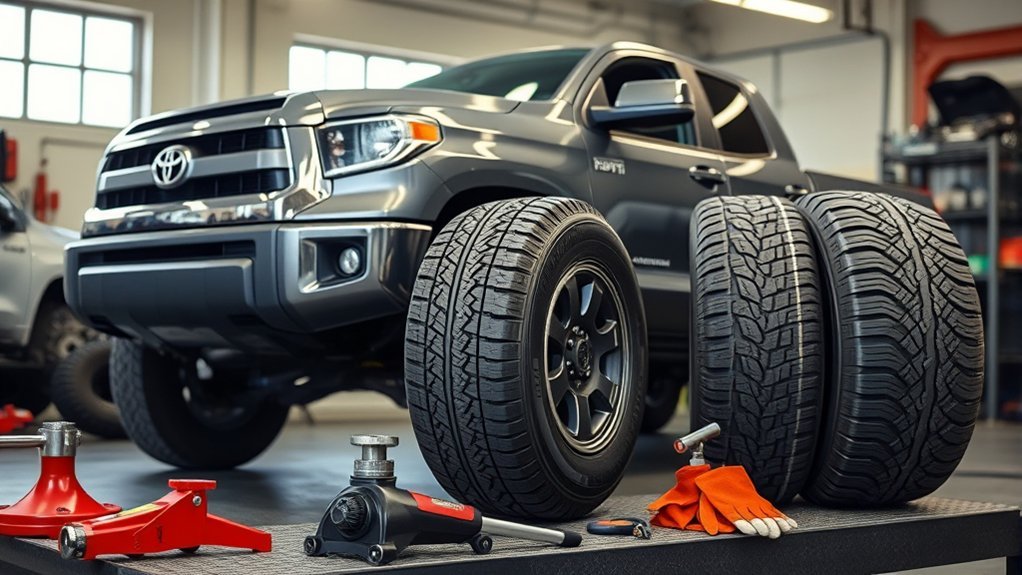
When swapping tires on your Toyota Tundra, having the right tools is essential for a successful and safe job. You might also want to think about professional installation to guarantee everything’s done correctly, especially if you’re unsure about the process. Plus, storing your off-season tires properly can extend their lifespan and maintain peak performance.
Tools Needed for Swapping
Swapping tires on your Toyota Tundra requires a few essential tools to guarantee a smooth and safe process. First, a torque wrench is crucial to confirm lug nuts are tightened to the manufacturer’s torque specifications, typically around 80-100 ft-lbs. You’ll also need a tire jack and jack stands to lift and support your vehicle securely during the swap. Don’t forget a tire pressure gauge to check and adjust the tire pressure to the recommended levels, usually between 32-36 PSI. Tire levers can assist with mounting and demounting, especially if you have a second set of wheels. Finally, cleaning supplies like a brush and mild soap help remove road salt and dirt, extending the lifespan of your tires.
Professional Installation Benefits
While some enthusiasts enjoy the challenge of swapping tires themselves, opting for professional installation can greatly enhance your vehicle’s performance and safety. Professionals guarantee proper tire balancing, preventing premature wear and improving handling. They also expertly handle TPMS reprogramming, reducing the chances of pesky warning light issues. If you’re not familiar with torque specifications, improper tightening can lead to serious problems like wheel detachment or uneven wear. Additionally, technicians typically perform a thorough professional inspection of your tires for damage and uneven wear, guaranteeing safer driving. Seasonal changes done by experts often include complimentary alignment checks, which not only prolong your tire lifespan but also improve your overall driving experience. So, consider going professional for peace of mind and peak performance.
Tire Storage Best Practices
Proper tire storage is essential for maintaining the longevity and performance of your Toyota Tundra’s tires. Follow these best practices to guarantee your tires remain in top shape:
- Tire Cleaning: Thoroughly clean tires to remove dirt and road salt.
- Storage Solutions: Find a cool, dry place away from direct sunlight to prevent rubber degradation.
- Cover Types: Use protective covers to shield tires from dust and moisture.
- Vertical Stacking: Store tires with rims vertically to avoid tread deformation; for tires without rims, opt for horizontal storage to protect sidewalls.
- Tire Inspection: Regularly check for damage or air loss and rotate their position if stacked.
What Are the Best Tires for Your Toyota Tundra?
Choosing the right tires for your Toyota Tundra can make all the difference in performance, safety, and comfort. The BFGoodrich All-Terrain T/A KO2 is a top pick, offering exceptional tire longevity and a 3PMSF rating for winter traction. For versatile driving conditions, the Toyo Open Country A/T III provides a softer ride with reliable stability and impressive load capacity. If you’re after off-road performance, the Falken Wildpeak A/T3W excels in challenging terrains while ensuring low noise levels, enhancing driving comfort. The Nitto Ridge Grappler combines all-terrain and mud-terrain capabilities, delivering excellent traction ratings across diverse environments. Each of these options features unique tread patterns and weather adaptability, ensuring you’re prepared for any adventure. By selecting the right tires, you’ll reveal the true potential of your Tundra, enhancing both performance and safety all year round.
Top Mistakes in Seasonal Tire Changes: What to Watch Out For
After you’ve selected the right tires for your Toyota Tundra, it’s important to be aware of common pitfalls during seasonal tire changes. Avoiding these mistakes can enhance tire longevity and guarantee your safety on the road.
- Monitor local weather patterns; don’t swap tires too early.
- Inspect winter tires for wear and damage before removal to prevent unsafe conditions.
- Store tires properly; avoid direct sunlight and damp areas to reduce deterioration.
- Always balance and align tires after a seasonal swap to maintain peak handling.
- Reprogram TPMS sensors post-swap to eliminate annoying warning lights.
Maintain Your Tires: Storage Tips and Inspection Best Practices
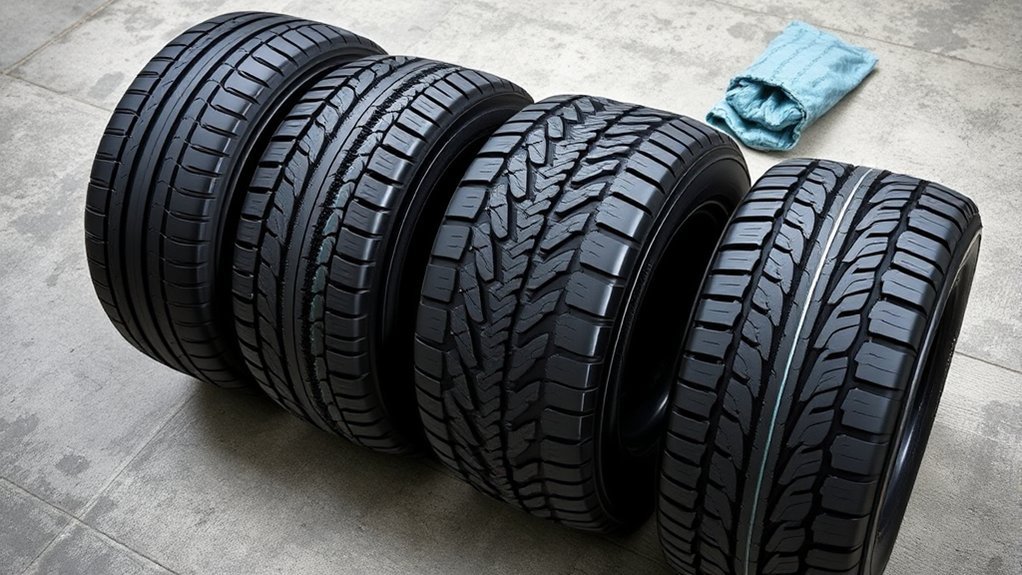
Keeping your tires in peak condition during off-seasons is crucial for your Toyota Tundra’s performance and safety. To prevent tire degradation, store your off-season tires in a cool, dry place away from direct sunlight. Before storage, use effective cleaning methods to remove road salt and debris, as these can cause corrosion over time. Conduct a thorough tire inspection, checking for uneven wear, punctures, or sidewall damage to guarantee they’re safe for future use.
Utilize tire covers during storage to shield your tires from dust and moisture, which can lead to deterioration. Don’t forget about pressure maintenance; regularly check tire pressure and condition to keep them in prime condition for the next season. By following these storage tips and inspection practices, you’ll make sure your tires are ready when you need them, enhancing your Tundra’s seasonal readiness and overall performance.
Frequently Asked Questions
Is October Too Early for Winter Tires?
October isn’t too early for winter tires if temperatures consistently drop below 40°F. Monitoring weather conditions is essential; installing them too soon can wear out tires faster and impact your vehicle’s performance. Stay prepared!
Can I Have Two All Season and Two Summer Tires?
Mixing two all-season and two summer tires isn’t advisable. Their differing tread patterns can compromise tire performance, leading to uneven handling and safety issues. For ideal safety, always use a matched set tailored for your conditions.
What Temperature to Switch From Summer to Winter Tires?
You should switch from summer to winter tires when temperatures consistently drop below 45°F. Tire performance decreases as it gets colder, so keep an eye on temperature impact to guarantee safe driving conditions.
Conclusion
To sum up, swapping your Toyota Tundra’s tires seasonally is as essential as keeping your favorite ice cream from melting on a hot day! By understanding when to switch and how to maintain your tires, you’ll guarantee peak performance and safety. Whether you opt for winter, summer, or all-season tires, staying proactive can save you from unexpected mishaps. So, embrace the tire swap ritual and keep your ride smooth, safe, and ready for whatever the road throws at you!

Related Articles
When to Use Mud-Terrain vs All-Terrain on a Tundra: Matching Tires to Use
Just how do you choose between mud-terrain and all-terrain tires for your Tundra? Discover the key factors that could make all the difference.
Read More
When to Air Down Tires for Off-Road: Terrain-Based Guide for Tundra
Perfect your off-road adventure by learning when to air down your Tundra's tires for different terrains—discover the key strategies inside.
Read More
Which Tires to Put Snow Chains on a Tundra 4×4: Front, Rear, or All Four?
Knowing which tires to equip with snow chains on your Tundra 4x4 can enhance safety—discover the best options for optimal performance.
Read More