Tire Performance at High Speed: What Heavy Truck Owners Need to Know

Tire performance at high speeds is crucial for your heavy truck’s safety and efficiency. Under-inflated tires can overheat and fail, especially beyond 75 MPH. Confirm your tires exceed speed ratings, have proper tread depth, and maintain recommended PSI levels. Regularly check for wear and damage, and rotate and balance your tires to extend their lifespan. Keeping an eye on these factors helps prevent accidents and costly breakdowns. You’ll uncover important specifics on tire maintenance and selection as you explore further.
Why Tire Performance Matters at High Speeds

When you drive at high speeds, tire performance becomes essential for safety and efficiency. Understanding tire technology is important, as under-inflated tires can generate excessive heat, leading to premature failure and blowouts—especially beyond 75 MPH. The relationship between speed dynamics and tire flex is critical; increased centrifugal forces can cause uneven wear and reduced traction if you’re using tires rated for lower speeds. Maintaining proper tire inflation at the recommended PSI is non-negotiable, as even minor deviations can drastically impact handling and stability. Tires rated only for speeds like 55 MPH won’t withstand the stresses of highway driving, increasing the risk of failure. Regular maintenance and inspections are key to maximizing tire lifespan and performance. By focusing on these aspects, you empower yourself with the knowledge needed to guarantee safe and efficient travels at high speeds, liberating you from the fear of tire-related issues.
Top Factors Influencing Tire Stability at High Speeds
To guarantee tire stability at high speeds, you must focus on key specifications, proper inflation levels, and regular maintenance practices. Each factor directly impacts performance and safety, influencing how your tires respond under stress. By monitoring these elements, you can reduce the risk of instability and enhance overall driving safety.
Key Tire Specifications
Five key tire specifications greatly influence stability at high speeds for heavy trucks. First, tire ratings are essential; choose tires rated for high speeds to guarantee peak performance and stability. Second, tread design matters—optimized patterns enhance grip and reduce rolling resistance, crucial for maintaining control above 75 MPH. Third, consider load capacity; verify your tire ratings exceed the truck’s axle weight to avoid instability and premature wear. Fourth, tire materials play a role in heat dissipation and overall durability. Finally, regular alignment and balancing checks are significant to prevent uneven wear and vibrations, which can seriously compromise tire performance. By focusing on these specifications, you’ll improve tire longevity and enhance your truck’s high-speed stability.
Proper Inflation Levels
Proper tire inflation levels are essential for maintaining stability at high speeds, as even slight deviations can lead to significant performance issues. Under-inflated tires generate excessive heat, risking premature failure, while over-inflated tires reduce traction and cause uneven wear. You should check tire pressure weekly and adjust for temperature changes—pressure can shift by 1-2 PSI for every 10°F. Utilizing tire-pressure monitoring systems provides real-time data for immediate adjustments, ensuring ideal inflation levels. Properly inflated tires yield inflation benefits like enhanced fuel efficiency, improved handling, and reduced blowout risk, all critical for safe operation.
| Condition | Effects on Tire Performance | Recommended Action |
|---|---|---|
| Under-Inflated | Excessive heat, blowouts | Inflate to recommended PSI |
| Over-Inflated | Reduced traction, uneven wear | Deflate to recommended PSI |
| Properly Inflated | Ideal performance | Maintain regular checks |
| Pressure Monitoring | Real-time adjustments | Install monitoring system |
Regular Maintenance Practices
While maintaining tire performance at high speeds, regular maintenance practices play an essential role in guaranteeing stability and safety. Adhering to maintenance schedules is vital; check tire inflation regularly, as under-inflated tires can overheat and fail prematurely. Inspect tread depth, confirming steer tires have at least 4/32 inch for maximum grip. Rotate tires every 6,000 to 8,000 miles to promote even wear, minimizing handling issues. Additionally, verify proper wheel alignment to reduce rolling resistance and prevent uneven road contact, which can compromise tire longevity. Implementing a tire-pressure monitoring system (TPMS) offers real-time insights, helping you manage air pressure effectively. By prioritizing these practices, you enhance both safety and performance while maneuvering high-speed conditions.
Choosing Tires for Optimal Performance at High Speeds
When choosing tires for high-speed performance, you must consider speed ratings that exceed 75 MPH to guarantee stability under centrifugal forces. Proper inflation practices are essential; maintaining the manufacturer-recommended PSI prevents heat buildup and premature tire failure. Additionally, selecting low-rolling-resistance tires can enhance fuel efficiency while maximizing performance during long-haul trips.
Tire Speed Ratings
Choosing the right tire speed rating is critical for heavy trucks, as it directly influences safety and performance at high speeds. Speed ratings indicate the maximum safe speed a tire can handle, with ratings like P, Q, and R. For peak performance, select tires rated R or higher. These high-speed tires feature advanced tire composition, including specialized tread designs that enhance grip and stability. Under the stress of centrifugal forces, maintaining structural integrity is crucial to prevent rapid wear and blowouts. Regular speed testing confirms tires perform effectively at speeds over 75 mph. Remember, proper maintenance, including pressure checks, is essential; even minor deviations can compromise safety and exacerbate wear, leading to significant issues.
Proper Inflation Practices
Proper tire inflation is essential for maximizing performance and safety in heavy trucks, especially at high speeds. Maintaining pressure according to manufacturer specifications guarantees you reap inflation benefits like enhanced traction and improved fuel efficiency. Even a 10% under-inflation can lead to a 15% increase in tire wear and decreased performance. Regularly check tire pressure weekly, particularly when tires are cold, as temperature fluctuations can affect PSI levels. Additionally, consider using tire-pressure monitoring systems for real-time data, helping you avoid inflation consequences like blowouts and excessive wear. Choosing tires rated for high speeds will help withstand centrifugal forces, ensuring peak performance. Prioritizing proper inflation practices not only safeguards your investment but also enhances operational safety.
Maintaining Proper Tire Inflation Under Load
Maintaining the correct tire inflation is vital for heavy trucks, especially under load. Under-inflated tires generate excessive heat, greatly increasing the risk of blowouts at high speeds. Regularly check tire pressure and adjust it according to the manufacturer’s load distribution and inflation tables. Frequent checks are particularly important in colder weather, where pressure can drop unexpectedly.
For peak performance, keep tire pressure within the recommended PSI range to guarantee even wear and extend tire lifespan. Remember, a loss of just 1 PSI can reduce fuel efficiency by 0.2%, impacting your overall operating costs. Implement consistent pressure monitoring to avoid the pitfalls of under-inflation, which can increase rolling resistance by up to 10%, leading to higher fuel consumption. By prioritizing proper tire inflation, you not only enhance safety but also improve fuel efficiency, liberating your fleet from unnecessary expenses and maximizing performance.
How to Spot Tire Wear and Damage
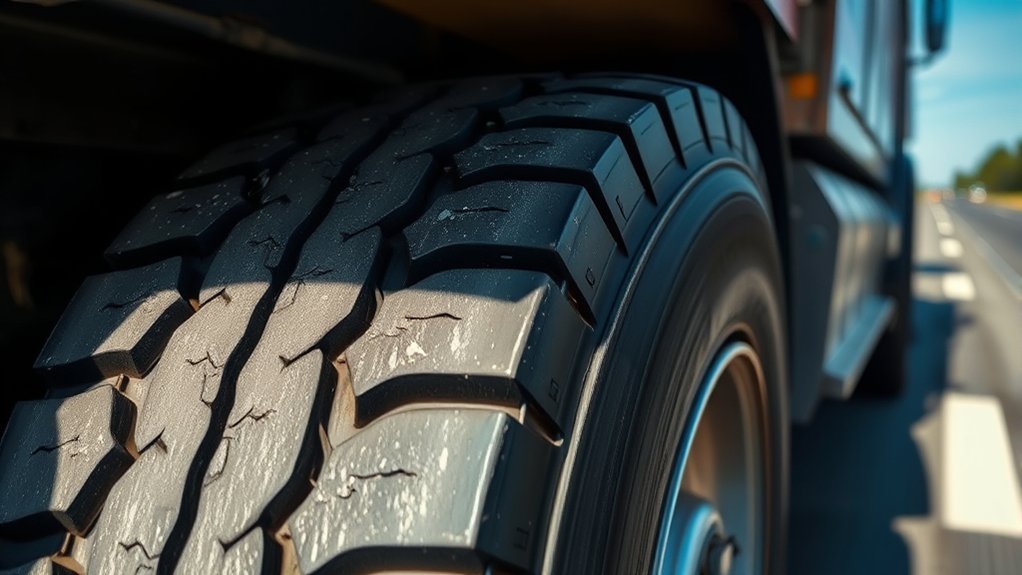
While you might not notice it at first glance, spotting tire wear and damage is essential for maintaining the safety and performance of heavy trucks. Regularly check tread depth with a gauge; steer tires should have at least 4/32 inch, while drive and trailer tires need to maintain above 2/32 inch. Conduct visual inspections to identify damage indicators like cracks, bulges, or foreign objects lodged in the tread, which can lead to tire failure.
Monitor for uneven wear patterns such as cupping or feathering; these suggest potential alignment or inflation issues. Don’t overlook the age of your tires; even if they seem fine, replace those older than six years to prevent degradation that could result in blowouts. Finally, be mindful of temperature changes affecting tire pressure. Regularly checking inflation levels, especially in extreme weather, is vital for ensuring even tread wear and overall tire health.
The Importance of Tire Rotation and Balancing
Tire wear and damage not only impact safety but also highlight the need for regular tire rotation and balancing. By adhering to maintenance schedules, you can greatly extend tire lifespan and performance. Here’s a quick overview of how rotation and balancing contribute to your truck’s efficiency:
| Aspect | Benefit | Frequency |
|---|---|---|
| Tire Rotation | Guarantees even wear | Every 3,000 to 8,000 miles |
| Tire Balancing | Reduces vibrations, improves comfort | At rotation, as needed |
| Load Distribution | Enhances fuel efficiency | Regularly, with rotation |
Regularly rotating and balancing your tires prevents uneven tread wear and premature failure. This practice also improves ride comfort and can lead to considerable cost savings over time. Don’t overlook these critical aspects of tire maintenance—your truck’s performance relies on it.
When to Seek Professional Tire Services?
How can you guarantee your heavy truck’s tires remain safe and effective on the road? Regular inspections are essential. Check your tread depth—if it’s below 4/32 inch on steer tires or 2/32 inch on drive/trailer tires, seek professional services immediately. Worn tires heighten the risk of hydroplaning and reduce traction, particularly at speeds exceeding 75 MPH.
If you spot uneven wear patterns, consult a technician. This could indicate alignment or inflation issues that compromise performance and safety. Additionally, if your tires are over six years old, regardless of their appearance, having them evaluated by a professional is wise for reliability.
Finally, utilize tire-pressure monitoring systems to maintain ideal inflation; under-inflated tires contribute to premature wear and potential failure. Prioritizing these actions not only enhances safety but also liberates you from the stress of unexpected tire failures on the road.
Frequently Asked Questions
Can You Use High Performance Tires for Daily Driving?
Yes, you can use high-performance tires for daily driving, but be mindful of tire wear and performance longevity. Regular monitoring of tire pressure and surface conditions is essential to maximize their benefits and lifespan.
Conclusion
In summary, prioritizing tire performance at high speeds isn’t just smart; it’s essential. By understanding tire stability, choosing the right tires, maintaining proper inflation, and monitoring wear, you enhance safety and efficiency. Regular rotation and balancing further guarantee peak performance. So, stay vigilant and proactive—your heavy truck’s safety and reliability depend on it. Make informed decisions, take action, and keep your fleet running smoothly at high speeds. Your tires are your lifeline on the road.

Related Articles
How Oversized Tires Affect Braking Distance on a Toyota Tundra
Maximize your safety by understanding how oversized tires impact your Toyota Tundra's braking distance, and discover crucial upgrades to maintain performance.
Read More
How Larger Tires Affect Towing Capacity on a Toyota Tundra
Towing with larger tires on your Toyota Tundra can drastically alter performance—discover the hidden impacts and how to optimize your setup.
Read More
How Tire Size Affects Fuel Economy on a Toyota Tundra: MPG Impact Data
Discover how tire size influences fuel economy on your Toyota Tundra and uncover the surprising impact on your MPG that could change your driving habits.
Read More