Toyota Tundra Aftermarket Wheel Fitment Guide: Offset, Bore, and Bolt Pattern
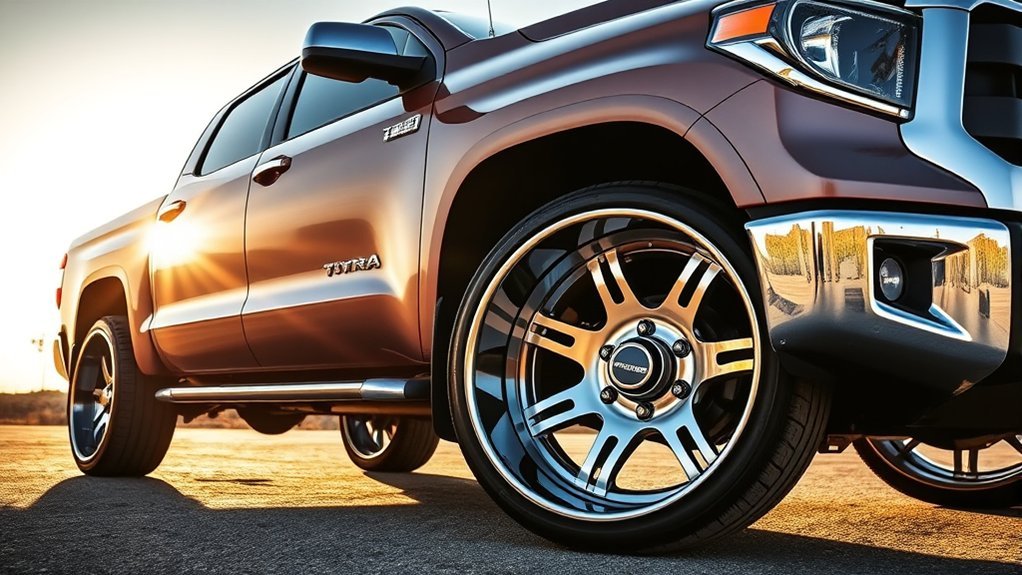
When upgrading your Toyota Tundra’s wheels, it’s essential to know key specs. The bolt pattern varies by model—6×139.7 mm for 2022-2026 and 5×150 mm for 2007-2021. Center bore sizes are 95.2 mm for newer models and 110.1 mm for older ones. Aim for a positive offset between +18 to +25 mm for improved handling. Choosing the right tire size, up to 33 inches, is important for avoiding rubs. Stick with us to uncover more fitting insights!
Essential Wheel Specifications for the Toyota Tundra
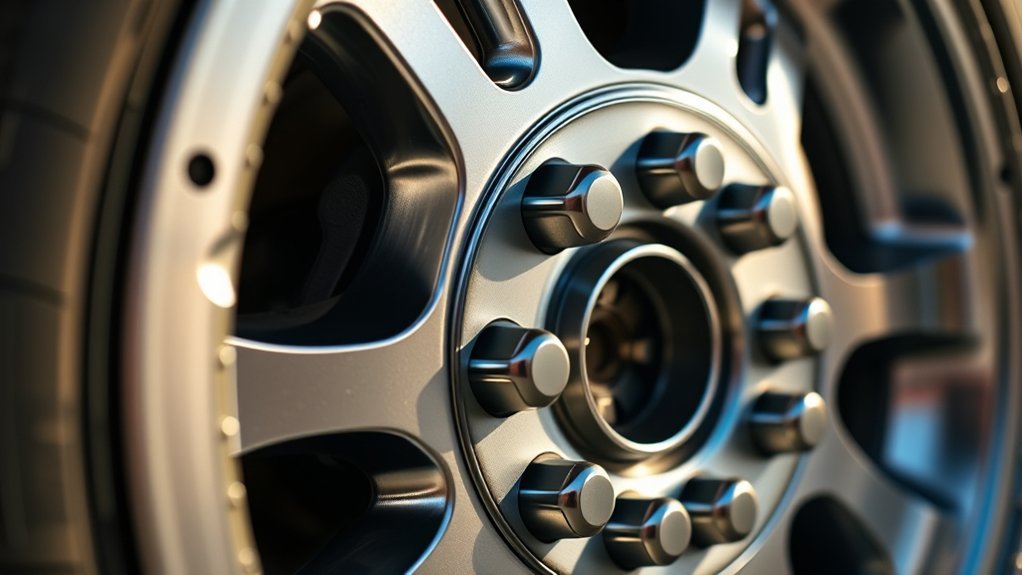
When selecting aftermarket wheels for your Toyota Tundra, it’s essential to understand the fundamental wheel specifications that guarantee compatibility and performance. For models from 2022 to 2026, you’ll need a bolt pattern of 6×139.7 mm (6×5.5 in), while older models (2007–2021) require a 5×150 mm pattern. Verify the hub bore size is approximately 95.2 mm; this snug fit is critical for stability.
Don’t overlook the lug nut size, which is M14x1.5—this guarantees your new wheels attach securely. When considering wheel aesthetics and performance enhancements, keep in mind that a positive offset brings wheels closer to the suspension, improving handling, while a negative offset pushes them outward, affecting tire clearance. Stick to a maximum tire size of 33 inches on stock suspension to avoid rubbing issues. Choose wisely, and elevate both your Tundra’s look and performance.
What Is Wheel Offset and Why Does It Matter?
Understanding wheel offset is fundamental for guaranteeing your Toyota Tundra performs at its finest. Wheel offset measures the distance between the wheel’s mounting surface and its centerline, greatly impacting how your wheels sit relative to the fenders and suspension components. A positive offset means your wheels are closer to the suspension, while a negative offset pushes them outward. For the Tundra, offsets typically range from +18 to +25 mm, depending on your desired stance and tire size.
Choosing the correct offset is vital; an improper fit can lead to rubbing against fenders or suspension parts, especially with larger tires. This misalignment can adversely affect suspension geometry, causing poor handling and increased tire wear. Proper wheel alignment guarantees your Tundra maintains peak performance, handling, and longevity. So, when selecting aftermarket wheels, pay close attention to offset to keep your ride smooth and reliable.
Understanding the Center Bore for Compatibility
Getting the right center bore size is vital for a proper fit when upgrading your Toyota Tundra’s wheels. The center bore’s significance can’t be overstated; for the 2022–2026 models, it’s approximately 95.2 mm, while older models (2007–2021) measure 110.1 mm. This difference highlights the need to match your aftermarket wheels to your specific Tundra generation for maximum compatibility.
Choosing wheels with a larger center bore, ideally over 100 mm, minimizes the need for hub rings and guarantees proper alignment. Hub-centric designs are essential as they distribute load evenly and reduce vibrations, enhancing your driving experience. If you ignore the correct center bore size, you risk improper fitment, which can lead to safety issues and performance problems. So, always double-check specifications before making your purchase to confirm seamless aftermarket wheel compatibility.
What’s Your Tundra’s Bolt Pattern?
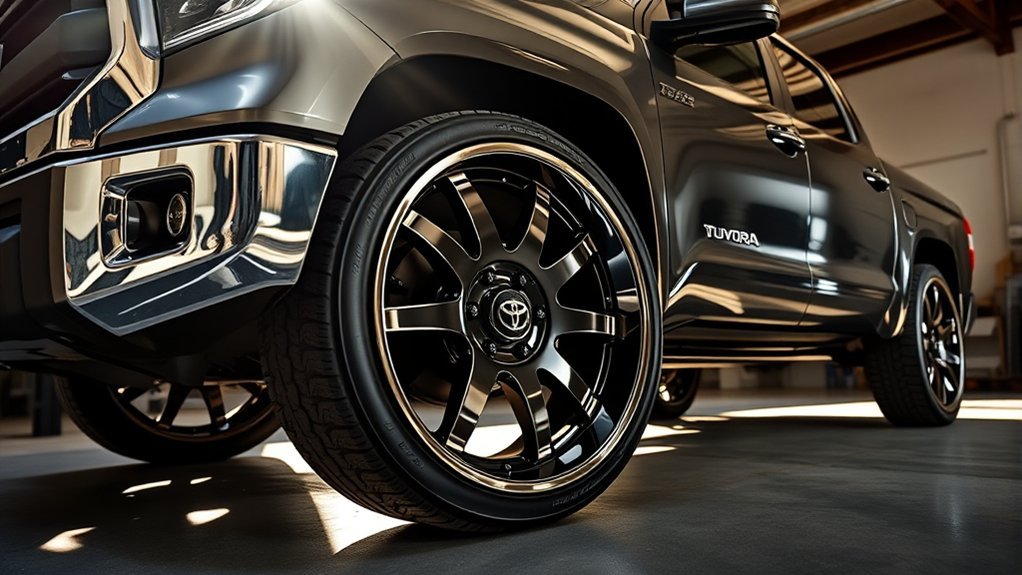
How do you confirm your aftermarket wheels fit your Toyota Tundra perfectly? Start by knowing your Tundra’s bolt pattern. For models from 2022 to 2026, the bolt pattern is 6×139.7 mm (6×5.5 in). If you own a 2007–2021 Tundra, you’ll need to look for a 5×150 mm pattern.
- Verify you’re using the right lug nut thread size: M14x1.5
- Double-check the center bore size—95.2 mm for newer models and 110.1 mm for older ones
- Investigate Tundra wheel compatibility with designs from other Toyota models, like the Tacoma and 4Runner
Finding the right bolt pattern is crucial for safe wheel attachment and peak performance. Immerse yourself in aftermarket wheel options with confidence, knowing you’re equipped with the essential specs for your Tundra!
Choosing the Right Aftermarket Wheel Size for Your Tundra
When selecting aftermarket wheels for your Tundra, what size will best enhance both aesthetics and performance? Start by considering the wheel design; sizes typically range from 17 to 22 inches. For 2022-2026 models, make sure you choose a wheel with a 6×139.7 mm bolt pattern and a center bore of approximately 95.2 mm to avoid hub rings. If you’re sticking with stock suspension, remember that the maximum tire size is around 33 inches in diameter, while lifted setups can handle larger tires, like 35 or 37 inches.
Material choices also play an essential role; lightweight alloys can improve handling and fuel efficiency. Don’t forget the offset—common offsets of +18 for 9-inch wide wheels can greatly affect your Tundra’s stance and performance. Finally, make sure the lug nut thread size is M14x1.5 for a safe and proper fit. Your Tundra deserves wheels that elevate both style and functionality!
Common Tire Sizes and Their Fitment on the Tundra
Selecting the right tire size for your Toyota Tundra is essential for optimizing both performance and aesthetics. Common tire sizes include:
- 255/70R18: A balanced choice for all-around driving.
- 275/65R18: Offers enhanced traction with diverse tread patterns.
- 285/70R17: Ideal for off-roading and rugged terrains.
For stock suspension, you can fit tires up to 33 inches in diameter without any modifications, ensuring no rubbing issues arise. If you’ve added a leveling kit (2–3 inches), you can upgrade to 33- or 35-inch tires, best paired with 18×9 or 20×9 wheels. For those with a 6-inch lift, 37-inch tires are possible, ideally matched with 18×9 or 20×10 wheels. Always keep tire pressure in check, as well as the offset and width of your wheels, to prevent clearance issues while enjoying the freedom of your Tundra’s robust capabilities.
How to Install Your Aftermarket Wheels Safely
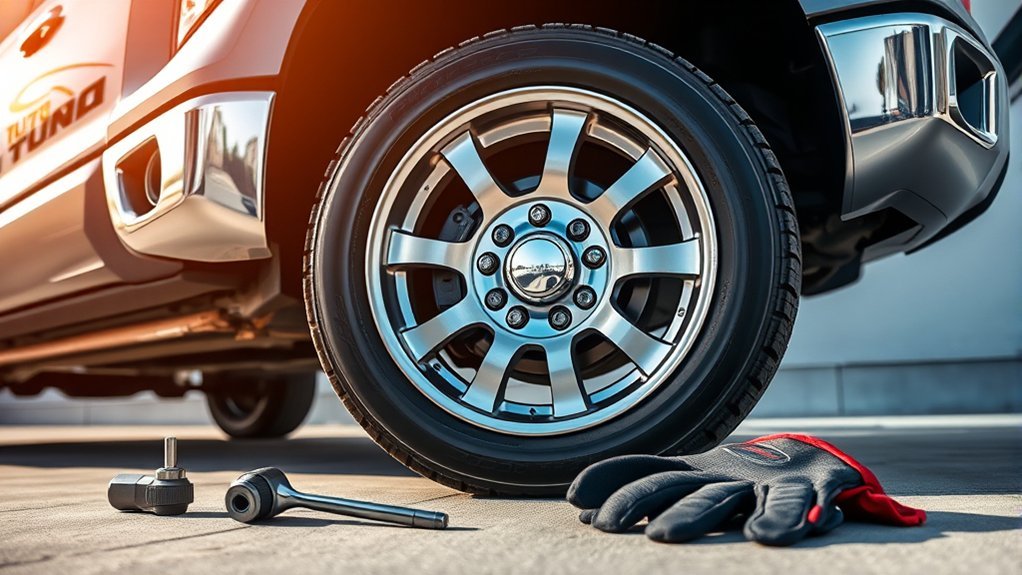
Installing aftermarket wheels on your Toyota Tundra can greatly enhance both its look and performance, but doing it safely requires attention to detail. Here are some essential wheel installation tips to guarantee a secure fit:
| Step | Details |
|---|---|
| Bolt Pattern | Verify it’s 6×139.7 mm for 2022–2026 Tundras. |
| Center Bore | Confirm it’s 95.2 mm for proper alignment. |
| Lug Nuts | Use 60-degree conical seat lug nuts, not stock. |
| Lug Nut Torque | Torque to 80-100 ft-lbs in a crisscross pattern. |
Check the offset of your wheels; positive offsets bring them closer to the suspension, while negatives push them outward. Confirm wheel width and tire size compatibility to prevent rubbing against fenders. Following these guidelines guarantees a safe and effective aftermarket wheel installation.
Frequently Asked Questions
What Is the Center Bore of a Toyota Tundra?
The center bore for 2007–2021 Toyota Tundra models is 110.1 mm, while 2022–2026 models have 95.2 mm. Ensuring proper wheel compatibility with these measurements maximizes performance and enhances your driving experience.
What Does +35 Offset Mean on a Rim?
A +35 offset means your wheel’s mounting surface is 35 millimeters outward, enhancing wheel stability. When selecting rims, this offset helps maintain alignment, reducing tire rub while ensuring peak performance for your setup.
Conclusion
In conclusion, choosing the right aftermarket wheels for your Toyota Tundra isn’t just about aesthetics; it’s about performance and safety too. With the right offset and bore, you’ll enhance handling, while the perfect bolt pattern guarantees a snug fit. Don’t overlook tire compatibility, as it can make or break your ride. So, whether you’re cruising city streets or tackling rugged terrain, equip your Tundra wisely and enjoy the journey ahead.

Related Articles
How Tire Size Affects Speedometer Accuracy on a Toyota Tundra
Knowing how tire size influences speedometer accuracy on your Toyota Tundra could save you from costly mistakes—discover what adjustments are necessary.
Read More
305/55R20 on a Toyota Tundra With No Lift: Will It Fit?
Not sure if 305/55R20 tires fit your Toyota Tundra without a lift? Discover the surprising truths and tips that could change your ride!
Read More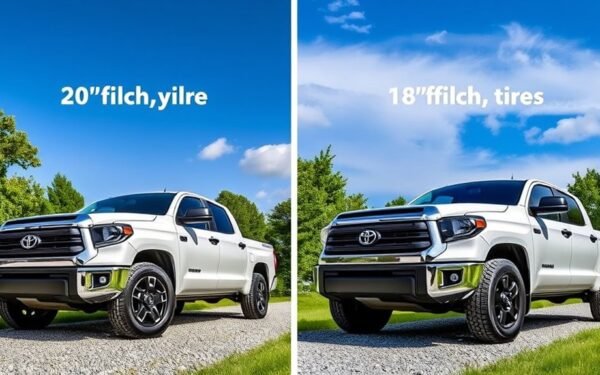
20-Inch vs 18-Inch Wheels on a Toyota Tundra: Tire Options Compared
Keen to know which wheel size enhances your Toyota Tundra’s performance and style? Discover the surprising differences between 20-inch and 18-inch options.
Read More