Will 33-Inch Tires Fit a Stock Toyota Tundra? What You Need to Know
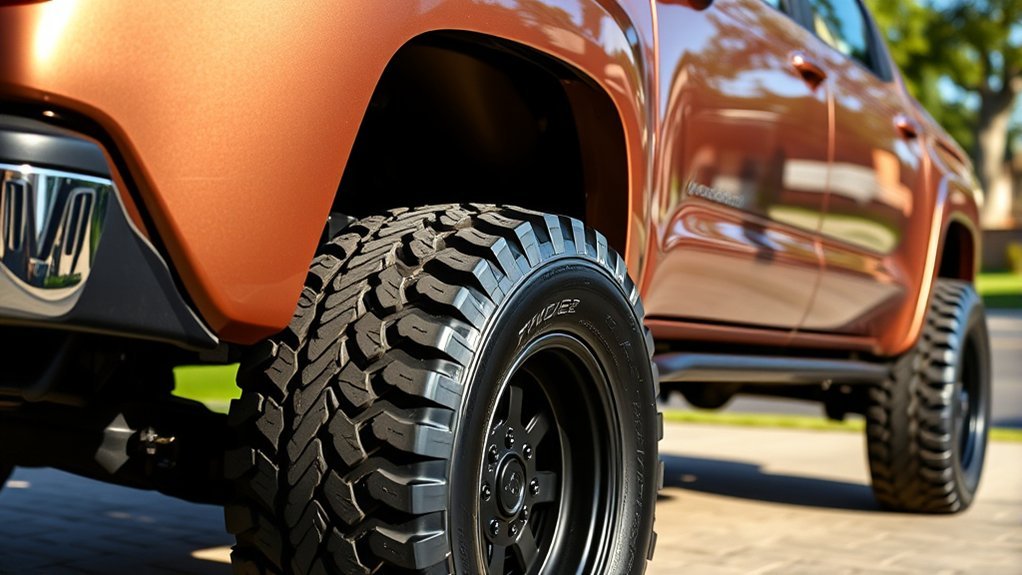
Yes, you can fit 33-inch tires on a stock Toyota Tundra, but you should be mindful of potential rubbing issues, especially at the front bumper and inner fender during turns. Many owners recommend using a leveling kit for better clearance, which helps prevent rubbing and enhances your truck’s aesthetics. Additionally, pay attention to tire specifications and wheel offset for safety. Stick around to discover more insights and tips for making your Tundra tire upgrade successful.
Can You Fit 33-Inch Tires on a Stock Tundra?
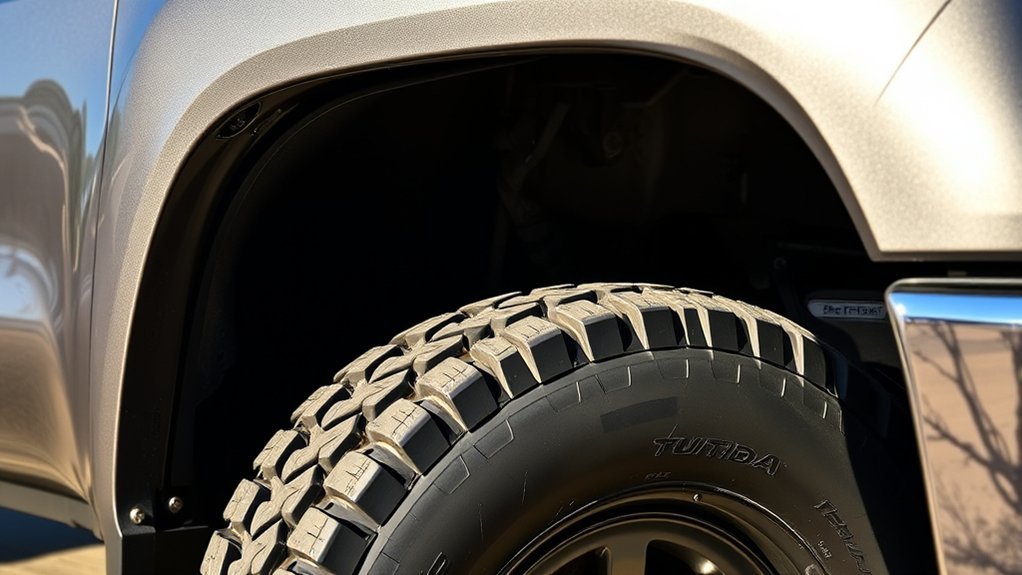
Can you really fit 33-inch tires on a stock Toyota Tundra? Absolutely! Tires like the 275/70R18 measure about 33.4 inches in height, making them a solid choice. Many Tundra owners report that fitting these tires without major modifications is achievable, though wider options like 33×12.50 could lead to rubbing, especially at the bumper. If you want to be extra cautious, consider installing a leveling kit—typically around 3/1—to enhance clearance while keeping your stock rims.
Where Rubbing Issues Most Commonly Occur With 33-Inch Tires
When fitting 33-inch tires on a stock Toyota Tundra, rubbing issues often crop up in specific areas, particularly at the front bumper and inner fender. These rubbing locations become most noticeable during turns or when the suspension compresses, so you’ll want to keep an eye out for contact with the plastic liners or suspension components.
If you’re opting for wider tires, like 33×12.50, the risk of rubbing increases considerably, especially against the upper control arms (UCA) or fenders. Proper tire alignment is essential; improper backspacing can worsen these rubbing issues. While some users report needing to trim wheel wells to accommodate the larger tires, be aware that variances between Tundra models can still lead to fitment challenges. Ensuring your tire width and wheel offset are well-matched can help you enjoy that liberating drive without the annoying rub.
Benefits of Installing a Leveling Kit for Clearance
Rubbing issues can be a frustrating aspect of fitting larger tires on your Toyota Tundra, but installing a leveling kit offers a practical solution for enhancing clearance. A 3/1 leveling kit can provide up to 3 inches of lift, allowing you to fit 33-inch tires without major fitment concerns. This modification not only improves ground clearance but also enhances your truck’s stance, delivering lift benefits that are hard to ignore.
Here’s a quick reference table on the advantages of a leveling kit:
| Benefit | Description | Installation Tips |
|---|---|---|
| Increased Clearance | Fits larger tires without rubbing | Guarantee proper torque on bolts |
| Maintains Compatibility | Works with stock rims | Check alignment after installation |
| Enhanced Aesthetics | Improves overall look of the vehicle | Use quality leveling kit |
| Better Off-Road Performance | Increases approach angles | Follow manufacturer’s instructions |
| Reduced Rubbing | Minimizes contact with suspension components | Test drive to confirm clearance |
With these benefits, a leveling kit is a popular choice among Tundra owners.
What the Tundra Community Says About Tire Upgrades
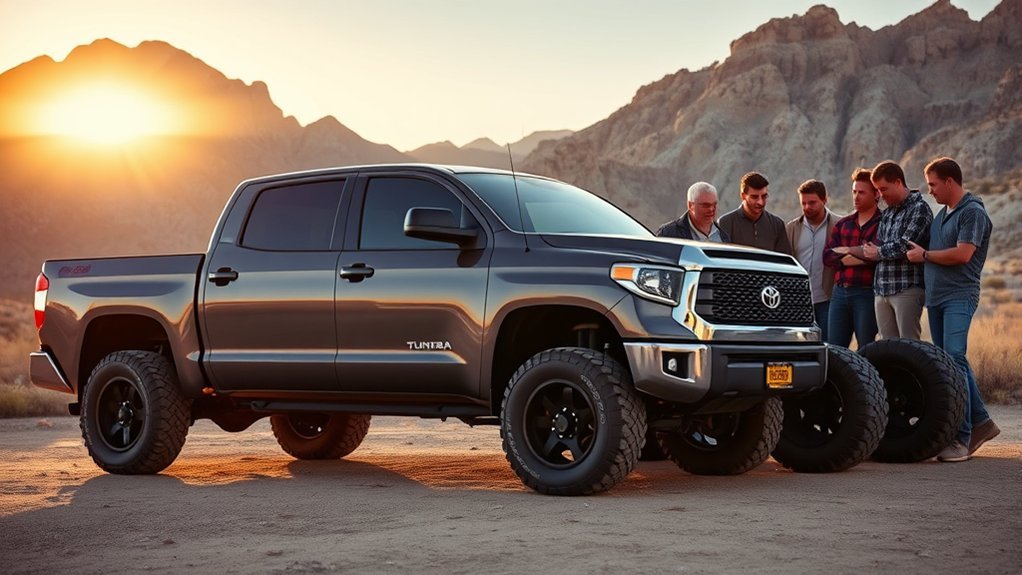
The Tundra community offers a wealth of insights on tire upgrades, with many owners sharing their experiences about fitting larger tires on their trucks. Many report successfully fitting 33-inch tires, especially on models between 2007 and 2021, though some encountered minor rubbing at full lock. A basic leveling kit or quick lift is often recommended to enhance clearance while keeping stock wheels.
Users emphasize the importance of tire brand preferences and tread pattern choices that match individual driving styles. For instance, a common size like 285/70R18 fits well without rubbing, elevating your Tundra’s aesthetics without extensive modifications. While fitment can vary by model year, community feedback highlights that sticking to size guidelines and considering wheel offset can make these upgrades smoother. By tapping into this knowledge, you can confidently navigate your tire upgrade journey.
Understanding Tire Specifications for Tundra Fitment
Upgrading your Toyota Tundra’s tires requires a solid understanding of tire specifications to guarantee a proper fit. Key factors like tire height, width, aspect ratio, and construction types must be considered. A typical 33-inch tire size, like 275/70R18, measures about 33.4 inches in height and generally fits stock half-ton trucks. However, wider tires can create fitment issues due to potential rubbing against the frame or suspension.
Here’s a quick overview of essential tire specifications:
| Specification | Description |
|---|---|
| Tire Height | 33 inches (approx. 33.4) |
| Width (mm) | 275 mm |
| Aspect Ratio | 70% of width |
| Construction Types | Usually radial |
| Rim Diameter (inches) | 18 inches |
Understanding these specifications will help you make informed decisions and ensure your Tundra can handle the upgrade without complications.
Why Tire Width Matters for Fitment
When choosing tires for your Toyota Tundra, tire width plays a vital role in fitment. Wider tires can create clearance issues, impacting not just your vehicle’s handling but also its fuel efficiency. Understanding how width affects these factors helps you make informed choices for a smoother, safer ride.
Clearance Issues Explained
Choosing the right tire width for your Toyota Tundra isn’t just about aesthetics; it directly affects fitment and performance. Wider tires often lead to clearance challenges, increasing the risk of rubbing against the frame, suspension components, and fenders. For example, while 33 x 12.50 tires may fit, they typically require at least 4 inches of lift for proper clearance. On a stock setup, opting for 285-width tires is generally safer. Additionally, stock wheel spacing can worsen rubbing issues, making backspacing an essential factor. Paying close attention to tire specifications, including both diameter and width, guarantees you avoid fitment problems and enjoy a smooth ride without needing extensive suspension adjustments.
Impact on Handling
Tire width plays a vital role in how your Toyota Tundra handles on the road and off it. Wider tires can enhance tire performance by providing better traction, especially in challenging conditions. However, they can also lead to increased rolling resistance, which may affect your overall handling dynamics. Proper wheel offset is important; it impacts how the tire interacts with suspension components, influencing steering response and stability. If you opt for wider tires like 33×12.50, be mindful of potential rubbing issues with upper control arms or fenders. This change may also make steering feel heavier and less responsive during cornering. Keeping tire width in balance with your vehicle’s lift is essential for ideal handling and safety.
Fuel Efficiency Considerations
While it might be tempting to upgrade to wider tires for enhanced traction and an aggressive look, the impact on fuel efficiency shouldn’t be overlooked. Wider tires typically increase rolling resistance, leading to a noticeable dip in your fuel economy. Plus, they can disrupt your vehicle’s aerodynamics, creating more drag and further hindering MPG. When you install larger tires, like 33-inch options, you also add weight, which can strain your engine and reduce acceleration efficiency. Although a larger contact patch can improve tire performance and traction, this often comes at the cost of increased fuel consumption. To keep your Toyota Tundra performing at its best, it’s important to find a balance between tire width, height, and your vehicle’s specifications.
Generation-Specific Recommendations for Tire Sizes
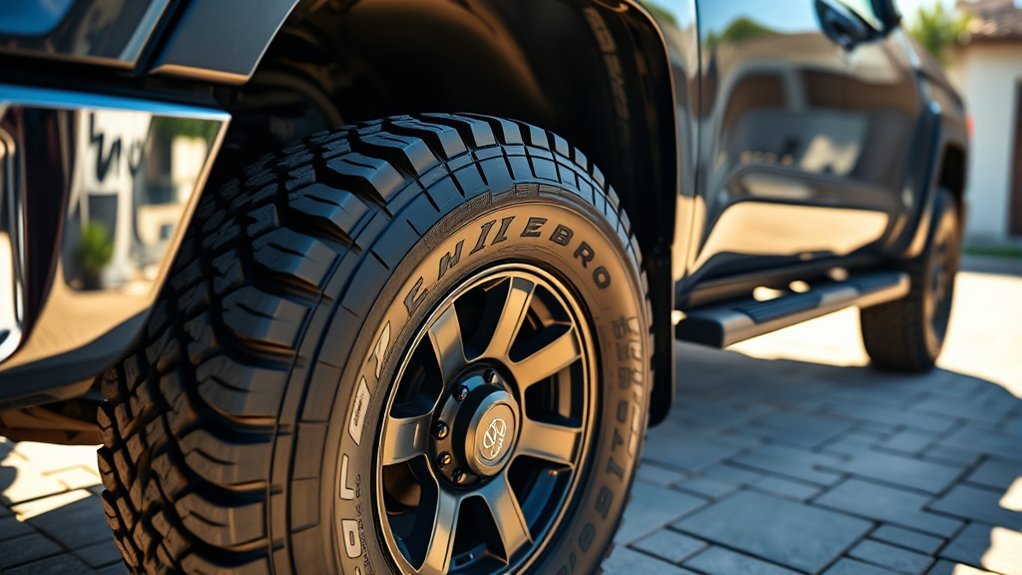
When it comes to choosing tire sizes for your Toyota Tundra, the options differ considerably between generations. For second-generation models, you can fit up to 33-inch tires with some adjustments, while third-generation models offer even more flexibility for larger sizes. Understanding these specifics will help you make the best choice for performance and safety.
Second-Generation Tire Sizes
For second-generation Toyota Tundra owners, selecting the right tire size can greatly enhance both performance and aesthetics. Typically, the factory tire size is 265/70 R18, which is about 32.6 inches. You can upgrade to 33-inch tires without major modifications, adhering to the 3% height increase guideline. If you install a 3/1 leveling kit, you can fit tires up to 285/70 R18, measuring about 33.4 inches. Explore reputable tire brands that offer these sizes, ensuring you choose ones compatible with your Tundra. Remember, installation tips like proper offset and alignment are essential to avoid rubbing against components. Wider options, like 295/70 R18, can work with aftermarket wheels, enhancing both capability and style.
Third-Generation Fitment Options
The third-generation Toyota Tundra, introduced in 2022, offers a more accommodating platform for larger tires compared to its predecessors. You can safely fit up to 285/70 R18 tires on SR/SR5 trims, which increases height by about 3.9%. For the 1794/Platinum/Limited models, the ideal size is 285/60 R20, adding roughly 3.1% in height. Staying within a 3% diameter increase is crucial for maintaining safety sensors and overall vehicle functionality. When upgrading, be sure to check tire pressure regularly and perform alignment checks to prevent uneven wear and rubbing. Careful selection of tire width and backspacing is essential for compatibility with factory rims, ensuring your Tundra maintains its performance and safety standards.
Do You Need Aftermarket Wheels for 33-Inch Tires?
Wondering if you need aftermarket wheels for 33-inch tires on your Toyota Tundra? The stock wheels might not provide the clearance you need, leading to potential rubbing against the frame or fenders. Aftermarket wheels can be a game-changer, allowing you to choose different offsets and backspacing for improved fitment.
Consider these aftermarket benefits:
Consider the advantages of aftermarket wheels for improved clearance, a wider stance, and tailored fitment for your Tundra.
- Enhanced clearance to prevent rubbing issues.
- Wider options (up to 12.5 inches) for a more aggressive stance.
- Compatibility with larger tires without needing a lift.
- Tailored fitment that matches your suspension and braking systems.
Researching specific wheel and tire combinations is vital. With the right aftermarket wheels, you can liberate your Tundra’s capability, ensuring it handles 33-inch tires with ease. Embrace the journey of customization and make your ride truly yours!
Safety Considerations for 33-Inch Tire Upgrades
When upgrading to 33-inch tires on your Toyota Tundra, it’s important to take into account the potential safety implications. Larger tires can rub against the frame or body during turns, especially under load, which may lead to dangerous situations. You’ll also notice changes in vehicle performance; acceleration and handling can suffer, posing additional risks on the road.
Moreover, speedometer inaccuracies might occur, resulting in unintentional speeding violations or miscalculated distances. To mitigate these issues, make sure you choose the right wheel offset and backspacing to prevent suspension interference, which could affect steering control.
Regular alignment checks are vital, as any modifications—like leveling kits—must maintain safety sensor functionality. Ignoring these considerations could compromise your Tundra’s safety. So, be proactive: monitor tire pressure and make adjustments as needed to keep your ride safe and enjoyable.
Maintaining Bigger Tires on Your Tundra
Upgrading to bigger tires on your Toyota Tundra can enhance its rugged appeal and off-road capabilities, but maintaining those larger tires is just as important for peak performance. Proper care guarantees you enjoy every adventure without hassles.
To keep your larger tires in top shape, remember to:
- Regularly check tire pressure: Proper inflation improves fuel efficiency and handling.
- Inspect tread wear: Monitor for uneven wear, especially in mud terrain.
- Rotate tires: This extends their lifespan and enhances stability.
- Clean debris: Remove mud and stones that can affect balance and wear.
Frequently Asked Questions
Will Larger Tires Affect My Speedometer Accuracy?
Yes, larger tires can affect your speedometer’s accuracy. You’ll need to take into account speedometer recalibration based on the new tire size. This adjustment guarantees accurate readings, allowing you to enjoy your driving experience without surprises.
How Do 33-Inch Tires Impact Fuel Efficiency?
How much do you value fuel efficiency? Switching to 33-inch tires can decrease it due to increased tire weight and altered traction performance, which affects your engine’s workload. You might feel the difference at the pump.
Can I Tow With 33-Inch Tires Installed?
Yes, you can tow with 33-inch tires installed. They may slightly alter your towing capacity and handling characteristics, but if you’re mindful of these changes, you’ll still enjoy a capable and liberated towing experience.
What Tire Pressure Should I Use for 33-Inch Tires?
For ideal tire pressure, aim for 30-35 PSI. This balance enhances off-road performance, ensuring you get control and comfort. Adjust based on load and terrain, but remember, lower pressure improves grip while higher reduces wear.
Are There Specific Brands Recommended for Tundra Fitment?
For your Tundra, consider reputable tire brands like Michelin, Goodyear, or Nitto. They provide fitment guides ensuring compatibility and performance. Researching user reviews can help you make an informed choice that suits your driving needs.
Conclusion
To summarize, fitting 33-inch tires on your stock Toyota Tundra is possible with some considerations. While you might worry about clearance and rubbing, many drivers successfully upgrade without major issues. A leveling kit can enhance your ride and aesthetics, making it a worthwhile investment. Embrace the transformation—your Tundra can handle the change, both on and off the road. With the right setup, you’ll enjoy improved performance and style without compromising safety or comfort.

Related Articles
Toyota Tundra Tire Size Calculator: How to Figure Upsize Limits Safely
Maximize your Toyota Tundra's performance by learning safe tire upsize limits—discover essential tips that could transform your ride. Don't miss out!
Read More
Biggest Tire With a 3-Inch Lift on a Tundra: Sizing Without Rubbing
Learn about the largest tire sizes for a Tundra with a 3-inch lift to avoid rubbing—your perfect fit awaits discovery!
Read More
Biggest Tire With a Leveling Kit on a Tundra: What Actually Fits
See how a leveling kit transforms your Tundra's tire options—discover what fits and what you need to watch out for.
Read More