
Bike Tire Size Guide: ETRTO, ISO & Rim Fit
Pick the wrong tire size and the bead won’t seat, pressure bleeds out, or the tire rolls off the rim under load. Most sizing confusion comes from mixing inch labels with actual rim diameters, which don’t always match. This guide shows you how to use ETRTO and ISO codes to get the right fit every time.
Quick Answer
Use ETRTO/ISO codes to match tires and rims accurately. The bead-seat diameter (BSD) must be an exact match. Common BSDs are 622 mm for 700C/29-inch, 584 mm for 27.5-inch/650B, 559 mm for 26-inch, and 571 mm for 650C. Check the sidewall of your tire for the ETRTO stamp before buying, and measure your rims if markings are missing.
Which Tire-Size System Should You Use?
Stick with ETRTO. Its two-number metric code, like 40-622, shows tire width and rim inner diameter in millimeters. That removes the guesswork from tire compatibility.
Road tires often use metric labels like 700x25C. Mountain tires lean toward imperial, such as 29×2.10. But those labels alone don’t guarantee fit. Older sizes mislead buyers.
Always check the sidewall for the ETRTO stamp before buying. This confirms the rim diameter and prevents unsafe pairings. Think of metric and imperial names as rough translations, not the final word on whether a tire fits your rim.
Quick Reference: Common Bike Tire and Wheel Sizes (ISO/ETRTO)
700C and 29-inch both use ISO 622. 27.5-inch matches ISO 584. The older 26-inch is ISO 559. Each ETRTO code lists tire width and rim diameter in millimeters, like 40-622.
Use the ETRTO pair to check tire compatibility before you buy. The rim diameter must match exactly. Width has some flexibility depending on the rim’s approved range.
Wider tires add grip and stability on rough surfaces. Narrower ones reduce rolling resistance on smooth pavement. Choose width based on how and where you ride.
650B/27.5-inch (ISO 584) works for mountain, gravel, and some road bikes. 622 mm rims fit both road and many modern mountain bikes (29-inch). The old 26-inch (ISO 559) still shows up on some bikes, but don’t mix it with 584 or 622 rims.
Road Tire Sizes Explained: 700C, 650C, and 27-Inch
Start with 700C, the standard for modern road and gravel bikes. It has a bead-seat diameter of 622 mm. Widths run from 23 mm to 50 mm: narrower widths suit road racing, while wider ones work for gravel and mixed-surface riding.
650C is smaller, with a BSD of 571 mm. It fits smaller frames and some triathlon bikes. Then there’s the older 27-inch size, which uses a 630 mm BSD. Despite the similar names, each has a different rim diameter and its own set of compatible tires.
700C Size Explained
The “C” in 700C and 650C refers to a historical French width category, but today it marks a specific bead diameter. 700C has a 622 mm inner rim diameter. 650C has 571 mm.
Choosing the right one makes sure tires seat properly on the rim and the bike handles as expected.
700C covers most road and gravel riding with widths from 23 mm to 50 mm. That range fits racing, commuting, touring, and gravel. 650C works for high-performance road and triathlon bikes, especially for smaller riders who want lighter, more aerodynamic setups.
Know your rim diameter before shopping for tires. Match the size to your frame and your riding goals.
650C vs 27-Inch Comparison
Understanding how 700C, 650C, and the older 27-inch standard compare saves you from a costly mismatch.
700C (622 mm BSD) has the widest range of available tire widths. 650C (571 mm BSD) is smaller and suits narrower, performance-oriented setups. 27-inch rims use a 630 mm BSD, which falls between the two in outer diameter but requires its own dedicated tires and rims.
A 27-inch tire won’t fit safely on a 700C rim, and the reverse is also true. The 8 mm difference in BSD between 700C (622 mm) and 27-inch (630 mm) is enough to make them incompatible.
Go with 700C for versatility. Choose 650C for compact performance. Use 27-inch only if you have a vintage frame built for that size.
Mountain and Hybrid Wheel Sizes: 29-Inch, 27.5-Inch, and 26-Inch
Three main wheel sizes cover mountain and hybrid bikes: 29-inch, 27.5-inch (650B), and 26-inch. Each performs differently depending on the terrain and frame design.
29-inch wheels (622 mm BSD) roll over obstacles well and hold speed on rough ground. 27.5-inch offers a balance of agility and stability for mixed trails. 26-inch works for older bikes or compact frames where quick steering matters.
Choose 29-inch for sustained momentum and obstacle clearance. It pairs with 622 mm rims and wider tires for better traction on rocks, roots, and loose dirt.
Pick 27.5-inch for nimble handling with good stability. It’s popular for varied singletrack and fits most modern trail frames.
Use 26-inch for legacy builds or tight hybrids that benefit from fast direction changes and a compact fit.
For standard mountain and hybrid use, widths run from about 1.6 inches to 3 inches. Fat bikes use dedicated wide rims and tires that go beyond this range. Match the rim’s internal width to the tire casing for the best traction and control on your terrain.
How to Identify Vintage and Unusual Inch Tire Sizes
Check old inch labels like 26 x 1.75 or 27 x 1 1/4 on the sidewall. Some tires carry three-number stamps, such as 22 x 1 3/8 x 1 1/4, which show diameter, height, and width.
Measure the bead seat diameter (BSD) rather than trusting the nominal inch size. This is the only reliable way to confirm rim compatibility. If markings are worn or unclear, measure the rim yourself or take it to a bike shop.
Identifying Old Inch Labels
Look for any numbers still visible on the sidewall. Vintage tires often carry labels like 22 x 1 3/8 x 1 1/4 or 26 x 1 3/4. These don’t always match modern rims.
The first number is the nominal diameter. The next numbers represent height and width in inches. Older labels come from different bead-seat diameters that predate ETRTO standards, so don’t assume they swap directly with current tires.
Measure the tire and rim. Note any faded markings. Translate inch labels to ETRTO before buying replacements. If you can’t read the numbers, a bike shop can help. See Sheldon Brown’s tire sizing guide for detailed conversion tables.
Measuring Bead Seat Diameter
If inch markings don’t help, measure the bead seat diameter (BSD) directly on the rim. This number determines whether a tire will fit.
Remove the tire and find the bead seat groove. Measure the inner rim diameter in millimeters using calipers or a tape measure.
For vintage bikes, convert the measured BSD to an ETRTO size. For example, 590 mm fits many 26 x 1 3/8 wheels. Pick tires that match that BSD exactly. This removes guesswork and keeps your bike rolling safely while preserving its original look.
How to Measure Your Rims and Pick the Right ETRTO Size
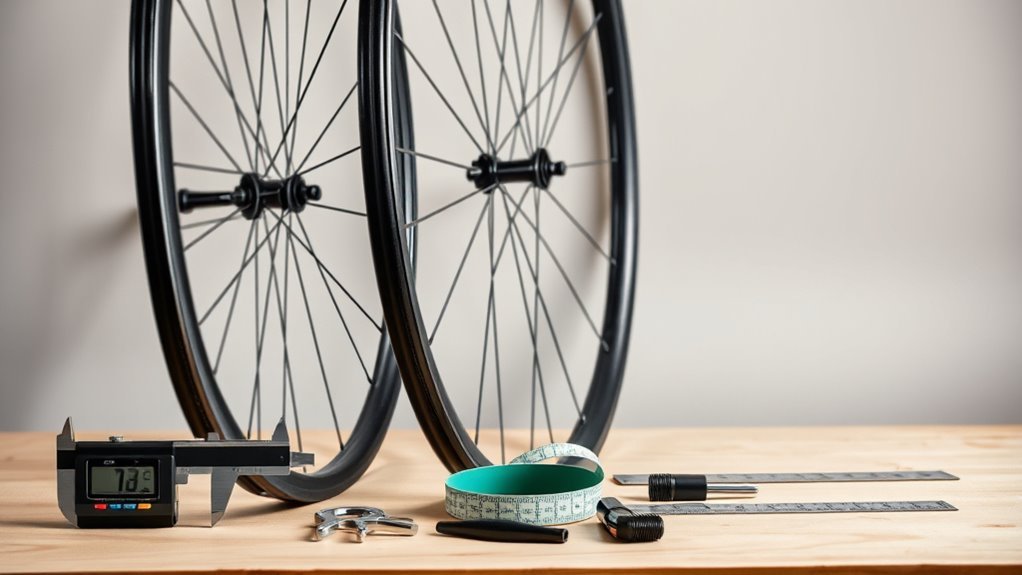
Use calipers to measure the bead-seat inner diameter. That’s the second number in the ETRTO code, often 622 mm for road wheels. Also record the rim’s internal width, which corresponds to the first ETRTO number (tire width in mm).
Accurate measurements prevent fit problems and help you choose tires with confidence.
| Measurement | Purpose |
|---|---|
| Bead-seat diameter (mm) | Confirms ETRTO second number |
| Internal rim width (mm) | Guides compatible tire width |
| Tire ETRTO first number (mm) | Desired tire width for performance |
| ISO/ETRTO conversion | Cross-checks sizing systems |
Use the internal rim width to check whether a given tire width is safe. Wider tires need wider rims.
Refer to a conversion chart to cross-check between ETRTO and ISO. Measure with calipers, write down the values, and pick a tire that matches both the bead-seat diameter and the rim width range. This prevents wobble, uneven wear, and blowouts.
[Products Worth Considering]

The GERCHWAY Presta Valve Adaptor Pump offers a versatile dual‑head chuck that fits both Presta and Schrader valves, eliminating the need for extra adapters. Its precision gauge accurately reads 5–100 PSI with ±2 PSI tolerance, ensuring safe and optimal tire inflation for bikes, motorcycles, SUVs, and cars. The 18‑inch hose provides flexible reach, while the 3‑in‑1 design lets you check pressure, release air, or inflate directly from an air compressor.

The AZUNO digital tire inflator gauge offers precise pressure readings for both Presta and Schrader bike valves, eliminating the need for separate adapters. Its bright LCD backlight and automatic shut‑off conserve battery life, while the included 18‑inch hose and accessories make setup quick and hassle‑free. Built with durable steel and brass components, it provides reliable performance for bicycles, motorcycles, and other vehicles.

The CO2 Inflator Kit provides rapid tire inflation for road and mountain bikes, delivering up to 100 psi in seconds with threaded 16 g cartridges. Its compact design fits easily in a saddle bag, and the included insulated sleeve protects hands from the cold discharge. Compatible with both Presta and Schrader valves, it offers a lightweight alternative to hand pumps for quick repairs on the trail.
How to Swap Tires Safely: Diameter and Width Rules
Tire fit depends on two things: bead-seat diameter and rim width. Only swap tires that match the rim’s ETRTO/ISO diameter, and make sure the tire width falls within the rim manufacturer’s recommended range.
Verify the ISO number, like 622 for 700C. This confirms the bead will seat correctly.
Check rim materials and construction. Some carbon or thin alloy rims have narrower width limits than steel or tubeless-ready rims.
You can often go slightly wider, like from 25 mm to 28 mm, if the rim’s compatibility chart allows it. Wider tires add traction and stability but change tire pressure needs and handling. For official rim-to-tire compatibility tables based on ETRTO recommendations, see Continental’s ETRTO standards page.
Use the manufacturer’s compatibility table. Never use a different bead-seat diameter. If unsure, measure the rim and confirm the ETRTO spec before swapping.
[Products Worth Considering]

The CO2 Bike Tire Inflator provides fast, precise inflation for road and mountain bikes with a CNC‑machined aluminum body and brass internals. Its control lever lets you regulate gas flow, preventing freezing and ensuring safe, leak‑free connections to both Presta and Schrader valves. Compact and lightweight, it’s ideal for race, group rides, and timed events, delivering reliable performance with premium threaded CO2 cartridges.

The ROCKBROS Mini Bike Pump delivers fast, high‑pressure inflation up to 100 PSI in a compact, lightweight design that fits easily in a pocket or backpack. Its rechargeable Type‑C battery and interchangeable Presta and Schrader nozzles make it versatile for road, mountain, and inner‑tube tires, while the LED indicator keeps you informed of battery status. Ideal for cyclists on the go, it inflates two 700×25C road tires on a single charge and charges fully in just 25 minutes.

Tire Size:24 x1.95 inch; Fits tire widths: 1.75-2.125 inch.
Rim Width to Tire Width: Practical Guidelines
The ETRTO standard sets minimum and maximum internal rim widths for each tire width. As a general rule, your rim’s internal width should be at least 40% of the tire’s width and no more than 85% of it.
For example, a 28 mm road tire pairs well with a rim that has 17 mm to 23 mm of internal width. A 2.4-inch mountain tire works best on a rim with 30 mm to 45 mm of internal width. Running a tire on a rim outside this range affects bead security, handling, and pressure limits.
Always check the rim manufacturer’s stated tire width range before swapping. It overrides general guidelines when there’s a conflict.
Tubeless Tire Compatibility
Tubeless setups follow the same BSD rules as clincher tires. The bead-seat diameter must match exactly, and the tire width must fall within the rim’s approved range.
The key difference is that tubeless tires need rims designed or rated for tubeless use. Look for “tubeless ready” (TLR) or “UST” markings on the rim. These rims have sealed spoke beds and bead profiles that create an airtight seal with compatible tires. According to ETRTO tubeless standards, only rims with the correct bead hook profile and spoke bed sealing qualify for tubeless use.
If you’re converting standard rims to tubeless, use a tubeless conversion kit with rim tape, a tubeless valve, and sealant. Not all rims suit conversion, so check the manufacturer’s specifications first. BSD and width compatibility still apply, regardless of whether you run tubes or go tubeless.
Mounting Tips for Bike Tires
Before mounting, confirm that the ETRTO codes on the tire and rim match. Use tire levers if needed, but take care not to pinch the tube.
Seat the bead evenly around the rim. Inflate slowly and check that the bead sits uniformly on both sides. You’ll hear a slight pop as the bead locks into place.
As a starting point for inflation, narrow road tires (23 to 28 mm) typically run between 80 and 110 psi. Wider gravel tires (35 to 50 mm) run between 40 and 70 psi. Mountain tires (1.9 to 2.5 inches) run between 25 and 45 psi. Always check the maximum pressure printed on the tire sidewall and stay within that limit.
For tubeless setups, apply sealant and use a floor pump or compressor. Follow the manufacturer’s instructions for pressure limits and compatibility.
If your tire has a rotation arrow on the sidewall, mount it in the correct direction. This keeps traction and handling predictable.
[Products Worth Considering]

Application : Simplest and most basic of cycling tools, ideal for toolbox and workshop. The Stainless Steel Levers help to repair a flat bicycle tire

Application : Simplest and most basic of cycling tools, ideal for toolbox and workshop. The bicycle tire levers help to repair a flat bicycle tire

Designed for Bicycle Tire – fits closely to the contours of Bicycle Tires and is easy to remove for repair and replacement.
Frequently Asked Questions
What Is the Most Common Bicycle Tire Size?
The most common bicycle tire size is 700C (ISO 622 mm). Check tire compatibility and pressure ratings to make sure the tire fits your rim and suits your riding style.
What Does 700×28/32c Mean?
700×28/32c means a wheel with an approximate 700 mm outer diameter and a tire width of either 28 or 32 mm. The “c” indicates a 622 mm bead-seat diameter. Choose width based on road conditions and adjust pressure for comfort, grip, and safety.
Conclusion
The single most important step in any tire swap is confirming the bead-seat diameter before anything else. Get that number right, and you’ve solved 90% of compatibility problems. From there, match the tire width to your rim’s approved range, check the sidewall for ETRTO markings, and set pressure within the tire’s rated limits. Measure once, buy right, and ride with confidence.

Related Articles
What Does THE P Stand For on a Tire? Full Meaning Explained
I’ll explain what the “P” on a tire really means and why it could change how you choose your next set.
Read More
How to Use a Tubeless Tire Repair Kit: Complete Field Guide
Learn how to fix tubeless tire punctures fast with the right kit, because one small mistake can leave you stranded on the trail.
Read More
How to Tell a Tire’s Diameter: Easy Guide to Reading Tire Size
Want to decode tire sidewall numbers and find the right diameter, but wonder what those hidden digits really mean?
Read More