
Camber, Caster, and Toe Explained: What Every Tundra Owner Should Know
Camber, caster, and toe decide how your Toyota Tundra tracks straight, turns, returns to center, and wears its tires. The goal is not to chase one universal number. The goal is to set the truck to the correct Toyota specification for its year, trim, tire size, ride height, and suspension setup—especially if it has a lift, leveling kit, aftermarket upper control arms, or oversized tires.
Quick Answer
Camber is tire tilt, caster is steering-axis angle, and toe is whether the tires point slightly inward or outward. On a Tundra, the best alignment is not always “zero everything.” Use factory specs for your exact truck, then adjust for lift height, tire wear, steering feel, and road-test results.
Key Takeaways
- Toe is usually the fastest tire killer because even a small toe error can scrub the tread as you drive.
- Camber affects shoulder wear: too much negative camber can wear the inside edge, while too much positive camber can wear the outside edge.
- Caster affects stability and steering return, but lifted Tundras may need aftermarket upper control arms to recover enough caster.
- A pull is not always an alignment problem; tire pressure, tire conicity, road crown, worn parts, brake drag, and damage can also cause it.
- Always ask for a before-and-after printout so you can see the actual camber, caster, and toe numbers.
At a Glance
| Time Required | 10–20 minutes for a driveway inspection; about 45–90 minutes for a professional alignment |
| Difficulty | Basic inspection is beginner-friendly; final alignment requires a calibrated alignment rack |
| Tools Needed | Tire-pressure gauge, tread-depth gauge, flashlight, alignment printout, and a professional alignment machine |
| Cost | Often about $100–$200 for a standard alignment; lifted or custom Tundra setups may cost more |
The Basics of Camber, Caster, and Toe for Tundra Owners
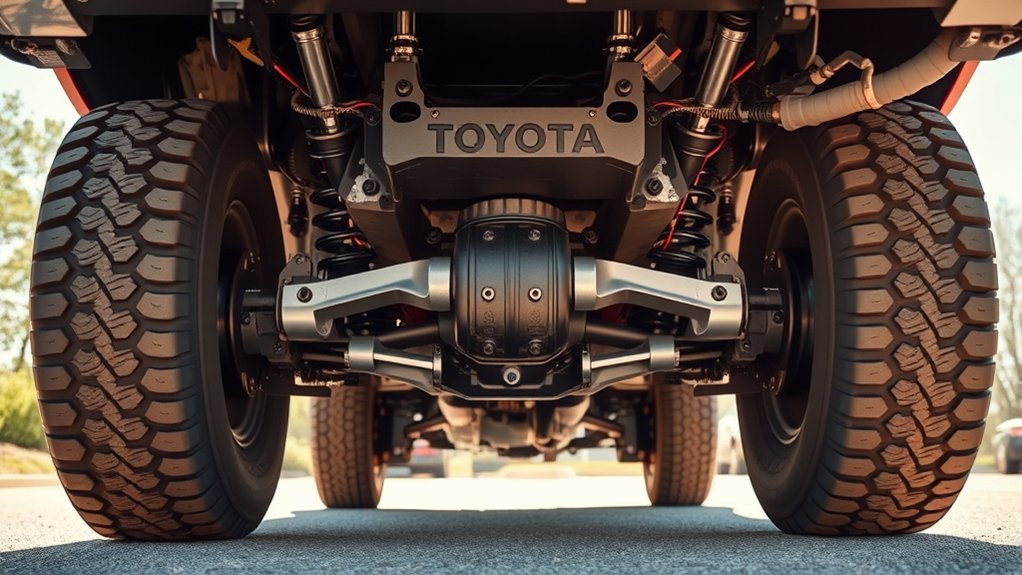
A wheel alignment adjusts the truck’s steering and suspension angles so the tires contact the road correctly. It is not an adjustment of the tire itself. For Tundra owners, the three angles to understand are camber, caster, and toe.
| Alignment Angle | What It Means | What You Feel or See |
|---|---|---|
| Camber | The inward or outward tilt of the tire when viewed from the front of the truck. | Too much negative camber often wears the inside shoulder; too much positive camber can wear the outside shoulder. |
| Caster | The angle of the steering axis when viewed from the side of the truck. | More positive caster can improve straight-line stability and steering return, but too much cross-caster can contribute to pull. |
| Toe | Whether the front of the tires point slightly inward or outward when viewed from above. | Bad toe often causes feathered tread, off-center steering, wandering, and fast tire wear. |
The key point: do not use a generic internet number as your final target. Toyota alignment values vary by model year, tire size, cab configuration, suspension package, and ride height. For factory repair information, Toyota directs owners and shops to the Toyota Technical Information System, which is the official service-information source for Toyota vehicles marketed in North America.
Note: If your Tundra has a lift, leveling kit, aftermarket wheels, larger tires, or aftermarket upper control arms, the shop may need to use a custom alignment strategy while still staying within safe, road-tested limits.
The Impact of Misalignment on Tire Wear and Handling
Misalignment can make a Tundra feel loose, darty, heavy, or unstable. It can also waste expensive truck tires quickly. According to Bridgestone’s tire wear guidance, out-of-spec alignment can cause uneven and premature tread wear, including heel/toe wear, feathering, and one-sided shoulder wear.
| Symptom | Possible Cause | What to Check First |
|---|---|---|
| Inside or outside tire shoulder wearing faster | Camber issue, worn suspension, or incorrect tire pressure | Camber reading, ball joints, bushings, tire pressure, and load |
| Feathered tread that feels sharp one way and smooth the other | Toe problem | Total toe, individual toe, steering wheel center, and tie rods |
| Truck pulls left or right | Alignment, tire pressure, tire conicity, road crown, brake drag, or worn/damaged parts | Tire pressure, tire rotation/cross-swap test, brakes, road test, and alignment printout |
| Steering wheel is off-center but truck drives straight | Toe not centered or steering wheel not centered during alignment | Front toe balance and steering wheel lock/centering during the alignment |
| Vibration at speed | Usually balance, tire damage, wheel damage, or driveline issue rather than alignment alone | Tire balance, wheel runout, tire condition, and suspension parts |
A pull is worth taking seriously, but it is not automatic proof of bad alignment. Toyota’s Vehicle Pull, Steering Wheel Off Center, and Alignment Best Practices bulletin notes that pulling complaints can also involve tire lateral force, road crown, vehicle damage, worn components, modifications, and brake drag. That is why a good shop diagnoses before it adjusts.
Warning: Do not keep driving on tires with exposed cords, severe one-edge wear, bulges, or a strong pull that makes the truck hard to control. Have the tires, steering, brakes, and suspension inspected before chasing alignment numbers.
When Your Tundra Needs an Alignment Check
You do not need to align a Tundra every time you think about maintenance. You need an alignment check when something changes or when the truck shows symptoms. NHTSA’s TireWise tire safety guidance recommends regular tire maintenance inspections that include inflation pressure, treadwear, tire damage, rotation, balancing, and alignment services.
- After a lift or leveling kit: Any ride-height change can move camber, caster, and toe.
- After replacing steering or suspension parts: Tie rods, control arms, ball joints, struts, shocks, and bushings can all affect alignment.
- After new tires: Start fresh tires with a verified alignment so old wear patterns do not repeat.
- After a hard pothole, curb hit, or off-road impact: A bent wheel, shifted cam bolt, or damaged component can change the readings.
- When the steering wheel is off-center: This often points to toe or steering-centering issues.
- When tread wear is uneven: Feathering, cupping, and one-sided shoulder wear are all reasons to inspect.
- At least annually if the truck works hard: Towing, hauling, rough roads, and off-road use justify more frequent checks.
Frequent Alignment Problems Tundra Owners Face and Their Solutions
Misalignment issues are common after lifts, tire changes, suspension work, and hard impacts. These are the Tundra alignment problems owners run into most often:
- Camber out of range: Excessive positive or negative camber can wear one shoulder of the tire and reduce contact patch consistency. The fix is to adjust the lower-control-arm cam bolts if adjustment range remains, then inspect for bent or worn parts if the numbers will not come back.
- Not enough positive caster after a lift: A lifted front end can reduce usable caster. If factory cams cannot recover enough caster while keeping camber in range, aftermarket upper control arms may be needed.
- Toe set incorrectly after camber/caster changes: Toe should be checked after camber and caster adjustments because moving the control-arm cams can affect toe. Bad toe can scrub tires quickly.
- Cross-caster or cross-camber imbalance: Even if both sides are technically “green,” a large left-to-right difference can affect tracking and pull.
- Steering wheel not centered: This is often a setup issue during the final toe adjustment. A good alignment includes a centered steering wheel and a road test.
Pro Tip: Ask the shop for a before-and-after printout. The printout should show camber, caster, toe, total toe, and left/right differences. “It’s in the green” is less useful than seeing the actual numbers.
Pre-Alignment Checklist Before You Pay a Shop
A clean alignment starts before the truck ever goes on the rack. If these basics are wrong, the final numbers can be misleading.
- Set tire pressure cold: Use the pressure listed on the driver-door placard or the correct pressure for your tire/load setup.
- Confirm tire size and condition: Mismatched tire sizes or unevenly worn tires can cause pull and poor tracking.
- Inspect tread depth across each tire: Measure inner, center, and outer tread to spot camber, toe, or pressure-related wear.
- Check steering parts: Loose tie rods, rack issues, or worn steering components must be fixed before alignment.
- Check suspension parts: Ball joints, control-arm bushings, shocks, struts, wheel bearings, and cam bolts should be secure and in good condition.
- Check brakes: A dragging caliper can mimic an alignment pull.
- Remove unusual load: Align the truck in a normal driving condition unless the shop is intentionally aligning for a constant work load.
- Let new suspension settle: After a lift, drive enough for the suspension to settle, then recheck alignment if the shop recommends it.
Adjusting Camber and Caster on Lifted Tundras
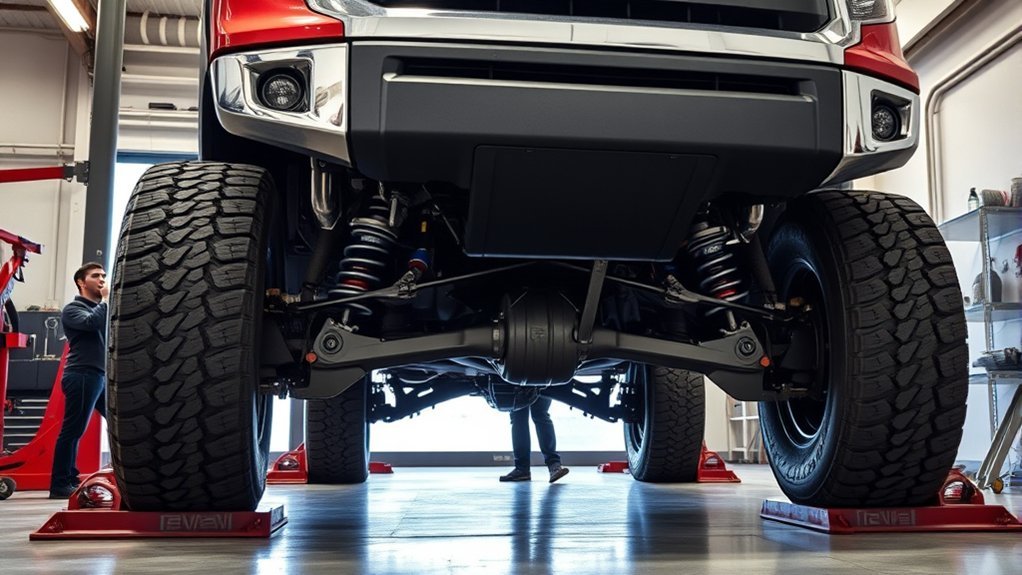
Lifted Tundras need more care than a stock truck because raising the front suspension changes control-arm angles. On many Tundras, camber and caster are adjusted with lower-control-arm cam bolts. The challenge is that a lift can use up the factory adjustment range, especially when the owner wants more positive caster for highway stability and tire clearance.
| Adjustment Type | Technique | Tips |
|---|---|---|
| Camber | Use cam bolts | Loosen LCA bolts only with proper support and torque everything to spec |
| Caster | Increase positive caster within safe range | Do not sacrifice camber, tire clearance, or left/right balance just to chase a high number |
| Measurement | Use a calibrated rack and road test | Compare before/after readings and confirm steering wheel center |
For a lifted Tundra, the usual goal is a stable highway feel, even tire wear, proper steering return, and no rubbing at full lock or suspension compression. Some owners ask for as much positive caster as the setup safely allows, but “more” is not always better. The final setup still needs balanced camber, acceptable toe, safe clearance, and a clean road test.
If the shop cannot bring caster and camber into a reasonable range with the factory cams, the issue may not be shop skill. The truck may need lift-compatible upper control arms, worn-part repair, or correction of ride height before another alignment attempt.
How to Read Your Tundra Alignment Printout
The alignment printout is your proof of the work. It also helps you understand whether your Tundra is truly aligned or just barely inside a broad range.
- Before readings: These show how far the truck was out before adjustment.
- After readings: These show the final camber, caster, and toe after the work.
- Camber left vs. right: Large side-to-side differences can affect tracking.
- Caster left vs. right: Cross-caster can help or hurt pull depending on the road and tire behavior.
- Individual toe: Each front wheel should be set correctly, not just the total toe.
- Total toe: This is critical for tire wear and straight-line tracking.
- Steering wheel center: A straight printout does not help if the steering wheel is crooked during normal driving.
A good Tundra alignment is not just “green numbers.” It is correct specs, balanced left/right readings, even tire wear, a centered steering wheel, and a road test that confirms the truck tracks properly.
How to Choose the Best Alignment Shop for Your Tundra
After fine-tuning your Tundra’s camber and caster, selecting the right alignment shop is essential for maintaining predictable handling and tire life. Use this checklist before booking:
- Ask if they work on lifted trucks: A shop that only handles stock commuters may not understand lifted Tundra caster needs, aftermarket upper control arms, or oversized tire clearance.
- Ask what specs they use: They should be able to look up the correct Toyota specs for your exact year, trim, tire size, and configuration—not guess from a generic chart.
- Ask for a pre-alignment inspection: A quality shop checks tire pressure, tread, steering, suspension, brakes, and obvious damage before adjusting.
- Ask for a before-and-after printout: This should be standard, not a special favor.
- Ask whether they road test: A road test helps confirm steering wheel center, pull, stability, and return-to-center.
- Ask how they handle custom targets: Lifted Tundras may need a practical target range that balances tire wear, steering feel, and clearance.
Modern alignment equipment matters, but the technician matters more. A calibrated rack, current specs, careful setup, and a real road test beat a rushed “green screen” alignment every time.
Frequently Asked Questions
What’s more important, toe or camber?
For tire wear on a daily-driven Tundra, toe is often the most urgent setting because a small toe error can scrub the tires every mile. Camber still matters, especially if you see inside or outside shoulder wear. The best alignment gets both toe and camber within the correct range instead of treating one as optional.
Is $100 for an alignment good?
Yes, $100 can be fair for a basic alignment, but price depends on location, shop type, and whether your Tundra is stock or modified. A lifted Tundra with aftermarket parts may cost more because it takes more setup time. Judge the value by the inspection, printout, final numbers, and road test—not price alone.
Should a lifted Tundra use factory alignment specs?
Factory specs are the starting point, but a lifted Tundra may need a custom target that improves caster, keeps camber reasonable, controls toe, and prevents rubbing. The shop should still use safe Toyota-based data and explain any custom setting on the printout.
Can I align my Tundra at home?
You can do a rough driveway check for obvious toe problems, uneven tire pressure, visible tire wear, or loose parts. But a final alignment needs a calibrated alignment rack because camber, caster, toe, steering wheel center, and left/right differences must be measured accurately.
Why does my Tundra still pull after an alignment?
A remaining pull can come from tire pressure, tire conicity, uneven tire wear, road crown, brake drag, worn parts, bent components, or cross-caster/cross-camber. Ask the shop to verify tire pressure, inspect the suspension and brakes, review the printout, and road test the truck on a flat road.
Conclusion
Understanding camber, caster, and toe helps you protect your Tundra’s tires and steering feel. Camber controls tire tilt, caster shapes stability and return-to-center, and toe has a major effect on tracking and tread scrub. For stock trucks, use the correct Toyota specs. For lifted Tundras, work with a shop that understands custom alignment targets, aftermarket control arms, tire clearance, and before-and-after printouts. With the right setup and a proper road test, your Tundra will drive straighter, wear tires more evenly, and feel more predictable on the road.
Sources
- Toyota Technical Information System — official Toyota source for repair manuals, service bulletins, and model-specific service information.
- Toyota TSB: Vehicle Pull, Steering Wheel Off Center, and Alignment Best Practices — backs the pull-diagnosis guidance and road-test cautions.
- NHTSA TireWise — backs tire-pressure, treadwear, damage, rotation, balancing, and alignment maintenance guidance.
- Bridgestone: What You Need to Know About Tire Alignment — backs camber, caster, toe definitions and alignment symptoms.
- Bridgestone: Tire Tread Wear & Causes — backs wear-pattern explanations for toe, camber, and alignment issues.
- AAA: Guide to Vehicle Wheel Alignment and Suspension — backs general alignment timing, symptoms, and alignment-vs-suspension context.

Related Articles
Toyota Tundra Tire and Wheel Package: What to Consider Before Buying
Unlock the secrets to choosing the perfect tire and wheel package for your Toyota Tundra—essential tips await to enhance your ride.
Read More
Do Bigger Tires Void a Toyota Tundra Warranty? Magnuson-Moss Act Explained
Bigger tires might not void your Toyota Tundra warranty, but understanding the Magnuson-Moss Act is crucial—discover how to protect your investment effectively.
Read More
Toyota Tundra Tire Rack Setup: Garage Storage Ideas for Seasonal Sets
Better tire storage for your Toyota Tundra awaits—discover essential tips to maximize space and protect your seasonal sets in the garage!
Read More